
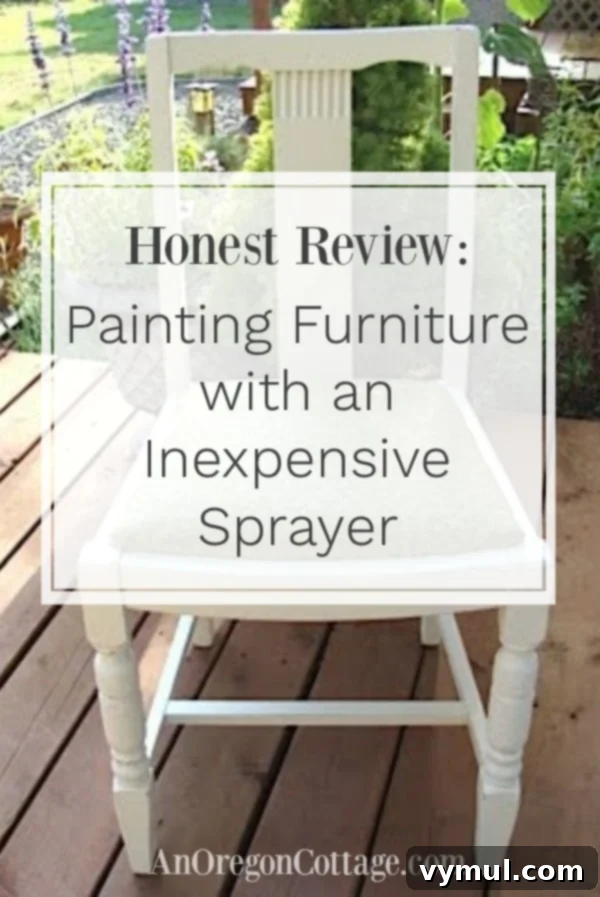
Transform Your Furniture: An Honest Review of the Best Inexpensive Handheld Paint Sprayer for DIY Projects
As avid DIY enthusiasts, we’ve often heard the skepticism surrounding inexpensive handheld paint sprayers. The common refrain? “They don’t work, don’t waste your money.” Yet, after years of tackling various home improvement projects, from painting entire house interiors and exteriors with professional-grade airless sprayers to laboriously brushing small furniture pieces, a persistent need emerged. We needed a solution for those countless smaller painting tasks – chairs, cabinet doors, intricate trim – that were too insignificant for a bulky, difficult-to-clean professional sprayer, but too time-consuming and inefficient for a paintbrush. This article details our honest and unbiased experience with an inexpensive handheld paint sprayer that you can find readily available – and spoiler alert: it genuinely exceeded expectations! Join us as we share our journey, unveil invaluable tips for effortless application, and guide you toward achieving a flawless, professional-looking finish on your DIY furniture projects.
Some links in this article are affiliate links, and if you click on them and make a purchase, I may receive a small commission at no additional cost to you. Please read our full disclosure for more information.
For years, my husband Brian and I operated under the assumption that budget-friendly handheld paint sprayers were simply not worth the investment. Our past experiences involved borrowing powerful airless paint sprayers from a contractor friend on a few occasions to tackle large-scale projects, such as painting the entire interior of our home and later, its exterior. We understood the efficiency and impeccable finish these high-end machines could deliver, but we also recognized their inherent drawbacks for smaller tasks: the significant setup time, the messy overspray, and the notoriously complex and lengthy cleanup process.
As a devoted DIY-er, my project list is perpetually overflowing with smaller painting endeavors – a forgotten side table, a set of dated dining chairs, or even just a few cabinet doors that need a refresh. These are projects that feel too small and fiddly for a large sprayer, yet far too tedious and time-consuming for a traditional paintbrush. The result? They’d often linger in the “to-do” pile, perpetually deferred due to the sheer effort involved in achieving a smooth, streak-free finish by hand.
Last year, when it came time to repaint the elaborately curved base of our dining room table, I experimented with spray paint cans. While certainly easier than a brush and providing a noticeably smoother result, the costs quickly added up. At five dollars or more per can, a single project could easily consume fifteen dollars or more just in paint. More importantly, these cans severely restrict color choices, forcing compromises on design visions. And let’s not forget the environmental impact of numerous small cans heading to the landfill, or the hand cramps that inevitably follow prolonged use.
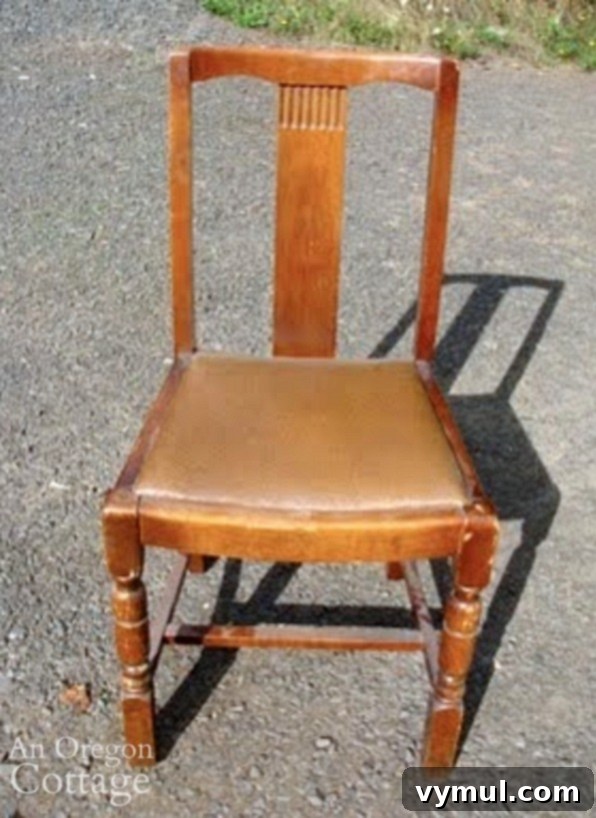
The breaking point arrived when it was finally time to tackle our “new” dining room chairs – which, by then, had been sitting unpainted for about nine months! I initially resorted to spray paint cans, but the math quickly became disheartening. Estimating two cans per chair meant nearly forty dollars just for four chairs, plus the unwelcome prospect of a severely cramped index finger (unless I invested in a spray can trigger, which, in my experience, tends to break after about one can’s worth of use). This financial and physical strain prompted a serious re-evaluation of my approach, leading me to begin researching electric handheld paint sprayers.
The Quest for an Effective, Inexpensive Handheld Paint Sprayer
My dive into online reviews for inexpensive handheld paint sprayers proved to be an enlightening experience. As anticipated, the digital landscape was polarized. A significant number of critics echoed our initial skepticism with pronouncements like “Don’t waste your money,” “Clogs and spits paint constantly,” and the more dramatic “Tricked into buying!” One particularly memorable review simply stated, “This is a great sprayer…for me to POOP on!” It made me wonder about the sincerity and motivations behind some of these reviews.
However, amidst the negativity, I began to notice a growing chorus of positive feedback, particularly for a specific model: the Wagner HVLP Control Sprayer. These positive reviews struck a chord with me, featuring phrases such as, “Worked great for me,” “Very pleasantly surprised with the results,” and “A fantastic gun for the price, saving me a ton of time.” These were the voices of fellow DIYers, speaking my language.
As I focused on more recent reviews, a pattern emerged: “Great product – don’t be fooled by the bad reviews” and “Be patient and don’t listen to the naysayers.” It became clear that this particular sprayer invoked strong opinions – people either absolutely loved it or vehemently hated it, with very few neutral standpoints. What was even more telling was that the reasons for dissatisfaction often seemed to stem from improper usage or a lack of understanding of the tool’s capabilities and requirements. This insight shifted my perspective; it wasn’t necessarily the sprayer’s fault, but perhaps the user’s approach.
Despite Brian’s firm stance that “you’re going to be disappointed,” I decided to take a chance. I was determined to try out this inexpensive paint sprayer myself and discover which camp I would ultimately fall into.
And I’m genuinely thrilled that I did! My decision was also influenced by my previous experience with large, expensive sprayers. I knew that even professional models come with challenges: significant overspray (Brian was often barely visible when painting the interior of our house!), the persistent threat of drips, and the undeniable hassle of thorough cleanup. These very issues seemed to be the main complaints leveled against the handheld sprayers, but I understood them to be inherent aspects of any spraying equipment, regardless of size or cost. In essence, my expectations for a budget-friendly model were realistic, perhaps even low. My primary goal was simply to find an efficient tool for smaller jobs – things like chairs, bi-fold closet doors, and kitchen cabinet doors – without the commitment of a large machine or the expense of countless spray cans.
UPDATE: Since the original publication of this review, Wagner has introduced an updated model: the Control Spray Double Duty Paint Sprayer. This version boasts suitability for both indoor and outdoor use and comes equipped with two easy-to-change paint cups, making it potentially even more versatile for projects like interior doors or larger furniture pieces, all for only about $20 more. It’s certainly an option worth considering for those looking for enhanced flexibility.
Mastering the Handheld Paint Sprayer: Essential Tips for Success
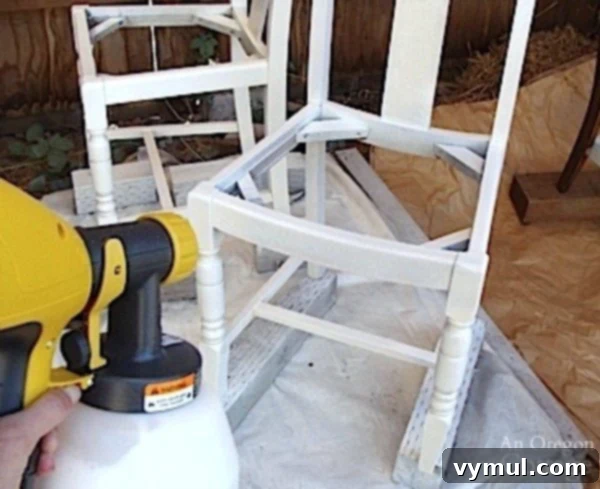
One of the greatest advantages of diving deep into online reviews before my purchase was gleaning invaluable insights from other users on how to achieve optimal results with the paint sprayer. Many of the “haters” had clearly missed these crucial steps. Here are the precise tips and techniques I rigorously followed, which proved instrumental in my success:
- Proper Paint Thinning is Key: I purchased the Wagner paint conditioner called “Paint Easy” specifically designed to thin latex paint. Latex paints are typically too thick for HVLP sprayers right out of the can, leading to clogs and an uneven spray pattern. I meticulously followed the thinning directions provided on the conditioner bottle, and the results were consistently excellent, ensuring a smooth flow through the nozzle.
- Embrace Latex Paint (with Thinning): Despite some manuals not explicitly mentioning water-based latex paint compatibility, numerous positive reviews confirmed its successful use. This reassured me, and by thinning the paint correctly, I encountered no issues whatsoever. This is a huge advantage for DIYers, offering easy cleanup and a wide range of color choices.
- Meticulous Adherence to Instructions: Beyond just thinning, I read and followed all the manufacturer’s directions for assembly, operation, and troubleshooting. Understanding your tool is paramount to avoiding frustration.
- Always Start with a Test Spray: Before approaching my actual furniture pieces, I used a large piece of cardboard to practice. This allowed me to test the spray pattern and adjust settings. If the sprayer “spit” a bit at the beginning, it would happen on the cardboard, not my project. Fortunately, with proper thinning, spitting was minimal.
- Practice Your Technique: Getting a feel for the trigger, the distance from the surface, and the speed of movement is crucial. I spent a few minutes practicing on the cardboard, learning how the paint came out and perfecting my sweep motions. Consistent, overlapping passes are vital for an even coat.
- Set Up a Dedicated “Spray Booth”: To manage overspray and ensure a clean environment, I created a makeshift spray booth within an old three-sided shed. This contained the paint particles, protected surrounding areas, and provided a relatively dust-free space for painting. Good ventilation is also critical, so consider wearing a respirator.
- Apply Multiple Thin Coats: This is arguably the most critical tip for avoiding drips and achieving a professional finish. I applied consistently thin coats. This might feel counterintuitive, as it seems like you’re not putting enough paint on, but it’s the secret to a flawless, drip-free result.
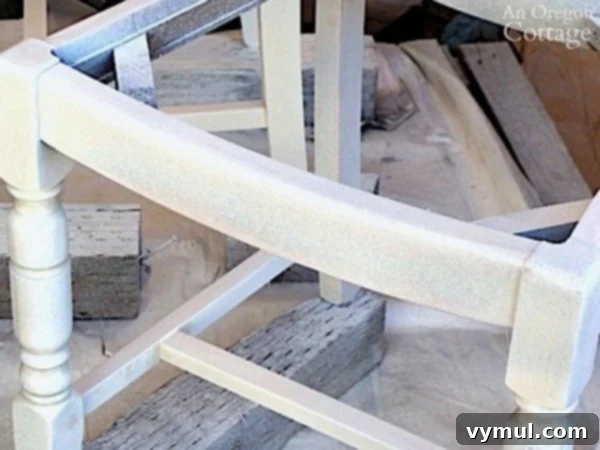
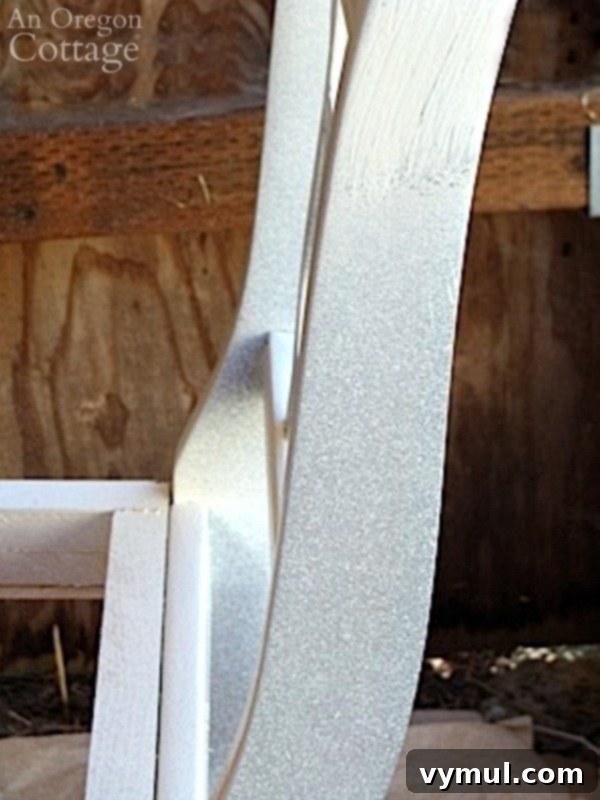
Applying truly thin coats proved to be the most challenging aspect initially. There’s an instinct to lay down a thick layer for quick coverage, but this inevitably leads to unsightly drips. As experienced painters know, this is true even with traditional spray cans. You can observe in the close-up photo of the chair front above that the paint initially sprays with distinct “droplets” or a slightly textured appearance. My first coats indeed did not look smooth at all, which admittedly caused a moment of worry. It felt like I was doing something wrong, and the finish appeared uneven.
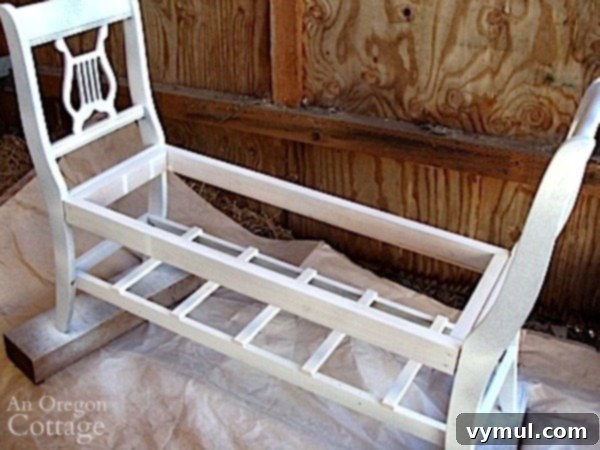
This image, showing a section of the bench Brian ingeniously crafted from a couple of our broken chairs, better illustrates how the paint layers build up during application. Notice at the top where I got a bit too zealous with the spray gun and had to quickly brush out a drip – a clear reminder of the importance of restraint. The initial coats should be so fine that you can still discern the original finish beneath. This thin application allows each layer to dry properly and fuse seamlessly, preventing drips and ensuring superior adhesion. By the time the third coat is applied, however, you’ll find the surface completely and beautifully covered.
The beauty of using water-based latex paint, especially with proper thinning, is its remarkably fast drying time. This meant that applying multiple thin coats wasn’t nearly as time-consuming as it might sound. I could often complete an entire small project, like a chair, within a couple of hours, allowing adequate flash time between coats. Of course, this timing was also dependent on how easily I got distracted between applications, a common occupational hazard for any DIY enthusiast!
What to Do with Paint in the Sprayer Between Coats or Overnight?
A crucial question that often arises is how to manage the paint remaining in the sprayer when you need to pause a project, either between coats for an hour or two, or overnight. Since I couldn’t fit all the chairs and the bench simultaneously into my small shed “spray booth,” I frequently needed to break up my painting sessions. One ingenious suggestion from an online reviewer became my go-to method: simply let the sprayer sit undisturbed. By allowing a small amount of paint to dry directly on the nozzle, it effectively creates an airtight seal, preserving the paint inside the reservoir. This prevents the bulk of the paint from drying out or hardening.
The next morning, or after a few hours’ break, I would gently use a thumbtack to prick off the dried paint from the nozzle opening. It typically peels off cleanly and easily. After clearing the nozzle, I’d aim the sprayer at my cardboard test piece and begin spraying. It usually took about 30 seconds for the sprayer to re-prime itself and resume spraying normally, delivering a consistent pattern once again. This incredibly simple yet effective tip saved me immense time and effort in cleaning the sprayer for short breaks, making the entire process far more convenient.
The Cleaning Process: Easier Than You Think
Another common apprehension with paint sprayers, especially for beginners, is the cleanup. Many fear it’s a messy, time-consuming ordeal. However, I only undertook a thorough cleaning of the paint sprayer once all my planned projects were completed. When the time came, I dedicated ample time to the cleaning process, meticulously following all the manufacturer’s directions. This involved flushing the system with water (since I was using water-based latex), disassembling the nozzle and other removable parts, and carefully scrubbing away any visible paint residue. To my pleasant surprise, the sprayer cleaned up remarkably well. Its design allowed for relatively easy access to all paint-contacting components, ensuring a complete and effective cleanup that preserved the sprayer’s functionality for future use.
The Final Verdict: A Smooth, Professional Finish for DIY Enthusiasts
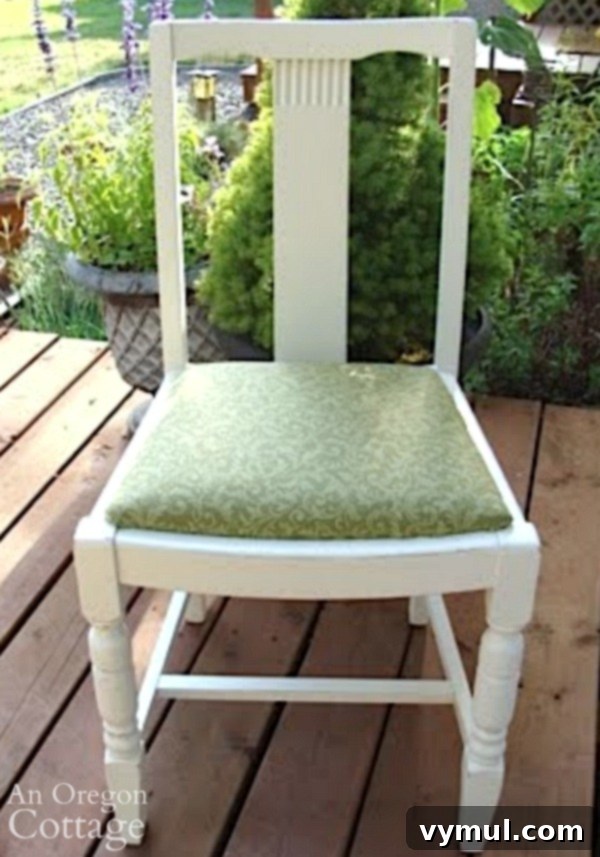
After all the coats were carefully applied and allowed to cure fully, I was not just satisfied, but genuinely pleasantly surprised by the results. The finish on the furniture appeared incredibly smooth and professional – a stark contrast to the initial “droplet” appearance of the wet paint. The difference compared to a brush-painted finish is dramatic; it’s much, MUCH better, eliminating brush strokes and achieving a factory-like smoothness.
While the finish isn’t quite as glass-smooth as that achieved by an industrial spray can (which often lays down a very fine, self-leveling lacquer), the difference is so subtle that you can only truly perceive it by rubbing your hand over the surface. For all practical purposes and visual appeal, it’s virtually indistinguishable. This small trade-off is more than compensated by the vast savings in cost, the freedom to choose any paint color, and the reduced environmental impact compared to disposable spray cans.
My unequivocal verdict? I absolutely LOVE this inexpensive handheld paint sprayer! It is precisely the tool I needed to revolutionize my approach to small and medium-sized DIY painting projects. I’m now confidently looking forward to tackling future endeavors such as my kitchen cabinet doors, which require a durable and smooth finish; our closet bi-fold doors – just imagine how effortlessly the louvers will be painted now!; and all our six-panel interior doors. While these larger items will require me to remove them and transport them to my “spray booth,” the hours of work I will save compared to painting them by hand make this extra step entirely worthwhile. This sprayer has truly transformed my DIY painting capabilities, delivering professional results without breaking the bank or sacrificing my sanity.

Have You Explored the World of Inexpensive Handheld Paint Sprayers?
We’d love to hear about your experiences! Have you tried one of these budget-friendly handheld paint sprayers for your furniture or other DIY projects? Which camp do you fall into – the satisfied users or the skeptics? Share your insights and tips in the comments below; your experiences help enrich the DIY community!
Note: This article was originally published in September 2011, born out of my genuine excitement over discovering a “cheap” sprayer that made painting tasks like chairs significantly easier. It’s important to stress that this was NOT a sponsored post; my recommendation then, as now, comes from a place of authentic user experience. To this day, the article continues to receive consistent Google traffic, likely for the very reasons I sought out this sprayer in the first place: people want honest answers about whether these tools truly work, cutting through the noise of polarized reviews on platforms like Amazon. Finding the simplest and most effective way to accomplish DIY projects is a core value here at An Oregon Cottage (AOC), and this sprayer perfectly embodies that ethos.
Disclosure: Affiliate links within this article may generate a commission based on sales, but please be assured that this does not alter the price you pay for any products. Click here to read my full disclaimer and advertising disclosure policy for complete transparency.