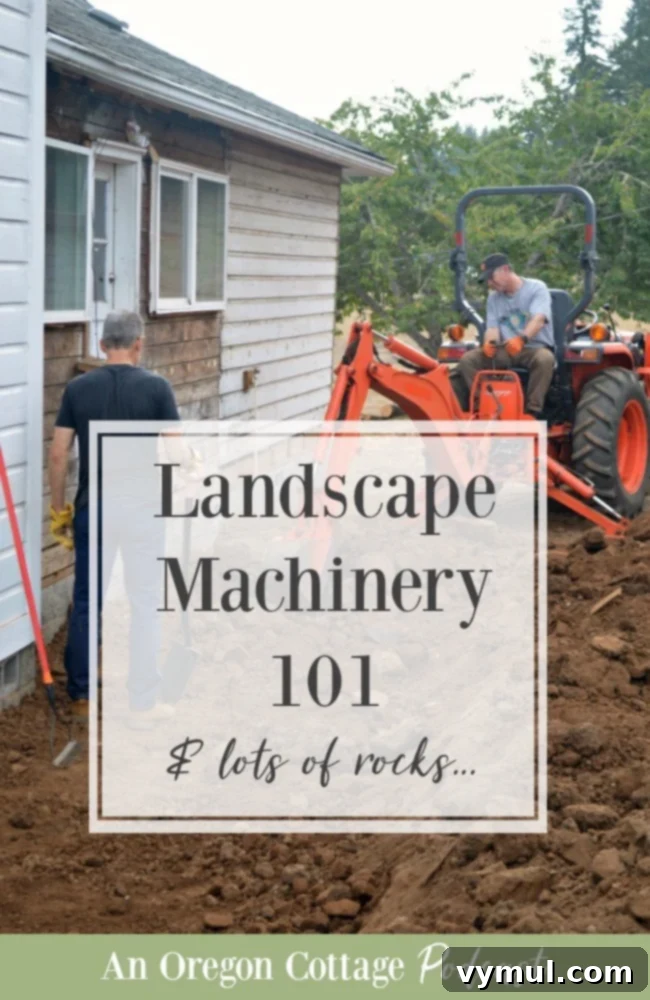
Unleashing the Power of Large Landscape Machinery: A DIYer’s Guide to Backyard Transformation
The thought of renting and operating large landscaping machinery can be daunting, even for seasoned DIY enthusiasts. We recently embarked on a significant outdoor renovation journey at our farmhouse, which required us to tackle some serious equipment: a powerful walk-behind stump grinder, a commercial-sized wood chipper, and a versatile tractor-backhoe combo. While my husband, Brian, had never operated any of these colossal machines before, he was handed the keys with merely a couple of minutes of instruction. It begs the question: Is that truly enough? What major accomplishments did we achieve, particularly involving an abundance of rocks and massive boulders? And, perhaps most importantly, would we choose to rent these machines again?
In this comprehensive guide, we’ll answer these questions and delve much deeper into our hands-on experience, sharing our triumphs, challenges, and hard-earned lessons. Beyond the heavy machinery, we’ll also take you through our cherished fall apple tasting tradition, complete with an incredible homemade caramel dip recipe that’s an absolute must-try. You’ll also receive exciting updates on our ongoing farmhouse renovation projects and discover a few cool things we’ve stumbled upon recently.
This content is inspired by our latest podcast episode, where you can hear all the details directly from us! You can easily download this episode from popular platforms such as Apple Podcasts, Google Play, Stitcher, and TuneIn Radio. Alternatively, you can listen to it directly on your computer using the player embedded below. Use this page as your go-to resource for any links, notes, or photographs we discussed in the episode. Note: If you’re accessing this post through a feed reader, you might need to click through to the original post to view the embedded player.
Please be aware that some links in this article are affiliate links. If you click on them and make a purchase, I will receive a small commission at no additional cost to you. This helps support our content creation.
Our Hands-On Landscape Machinery Experience: Triumphs and Unexpected Challenges
Diving into large-scale landscaping projects often means facing unfamiliar territory, especially when it comes to operating heavy machinery. Our recent experience was a crash course in efficiency, safety, and problem-solving. Here’s a closer look at each piece of equipment we rented and what we learned along the way.
The Walk-Behind Stump Grinder: A Test of Endurance and Savings
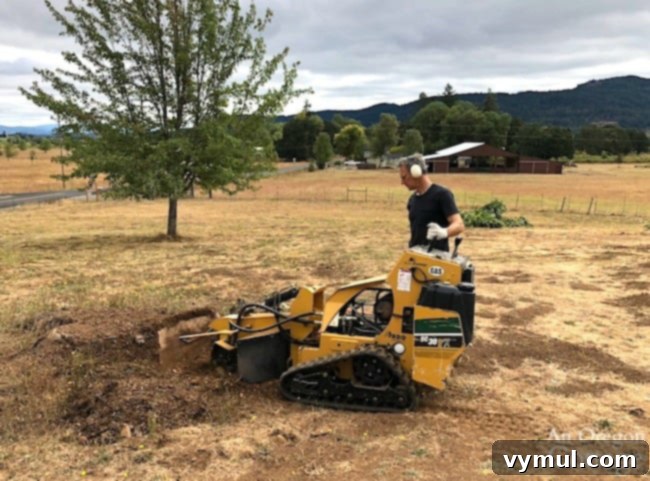
The stump grinder Brian described in the podcast episode is a beast of a machine. It’s operated by walking behind it, using powerful controls and joysticks to maneuver the grinding blade back and forth across the stump. This particular task involved grinding a formidable walnut stump. Walnut wood is notoriously dense and tough, making this a long and arduous process. Brian spent a considerable amount of time meticulously chipping away at it, piece by piece.
While it demanded significant physical effort and patience, the payoff was substantial. We estimated that hiring a professional to remove a stump of that size and material would have cost anywhere from $200 to $300. By renting the machine and doing it ourselves, we achieved considerable savings. Beyond the financial aspect, there’s an immense sense of satisfaction that comes with conquering such a challenging task through your own efforts. The key takeaways here are: research your wood type, understand the machine’s capabilities, and be prepared for a workout! Would we rent a stump grinder again? Absolutely, for the right project where the cost savings outweigh the labor.
The Tractor-Backhoe Combo: Battling Boulders and Reality Checks
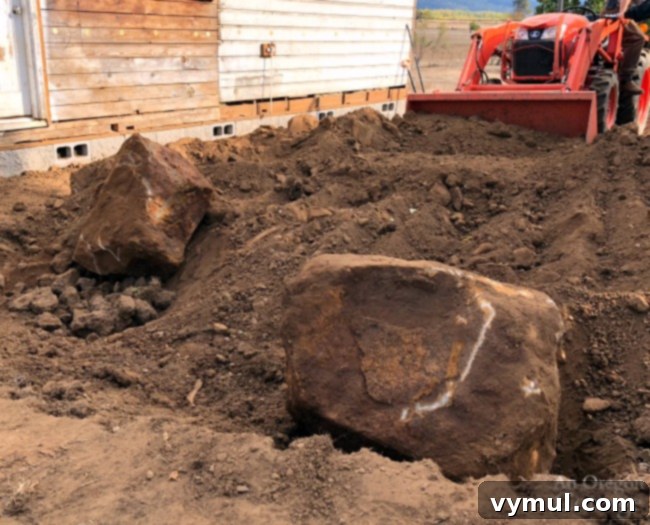
The backhoe, partially visible in the background of this image, was intended to make quick work of digging and moving earth. However, our focus quickly shifted to the monumental boulders unearthed during excavation. These weren’t small garden rocks; each measured roughly three feet across and one to two feet thick. To our dismay, the small backhoe we rented could do little more than roll them, a feat made even more challenging by the enormous holes of dirt created as we uncovered them.
What began as a simple “rent a backhoe and quickly dig out that dirt” idea quickly spiraled into a much larger, more complex operation. It involved a repetitive cycle of moving vast amounts of dirt (and countless smaller rocks), laboriously rolling the massive boulders, relocating more dirt, meticulously rolling them into their designated spots in a new rock wall, and then diligently filling the crater-like holes left behind. This experience was a profound lesson in managing expectations and the sheer scale of natural elements. While the backhoe was invaluable for moving large volumes of soil and smaller rocks, its limitations against truly colossal boulders taught us that sometimes, even with heavy machinery, brute force and clever maneuvering are still essential. Despite the unexpected difficulty, the backhoe was instrumental in shaping our landscape, making it a worthwhile rental for general earthmoving, even if it couldn’t simply “scoop” our biggest rocks.
The Commercial Wood Chipper: Efficient Clearing and Safety First
While we didn’t capture a photograph of the wood chipper, imagine one of the powerful machines commonly used by roadwork crews – it was that substantial. This commercial-grade chipper made incredibly quick work of all the limbs and branches we needed to clear from our property. In just half a day, we processed what would have taken days, if not weeks, of tedious cutting and hauling. The efficiency was truly impressive, transforming piles of brush into manageable wood chips.
Operating such a powerful machine demands respect and stringent safety precautions. Brian ensured he wore appropriate personal protective equipment (PPE), including hearing protection, safety glasses, and sturdy gloves. We thoroughly reviewed the operating manual and maintained a safe distance from the feed chute while the machine was running. The good news? All limbs were shredded, and no body parts were lost! The wood chipper proved to be an indispensable tool for clearing and converting organic waste into useful mulch, solidifying its place as a machine we would undoubtedly rent again for similar large-scale clearing projects.
Farmhouse Updates: Designing Our Dream Herb and Flower Garden
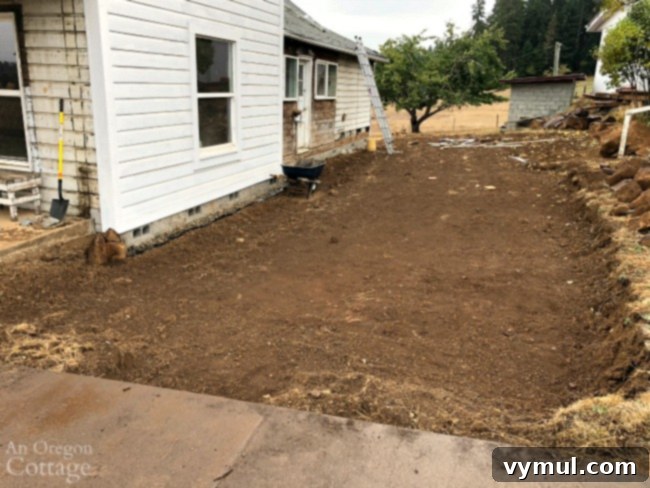
Our “Farmhouse Fixer” journey continues, and after all the heavy excavation work with the backhoe, we’ve been left with a beautiful blank slate, as seen in the photo above. For those who followed our initial yard and garden before tour, you’ll recall my original vision for this particular area of lawn was to transform it into a dedicated herb garden. However, as often happens with large projects, plans evolve! This space is now transitioning into a combined herb and flower garden, elegantly bordered by a new retaining wall, creating a more dynamic and visually appealing landscape.
I promised to share the initial plan I quickly sketched out the night we completed the major earthworks. It’s crucial to seize inspiration when it strikes! While it might appear rough, remember that’s all you truly need to get started. A simple drawing serves as an invaluable guide for your decisions and provides clear direction for anyone assisting with the project. It’s a living document, as you’ll see, always open to refinement.
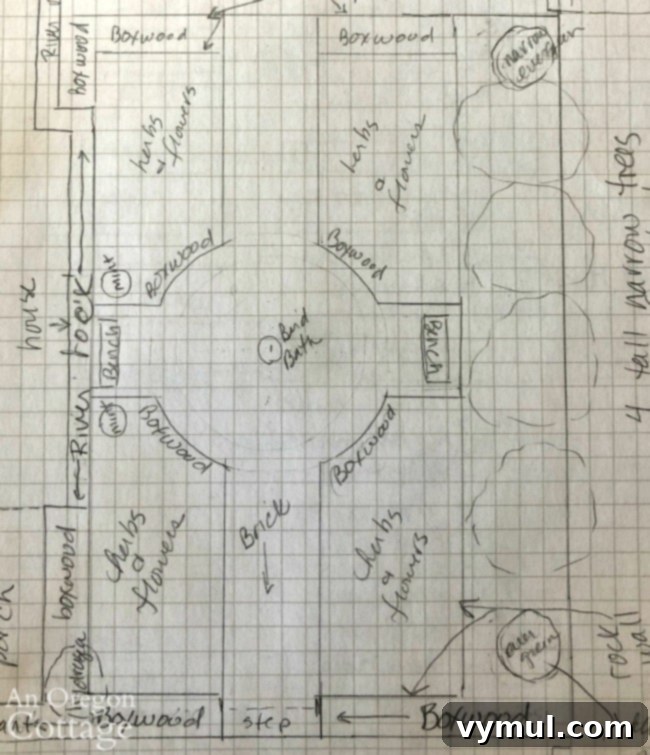
Indeed, some elements of the plan have already undergone changes, highlighting the fluid nature of garden design:
- Paths and Round Area: Originally, I considered brick for the paths and the central round feature. However, after careful consideration, we’ve decided to opt for gravel. Gravel offers excellent drainage, is typically more cost-effective for larger areas, and lends a wonderful rustic, cottage aesthetic that perfectly complements our farmhouse style. It also requires less intensive installation compared to laying bricks meticulously.
- Bed Edging: I still harbor a strong desire to edge the four main beds with salvaged brick. For me, herbs and brick simply belong together, creating a classic and charming border. We do have some bricks on the property that we can salvage and reuse, which is a fantastic way to incorporate sustainable practices and add character. However, the big question remains: will we have enough? If not, we have an abundance of rocks from our excavation project. So, it might very well end up being a rock edging, which would still be beautiful and integrate naturally with the landscape we’ve created.
- Tall Evergreens: My initial thought for the tall evergreens was arborvitae. However, a bit of research quickly revealed that deer absolutely adore arborvitae, and given our rural setting, that would be an invitation for trouble. Now, the search is on for a deer-resistant alternative. Juniper often deters deer, so perhaps a tall, narrow juniper variety? Skyrocket Juniper comes to mind, but its cost can be prohibitive for the number we’d need. This forces more research into native and drought-tolerant options that fit our budget and design aesthetic.
- Boxwood on Curves: I’m reconsidering adding boxwood along the curves of the central round. We’re already planning to incorporate a good deal of boxwood around the edges of the new planting beds at the top of the small retaining walls, and repeating them on the opposite side initially seemed like a logical way to create continuity. However, I’m now leaning towards a simpler approach, allowing other plant elements to shine. Sometimes, less is more in garden design, preventing the space from feeling overcrowded.
A significant challenge lies in selecting the right type of tall, narrow trees for the larger retaining wall. Their primary function will be to provide crucial shade, helping to mitigate the intense western sun that beats down into our living and dining rooms during the hot summer months. Crucially, these trees must have non-invasive root systems, as they will be planted directly adjacent to our newly laid cement driveway. Landscapers often utilize specific “sidewalk” or “parking lot” trees that are known for their constrained root growth and ability to thrive in restricted spaces. My task now is to meticulously research the correct varieties that meet these criteria and then track down a reliable local source for them. It’s an exciting puzzle to solve, knowing that the right choice will significantly enhance both the comfort and beauty of our home.
Despite these evolving decisions and ongoing research, my excitement for this project remains high. I have a strong feeling that the finished garden will not only look magnificent from the outside but will also offer a serene and beautiful vista from within the farmhouse, truly connecting our indoor and outdoor living spaces.
What’s Cooking: Our Beloved Fall Apple Tasting Tradition

As the leaves turn and the air grows crisp, it’s officially caramel apple time! This beloved fall tradition is incredibly easy to bring to life with just four simple, real ingredients and about 15 minutes of your time. Our homemade caramel dip is rich, creamy, and far superior to any store-bought version, making it the perfect accompaniment for a variety of crisp, autumn apples.
Beyond just the recipe, we’ve cultivated a delightful family apple tasting tradition that celebrates the bounty of the season. It’s a wonderful way to gather, explore different apple varieties, and enjoy a simple, sweet treat together. Click here for our full homemade caramel apple dip recipe, which also includes a lower sugar version for those who prefer it, along with all the details on how to start your own memorable apple tasting tradition (a tradition that actually dates back to our site’s very first year!).
This Is Really Cool! Discoveries Worth Sharing
Beyond our projects and recipes, we love to share little discoveries that have made a positive impact on our daily lives. Here are a couple of recent “cool finds” from Brian and Jami.
Brian’s Cool Find: The Perfect Wide-Fit Nikes

Brian: For anyone who struggles with finding comfortable athletic shoes for wide feet, this is a game-changer. I’ve always found it challenging to find Nike shoes that truly accommodate wider feet without feeling restrictive. However, I recently discovered the Nike Revolution 4 available in an EEEE width. This was a revelation! The comfort and fit are exceptional, providing ample space without sacrificing support or style. If you have wide feet and are tired of compromising on shoe choice, I highly recommend checking these out. They’ve made a significant difference in my comfort during daily activities and workouts.
Jami’s Cool Find: A Captivating Documentary and Unique Theater Experience

Jami: I recently watched the incredible Three Identical Strangers documentary, and it left me absolutely captivated. It’s a truly astonishing story that explores themes of nature vs. nurture, identity, and fate in a way I hadn’t encountered before. The narrative is both heartwarming and heartbreaking, keeping you on the edge of your seat from start to finish. I highly recommend it for anyone who appreciates thought-provoking real-life stories.
Adding to the experience was where I watched it: The David Minor Theater. This isn’t your average multiplex; it’s a small, second-run art house theater that offers a unique and cozy viewing environment. Instead of traditional movie seats, they have comfortable couches, and you can even order food to enjoy during the film. It transforms movie-watching into a relaxed, communal experience, making it perfect for delving into documentaries like “Three Identical Strangers.”
Thanks for Listening and Joining Our Journey!
We genuinely appreciate you tuning in and following our adventures in DIY, gardening, and farmhouse living. If you enjoyed this podcast and found our experiences helpful or inspiring, you can truly help us grow by sharing it with your friends, subscribing on iTunes (or your preferred podcast platform), and leaving us a review. Your feedback and support are invaluable and help others discover our content too.
Do you have a question you’d like us to answer, or an idea for a future podcast topic? We’d love to hear from you! You can call us at (541) 658-0215 to leave a voicemail, and we might just discuss it on air in an upcoming episode!
For more inspiration and regular updates from An Oregon Cottage, be sure to follow us on Instagram @AnOregonCottage, like our page on Facebook, and explore our boards on Pinterest. And to ensure you never miss out on our latest projects, recipes, and discoveries, subscribe to the AOC newsletter.
Disclosure: Please note that affiliate links are included in this post. We may earn a commission based on sales generated through these links, but this will not affect the price you pay for any products. Click here to read my full disclaimer and advertising disclosure for more details.