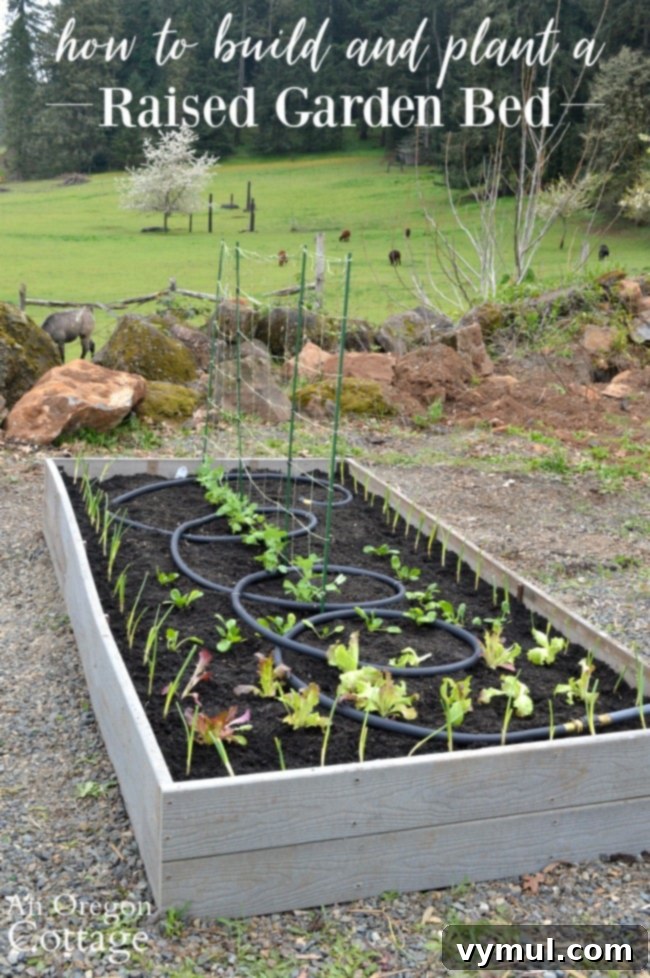
Build Your Own Long-Lasting, Low-Maintenance DIY Raised Garden Bed: A Step-by-Step Guide
Transform your gardening experience with this comprehensive, step-by-step tutorial on constructing a durable, low-maintenance DIY raised garden bed. In just a few hours, you can go from an empty space to a thriving, planted garden, designed to last for years to come.
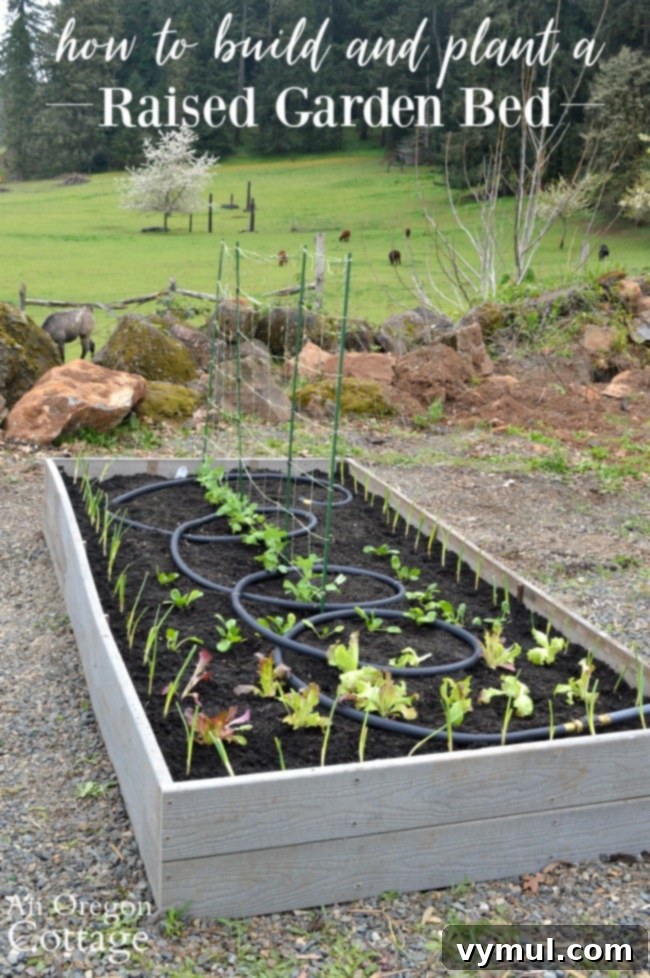
This gardening guide is proudly sponsored by Fiskars and Gilmour, brands whose innovative and reliable gardening supplies I personally use and highly recommend.
There’s an undeniable joy in cultivating your own food, and I’m thrilled to share the completion of the very first raised garden bed for our new vegetable garden! The feeling of planting fresh produce again is incredibly fulfilling, a sensation I’ve deeply missed since our recent move. I wholeheartedly encourage everyone to plant some food, no matter how small the scale – it’s a truly life-affirming endeavor.
I’m particularly excited to finally offer a detailed tutorial for building a raised bed here on AOC. As many of you know, I’m a strong advocate for raised beds as a cornerstone of easy-care gardening. This isn’t just any ordinary raised bed tutorial, however. This guide focuses on constructing a bed that will boast exceptional longevity, far surpassing the typical 8-10 year lifespan often associated with traditional wooden raised garden beds. Indeed, this design is built to endure.
My extensive experience with raised beds has highlighted one significant drawback of conventional wood construction: rot. This issue is especially prevalent in regions like the northern United States or anywhere that experiences substantial rainfall, such as my home state of Oregon. In our first city garden, we used cedar for our beds, which had begun to disintegrate by the time we sold the property a decade later. For our acre property, we sourced thick reclaimed wood, only to see those beds also start to fail around the ten-year mark.
Most resources on wooden raised beds suggest a lifespan of “up to 10 years” before replacement. But consider the practical implications: if your beds are 4′ x 12′ with established gravel paths, what do you do with all that carefully cultivated soil when the boards inevitably rot? The prospect of disturbing and replacing an entire garden bed system is a daunting, arduous task.
During a year and a half hiatus from gardening, I dedicated considerable time to researching and observing various garden designs, specifically seeking alternatives to wood for raised beds. Spoiler alert: truly long-lasting, wood-free options are surprisingly scarce. I was nearly resigned to creating mounded earth beds (and bracing for the inevitable weeding challenges along the sloped sides) when we purchased a new home. Coincidentally, this home featured a large, unneeded deck constructed from composite decking material – similar to brands like Trex.
My uncle had actually suggested composite lumber for raised beds some time ago, and a bit of research confirmed that composite lumber is generally considered safe and is even approved for use in certified organic garden beds. This discovery was a game-changer. My husband, Brian, and I began carefully dismantling the composite boards from the deck, simultaneously brainstorming how to repurpose them into completely wood-free raised beds. The result has been an incredibly effective and durable solution that I am eager to share with you.
Can This Building Method Be Used with Traditional Wood Boards?
Absolutely! This robust construction method is entirely adaptable for use with standard cedar or other lumber boards. In fact, by incorporating metal stakes and corner braces as outlined in this tutorial, you can significantly extend the life of a wooden raised bed beyond what typical wood-stake designs offer.
But wait, there’s more! (I’ve always wanted to say that!) This comprehensive guide will not only show you how to build a raised bed that truly endures, but you’ll also learn how to efficiently fill it using a smart layered system, establish a hassle-free watering setup with Gilmour hoses and an electronic timer, and expertly plant your garden using high-quality Fiskars tools, including their incredibly useful new planting knife.
Essentially, this tutorial empowers you to construct and plant a complete raised garden bed, from start to finish, in a single day, on virtually any surface. This speed and simplicity are precisely why I love raised beds so much – instant gardening gratification!
Raised Garden Bed Construction Tutorial
Please note: Some links within this article are affiliate links. If you choose to click on them and make a purchase, I may receive a small commission at no additional cost to you. Your support helps maintain this resource.
Essential Materials for Each Durable Raised Garden Bed
To construct one 4′ x 8′ raised bed using this method, gather the following materials. Please note you may have some supplies left over, which can be useful for additional beds or other projects:
- Six 1-inch x 5-1/2-inch 8-foot long boards of composite lumber (or similar dimensions). These dimensions will create a generous 11-inch high bed, eliminating the need for extensive ground digging. If opting for cedar or other wood, consider using 2-inch thick boards for enhanced sturdiness and reduced warping.
- One 10-foot long 1-1/2-inch x 1-1/2-inch drip edge metal roof flashing. This will be cut to create your robust corner braces.
- Six 3/8-inch, 2-foot long rebar pieces, essential for anchoring the bed and preventing bowing.
- One package of 1/2-inch galvanized tube straps to secure the rebar to the bed frame.
- A reliable drill or driver for assembly.
- Sixteen 2-inch screws for securing the main board joints, and forty 1/2-inch screws for attaching the metal flashing and tube straps. Standard screws work well, but composite screws are an option if you prefer.
- A variety of layering and fill materials: cardboard, straw, grass clippings, well-composted manure, quality planting soil, and other organic matter.
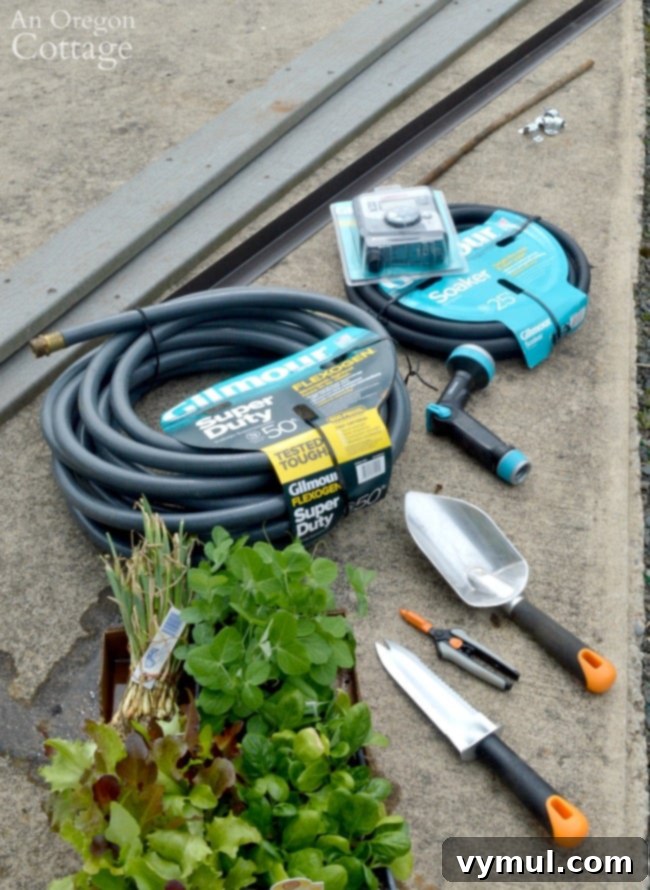
- For the watering system: a soaker hose, a durable Flexogen Super Duty Hose, an efficient electronic garden timer, and a versatile watering nozzle.
- Essential digging and planting tools: a sturdy shovel, a hand trowel, sharp pruners, and/or garden snips. All my personal tools come from Fiskars, including this fantastic new Big Grip Garden Knife, which has quickly become an indispensable addition to my gardening arsenal.
- Your choice of vegetable transplants and/or seeds to bring your garden to life.

Step-by-Step Guide to Building Your Raised Garden Beds
The initial step in constructing your raised garden bed is to identify the optimal location on your property. Seek an area that receives ample sunlight (ideally more than 6 hours daily, with 8-10 hours being perfect for most vegetables) and is conveniently accessible from your home or garden shed. A level surface is ideal, but don’t hesitate to do some minor digging and leveling if necessary, as we did. Raised beds can be successfully placed on various foundations, including grass, a gravel area, or even concrete (if lined appropriately). Expert Tip: Many gardeners find that a gravel base acts as an excellent deterrent against common garden pests like gophers, moles, and voles.
Whenever possible, orient your garden beds facing a north-south direction. This alignment helps minimize shading on adjacent beds and plantings as your crops mature and grow taller, ensuring all plants receive maximum sunlight.
- First, prepare your boards: cut them as needed to achieve four 8-foot long boards for the longer sides and four 4-foot long boards for the shorter ends.
- Next, using the 2-inch screws, firmly attach two boards together in a butt joint configuration to form your first corner. This establishes the initial structure of your raised bed frame.
- Carefully position this first corner in your chosen garden area, ensuring it is level. Adjust the ground underneath as necessary to achieve a stable base.
- Continue by screwing together the remaining three corners, then construct the second (top) level of your raised bed using the remaining boards in the same manner. This creates a sturdy, two-tier frame.

- Now, take your metal flashing and cut it into 10-1/2 inch pieces (or the appropriate length to span the height of your stacked composite boards). Repeat this process until you have four pieces, one for each corner.
- Using a drill fitted with a metal bit, carefully create holes on each side of the flashing pieces. Position these holes a couple of inches from both the top and bottom edges, as clearly depicted in the accompanying image.
- Tuck each prepared metal flashing piece snugly into each corner of your raised bed frame. Secure them firmly in place using the 1/2-inch screws, ensuring both levels of boards are tightly connected and reinforced by the metal.
Crucial Tip: If you suspect your garden might experience issues with burrowing pests like voles, moles, or gophers, this is the opportune moment to attach metal hardware cloth to the bottom of your raised bed. Flip the frame over, cut the hardware cloth to precisely fit the base, and secure it thoroughly with a heavy-duty stapler. Once this protective layer is in place, flip the bed back over and proceed with the next steps.
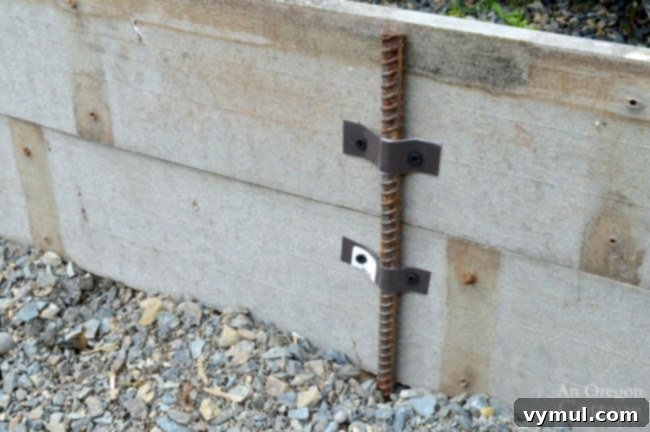
To further enhance the stability of your raised garden bed and prevent the flexible composite boards from bowing outwards under the pressure of soil, we recommend using metal rebar as additional support stakes.
IMPORTANT NOTE: If you are constructing your raised beds directly on a grass lawn, it is essential to lay down your cardboard weed barrier first (unlike the order shown in some of these photos). Ensure the cardboard extends underneath the bed sides and out approximately 5 inches around the entire exterior perimeter. This foundational layer will effectively smother existing grass and weeds. You can then lay your chosen walkway material directly on top, which will further help prevent grass from encroaching on the sides of your raised bed. If you’ve opted to use hardware cloth on the bottom, you’ll need to strategically place cardboard under the bed sides and extend it outwards to achieve effective grass suppression.
- Drive two pieces of rebar firmly into the ground, evenly spaced along each of the longer sides of your raised bed. Similarly, pound one rebar piece into the center of each shorter end. These stakes will provide crucial structural integrity.
- Attach two galvanized tube straps to each rebar stake – one strap for each board level. Secure these straps to the boards using 1/2-inch screws. You may need to bend the tube straps slightly to ensure a firm hold. (In our case, the purchased tube straps were a bit too large, so we improvised by cutting small pieces of the metal flashing to create custom, perfectly fitting tube straps).
Congratulations! Your robust and long-lasting raised garden bed structure is now complete! The next exciting step is to fill it with nutrient-rich layers.
Filling Raised Beds with Nutrient-Rich Layers: The Lasagna Method

This is where the magic happens, allowing you to cultivate the exceptional soil quality that raised beds are renowned for. When constructing a deep bed like this, it’s highly advantageous to utilize free or inexpensive materials for the bottom layers. This not only significantly reduces costs but also allows you to incorporate organic matter that will naturally enrich your soil over time. Furthermore, certain layers, like cardboard, play a vital role in suppressing existing grass and weeds.
Recommended Layering for Your Raised Vegetable Garden (equally suitable for flowers, herbs, etc.):
- Layer 1: The Foundation – Thick Cardboard and/or Newspaper. Lay a generous, overlapping layer of cardboard or newspaper directly on the bottom of your raised bed. This acts as an excellent weed barrier, suffocating any existing vegetation and preventing new weeds from sprouting through. It also slowly breaks down, adding organic matter.
- Layer 2: The Nourishment – Composted Manure & Organic Matter. This layer is your primary source of slow-release nutrients. Composted horse manure (often available for free from local stables) is an excellent choice. Other fantastic options include: a thick layer of straw followed by manure, used chicken coop bedding, various barnyard manures, fresh or aged grass clippings, fall leaves, or homemade compost. The key here is to use materials that will decompose and enrich the soil. Even if these materials might contain some weed seeds (horse manure is notorious for this due to grains in their feed), the subsequent layers will suppress their growth by limiting oxygen and light. This time, we didn’t have straw readily available, but for our next beds, I will definitely incorporate a straw layer directly over the cardboard.
- Layer 3: The Growing Medium – High-Quality Planting Soil. On top of your organic layers, add a substantial layer of good quality planting soil. For this particular 4′ x 8′ raised bed, we used approximately 1/4 cubic yard of soil, which was very affordable at our local landscaping supplier. This top layer provides an immediate, ideal environment for plant roots to establish and thrive.
And just like that, without any back-breaking digging, your raised bed is ready for planting – all accomplished in just a few hours. Isn’t that truly wonderful? But before we get to planting, let’s set up an efficient watering system to ensure your garden remains as low-maintenance as possible.

Establishing an Easy Watering System for Your Raised Beds
Beyond the structural integrity of the raised beds, I dedicated considerable thought to devising an effortlessly manageable watering system. Many online resources often suggest complex drip irrigation systems for raised bed gardens. However, a significant drawback of these systems is their cost, time-consuming setup, and the frequent maintenance required to prevent leaks and clogs. Even systems marketed as “easy” often prove to be surprisingly intricate.
It’s no secret to those who follow my gardening journey that I am a huge proponent of soaker hoses for both raised beds and traditional flower beds. They are an economical, straightforward, and highly effective watering solution. At around $10 each, they are substantially more affordable than the $40-$75 often seen for raised bed drip kits.
Here’s how we implemented our simple watering solution for this bed. (And stay tuned for exciting updates as we continue to build our new garden – we’ll be sharing how we connect all the beds for a truly hands-off, automated watering system!)
UPDATE: Discover our innovative DIY PVC pipe watering system here!
- Strategically Lay Your Soaker Hose: Before introducing any plants, carefully lay a soaker hose evenly across the surface of the bed’s soil. Ensure it’s positioned to provide thorough coverage. HELPFUL TIP: If you plan ahead, uncoil the soaker hose a few days prior and leave it in the sun. The warmth will soften the material, making it significantly easier to maneuver and lay smoothly. Additionally, using garden staples in a few key areas can help keep the hose securely in place.
- Connect to a High-Quality Garden Hose: Attach your soaker hose to a durable, reliable garden hose, such as the Flexogen Super Duty Hose. These hoses have consistently performed exceptionally well for me over many years, demonstrating remarkable resistance to cracking and minimal kinking. Their superior quality meant I absolutely had to bring them with us when we moved!
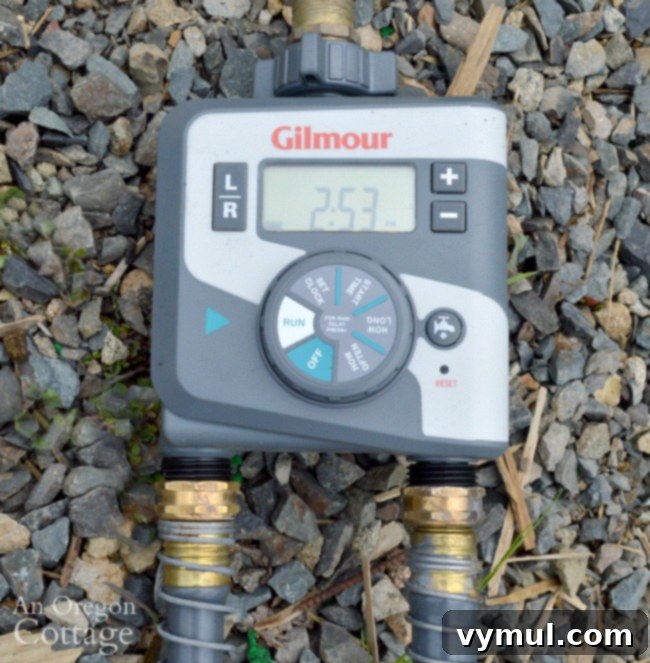
- Integrate an Electronic Water Timer: Connect your primary garden hose to a dependable electronic water timer, like this excellent model from Gilmour. Set the timer to water just once every 4-5 days for approximately 4 hours, adjusting based on your local weather conditions and plant needs. Remember, soaker hoses deliver water slowly and deeply, promoting strong root growth, so they do not need to run for short bursts like sprinklers. If you’re uncertain about the duration, conduct a test watering before setting your timer; observe how long it takes for the soaker to moisten the bed to a depth of 10-12 inches.
- Adjust for Seasonal Needs: Periodically observe your garden beds to determine if they require less watering during the cooler spring and fall months, and more frequent or longer watering sessions during the heat of summer. Adjust your timer settings accordingly to optimize water usage and plant health.
EXCITING UPDATE: We’ve successfully built an incredibly inexpensive and simple PVC pipe watering system that allows us to water all our raised beds simultaneously using a single timer. It’s truly a game-changer for hands-off gardening!
Click here to access the full tutorial, detailed supplies list, and a helpful video demonstration for this innovative system.

Planting Your Raised Vegetable Garden Bed for Success
When it comes to planting your raised bed, you have various layout options: traditional rows, square-foot gardening grids, or alternating rows. The choice is entirely yours! If I’m incorporating a trellis, especially for climbing plants like peas, I usually prefer to position it in the middle of the bed to allow for planting on both sides, or at the ends if I’m only growing a smaller quantity.
Here are some practical tips to ensure a successful planting season:
- Prepare the Planting Hole: Using a hand trowel, dig a hole that is slightly larger than the root ball of your chosen transplant.
- Add Fertilizer: Incorporate a couple of tablespoons of a slow-release organic fertilizer into the bottom of the hole, or follow the specific application instructions on your chosen fertilizer package.
- Encourage Root Growth for Transplants: Before placing your transplant, gently tease apart the roots at the bottom of the root ball. This crucial step encourages the roots to grow outwards into the new soil rather than continuing to circle within their original confined space. If the plant is severely root-bound, use a tool like Fiskars’ versatile garden knife to make shallow scores along the sides and bottom of the root ball. I promise, this will not harm the plant; in fact, failing to do so may prevent the roots from effectively expanding into the surrounding garden soil!
- Planting Seeds: For direct seeding, use your trowel to create a long, shallow furrow. Add fertilizer along the furrow according to package directions, then carefully drop the seeds at the recommended spacing and depth, as indicated on the seed packet.
- Prune for Energy Conservation: If any of your transplants exhibit browning tops or damaged leaves (like the clearance onion starts I happily rescued!), use small garden snips to carefully clip off the affected foliage. This directs all the plant’s valuable energy into establishing a strong root system and promoting healthy new growth, rather than wasting resources on repairing old, struggling parts.
- Initial Watering: After planting, gently water your newly planted areas with a soft-spray nozzle. This helps settle the soil around the roots, eliminating air pockets and aiding in the establishment of your young plants.

Ongoing Raised Bed Maintenance for Continuous Harvests
Now, you’ve arrived at the most rewarding and easiest part of raised bed gardening: monitoring your plantings and enjoying the fruits (and vegetables!) of your labor through regular harvests! Since the raised garden bed pictured here is currently flourishing with spring crops, I eagerly anticipate replanting it with suitable summer and fall crops once these early season vegetables have been harvested, ensuring a continuous bounty.
For longer-term maintenance, once the growing season concludes, cover your raised bed with a thick layer of leaves, straw, or even black plastic. This protective covering serves multiple purposes: it helps prevent soil erosion during winter, minimizes weed seeds from blowing in and germinating, and continues to enrich the soil as organic materials break down. The following spring, approximately a few weeks before you plan to plant, add a fresh 2 to 3-inch layer of high-quality compost to the bed. This rejuvenates the soil with essential nutrients, after which you can proceed with your usual planting schedule.
Have I convinced you that building a durable raised garden bed is not only achievable but also incredibly rewarding? With this tutorial, you can complete the entire process – from construction to planting – in a single day, followed by minimal upkeep. This means you get to focus on the enjoyable aspects: planting beautiful crops and harvesting delicious produce. This type of easy-care gardening is truly my passion!
Disclosure: I received product and/or compensation for this post. As always, the opinions, thoughts, and projects are all mine and I will NEVER promote something I don’t love and think you will find helpful – promise! This post also uses affiliate links that earn commission based on sales, but doesn’t change your price. Click here to read my full disclaimer and advertising disclosure.