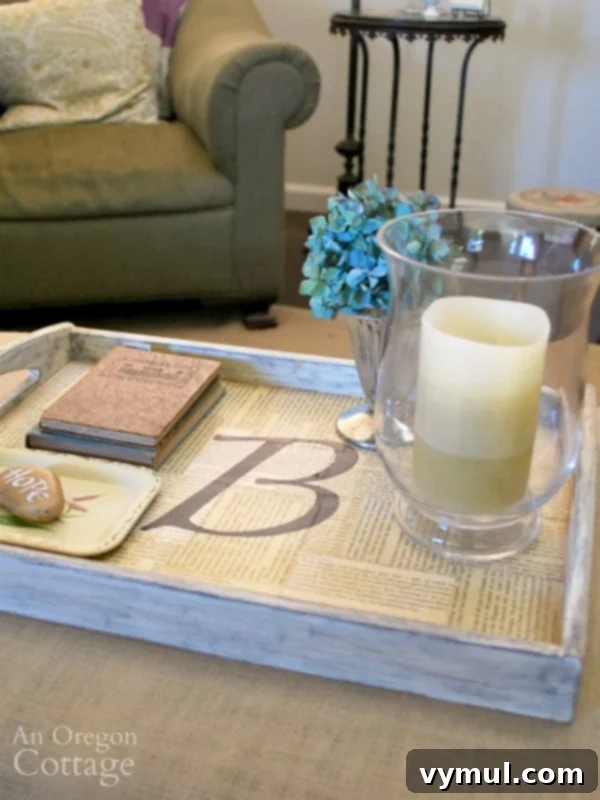
DIY Thrift Store Tray Makeover: Create a Stunning Book Page Monogrammed Decoupage Tray
Unleash your creativity and transform an ordinary thrift store wood tray into a unique, personalized book page monogrammed tray. This engaging DIY project utilizes simple painting and decoupage techniques, turning overlooked items into cherished home decor pieces with a story.
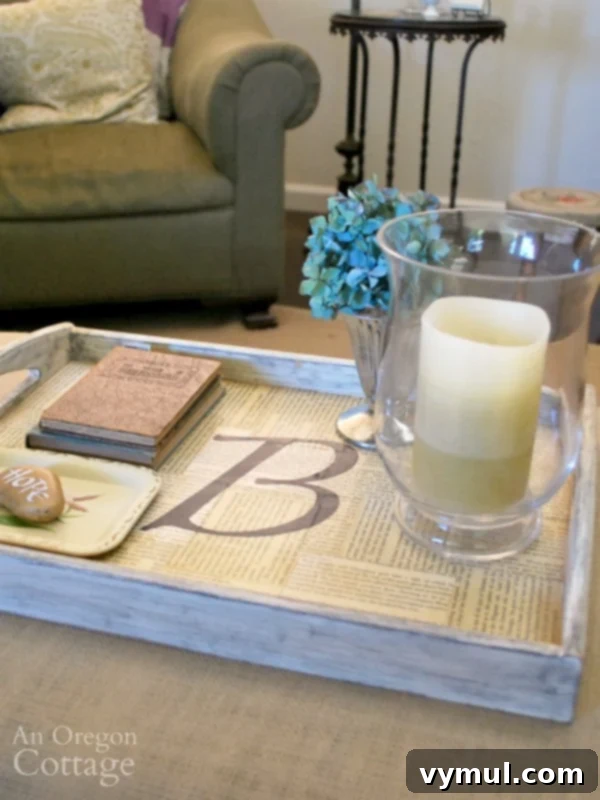
There’s a special kind of satisfaction that comes from transforming something old and forgotten into a beautiful, functional item for your home. After exploring countless ways to maximize the potential of thrift store trays for organization, it felt like the perfect time to delve into a more decorative endeavor. This project takes the humble wood tray and elevates it to a sophisticated decor piece, combining classic techniques with a personal touch.
What better way to infuse character into a plain tray than by incorporating the timeless charm of old book pages? As we’ve often discussed, used books are a treasure trove of crafting materials, offering beautiful typography, aged textures, and an inherent sense of history. These pages provide a wonderfully unique canvas for decoupage projects, making each creation truly one-of-a-kind.
Wood trays are incredibly common finds at thrift stores, often priced as a steal. More often than not, they arrive looking a little tired and uninspired, practically begging for a creative facelift. This project provides an ideal opportunity to rescue one of these overlooked gems and give it a new lease on life. We’re going to turn a simple wooden tray into a stunning, personalized accent piece – perfect for your coffee table, console, or vanity. Best of all, this book page tray can be customized with or without a monogram, allowing you complete creative freedom.
Crafting Your Unique Book Page Monogrammed Tray
Embarking on this DIY journey begins with selecting the right foundation. Thrift stores are an excellent source for sturdy, well-made wooden trays that offer significant potential for transformation. Don’t be deterred by minor imperfections or a dull finish; these can all be remedied with a bit of paint and creativity.

The tray I chose for this project, pictured above, perfectly illustrates the potential. While it started as a basic blond wood tray, its substantial size, solid construction, and pleasing weight immediately caught my eye. These qualities justified a slightly higher thrift store price of $3.99 (smaller, lighter trays can often be found for around $1). I knew instantly that with a touch of crafting magic, this piece had the bones to become something truly special and stylish. Investing in a good quality “before” piece always pays off in the final “after” result.
Essential Supplies for Your Decoupage Tray Project
Gathering your materials is the first step towards a successful DIY. Besides your chosen used wood tray, you’ll need a few key supplies, most of which are readily available at craft stores or even around your home:
- Black spray paint: Provides a foundational base coat. Choose a matte or satin finish for a sophisticated look.
- Creamy white craft paint: Adds a layer of contrast and depth for distressing. Acrylic craft paints work perfectly.
- Tan craft paint (optional): Introduces a warmer, aged tone, coordinating beautifully with vintage book pages. A small bottle is usually sufficient.
- Foam paint brushes: Ideal for applying craft paints and Mod Podge smoothly and evenly. Keep a few on hand for different steps.
- Sanding block: Essential for distressing, creating a worn look, and smoothing surfaces. Various grit levels can be useful.
- Old book pages: The star of the show! Look for books with interesting fonts and slightly aged paper. Thrift stores are perfect for this.
- Tea bag & paint brush (optional): For custom tea staining, which adds an authentic vintage feel to newer pages. Any plain black tea will do.
- Mod-Podge (or regular glue thinned with water): The adhesive for decoupage. Matte or gloss finish is up to your preference. As an alternative, a good quality white school glue thinned with approximately 20-30% water works surprisingly well and is more budget-friendly.
- Printed out monogram & scissors: For personalizing your tray. Choose a font that is bold and easy to cut.
- Clear spray coating: A crucial step for protecting your finished tray from spills and wear, ensuring longevity. Look for a durable, non-yellowing clear coat.
Step-by-Step Instructions to Create Your Book Page Tray
1. Prepare with a Base Coat of Black Spray Paint
The initial step in transforming your tray is to apply a solid base coat. As illustrated in the photo above, use black spray paint to cover the exterior surfaces of the tray. This provides a rich, dark foundation that will peek through subsequent layers, enhancing the distressed look. Focus on achieving an even coat on the sides, handles, and outer edges. There’s no need to spray the interior bottom, as it will be completely covered by the book pages. Allow ample drying time as per the spray paint manufacturer’s instructions before proceeding to the next step.

2. Create a Layered, Distressed Painted Surface (Optional but Recommended)
While a sleek black tray can be stylish, a layered, distressed finish adds depth and character, perfectly complementing the vintage aesthetic of book pages. After your black base coat is completely dry, brush on a coat of creamy white craft paint over the entire exterior surface. Once this white layer is dry, use a sanding block to lightly sand the edges and raised areas. This technique reveals glimpses of the underlying wood and black layers, creating a naturally aged appearance. Don’t be afraid to experiment here; if you feel not enough black is showing through, a light dry-brushing of additional black paint can be applied. I found the stark white a bit too bright against the book pages, so I gently rubbed on some water-thinned tan acrylic craft paint with an old rag. This softened the look, creating a warm, vintage patina. Remember, painting is an iterative process – play around until you achieve a look you love. It’s just paint, and you can always adjust it!

3. Tea Stain Your Book Pages for an Authentic Vintage Look (Optional)
To enhance the antique feel of your book pages, especially if they are newer or too bright, consider tea staining them. This simple process gives paper a beautiful, aged hue. Steep a tea bag in about 1/4 cup of hot water until you achieve a rich, dark tea. Once cooled slightly, use a large, soft brush to gently apply the tea stain to both sides of your book pages. Lay them flat to dry completely. This step is optional; if your chosen book pages already possess a lovely aged appearance, you can certainly skip it. Coffee can also be used for a slightly different tone.
4. Trim and Cut Your Book Pages
To ensure your decoupage doesn’t look like haphazardly torn-out pages, precision in cutting is key. Begin by carefully trimming off all the margins from your book pages. Then, cut each page in half. This serves a dual purpose: it creates smaller, more manageable pieces for decoupaging, allowing for a more artful arrangement, and it prevents the impression that entire readable pages have simply been glued down. The goal is to create a textural, visually appealing surface rather than an invitation to read! Trust me, these pages are usually chosen for aesthetics, not literary merit, which frees you from any guilt about tearing up a book.

5. Decoupage the Book Pages to the Tray
Now for the main event: applying your book pages. Use Mod-Podge (or your thinned glue mixture) to adhere the pages to the inside bottom of the tray. Work in small sections, applying a thin layer of adhesive to the tray surface, then carefully placing a page, smoothing out any air bubbles with your fingers or a clean brush. For an aesthetically pleasing pattern, alternate the direction of the words on the pages as you glue them down. This creates visual interest and prevents a uniform, monotonous look. I found it easiest to eyeball the placement, ensuring a balanced and even distribution of text. A crucial tip for working with Mod-Podge is to thin it slightly with a bit of water; this makes it much easier to spread and reduces streaks. I’ve often wondered why Mod-Podge is so expensive when it feels so similar to our craft paper floor technique, where we successfully use thinned Elmer’s glue. Update: After experimenting, I can confirm that thinned regular school glue works just as effectively for this project, offering a cost-effective alternative!

6. Add Your Optional Monogram
Once all your book pages are securely decoupaged and dry, it’s time to add a personal touch with a monogram. Print out a large letter in a font you love. A bold, sans-serif font often works best, especially if it’s connected in places, making it easier to cut. Carefully cut out your chosen letter using sharp scissors. Position the monogram on the center of your decoupaged surface, ensuring it’s straight and aesthetically pleasing. Then, use a small amount of Mod-Podge to glue it firmly in place. This monogram transforms your tray from a pretty decor piece into a truly personalized statement, ideal for gifting or showcasing your own family initial.
7. Apply a Clear Protective Coating
The final and perhaps most important step is to protect your beautiful creation. Once all the layers of paint, book pages, and monogram are completely dry (allow at least 24 hours for optimal curing), apply a clear protective spray coating over the entire tray. This sealant will shield your tray from moisture, food spills, and general wear and tear, making it durable and easy to clean. Choose a clear coat that matches your desired finish – matte for a subtle, aged look, or gloss for a shinier, more polished appearance. Apply several light, even coats, allowing sufficient drying time between each, to ensure comprehensive protection.
And there you have it! Your stunning, custom-made book page monogrammed tray is complete. I absolutely adore how this project turned out and find myself constantly on the lookout for more items to paint, sand, glaze, and decoupage. This type of creative upcycling is incredibly rewarding, and I’m sure you’ll be seeing more transformation projects from me very soon – ha!
Have you ever taken on a tray makeover project? What creative techniques have you experimented with? Whether it’s painting, tiling, or decoupage, sharing your experiences can inspire fellow DIY enthusiasts!
 This project marks day 26 in our popular series, “31 Days of Thrift Store Transformations.” You can easily explore all the posts in this category by clicking on the button above. If you’re curious about the origins of this exciting series and what to look for on your own thrifting adventures, you can read the comprehensive introduction to 31 Days of Thrift Store Transformations here.