Garage Transformation: Creating Functional Home Offices and a Multipurpose Workroom
Embarking on a comprehensive home renovation journey can uncover incredible potential within existing spaces. Our whole-house remodeling series has documented the significant transformation of our home, and this installment delves into one of the most impactful changes: converting our former garage into essential, highly functional living areas. If you haven’t followed our progress, you can catch up on parts 1-4 of the remodeling series here, which provide crucial context for this exciting conversion and showcase the foundation of our renovation efforts.
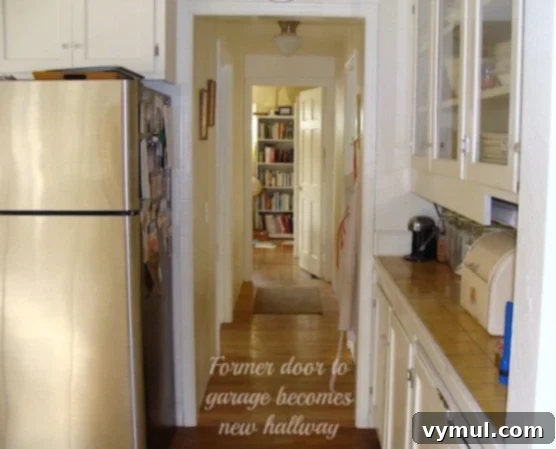
As you step through the beautifully remodeled hallway that now seamlessly connects our kitchen to what was once merely a utilitarian garage, you begin to appreciate the scale and thoughtful design of this undertaking. This central corridor is more than just a passage; it’s a transition point from the older parts of our home to the newly integrated spaces. In Part Four of our series, we proudly showcased the incredibly practical and aesthetically pleasing laundry and mudroom, situated just to the left of this inviting hallway. Today, we’re thrilled to unveil the other side of this transformed garage conversion: the much-needed home offices and a versatile workroom that have not only added significant square footage but also revolutionized how we utilize and enjoy our home.
The Multipurpose Workroom: A Hub of Activity and Innovation
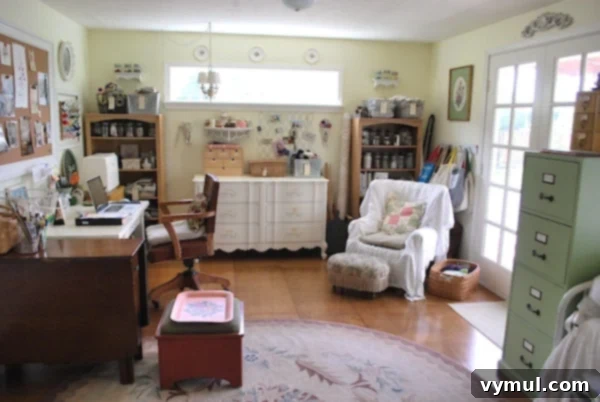
To the right of the hallway, a newly installed door opens into a room that has quickly become a cornerstone of our daily living – a space we variously refer to as my workroom, guestroom, or simply “the home office.” This room perfectly embodies the concept of multifunctionality, expertly designed to adapt to a myriad of needs. It serves as a dedicated area for my creative pursuits and various DIY projects, yet it also comfortably transforms into an inviting space for occasional guests. Furthermore, it efficiently houses our treadmill, promoting convenient home workouts, and boasts an ingeniously designed storage wall that discreetly accommodates a wide array of household items. Crucially, this smart storage solution also ingeniously conceals the essential yet often unsightly workings of the house—elements that were previously exposed in the garage—seamlessly integrating them into our refined living space.
Transforming the Exterior: Windows and French Doors for Abundant Light
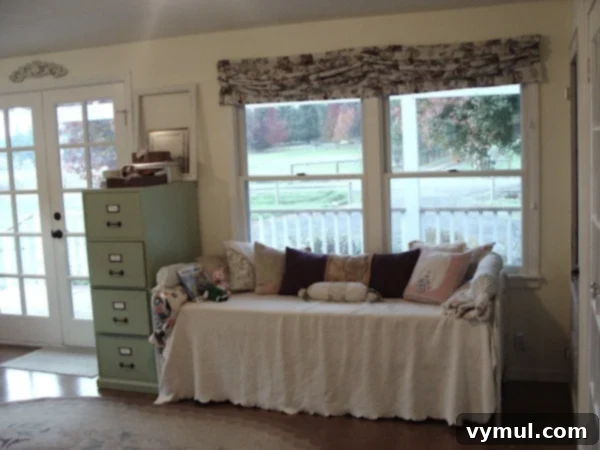
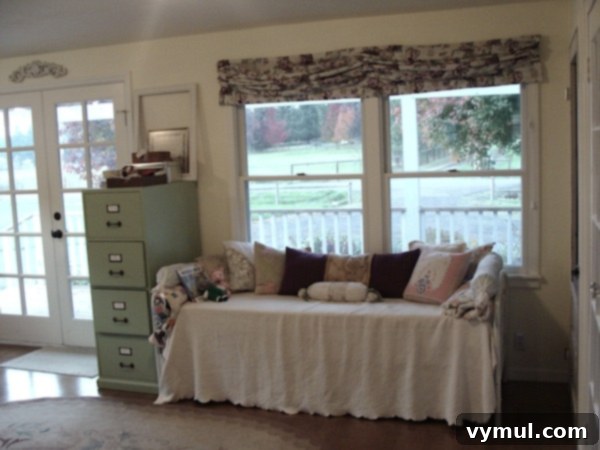
- One of the most dramatic and impactful changes in this garage conversion project was the decision to replace the old, imposing double garage doors. In their place, we installed a stunning set of large windows and elegant French doors. This singular design choice profoundly transformed the room’s entire ambiance, flooding the space with an abundance of natural light and offering a picturesque view of the outdoors, creating an immediate connection to our garden.
- To inject additional character and maintain the historical integrity of our home’s original aesthetic, we resourcefully repurposed a set of double-hung windows that were once located on the side of the garage. Their thoughtful reinstallation ensures the exterior of this newly converted area harmonizes flawlessly with the existing main house windows, a testament to our commitment to cohesive design and sustainability. We are exceptionally pleased we had these original windows available, as they lend an authentic sense of history and unity to the facade.
- For the prominent French doors, we made a conscious decision to invest in quality, opting for high-quality wood doors featuring authentic paned windows. This was a deliberate “splurge,” and it’s an investment we haven’t regretted for even a single minute. The superior craftsmanship, enhanced durability, and undeniable visual appeal they bring are profound, and they perfectly complement the similar French doors we installed in the dining room. A valuable remodeling tip we consistently adhere to is to maintain consistency in materials and styles throughout your home. This approach effortlessly blends new additions with existing structures, creating a cohesive, polished, and timeless look.
- To further enhance the room’s inherently bright and inviting atmosphere, we carefully selected Behr’s “Vanilla Shake” for the wall paint. This exquisite color is the lightest hint of yellow, perfectly chosen to ensure the room feels cheerful, expansive, and perpetually sunlit throughout the year, irrespective of the external weather conditions.
Clever Storage Solutions: Integrating Utilities with Aesthetic Appeal
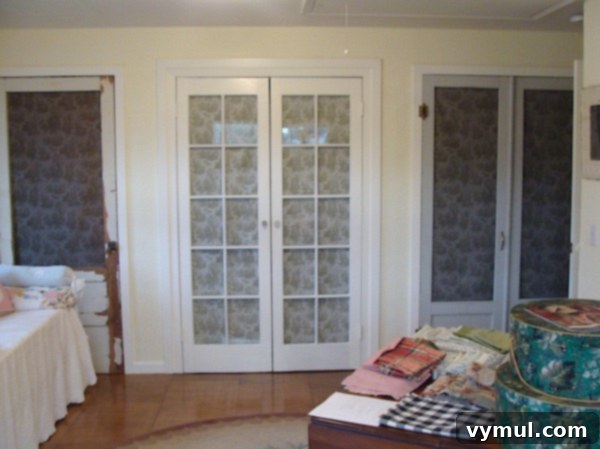
- The comprehensive storage wall within this workroom is a true testament to practical and intelligent design. It masterfully conceals all the utilitarian elements typically found in a garage, such as the back of the fireplace, the furnace, and the water heater. The initial design challenge was to devise a system that not only provided ample, organized storage but also allowed for convenient and unobstructed access to these critical household systems when needed for maintenance or inspection. Our solution involved creating a single, extended storage space segmented by three distinct doors. One door provides essential access to the furnace and water heater. Another section, strategically situated in front of the fireplace’s back, was ingeniously designed to house a set of shelves, brilliantly serving as an extension of our canning pantry (you can observe the French doors leading to the canning pantry open here). The third door opens into a deep storage closet located to the left of the fireplace, ideal for stashing away bulkier seasonal items or less frequently used equipment.
- Our skilled builder meticulously framed this entire storage structure according to our precise specifications, ensuring both optimal functionality and robust structural integrity. However, when the time came to price the new doors needed to seamlessly match the existing doors in the main house, we faced an unexpected and sobering reality: the costs were prohibitively high, with each door estimated at an astonishing $80-90. This significant, unforeseen expense immediately called for a strategic “Plan B” to keep our budget in check.
- Our alternative strategy led us to explore the world of salvaged doors, a decision that proved to be both incredibly economical and creatively fulfilling. We were incredibly fortunate to stumble upon the perfect set of French doors at a local barn sale for an unbelievable $25. While they were slightly smaller than our framed opening, a clever and simple adjustment to the molding around the frame allowed us to seamlessly integrate them. Following this successful find, we visited a local salvage center, where we discovered a single screen door for $10 and a double set for $15, perfectly completing our multi-functional storage wall with character and charm.
This entire experience taught us a profoundly valuable lesson: necessity truly is the mother of invention, and creativity flourishes under constraint. Not only did we manage to stay well within our budget, but the salvaged doors added an unexpected layer of unique character, history, and visual interest to the room. We genuinely prefer their rustic charm and individuality over what a perfectly matched, mass-produced, off-the-shelf option would have offered. It stands as a prime example of how embracing “outside-the-box” thinking in DIY projects can often lead to superior, more personalized, and undeniably charming outcomes while diligently adhering to financial constraints.
Innovative Flooring Solutions: The Durability and Charm of Plywood Hardwood
Cost-Effective and Unique: Our Approach to Plywood Flooring
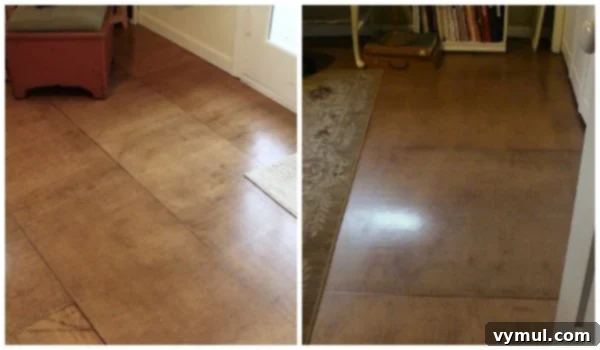
- For the flooring throughout the entire remodeled garage area, with the exception of the connecting hallway, we boldly opted for an unconventional yet incredibly budget-friendly material: 4×6 maple hardwood plywood sheets. The total cost for this ingenious solution was an astonishing $0.54 per square foot, a figure that often elicits disbelief and admiration from visitors. We are immensely pleased with the distinctive, warm, and inviting look we achieved for such a minimal investment, proving unequivocally that high style and enduring aesthetic appeal do not always demand a high price tag or expensive materials.
- In the workroom, we meticulously cut the large plywood sheets into manageable 2-foot lengths and installed them in a random pattern. This careful arrangement created a visually dynamic, engaging, and custom-designed floor surface, reminiscent of traditional plank flooring (as vividly seen in the left photo). This method also cleverly allowed for creative variation and minimized material waste, optimizing our resources.
- When it came to Brian’s adjacent home office, our initial approach to cutting the plywood was slightly different. We simply cut the sheets in half, resulting in wider planks (as depicted in the right photo). This room was completed first, and while the outcome was certainly acceptable and functional, we realized during the subsequent workroom installation that narrower cuts offered a more refined, intentional, and aesthetically pleasing “random width” aesthetic, mimicking the variation found in authentic hardwood floors more closely. If we were to undertake this project again, our strong preference would be to cut the plywood into the longest possible lengths with varying widths to truly maximize that coveted random width effect, enhancing the illusion of traditional, custom hardwood planks.
- To ensure a cohesive and harmonious flow with the rest of our home’s interior, we meticulously stained the plywood in both the workroom and the office. Our aim was to closely match the rich tone of our existing oak floors, creating a seamless transition between old and new spaces. Following the staining process, we applied multiple coats of a durable polyurethane sealant. This protective layer not only safeguards the wood from wear and tear but also provides a subtle, elegant sheen that elevates the overall appearance and enhances its resilience.
- Over time, these innovative plywood floors have demonstrated admirable durability, wearing surprisingly well under the rigors of daily use. However, it is worth noting a characteristic inherent to this type of plywood: it has a slight propensity to divot more easily than traditional solid hardwood. While we’ve only encountered a couple of minor, localized divots in the room, it’s an honest factor to consider for those seeking an absolutely pristine, impact-resistant surface for a high-traffic area. Despite this minor imperfection, the overwhelming aesthetic appeal, significant cost savings, and unique character derived from this creative flooring solution far outweigh any minor drawbacks for us.
Brian’s Dedicated Home Office: A Productive and Personalized Retreat
Designing for Efficiency and Focus in the Home Office
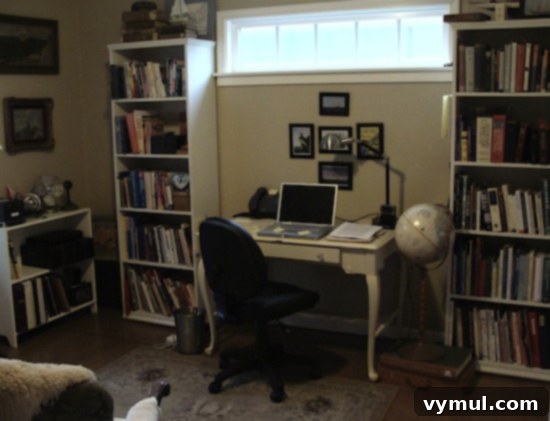
- Adjacent to the bustling workroom, Brian’s dedicated home office offers a quiet, organized, and highly functional domain, absolutely essential for focused work and productivity. This room features a practical bi-fold closet door located to the right, which ingeniously conceals all our shared office supplies, the printer, and other equipment. This smart storage solution keeps the workspace remarkably clutter-free and maintains an atmosphere conducive to concentration and efficiency.
- With the initial intention of adding both light and architectural character, we incorporated narrow, high windows into both Brian’s office and my workroom. While these windows were undeniably aesthetically pleasing in concept, this design decision came with an unforeseen and significant challenge in Brian’s office: its prominent western exposure. On sunny days, these windows unleash a blazing intensity of heat and an often-blinding glare, frequently making the room uncomfortably bright and excessively warm. Consequently, the windows often remain covered with makeshift solutions to mitigate the harsh light and heat. If given the valuable opportunity to redo this specific aspect of the renovation, we would undoubtedly choose to omit these particular windows, recognizing the practical drawbacks despite their initial design appeal. It truly serves as a classic example of the “live and learn” philosophy inherent in the exciting, yet sometimes unpredictable, realm of home renovation.
- The paint color selected for Brian’s office walls is Behr’s “Gobi Desert,” a warm, sophisticated, and inviting neutral hue that masterfully fosters a calm yet highly productive atmosphere. This choice is beautifully complemented by “Creamy White” trim, which provides a crisp, clean contrast and seamlessly ties into the consistent trim palette we have meticulously maintained throughout all the newly renovated areas of our home.
The Office Windows: A Candid DIY Renovation Story and Lessons Learned
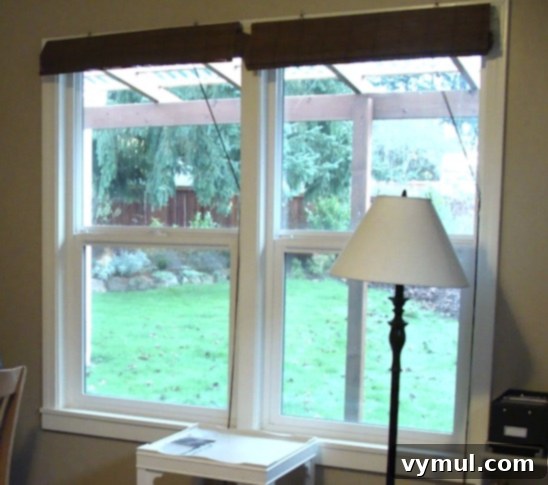
The windows in Brian’s office come with their own memorable anecdote, a story that perfectly encapsulates the unpredictable nature, the inevitable challenges, and the rewarding problem-solving spirit inherent in many DIY home improvement projects.
During our earlier, extensive renovation of the main house, we undertook a significant change by replacing a single exterior door and window in the dining room with a more elegant, expansive double French door. Resourcefully, we decided to reuse the dining room’s perfectly functional old door in the newly created laundry room. Our subsequent plan was to utilize the dining room’s old window here in Brian’s office, intending to pair it with another seemingly similar window we had previously removed from one of the bedrooms (as we also installed a French door in our bedroom, creating an opening). The logic seemed perfectly sound at the time: both were substantial, classic double-hung windows, original to the house, and visually appeared absolutely identical to all the other timeless windows throughout our home’s original structure. They simply *looked* the same, leading us to believe they were interchangeable.
However, a critical and, in hindsight, quite obvious step was regrettably overlooked: I **never bothered to meticulously measure the dimensions of the windows.**
This oversight became glaringly and inconveniently obvious when the builder successfully installed the first window and then, to our dismay, attempted to install the second one next to it. Oops. Discovering a significant 2-3-inch difference in window sizes at that precise stage of construction was, to put it mildly, not ideal for our timeline or our peace of mind. All installation work immediately ground to a halt as we scrambled, quite urgently, for a viable solution to this unexpected predicament.
In a moment of combined urgency and pure luck, we rushed to a local discount window supplier. Fortunately, and much to our relief, we were able to quickly find a matching pair of windows at a remarkably reasonable price that perfectly fit the existing opening. While this was certainly not the most strategic, planned, or budget-optimized way to purchase windows, sometimes in the fast-paced world of DIY, you simply have to adapt quickly and deal creatively with unexpected challenges as they arise, finding the best solution available under pressure.
Interestingly, the two non-matching windows that initially caused our predicament didn’t go to waste. Embracing our ethos of resourcefulness, we ingeniously repurposed them on separate walls in the new garage we subsequently built, giving them a second life. This entire experience served as a powerful and enduring reminder of the paramount importance of meticulous planning, precise measurement, and thorough preparation in any home renovation project, while also highlighting the immense value of flexibility, creative problem-solving, and a good sense of humor when facing inevitable surprises in any DIY endeavor.
I’m sure if you’ve ever embarked on a DIY project of your own, you have similar stories of unexpected twists, clever recoveries, and valuable lessons learned, don’t you?
Jami