Mastering Vertical Cucumber Growing: Your Ultimate Guide to Trellising Cucumbers for Abundant Harvests
Unlock the full potential of your cucumber harvest by growing these vigorous vines vertically on a trellis. This comprehensive guide will reveal more than five compelling reasons why trellising cucumbers is a game-changer for any garden size, from small urban plots to sprawling homesteads. Discover the simple techniques and explore three effective trellis options to ensure your most productive and healthiest cucumber crop yet!
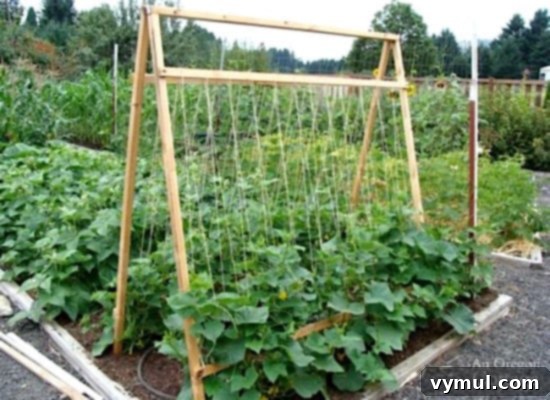
Do you currently grow cucumbers sprawling across the ground, or have you embraced the efficiency of vertical gardening by using a trellis? For many years, I’ve exclusively grown my cucumbers on a trellis, initially motivated by the desire to conserve precious garden space. However, through countless growing seasons, I’ve uncovered a wealth of additional benefits to cultivating cucumbers vertically. These advantages extend far beyond mere space-saving, proving invaluable even for gardeners with ample room who aren’t specifically aiming for a “Square Foot Garden” approach.
I am confident that once you understand the profound impact vertical growing can have on your cucumber patch, you’ll wholeheartedly agree. In this guide, I’ll not only delve into the compelling reasons to encourage your cucumber plants to grow upwards rather than outwards, but I’ll also provide detailed, step-by-step instructions on exactly how to implement these techniques. Growing cucumbers vertically requires a few minor adjustments to your usual gardening routine, but I promise these new methods are well worth the effort and learning curve for the superior results you’ll achieve.
Seven Compelling Benefits of Growing Cucumbers on a Trellis
Beyond the obvious advantage of saving garden space, trellising your cucumber plants offers a multitude of benefits that contribute to healthier plants, easier maintenance, and significantly improved fruit quality and yield. Here are the top reasons to embrace vertical cucumber cultivation:
- Easier and More Efficient Watering: When cucumber plants are trellised, their main stems are more exposed and accessible, making it much simpler to water directly at the base. This targeted watering keeps the plant leaves drier, which is crucial for preventing common fungal diseases like powdery mildew and downy mildew. Dry leaves and improved airflow are key deterrents to these notorious plant ailments, leading to more robust and productive plants.
- Significantly Easier Harvesting: This is arguably the biggest benefit for many gardeners! Cucumbers grown on a trellis hang freely at or near eye level, making them incredibly easy to spot and pick. No more bending, stooping, or searching through dense foliage. Furthermore, the prickly stems and leaves of cucumber vines are neatly confined to the trellis structure, minimizing the risk of getting scratched during harvest. The entire process becomes a joy rather than a chore.
- Cleaner Fruit Production: When cucumbers are suspended off the ground, they never come into contact with soil. This means your harvested cucumbers will be naturally cleaner, requiring less washing before consumption. It also reduces the risk of soil-borne pathogens or pests transferring to the fruit, ensuring a healthier and more appealing crop.
- Uniformly Colored Cucumbers: Cucumbers left to sprawl on the ground often develop pale or yellowish spots where they rest against the soil, unevenly exposed to sunlight. With vertical growth, each fruit receives consistent sunlight exposure on all sides, resulting in a beautiful, even green color across the entire cucumber.
- Straighter and Better-Shaped Fruit: Gravity works wonders when cucumbers are allowed to hang freely. Instead of growing with kinks or misshapen forms caused by resting on uneven ground or obstructions, trellised cucumbers grow long, straight, and perfectly formed. This not only enhances their aesthetic appeal but also makes them easier to slice and prepare.
- Reduced Pest and Disease Pressure: As mentioned, improved air circulation around trellised plants significantly reduces the humidity that fungal diseases thrive in. Moreover, elevated fruit is less susceptible to ground-dwelling pests like slugs and snails, and it’s easier to inspect plants for early signs of infestations or disease.
- Optimized Garden Space: While not the sole reason, the ability to grow a large number of cucumbers in a significantly smaller footprint remains a powerful advantage. Trellising allows you to maximize your garden’s productivity, making it ideal for urban gardeners, small backyards, or anyone looking to get the most out of their growing area.
Are you convinced yet? I certainly hope so! While cucumbers are inherently easy to grow, cultivating them vertically elevates your gardening experience and the quality of your harvest. Fortunately, the transition to vertical cucumber growing only requires attention to a few key practices.
How to Successfully Grow Cucumbers Vertically
Implementing a vertical growing strategy for cucumbers is straightforward. You’ll primarily focus on providing robust support, guiding the plants, and optimizing their environment. Here are the three essential steps to transform your cucumber patch:
1. Prepare a Sturdy Trellis and Plant Accordingly
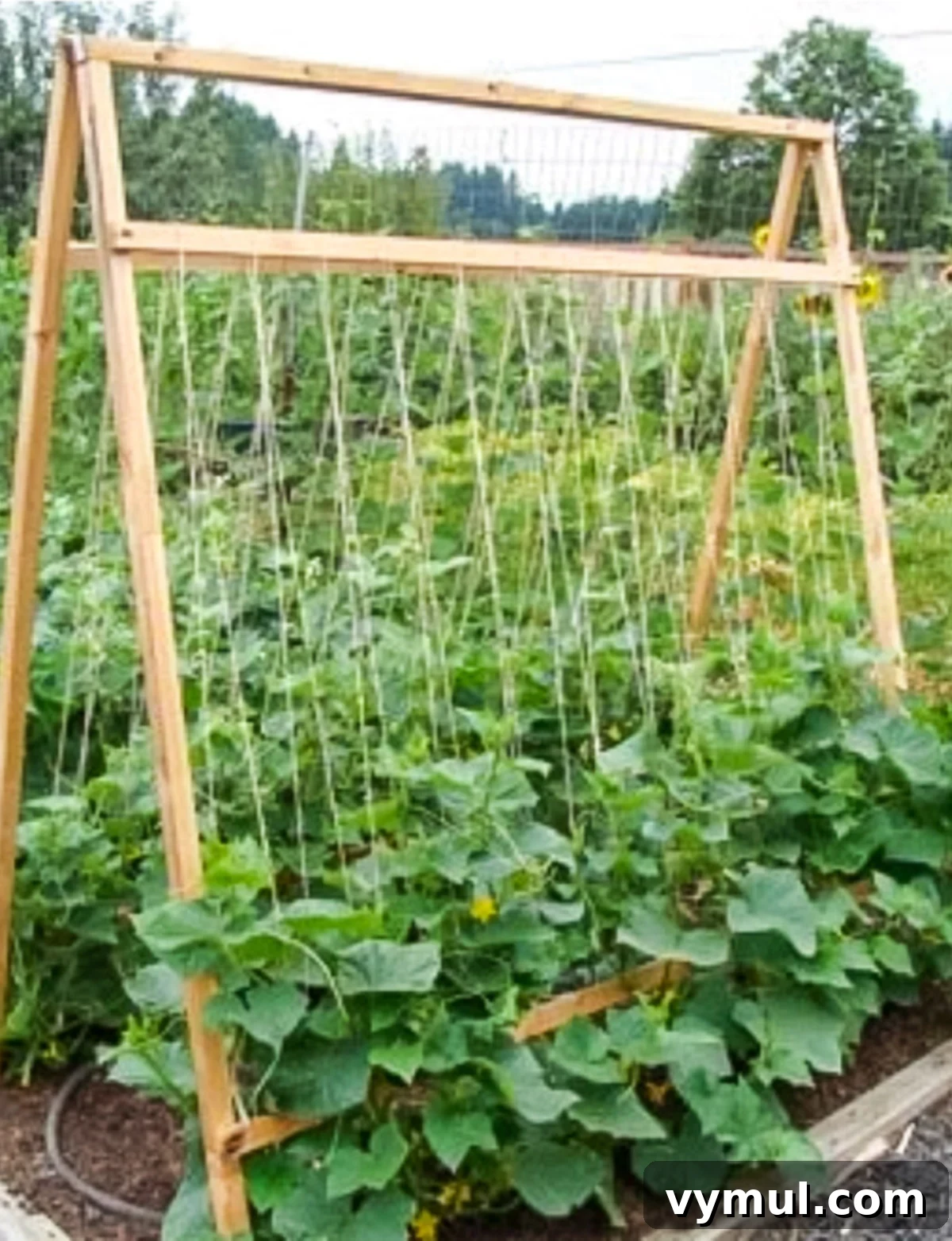
The foundation of successful vertical cucumber growing is a well-chosen and properly installed trellis. While simple structures like an A-frame made from 1″ x 2″ boards or bamboo poles can work, my experience has shown that durability is key. Early attempts with wood, while easy to construct and install due to their self-supporting A-frame shape, often succumbed to rot after a few seasons. Investing in more lasting solutions will save you time and effort in the long run.
Exploring Trellis Options for Cucumbers
Choosing the right trellis depends on your budget, available materials, and garden aesthetics. Here are a few proven methods:
Wood Trellises:
While an A-frame wood trellis is budget-friendly and relatively easy to construct, its lifespan can be limited, typically around three seasons before the wood begins to rot, especially at ground level. If you opt for wood, consider using treated lumber or naturally rot-resistant woods like cedar. For a DIY approach, designs similar to this A-Frame Trellis Tutorial, often using thicker wood, can offer increased longevity and stability.
Rebar Trellises:
For unparalleled durability, rebar trellises are an excellent choice. We once fashioned an A-frame from 10-foot U-shaped rebar, connecting the structure with strong twine. This design effectively eliminated the rot issues associated with wood supports.
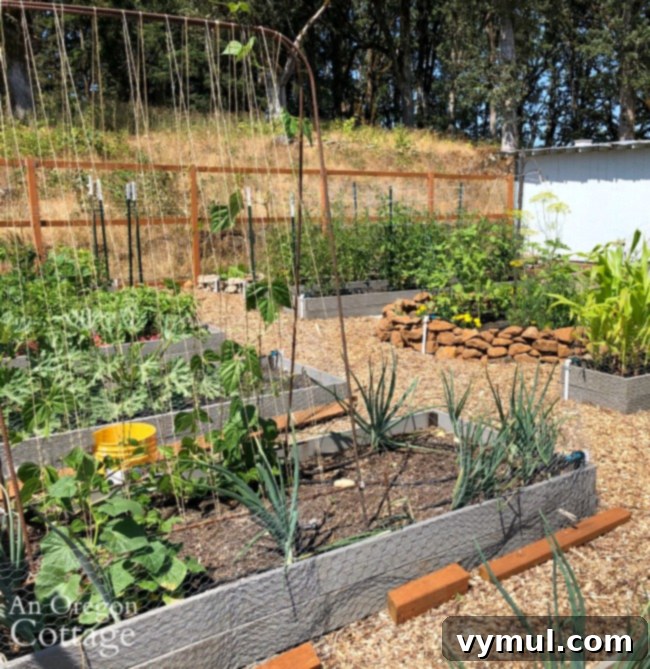
- Pros: Rebar is virtually indestructible and will last indefinitely without rotting. It can be made quite tall, providing ample climbing space for even the most vigorous cucumber varieties. Once set up, it offers exceptional stability.
- Cons: Finding pre-formed U-shaped rebar can be challenging; our pieces were a lucky find from a neighbor. Attaching twine or other climbing aids can be cumbersome, sometimes requiring extra height to reach the top. Its large size might also be less adaptable for smaller raised beds or constrained garden spaces.
Fencing Panels (Hog/Cattle Panels):
Currently, for our smaller farmhouse raised bed garden, hog or cattle panels zip-tied to metal fence stakes have proven to be an outstanding trellis solution. These heavy-duty wire panels are widely available and extremely versatile (learn how I install and use these for growing tomatoes, and beans, too).
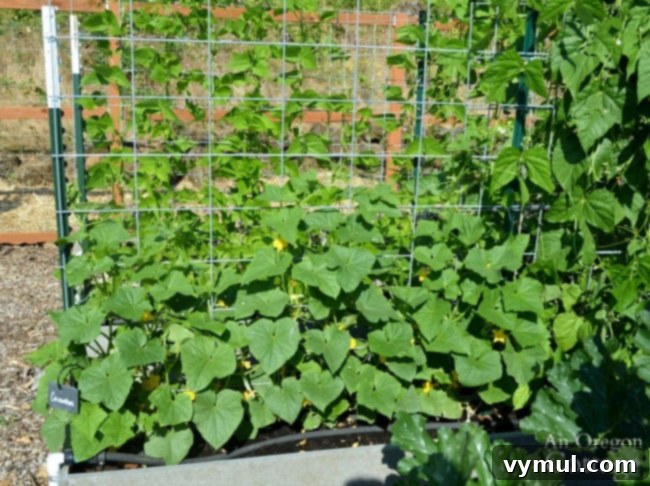
- Pros: These panels are easy to source, relatively inexpensive, and incredibly robust. They eliminate the need for intricate twine attachment and removal, simplifying setup and end-of-season cleanup. Their rigid structure fits well in various garden layouts, including raised beds, making them a favorite for efficient space utilization.
- Con: The only minor drawback I’ve encountered is that initially training the cucumber vines up the rigid wire panels can be slightly trickier compared to guiding them around soft twine. Some gardeners report difficulty, but with consistent, early training (checking daily or every other day), the vines readily adapt and grab hold of the wire squares.
Optimal Planting Density for Trellised Cucumbers:
One of the great advantages of vertical growing is the ability to plant cucumber seeds and starts closer together. This dramatically increases your yield per square foot. When direct seeding, plant seeds approximately 2 inches apart initially. Once they’ve germinated and established a bit, thin them to a final spacing of 5-6 inches apart. I often plant extra seeds as insurance against poor germination rates. If you’re starting cucumbers indoors or purchasing young plants, aim to plant them directly at the 5-6 inch spacing.
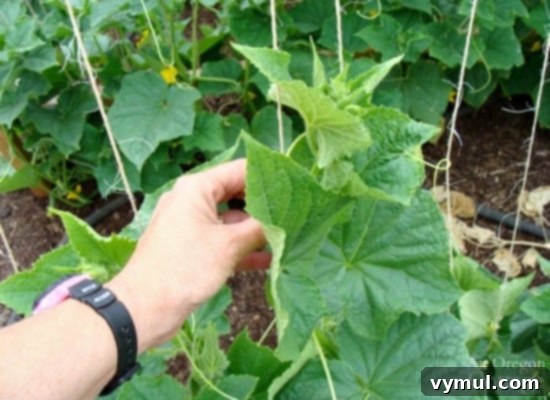
2. Train the Plants Upward Throughout the Growing Season
This step is crucial for successful vertical growth and surprisingly simple. Cucumber vines naturally produce tendrils that seek out support to climb, but they often need a little guidance to get started on your chosen trellis. During the growing season, especially when the plants are young and actively growing, dedicate a few minutes every couple of days to gently guide the vines onto your trellis. For string trellises, simply wind the main vine around the string one or two times. For fencing panels, weave the tender new growth through the wire squares. The plant’s tendrils will then latch on, and it will continue its upward ascent independently. This consistent, gentle training ensures the vines grow where you want them, preventing them from sprawling on the ground and maximizing the benefits of trellising.
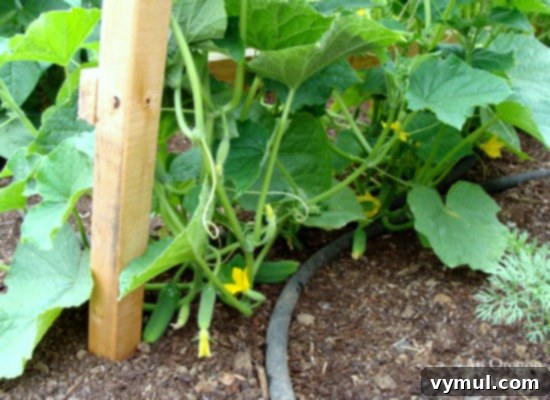
3. Water from the Bottom for Optimal Plant Health
While trellising and training are the primary differences for vertical cucumber cultivation, adopting a bottom-watering strategy is a truly smart horticultural practice that complements trellising perfectly. Using a soaker hose or drip irrigation system is highly recommended. These systems deliver water directly to the plant’s root zone, minimizing evaporation and ensuring deep saturation. Crucially, they keep the cucumber leaves dry, which is paramount in preventing the proliferation of fungal diseases such as powdery mildew, which thrive in moist foliage. I typically run my soaker hose for about 2 to 2.5 hours once a week, adjusting to every 5 days during periods of intense heat. This deep, consistent watering regimen promotes vigorous growth and a healthy root system. For added moisture retention and weed suppression, consider applying a layer of organic mulch around the base of your plants, especially in hotter climates.
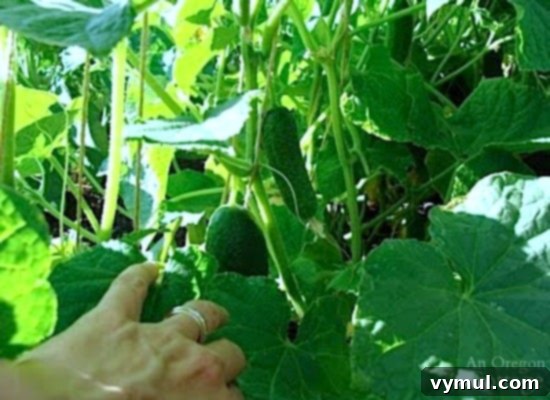
4. Enjoy Effortless Harvesting of Pristine Fruit
The final reward for your efforts in trellising is an incomparably easy and enjoyable harvest. The very first cucumbers might appear near the bottom of the plant, potentially touching the soil and getting a little dirty. However, as your plants mature and climb higher up the trellis, most of your fruit will hang suspended, making them incredibly accessible. You’ll simply reach into the foliage, gently push leaves aside, and pluck a perfectly formed, clean, uniformly colored, and wonderfully straight cucumber. No more arduous searching or dirty knees!
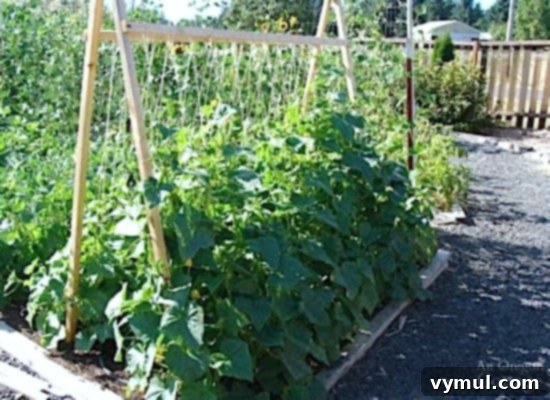
As the season progresses and the vines ascend further (the photo above shows growth just two weeks after the introductory image), you might find yourself harvesting beautiful cucumbers without even needing to stoop. The ability to plant seeds closer together and leverage vertical space means you will undoubtedly achieve a much larger, higher-quality harvest from a smaller area compared to letting your cucumber plants sprawl on the ground. This increased productivity is a hallmark of efficient vertical gardening, and it’s a benefit that truly speaks for itself. It’s clear why I’m such a strong advocate for growing cucumbers this way – the advantages are simply too numerous to ignore!
Grow Cucumbers On A Trellis FAQs
Yes, cucumbers are sun-loving plants that thrive in full sun. This means they require a minimum of 6 to 8 hours of direct sunlight daily to produce abundant and healthy fruit. Insufficient sunlight can lead to reduced yields and weaker plants.
Absolutely! Growing cucumbers on a trellis offers numerous advantages, leading to superior growth and yields. Beyond making watering easier and harvests more accessible, trellising significantly reduces fungal diseases like powdery mildew by improving airflow around the plants. It also results in cleaner, more uniformly colored, and straighter fruit, making it a highly recommended practice for any gardener.
Without a doubt, growing cucumbers on a trellis is generally superior to letting them sprawl on the ground. The natural growth habit of cucumber vines, with their grasping tendrils, clearly indicates they are designed to climb. Trellising supports this natural inclination, leading to healthier plants, higher quality fruit, and more efficient use of garden space compared to ground cultivation.
While cucumber plants have tendrils that will naturally try to grab onto supports, you’ll need to actively train them, especially in their early growth stages. Gently guide the young vines by twining them through the string or weaving them through the openings of your chosen trellis material. Consistent, gentle guidance will encourage their tendrils to attach, and the plant will continue its upward ascent.
An ideal cucumber trellis should be about 5 feet tall, with a maximum height of 6 feet. This height allows for easy harvesting without the need for a ladder. If the variety of cucumber you’ve planted tends to grow taller than your trellis, simply allow the vines to grow up and over the top, then cascade back down the other side. They will continue to produce fruit along the downward-growing sections.
Do you already grow cucumbers on a trellis? Share your experiences and insights below!
This article has been thoughtfully updated to provide the most current and comprehensive information. It was originally published in August of 2011.