
Your Ultimate Guide to Easy Canning Supplies: Essential Tools for Home Preserving Success
Are you ready to unlock the joy of home preserving? Wondering what equipment you truly need to transform fresh, seasonal produce into delicious, shelf-stable pantry staples? This comprehensive guide will walk you through both essential and highly recommended “nice-to-have” canning supplies, ensuring you can start preserving food with confidence and ease. Get ready to embrace the satisfying art of canning and enjoy your harvests all year long!
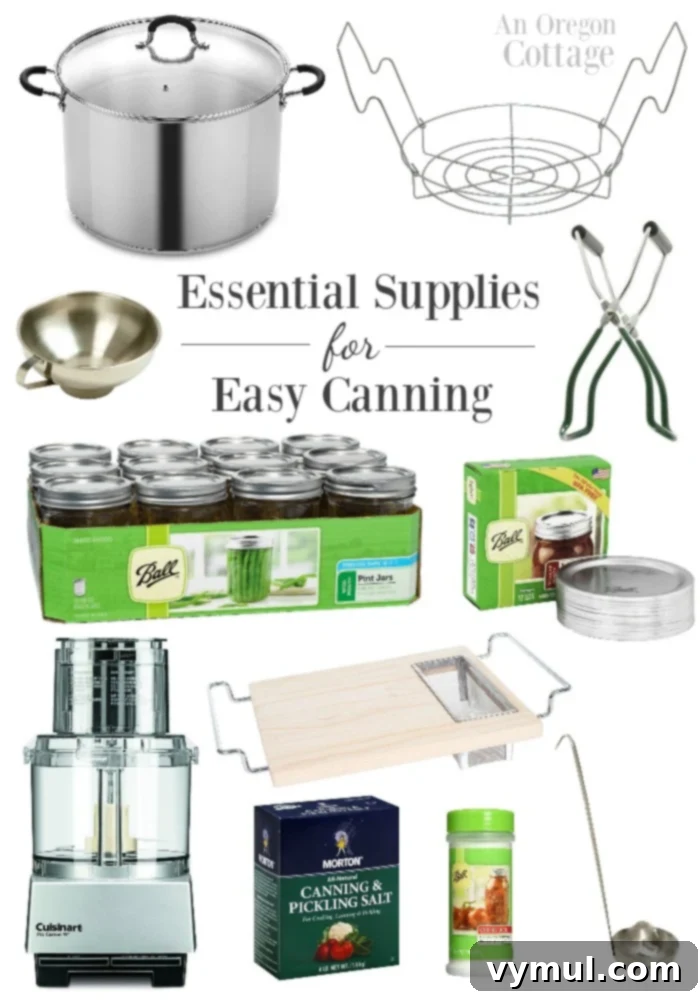
Some links in this article are affiliate links, and if you click on them and make a purchase, I may receive a small commission at no extra cost to you.
The practice of preserving food holds a special place in my heart. There’s an incredible sense of accomplishment and self-sufficiency that comes from taking peak-season fruits and vegetables and expertly preparing them for future enjoyment. Whether it’s freezing fresh green beans for a winter side dish or crafting a vibrant, complex tomato chutney, home preserving allows you to capture the essence of the harvest and enjoy it long after the growing season has passed. It’s a way to connect with your food, reduce waste, and ensure your pantry is stocked with wholesome, homemade goodness.
My goal is to demystify the canning process and show everyone just how accessible and rewarding it can be – and that it doesn’t demand an excessive amount of time or highly specialized equipment. With the right tools and a little guidance, you’ll be putting up jars of delicious food in no time.
To assist you on your preserving journey, I’ve compiled a comprehensive guide to my favorite and most frequently used canning supplies. This list is carefully divided into two categories: the absolute essentials for water-bath canning, which you’ll need to get started, and a selection of “nice-to-have” items that can significantly enhance your canning experience and efficiency.
Understanding Water-Bath Canning
This resource guide primarily focuses on water-bath canning, a method ideal for high-acid foods like fruits, jams, jellies, pickles, and some tomato products. While most of the tools mentioned here are versatile enough for any preserving task, the canner and its accompanying racks are specifically chosen for water-bath processing. If you plan to preserve low-acid foods such as vegetables, meats, or stews, you would need a pressure canner, which operates at higher temperatures. Personally, I opt for freezing low-acid foods rather than pressure canning them, as it suits our family’s preferences for texture and flavor. Freezing also tends to be a simpler process for these types of foods, maintaining their fresh qualities beautifully. You’ll be surprised at how easy it is to freeze many of your favorite garden treasures!
Intrigued by freezing? Explore my list of produce I frequently freeze – and discover my easy (and perhaps unconventional!) methods!
Essential Easy Canning Supplies
NOTE: I strongly advise against purchasing generic “all-in-one” canning kits. These kits often include low-quality tools, many of which are made from plastic, and feature items you simply won’t need with modern canning practices (like magnetic lid wands or old-style lid holders). Investing in individual, durable, stainless steel components will save you money and frustration in the long run.
Below are the essential canning supplies that I rely on year after year to ensure a smooth, safe, and efficient preserving season. These are the workhorses of my kitchen!
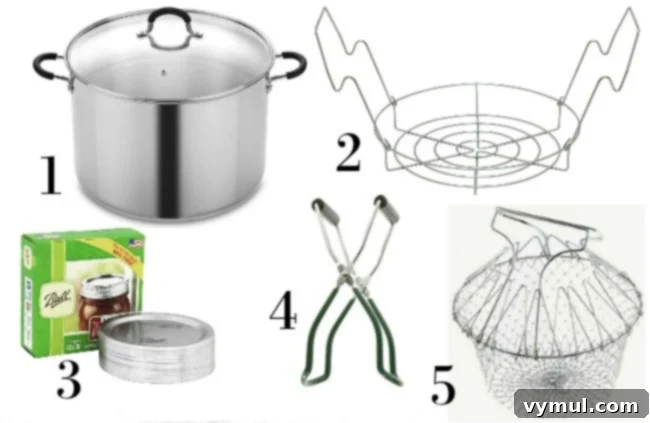
1. Stainless Steel Canner. This piece of equipment is a game-changer that I wish I had discovered years ago! It is vastly superior to the flimsy, cheap black enamel pots commonly sold. Despite its robust construction, it’s still perfectly sized to accommodate a full batch of quart jars, unlike many standard large stockpots that lack the necessary capacity and stability for canning. Its thoughtful design addresses many frustrations associated with traditional canners.
Here’s why I wholeheartedly recommend a stainless steel canner:
- Flat, Stable Bottom: Unlike enamel canners that can wobble, this canner features a perfectly flat bottom, ensuring stability on electric burners and making it safe for delicate glass-top stoves. This prevents dangerous tilting and uneven heating.
- Thick, Encapsulated Base: Similar to high-quality cookware, its thick, encapsulated bottom provides exceptional heat distribution. This prevents hot spots, promotes an even boil, and reduces the risk of scorching, which is critical for consistent processing.
- Clear Glass Lid: Say goodbye to constantly lifting a heavy lid to check on your water! The transparent glass lid allows you to easily monitor the boiling process without releasing precious steam and heat, saving energy and maintaining consistent temperatures.
- Superior Durability: Unlike enamel canners that are prone to chipping and rust over time, stainless steel is incredibly durable and rust-resistant, ensuring your investment lasts for many seasons to come.
- Versatile Use: This canner is robust enough to double as a regular large stockpot for family meals, boiling pasta, or making big batches of soup. This versatility is something you’d never risk with a fragile enamel pot.
-> Acquire this essential canner HERE – while it represents a slightly higher upfront cost than an enamel pot, its durability, performance, and versatility make it worth every extra penny.
2. Sturdy Stainless Canning Rack. The quality of your canning rack is often overlooked, but it makes a significant difference. The sturdy construction and numerous support rings on the bottom of this stainless steel rack provide unparalleled stability for jars, preventing tipping and shifting as you raise and lower them into the boiling water. This is a vast improvement over the flimsy wire racks that typically accompany enamel canners, which often allow jars to jostle.
A key advantage of this design is the absence of individual dividers. This allows for greater flexibility in arranging jars, meaning you can often fit more than the standard seven pint or smaller jars in a single load, maximizing your canning efficiency. Just like the canner itself, upgrading to a robust rack was a decision I wished I’d made much sooner!
Important: This sturdy stainless canner does not come with its own rack, so you will absolutely NEED to purchase this compatible rack separately to ensure safe and effective water-bath canning.
-> Secure your sturdy canning rack HERE.
3. Canning Lids. Canning lids are a crucial component for creating a vacuum seal that preserves your food. You will need to keep a supply of both regular mouth and wide mouth lids to match the jars you use. It’s vital to remember that canning lids are designed for single use only when it comes to creating a secure, hermetic seal for shelf-stable food. The sealing compound on the lid is compromised during the initial canning process and cannot guarantee a safe seal for subsequent uses. However, the metal bands (rings) are reusable, and used lids can be repurposed for dry food storage or temporary refrigeration. I typically find that about two-thirds of my jars are regular mouth, so I stock up accordingly.
-> Purchase your annual supply of canning lids HERE.
4. Jar Lifter. This specialized tool is non-negotiable for safe canning. While it might seem like an auxiliary gadget, similar to a magnetic lid wand (which is largely unnecessary), a jar lifter is essential for protecting yourself and your jars. Trust me on this: I once attempted to use kitchen tongs, only to end up with a broken jar and a painful burn. A jar lifter features a rubber-coated grip that securely clasps hot jars, allowing you to safely lift them in and out of boiling water without scalding your hands or risking breakage. Its ergonomic design ensures a firm hold, minimizing slips and accidents.
-> Invest in a reliable jar lifter HERE.
5. Foldable Produce Strainer Basket. This versatile colander-like basket, often listed under various names like “deep fry basket” or “kitchen tool,” is incredibly useful for blanching fruits and vegetables to remove skins. It’s particularly effective for tasks like preparing tomatoes and peaches. You simply load the basket with produce, immerse it in boiling water for a short period, and then lift it out for easy skin removal. While I don’t use it for every canning project, it significantly streamlines the process for certain items, such as dicing tomatoes, making homemade Rotel-style tomatoes, and canning peaches. Its design makes it safer and more efficient than trying to scoop produce from boiling water with a standard colander.
-> Find your foldable produce strainer basket HERE.
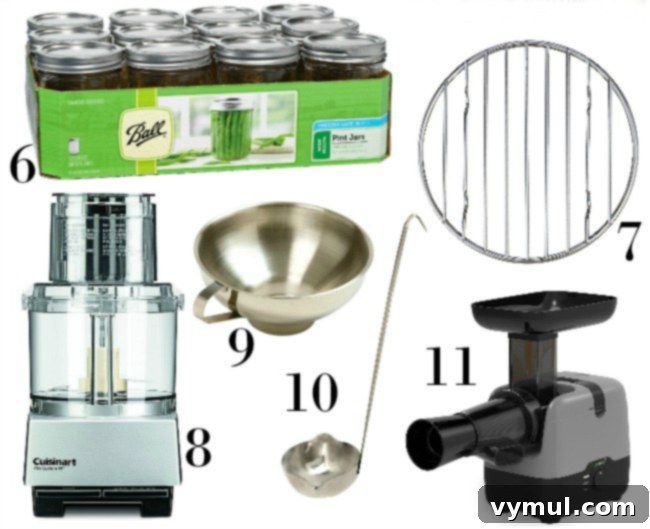
6. Canning Jars. The iconic mason jar is synonymous with home canning, and for good reason. These durable glass jars are specifically designed to withstand the high temperatures and pressure changes of the canning process. You’ll need a variety of sizes and mouth types – both regular mouth and wide mouth – to accommodate different recipes and serving needs. I find myself reaching for pint jars most often for items like salsa, pickled beans, and fruit preserves, while half-pint jars are perfect for tomato chutney, apple butter, or gifts. Quarts are indispensable for larger batches of tomato sauce or whole fruits. Canning jars are an excellent investment, as they are infinitely reusable as long as they remain free of chips or cracks.
-> Stock up on high-quality canning jars HERE.
7. Round Cooling Rack. While primarily used for cooling baked goods, a simple round cooling rack can serve a vital dual purpose in canning. If you don’t have a dedicated small-batch canner, placing one of these racks at the bottom of any regular large stockpot you own instantly converts it into a functional small-batch water-bath canner. This is ideal for when you only have a few jars to process, perhaps for a specialized recipe like honey rhubarb ginger jam or roasted peppers in white wine. It keeps the jars off the bottom of the pot, ensuring even heat circulation and preventing breakage.
-> Get your versatile cooling rack HERE.
8. Food Processor. For anyone serious about home canning, especially those working with large quantities of produce, a quality food processor is an absolute game-changer. It dramatically reduces prep time, transforming what could be tedious chopping and dicing into a swift, effortless task. For recipes like homemade salsa or tomato chutney, a food processor allows you to completely bypass the time-consuming step of peeling skins, saving hours of work! Once you experience the efficiency it brings to food preparation for canning, you’ll wonder how you ever managed without one.
PRO TIP: Beyond canning, your food processor will become an indispensable kitchen tool for countless other tasks, from making fresh freezer pesto to preparing pie crusts and chopping vegetables for everyday meals.
-> Acquire the trusted Cuisinart brand food processor I use HERE.
9. Stainless Steel Canning Funnel. A wide-mouth canning funnel is essential for mess-free filling of jars, ensuring that your precious preserves don’t end up all over your countertop. I cannot stress enough the importance of using only stainless steel tools when working with boiling water and hot foods. Plastic funnels, especially when exposed to high heat over time, can degrade, potentially leach microplastics into your food, and simply won’t last. This is precisely why I advise against those all-in-one canning kits, which predominantly feature plastic components. A stainless steel funnel is durable, hygienic, and safe, making it a wise, long-term investment.
-> Purchase your robust stainless steel canning funnel HERE.
10. Stainless Steel Ladle. Just like the funnel, when you’re transferring hot jams, chutneys, sauces, or soups into canning jars, a high-quality stainless steel ladle is the smartest choice. It provides durability, maintains hygiene, and prevents any unwanted interactions with your food. Stainless steel utensils far outlast their plastic counterparts and retain a professional appearance in your kitchen. I’ve gradually replaced almost all my plastic kitchen utensils with stainless steel for these very reasons.
-> Opt for a long-handled canning ladle for extra reach and safety, or a more budget-friendly regular stainless steel ladle that performs just as admirably, like the one I use.
11. FreshTech Electric Sauce Maker. While this item falls into the “highly beneficial” rather than strictly “essential” category for everyone, it is truly a godsend for those who produce large quantities of sauces. You can certainly achieve excellent results using a basic food mill or even a table-top hand-crank mill, as I did for many years. Alternatively, smaller batches can be peeled and pureed in a blender. However, if you regularly process a significant volume of tomatoes for sauces, or apples for applesauce, this electric sauce maker is a revelation. It efficiently separates seeds and skins, producing a smooth puree with minimal effort. You can see my initial impressions and a detailed review in this article, where I unboxed and tested it. Since then, it has become an indispensable part of my annual preserving routine, particularly for tomato and apple sauces, saving me immense time and labor.
-> Discover the efficiency of the FreshTech Electric Sauce Maker HERE.
UPDATED to ADD:
12. 12-quart Stainless Steel Stock Pot with Encapsulated Bottom. I can’t believe I initially overlooked adding this truly essential item to my list! This robust stock pot is an absolute must-have for preparing large batches of ingredients for canning, such as chunky salsa, rich tomato sauce, or a substantial quantity of chutney. Its capacity and design are crucial for handling the volume and consistency of these recipes.
PRO TIP: I cannot overemphasize the importance of investing in pots that feature an encapsulated, heavy-gauge bottom. Many canning recipes, especially for sauces and chutneys, require extended simmering to achieve the desired thickness. With thin, cheaper pots, you will constantly battle scorching and uneven cooking, leading to wasted ingredients and frustration. A quality encapsulated bottom distributes heat evenly, preventing sticking and burning – a lesson I learned the hard way!
The 12-quart size typically proves sufficient for most of my canning preparation needs. However, if your canning projects frequently involve even larger volumes, a 16-quart pot is also an excellent choice to ensure you always have enough space.
->Acquire your indispensable 12-quart stock pot HERE.
Food & Nice-to-Have Easy Canning Supplies
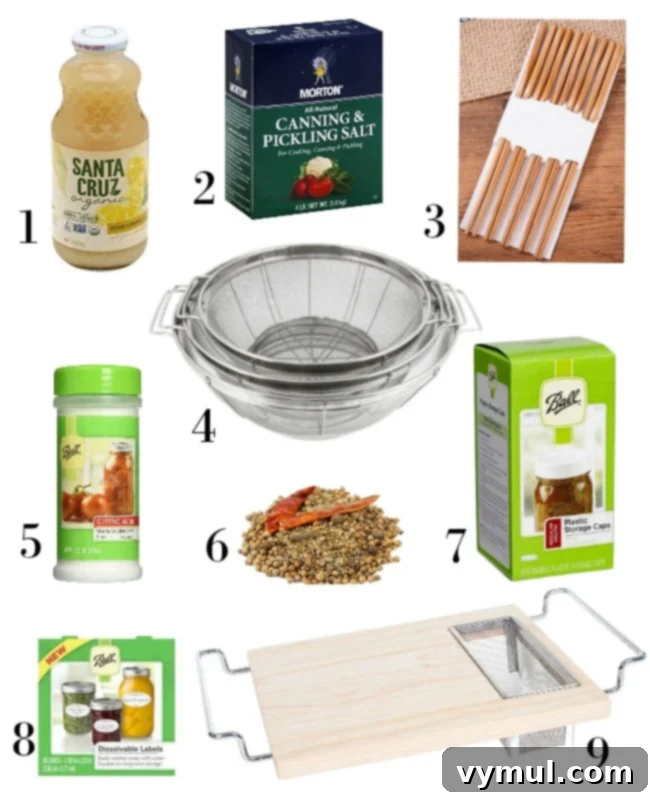
Beyond the core equipment, certain specific food ingredients and helpful tools can significantly elevate your canning game. These “nice-to-have” items contribute to safer processing, better flavor, and greater convenience, making your preserving efforts even more enjoyable and successful.
1. Organic Bottled Lemon Juice. When adding acidity to tomato products for water-bath canning, bottled lemon juice is always recommended over fresh lemon juice. This is because the acidity level in fresh lemons can vary significantly, whereas bottled lemon juice is processed to have a consistent acidity (typically 5%), ensuring the safety of your canned goods. However, if you’ve ever checked the ingredients list of conventional bottled lemon juice, you might have noticed some undesirable additives. For this reason, I’ve often used citric acid as an alternative. I was delighted to discover that organic bottled lemon juice contains only pure lemon juice, making it a safe and trustworthy option for recipes specifically tested with lemon juice as an acidifier, without compromising on quality or health.
-> Find organic bottled lemon juice HERE.
2. Canning & Pickling Salt. When making pickles or other brined items, it is specifically recommended to use canning and pickling salt. Regular table salt often contains anti-caking agents and other additives, which can cause cloudiness, discoloration, or alter the texture and appearance of your preserved foods over time. Canning salt, on the other hand, is pure granulated salt designed to dissolve cleanly and maintain the integrity of your ingredients. Alternatively, you can use pure sea salt that explicitly states it has no added ingredients, ensuring a clean and natural product. The choice is yours, as long as it’s pure!
-> Purchase your canning and pickling salt HERE.
3. Bamboo Chopsticks. A simple bamboo chopstick might seem like an unlikely canning tool, but its versatility in the kitchen is truly surprising! I use them constantly for tasks beyond just eating: stirring small jars, turning foods, getting condiments out of jars, and grabbing olives or pickles. For canning, a chopstick is an absolutely perfect tool for gently releasing trapped air bubbles from around the food in your jars before processing. This crucial step prevents issues like siphoning and ensures a proper, safe seal. Give it a try – you’ll be amazed at how effective it is! (As a bonus, I also utilize them for starting seeds indoors!)
-> Get your multi-purpose bamboo chopsticks HERE.
4. Colander set. While basic colanders are a kitchen staple, they become an even more indispensable workhorse during canning season. You’ll be using them constantly for washing, draining, and preparing large quantities of fruits and vegetables. A good set that includes various sizes ensures you always have the right tool for the job, whether you’re rinsing berries or straining blanched tomatoes. The linked set is particularly appealing because it offers multiple sizes, is designed to be rust-resistant, and nests together efficiently for easy storage, making it a practical addition to any preserving kitchen.
-> Invest in a versatile colander set HERE.
5. Citric Acid. This is an essential ingredient (along with lemon juice) for many water-bath canning recipes, especially those involving tomatoes or other marginally acidic foods where boosting the pH to a safe level is critical. I often prefer using citric acid over lemon juice in certain recipes because it offers precise acidity control without adding extra liquid, which can thin out your product, or introducing a distinct lemon flavor that might not be desired. It’s a clean and effective way to ensure your canned goods meet safety standards while preserving their intended taste and texture.
-> Purchase high-quality citric acid HERE. (Note: I now opt for this more economical alternative to the Ball brand, finding it equally effective.)
6. Pickling Spice. For creating vibrant, flavorful pickles and pickled vegetables, a good pickling spice blend is invaluable. The mixture I’ve linked to, featuring smaller bay leaves and dried red peppers, provides a classic aromatic profile that enhances various recipes. It’s perfect for staples like easy refrigerator pickles, where it infuses a delightful complexity, and for canned pickled green beans, adding depth and character to every bite. Having a reliable pickling spice on hand allows you to experiment with different pickling projects and achieve consistently delicious results.
-> Stock up on your favorite pickling spice HERE.
7. Plastic Storage Lids. While the two-piece metal lids and rings are perfect for the canning process, they aren’t always ideal for everyday storage once a jar has been opened. Plastic storage lids offer a convenient and reusable alternative for your mason jars. They create a secure, airtight seal for refrigerated leftovers, pantry dry goods, or carrying snacks on the go, making them much easier to use than wrestling with a metal ring and a used lid. I initially thought these might be superfluous, but I now find myself reaching for them constantly, especially for jars containing items that have been opened.
-> Get both regular and wide-mouth plastic storage lids HERE.
8. Dissolvable Labels for mason jars. If you’ve ever received a beautifully canned gift or reused jars with old labels, you know the frustration of scrubbing off stubborn paper and sticky residue. Traditional labels seem impervious to everything – even 15 minutes in a boiling canner won’t budge them completely! This persistent problem led me to stop using labels altogether for a while. However, these brilliant dissolvable labels are a game-changer. They adhere perfectly during storage but dissolve completely under water, leaving no trace. No more annoying stuck-on paper or sticky mess, making jar reuse truly effortless!
-> Simplify your labeling with dissolvable labels HERE.
9. Expandable Over-Sink Cutting Board: Wood (Note: this link directs to a highly-rated wood board option, superior to the one shown in the original image.) My love for the convenience of an over-the-sink cutting board knows no bounds! This simple yet ingenious tool dramatically improves kitchen efficiency, especially during the intensive prep work of canning season. You can position a bowl directly underneath the cutting board’s opening and effortlessly scrape either chopped ingredients or compostable scraps into it. Any accumulated juices from fruits or vegetables simply drain directly into the sink, keeping your countertops clean and dry. It’s truly a stroke of genius. For me, this is less of a “nice-to-have” and more of an “essential” – I genuinely don’t preserve anything without it, thanks to its ability to streamline the entire prep process and minimize cleanup.
Plastic versions are also available if you prefer that material: Explore the best-reviewed plastic cutting board option HERE.
That concludes my curated list of essential and highly recommended supplies for simplifying the canning of seasonal produce. What about your experience? Are there any tools you absolutely wouldn’t want to can without? Share your insights!
For a visual demonstration of many of these items in action (though, regrettably, not yet the stainless canner – I clung to the flimsy enamel version for far too long!), be sure to check out this comprehensive water-bath canning tutorial:
Disclosure: Affiliate links featured in this article may generate a commission based on sales, but this does not alter your purchase price. Click here to review my full disclaimer and advertising disclosure policy.