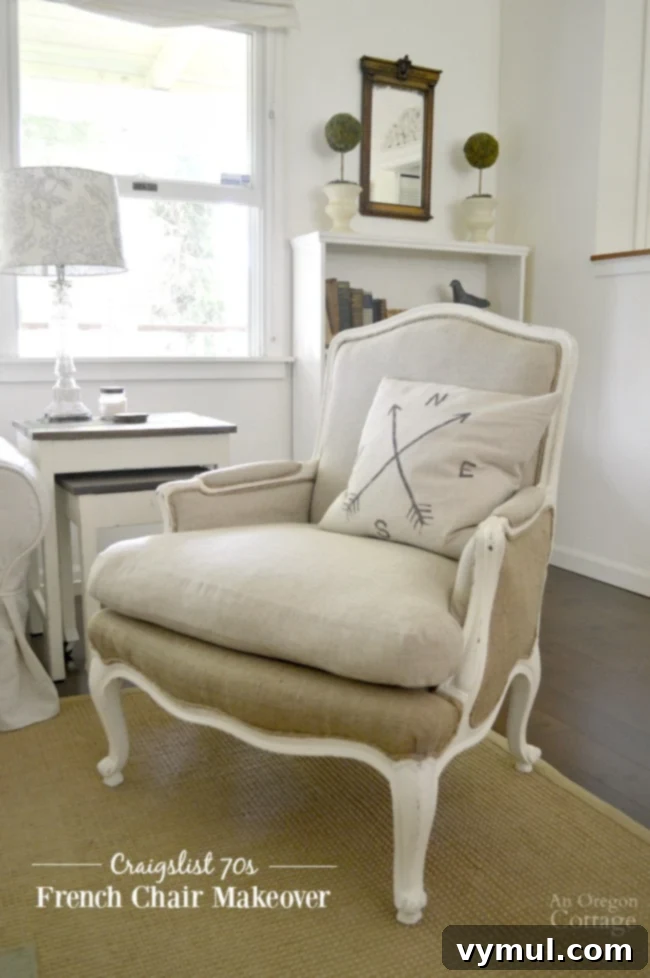
French Chair Makeover: Transform Old Chairs into High-End Decor (DIY Upholstery Guide)
Welcome to the ultimate guide to giving your vintage French chairs a stunning, high-end makeover – without breaking the bank or needing professional upholstery skills! This project chronicles our journey to revitalize a pair of neglected French-style chairs, turning them from forgotten Craigslist finds into luxurious, Restoration Hardware-inspired statement pieces. If you’ve ever dreamt of tackling a furniture upholstery project but felt intimidated, this detailed, step-by-step tutorial is for you. We’ll share all our tips, lessons learned, and the precise steps we took so you can achieve similarly fabulous results and save a significant amount of money.
Please note: Some links within this article are affiliate links. If you click on them and make a purchase, I may receive a small commission at no additional cost to you. This helps support our work in bringing you more DIY guides and inspiration.
I am absolutely thrilled to finally unveil the grand reveal of our DIY upholstered French chairs! These elegant “ladies” were a true labor of love, a project that spanned what felt like an eternity – okay, truly, several years. Along the way, we encountered numerous hurdles and setbacks that often led to me ignoring them for months at a time. The one constant that prevented me from ever completely giving up was the vivid vision etched in my mind: picturing these chairs, with their fresh paint and neutral upholstery, gracefully accentuating our living room.
Oh, and let’s not forget the undeniable fact that each chair cost a mere $25. This was a crucial motivator, especially when considering the alternative: shelling out $500 or more per chair for new ones of similar style. Yes, now that I reflect on it, the incredible savings likely trumped even the most beautiful vision I had, wouldn’t you agree? Ha!
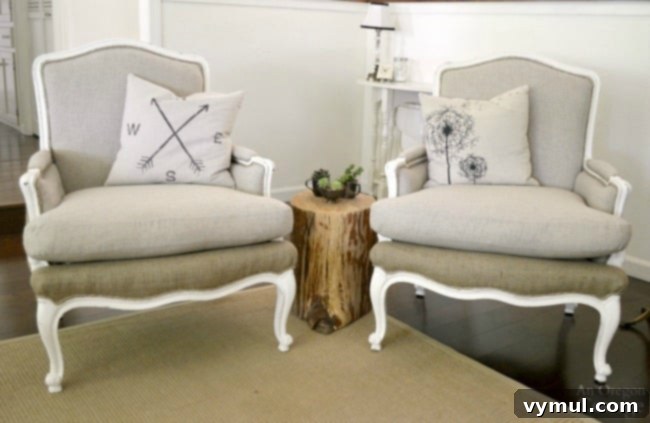
But the profound sense of accomplishment and joy watching these chairs finally settle into their rightful place in our home is immeasurable. They genuinely look even better than I had ever imagined. I adore how much lighter and airier they appear compared to our previous, rather overstuffed chairs. This transformation is not just about their refined size and elegant “legginess” but also the deliberate choice of light, neutral colors, which instantly brighten the room and create a more open, inviting atmosphere.
My primary inspiration for this ambitious project came from various sources, but the most significant was this exquisite chair from Restoration Hardware. It featured a beautifully distressed white frame, luxurious linen upholstery on the interior, and rustic burlap on the exterior – a combination that immediately captivated me. The only catch? Its hefty price tag of $1295.00… each. Ouch. That figure alone solidified my resolve to embark on a DIY journey.
Now, here’s the honest truth: I had never upholstered anything before taking on these chairs. My previous experience was limited to sewing numerous slipcovers and recovering the seats of dining chairs. True upholstery, involving stapling fabric directly to a frame, was entirely new territory. Yet, this specific style of chair, with its mostly exposed wooden frame, made me believe it was possible. Much of the upholstery simply involved stapling fabric to the visible frame sections. The more complex “inside” upholstery—the padded seat back and arms—I decided I would simply figure out as I went along.
And that’s precisely what I did! I successfully navigated the entire process, and I’m here to assure you that you can, too. If you happen to discover similar chairs with exposed frames, even with absolutely no prior upholstery skills and only basic sewing experience, this project is well within your reach. It’s a fantastic way to acquire new skills, customize your home decor, and save hundreds, if not thousands, of dollars.
Through this challenging but incredibly rewarding journey, I picked up a wealth of valuable insights and practical tips. These are the kinds of lessons that only come from hands-on experience, often described as “hindsight is 20-20.” So, consider me your “hindsight” – I’m eager to share these crucial learnings with you, helping you avoid common pitfalls and make your own chair makeover project smoother and more successful. Let’s dive into the steps!
The Journey Begins: Steps to a Stunning DIY French Chair Makeover
1. Seek Out Your Perfect Project: Hunting for a Deal on Chairs
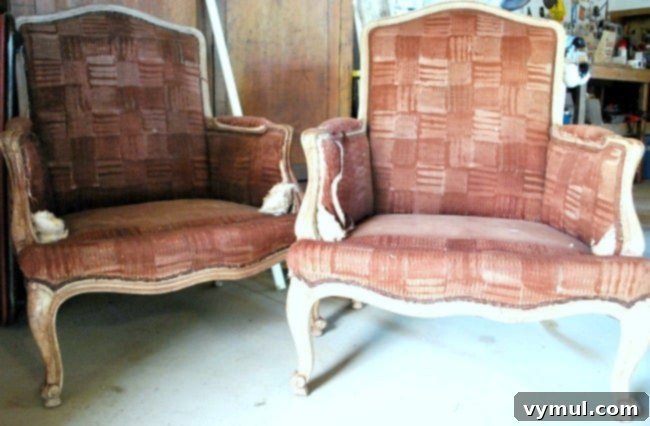
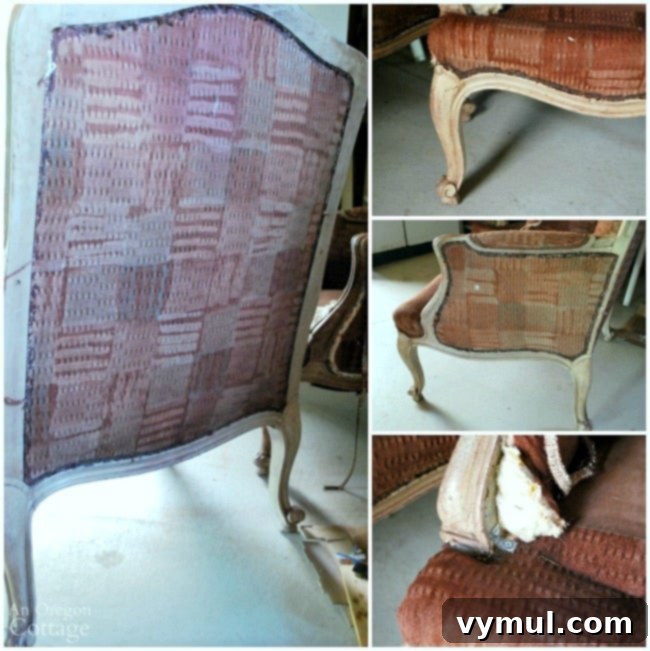
Every great DIY story starts with the perfect “before.” For me, it was a pair of French-style chairs, likely from the late 1970s, discovered on Craigslist for an unbelievable $25.00 each. A true score, right? Well, sort of. I had spent nearly a year diligently searching for this exact style – chairs featuring a predominantly exposed frame, which are surprisingly rare in our local area. Despite the obvious problems they presented, I immediately recognized the immense potential and the fantastic price. This initial “find” is crucial: be patient, know what you’re looking for, and don’t be afraid to see past surface imperfections to the hidden beauty beneath. Look for chairs with solid wood frames that are mostly exposed; these are generally easier for beginners to re-upholster as much of the stapling happens directly onto the wood, simplifying the process considerably compared to fully upholstered pieces.
2. Addressing the Imperfections: Fixing Any Structural or Aesthetic Problems
Once your project chairs are home, it’s time for an honest assessment. Our chairs, though a steal, came with their fair share of issues that needed to be tackled before any aesthetic improvements could begin. This foundational step is critical for ensuring the longevity and stability of your renewed furniture. Here were the main challenges we faced:
- Wobbly Arms: The most significant structural problem was severely wobbly arms. My husband and I devised a rather unconventional, yet highly effective, solution that we detail in our previous post about fixing Craigslist French chairs. Don’t be afraid to get creative if traditional furniture repair methods seem daunting or require specialized tools. Sometimes, a little wood glue and a few clamps can work wonders; other times, you might need to reinforce joints with L-brackets or corner blocks.
- Grubby Frame Paint: The original frame had been painted in a way that left it looking perpetually dirty and uninviting. This meant a complete stripping and repainting would be necessary to achieve the crisp, distressed look I envisioned. Sanding down to bare wood or at least a smooth, paintable surface is essential for a lasting finish.
- Stiff, Painted Fabric: Perhaps the most peculiar issue was the existing fabric, which had been painted over with a stiff, maroon-colored paint. This made the fabric brittle, difficult to remove, and frankly, quite unpleasant to touch. This also complicated staple removal, as the paint contributed to rust.
- Flat Cushions: The seat cushions were severely compressed and offered no real comfort or support. They would definitely need a complete overhaul to provide the plush, inviting feel we desired. This typically involves replacing old foam or adding layers of batting for extra loft.
Taking the time to address these underlying problems ensures that your beautiful new upholstery and paint job aren’t wasted on a piece of furniture that isn’t structurally sound or comfortable. It’s the difference between a quick cosmetic fix and a truly restored piece.
3. The Tedious but Essential Task: Removing Staples and Old Fabric (and Keeping Patterns)
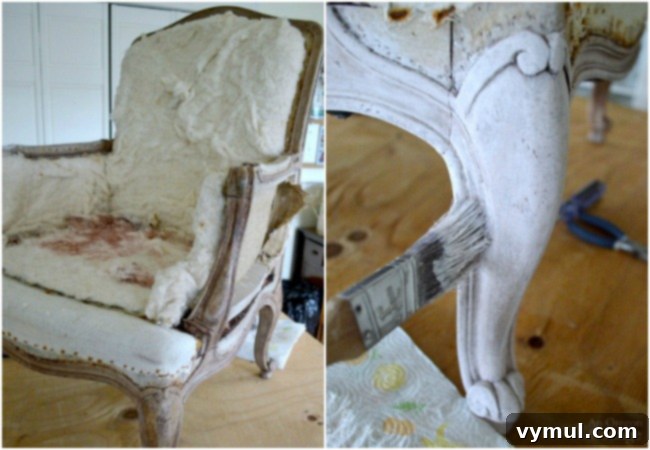
Prepare yourself, because removing staples and the old fabric is, without a doubt, the most challenging and time-consuming part of this entire project. I genuinely attempted to make it easier using this cool staple remover tool, which, to its credit, worked on some staples. However, I quickly discovered a major hurdle: when fabric is painted (especially in the way these chairs were), it causes the underlying staples to rust. Every. Single. Staple. And when you try to extract rusted staples, they inevitably snap, leaving behind perilous, sharp ends that necessitate painstakingly prying them out with needle-nose pliers.
Let me reiterate: Every. Single. Staple. This meant the removal process stretched into… well, years. I truly wish I were exaggerating. I would enthusiastically begin the task, only to find myself two hours later with merely half a section cleared. At that point, my motivation would wane, and I’d inevitably pivot to other, less labor-intensive projects. This cycle, unfortunately, repeated itself countless times.
To be perfectly honest, I might still be toiling away on them if it weren’t for my wonderful husband, Brian, taking pity on me. He dedicated several Saturdays last fall to watching football while simultaneously pulling stubborn pieces of staples from the chair frames. #lovehim! This anecdote isn’t just a fun story; it highlights the sheer dedication (or stubbornness!) required and the value of having a supportive partner or friend when tackling such a project.
When stripping the frame, you have two main options:
- Complete Stripping: Carefully remove all existing batting and fabric, setting them aside. The fabric pieces are crucial as they will serve as your patterns for cutting the new upholstery fabric. The batting can often be reused if it’s in good condition, or at least used as a template for new batting. It’s often best to replace old batting entirely for a fresh, clean feel.
- Partial Stripping (My Method): I chose to leave the batting on the insides of the chair (it had mostly fallen off the outsides anyway). I then painted around it. My reasoning for this was primarily fear – I was concerned I wouldn’t be able to get the batting back into place correctly if I removed it entirely. This approach also saved me one step in the re-upholstering process. While it worked for me, be aware that completely stripping and replacing batting often yields a cleaner, more consistent finish, and allows for a truly fresh start. Always keep the old fabric pieces, regardless, for your patterns! Labeling these pieces as you remove them (e.g., “left arm,” “back panel”) will save you immense confusion later.
4. A Fresh Canvas: Painting the Frame
Finally, a truly satisfying step! Once the chairs were stripped and any structural repairs were complete, it was time to paint the frames. This step offers a fantastic opportunity to redefine the aesthetic of your chairs and create the perfect contrast with your chosen fabrics. I initially experimented with a couple of different paint techniques, including a gray-wash look, similar to these frames. However, after careful consideration, I ultimately decided that a distressed creamy white would offer the most elegant contrast with the natural texture of the burlap and the subtle beige tone of the linen-like fabric I planned to use. This choice instantly lightened the chairs and gave them that desirable French country, shabby chic appeal.
When selecting your paint color and finish, consider:
- Desired Style: Do you want a modern, traditional, rustic, or shabby chic look? A solid color provides a crisp, contemporary feel, while distressing adds vintage charm.
- Fabric Choice: How will the paint color complement or contrast with your upholstery fabric? A dark frame might make light fabric pop, while a light frame can create an airy, cohesive look with neutral tones.
- Room Decor: What colors and styles are already present in the room where the chairs will reside? Ensure your chosen paint color integrates well with your existing palette.
- Finish: Matte, satin, or glossy? Do you want a solid color, a distressed finish, or a wash? Chalk paint is excellent for a distressed look, while a semi-gloss enamel offers durability and easy cleaning. Always consider a topcoat for added protection.
A good quality paint (chalk paint, milk paint, or a durable latex/acrylic with a topcoat) will ensure your efforts last and create a professional-looking foundation for your new upholstery.
5. Building the Comfort: Cutting Fabric and Upholstering the Interior
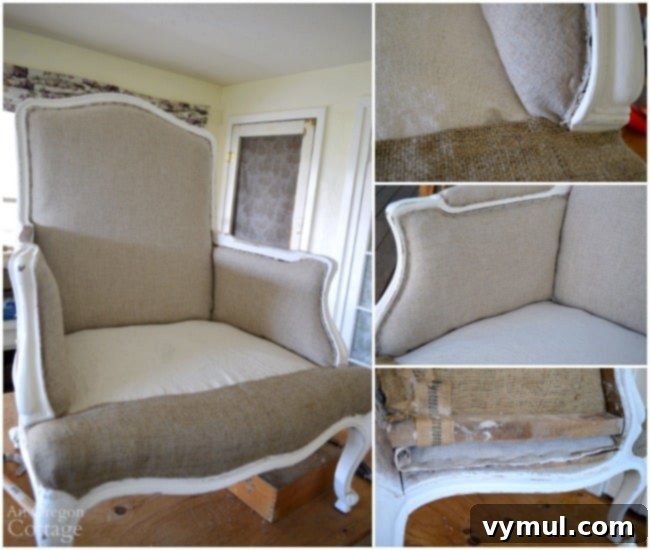
This is where your chairs truly begin to take shape. Using your carefully preserved old fabric pieces as patterns, cut out your new fabric. Precision here pays off, so take your time and use sharp scissors or a rotary cutter. You’ll start with the interior sections, beginning with the “deck” – which is the base of the seat section where the cushion will eventually rest.
To upholster the deck, first staple the front edge of your fabric securely to the underside of the front rail. Make sure it’s taut. Then, pull the fabric tightly towards the back and staple it under the chair back from the outside. (You can often see in the lower right photo where the staples go on the frame – the back usually has a similar area for securing the fabric). Work from the center outwards, smoothing the fabric as you go to avoid wrinkles.
PRO UPHOLSTERY TIP: Invest in the Right Tools!
I cannot stress this enough: a compressor and pneumatic stapler will be your best friend for this project. If purchasing one isn’t feasible, seriously consider renting or borrowing. It can make projects like this go two to three times faster and save your hands from immense strain compared to a manual stapler. I personally used a pancake compressor paired with a pneumatic gun featuring an extended tip – the extended tip is an absolute must for reaching into tight corners and crevices. I recommend using 3/8″ upholstery staples. In hindsight, I wish I had used 3/8″; I originally used 1/2″ staples, and they were incredibly difficult to remove when I made a mistake (and trust me, mistakes happen!). Learn from my painful experience! Shorter staples penetrate enough for most upholstery and are much less forgiving to remove if you make an error.
You’ll often notice that many upholstered chairs use a less expensive, different material for the deck since it’s typically unseen beneath the cushion. This is a smart way to economize on your more expensive, decorative fabric. For my chairs, I used simple drop cloth for the deck. This was partly due to not having *quite enough* of my main linen-like fabric, and I wanted to reserve every visible inch of it for prime display. (This leads to another crucial lesson from my mistakes: you’ll be dedicating a significant amount of time and effort to this project – don’t skimp on fabric! Buy quality, and buy *enough*.)
The front section of the deck, however, *is* visible. To address this, I carefully sewed burlap to the drop cloth. This was one of the very few instances of actual sewing required, apart from the cushions themselves. For a professional, tight finish, I utilized a curved upholstery needle to meticulously attach the seam of the burlap-drop cloth piece to the underside of the seat. This technique mirrored how the original fabric was secured and significantly improved the tautness and overall appearance. This step adds a subtle but important detail that elevates the entire project.
The Golden Rule of Upholstery: Pull the Fabric as Tight as Possible
This single piece of advice has been invaluable across all our upholstery projects, from recovering dining chair seats to these more complex French chairs. To achieve that coveted, professional upholstered look (or as close as a DIYer can get), you must: pull the fabric as tight as possible before stapling. This makes a world of difference, eliminating sags, wrinkles, and giving your piece a crisp, polished finish. So, with your pneumatic stapler ready, pull that fabric taut and confidently staple away on the rest of the interior pieces, such as the inside back and inside arms. Corners can be a bit challenging, but maintaining maximum tension on the fabric will greatly assist in getting them to lay flat and come together neatly. Don’t be afraid to pull hard; quality upholstery fabric is designed to withstand it.
6. The Grand Reveal: Stapling Outer Fabric Pieces to Finish Upholstering
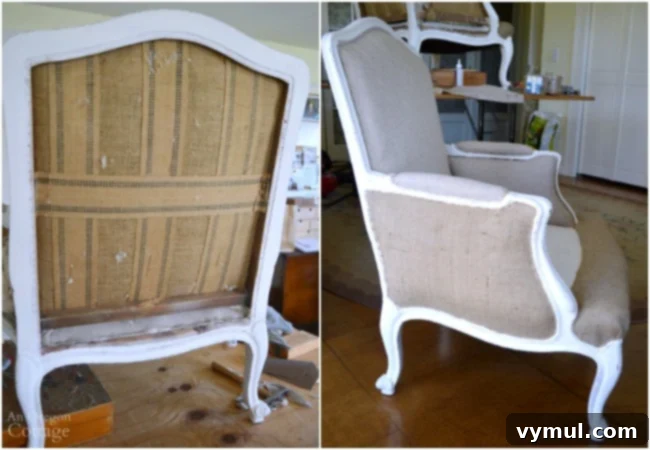
With the interior completed, it’s time to work on the outer, visible sections of the chair. This is where your design choices truly come to life. Before stapling your chosen fabric (in our case, beautiful burlap) to the edges, make sure to replace any batting on the back and outer arm sections. This batting provides the necessary padding and shape to the chair’s exterior and smooths out any imperfections in the frame. If you’re using new batting, use the old pieces as a template for cutting, adding a little extra for fullness if desired. Secure the batting with a few temporary staples or spray adhesive.
Then, carefully position your outer fabric pieces. Take your time with this step, focusing on pulling the fabric *evenly* tight across the frame. This is particularly important with looser weaves like burlap, which can easily distort if pulled unevenly, leading to a wavy or puckered appearance. Work slowly, adjusting as you go, to ensure a smooth, professional-looking surface. Start by stapling the top center, then the bottom center, then the side centers, gradually working your way towards the corners, always pulling tautly. Trim excess fabric as you go to prevent bulk in the corners.
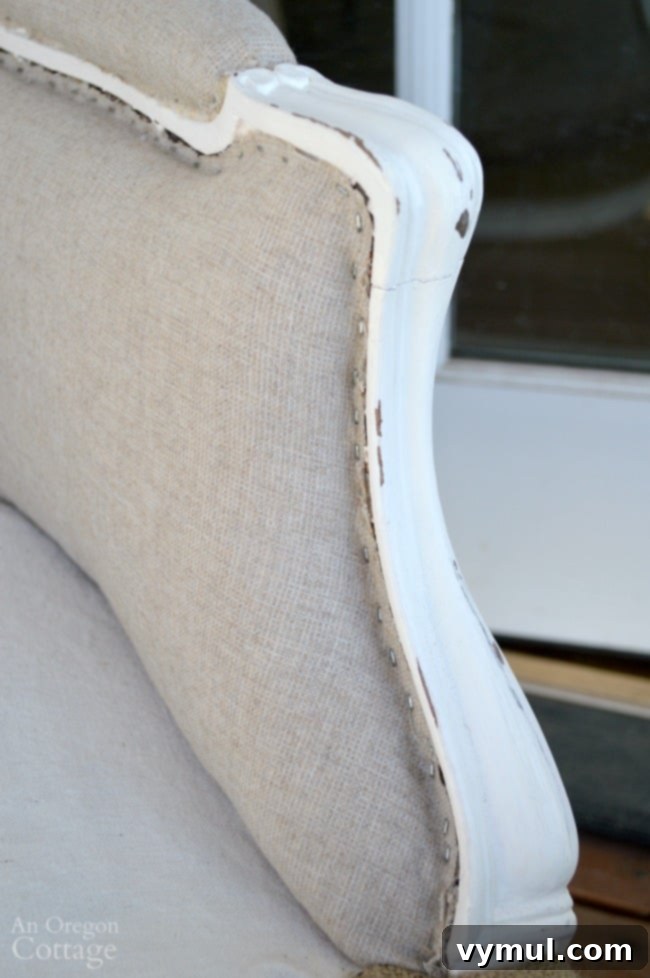
7. The Refined Edge: Trimming Fabric and Concealing Staples
Once all your fabric is securely stapled, the next step is to carefully trim any excess material. Cut the fabric as close as possible to the staples and the wooden frame using a sharp utility knife or heavy-duty scissors. This step creates a neat, clean edge, but it also leaves the staples exposed, which is where the finishing trim comes in. This trim is not just decorative; it’s functional, hiding all your hard work and any small imperfections along the staple line, giving the chair a truly finished appearance.
There are several elegant choices for covering up those exposed staples and giving your French chairs a truly polished, professional finish:
- Gimp Braid: This is a classic choice, a narrow, flat braid often found in coordinating colors like white, off-white, or various shades to match your fabric. It’s subtle, versatile, and easy to apply, offering a timeless look.
- Cording: You can use cording applied singly or as a double row. This can either be handmade (by wrapping fabric around a cord) or purchased as decorative cord. Cording adds a beautiful, dimensional edge that can highlight the curves and lines of your chair frame.
- Other Fabric Trim: Get creative! Anything that can be neatly glued down and covers the staples can work. Consider contrasting fabric strips, elegant ribbon, or even a woven trim for a unique touch. The goal is to create a seamless transition between the fabric and the exposed wood frame.
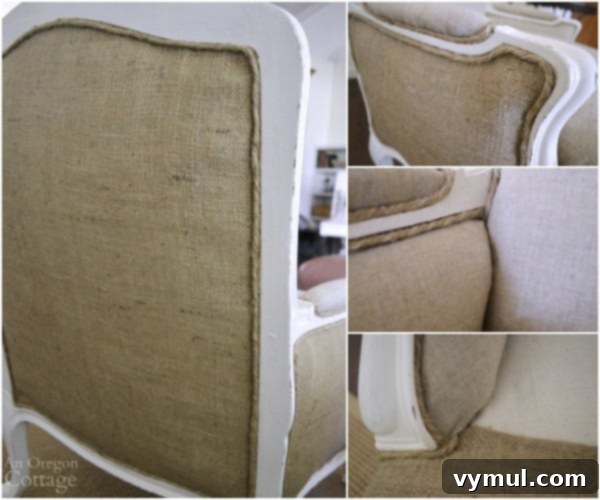
8. The Final Flourish: Applying Decorative Trim to Cover Staples
For my chairs, I opted for a creative route with the trim, wanting it to seamlessly tie together the distinct colors and textures of the burlap and linen. I was delighted to discover this thick, 4-ply jute cord, which perfectly matched the burlap and beautifully harmonized with the overall aesthetic. I meticulously glued this cord directly over all the exposed staples, effectively concealing them while adding an authentic, rustic-chic detail. Had I not found such a substantial jute cord, I would have simply glued down two thinner rows to achieve a similar visual weight and ensure complete staple coverage. This custom trim choice truly elevated the unique character of the chairs.
For applying your chosen trim, a hot glue gun is typically the most efficient and straightforward method, offering a quick and secure bond. Ensure you apply the glue evenly and press the trim firmly into place for a smooth, lasting finish. Work in small sections so the glue doesn’t dry before you can position the trim correctly.
Alternatively, for a more traditional or robust look, you can use upholstery tacks (also known as decorative nails) and a tack hammer. This method involves individually nailing the tacks over a flat trim, creating a distinct, embellished edge. While this offers a beautiful aesthetic, it is considerably more time-intensive than hot gluing, requiring patience and precision to ensure even spacing. To expedite the process with tacks, you might consider using an upholstery tack strip, which allows you to nail down a whole section of decorative nails at once, providing a consistent line with less effort.
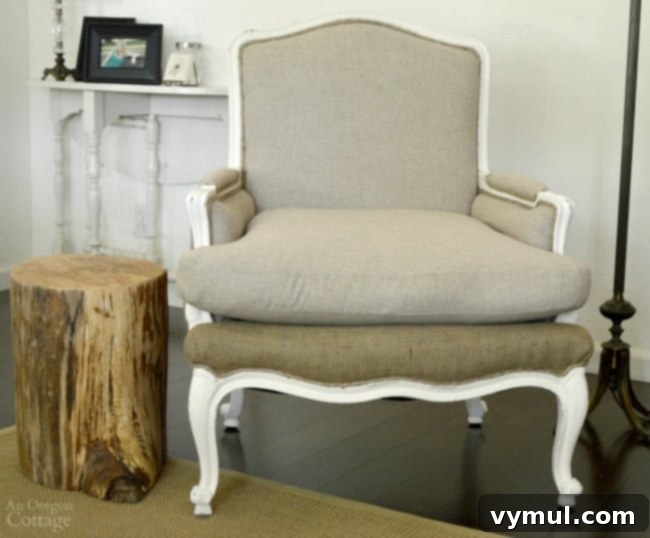
9. Crafting Comfort: Sewing the Cushions and Enhancing Foam with Batting
This stage represents the only significant sewing requirement for this entire French chair makeover. The original fabric pieces from the cushions served as excellent patterns, which I used to cut the new fabric. I designed the cushions similarly to these cushions, though I omitted the extra fabric needed for tufting, focusing instead on a clean, tailored look. A key improvement I made was adding a sturdy zipper at the back of each cushion, making future cleaning and maintenance significantly easier – a practical touch I highly recommend. It also allows you to adjust the cushion fill over time.
My goal was to achieve a wonderfully plush, “over-stuffed” appearance for maximum comfort and visual appeal. To accomplish this, I took the well-used, flattened foam cushions and meticulously wrapped them with generous layers of extra-loft batting. This instantly added volume and softness, transforming the old, flat foam. For an even more luxurious, down-like feel, I incorporated old feather pillows into the core of the cushions. This is one of my absolute favorite tricks for rejuvenating old cushions; I’ve even used feather pillows to enhance the seat and back cushions of our couch, as you can see in some of my other projects! It’s a budget-friendly way to get that high-end softness.
One regret I harbored, a valuable lesson learned, was not having enough fabric to include piping along the cushion edges. Piping adds a truly professional and finished touch, defining the edges and elevating the overall appearance. This experience solidified my advice: when embarking on a time-intensive project like this, always invest in high-quality fabric and ensure you purchase more than you think you’ll need. It’s far better to have a little extra for details like piping or for correcting mistakes than to run short at the final stage. Without piping, the cushions felt just a touch unfinished to me, despite all the effort. Consider adding a few extra yards to your fabric order for these critical finishing touches.
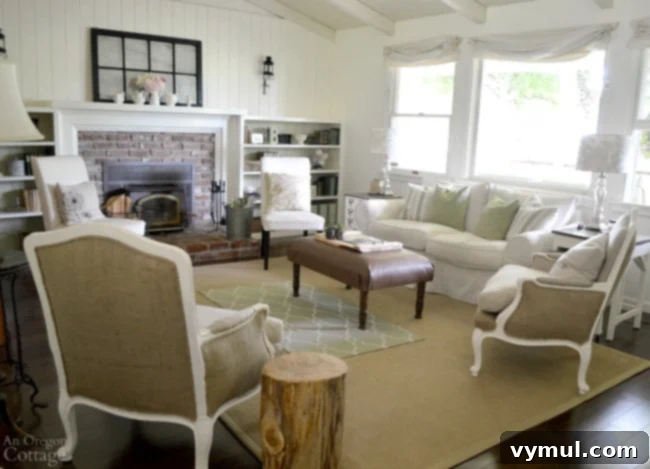
Enjoying the Transformation: A Beautiful Addition to Our Home
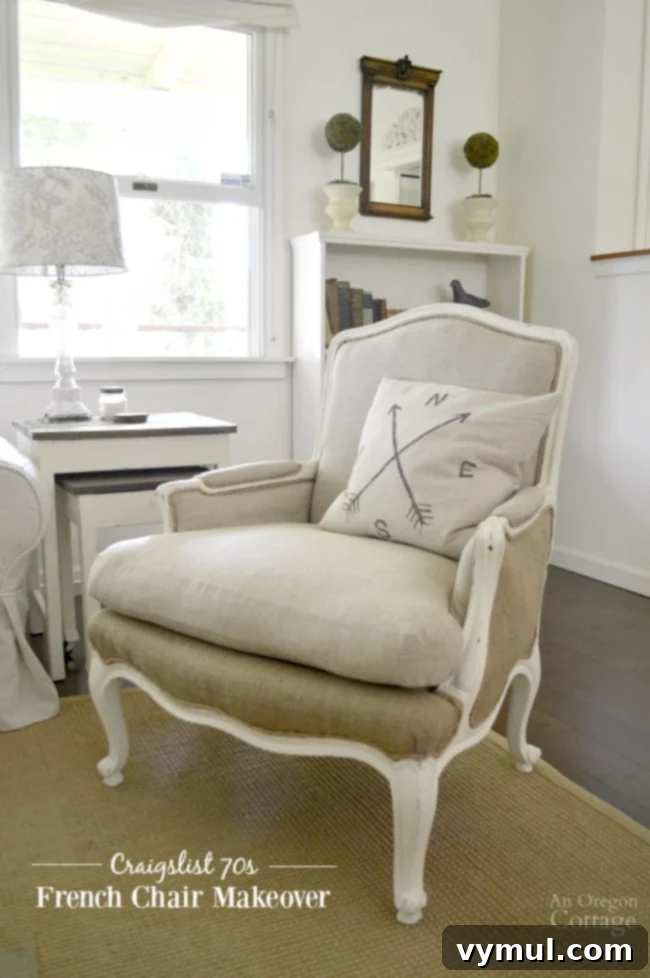
And with all the meticulous steps completed, all that remains is the immense satisfaction of enjoying your newly transformed French chairs in your own home! I am absolutely enamored with how these chairs look in our living room. Their exposed feet lend a wonderful sense of lightness and airiness to the space, preventing the room from feeling heavy or overcrowded. I particularly appreciate the elegant, classic shape of the chairs, which beautifully contrasts with the charming, nubby texture of the burlap and the soft, neutral linen-like fabric. This combination creates a sophisticated yet inviting aesthetic that perfectly complements our cottage-style decor.
They truly are even more magnificent than I had ever pictured in my mind’s eye! The journey was long and sometimes challenging, but the reward of seeing these exquisite pieces, knowing they were brought back to life by our own hands, is unparalleled. It’s a testament to the power of vision, patience, and a willingness to learn new skills. I’d love to hear your thoughts on this makeover – please leave me a comment below! And if you’re feeling inspired to undertake a similar project, be sure to pin this guide for future reference and share it with friends who might also be looking for budget-friendly ways to update their homes.
To recap, here are my most significant takeaways from this extensive DIY upholstery project, especially if you’re considering tackling a similar furniture transformation:
- Embrace the Time Commitment: This is not a quick weekend project. It will demand significant time, patience, and perseverance. Be prepared to sweat, and there may very well be moments of frustration, tears, and even a few drops of blood (all of which I personally experienced!). But the end result, a truly customized and high-quality piece of furniture at a fraction of the retail cost, is incredibly worth every single moment of effort.
- Invest Wisely in Tools and Materials: Precisely because of the substantial time investment (point #1), it is absolutely crucial to invest in the right amount of high-quality fabric and appropriate tools. A pneumatic stapler is a game-changer that will save you countless hours and hand strain. Buying enough good-quality fabric ensures you don’t compromise on details like piping or run short for minor corrections, avoiding costly delays or an unfinished look. You will not regret these investments; they make the process smoother, more enjoyable, and the outcome far more professional and durable.
And now, let’s take one last, satisfying look at the incredible before and after transformation:
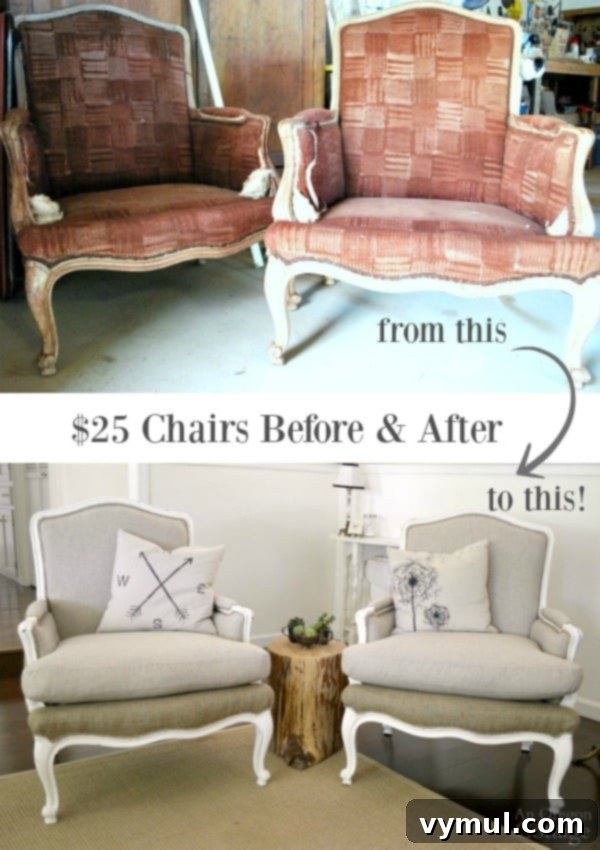
Pretty cool, right? From humble beginnings to a stunning statement piece – that’s the magic of DIY!
More Furniture Transformations to Inspire Your Next Project:
If you’ve enjoyed this French chair makeover, you’ll love exploring these other inspiring furniture transformations from our collection. Each project offers unique challenges and rewarding outcomes, proving that with a little creativity and effort, almost any old piece of furniture can be given a new lease on life, reflecting your personal style and saving you money.
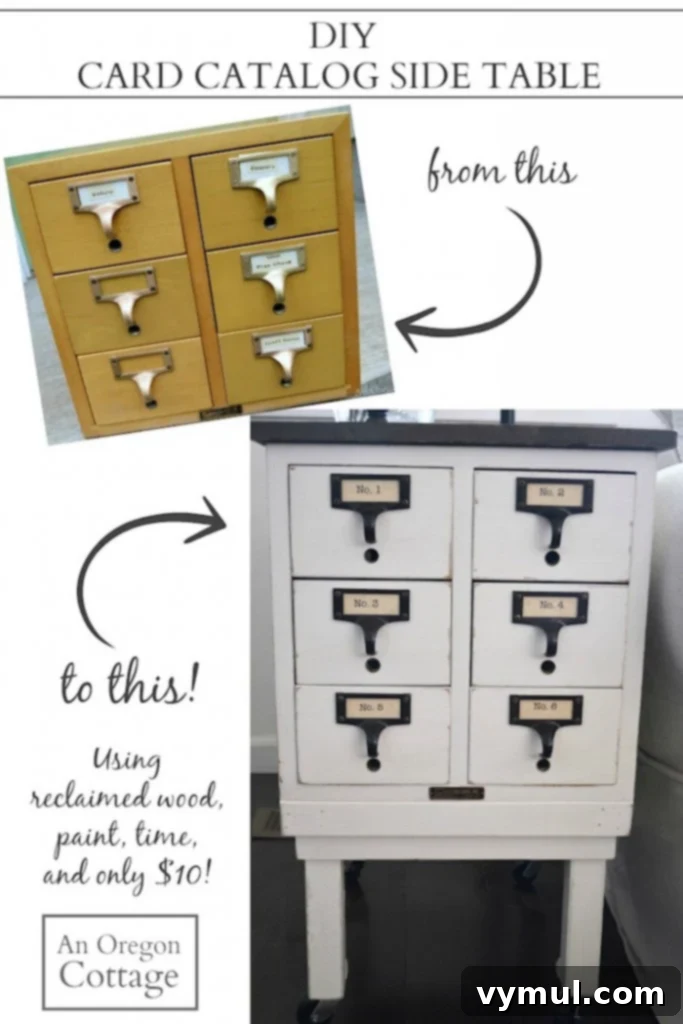
DIY Card Catalog Side Table
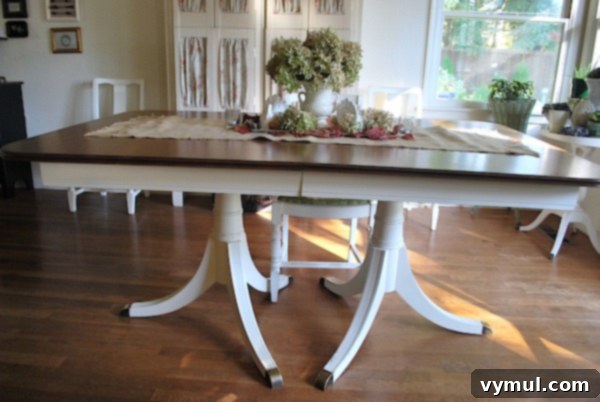
Craigslist Dining Table Makeover
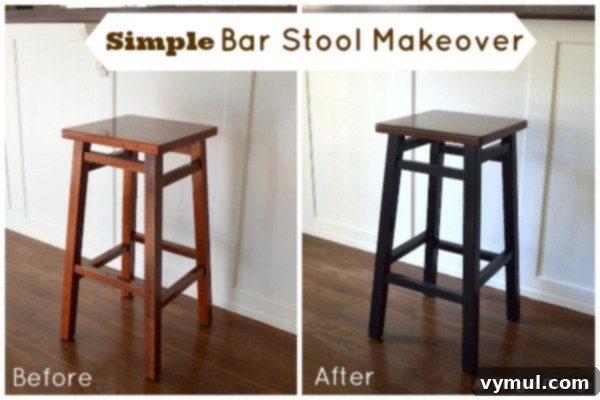
Simple Bar Stool Makeover
Disclosure: Affiliate links in this article will earn commission based on sales, but it doesn’t change your price. Click here to read my full disclaimer and advertising disclosure.