Experience the Art of Flia: A Journey into Kosovo’s Traditional Layered Delicacy
Embark on a culinary adventure and discover the intricate process of making Flia, a cherished traditional dish, at a rustic farmhouse in Kosovo. Witness a labor-intensive, truly unique, and incredibly special gastronomic tradition.
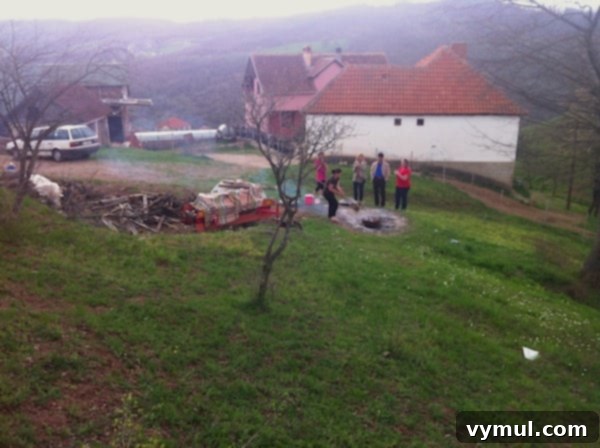
Ever since our unforgettable trip to Kosovo, I’ve eagerly anticipated the moment to share these remarkable photographs and the story behind the making of Flia. After giving you a glimpse into Kosovo’s vibrant gardens and the heartwarming experience of crafting with a local ladies group, this culinary revelation stands out as another essential aspect of Kosovar culture I simply had to share. Flia is not merely a dish; it’s a testament to tradition, community, and hospitality, and we were incredibly privileged to experience its creation firsthand.
Flia holds a significant place in Kosovo’s culinary landscape. Often reserved for special occasions, holidays, or when guests are honored, this layered pancake-like dish is a symbol of warmth and welcome. Its preparation is a communal event, steeped in history and passed down through generations. To be invited to witness and partake in its making is to be truly embraced by Kosovar culture.
Our extraordinary invitation led us to the charming farmhouse of a sweet Kosovar family. They extended their home and their hearts, eager to introduce us to their special-occasion national dish: Flia. In the region of Kosovo we visited, the name is pronounced ‘flea,’ though my cousin informed us that in the western parts of the country, it’s often pronounced with a distinct ‘a’ at the end. Regardless of pronunciation, the essence of the dish remains the same – a labor of love.
We felt profoundly honored by their invitation. Preparing Flia is a highly labor-intensive process, demanding hours of dedicated effort. Yet, this family was not only willing but genuinely excited to dedicate their time and energy to allow us to observe, learn, and ultimately, savor this incredible dish. It was a gesture of generosity that deeply touched us, offering a rare window into authentic Kosovar life and traditions.
The Art of Making Kosovo’s Traditional Flia
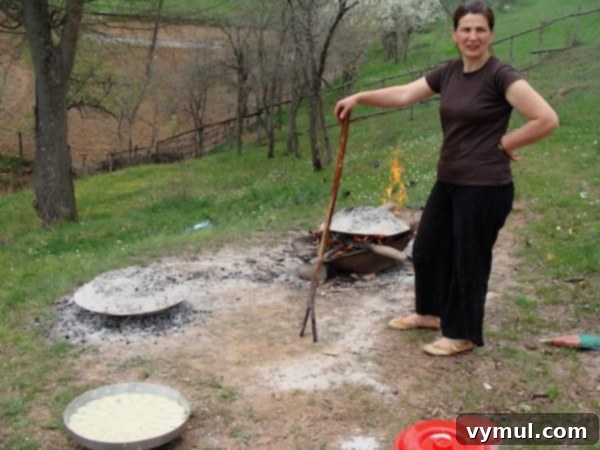
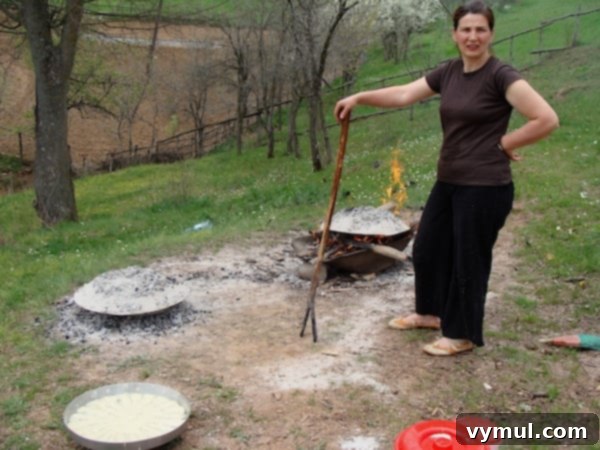
Our hostess, Liza (pronounced ‘Leeza’), proved to be a true Flia master. Her day began long before our arrival, specifically around noon, as she meticulously prepared the coals. By the time we reached the farmhouse around 3:00 pm, a scene of culinary magic was already unfolding. Two large, convex metal lids, traditional tools known as a ‘saç’ or ‘çerep,’ were heaped with glowing coals, radiating intense heat. Beneath them, two pans of Flia layers were already in various stages of cooking, emanating a tantalizing aroma.
Liza’s expertise was immediately apparent. With practiced grace, she used a long, forked stick – a simple yet essential tool – to skillfully pick up the heavy, hot lids by their handles. She balanced them with remarkable precision, ensuring the scorching coals remained perfectly in place atop the lids, ready to provide the crucial top heat for the Flia. The entire setup was a fascinating demonstration of traditional cooking methods, where heat management is an art form in itself.
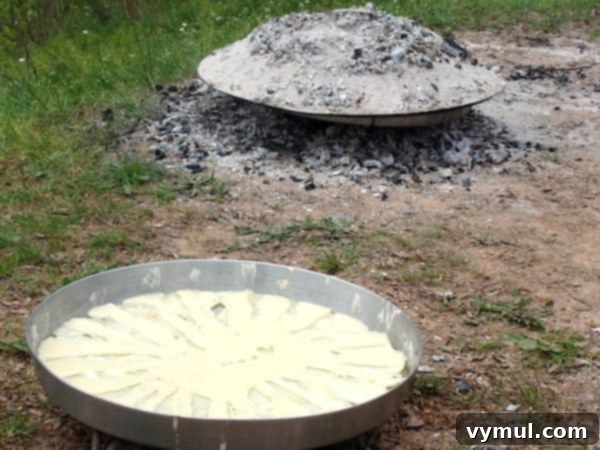
The cooking process for Flia is unique and requires unwavering attention. The specialized Flia pan, usually a large, round, shallow metal dish, remains stationary over a low heat source. Into this pan, Liza carefully spoons the thin dough batter, forming it into a distinctive star pattern that radiates from the center. This artistic application of dough is not just for aesthetics; it helps create the many individual layers that define Flia.
In the image above, you can observe two pans simultaneously. The pan at the top is actively cooking, enveloped by heat from both above and below. A hot lid, brimming with glowing coals, rests directly on its surface, while a few coals are strategically placed underneath the pan to ensure even cooking. The other lid, meanwhile, is positioned directly over the fire, intensely heating up, while the pan at the bottom receives another freshly spooned layer of dough. This meticulous rotation ensures a continuous cooking cycle, allowing each thin layer to cook perfectly.
As soon as a layer achieves its golden, cooked perfection, the hot lid is swiftly removed and returned to the fire to reheat. Before the next scorching lid is placed, a new, delicate layer of dough is added to the pan. This precise rhythm of adding dough, cooking with intense heat from above and below, and rotating the lids is repeated countless times. We watched Liza, captivated, as she tirelessly labored over this process for well over an hour, her movements fluid and efficient despite the considerable effort involved. It’s a dance between dough, heat, and time, resulting in a truly exceptional dish.
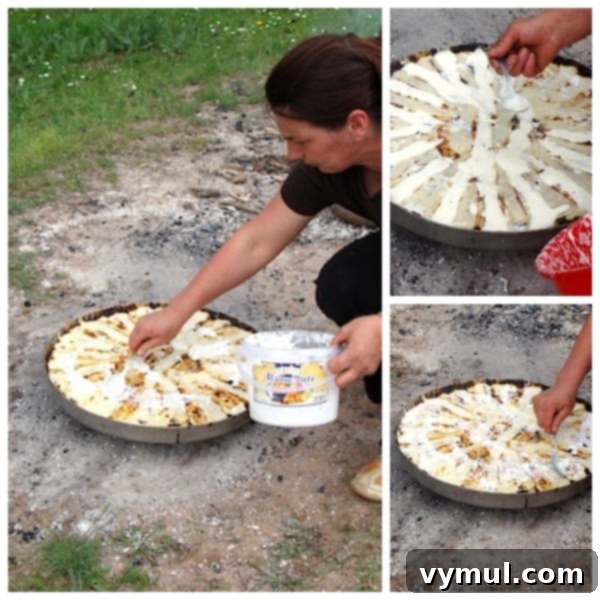
The secret to Flia’s delicate texture lies in its thin dough, traditionally prepared from a simple yet precise blend of flour, water, and a milk/yogurt mixture – as best as we could understand the ingredients. Each subsequent layer of dough is meticulously spooned into the spaces left by the previous cooked layers, maintaining that characteristic star pattern. This intricate layering technique is clearly visible in the top right photo of the collage, showcasing the careful construction of the dish. What truly elevates Flia, however, is the addition between each dough layer.
In between these thin, cooked dough layers, Liza deftly spread an equally thin layer of a creamy, tangy yogurt-cheese mixture. This rich filling not only adds a burst of flavor but also ensures the Flia remains moist and tender throughout the extensive cooking process. This thoughtful layering of dough and yogurt-cheese is meticulously repeated until the pan is generously filled, creating a magnificent tower of savory goodness. The cumulative effect of these many layers, each perfectly cooked and infused with the dairy blend, is what gives Flia its distinctive taste and texture, making it a truly unforgettable culinary experience.
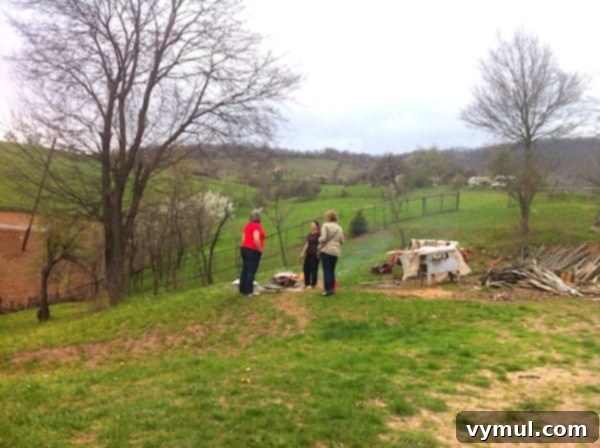
The Meticulous Steps to Craft Kosovo’s Authentic Flia:
- **Fueling the Fire:** The process begins with gathering wood and meticulously starting a fire to produce the perfect glowing coals, which are essential for both top and bottom heat.
- **Preparing the Elements:** Next, the light, pourable flour dough is mixed, alongside the creamy yogurt-cheese mixture that will bind and flavor the layers.
- **Heating the Sac:** The heavy, convex lids (saç or çerep) are placed over the fire, accumulating an intense heat from the coals piled upon them.
- **First Layer:** The initial star-patterned layer of dough is carefully spooned into the base of the Flia pan, which rests over a gentle heat source.
- **Applying Top Heat:** Using the long, forked stick, a lid, now fully heated and topped with coals, is deftly lifted and placed atop the pan to begin cooking the first layer from above.
- **Filling and Reheating:** Once the first layer is cooked to a golden perfection, the lid is carefully removed and returned to the fire for reheating. Simultaneously, a thin, even layer of the yogurt-cheese mixture is spread over the cooked dough.
- **Building the Layers:** A subsequent layer of dough is then skillfully spooned into the open spaces of the previous cooked layer, meticulously maintaining the star pattern.
- **Continuous Cooking:** The reheated lid, once again laden with glowing coals, is retrieved from the fire and placed back onto the pan to cook the new layer.
- **Bottom Heat Management:** Throughout the process, the cook uses the stick to periodically adjust and ensure there are sufficient hot coals beneath the pan, providing consistent bottom heat.
- **The Grand Finale:** This bending, lifting, carrying, spreading, and cooking cycle is repeated again and again, with unwavering dedication, until the expansive Flia pan is piled high with layers, and the entire dish is beautifully browned and thoroughly cooked.
Whew. Reflecting on this intricate process, I genuinely believe Liza devoted between 4 to 5 hours of continuous, focused labor solely for us to enjoy this magnificent dish! It’s a profound testament to her skill, patience, and generosity. Witnessing such dedication really puts my Kitchenaid-enabled bread baking to shame, doesn’t it? It highlights the sheer effort and tradition embedded in authentic regional cooking, a stark contrast to the convenience of modern kitchens.
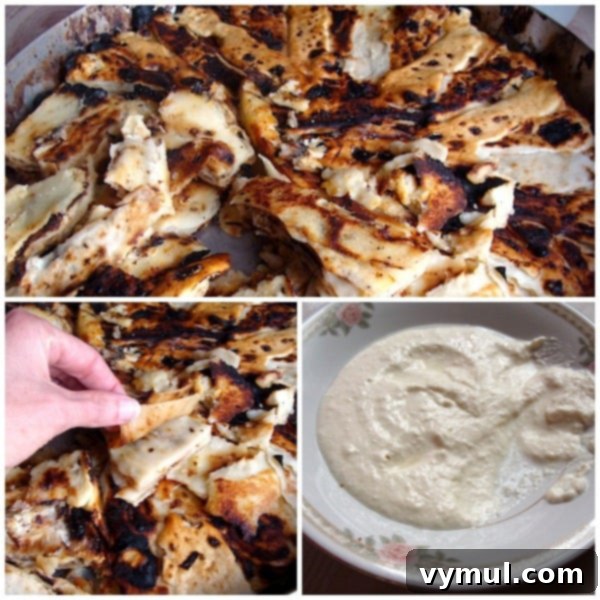
The moment the Flia was finally ready, golden and fragrant, Liza’s entire family gathered around, transforming the simple act of eating into a joyous communal celebration. She served the exquisite Flia with a selection of her home-canned pickled vegetables, adding a delightful tang to balance the richness of the dish. Alongside, she presented a delectable dip called Maze, which, to our understanding, was a variation or perhaps an intensified version of the same creamy yogurt-cheese mixture used within the Flia layers. This Maze added another dimension of flavor and moisture, perfectly complementing the layered pastry.
Flia is meant to be enjoyed with your hands, a truly tactile and engaging culinary experience. Guests are encouraged to gently peel off the tender layers, dipping them into the tangy Maze. It was truly heartwarming to watch the children, their faces alight with excitement, savoring this special treat. Flia is not an everyday dish, and their enthusiastic consumption, eating “LOTS of it,” underscored its cherished status within the family. Their unreserved enjoyment was infectious, making the meal even more memorable.
It’s easy to understand why we were so profoundly honored and deeply thankful to be gifted with this extraordinary experience by Liza and her wonderful family. Their willingness to open their home and dedicate so much time and effort to share a part of their culture with us was incredibly moving. This wasn’t merely a meal; it was an intimate cultural exchange, a glimpse into a Kosovo we would never have seen from the confines of a hotel room. Through this experience, we forged new relationships, overcoming language barriers with the invaluable help of my cousin and his wife who interpreted for us. We gained a genuine understanding of how a typical family lives, works, and celebrates, and most importantly, we tasted a new and distinctly different dish that will forever be etched in our memories.
This authentic Flia experience, steeped in tradition and brimming with hospitality, was just one of the many, many blessings and invaluable insights we received during our truly unforgettable trip to Kosovo. It reinforced our belief that the most enriching travel moments often come from connecting with local people and embracing their customs, especially when they involve sharing a meal crafted with such love and care.