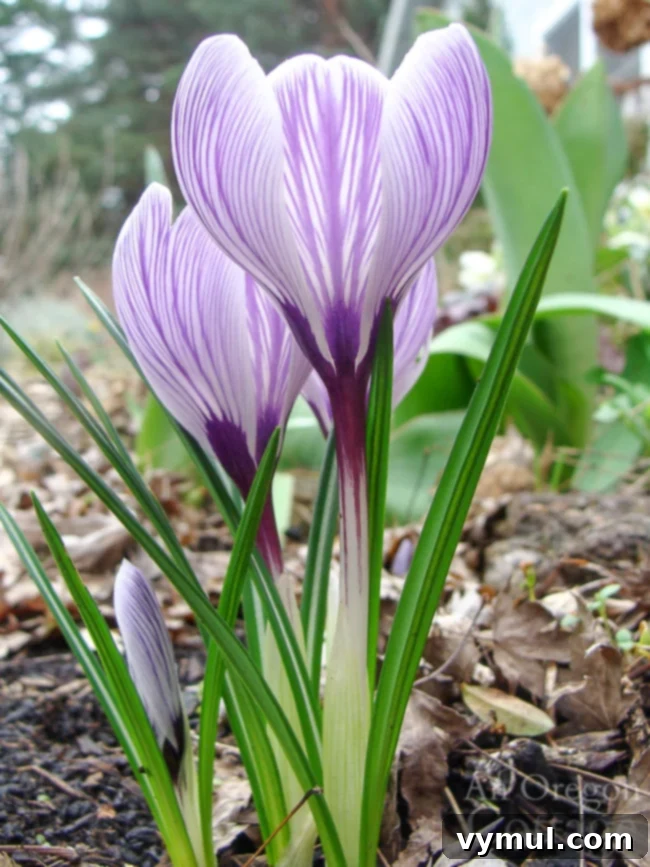
Crocus: Your Guide to Planting, Growing, and Cherishing These Early Spring Harbingers
As winter’s chill lingers, few sights bring as much cheer and anticipation as the emergence of the crocus. These vibrant, resilient flowers, often gracing gardens from late January through March, are incredibly simple to plant and grow, offering a much-needed splash of color and a profound sense of hope when the landscape feels barren. Dive into the world of crocus with this comprehensive guide, packed with information and practical tips for cultivating them in your own garden.
When the days feel their shortest and the spirit of winter seems to reign supreme, the humble crocus bursts forth from the frosty ground, a living testament to the cyclical promise of spring. Depending on your geographical location – be it the warmer southern states or the colder northern regions – these cheerful blossoms might appear as early as January or extend their display into March. For many gardeners, the crocus marks the unofficial start of the gardening season, a gentle nudge that the full, glorious beauty of spring is just around the corner.
From the delicate purples and whites to the sunny yellows, often adorned with charming stripes or soft color gradations towards their throats, crocus flowers possess an undeniable charm. Their seemingly fragile petals belie an incredible hardiness, often pushing through a thin blanket of snow to unfurl their cheerful cups. This remarkable resilience makes them a beloved fixture in early spring landscapes, inspiring even the most winter-weary gardener to dream of warmer days and renewed activity in the garden.
Crocus: A Symbol of Joy and Enduring Hope
Beyond their aesthetic appeal, crocuses carry rich symbolism. Traditionally, these radiant flowers have been associated with joy, cheerfulness, and lightheartedness, with the bright yellow varieties often being the most potent symbols of happiness. More profoundly, due to their timely appearance during the bleakest part of the year, crocuses have come to represent hope. They serve as a poignant reminder that even through the darkest and coldest periods, new life is stirring, and brighter days are inevitably ahead. Winter will yield to spring, and life, in its endless cycle, will flourish once more.
This enduring message of hope is beautifully captured in Miss H.F. Gould’s sweet poem about the crocus, featured in the old Victorian book, “The Poetry of Flowers.” The poem eloquently describes the crocus’s initial struggle, spending its early days in “so gloomy a dwelling” beneath the snow. However, as the frost recedes and the sun’s benevolent rays begin to “focus,” the magnificent transformation occurs: “from the darkness of earth shall emerge, a happy and beautiful Crocus!” What resonates most is the profound lesson embedded in its final stanza:
“Many, perhaps, from so simple a flower,
This little lesson may borrow,
Patient today, through its gloomiest hour,
We come out the brighter tomorrow.”
This profound message – a promise of a brighter tomorrow, stemming from an unassuming bulb that transforms into a beacon of beauty – is a testament to the simple yet powerful wisdom found in nature. If your garden currently lacks these wondrous plants, you’ll undoubtedly want to incorporate some. Crocus bulbs (technically corms) are exceptionally easy to plant and grow, naturally multiplying into charming clumps and faithfully returning to bloom year after year, enriching your landscape with minimal effort.
How to Successfully Grow Crocus in Your Garden
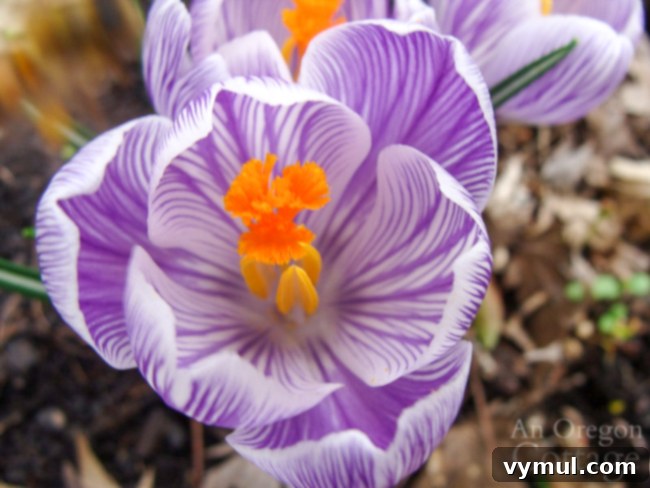
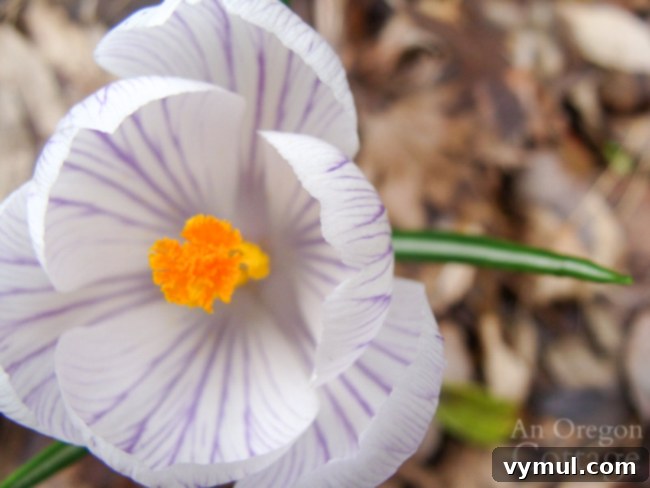
The delicate appearance of crocus flowers, as captured in these stunning photographs, might lead one to believe they are fragile. However, this perception is wonderfully misleading! Crocus are incredibly robust, often pushing through snow and ice, a true testament to their hardiness. This makes them an ideal choice even for gardeners who might consider themselves to have a “black thumb” – success with crocus is almost guaranteed.
Choosing the Right Crocus Varieties
While often simply referred to as “crocus,” there are several species and countless cultivars, each with unique characteristics. The most common spring-blooming varieties belong to species like Crocus vernus (Dutch Crocus), known for its larger flowers and classic purple, white, and striped hues, and Crocus chrysanthus (Snow Crocus), which boasts smaller, more numerous flowers and a wider color palette including vibrant yellows, bronzes, and bicolors. Snow crocuses tend to bloom earlier than Dutch crocuses, extending the season of cheer. When selecting bulbs, consider their mature height, bloom time, and color to create a diverse and continuous display throughout early spring.
Planting Crocus: Simple Steps for Stunning Blooms
Crocuses are remarkably forgiving and thrive in a wide range of conditions, making them suitable for gardening zones 3-8. Here are the easy steps to ensure a spectacular bloom:
- Select an Ideal Location: Choose a spot that receives full sun to partial sun. Crocus bloom before most deciduous trees leaf out, making them excellent candidates for planting under trees. This clever strategy utilizes space that would typically be dry shade later in the season, maximizing your garden’s potential. They also perform beautifully in rock gardens, along pathways, or at the front of borders where their early emergence can be fully appreciated.
- Consider Visibility: Given their relatively small stature, plant crocus in areas where their beauty won’t be overlooked. Ideal spots include near your front door, along garden paths, at the edges of flower beds, or even in decorative pots on a patio. Planting them in these high-traffic areas ensures you’ll enjoy their cheerful display every day.
- Optimal Planting Time: Crocus corms (often referred to as bulbs) should be planted in the fall. The best window is anytime after the weather has cooled significantly, but crucially, before the ground freezes solid with a hard frost. This typically falls between September and November in most regions. You can find a wide selection of crocus corms at local garden centers, nurseries, and through various reputable gardening catalogs.
- Digging the Holes: Prepare a hole approximately 3 inches deep. While you can plant individual corms, crocuses look most impactful and natural when planted in informal clumps. Dig a hole wide enough to accommodate 3-5 corms, spaced about 2-3 inches apart. This arrangement allows them to create a dense patch of color rather than a sparse, linear row.
- Cover and Wait: Once the corms are in place, cover them with soil, gently tamp it down, and water thoroughly. Then, simply wait for nature to work its magic. The corms will establish roots during the fall and winter, preparing for their spectacular emergence in early spring.
Helpful Planting Tips:
- Soil Versatility: Crocus are incredibly unfussy about soil type. While they prefer well-drained soil, they will tolerate almost any garden soil as long as it’s not waterlogged. This adaptability makes them a fantastic choice for nearly any gardener.
- Missed Fall Planting? Don’t Despair!: If autumn slipped by before you could plant your bulbs, don’t worry! Many garden centers offer pre-potted crocus bulbs in late winter or early spring. These can be brought home and enjoyed indoors or on a patio for an immediate burst of color. Once they finish blooming, you can simply plant these same bulbs directly into your garden beds. They will naturalize and return the following year, proving that it’s never too late to add crocus to your landscape.
- Corms vs. Bulbs: While often used interchangeably, crocus grow from corms, which are solid, swollen stem bases, rather than true bulbs (which have fleshy scales). Functionally, for planting purposes, they are treated the same way.
Caring For Crocus: A Minimalist’s Dream
One of the most appealing aspects of crocus, beyond their exquisite blooms, is their remarkably low maintenance. They truly embody the “plant-it-and-forget-it” philosophy, making them a favorite among busy gardeners.
- No Deadheading Required: Unlike many other flowering plants, crocuses do not need to be deadheaded. Their blossoms will gracefully fade and wither on their own, allowing you to simply enjoy their display without additional chores.
- Post-Bloom Foliage: After the vibrant petals have closed for the season (typically over a 2-4 week period, depending on the specific cultivar and weather), the green, grass-like foliage will persist for another month or so. It is critically important to allow these leaves to remain intact and die back naturally. This process allows the plant to photosynthesize and store vital energy and nutrients back into the corm, ensuring robust blooms for the following year. Cutting back the foliage too soon can significantly weaken the plant and reduce future flowering.
- Watering and Fertilizing: Once established, crocus require very little supplemental watering, especially in regions with typical spring rainfall. They generally don’t need fertilization, particularly if planted in reasonably fertile soil. However, if your soil is very poor, a light application of a balanced slow-release fertilizer in the fall, when planting, can be beneficial.
- Pest Control: While crocus are generally pest-free, squirrels and other rodents can sometimes be an issue, as they are fond of digging up and eating the corms. To deter them, you can try planting the corms deeper, covering the planted area with chicken wire or hardware cloth until the ground freezes, or mixing sharp grit (like crushed oyster shells or gravel) into the soil around the corms.
Essentially, crocus are the quintessential set-it-and-forget-it flower, which makes them a true gem for any garden. For a neater aesthetic as the foliage yellows and withers, plant your crocus in flower beds alongside other perennials and annuals. As these companion plants begin to grow and fill out, their foliage will gracefully obscure the dying crocus leaves, maintaining a tidy appearance in your garden beds.
Growing Crocus: Common Questions & Answers
Let’s address some frequently asked questions about these charming early bloomers:
Are spring crocus and autumn crocus the same?
No, they are distinct. Spring crocus, the focus of this article, are true crocuses from the iris family (Iridaceae). Autumn crocus (often known as meadow saffron) belong to the lily family (Colchicaceae) and are botanically classified as Colchicum autumnale, making them not a true crocus. It’s an important distinction as Colchicum autumnale is highly poisonous.
There is, however, another type of true crocus that blooms in the fall: the saffron crocus (Crocus sativus). This particular crocus is famously cultivated for its precious red stigmas, which are harvested to produce the expensive spice, saffron. If you reside in USDA Zones 6-8 (South) or 6-9 (West), you might be able to grow and harvest this Mediterranean spice in your own garden. Click here for detailed growing information on saffron crocus.
Do crocuses multiply?
Absolutely! Crocuses are excellent naturalizers. The initial corms you plant will happily produce offsets, gradually expanding into larger, denser clumps over time. Some varieties may even “naturalize” more aggressively, meaning they will spread and pop up in unexpected but delightful places around your garden, creating a truly wild and enchanting display.
What should I do when crocuses are finished blooming?
The primary action is to do nothing right away! As mentioned, allow the foliage to yellow and die back naturally. Once the leaves have fully withered, you can gently remove them if you wish. If your crocus clumps have been thriving for several years and you notice a decrease in blooming or the clumps seem overly crowded, it’s a good sign they need dividing. In the late summer or early fall, carefully dig up the entire clump, gently separate the individual corms, and replant them in smaller groups, just as you did when you first started. This revitalizes the plants and ensures an abundance of blooms for many more seasons.
Are crocuses poisonous?
Spring crocus (genus Crocus) and saffron crocus (Crocus sativus) are generally considered non-toxic. However, like many plants, ingesting any part of them can cause mild gastrointestinal upset, such as vomiting or diarrhea, especially in pets or small children. It’s always best to err on the side of caution. As for the autumn crocus (Colchicum autumnale), it is highly poisonous in all its parts and should be handled with extreme care and kept away from curious pets and children.
Are crocus deer resistant?
Mostly, yes! Crocuses are generally not high on a deer’s preferred menu, so they tend to leave them alone. However, deer can be opportunistic feeders. If other food sources are scarce in early spring, they might graze on crocus foliage or even pull out the corms in search of something edible. For areas with high deer pressure, consider planting them in protected locations or using deer repellents if necessary, but generally, they are a safer bet than many other spring bulbs.
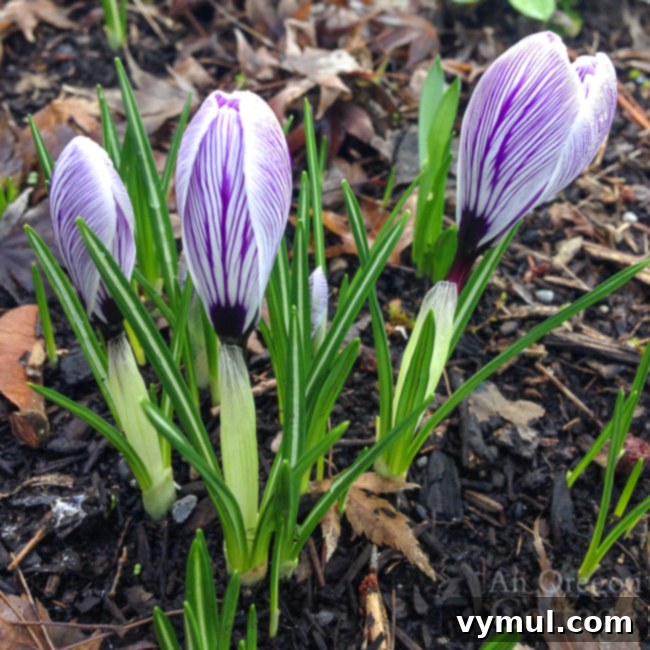
You don’t need hundreds of crocus bulbs to experience their profound impact. Just a handful of 20-30 bulbs, strategically planted in small, informal clumps along a pathway or near your front door, will provide a delightful burst of color and a daily dose of cheer. Every time you step outside, you’ll be greeted by their delicate beauty, allowing them to work their quiet magic: a gentle, undeniable assurance that spring is indeed coming, and with it, renewed hope.
What’s even better is their incredible affordability. Crocus bulbs are often among the cheapest you can purchase, sometimes costing as little as 10 cents per bulb when bought in larger packages. This makes them an accessible luxury for any gardener, regardless of budget.
Paired with other equally affordable and hardy early spring bulbs like daffodils and grape hyacinths (both excellent choices and personal favorites of many), crocuses help create a vibrant, living tapestry in the early spring garden. They transform a dormant landscape into a symphony of color and life, signalling the end of winter’s slumber.
Let’s always embrace the opportunity to spend a few cents to infuse our lives with such accessible and profound beauty. The joy and hope they bring are immeasurable.
“A single crocus blossom ought to be enough to convince our heart that springtime, no matter how predictable, is somehow a gift, gratuitous, gratis, a grace.”
-David Steindl-Rast
This article has been thoughtfully updated and expanded for comprehensive information. It was originally published in February of 2010.