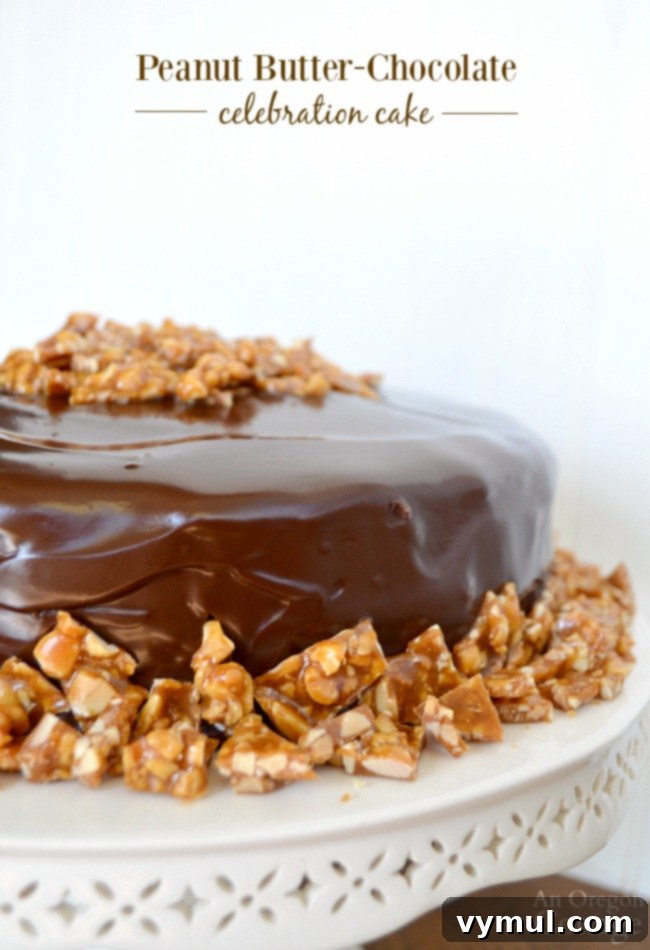
Decadent Peanut Butter Chocolate Celebration Cake: Your Ultimate Guide to a Bakery-Style Masterpiece
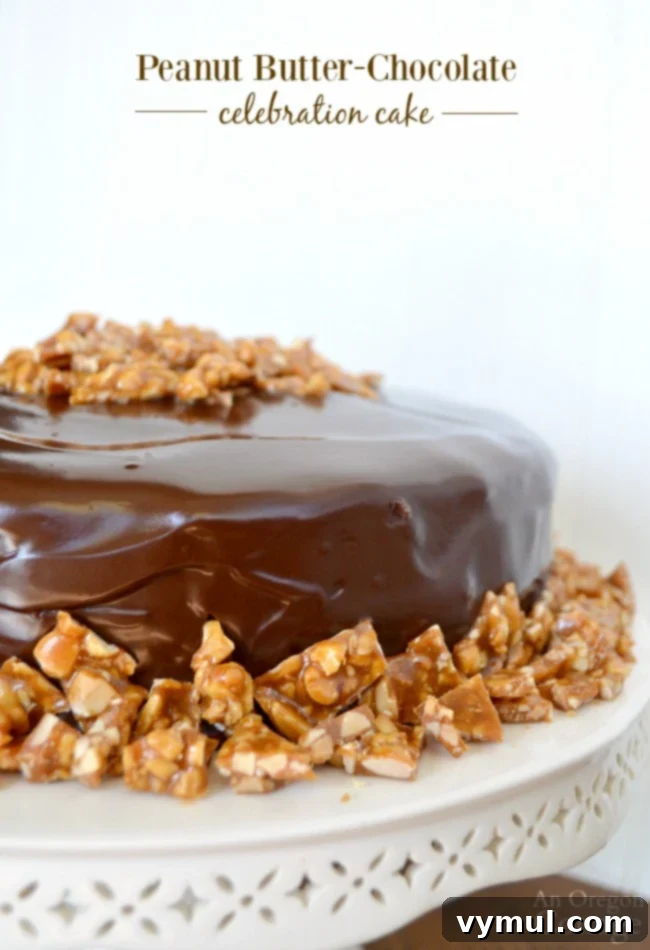
Ever dreamed of creating a stunning, specialty cake that rivals those found in the finest bakeries? Good news – you absolutely can! This comprehensive guide will show you how to bake a magnificent peanut butter chocolate celebration cake, a dessert so extraordinary it will have everyone raving. Forget complicated techniques or expensive equipment; with these clear, step-by-step instructions and helpful tips, you’ll craft a show-stopping confection that looks and tastes like a labor of love. Perfect for birthdays, anniversaries, holidays, or any special gathering, this cake promises to deliver an unforgettable culinary experience.
When you present this incredible candy-bar-like peanut butter chocolate cake, be prepared for a truly enthusiastic reception. Your guests will be:
- Astonished by your impressive baking prowess and artistry.
- Eagerly devouring every last crumb, perhaps even eyeing any potential leftovers.
- Sharing stories of this amazing dessert with their friends, who will undoubtedly start hinting about their upcoming special occasions.
- Overflowing with compliments, ensuring you’ll hear about their delight long after the last slice is gone.
This isn’t just a cake; it’s an experience, a true testament to homemade goodness elevated to a gourmet level. I’ve been refining this recipe for over a decade, adapting it from an old Family Circle magazine clipping, and have witnessed firsthand the joy and admiration it brings. Now, you can achieve the same spectacular results. While creating a ‘celebration’ cake naturally involves a few steps and some dedicated time, the process is far from difficult. In fact, many of the decorative elements, like the peanut brittle, are surprisingly simple to master, even without extensive cake decorating experience.
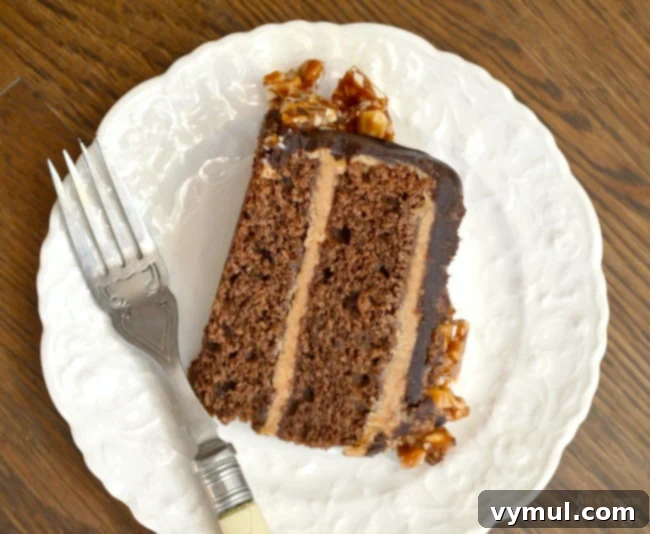
Baking this cake is a wonderful way to express your affection and care to your loved ones. Its rich flavors and gorgeous presentation speak volumes. I truly want you to succeed in bringing this delicious masterpiece to life, which is why I’ve broken down every stage with detailed explanations and plenty of accompanying pictures. This comprehensive tutorial is designed to empower you to confidently create a dessert that will make your family and friends feel cherished and celebrated!
(A quick note: please don’t be intimidated by the length of this tutorial. My aim is simply to share all the valuable tips and tricks I’ve learned over the years to make your baking journey as smooth and successful as possible. If you’re eager to jump straight into the baking, feel free to scroll down to find the printable recipe at the end of the post.)
How to Make a Decadent Peanut Butter Chocolate Celebration Cake
Step 1: The Moist Chocolate Cake Base
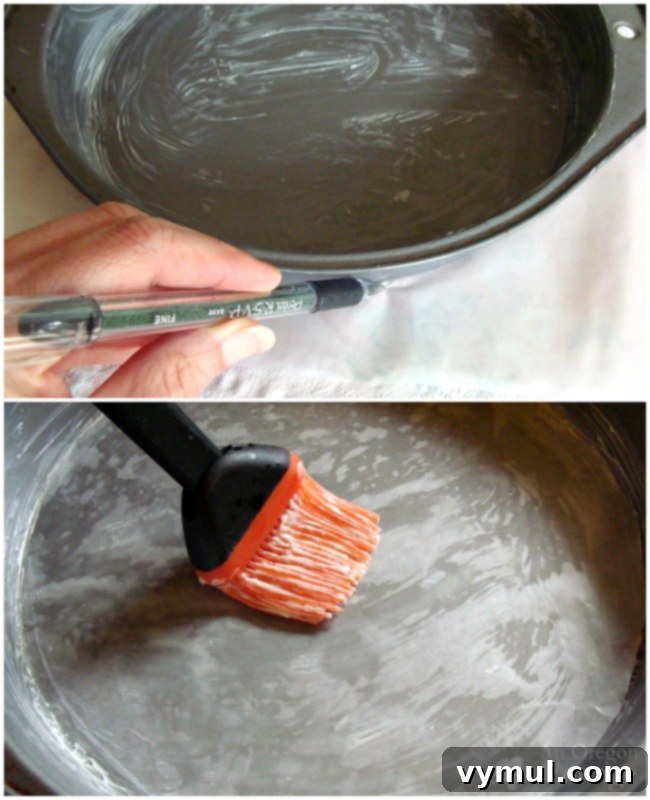
Every exceptional cake begins with a perfectly baked foundation. For this peanut butter chocolate celebration cake, we start with a rich, moist chocolate cake that serves as the ideal counterpoint to the creamy fillings. Preparing your cake pans correctly is crucial for ensuring your layers release cleanly and maintain their beautiful shape.
- Begin by preparing two 9-inch round cake pans. Generously coat the inside of each pan with butter. This initial butter layer acts as a non-stick barrier.
- Next, line the bottom of each buttered pan with wax paper. To do this effortlessly, place a pan on top of two sheets of wax paper, trace around its edge with a pen, and then cut just inside the pen mark to ensure the paper disk fits snugly at the bottom of the pan. While parchment paper works, wax paper is perfectly suited for this application and is often more economical.
- Once the wax paper is in place, give the tops of the paper an additional light coating with your buttered brush. This double layer of butter and paper guarantees that your delicate cake layers will easily release from the pans after baking, preventing any dreaded sticking or tearing.
Essential Cake Baking Tips for a Perfect Texture:
- Alternating Wet and Dry Ingredients: When mixing your batter, it’s vital to add the dry ingredients alternately with the sour cream. This technique is especially important in recipes like this one, as it helps to create a finely textured, tender crumb. Adding liquids and dry ingredients in stages allows for proper emulsification, preventing the batter from separating and ensuring a consistently smooth and moist cake.
- Avoid Over-Beating: Once your ingredients are combined, beat the batter only until it’s *just blended*. Over-beating can develop the gluten in the flour too much, leading to a tough, dry cake. Furthermore, excessive mixing can incorporate too much air, which can then collapse during baking, resulting in those undesirable “volcano-like” rises in the center of your cakes, or a dense, sunken texture.
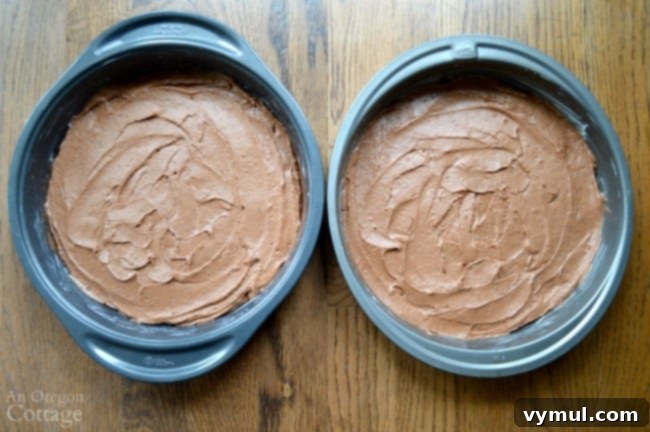
After mixing, divide the thick batter evenly between your two meticulously prepared pans, smoothing the tops with a spatula. As you can see in the image above, the batter has a rich, dense consistency, more akin to a brownie batter than a typical cake batter. This thickness is a key indicator of the incredibly moist cake you’re about to create.
Bake the cake layers as directed, then allow them to cool in their pans for a brief 5 minutes. This brief cooling period helps the cakes set before you handle them. Carefully invert the cakes onto wire cooling racks, gently peel off the wax paper, and then invert them once more onto another rack to cool completely right-side up. This ensures proper air circulation and prevents condensation, which could make the cake soggy.
Step 2: Crafting the Crunchy Peanut Brittle Topping
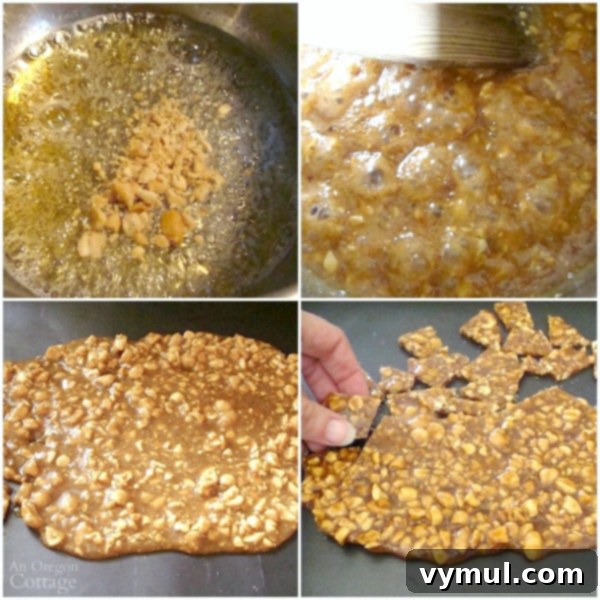
One of the most exciting elements of this celebration cake is the homemade peanut brittle topping, providing a delightful crunch and a caramelized nut flavor. If the thought of making candy, especially without a candy thermometer, makes you nervous (trust me, you’re not alone!), please don’t fret! This recipe is incredibly forgiving and truly does not require a candy thermometer. Just follow these straightforward steps, and your brittle will harden perfectly. I’ve only ever had it fail to set once, and that was simply because I didn’t cook it quite long enough.
Expert Brittle Making Tips for Success:
- Initial Simmer Without Stirring: Combine all ingredients for the brittle, except the peanuts, in a saucepan. Bring the mixture to a gentle simmer over medium heat. It’s crucial *not* to stir the mixture at this stage. Stirring can cause sugar crystals to form on the sides of the pan, leading to a grainy brittle.
- Prepare Your Surface: For the easiest removal and cleanest break, I highly recommend using a silicone baking liner on a cookie sheet. If you don’t have a silicone liner, you can grease a piece of aluminum foil generously; foil alone tends to stick, and parchment paper doesn’t work as effectively for brittle.
- Cover and Simmer: Once the mixture is simmering (a very low boil with small bubbles), cover the saucepan and continue to simmer for exactly 3 minutes. The steam trapped under the lid will wash down any sugar crystals that may have formed on the sides of the pan, preventing graininess.
- Achieving Pale Amber: Remove the cover and continue to cook the syrup, still without stirring, until it reaches a beautiful pale amber color. This typically takes about 10 to 12 minutes. The image on the top left vividly illustrates this desired pale amber hue. This stage indicates the sugar has caramelized sufficiently to start developing its distinct brittle flavor. At this point, add your chopped peanuts and stir gently to combine them evenly.
- Deep Amber Perfection: Continue to cook, stirring occasionally, just until the syrup deepens to a rich deep amber, as shown in the top right picture. This final stage usually takes only a few more minutes. The exact timing can vary, so rely on the visual cue of the color. This deep amber signifies that the caramelization is complete and the flavor will be intensely nutty and sweet.
- Critical Timing – Don’t Get Distracted!: This is perhaps the *biggest tip* for perfect brittle: do not be tempted to multitask or step away from the kitchen for these crucial few minutes. Brittle can go from perfectly deep amber to burned in a flash. While I’ve only had my brittle *not harden* once, I’ve burned it a number of times by losing focus. Your full attention will be rewarded!
- Pour and Spread Immediately: As soon as the deep amber color is achieved, immediately pour the hot brittle mixture onto your prepared silicone liner or greased foil. Work quickly to spread it as thinly as possible using an offset spatula, ensuring there are no significant holes. The thinner it is, the crisper it will be.
- Break for Easy Cutting: Once the brittle is completely cool and hard, break it into the smallest possible pieces. This step is essential because it makes slicing through the finished cake much easier, preventing the brittle from shattering unevenly and making for cleaner cuts.
Step 3: The Creamy Peanut Butter Frosting Layer
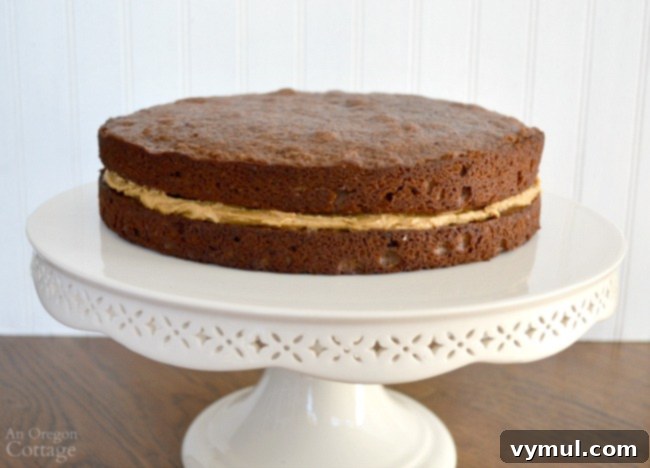
Now that your cake layers are cool and your brittle is ready, it’s time to introduce the star of the show’s flavor profile: the luscious peanut butter frosting. This rich and creamy frosting is a perfect complement to the moist chocolate cake, offering a delightful nutty flavor and smooth texture that makes each bite irresistible.
Carefully place one of your cooled chocolate cake layers onto your chosen serving plate. With an offset spatula, spread approximately one cup of the prepared peanut butter frosting evenly across the top of this first layer. Aim for a consistent, smooth thickness. Then, gently place the second chocolate cake layer directly on top, aligning it carefully to create an even stack.
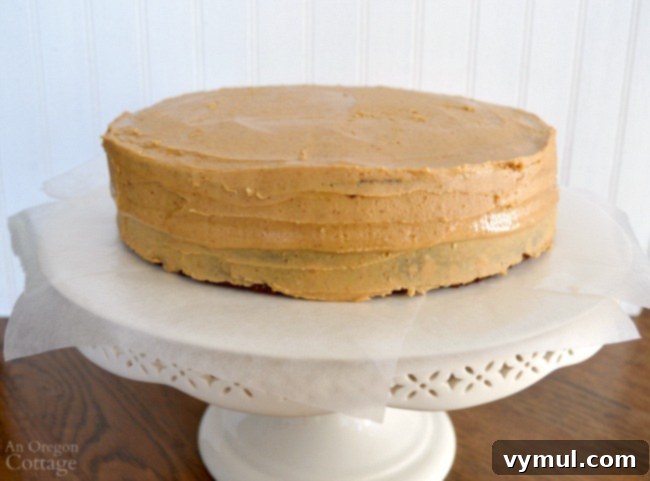
Using the remaining peanut butter frosting, generously cover the sides and the very top of the assembled cake. Work to create a smooth, even coating, filling in any gaps between the layers and ensuring a polished appearance. Don’t worry about absolute perfection at this stage; the ganache will add another layer of smooth finish. Once frosted, place the cake in the refrigerator for about 10 minutes. This chilling time allows the peanut butter frosting to set firm, creating a stable base and a crisp edge for the ganache that will follow.
Step 4: The Luxurious Chocolate Ganache
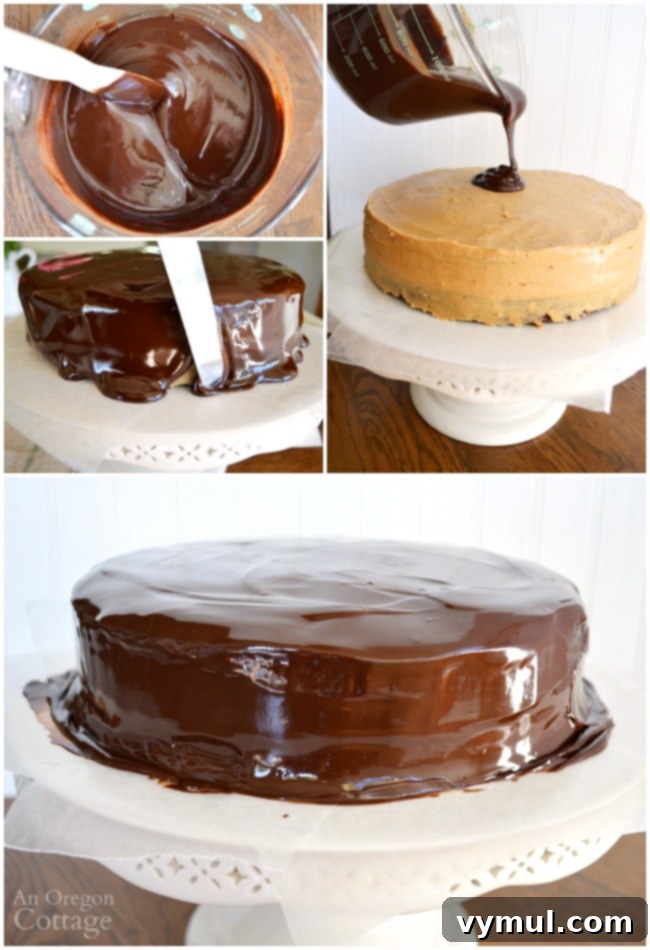
The final, irresistible layer of this celebration cake is a decadent chocolate ganache. While many ganache recipes call for heavy cream, this particular version uses butter, which imparts an exceptionally rich and nuanced flavor profile that perfectly enhances the chocolate and complements the peanut butter. This buttery ganache sets up beautifully, providing a glossy, smooth finish that truly elevates the cake to bakery-quality status.
Mastering Your Ganache Frosting: Key Tips
- Gentle Heating is Key: Combine your chocolate, butter (cut into pieces for faster melting), and honey in a microwave-safe bowl. Heat in the microwave for approximately 1 minute. Stir well, and if any chocolate pieces remain unmelted, microwave for an additional 10-20 seconds, being careful not to overheat. Alternatively, you can achieve a perfectly smooth ganache by melting the ingredients together over a double boiler, stirring gently until completely smooth and glossy. The goal is to melt the chocolate slowly and evenly, creating a consistent emulsion.
- Achieving the Right Consistency: For a ganache that’s thick enough to frost and drip beautifully, it needs to be cooled to the right temperature. If your ganache is too thin after melting, simply place it in the refrigerator (or even the freezer for a quicker set, but watch it very carefully!) until it reaches a spreadable, pourable consistency. It should be thick enough to cling to a spoon but still flow smoothly.
- The Secret to a Pristine Ganache Edge: This is a game-changing tip for a professional-looking finish! Take several strips of wax paper, about 2-3 inches wide, and carefully tuck them under the bottom edges of the cake, ensuring that they overlap slightly where they meet. These strips will catch any drips as you pour the ganache, protecting your serving plate and allowing for an incredibly clean, sharp edge once removed. It’s a simple trick that makes a huge difference in presentation!
- A Forgiving Glaze: Don’t despair if your ganache is initially a little too thin and pools excessively on the wax paper strips when you pour it. This is a very forgiving cake, and ganache thickens considerably as it cools. Simply allow the ganache to set slightly (you can even pop it back into the fridge briefly). Once it’s firmer, use a metal spatula to gently scrape the excess ganache from the wax paper strips and reapply it to the sides of the cake, where it will now adhere beautifully. I rarely aim for perfectly smooth frosting on my cakes, as you might gather, and this ganache technique ensures a lovely, rustic yet elegant finish every time.
Step 5: The Grand Decoration
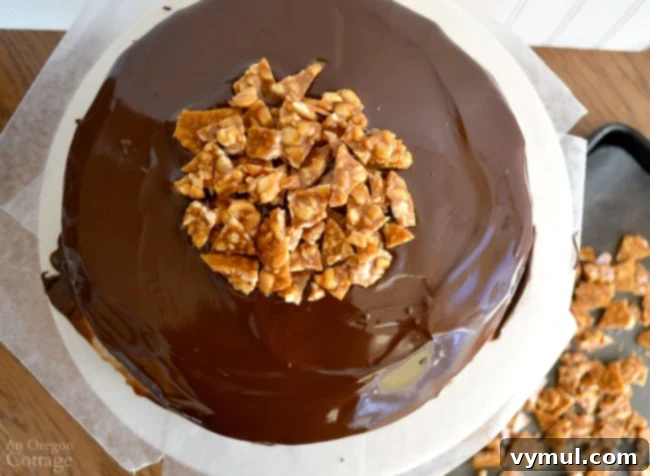
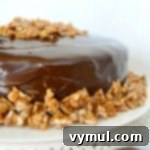
With the rich chocolate ganache beautifully set, it’s time for the grand finale: adorning your cake with the homemade peanut brittle. This step is where your creativity can truly shine, as the brittle not only adds incredible flavor and crunch but also a stunning visual texture to your celebration cake. Take the small, broken pieces of peanut brittle and artfully arrange them on top of the cake. There’s no right or wrong way to do this; let your aesthetic guide you to create a design that you love.
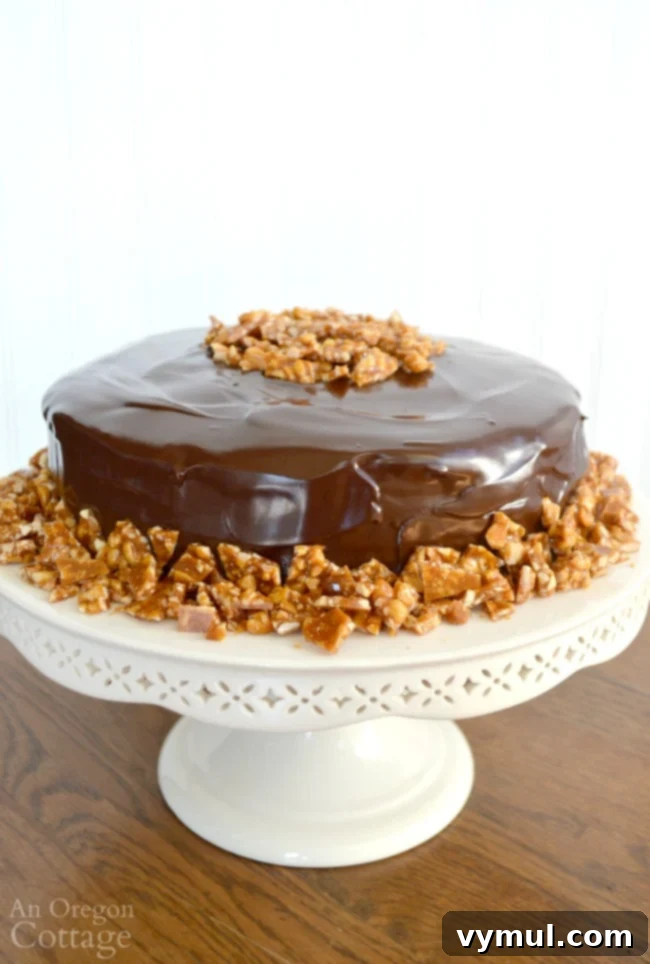
Through trial and error, I’ve discovered a practical approach to brittle placement. Since cutting through large pieces of brittle can be challenging and messy (a lesson hard-learned!), I’ve settled on a pattern that’s both attractive and functional. I typically create a central pile of brittle and then scatter smaller pieces around the edges. This arrangement makes it much easier to simply nudge the brittle aside with the tip of your knife when slicing the cake, ensuring clean, elegant portions every time.
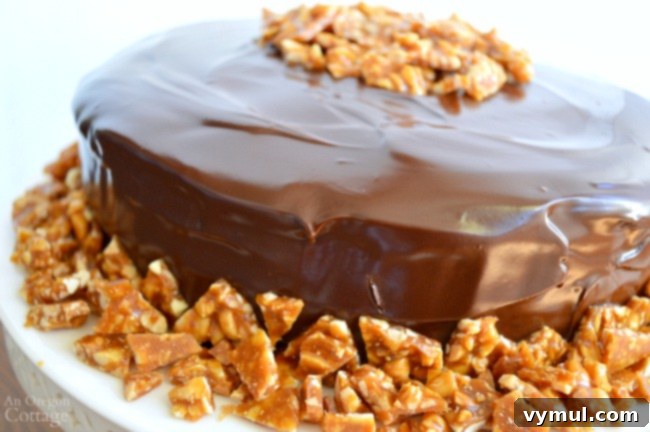
This Peanut Butter Chocolate Celebration Cake is more than just a dessert; it’s a statement of love and celebration. The combination of moist chocolate cake, creamy peanut butter frosting, rich ganache, and crunchy brittle creates a symphony of textures and flavors that will undoubtedly leave a lasting impression. And for those with peanut allergies or simply a preference for other nuts, don’t hesitate to customize! This recipe adapts beautifully to almond butter and almond brittle, or even cashews. The goal is to share this delightful confection with as many people as possible, making every occasion truly special. Enjoy the baking process, and prepare for endless compliments!
Print Recipe
Pin Recipe
SaveSaved!
Peanut Butter Chocolate Celebration Cake
Ingredients
Chocolate Cake:
- 1 cup all-purpose flour
- 1/3 cup unsweetened cocoa powder
- 1/2 teaspoon salt
- 1/4 teaspoon baking soda
- 1/4 teaspoon baking powder
- 10 tablespoons unsalted butter softened to room temperature
- 1 cup granulated sugar
- 1 teaspoon pure vanilla extract
- 2 large eggs at room temperature
- 1/2 cup sour cream or plain full-fat yogurt
Peanut Brittle:
- 1/2 cup granulated sugar
- 1/4 cup water
- 1/8 teaspoon cream of tartar
- 1/2 cup raw or roasted peanuts chopped (ensure unsalted if using roasted)
Peanut Butter Frosting:
- 1 cup creamy peanut butter choose a brand with minimal ingredients (peanuts and salt only is ideal)
- 1/2 cup powdered sugar
- 6 tablespoons unsalted butter softened to room temperature
- 1/4 teaspoon pure vanilla extract
Chocolate Ganache:
- 8 ounces good quality bittersweet chocolate approximately 8 squares, finely chopped
- 1/2 cup unsalted butter cut into small pieces
- 1 tablespoon honey
Instructions
Prepare Cake:
-
Preheat your oven to 350°F (175°C). Prepare two 9-inch round cake pans by thoroughly buttering them, then lining the bottoms with wax paper rounds, and finally buttering the wax paper. This ensures easy release.
-
In a small bowl, whisk together the flour, cocoa powder, salt, baking powder, and baking soda; set aside. In a separate large mixing bowl, beat the softened butter until light and creamy. Gradually add the granulated sugar and vanilla extract, beating until well combined and fluffy. Incorporate the large eggs one at a time, beating well after each addition, then continue to beat for an additional two minutes to incorporate air.
-
Carefully add the dry ingredients mixture alternately with the sour cream (or yogurt) to the wet ingredients, beginning and ending with the dry. Beat just until all ingredients are blended into a thick, uniform batter. Over-mixing can lead to a dense cake. Spoon the batter evenly into the prepared cake pans, spreading the tops smooth with a spatula.
-
Bake for approximately 16-18 minutes, or until a wooden toothpick inserted into the center of a cake comes out clean. Be cautious not to overbake, as this can dry out the cake. Allow the cakes to cool in their pans on wire racks for 5 minutes. Then, gently invert them onto cooling racks, carefully remove the wax paper, and invert again to cool completely right-side up.
Make Peanut Brittle:
-
Prepare a baking sheet by placing a silicone liner on it. Alternatively, grease a piece of aluminum foil very well and place it on the baking sheet. In a small, heavy-bottomed saucepan, combine the sugar, water, and cream of tartar. Bring the mixture to a simmer over medium heat without stirring.
-
Once simmering, cover the saucepan and allow it to simmer for 3 minutes. Remove the cover and continue to cook, without stirring, until the syrup turns a pale amber color, which typically takes 8 to 12 minutes. At this point, stir in the chopped peanuts. Continue to cook, stirring gently, until the syrup reaches a deep amber color, being extremely careful not to burn it (this usually takes just a few more minutes, so watch closely!). Immediately pour the hot brittle mixture onto your prepared baking sheet, spreading it as thinly as possible using an offset spatula. Let it cool completely until solid, then break it into small, manageable pieces.
Make Peanut Butter Frosting:
-
In the bowl of a stand mixer fitted with a paddle attachment, combine the creamy peanut butter, powdered sugar, softened butter, and vanilla extract. Beat on medium speed until all ingredients are thoroughly combined, smooth, and creamy.
Make Chocolate Ganache:
-
Place the finely chopped bittersweet chocolate, butter pieces, and honey in a microwave-safe bowl. Microwave for 1 minute. Stir gently with a spatula. If the chocolate is not fully melted, microwave for another 10 to 20 seconds, stirring until smooth and glossy. Alternatively, melt these ingredients in a double boiler, stirring until completely melted and well combined. Set the ganache aside to cool slightly, or place it in the refrigerator while you assemble the cake, checking frequently, until it reaches a pourable but slightly thickened consistency.
Assemble Cake:
-
Place one cooled chocolate cake layer on your chosen serving plate. Spread about 1 cup of the peanut butter frosting evenly over the top of this layer. Carefully place the second chocolate cake layer on top. Use the remaining peanut butter frosting to generously frost the top and sides of the entire cake, aiming for an even coating. Refrigerate the cake for approximately 10 minutes to allow the peanut butter frosting to set firm.
-
Remove the ganache from the fridge and whisk briefly until it’s smooth and pourable, yet thick enough to coat. Tuck several strips of wax paper under the edges of the cake on the serving plate, overlapping them slightly to protect the plate. Pour the ganache onto the center top of the cake, allowing it to flow naturally over the sides. Use a metal offset spatula to gently spread and guide the ganache to cover the entire top and sides of the cake. If the ganache drips onto the wax paper, you can scrape it up and reapply it to the sides as it thickens.
-
Carefully remove the wax paper strips from under the cake, revealing a clean, sharp ganache edge. Finally, garnish the top of the cake with the broken peanut brittle pieces, arranging them artistically as desired. For easier serving, consider creating a central pile and scattering pieces around the edges so they can be easily moved with a knife tip.
Notes
Allergy Adaptation: If you or your guests have a peanut allergy, this recipe can be easily adapted. Simply substitute almond butter for peanut butter and use chopped almonds to make almond brittle. Cashew butter and cashew brittle would also be delicious alternatives!
Nutrition
Note: This recipe was originally published in 2010. It has since been thoroughly updated with all new photos, enhanced instructions, and a user-friendly printable recipe format for your maximum enjoyment and baking success.
Other Special Desserts You Might Love:
White Zucchini Cake with Broiled Caramel-Nut Frosting
Dark Chocolate Spelt Cake with Mocha Ganache
Giant Chocolate Chip Cookie {aka, Skillet Cookie}