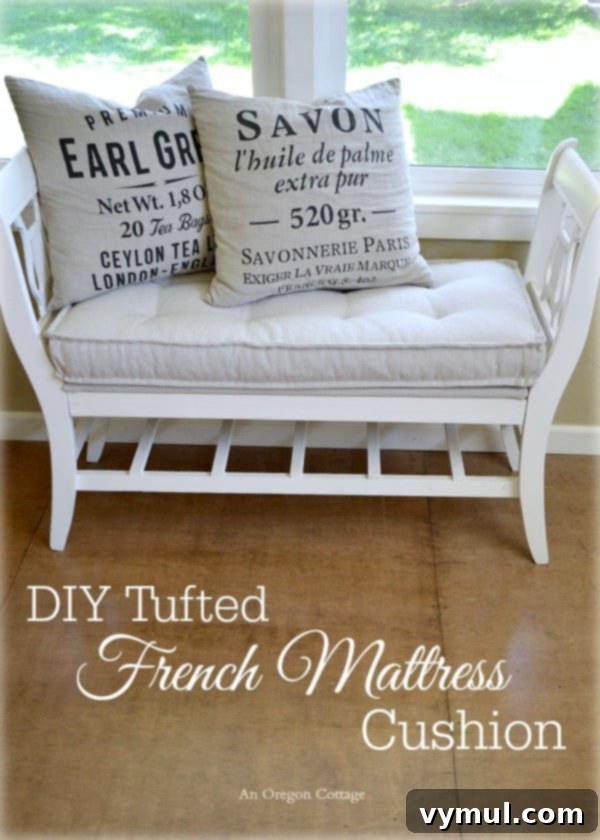
Craft Your Own Ballard-Style Tufted French Mattress Cushion: A Comprehensive Step-by-Step DIY Guide
Welcome to an exciting DIY journey where you’ll learn to create your very own elegant Ballard-style tufted French mattress cushion! This detailed, step-by-step tutorial will guide you through the process, allowing you to achieve a professional-looking result in just a few hours using basic materials and fundamental sewing skills. Imagine the satisfaction of crafting a custom piece that perfectly complements your home decor, all while saving significantly on designer prices.
Please note: Some links in this article are affiliate links. If you click on them and make a purchase, I may receive a small commission at no additional cost to you. These commissions help support the creation of more helpful content like this.
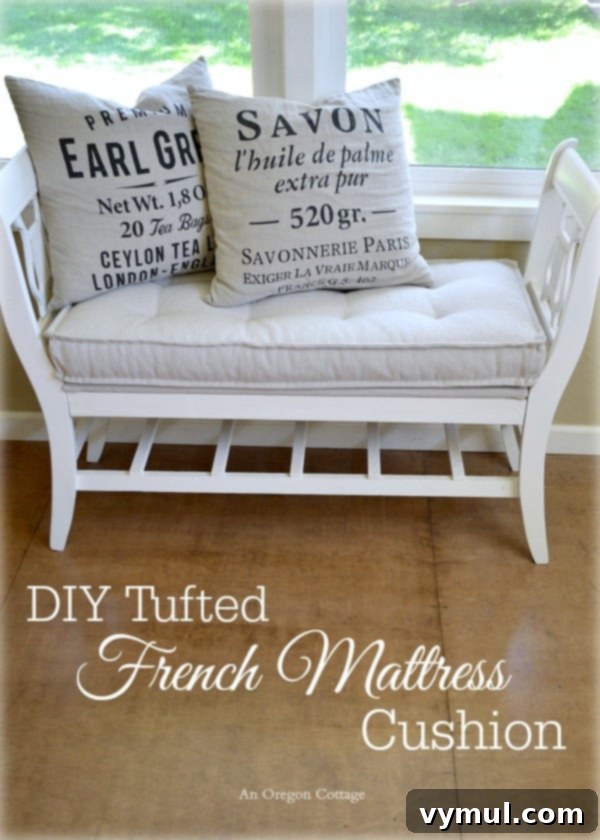
I am absolutely thrilled to finally share this tufted French mattress cushion project with you! It feels like a true accomplishment, especially considering it’s been two years in the making. Yes, really! The idea for this cushion first sparked when we finished our French-style bench, ingeniously crafted from a pair of broken chairs. That bench itself was inspired by a Ballard Designs piece – no longer available – which featured a similar charming cushion. Since then, my half-completed cushion has been patiently waiting in my workroom, a testament to my sometimes-procrastinating nature.
Like many projects I postpone, once I actually committed to tackling it, I couldn’t believe how quickly it came together. The entire process, from start to finish, literally took only a couple of hours. This project is far less daunting than it might appear, requiring only straight-stitch machine sewing and simple running-stitch hand sewing. I made sure to capture detailed photographs throughout the entire process, not just for my own reference, but specifically so I could meticulously show you exactly how to make one yourself. I’m also passing on some invaluable tips and tricks I picked up along the way, hoping to make your crafting experience even smoother and more enjoyable!
Creating a custom cushion allows for incredible personalization. You can choose any fabric to match your existing decor, ensuring a cohesive and stylish look. Beyond aesthetics, the satisfaction of creating something beautiful and functional with your own hands is truly unparalleled. This guide aims to demystify the process, empowering even novice sewers to achieve a stunning, durable French mattress cushion that will elevate any space, be it a bench, a window seat, or a cozy reading nook.
How to Make a DIY Tufted French Mattress Cushion: Essential Supplies & Steps
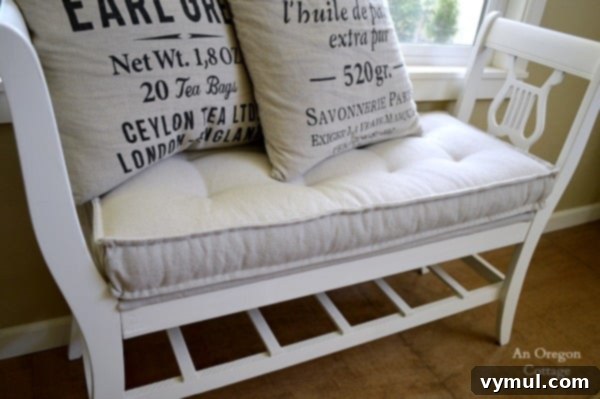
Before diving into the construction of your beautiful French mattress cushion, gathering all the necessary materials and tools is crucial. Having everything on hand will ensure a seamless and efficient crafting process. This project is designed to be accessible, utilizing common sewing supplies that you might already own or can easily acquire.
What you’ll need for your DIY tufted cushion:
- Foam Insert: A 2″ to 3″ thick foam piece, precisely cut to your desired cushion dimensions. The thickness impacts comfort and the final aesthetic.
- Quilt Batting: Enough quilt batting to completely wrap around your foam piece. Batting adds a layer of softness, helps smooth out the foam’s edges, and prevents the fabric from showing the foam’s texture.
- Sturdy Fabric: Durable fabric to cover the top, bottom, and sides of your foam. I personally used a robust piece of cotton canvas drop cloth for its strength and natural look. For most standard chair cushions, about 1 yard of upholstery-weight fabric will suffice. For larger, bench-sized cushions, plan for approximately 1-1/2 yards. Choosing upholstery-grade fabric is vital for longevity and resisting wear and tear.
- Sewing Essentials:
- Ball-head pins for holding fabric in place.
- Regular all-purpose thread for machine sewing seams.
- Heavy-duty thread like quilting or button weight thread for the hand-sewn French mattress edge and tufting, as it needs to withstand tension.
- A long, sturdy upholstery needle for hand sewing and tufting through thick foam.
- A reliable sewing machine for constructing the cushion cover.
- Optional but Recommended Tools:
- A disappearing ink fabric marker or chalk for marking tuft placements, which will vanish after use.
- Small fabric-covered buttons if you wish to add a more decorative, traditional button-tufted look.
- Small craft scissors for precise thread snipping, especially useful during tufting.
- A leather thimble to protect your finger when pushing the upholstery needle through thick foam during tufting.
Once you have all your supplies ready, you’re set to begin creating your beautiful, custom tufted French mattress cushion!
Tufted French Mattress Cushion Construction Steps
Step 1: Precisely Cut Your Fabric Pieces
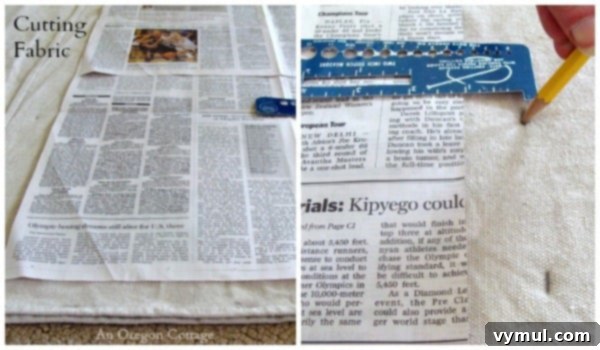
Accurate fabric cutting is the foundation of a well-made cushion. Take your time with this step to ensure all subsequent stages are as smooth as possible.
1. Measure and Pattern Creation: Begin by carefully measuring your foam piece. Once you have the exact dimensions, create a paper pattern (newspaper works perfectly) for both the top/bottom piece and the side pieces of your cushion. Lay your fabric flat, pin the patterns securely to prevent shifting, and then use a ruler and fabric marker to mark your cutting lines. This is where the unique French mattress edge comes into play:
- For the top and bottom pieces, you’ll mark a generous 1-inch allowance beyond your paper pattern, all the way around. This extra fabric is crucial; it provides the necessary material to “pinch” and hand-sew, forming the distinctive mattress edge.
- For the cushion side pieces, when marking where the side corner pieces join, you only need a standard 1/2-inch seam allowance. However, for the long edges of the side pieces that will attach to the top and bottom, maintain the 1-inch allowance.
UPDATED TO CLARIFY SEAM ALLOWANCES: To avoid confusion, let’s break this down further. ALL the edges where the side pieces will meet the top/bottom pieces should be cut with a 1-inch allowance. This 1-inch allowance essentially comprises two parts: a 1/2-inch regular machine sewing seam allowance, AND an additional 1/2-inch for the decorative “pinching” and hand-sewing required to create the French mattress edge. BUT, the short edges of your side pieces – those that will form the vertical corners of your cushion – only need the standard 1/2-inch seam allowance, as they will be sewn together and don’t require the extra fabric for pinching. Think of it this way: add a 1/2-inch seam allowance everywhere, and then ADDING another 1/2-inch only on the edges that will be pinched and hand-sewn (i.e., the perimeter of the top and bottom panels, and the corresponding long edges of the side panels).
2. Precise Cutting: Carefully cut out all your fabric pieces along the marked lines. Precision here will pay off in the final assembly.
Step 2: Expertly Sew Your Cushion Cover
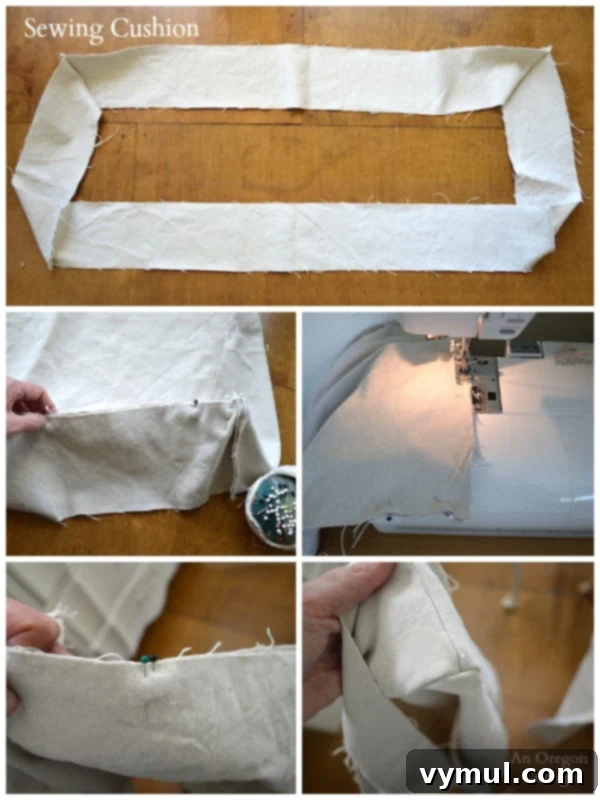
This stage involves assembling the fabric pieces into the cushion cover. Ensure your sewing machine is threaded correctly and you’re using a strong, appropriate needle for your chosen fabric.
3. Sew Side Corner Seams: Take your side fabric pieces and sew the corner seams together using a 1/2-inch seam allowance. These are the vertical seams that define the cushion’s height. (For those in search of a reliable sewing machine, I highly recommend a model similar to this Janome machine. Mine has been a workhorse for over a decade, handling countless tough sewing projects with ease!)
4. Pin Side-to-Bottom: With the side pieces now forming a loop, pin this assembly to the bottom fabric piece. Carefully ease the fabric as needed to align the straight edges and navigate around the corners smoothly. Take your time to ensure an even distribution.
5. Sew Side-to-Bottom Seam: Stitch the side-to-bottom seam all the way around using a 1/2-inch seam allowance. Remember, the additional fabric allowance we left will be used later for the hand-sewn French mattress edges.
6. Attach the Top Piece (with an opening!): Repeat steps 4 and 5 for the cushion’s top piece, pinning and sewing it to the sides. However, this time, it’s absolutely crucial to leave a wide opening along one of the sides. This opening is where you will eventually insert your foam. A helpful trick I use to avoid accidentally sewing the entire seam closed (a mistake I’ve learned the hard way too many times!) is to place two pins side-by-side at the beginning and end of your desired opening. This serves as a clear visual reminder to stop sewing. Additionally, make sure to bar-tack (sew back-and-forth a couple of times) at both ends of the opening. This reinforces these stress points, which will endure considerable pressure when you insert the dense foam.
7. Inspect Corners: Before you even think about inserting the foam, thoroughly check each corner of your newly sewn cushion cover. Look for any creases, puckers, or pleats. If you find any, simply remove a few stitches in that area and re-sew them until your corners are smooth and crisp. This attention to detail now will significantly improve the final appearance.
Step 3: Apply Batting & Insert Foam Comfortably
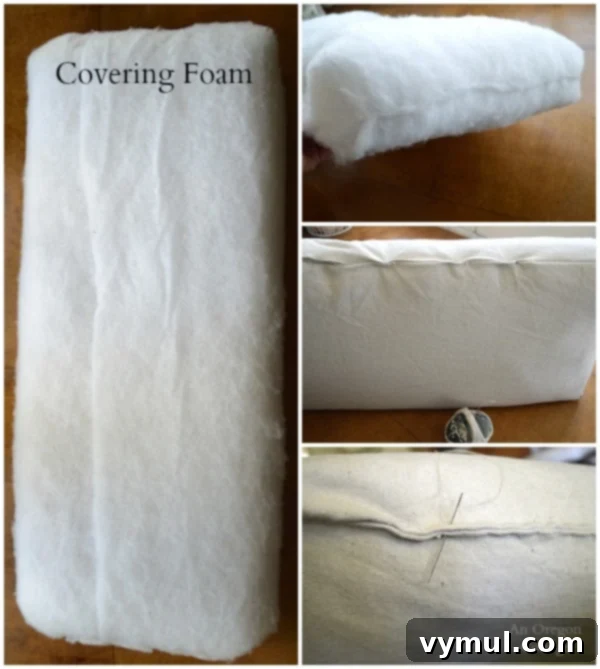
Adding batting is an essential step that not only provides extra comfort but also helps to smooth the contours of the foam, giving your cushion a more polished and inviting look.
8. Cover Foam with Batting: Lay your quilt batting flat and carefully place your foam piece on top. Wrap the batting around the foam, ensuring complete coverage on all sides.
9. Secure the Batting: At the ends of the foam, fold the batting neatly, similar to how you would wrap a present. Use a simple slip stitch to secure these folded ends closed. There’s no need to sew where the batting overlaps lengthwise; securing the ends will be sufficient to keep it snugly in place around the foam.
10. Insert Foam into Cover: Now for the slightly tricky part! Carefully insert the batting-covered foam into your cushion cover through the opening you wisely left. You may need to fold or compress the foam slightly to get it through the opening – don’t be afraid to gently manipulate it. Once the foam is fully inside and properly positioned, fold the raw edges of the opening under to align with the 1/2-inch seam allowance and pin it securely closed.
11. Close the Opening: Using a simple slip stitch or a running stitch, hand-sew the opening closed. Aim for small, even stitches that blend seamlessly with the machine-sewn seams.
Step 4: Create the Signature French Mattress Edge
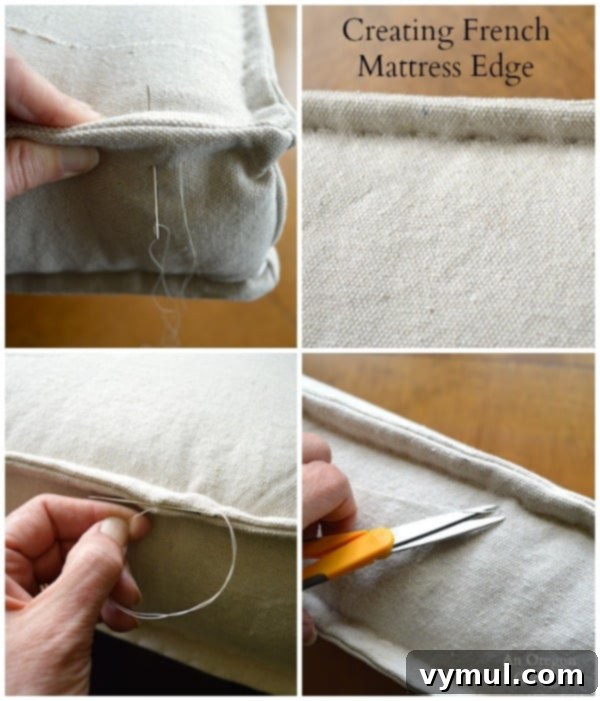
This is where your cushion truly begins to take on its distinctive French mattress character. The hand-stitched edge adds a beautiful, tailored finish that sets this style apart.
12. Prepare for Hand Sewing: Thread a long upholstery needle with a sturdy quilting or button thread. Tie a secure knot at the end of your thread. To hide the knot, insert the needle into the seam at your chosen starting point on one of the bottom edges of the cushion, pulling the thread gently so the knot pops into and disappears within the seam allowance. Now, begin sewing by pinching approximately an inch of fabric and batting at the edge. Sew at the base of this pinch (usually about 1/2 inch from the machine-sewn edge) using a small, consistent 1/4-inch running stitch. This stitch will secure the pinched edge, creating a raised, defined border.
13. Continue Around All Edges: Continue hand sewing this running stitch meticulously all around the entire perimeter of the top edge, and then repeat the process for the bottom edge. As you work, rethread your needle and hide any new knots as needed, following the method described above.
14. Hiding Knots Like a Pro: The goal is a clean finish. When you reach the end of a thread or are starting a new one, bring your needle up to the top of the seam from the running stitch. Create your knot precisely where the fabric pieces come together in the seam, allowing the knot to nestle invisibly within the folds. The bottom pictures in the original article provide excellent visual guidance for this technique.
15. Finishing a Thread: After making your final ending knot for a section of thread, send your needle back through the seam and push it a bit further down into the side fabric of your cushion. Gently pull your thread so it’s slightly taut, and then snip it close to the fabric. The tension will cause the cut end to ease back into your foam and batting, making both the thread end and the finishing knot completely invisible.
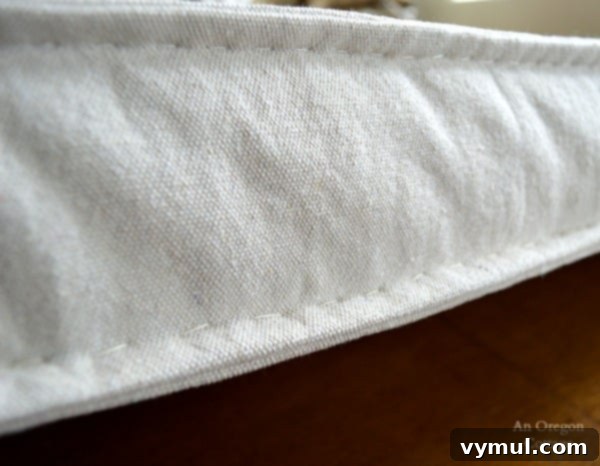
Don’t fret over minor imperfections in your hand sewing! Crooked stitches or slight variations in length are part of the charm and character of a handmade French mattress cushion. Embrace these unique touches – they add to the authentic, artisanal appeal of your creation. After all, that’s what makes it truly yours!
Step 5: Master the Art of Tufting for a Distinctive Look
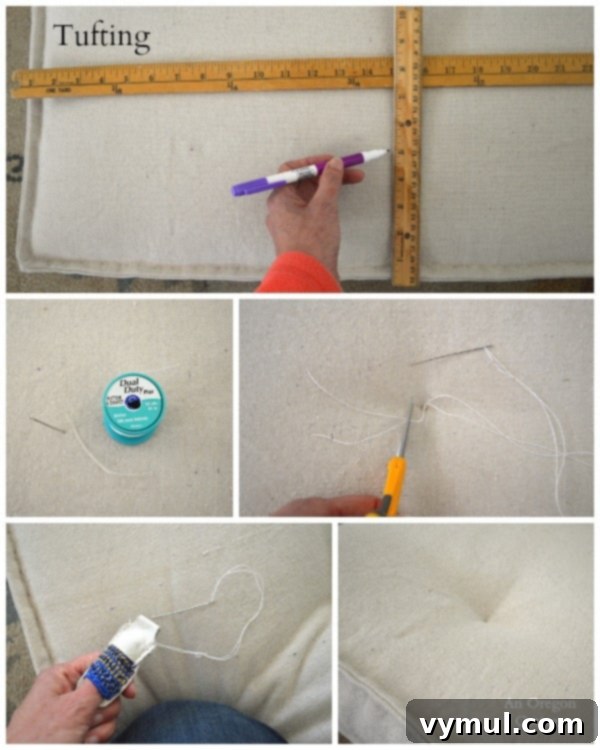
Tufting adds depth, texture, and the final touch of traditional elegance to your French mattress cushion. While it can be the most challenging part, the visual impact is well worth the effort. It creates those signature dimples that give the cushion its unique character.
16. Mark Tuft Placements: Let’s be honest, this is arguably the toughest part of this project, but it’s completely optional! Your cushion would still look lovely with a plain top, but tufting truly elevates it to that authentic mattress aesthetic. Begin by marking where you want your tufts to be on both the top AND bottom of the cushion. A disappearing ink fabric marker or a light pencil mark (which will be hidden by the tufting) works best. For reference, my cushion is 38″ x 16″. I opted for 8 tufts, spacing them by dividing the length by 5 (resulting in 4 equally spaced tufts along the length) and then marking 5 inches in from each of the shorter sides. Consider various tufting patterns – a simple grid, diamond, or even scattered dots – to match your personal style.
17. Select Strong Thread: For tufting, you absolutely need a heavy-duty button and upholstery thread. These tufts will be under constant pressure, and using a strong thread is essential for their longevity. Even with thick thread, I recommend doubling it in your needle for maximum strength and durability.
18. The Tufting Process:
- Start from the bottom of the cushion. Insert your upholstery needle precisely at one of your marked points.
- Carefully squeeze and compress the cushion as much as possible to help guide the needle.
- Push the needle through the entire thickness of the foam, batting, and fabric until it emerges at the corresponding marked point on the top of the cushion. Leave a long tail of thread on the bottom.
- Now, re-insert the needle very close to where it just came up through the top. (Optional tip: If you desire a classic button-tufted look, you can thread a small fabric-covered button onto the thread before re-inserting the needle.)
- Push the needle back down through the fabric, batting, and foam, compressing the cushion again as you go.
- Bring the needle out on the bottom of the cushion, ideally close to where your starting thread tail is.
- Tie the two thread ends (the starting tail and the one just brought through) together. Tie them semi-tightly – you want to create a distinct dimple without tearing the fabric over time. Experiment with tension until you achieve the desired indentation.
- Clip the excess thread, leaving about 1/4-inch ends visible on the bottom of the cushion. Using small craft scissors is particularly helpful for this precise snipping.
19. Tufting Made Easier – Pro Tips: As I mentioned, this part can be tough! Pushing a long needle through 3 inches of dense foam and hitting precise marks was more challenging than I anticipated. Here are two tips that significantly eased the process for me:
- Protect Your Thumb: A leather thimble worn on your thumb will allow you to apply substantial force to the end of the needle without discomfort, while simultaneously pulling from the other side.
- Hands-Free Tying: When you reach the tying stage, use your knee to firmly hold down and compress the foam. This frees up both your hands, making it much easier to tie the threads securely without the added struggle of simultaneously holding the foam in place.
20. Complete Your Tufting: Repeat this tufting process for all your marked areas until your cushion boasts a beautifully dimpled, tufted surface.
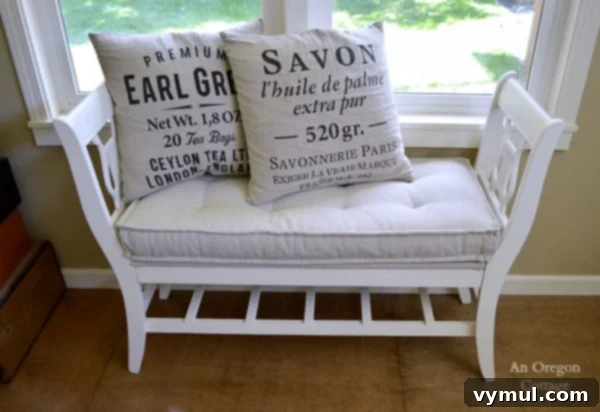
Enjoy Your Beautifully Crafted French Mattress Cushion!
Once all the tufting is complete, it’s time to step back, admire your handiwork, and truly enjoy your sweet tufted French mattress cushion! This project is not just about making a cushion; it’s about infusing your home with personality, comfort, and the undeniable charm of a custom-made piece.
Considering similar cushions can fetch upwards of $129 (or even more!) in high-end catalogs, dedicating just 2-3 hours to this DIY project is incredibly rewarding and budget-friendly. Don’t you agree? You’ve not only created a beautiful and durable addition to your home, but you’ve also gained valuable sewing skills and the immense satisfaction of a job well done.
Care and Maintenance for Your DIY Cushion
To ensure your new tufted French mattress cushion remains beautiful for years to come, regular care is important. Spot clean any spills immediately with a mild detergent and a damp cloth, blotting gently. If your fabric is machine washable (check the fabric care instructions before starting the project), you might be able to remove the cover for a more thorough cleaning – though this depends on how tightly the foam is packed. For best results, professional cleaning might be a good option for heavily soiled covers. Rotate your cushion periodically to ensure even wear and maintain its plump shape.
This project is a fantastic way to personalize your living space, create unique gifts, or simply indulge in the joy of creative crafting. With these detailed instructions and tips, you’re now equipped to tackle this delightful project with confidence. Happy sewing!
Disclosure: Affiliate links in this post will earn a commission based on sales, but it doesn’t change your price. Click here to read my full disclaimer and advertising disclosure.