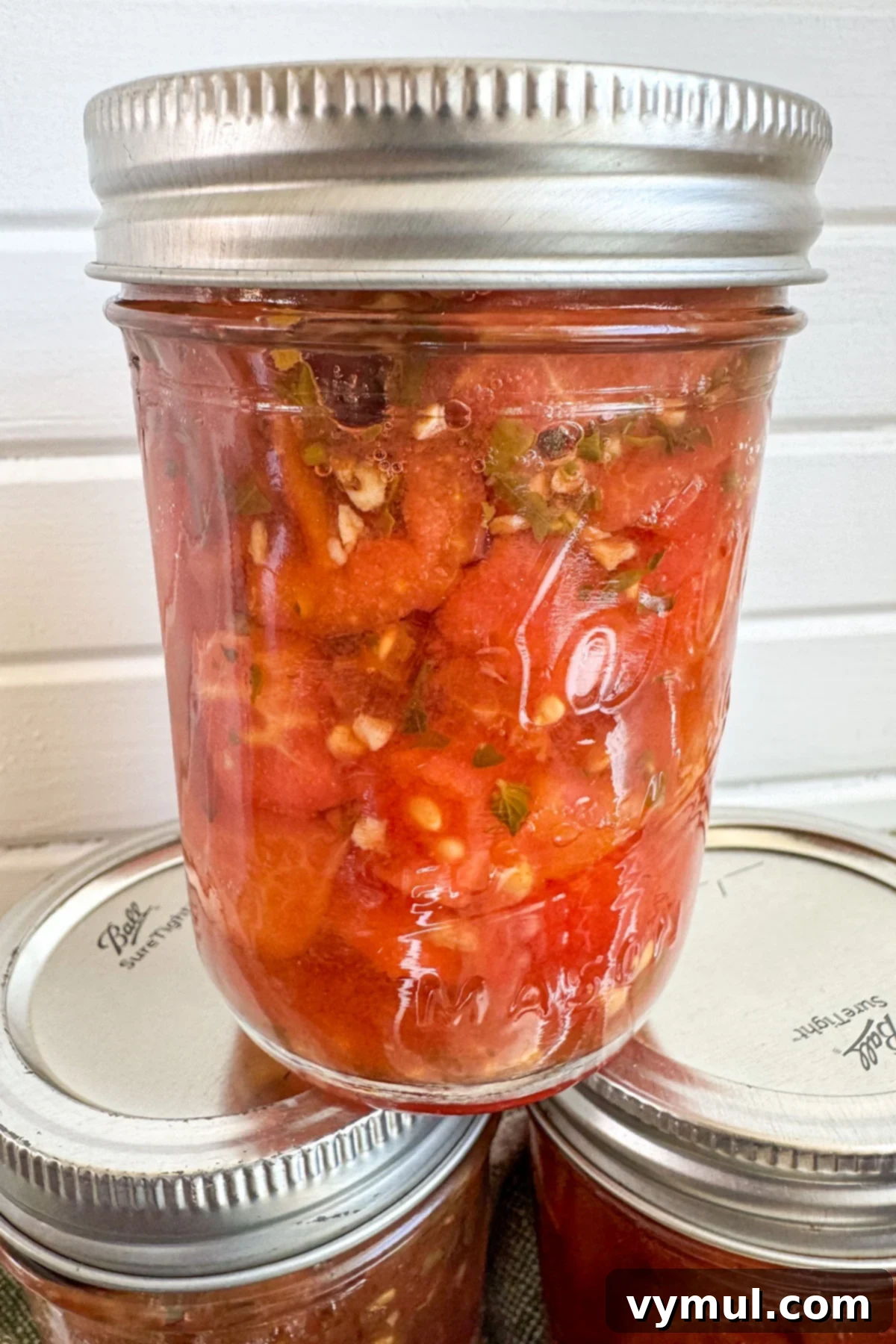
Canned Tomato Bruschetta: Preserve Garden-Fresh Flavor All Year Long
Imagine capturing the vibrant taste of peak-season tomatoes, infused with aromatic garlic, fragrant herbs, a touch of fine wine, and a hint of tangy balsamic vinegar, ready to elevate your meals any day of the year. This canned tomato bruschetta recipe makes preserving that garden-fresh flavor incredibly simple, transforming humble paste tomatoes into a gourmet topping that tastes like summer in a jar. Beyond simply topping toast, you’ll discover how this versatile preserve can revolutionize your winter salads, pizzas, grain bowls, and more! Its robust flavor and satisfying texture, carefully maintained through the canning process, will truly surprise and delight you.
✩ What readers are saying…
“This is the best thing I have ever canned in my decades of canning. Other recipes recommend not peeling, but I think it is essential. I have a dicer and used the 1/2 inch blade which was perfect. The tomatoes stayed firm and tasted fresh.” – Linda
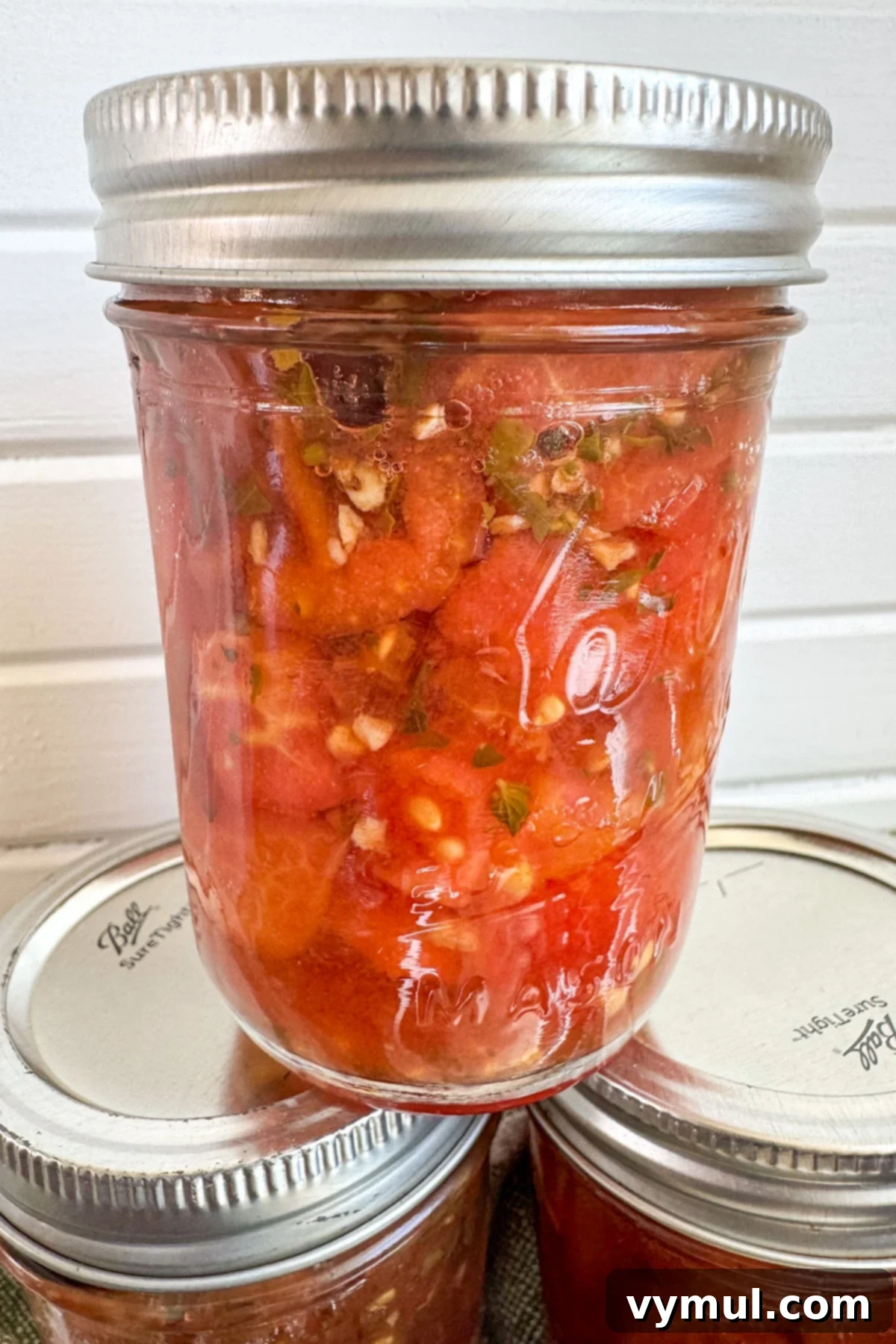
For years, I was skeptical about canning tomatoes for anything other than basic sauces or diced varieties. The idea of a “canned tomato bruschetta” felt almost contradictory; surely, the tomatoes would turn out mushy, resembling a chunky sauce more than a fresh, vibrant topping for bread. However, the unique combination of ingredients – savory white wine, bright apple cider vinegar, pungent garlic, fragrant dried herbs, and rich balsamic vinegar – alongside the promise of an easy water bath canning process, was too intriguing to resist. I decided to try it, and I’m immensely glad I did.
The results were absolutely phenomenal. The tomatoes, far from being mushy, retained a wonderful firmness and developed an incredibly deep, complex flavor from marinating in the perfectly balanced brine. This isn’t just a basic tomato preserve; it’s a gourmet concoction that effortlessly infuses a burst of summer into any dish. From simple grilled bread and crispy crackers to elaborate grain bowls, and from refreshing green salads to homemade pizzas, a jar of this homemade bruschetta topping truly elevates every meal.
You genuinely won’t believe how fresh these tomatoes taste during the colder months! It truly embodies the essence of “summer in a jar.” Now, it’s become a beloved annual tradition to prepare several batches of this delightful canned tomato bruschetta each season. Having these jars on hand is a complete game-changer, especially when those inevitable winter cravings for robust, sun-ripened tomatoes strike, and the only alternative at the grocery store is bland, pale produce. It’s a simple, rewarding way to extend your garden’s bounty and enjoy delicious, homemade flavors long after the growing season has ended.
Understanding Bruschetta: More Than Just a Topping
Before we dive into the canning process, let’s clarify what bruschetta truly is – a term often misunderstood, even by seasoned food enthusiasts. For many years, I, like countless others, mistakenly thought “bruschetta” referred exclusively to the delicious tomato, garlic, and sometimes onion mixture used to adorn bread (much like this fresh version I frequently prepare during peak tomato season). However, traditional Italian culinary wisdom reveals that the term bruschetta actually refers to the toasted bread itself. This bread, typically slices of rustic Italian loaf or baguette, is first grilled or toasted, then traditionally rubbed with a raw garlic clove and drizzled with good quality extra virgin olive oil. While it can be topped with a myriad of ingredients, from cured meats and cheeses to spreads or pâtés, the most universally beloved and recognized topping remains the fresh, flavorful tomato mixture we associate it with today. Understanding this distinction adds a richer appreciation for this classic Italian appetizer.
How to Pronounce Bruschetta Correctly
The Italian language can sometimes present a playful challenge for English speakers, and “bruschetta” is a prime example of a word commonly mispronounced. Initially, many tend to pronounce it phonetically, as it appears: ‘broo-shet-tuh.’ However, in Italian, the ‘ch’ combination consistently produces a hard ‘k’ sound. Therefore, the correct pronunciation is actually ‘broo-sket-tuh.’ Getting the pronunciation right not only shows respect for Italian culinary traditions but also adds a little extra authenticity to your enjoyment of this timeless appetizer!
Essential Ingredients for Homemade Tomato Bruschetta
Crafting this flavorful canned tomato bruschetta requires a selection of simple yet high-quality ingredients. Each component plays a crucial role in developing the deep, rich taste that makes this recipe so irresistible and perfectly safe for water bath canning.
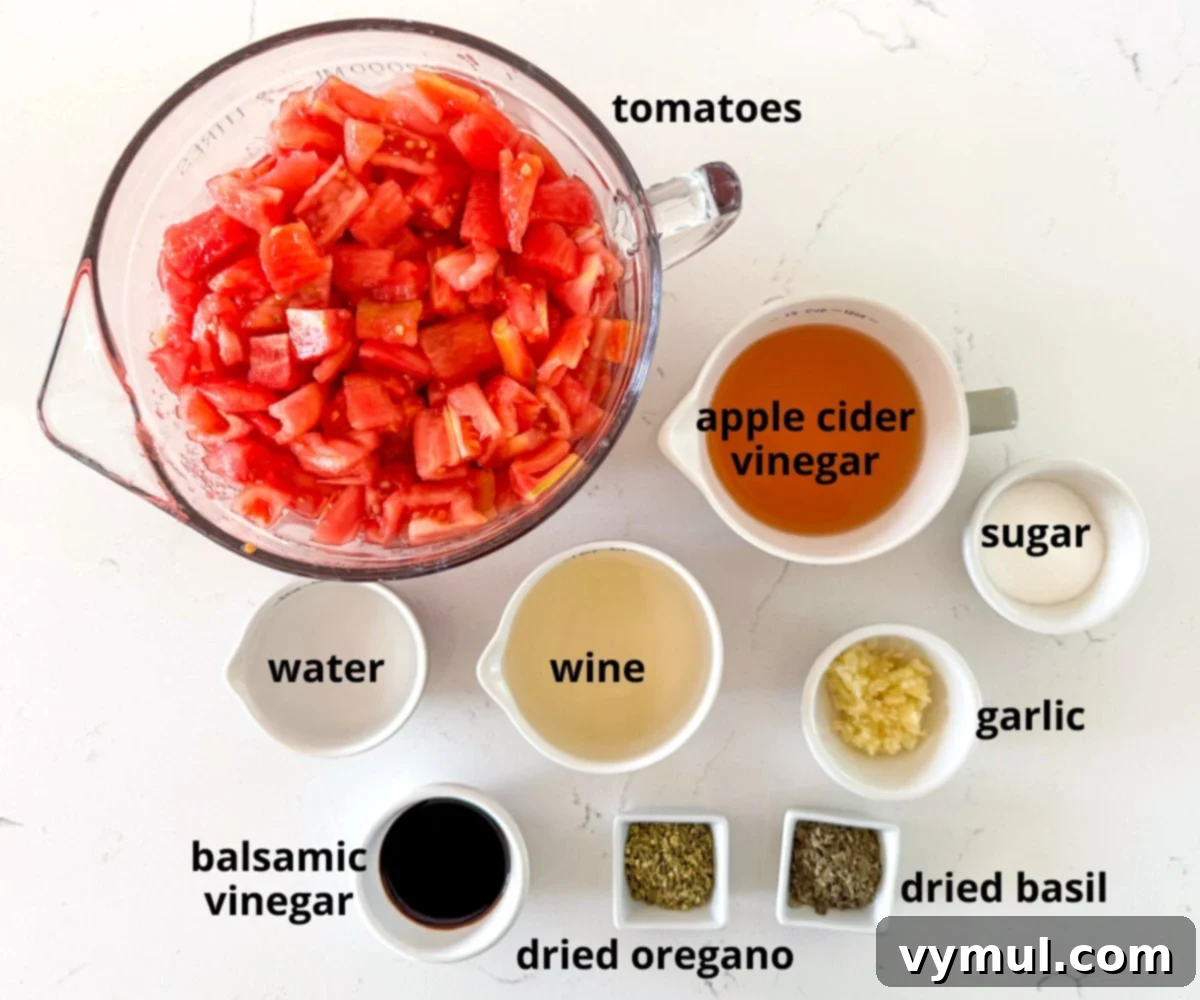
Key Ingredient Notes & Tips for Success
- Tomatoes: The Cornerstone of Texture. The absolute most critical element for this recipe’s success is using firm, low-moisture paste tomatoes. Varieties like Roma, San Marzano, Amish Paste, or Plum tomatoes are ideal because their dense flesh and minimal seed/juice content prevent them from becoming mushy during the canning process. This is *not* the time for juicy Brandywines or other large heirloom slicing tomatoes, no matter how exquisite their fresh flavor might be. While you can experiment with slightly underripe and firm slicing tomatoes if you’re feeling adventurous, sticking to paste varieties guarantees that desirable “fresh” texture even after months in the jar.
- Vinegar: Flavor and Preservation. This recipe essentially creates marinated tomatoes, where vinegar is paramount. It provides both the distinctive tangy flavor and the essential acidity required for safe water bath canning. The inclusion of balsamic vinegar adds a delightful depth, complexity, and a hint of sweetness that complements the tomatoes beautifully, creating a more robust flavor profile than a single vinegar could achieve.
- White Wine: Aromatic Acidity. Dry white wine contributes both a subtle sweetness and a layer of complex flavor to the brine, helping to cut through the sharpness of the vinegar. Crucially, it also adds to the overall acidity of the mixture, which is vital for canning safety. For this reason, it cannot simply be replaced with water or more vinegar without careful consideration. For those who prefer not to cook with wine, I’ve researched and developed a safe substitution, detailed in the “Tip” section below and within the recipe card.
- Garlic: Aromatic Power. Garlic is an indispensable aromatic for any bruschetta. However, in canning, it’s crucial to adhere strictly to the amount of fresh garlic specified. Adding more fresh, low-acid ingredients like garlic can subtly alter the pH balance of the recipe, potentially compromising safety and the efficacy of water bath canning. Stick to the recommended five cloves for both flavor and safety.
- Sugar: Balancing Act. Sugar’s role here is not to make the bruschetta overtly sweet, but to perfectly balance the acidity of the vinegars and wine. It mellows the tartness, allowing the other flavors to shine through. You can slightly adjust the quantity to your personal preference for sweetness, or even substitute it with honey for a different nuanced sweetness.
- Dried Herbs: Safety First. I typically use a classic combination of dried basil and dried oregano, which are foundational flavors for authentic Italian cuisine. You’re welcome to experiment with other dried herbs or a pre-made dried Italian seasoning blend to suit your taste, but it is absolutely essential that you DO NOT use fresh herbs in this canning recipe. Fresh herbs are low-acid ingredients that can significantly change the pH of the mixture, making the recipe unsafe for water bath canning. Always add fresh herbs, if desired, only just before serving, after the jar has been opened.
💡 TIP: Do I have to use wine in this recipe?
Many readers have asked about substituting the wine. While the wine adds a lovely sweetness and acidity, a safe alternative is possible. After careful research into the pH levels of dry white wine (typically 3.0-3.4) and various vinegars, I recommend the following substitution to maintain the necessary acidity for canning safety:
To replace the 1 cup of dry white wine, use an equal amount (1 cup) of apple cider vinegar (which has a similar pH of around 3). This ensures the overall acidity of the recipe remains stable, preventing any impact on safety. To balance the more pronounced vinegar flavor that this substitution will introduce, increase the sugar or honey by 3 tablespoons.
How to Make Canned Tomato Bruschetta: A Step-by-Step Guide
This comprehensive guide will walk you through each stage of making and preserving your own delicious tomato bruschetta, ensuring a safe and successful canning experience that yields perfect, firm tomatoes every time.
PREPARATION: Essential First Steps for Optimal Results
- Tomato Prep is Key: Begin by carefully washing your chosen paste tomatoes. For the best texture in the finished product, and to avoid tough skins floating in your jars, you’ll need to peel them. This easier method for peeling tomatoes can save you significant time and effort. Once peeled, coarsely chop the tomatoes, being sure to remove the juicy, seedy insides as you go. This step minimizes excess moisture, which is crucial for preventing mushy results in your canned bruschetta. Accurately measure out the chopped tomatoes to ensure proper brine ratios and consistent flavor.
- Canning Equipment Readiness: While you’re busy with tomato preparation, ensure all your canning equipment is ready to go. Wash your half-pint jars thoroughly and keep them warming in your canner or a large pot of hot water (this recipe typically yields about nine half-pint jars). Prepare your new canning lids by washing them (the rings can be reused from previous canning projects), and fill your water bath canner, placing it on the stove to begin heating. If you’re new to water bath canning, or simply need a refresher on the basics of preparing your canner and jars, refer to my full boiling water canning tutorial here for detailed instructions.
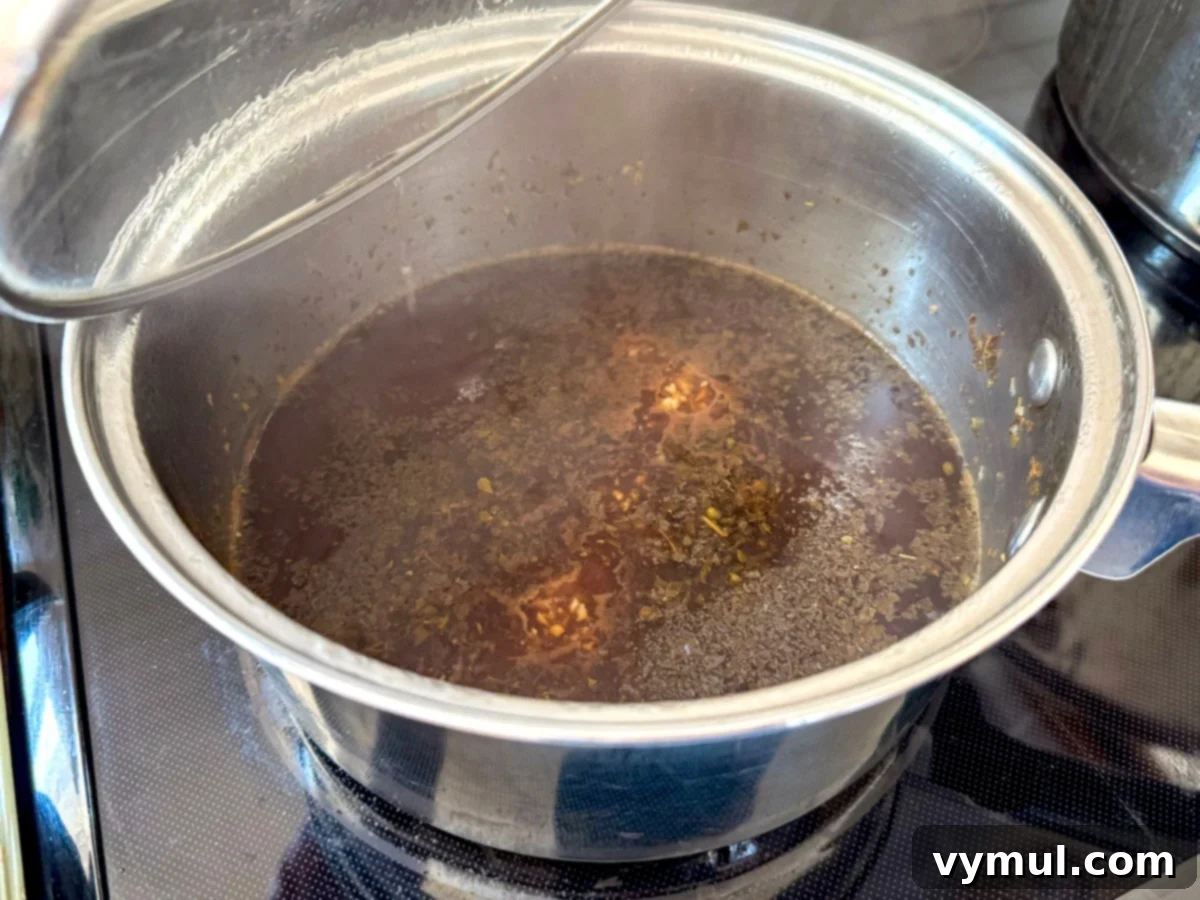
Step 1: Prepare the Flavorful Brine. In a large, deep pot – ideally made of stainless steel to prevent reactivity with acidic ingredients – combine all the ingredients for the brine except the chopped tomatoes. This includes the minced garlic, dry white wine, apple cider vinegar, water, sugar (or honey), balsamic vinegar, dried basil, and dried oregano. Bring this aromatic mixture to a full, rolling boil over high heat, stirring frequently to ensure the sugar fully dissolves and all flavors meld. Once boiling, reduce the heat to low, cover the pot, and allow it to gently simmer for about 5 minutes. It’s crucial to keep this brine warm on the lowest heat setting while you proceed to pack your jars; this helps prevent thermal shock to the jars and promotes a stronger vacuum seal.
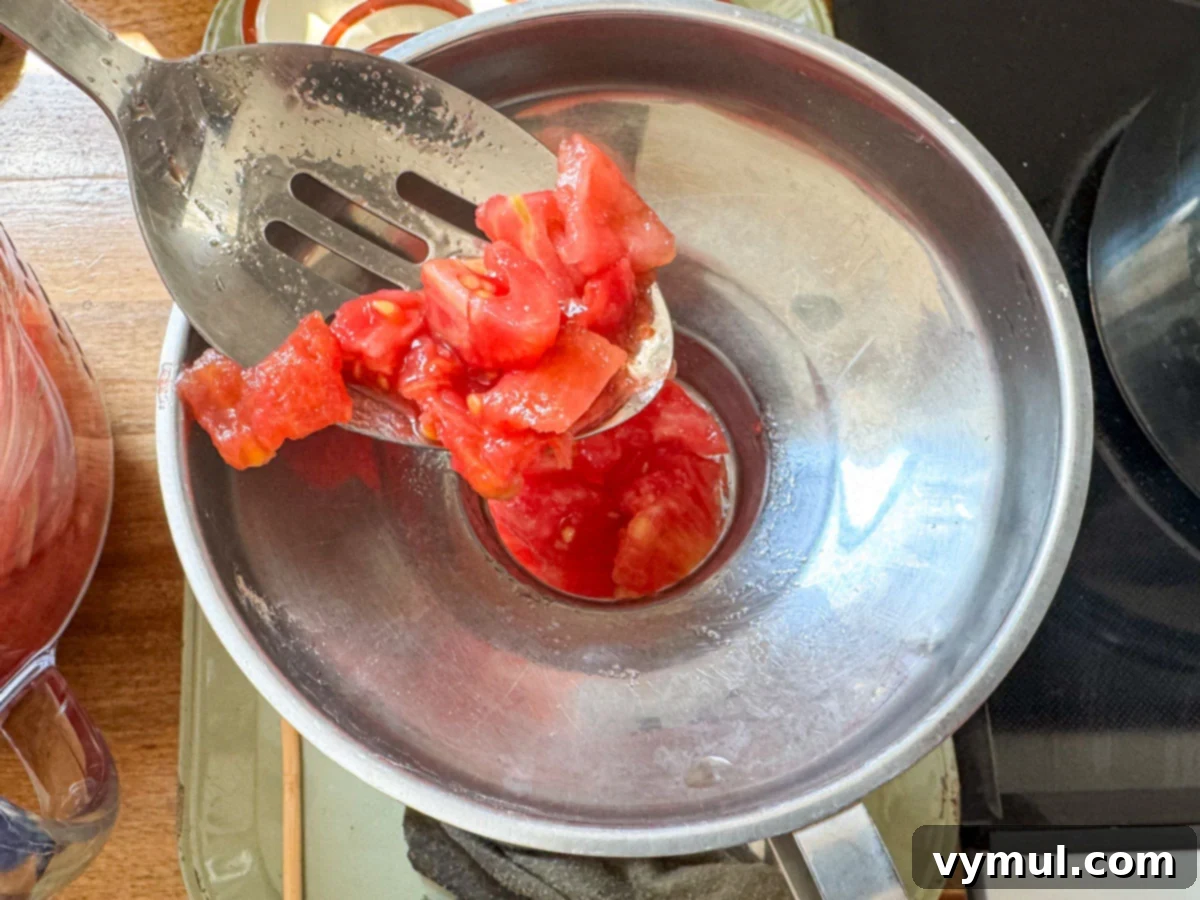
Step 2: Pack Tomatoes into Hot Jars. Carefully remove a warm, prepared jar from your canner or hot water. Using a slotted spoon to drain excess liquid, begin to pack the coarsely chopped tomatoes tightly into the hot jar. It’s important to leave a generous 1/2-inch of headspace between the top of the tomatoes and the rim of the jar. As you fill, gently press the tomatoes down with the back of the spoon or a clean utensil. This helps to eliminate large air pockets and allows you to fit more delicious bruschetta into each jar without crushing the tomatoes.
Understanding Headspace in Canning
Headspace refers to the empty space between the food surface and the rim of the canning jar. This space is absolutely crucial in canning because it allows for food expansion during the heating process and helps in forming a strong, reliable vacuum seal as the jar cools. Always meticulously follow the recipe’s recommended headspace measurement (which is 1/2-inch for this bruschetta) to prevent seal failures, food spoilage, and ensure the long-term safety of your preserves.
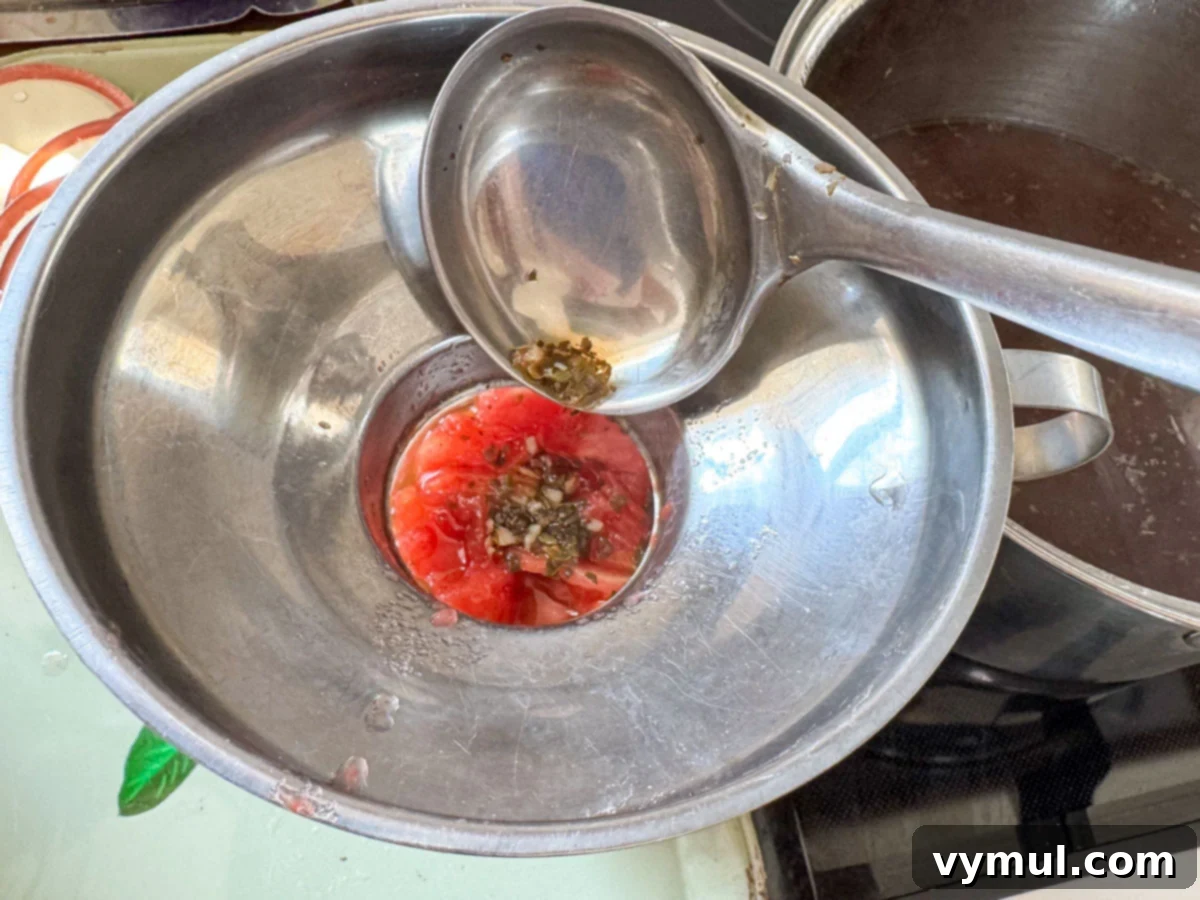
Step 3: Cover Tomatoes with Hot Brine. Once the tomatoes are packed into the jar, carefully ladle the hot vinegar mixture (brine) over them. Ensure that all the tomatoes are completely submerged in the liquid. As you pour, continuously monitor the headspace, making sure to maintain the critical 1/2-inch space from the top of the liquid to the jar rim. Using a canning funnel can make this step cleaner and prevent hot liquid from splashing onto the jar rims, which could interfere with sealing.
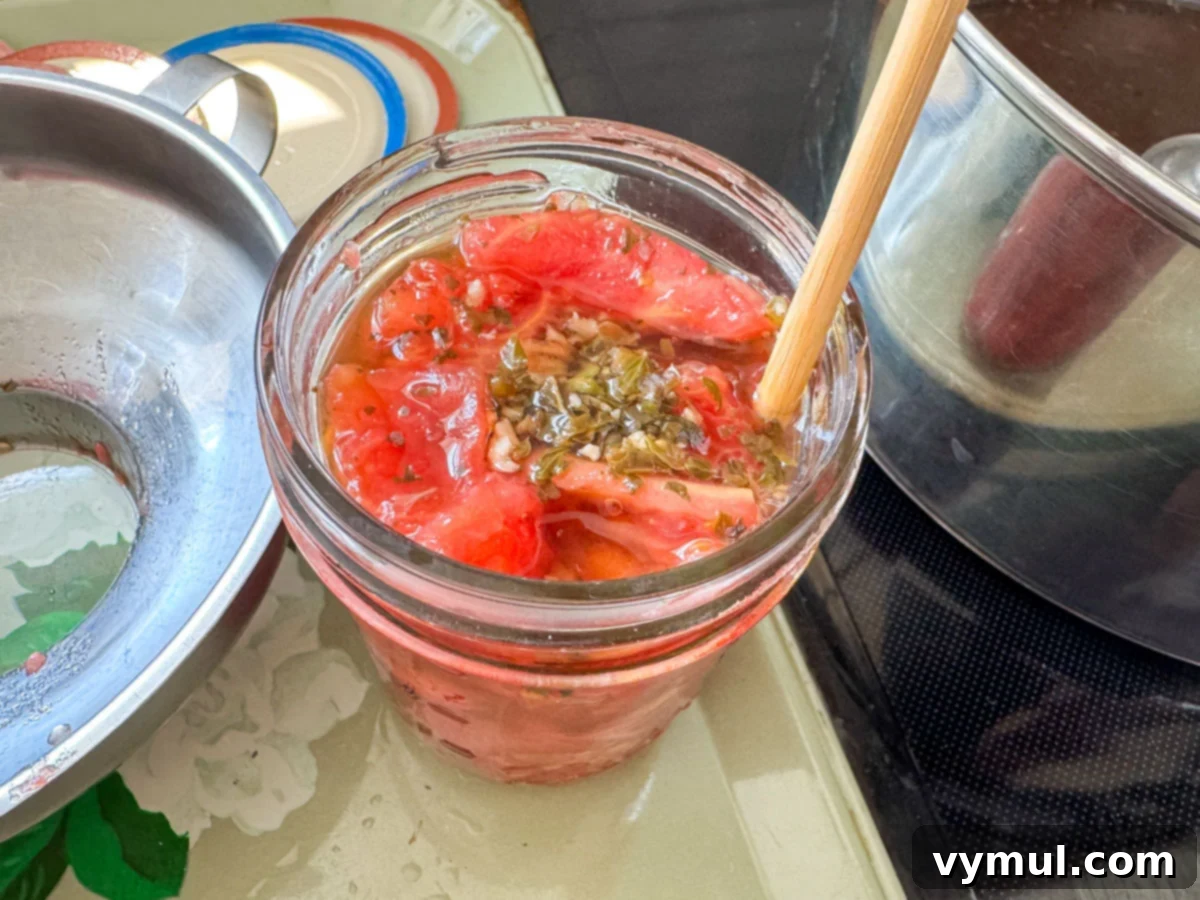
Step 4: Remove Trapped Air Bubbles. This is a vital step for canning safety and quality. Using a wooden chopstick or a dedicated de-bubbling tool (avoid anything metal that could scratch the jar), carefully run it around the inside edge of the jar. Gently push the tomatoes and liquid to release any trapped air bubbles. Also, poke the tool in several places through the center of the jar. Air bubbles, if left, can cause the liquid level to drop significantly during processing, potentially exposing some of the food and compromising the seal. If the liquid level falls below the 1/2-inch headspace after de-bubbling, add a bit more hot brine to restore it.
Why Debubble Preserves with Chopped Produce?
In preserves like this, where chopped ingredients are suspended in liquid, air bubbles can easily become trapped within the food matrix. If these bubbles are not thoroughly removed before processing, they will expand and escape during the heating cycle in the canner. This expansion often causes the liquid level in the jar to decrease, which can leave some of the food exposed above the brine. Exposed food is more prone to discoloration, can dry out, and most importantly, can compromise the integrity of the vacuum seal, potentially leading to spoilage. Thorough debubbling ensures consistent preservation, optimal food quality, and maximum shelf life.
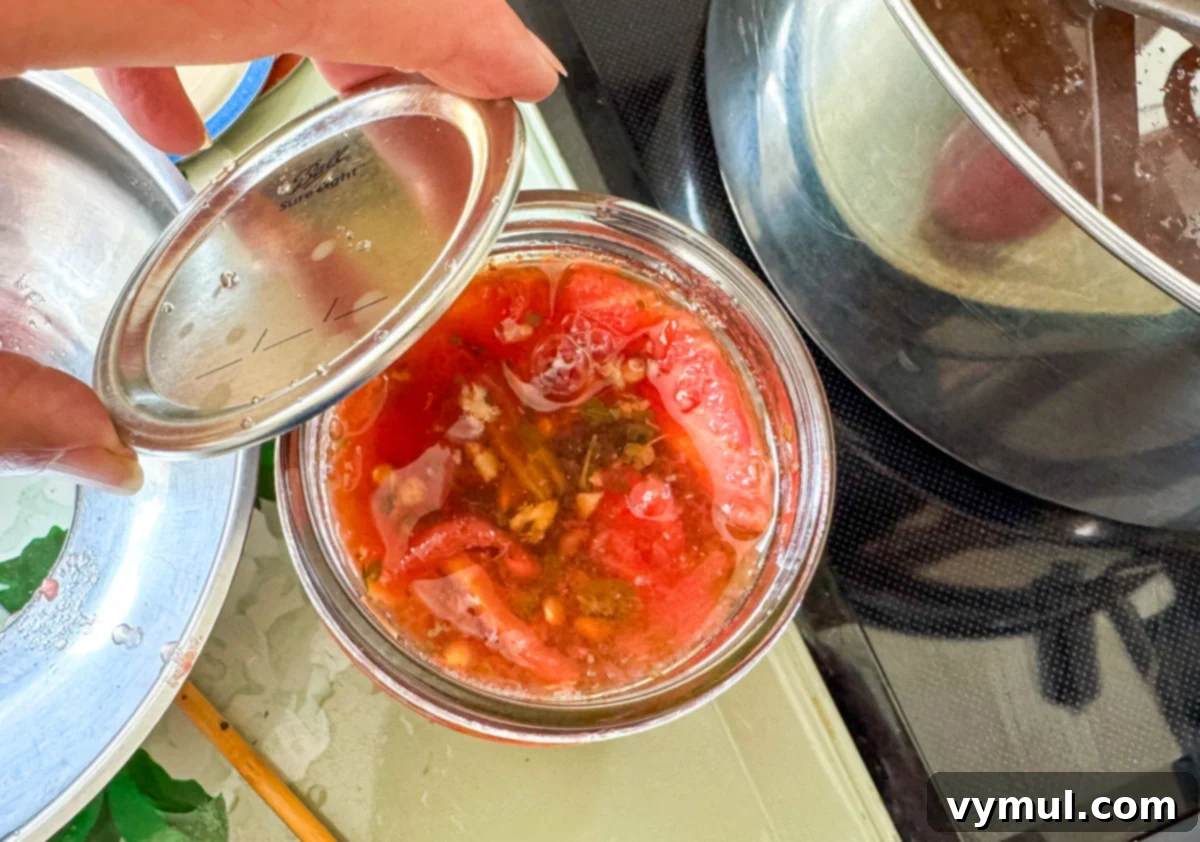
Step 5: Clean Rims and Secure Lids. With the tomatoes packed and brine adjusted, take a clean, damp cloth and carefully wipe the entire rim of each jar. Any food particles or liquid residue on the rim, even a tiny speck, can prevent a proper, airtight seal from forming. Once the rim is spotless, center a new, unused canning lid on the jar. Then, screw on the metal band (ring) fingertip tight. This means screwing it on until you feel resistance, then giving it just a slight extra turn – avoid overtightening, as this can prevent air from properly escaping during processing, which can lead to seal failure.
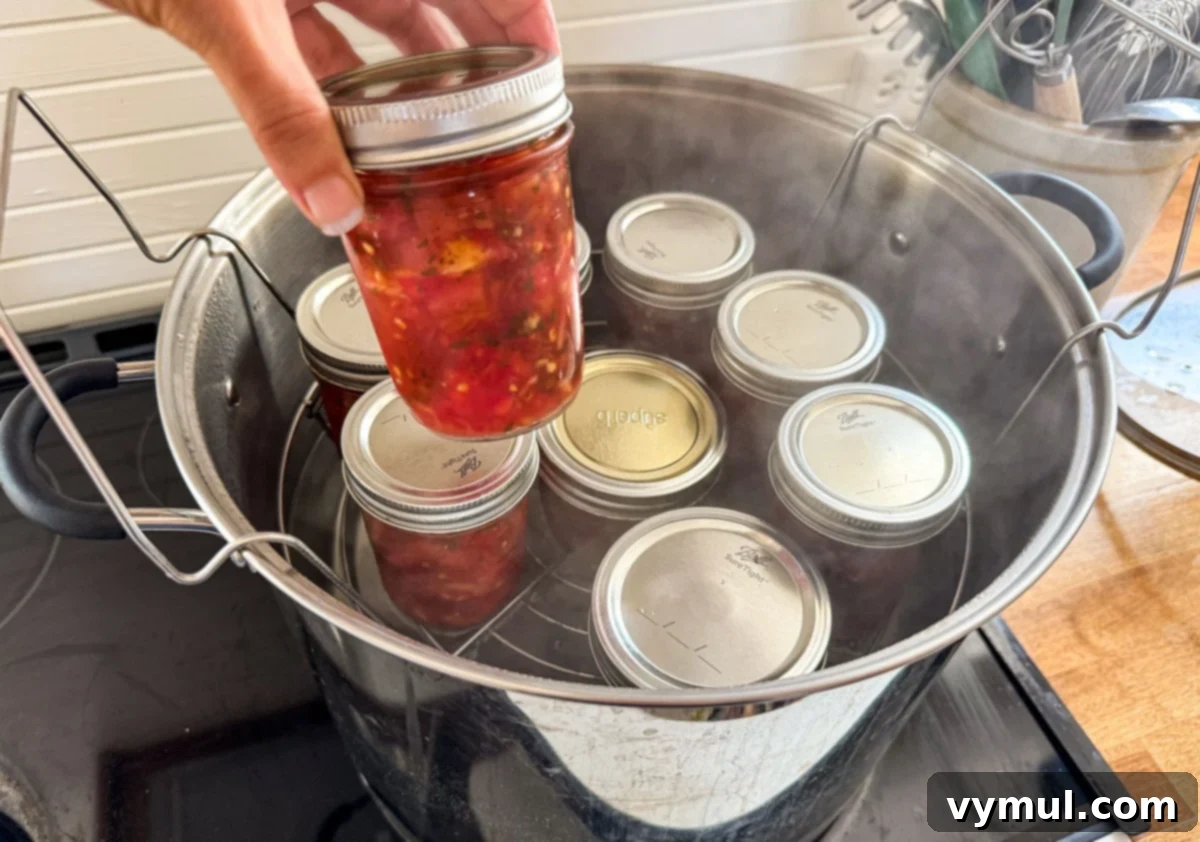
Step 6: Water Bath Processing. Carefully place the filled jars onto the rack inside your preheated water bath canner, ensuring they are not touching each other. Make sure the jars are completely covered by at least one inch of water. Cover the canner with its lid and bring the water to a vigorous, rolling boil. Once the water is boiling steadily, set a timer and process the jars for the recommended 20 minutes. After the processing time is complete, turn off the heat but do not immediately remove the jars. Leave the canner lid on and allow the jars to rest in the hot water for an additional 5 minutes. This crucial resting step helps to equalize the temperature, preventing siphoning (liquid loss from the jars) and promoting a stronger, more reliable seal.
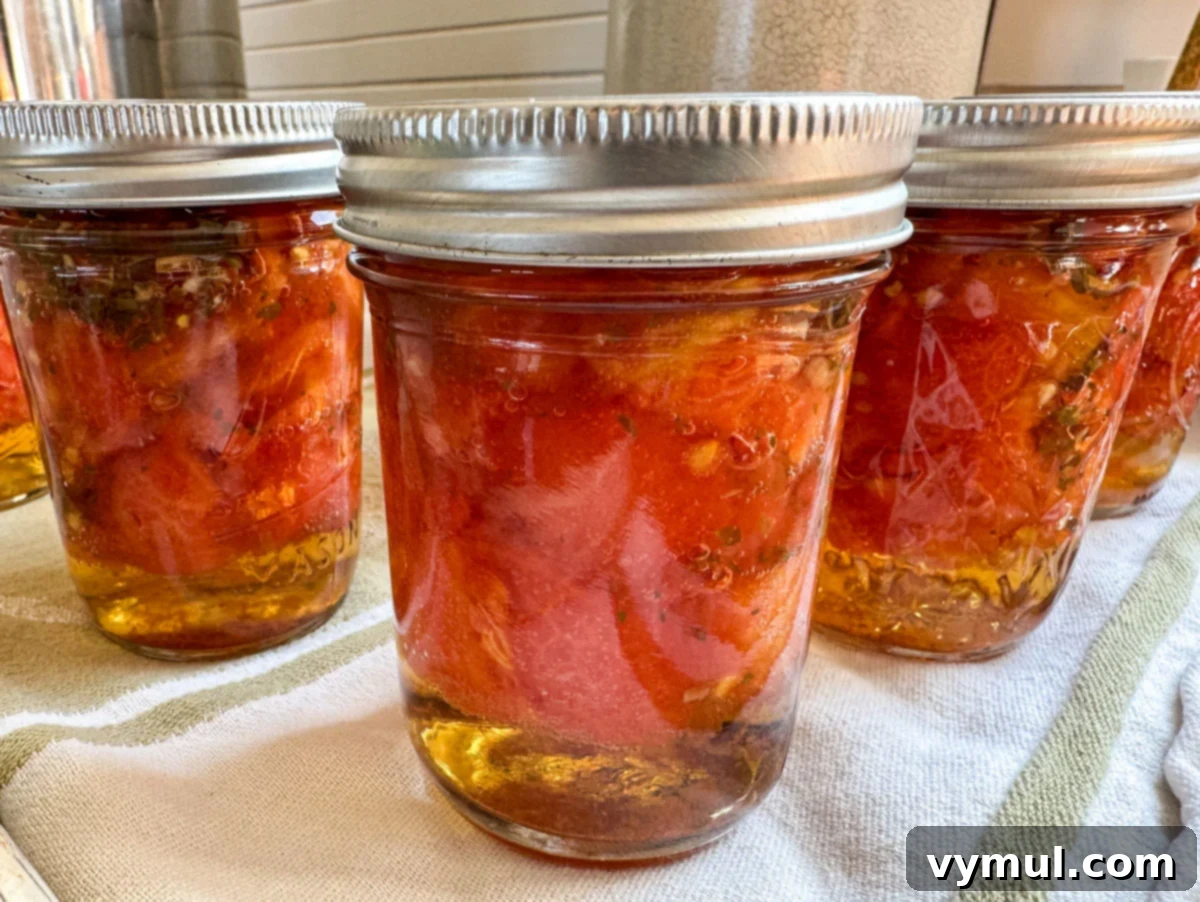
Step 7: Cool and Check Seals. Carefully remove the hot jars from the canner using a jar lifter and place them upright on a sturdy, towel-lined counter, spaced slightly apart to allow for even airflow. Allow them to cool undisturbed for 12 to 24 hours. During this cooling period, you’ll often hear the satisfying “ping” sound as the lids seal, indicating a successful vacuum. After 24 hours, check each lid for a proper seal: the center should be concave (curved inward) and should not flex up and down when pressed. If any jar did not seal, refrigerate it immediately and consume its contents within 1-2 months. Once sealed, remove the metal rings (as they can trap moisture and harbor rust, and are not needed for sealed jars) and store your beautiful jars of canned tomato bruschetta in a cool, dark, and dry pantry.
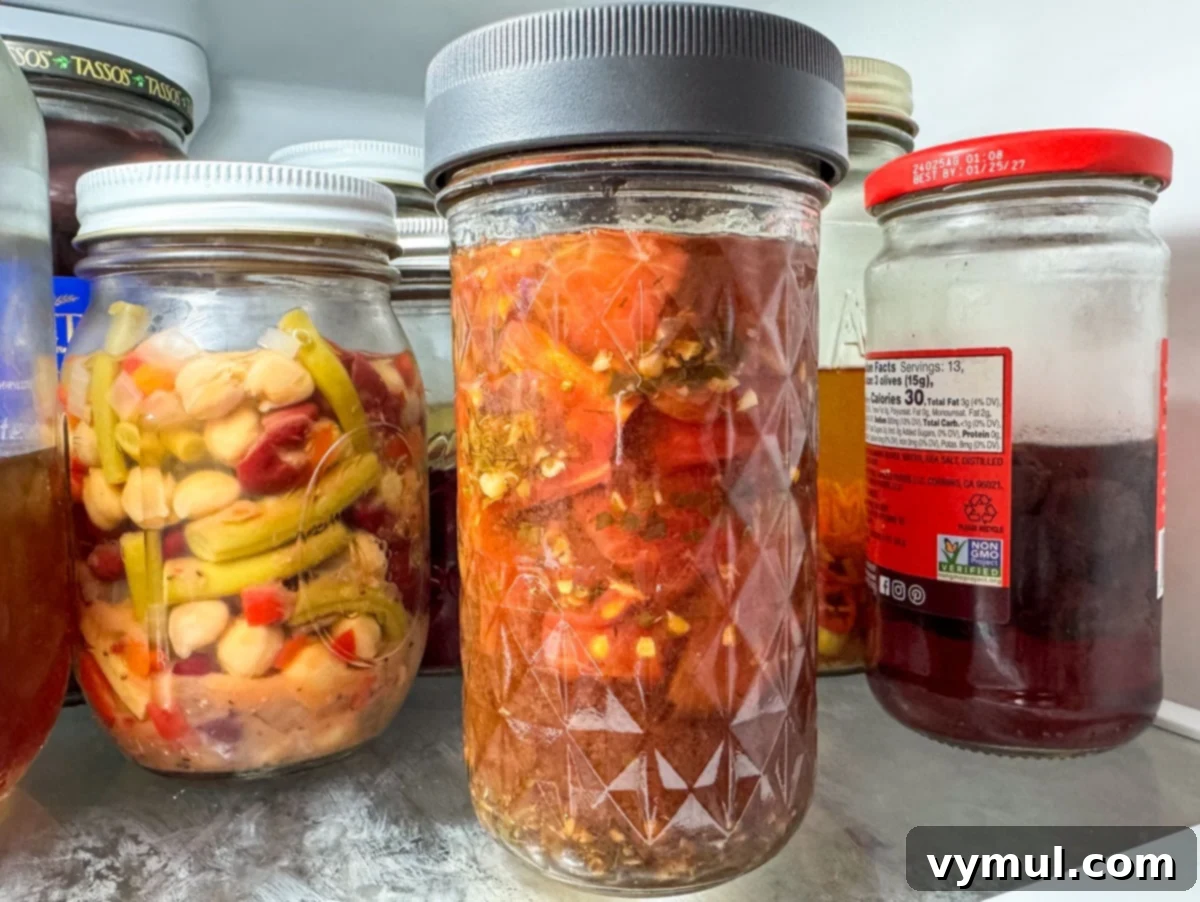
💡 PRO TIP: Don’t Waste a Drop! It’s common to have a small amount of chopped tomatoes and/or brine remaining after carefully filling all your canning jars. Don’t let these precious remnants go to waste! Simply collect any leftover tomatoes and brine in a separate clean jar, secure it with a lid, and store it in your refrigerator for up to two months. This “bonus” bruschetta is perfect for immediate use, offering a quick taste of your hard work. Furthermore, the flavorful leftover brine itself makes an exceptional base for a vibrant homemade vinaigrette; just whisk together 2 parts good quality olive oil with 1 part brine, adding a teaspoon or two of Dijon mustard for an instant, easy, and incredibly delicious salad dressing!
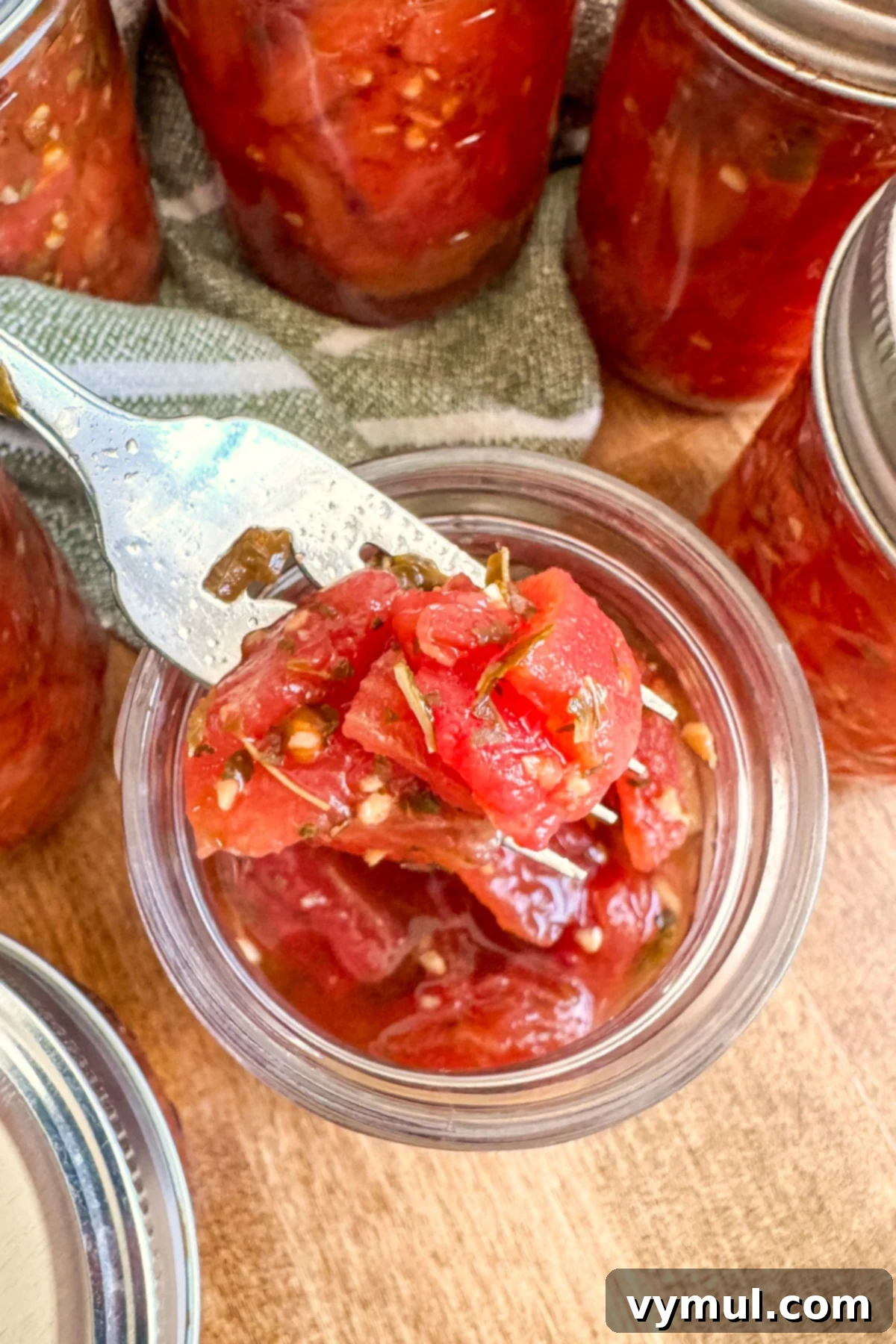
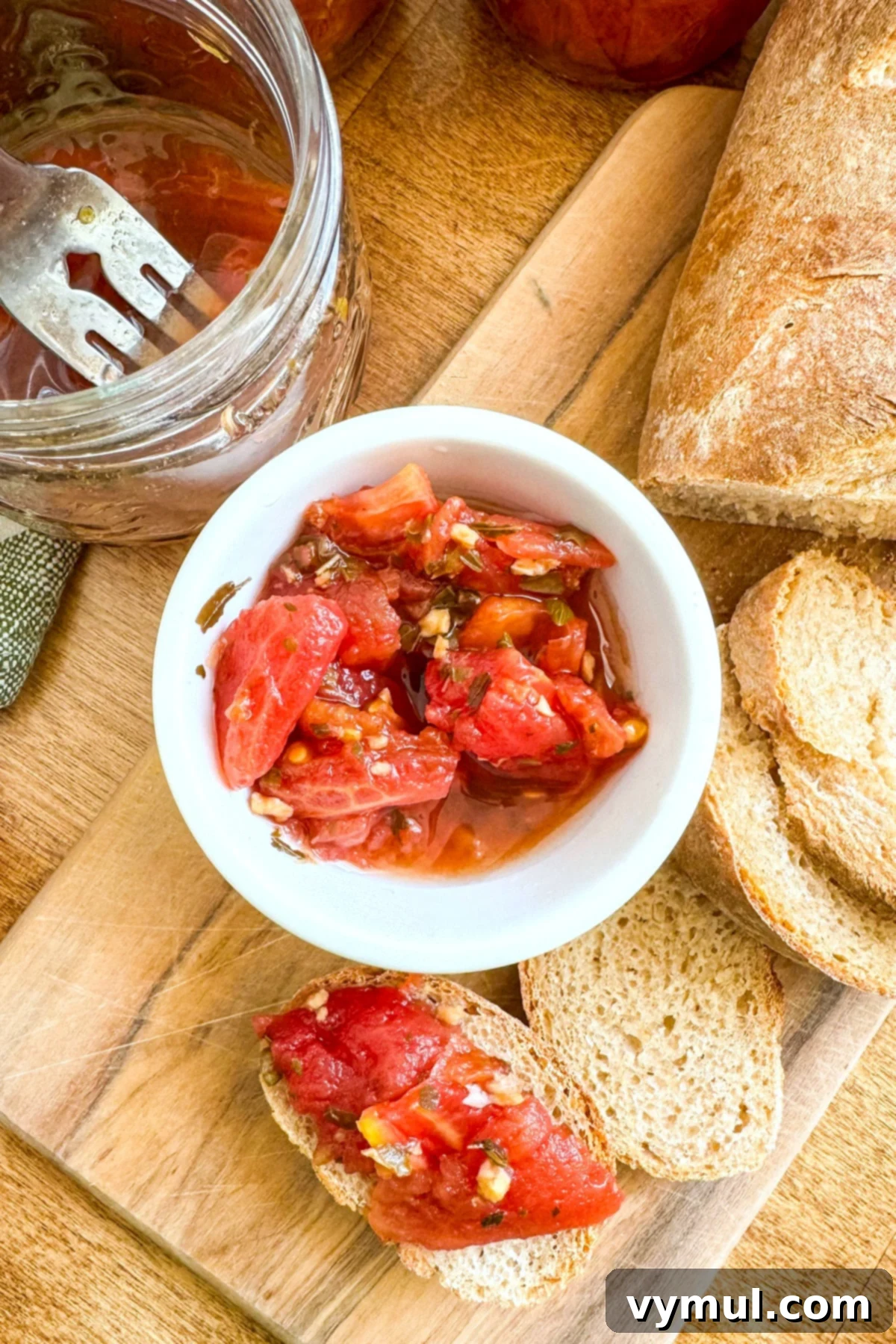
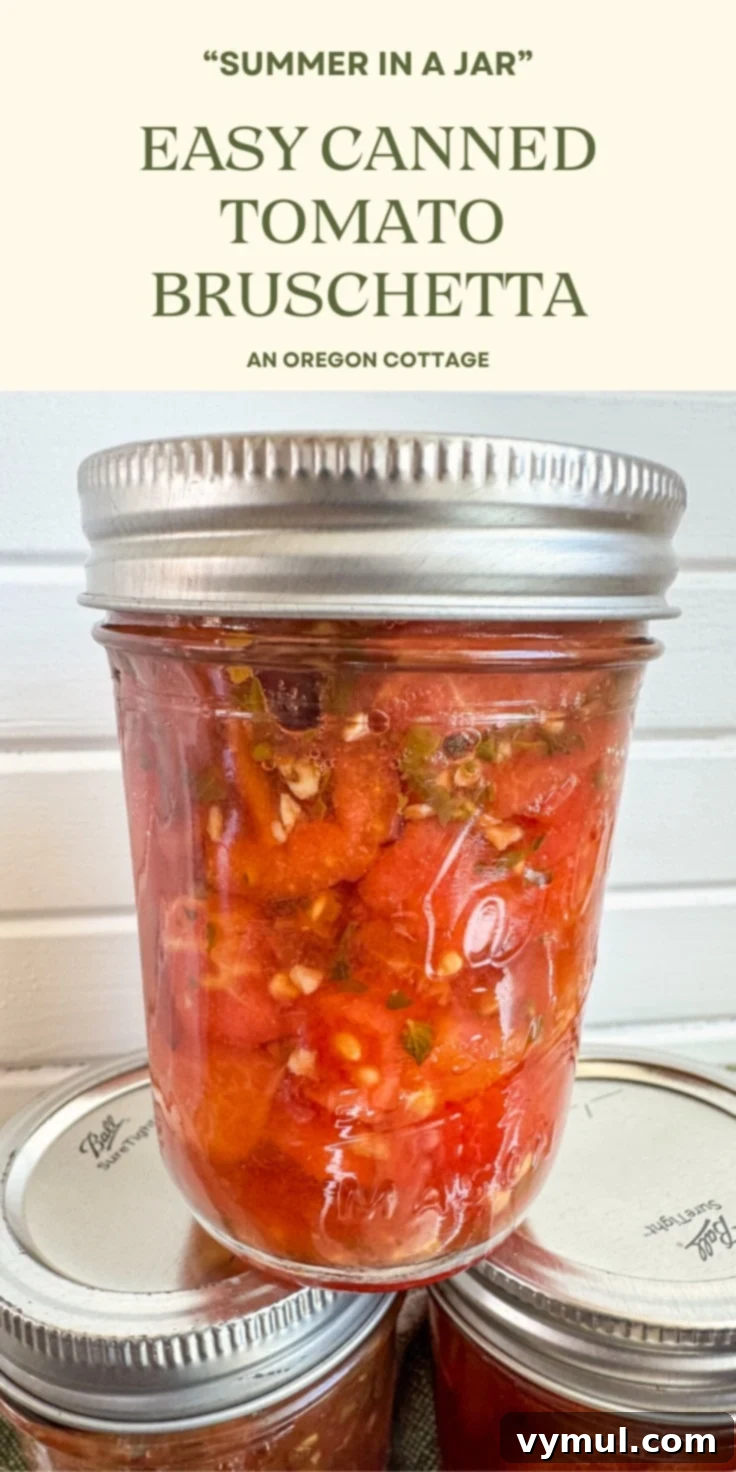
As you can clearly see from the image, the tomatoes maintain their integrity beautifully, remaining firm and vibrant – a testament to the effectiveness of using paste tomatoes and meticulously following the proper canning method. There’s no hint of mushiness here, only perfectly preserved, garden-fresh flavor! Now, with your pantry stocked with these beautiful jars, you’re all set to enjoy the delightful taste of “summer in a jar” all through the winter months, bringing brightness and Italian flair to even the coldest, gloomiest days.
Optimal Storage: For the longest shelf life and best quality, store your properly sealed jars of homemade canned tomato bruschetta in a cool, dark, and dry pantry. Under these ideal conditions, your delicious bruschetta will retain its exquisite flavor and satisfying texture for up to 18 months. Before opening and consuming, always ensure the lid is still concave and check for any signs of spoilage, such as bulging lids, mold, or an off-odor.
Creative Ways to Enjoy Your Canned Tomato Bruschetta
Once you’ve mastered this easy canning recipe and your pantry is brimming with jars of homemade tomato bruschetta, you’ll find endless opportunities to incorporate this burst of summer flavor into your everyday meals. It’s incredibly versatile, acting as a gourmet topping or a vibrant ingredient. Here are some of our favorite ways to enjoy this delightful preserve:
- Classic Bruschetta Toast: The most obvious and utterly satisfying way! Toast slices of crusty baguette or rustic Italian bread until golden. While still warm, rub them generously with a fresh garlic clove, drizzle with good quality olive oil, and then pile high with your delightful canned tomato bruschetta. Perfect for appetizers, a light lunch, or a sophisticated snack.
- Gourmet Cracker Topping: For a quick and elegant bite, spread cream cheese, soft goat cheese, feta, or Boursin on your favorite crackers or crostini. Then, spoon a dollop of bruschetta on top. The creamy cheese provides a lovely contrast to the tangy, garlicky tomatoes.
- Mediterranean Tuna or Bean Salad: Create a vibrant and healthy meal by tossing your canned bruschetta with flaked tuna or cooked cannellini/chickpeas, finely diced red onion, and briny Kalamata olives. This makes for a fantastic and quick protein-packed lunch or a flavorful side dish.
- Enhanced Green Salads and Grain Bowls: Transform a simple green salad or hearty grain bowl into a gourmet experience. The bright, acidic, and herbaceous flavors of the bruschetta add an incredible zest, texture, and depth that store-bought dressings or plain tomatoes simply can’t match.
- Elevated Sandwiches and Wraps: Spread a generous layer of bruschetta inside your favorite sandwich, panini, or wrap for an instant flavor upgrade. It pairs wonderfully with deli turkey, grilled chicken, fresh mozzarella, provolone, or even grilled vegetables like zucchini and bell peppers.
- Pizza and Flatbread Perfection: Use it as a vibrant and flavorful base or a robust topping for homemade pizzas, quick flatbreads, or naan bread. Skip the traditional red sauce and let the bruschetta shine as the star ingredient, perhaps with a sprinkle of fresh mozzarella or Parmesan.
- Savory Breakfast Boost: Brighten up your morning meals! Serve this bruschetta alongside scrambled eggs, in an omelet, as a topping for a savory French toast, or with a frittata or quiche for a burst of fresh flavor at breakfast or brunch. It’s particularly good with a chicken and spinach frittata.
- Quick Pasta Helper: While not a full pasta sauce, a spoonful stirred into hot pasta with a little olive oil, grated Parmesan cheese, and perhaps some cooked chicken or shrimp can create a quick, fresh-tasting, and incredibly satisfying meal in minutes.
Hear What Others Are Saying!
“Thank you for this recipe. I made this this year and just can’t quit eating it. The Best!!!!!” -Anita T.
“This was SOOOO good! Thank you for the recipe.” -Lindy H.
I truly hope you discover the immense joy and deliciousness of this easy canned tomato bruschetta recipe. It’s a fantastic way to extend the bounty of summer and savor garden-fresh flavors throughout the entire year. If you decide to make it, please remember to leave a recipe rating and let me know how it turned out – your feedback is always appreciated and helps other home canners!
Print Recipe
Pin Recipe
SaveSaved!
Easy Canned Tomato Bruschetta Recipe
Equipment
-
2 to 3-quart saucepan
-
water bath canner and canning equipment
-
9 Half-pint jars and new lids (you can reuse rings)
Ingredients
- 8 cups chopped, cored, peeled plum/paste tomatoes* (about 5 pounds)
- 5 cloves garlic, minced
- 1 cup dry white wine (for alternative, see Notes section below)
- 1 cup apple cider vinegar
- 1/2 cup water
- 2 tablespoons sugar or honey
- 2 tablespoons balsamic vinegar
- 1 tablespoon dried basil**
- 1 tablespoon dried oregano**
Instructions
-
Prepare your tomatoes by washing, coring, peeling (use this method for ease), and then coarsely chopping them. You will need approximately 8 cups of chopped tomatoes (this usually equates to about 5 pounds of fresh paste tomatoes).
-
Get your canning equipment ready: ensure your water bath canner is filled and heating, and your jars and new lids are washed and warming. For a detailed guide on water bath canning, please refer to this tutorial.
-
In a large, deep, stainless steel pot, combine all brine ingredients (garlic, white wine, apple cider vinegar, water, sugar/honey, balsamic vinegar, dried basil, and dried oregano) except the tomatoes. Bring this mixture to a full, rolling boil over high heat, stirring occasionally to ensure everything is well combined and dissolved.
-
Once boiling, reduce the heat to low, cover the pot, and gently simmer the brine for 5 minutes. Keep it warm on the lowest possible heat setting while you proceed with packing the jars.
-
Carefully pack the prepared chopped tomatoes into hot jars using a slotted spoon, ensuring you leave a 1/2-inch headspace. Gently press the tomatoes down to remove any large air pockets. Next, ladle the hot brine mixture into the jars, fully covering the tomatoes, while maintaining the crucial 1/2-inch headspace. Use a wooden chopstick or non-metallic spatula to remove any trapped air bubbles around the edges and through the center of the jar. If the liquid level drops below 1/2-inch headspace, add more hot brine. Finally, wipe the jar rims clean with a damp cloth, center the new lids, and secure them with bands to fingertip tight. Place each filled jar into your prepped water bath canner.
-
Bring the water in the canner back to a vigorous boil. Once boiling steadily, process the jars for 20 minutes. After the processing time, turn off the heat, remove the canner lid, and allow the jars to rest in the hot water for an additional 5 minutes before carefully removing them to cool.
-
Remove the jars from the canner and place them on a towel-lined counter, spaced apart, to cool undisturbed for 12-24 hours. After cooling, check all seals to ensure the lids are concave and do not flex. Store properly sealed jars without rings in a cool, dark place for up to 18 months. Any unsealed jars should be refrigerated and consumed promptly.
-
💡 TIP: Maximize Your Yield and Flavor! Often, you’ll have a small amount of chopped tomatoes and brine remaining after filling your canning jars. Collect these delicious leftovers in a separate jar, seal it, and keep it in the refrigerator for up to 2 months. This allows you to enjoy a quick batch of bruschetta right away! The flavorful brine itself also makes an excellent base for a vibrant salad dressing: whisk together 2 parts olive oil with 1 part brine, adding 1-2 teaspoons of Dijon mustard for an easy and delicious vinaigrette.
Notes
**For convenience and a slightly different flavor profile, you can use 2 tablespoons of a good quality dried Italian Seasoning blend as an alternative to separate dried oregano and dried basil. Remember, all herbs used in this canning recipe MUST BE DRIED to ensure the recipe remains safe for water bath canning. Fresh herbs are not safe for this application due to their low acidity which can impact the pH levels of the preserve.
Alternative to using wine (Please note: I have not personally tested the flavor profile of this specific substitution, but it has been thoroughly researched for safety based on pH levels):
- To replace the 1 cup of dry white wine (with a typical pH of 3.0-3.4), substitute with an equal amount (1 cup) of apple cider vinegar (which has an approximate pH of 3). This substitution maintains a similar acidity level, thus ensuring the canning safety of the recipe.
- To counteract the stronger vinegar flavor introduced by this substitution, increase the amount of sugar or honey in the recipe to 3 tablespoons.
High Altitude Adjustment: If you are processing these jars at an altitude higher than 1000 feet above sea level, it is essential to adjust the processing time accordingly to ensure proper sterilization. Please refer to this official Ball Mason Jars chart for specific adjustments based on your elevation.
Nutrition
Frequently Asked Questions About Canned Tomato Bruschetta
For those who prefer to avoid wine in cooking, a safe and effective substitution can be made. You can replace the 1 cup of dry white wine (which typically has a pH of 3.0-3.4) with an equal amount (1 cup) of apple cider vinegar (ACV), which has a comparable pH of around 3. This ensures the overall acidity of the recipe remains consistent, which is crucial for canning safety. To balance the stronger vinegar flavor introduced by the ACV, I recommend increasing the sugar or honey in the recipe to 3 tablespoons. While the flavor profile will differ slightly, ACV is relatively mild compared to white vinegar, so the impact on the final product should still be delicious and safe.
Absolutely, you can use yellow paste tomatoes for this recipe! While red paste tomatoes are traditional and widely available, any color of paste tomato will work well. The key factor is to use firm, slightly underripe paste tomatoes that have a dense flesh and lower moisture content. This characteristic is essential for them to hold their shape and texture beautifully through the canning process, preventing them from becoming mushy and ensuring a visually appealing preserve.
No, it is critically important to use only dried herbs, as specified in this recipe. Adding fresh herbs, such as fresh basil, during the canning process is not recommended for safety reasons. Fresh herbs are low-acid ingredients that can significantly alter the overall pH balance of the recipe, making it potentially unsafe for water bath canning. To enjoy the fresh flavor of basil, always add it after the jar is opened and just before serving your bruschetta, either directly onto the topping or as a garnish.
From a purely safety standpoint, peeling the tomatoes is not strictly necessary as long as they are thoroughly washed. However, for the best eating experience and a superior final product, I highly recommend peeling them. Tomato skins tend to toughen and separate during the canning process, often floating unsightly in the jar and creating an undesirable, chewy texture. While it’s ultimately a matter of personal preference, skipping the peeling step can result in a less pleasant mouthfeel. You can try a small batch without peeling to see if you like it, but for a truly delicious, gourmet-quality bruschetta, peeling is definitely worth the effort.
Unfortunately, for safety reasons in home canning, it is not recommended to increase the size of the jars beyond what the tested recipe specifies. This recipe has been specifically developed and tested for half-pint jars. Increasing the jar size to pints would require a different, longer processing time to ensure adequate heat penetration throughout the larger volume of food and to eliminate any potential harmful bacteria. Since this recipe has not been tested for pint jars, making this modification is considered unsafe. While you can always size down a canning recipe (e.g., from pints to half-pints, keeping the processing time the same), going up in jar size is generally considered unsafe without a specific, tested recipe for that larger size. (Source: USDA and university extension guidelines on modifying canning recipes).
More Delicious Tomato Preserving Recipes To Try
- How to Dry Tomatoes And Store In Olive Oil for Year-Round Use
- Homemade Canned Pizza Sauce (Perfect from Frozen or Fresh Tomatoes)
- Canned Tomatoes & Chilies – A Zesty Rotel Copycat Recipe
- Addictive Tomato Chutney: Updated Recipe with Less Sugar
This beloved recipe was originally published in September 2009 and has been comprehensively updated to provide the most current and detailed instructions, ensuring both deliciousness and canning safety.