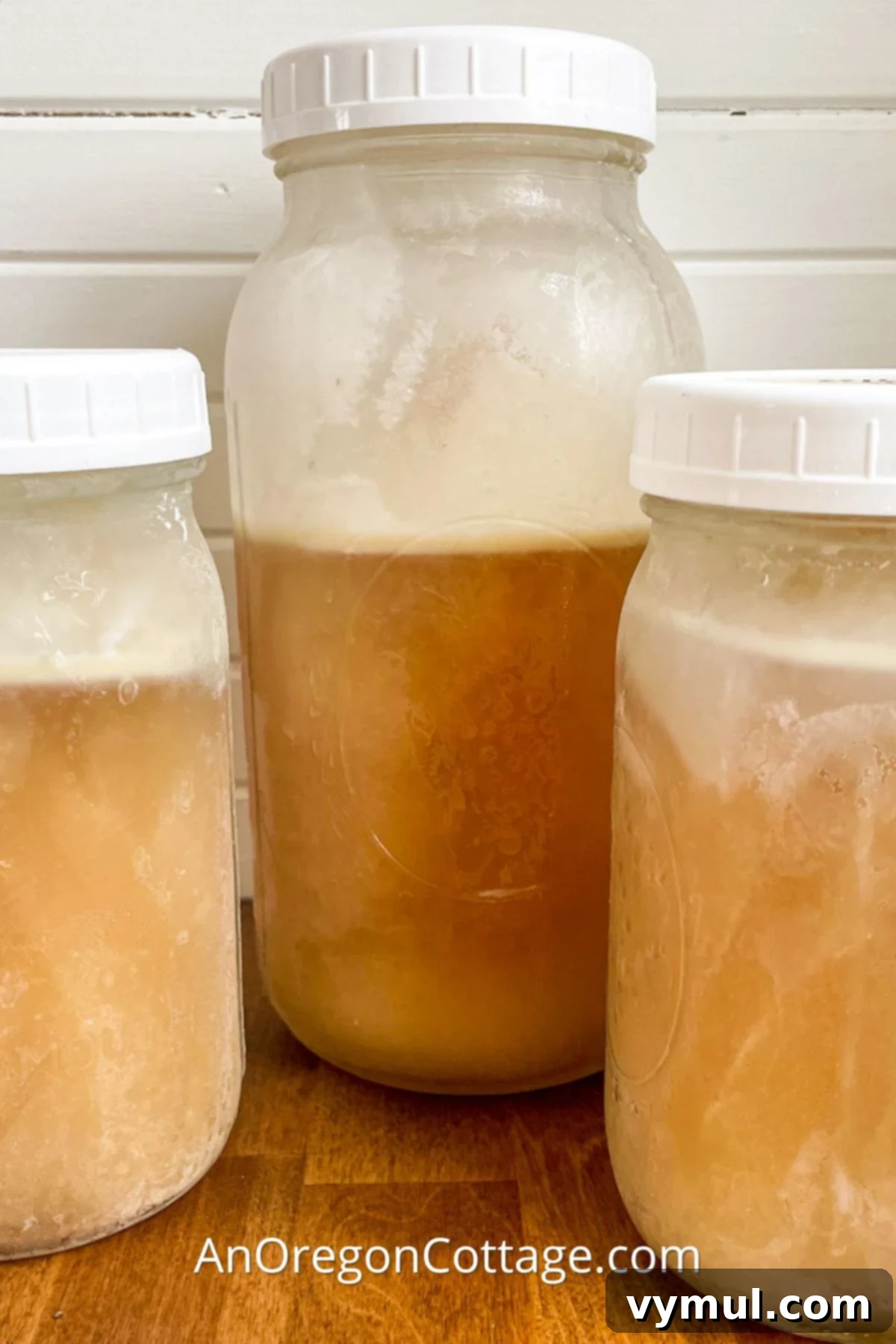
Easy Homemade Chicken Stock: Your Essential Guide to Budget-Friendly Bone Broth
Once you experience the rich, deep flavors of homemade chicken stock – and discover how incredibly simple, almost free, and convenient it is to store in your freezer – you’ll likely question why you ever purchased store-bought versions. This culinary fundamental is a timeless technique, requiring no specialized equipment. If you possess a basic pot and a stove, you are fully equipped to craft your own nourishing stock or bone broth.
Some links in this article are affiliate links and if you click on them I will receive a small commission at no cost to you.
Homemade chicken stock, often interchangeably referred to as bone broth, perfectly embodies the “use it up” philosophy that many home cooks cherish. It involves leveraging what you already have – and what you might typically discard – transforming these humble scraps into a valuable kitchen staple that many people exclusively purchase.
This principle is at the heart of many “Pantry Basic” recipes, which focus on everyday foods we often assume must be bought, but are in fact straightforward and economical to prepare at home. Consider staples like homemade mayonnaise, ketchup, bread crumbs, and even delightful chocolate syrup – all easily made from scratch.
How to Make Chicken Stock for Virtually Free
The concept of “free” chicken stock might sound too good to be true, but it’s remarkably achievable. Here’s how:
- Gather Your Bones: Save the neck, back, and wing tips whenever you cut up a whole chicken. Likewise, collect bones from a roasted chicken or a rotisserie chicken. Store these scraps in a large freezer bag or container until you have a sufficient amount.
- Collect Vegetable Trimmings: Maintain a separate freezer bag for vegetable scraps. This includes carrot peels and ends, celery bases and leafy tops, and onion skins and root ends. These are the parts you’d normally discard when prepping vegetables for salads or other meals.
- Brew Your Broth: Once you’ve accumulated enough bones and vegetable trimmings, you’re ready to make a flavorful, nutrient-rich broth.
Essentially, combining these “throwaway” items with water and a bit of cooking time yields delicious stock for next to nothing – or, at most, a few pennies to cover electricity costs.
For many years, homemade stock wasn’t part of my kitchen routine, nor did I know anyone who made it. However, during the early years of my marriage, juggling a single income and young children, I actively sought out every possible way to save money. Making nourishing soups using stock derived from what would otherwise be discarded leftovers quickly became an obvious and rewarding choice.
The Essential Role of Vegetables in Stock
Initially, when I first started following stock recipes, they often called for whole, fresh vegetables like onions, carrots, and celery. Being quite frugal, I was hesitant to “waste” perfectly good vegetables only to discard them once the stock was cooked and they were mushy. So, I experimented by boiling just the meat and bones.
What I soon discovered was a crucial lesson: vegetables are indispensable for developing rich flavor! The soups I made with stock from bones alone were remarkably bland compared to those made with veggie-inclusive stock. The difference was astonishing, even my husband, Brian, commented on it. I’ve since learned that many vital nutrients in stock are also extracted from the vegetables during the simmering process, providing yet another compelling reason to always include them.
My Smart Solution: Use Vegetable Trimmings!
Instead of using whole vegetables, my preferred method is to utilize the trimmings and scraps from vegetables. I maintain a dedicated bag in the freezer for these pieces, adding to it until I have enough for a pot of stock. I ensure they are well-washed and, when possible, I opt for organic vegetables. I collect peels and ends from carrots, onions (including green onion tops), and celery, as well as the stems and leaves from parsley if available.
Once you’ve amassed your collection of bones and vegetable trimmings, you’re ready to embark on making delicious chicken stock in just four straightforward steps!
PRO TIP: This method isn’t exclusive to chicken. You can use ANY animal bones to make bone broth – whether it’s turkey (as I demonstrate for this turkey noodle soup), beef, or pork. Simply swap out the chicken bones for your preferred animal bones and follow the same procedure outlined below for fantastic results.
Easy Homemade Chicken Stock (Stovetop Method)
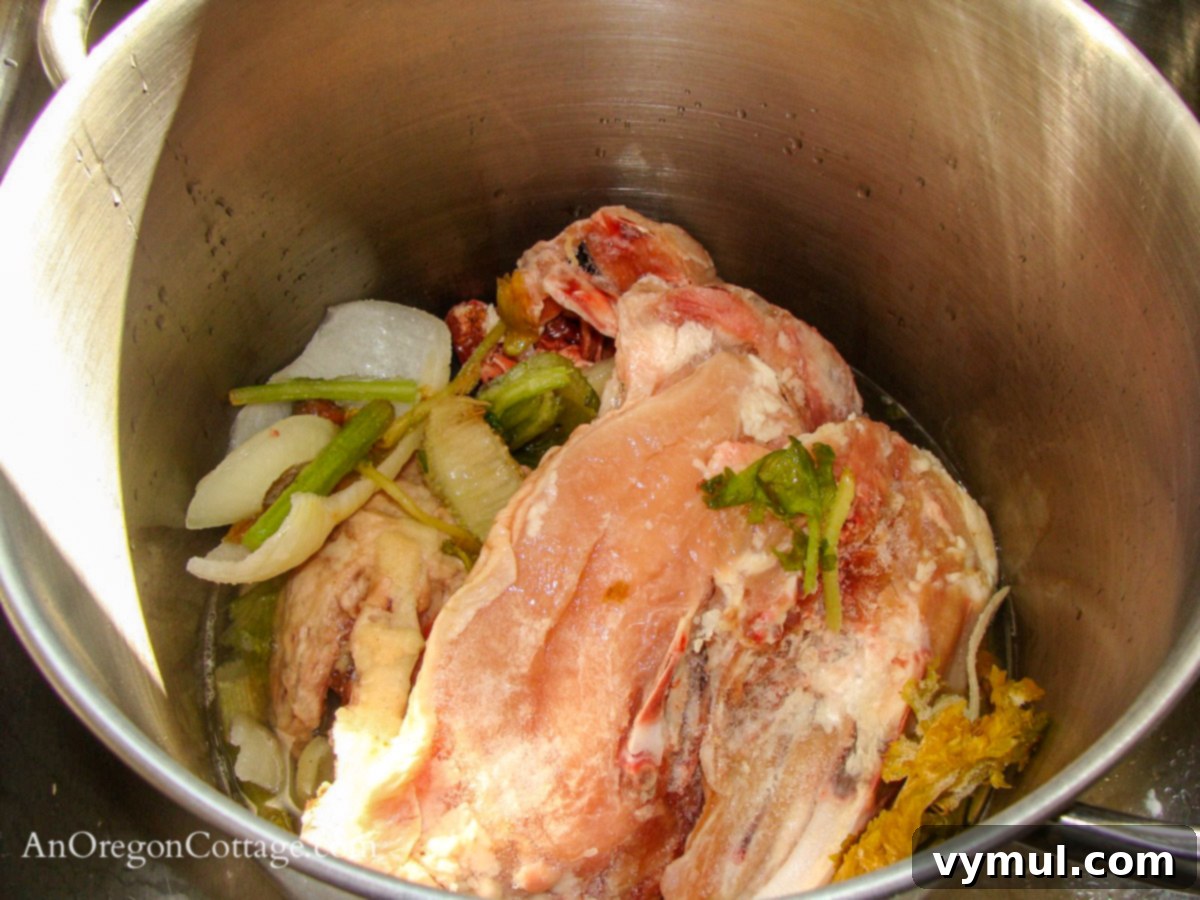
1. Combine Bones and Vegetable Trimmings in a Large Pot
Once you’ve collected enough bones and trimmings for a substantial batch of stock, transfer the frozen bones directly into a 6-quart (or larger) stockpot along with your accumulated vegetable scraps. There’s no need to thaw them first. For larger batches, I personally use a 12-quart stainless steel stockpot.
My go-to vegetables for stock always include carrots, onions (tops included), and celery. Occasionally, I’ll enhance the flavor with a few whole peppercorns.
Exploring Other Vegetable Scraps for Flavor
While some cooks enjoy adding whole garlic cloves, I generally prefer to keep my broth’s flavor profile neutral and versatile, allowing it to adapt to various recipes without overpowering them. Therefore, I stick to the classic mirepoix base.
However, you can certainly experiment with other vegetable trimmings, keeping in mind they might impart a stronger or distinct flavor. These can include broccoli stems, cauliflower cores, cabbage trimmings and cores, or even wilted herbs like thyme, rosemary, and chervil. Remember to wash all scraps thoroughly.
Crucially, you’ll also want to add a couple of tablespoons of apple cider vinegar to the pot. While not strictly mandatory, it’s highly recommended as its acidity helps to break down the bones and draw out beneficial minerals and collagen, contributing to a more gelatinous and nutritious stock.
QUICK TIP: You might notice a whole chicken breast in some of the images. This is because I often multitask in the kitchen, sometimes deciding to make a chicken soup for dinner concurrently. I’ll pour off some of the freshly made stock for the soup and then freeze the remainder. This “double duty” cooking is a fantastic way to maximize your efforts and get more out of your ingredients!
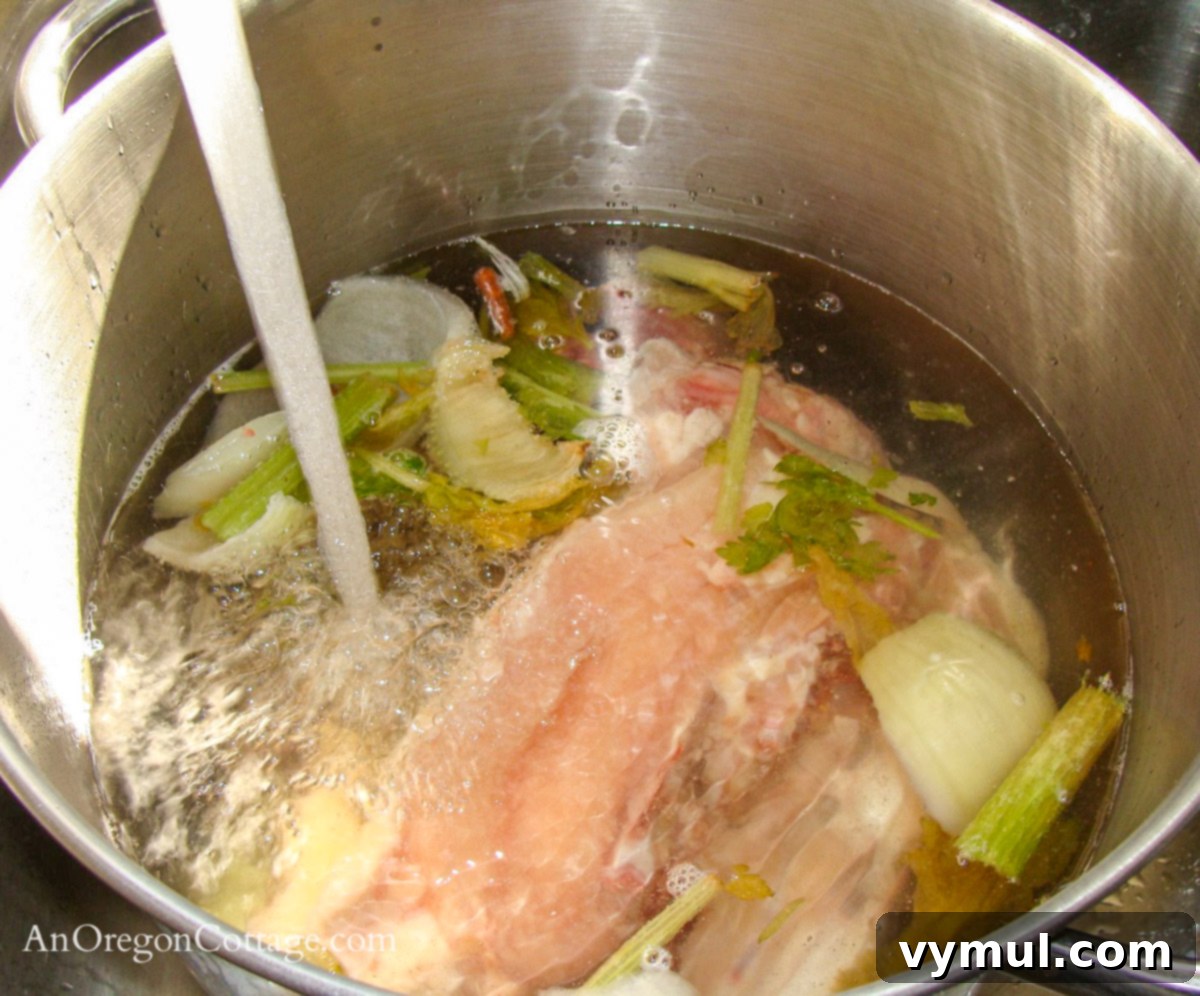
2. Slowly Simmer to Create Rich Stock
Once all your ingredients are in the pot, fill it with cold water, ensuring it just covers the contents. Bring the water to a rolling boil over high heat, then immediately reduce the heat to maintain a gentle, slow simmer. It’s advisable to leave the lid slightly ajar during this process to prevent excessive reduction as it cooks.
While you can technically cook it for as little as an hour, this will result in a lighter broth rather than a rich, flavorful stock (we’ll delve more into the distinction between broth and stock in the FAQ section below). For maximum flavor extraction and nutritional benefits, you’ll want to simmer it longer. The longer the cooking time, the more robust and nutritious your stock will be. This extended simmering is what truly transforms it into a true stock or bone broth, packed with gelatin and minerals.
On a stovetop, aim for a minimum of 3-4 hours of simmering. For the absolute best results, consider letting it simmer from morning until evening – an all-day cook will yield an incredibly rich and deeply flavored stock.
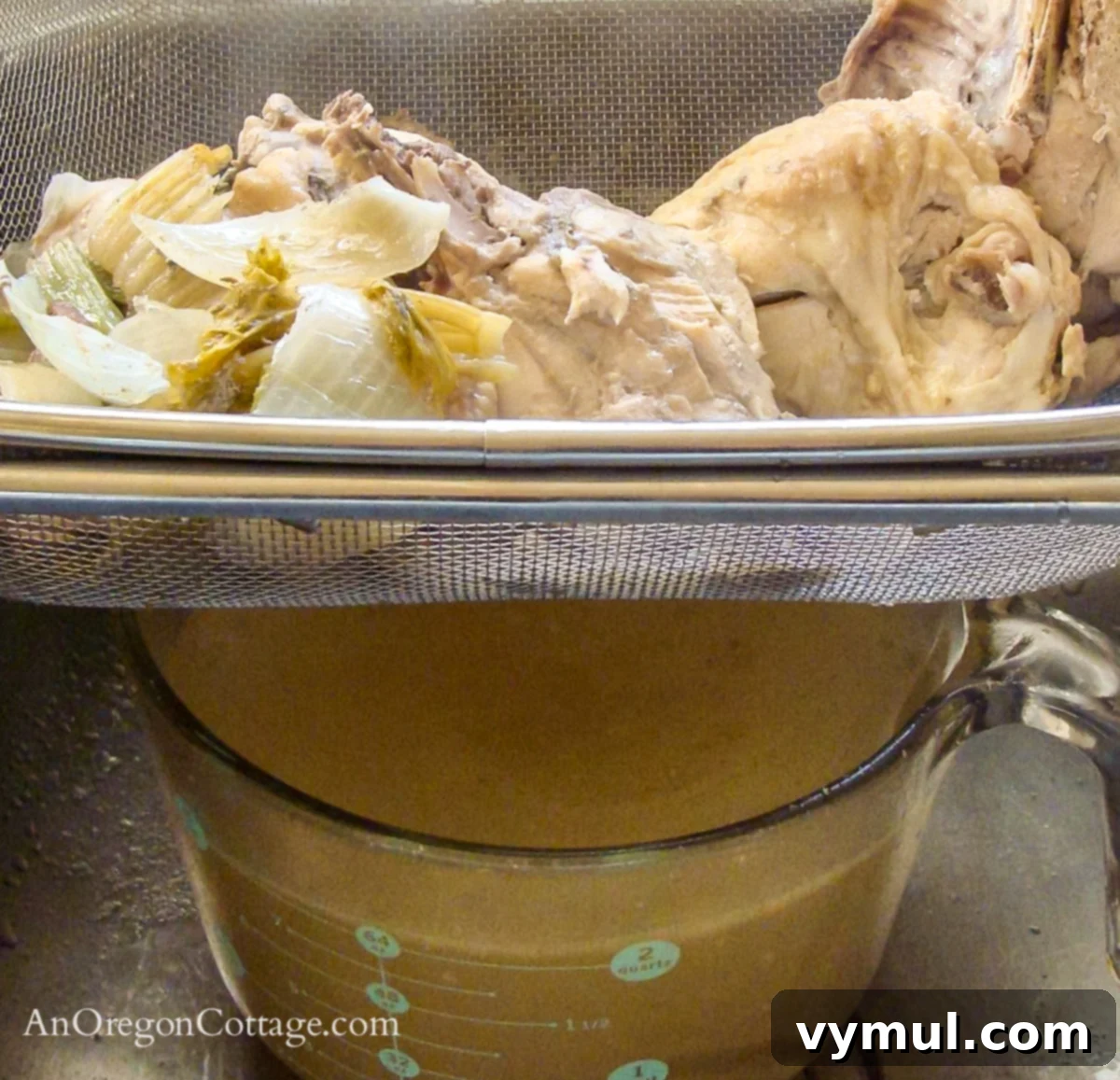
3. Strain the Cooked Chicken Stock
Once your broth has simmered to perfection, it’s time for a critical step: straining the liquid into a suitable container. Please, learn from my past mistakes – I once accidentally dumped a pot of perfectly good broth down the drain while straining! Always ensure you have a large pot, a sturdy heat-proof bowl, or another appropriate receptacle positioned beneath your colander.
If you plan to use the stock immediately for a soup, you can strain it directly into another large pot. For storing and freezing, use a large glass or ceramic bowl with a pour spout; this makes transferring the liquid into smaller containers much easier and safer.
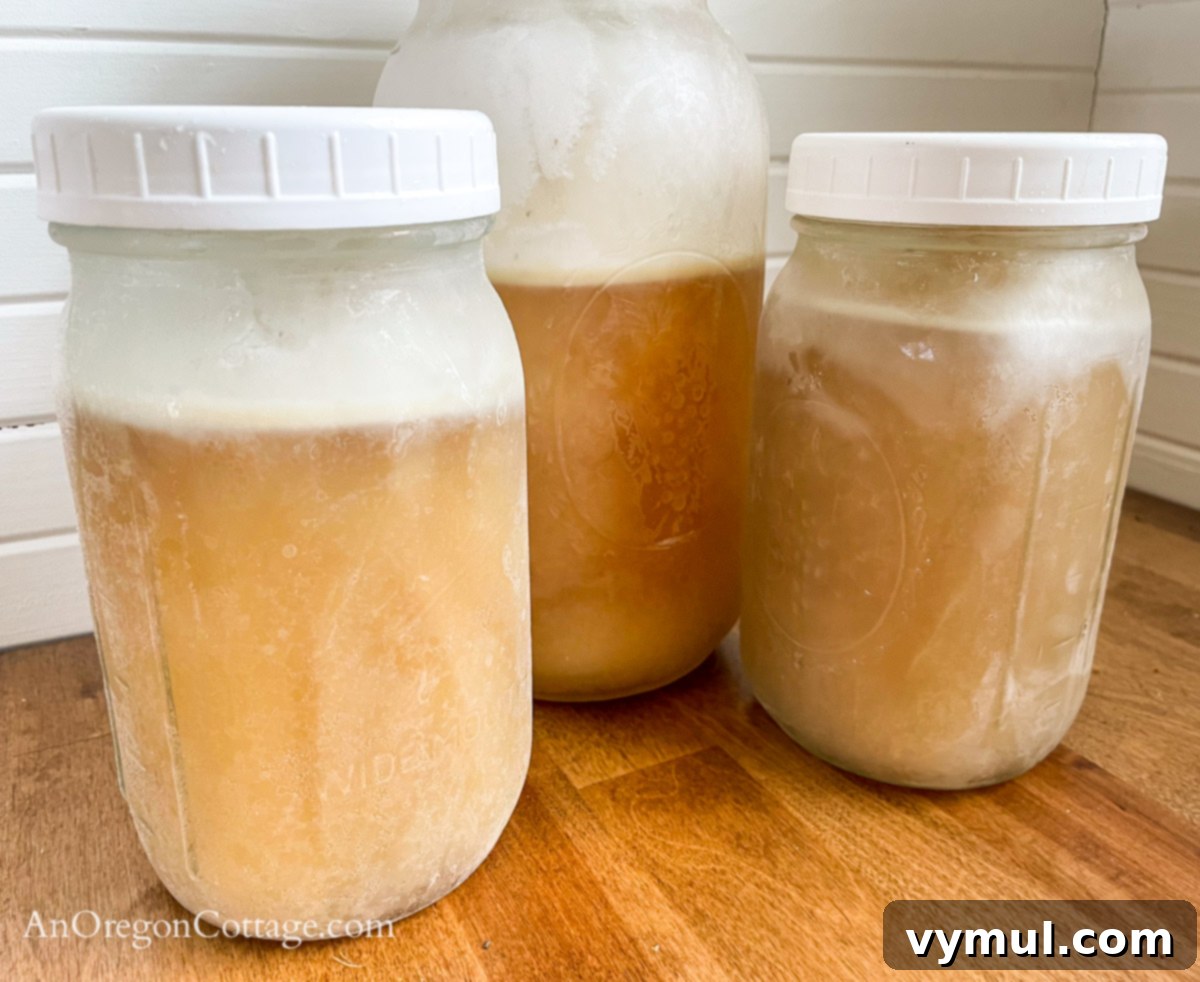
4. Cool and Safely Freeze Your Stock
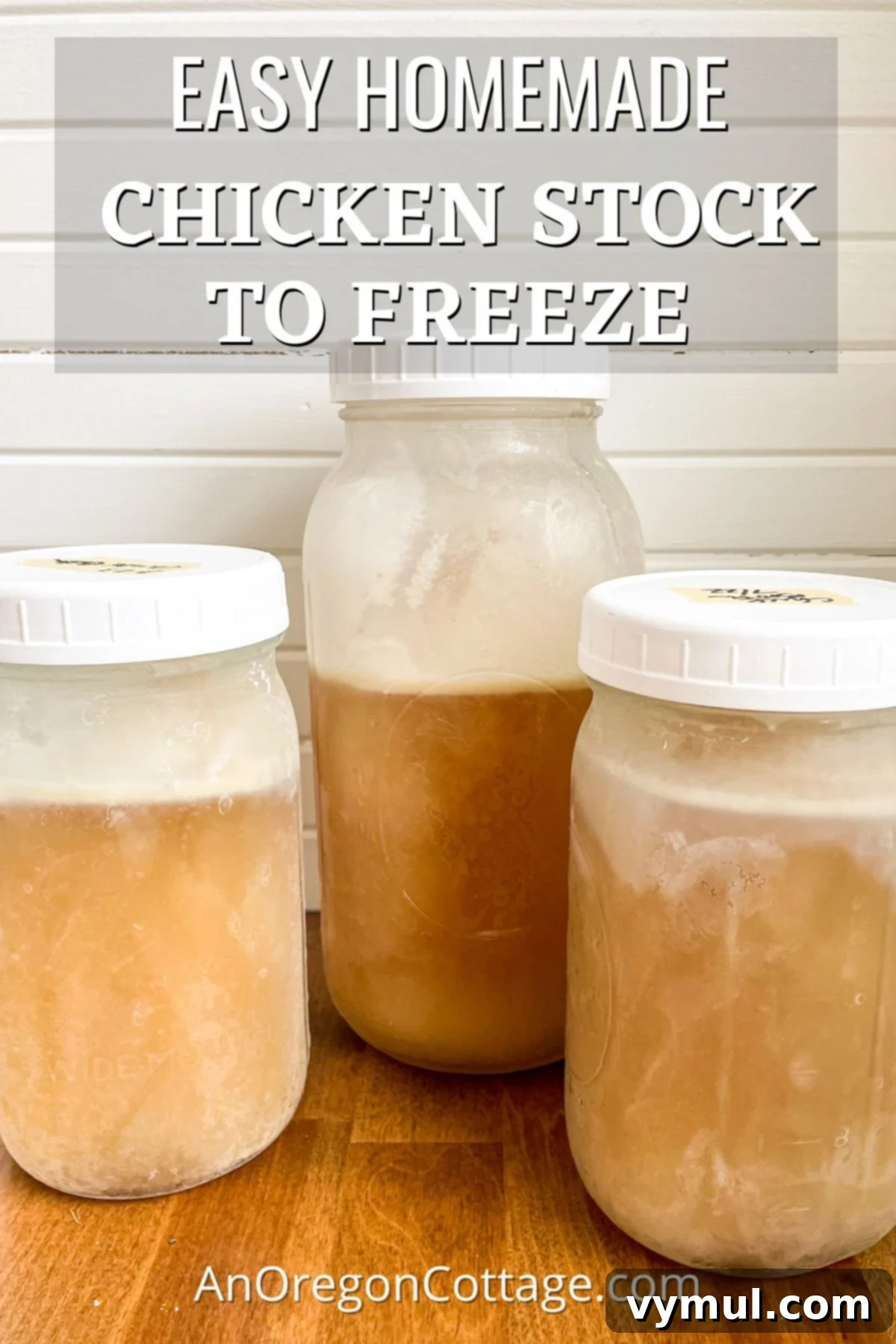
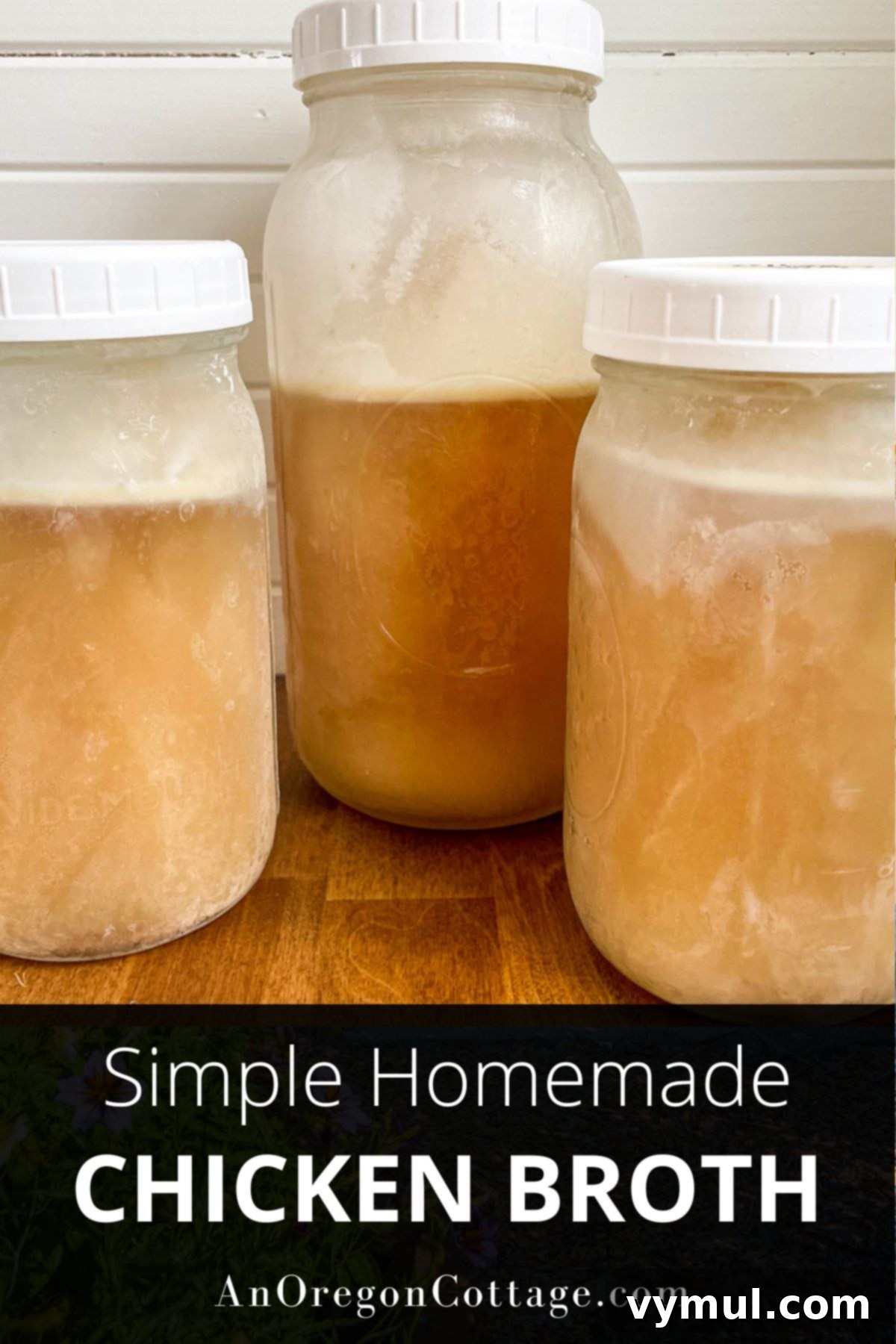
Allow the hot stock to cool down significantly before transferring it to freezer-safe containers. I’ve moved away from using plastic freezer containers due to concerns about hot liquids potentially leaching chemicals. Instead, I opt for pint and quart-sized glass mason jars. When filling, be sure to leave at least 3/4 inch of headspace at the top to allow for expansion during freezing, which helps prevent jar breakage. While a few jars might still occasionally crack, it’s a trade-off I accept for avoiding plastic.
For easier sealing and reopening, I find using white plastic storage lids for mason jars to be much more convenient than the traditional two-piece metal lids.
Homemade Chicken Stock FAQs
I explore this topic in much greater depth in this Bone Broth 101 article, but generally speaking, it’s commonly understood that stock is primarily made using the bones of an animal and is simmered for many hours. Broth, on the other hand, is typically made with meat and cooked for a shorter duration, often around an hour. When the term “bone broth” is used, it invariably refers to stock that is made from bones, emphasizing its nutrient-dense qualities derived from prolonged bone simmering.
The method described here for making broth or stock is universal, regardless of how you intend to preserve it. HOWEVER, it’s crucial to understand that this is a low-acid product and cannot be safely canned using a water bath method. If you wish to can any type of meat broth for shelf stability, you absolutely must use a tested pressure canner recipe. This will provide precise instructions on the required pounds of pressure and the specific canning duration. For a reliable guide, here is a recipe for pressure canning chicken stock from Ball Canning (it calls for a whole chicken, but using just bones is perfectly fine and often preferred for richer stock, and importantly, it includes the vegetables that make broth so much more flavorful and nutrient-rich).
Absolutely! Both an Instant Pot and a slow cooker are excellent alternative appliances for making homemade chicken stock, often offering different benefits like speed or hands-off convenience. Visit this link for detailed instructions on how to easily prepare this recipe using either an Instant Pot or a slow cooker.
For convenient portioning, I highly recommend Souper Cubes. They come in various sizes (1/2 cup, 1 cup, 2 cup), allowing you to choose the perfect portion size for your most frequent recipes. Once the stock is completely frozen into solid cubes, simply pop them out from the flexible silicone trays and transfer them to a labeled freezer bag. This way, you can easily pull out exactly the amount you need whenever cooking, minimizing waste and maximizing convenience!
Isn’t it incredible how straightforward this process is? There’s truly minimal hands-on time involved, and the end result is a product that far surpasses anything you can purchase from a store – I guarantee it.
From just one batch of stock, I was able to prepare a delicious pot of chicken noodle soup for dinner and fill two quart-sized containers for the freezer. That’s a fantastic yield for what amounts to only about five minutes of active work, wouldn’t you agree? Moreover, I successfully repurposed ingredients that would have otherwise gone to waste, all while creating a superior-tasting, incredibly nourishing product that benefits both my health and my budget.
Print Recipe
Pin Recipe
SaveSaved!
Easy Homemade Chicken Stock
Equipment
-
1 6 to 12 quart stockpot, depending on the amount to make
-
1 large strainer/colander
-
containers for freezing
Ingredients
- 3 to 4 pounds frozen chicken backs, bones, wing tips, etc. or bones from one whole chicken*
- 2 cups vegetable scraps: carrots, celery, onions, parsley
- 2 tablespoons apple cider vinegar**
- 12 cups cold water
- Optional: 1 tablespoon peppercorns, 2-4 cloves garlic, other herbs like bay leaf, etc.
Instructions
-
Combine all the frozen bones, vegetable scraps, and apple cider vinegar in a large stockpot along with any other optional ingredients you wish to add (e.g., peppercorns).
-
Pour cold water over the contents until just covered. Place the lid on the pot, slightly ajar, and bring the mixture to a rolling boil over high heat.
-
Once boiling, reduce the heat to low and allow the stock to simmer gently. Continue simmering for as long as possible – a minimum of 3-4 hours, but ideally from morning until evening for the deepest flavor and most nutrients.
-
Carefully place a large colander over a heat-safe container (like another pot or a large bowl) in the sink. Slowly pour the entire contents of the stockpot through the colander to separate the liquid from the solids. Discard the cooked bones and vegetables, or pick off any remaining meat if desired.
-
Allow the strained stock to cool slightly. Once cooled enough to handle, transfer it to freezer-safe containers (like mason jars, leaving headspace). Seal, label with the date, and freeze. The stock can be stored in the freezer for up to one year.
-
Alternatively, you can pour all the stock into a large pot and store it in the refrigerator overnight. This allows any fat to solidify at the top, making it easy to skim off before transferring the stock into containers for freezing or immediate use. Or, simply use the fresh stock to make a delicious soup right in the pot!
Notes
**While technically optional, apple cider vinegar is highly recommended. It plays a crucial role in helping to extract gelatin, minerals, and other valuable nutrients from the bones, resulting in a more robust and beneficial stock.
Nutrition
So, has this guide inspired you to start filling your freezer with bones and vegetable trimmings, ready to transform them into your own golden, nutrient-packed homemade stock? It’s a rewarding journey towards healthier, more flavorful cooking and a more sustainable kitchen.
Disclosure: Affiliate links in this article will earn commission based on sales, but it doesn’t change your price. Click here to read our full disclaimer and advertising disclosure.