
Craft the Perfect Gift: Easy, Low-Sew DIY Flannel Scarves for Men (Old Navy Style)
Are you searching for a thoughtful, practical, and budget-friendly gift that the men in your life will genuinely appreciate and actually use? Look no further! This comprehensive guide will walk you through creating stylish, low-sew DIY flannel scarves, reminiscent of popular styles found at stores like Old Navy, for under $1.50 each. Not only are these scarves incredibly easy to make, requiring just a simple straight stitch, but they also offer a level of warmth, comfort, and personalized charm that a store-bought item simply can’t match. Prepare to transform simple fabric into a cherished accessory!
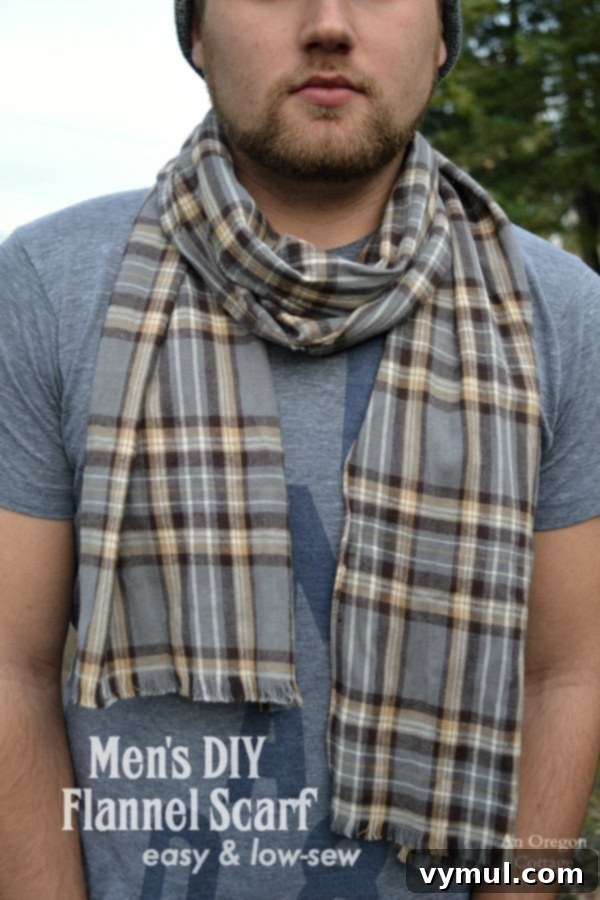
The Quest for the Perfect Handmade Gift for Men
Finding the ideal handmade gift for men and boys can often feel like an insurmountable challenge. While there’s a seemingly endless array of creative projects for women and girls—from charming boot toppers and decorative clip photo boards to elegant burlap jewelry organizers—options for guys tend to be far more limited. We often find ourselves resorting to practical but less personal choices like flaxseed heat pads or customized bulletin boards. All too often, the fallback becomes a generic gift card, which, while useful, lacks the heartfelt touch of a handmade present.
For me, relying on gift cards presents a couple of issues. Firstly, there’s the subtle imbalance it creates. I want all family members, especially the kids and teens, to feel equally valued and thought of when it comes to gift-giving. A collection of handmade gifts for one group and impersonal cards for another can subtly send the wrong message. Secondly, and perhaps more importantly for many home crafters, gift cards offer little opportunity for savings. A $15 gift card will almost always cost you exactly $15. While bulk purchases might yield a slight discount, the fundamental premise remains: you’re paying full price.
The Solution: An Affordable & Stylish DIY Flannel Scarf
This is precisely where the easy, low-sew DIY flannel scarf becomes a game-changer. It’s a project that elegantly solves both of these dilemmas. These scarves look far more expensive than they are, capturing the cozy, classic aesthetic found in popular men’s fashion retailers like Old Navy and Gap. The best part? You can craft one of these stylish accessories for an astonishingly low price point – less than $1.50 per scarf! My own creations, for instance, came in at a mere $1.44 each, and I wasn’t even hunting for the absolute best fabric deals.
Beyond the incredible cost savings, these scarves are remarkably quick and easy to make. Many crafters find they can complete a significant portion of the project, especially the less intricate steps, while enjoying a movie or listening to a podcast. The simplicity of the design means you don’t need advanced sewing skills; if you can sew a straight line, you can make these scarves. And the ultimate reward? The enthusiastic reception from everyone who received one. That, truly, is the best deal of all – a well-loved, handmade gift that speaks volumes without breaking the bank.
Inspiration and the “Low-Sew” Advantage Over “No-Sew”
The inspiration for this project stemmed from two key sources: observing the narrower men’s scarves offered in Old Navy’s seasonal collections, and an earlier experience with making blanket scarves (a fantastic project for women!). While traditional blanket scarves often embrace a wider, bolder style, the men’s options I saw favored a sleeker, approximately 12-inch width, which seemed more practical and understated for everyday wear. This tailored dimension resonated as a perfect fit for a masculine accessory.
However, an important lesson was learned from the “no-sew” approach sometimes used for blanket scarves. While the idea of simply cutting and fraying fabric sounds appealingly simple, true no-sew scarves, particularly when made from flannel, often disappoint after their first wash. The raw edges tend to ravel excessively, leading to a messy, unattractive finish. My experience confirmed this: the flannel I initially used for a purely no-sew scarf did not hold up well to washing, and the fringe became an unruly mess.
Recognizing that men are likely to prioritize ease of care—simply tossing their scarves into the washing machine without a second thought—durability was paramount. This led to the crucial “low-sew” modification: a simple, straight stitch applied around the edges before the fraying process begins. This single, easy step acts as a barrier, preventing the fabric from unraveling beyond a controlled, intentional fringe. It ensures that your beautifully frayed edges will maintain their integrity wash after wash, looking just as good as the day they were made. While it does require a sewing machine, the stitch itself is incredibly straightforward, made even easier by the inherent grid of plaid flannel, which provides perfect lines to follow. This minimal sewing effort yields maximum results in terms of both aesthetics and longevity.
Gather Your Materials: What You’ll Need
Preparing your materials is the first step towards crafting these fantastic flannel scarves. For this project, you’ll be able to create three individual scarves from a single fabric purchase, making it an incredibly efficient and cost-effective endeavor.
Materials (to make 3 scarves):
- 2 yards of 44″ wide plaid flannel shirting, pre-washed: Flannel is key for its softness, warmth, and classic appeal. Pre-washing is essential to prevent future shrinkage and ensure the colors are set. I found excellent options at JoAnn’s, often available at a 30% discount or more, which significantly contributes to the low cost per scarf. Look for a plaid pattern that suits the recipient’s style – classic reds, blues, greens, or more neutral grays and tans are always popular choices.
- Coordinating thread & a sewing machine: Choose a thread color that blends well with your flannel, or a contrasting color if you want the stitch to stand out as a design element. A basic sewing machine with a straight stitch function is all you need.
- Seam ripper or large needle: These tools will be invaluable for the fraying process, helping you to easily pull individual threads from the fabric edges.
Before you begin, ensure your flannel fabric is completely dry after pre-washing. A quick iron can also help to smooth out any wrinkles, making it easier to cut and sew accurately.
Step-by-Step Instructions: Crafting Your Flannel Scarves
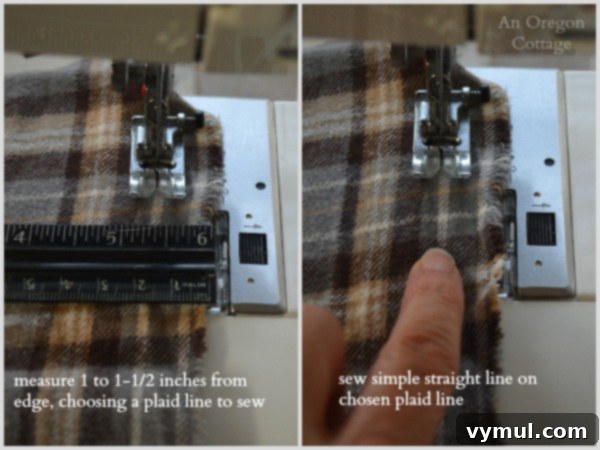
Follow these simple steps to create durable, stylish, and comfortable flannel scarves that will be treasured gifts.
Directions:
- Cut Your Fabric Strips: Take your pre-washed 2-yard piece of flannel and cut it into three long strips. Each strip should be approximately 14 inches wide. This will yield three scarves.
TIP: The beauty of plaid flannel is its built-in grid! Utilize the plaid lines as your guides. Find a prominent line within the pattern and follow it meticulously with your scissors (or a rotary cutter and mat for even greater precision) to create perfectly straight, even widths for each scarf strip. While Old Navy’s inspiration scarves were 12 inches wide, I’ve found that the extra couple of inches (14 inches total) creates a slightly more substantial and luxurious end-product, offering a bit more versatility in styling without being too bulky. You’ll simply have fewer leftover strips if you opt for the wider cut. - Sew the Straight Stitch: Select one of your flannel strips. Measure in approximately 1 to 1.5 inches from the raw edge of the fabric. Now, choose a visible colored plaid line within this measured distance. This line will serve as your guide. Using your sewing machine, sew a simple straight stitch all the way around the entire perimeter of the scarf strip, following your chosen plaid line. As you sew each side, measure and re-select your guiding plaid line as needed to maintain consistency.
TIP: For the smoothest and most flexible outcome, opt for a slightly looser stitch length on your machine – around a setting of 3 on a typical 0-5 scale. This prevents the fabric from puckering and allows the finished scarf to drape beautifully. Remember to “lock” your stitches at the beginning and end of each seam by sewing a few reverse stitches. This will secure the thread and prevent unraveling before you begin the fraying process. - Create the Frayed Edges: Once all four edges of your scarf strip have a secure straight stitch, it’s time to add that signature frayed fringe. Grab your seam ripper or a large needle. Begin by gently finding the first thread on the raw edge of the fabric, just outside your sewn straight stitch. Carefully pull this thread out. You’ll find that you can only pull a few threads at a time, and they may break, which is completely normal. Be patient and persistent! Continue to pull out individual threads until you’ve achieved your desired fringe length. You can fray all the way up to your straight stitch line, or stop just before it, depending on the look you prefer. The straight stitch will ensure the fraying stops exactly where you want it, maintaining a neat and defined edge.
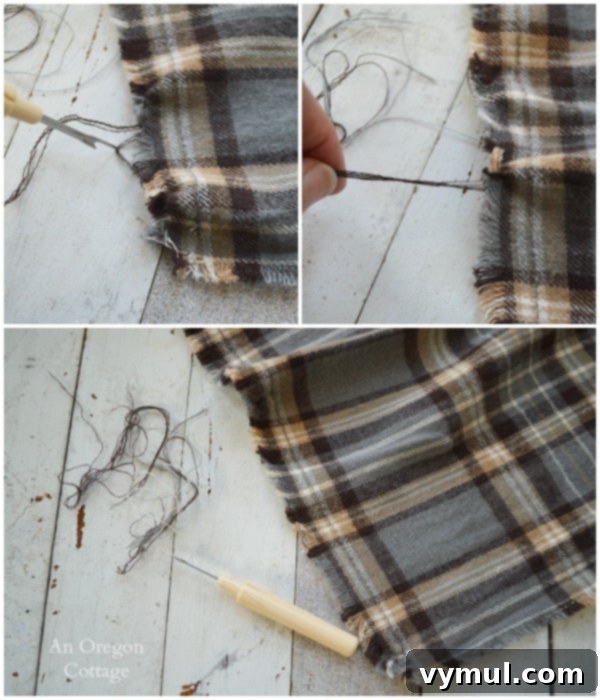
Fraying Tip: This step is surprisingly therapeutic! It’s easiest and most enjoyable to tackle the fraying while you’re engaged in another activity, like watching your favorite TV show or movie. When you’re distracted by entertainment, the repetitive task of pulling threads seems to fly by, and before you know it, you’ll have a beautifully fringed scarf!
A Note on Edging: You might observe that some scarves in older photos feature long edges that are rolled-hemmed. While I initially experimented with this technique, I found that hemming the long edges could sometimes cause the fabric to bunch slightly. Ultimately, I preferred the aesthetic and simplicity of fraying all the edges. This approach not only provides a consistent, rustic look but is also considerably easier to execute. However, if you’re an experienced seamstress and prefer a clean, hemmed long edge, feel free to incorporate that into your design.

And there you have it! A truly easy and rewarding DIY project, even with a touch of sewing. The minimal sewing effort is well worth the payoff in durability and professional finish.
Styling Your DIY Flannel Scarves
One of the joys of this project is the sheer variety of plaid shirting flannels available. From classic buffalo checks in red and black to sophisticated tartans in shades of green, blue, and brown, you can select patterns and colors that perfectly suit the individual style of each recipient. This personalization truly elevates a handmade gift.
Consider the color palette of the person you’re gifting it to. For instance, the tan plaid scarf pictured beautifully complements my son’s hair and acts as a versatile neutral, pairing effortlessly with a wide range of his clothing. While he might not be consciously analyzing the coordination of his scarf with his hair (ha!), the overall effect is undeniably cohesive and stylish. These scarves are incredibly versatile, ideal for adding a layer of warmth and a touch of casual sophistication to any outfit, whether it’s paired with a simple t-shirt and jeans, a casual button-down, or a winter coat.
Caring for Your Handmade Flannel Scarf
Thanks to the clever low-sew technique, caring for these flannel scarves is a breeze, making them truly practical gifts for anyone, especially men who appreciate low-maintenance accessories. To keep your flannel scarf looking its best:
- Washing: Machine wash cold on a gentle cycle. Using cold water helps to prevent further shrinkage and maintains the vibrancy of the flannel colors.
- Detergent: Use a mild detergent. Avoid harsh chemicals or bleach, which can damage the fabric fibers and cause colors to fade.
- Drying: Tumble dry on low heat or, even better, lay flat to air dry. High heat can cause flannel to shrink or become stiff. Air drying will help maintain the softness and shape of the scarf, and prevent any excessive fraying beyond the stitched line.
- Ironing: If desired, you can lightly iron the scarf on a low-medium setting. However, flannel is naturally soft and often looks great with a slightly relaxed, unironed finish.
By following these simple care instructions, your handmade flannel scarves will remain soft, warm, and a stylish staple for years to come.
Conclusion
I sincerely hope this DIY flannel scarf tutorial offers you a fantastic, achievable option for the men and boys on your gift list. It’s a project that combines affordability, ease of creation, and genuine thoughtfulness into a practical item that will be used and appreciated time and again. Say goodbye to impersonal gift cards and embrace the joy of crafting a truly meaningful present. Happy sewing!
Disclosure: this post contains affiliate links and by clicking on them you help support AOC at no extra cost to you – thanks so much! Plus you can trust I’ll only share what I love. (You can always read AOC’s entire disclosure page here.)
Print
Pin
SaveSaved!
Easy, Low-Sew Men’s DIY Flannel Scarf
Tools
-
thread & sewing machine
-
seam ripper or large needle
Materials
- 2 yards of 44″ wide plaid flannel shirting, pre-washed (enough for 3 scarves)
Instructions
-
Cut the pre-washed 2-yard piece of flannel into three long strips, each approximately 14″ wide. This yields three individual scarves. TIP: Use a plaid line on the fabric as a guide for cutting to ensure even widths. While 12″ wide scarves are common (like the Old Navy inspiration), 14″ provides a slightly richer and more versatile finished product.
-
Take one of the cut flannel strips. Measure 1 to 1-1/2 inches in from each raw edge. Along this measured line, choose a colored plaid line as your guide. Sew a simple straight stitch all the way around the entire perimeter of the scarf strip. Ensure you lock your stitches at the beginning and end by reversing a couple of times. For the smoothest result, use a slightly looser stitch setting (e.g., about 3 on a scale of 0-5).
-
After all edges have been stitched, it’s time to create the frayed fringe. Use a seam ripper or a large needle to gently pull out individual threads from the raw edges of the fabric, working up to the straight stitch you just sewed. You may only be able to pull a few threads at a time, and they might break – this is normal. Continue this process until you achieve the desired length and density for your fringe. TIP: This step can be done while watching TV or listening to a podcast to make it feel faster and more enjoyable.