
The Ultimate Guide to Easy Refrigerator Garlic Dill Pickles: Crisp Perfection Without Canning
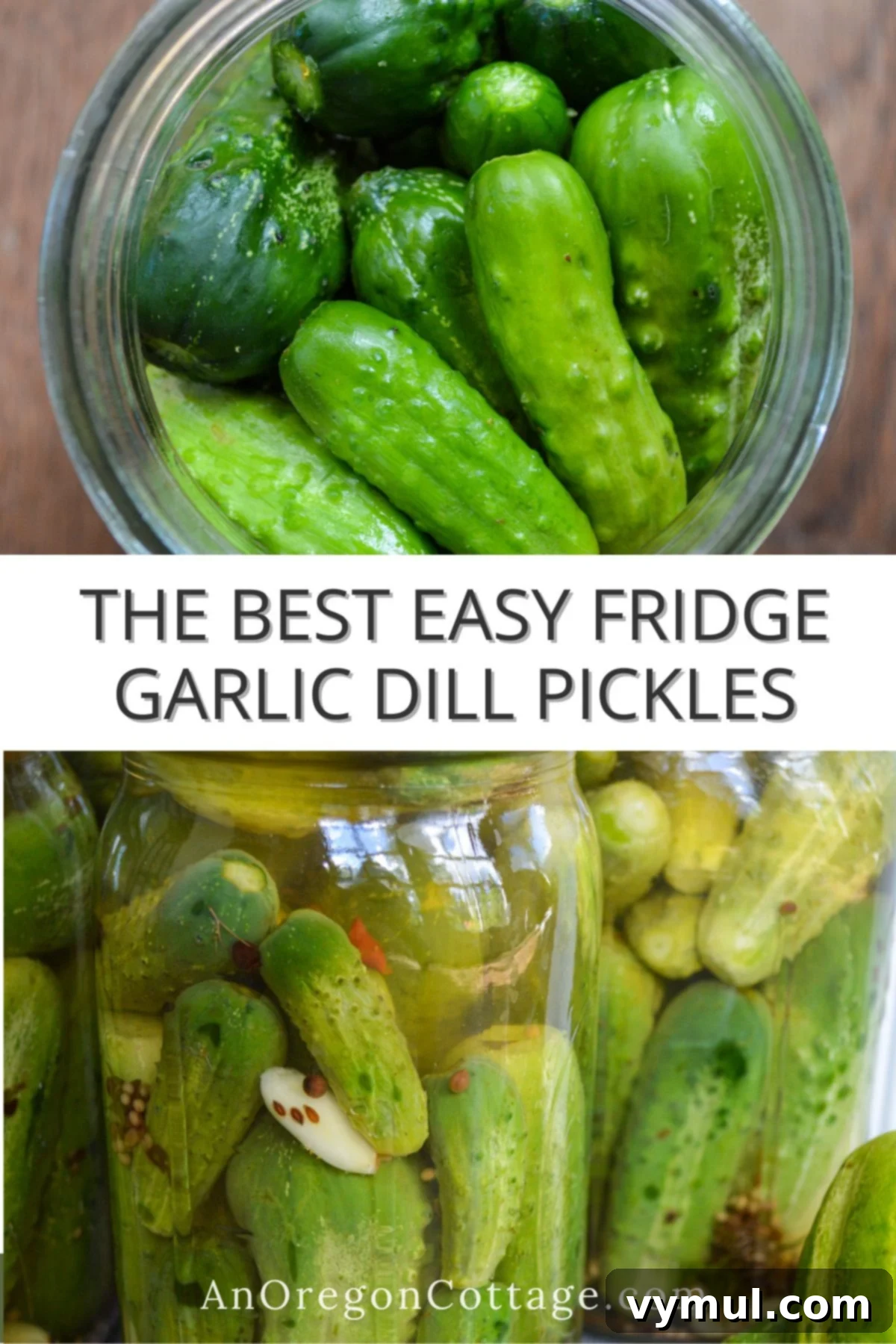
Discover the secret to incredibly crisp, perfectly tangy, and vibrantly flavored refrigerator garlic dill pickles that require absolutely no complex processing. This quick and simple recipe allows you to prepare delicious pickles in minutes, offering a delightful crunch and robust flavor that can last for up to a year. Unlike their water-bath canned counterparts, these pickles maintain an exceptional crispness you’ll adore. Plus, you have complete freedom to customize the garlic, dill, and spice levels to your exact preference. Whether you’re harvesting a bountiful garden or just a few cucumbers at a time, this method makes it effortless to enjoy fresh, homemade pickles whenever you desire.
✩ What readers are saying…
“Oh. My. Goodness! I made these last year with “cocktail” cucumbers from Costco – maybe next year I’ll get my garden in earlier and be able to grow my own. Without a doubt, the BEST PICKLES EVER!!” -Linda

Some links in this article are affiliate links and if you click on them I will receive a small commission at no cost to you.
My journey into the world of food preservation began with simpler endeavors like homemade jams and canned salsa. As a self-taught canner, I quickly found myself drawn to the art of pickling. There were a couple of compelling reasons for this fascination.
Firstly, the high vinegar content in pickles offered a comforting sense of safety, alleviating many of my initial concerns as a beginner in food preservation. This meant I could experiment with confidence. Secondly, despite a general dislike for raw cucumbers, I have always loved small, crunchy pickles! Growing my own cucumbers allowed me to harvest them at the exact size I preferred, ensuring every jar was filled with those delightful baby gherkins.
I initially delved into traditional water-bath canned dill pickles, primarily for their shelf-stable storage convenience. However, it wasn’t long before I transitioned to what are known as “refrigerator pickles” – a method that quickly became my preferred way to enjoy these garlicky, dilly treats.
Why Choose Refrigerator Pickles Over Traditional Canning?
Our family quickly developed a strong preference for refrigerator pickles, and I believe you will too. Here are the paramount reasons why this method stands out:
- Unmatched Crispness: This is, without a doubt, the primary reason we gravitated towards refrigerator pickles. They maintain an incredible, satisfying crispness that is often lost in the high-heat processing of water-bath canning. Even with traditional additives like grape leaves or alum, canned pickles rarely achieve that desired sharp snap. Refrigerator pickles consistently deliver that perfect crunch.
Beyond crispness, there are several other practical benefits that make refrigerator pickling a superior choice for many home cooks:
- Significantly Less Time and Effort: This method drastically cuts down on preparation and processing time. You can easily complete a quart jar of these delicious pickles in less than 20 minutes, making it an ideal project for busy schedules.
- Perfect for Small, Continuous Harvests: If you’re growing cucumbers in your garden, you know they ripen in stages. Refrigerator pickling allows you to prepare pickles one or two jars at a time as your cucumbers become ready. This eliminates the need to wait for a large batch, which is especially beneficial for smaller gardens that may not produce enough for a full canner load all at once.
- No Unwanted Heat in Your Kitchen: Who wants to boil a large canner on the stove during the peak of summer? This method avoids heating up your home with prolonged canning sessions, a welcome relief on hot days (especially when it’s 104 degrees in the shade, as it often is at my house!).
- Safe Recipe Customization: Refrigerator pickles offer a much safer way to experiment with flavors. You can freely adjust the amounts of seasonings, garlic, and spices without the risk of foodborne illness that comes with altering recipes intended for water-bath canning. This freedom allows for endless culinary creativity.
- Versatility in Jar Usage: Unlike strict canning guidelines that require specific jars and new lids, refrigerator pickles can be stored in any clean glass jar with a tight-fitting lid. This means you can reuse old mayo, olive, or pickle jars, which is both economical and environmentally friendly.
How Long Do Refrigerator Pickles Last?
One of the most common questions about refrigerator pickles is regarding their shelf life. You might be surprised to learn that these pickles can last a remarkably long time while retaining their excellent quality. In my personal experience, I’ve enjoyed pickles from jars that were 18 months old, and they were still absolutely wonderful!
However, for general guidance and optimal flavor, I recommend planning to store your homemade refrigerator pickles for approximately 9 to 12 months. This duration allows ample time to enjoy them throughout the year, typically bridging the gap until your next cucumber harvest season. For my family, this usually translates to preparing enough quarts to enjoy about one jar per month.

Here’s an important safety note about home “canned” pickles:
It’s important to clarify the distinction between true canning and refrigerator pickling. Some individuals mistakenly believe they can “can” pickles using the refrigerator pickle method by simply pouring hot brine over cucumbers and allowing the jar to seal as it cools (a process sometimes referred to as “open kettle” canning), then storing them on a shelf without any further water-bath processing.
While I often hear anecdotes from people who claim to have done this for many years without issue, it’s crucial to understand the official safety guidelines. The USDA explicitly states that this practice is not safe and carries a significant risk of food poisoning and spoilage. Here’s a good article from Penn State Extension that delves deeper into why open kettle canning is not recommended.
My personal philosophy on this is simple: Is the rare chance of foodborne illness worth it? What if it caused severe intestinal problems, or worse? My answer is an unequivocal NO. Food preservation should prioritize safety above all else. It’s never worth risking sickness (or, heaven forbid, a life) when recommended precautions are so easy to follow. Therefore, always store these pickles in the refrigerator to ensure safety.
Now that we’ve covered the essential safety information, let’s get back to making our perfectly safe and delicious fully refrigerated pickles!
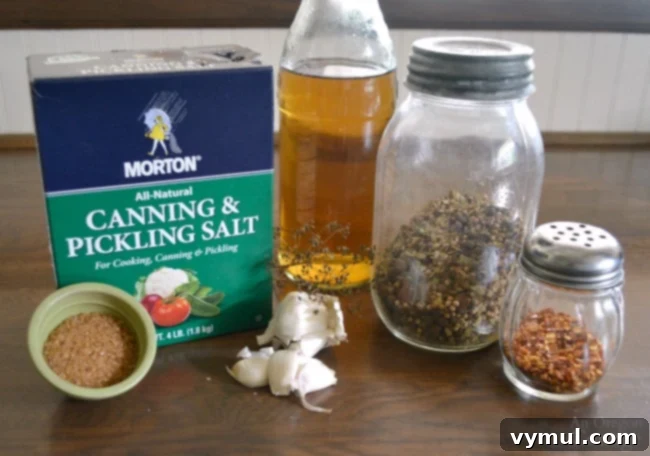
Essential Ingredients & Supplies for Perfect Pickles
Gathering the right ingredients and tools is the first step to making exceptional refrigerator garlic dill pickles. Here’s what you’ll need for a single quart jar – simply scale up for more batches:
- Cucumbers: You’ll need enough pickling cucumbers to fill a quart jar. While any cucumber can technically be pickled, pickling varieties (often shorter, bumpier, and firmer) yield the best results. I prefer using the smallest “baby” cucumbers for their superior crispness and tenderness – this is precisely why I love growing my own, as store-bought options can be pricey. If you only have pint jars, two pints will equal one quart.
- Apple Cider Vinegar: This provides a slightly milder, fruitier tang that I find particularly appealing in dill pickles. However, if you prefer a sharper taste, white vinegar works perfectly fine. Always use vinegar with at least 5% acidity for pickling.
- Canning & Pickling Salt: This type of salt is pure, without anti-caking agents or iodine, which can make your brine cloudy or affect the pickle’s texture and color. A pure sea salt without additives is also an excellent alternative. Do not use regular table salt.
- Fresh Dill Heads: The star of dill pickles! Fresh dill heads (the flower heads) impart the most authentic and robust dill flavor. If fresh dill isn’t accessible, you can substitute with dried dill seeds. Use about 1 teaspoon of dill seeds per quart jar.
- Garlic Cloves: Fresh garlic is essential for that signature garlicky punch. Adjust the quantity to suit your preference – you can never have too much garlic in my book!
- Homemade Pickling Spice: A blend of various whole spices like mustard seeds, peppercorns, coriander, and bay leaves adds depth and complexity to the brine. You can easily make your own mix or opt for a good quality store-bought organic pickling spice.
- Sugar: A touch of sugar balances the acidity of the vinegar, rounding out the flavors without making the pickles sweet. Adjust to your taste, if desired.
- Red Pepper Flakes: (Optional, but highly recommended) A pinch of red pepper flakes introduces a delightful, subtle heat that enhances the overall flavor profile.
Supplies:
- Quart Canning Jar(s): Or any clean, quart-sized recycled glass jar with a tight-fitting lid. For refrigerator pickles, traditional canning-specific jars aren’t strictly necessary, but they are durable. It’s always good practice to sterilize your jars by boiling them for 10 minutes or running them through a hot dishwasher cycle, as this helps guard against spoilage. (Full disclosure: while I advise sterilization for best practice, I often just ensure my jars are meticulously washed with hot, soapy water. Do as I say, not as I do!)
PRO TIP: I find regular mouth jars to be ideal for pickles. The slight “shoulders” inside the jar help keep the smaller cucumbers submerged under the brine, which is key for proper pickling and preventing spoilage.
- Plastic Canning Storage Lids: Or simply reuse any old canning lids or even the original lids from your recycled jars. Since these pickles are stored in the refrigerator and not undergoing a true canning process for an airtight seal, reusing lids is perfectly acceptable. (Note: For actual water-bath canning, always use new lids to ensure a proper and safe seal – it’s worth the small cost for food safety.)
- Metal Canning Funnel: Highly recommended for safely and cleanly pouring hot brine into jars, preventing spills and burns.
- Large Saucepan: For preparing the pickling brine.
Step-by-Step Directions to Homemade Refrigerator Pickles
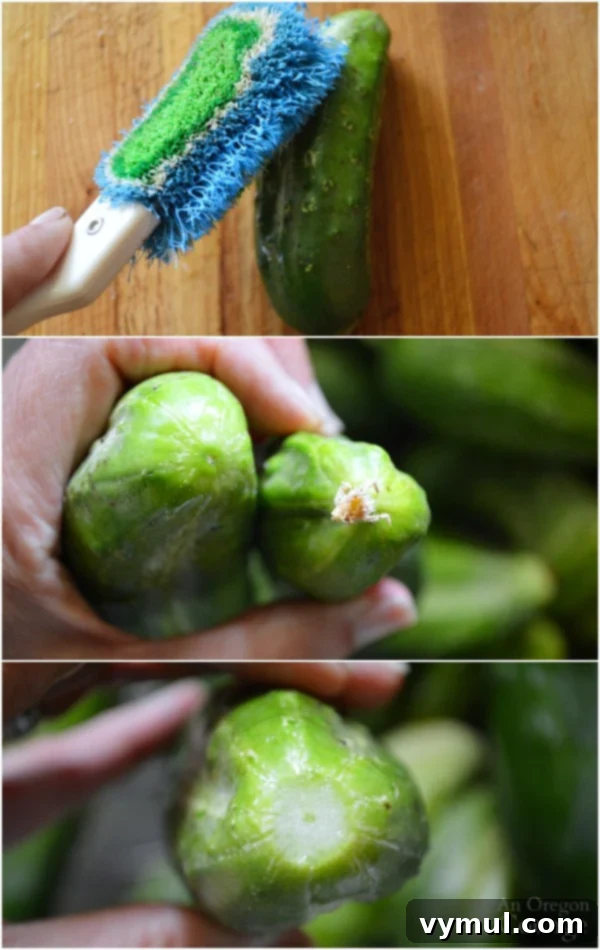
Part 1: Prepare the Cucumbers
Proper cucumber preparation is vital for crisp, delicious pickles. Follow these steps carefully:
1. Thoroughly Scrub the Cucumbers: Use a stiff scrub brush (I prefer one with a handle, like this similar one, for easier grip) and cold water to scrub each cucumber rigorously. This removes any dirt, debris, or residual wax that could interfere with the pickling process.
As mentioned, my absolute favorite pickles come from the smallest “baby” cucumbers. Their firm texture and delicate flavor are unmatched, which is precisely why I started growing my own. In the past, trying to select only the tiny cucumbers at local farms proved challenging (and sometimes amusingly frowned upon!).
2. Identify and Remove the Blossom End: This is a crucial step for achieving crisp pickles. Locate the “blossom end” of each cucumber – this is the end opposite the stem, where the flower once was. (It might sound elementary, but these are the details I learned along my canning journey!)
The blossom end contains an enzyme that, if not removed, can cause your pickles to become soft and mushy, completely defeating the purpose of a crisp pickle. So, don’t skip this essential corner!
3. Trim Just a Small Slice: With a sharp knife, carefully cut off just a tiny sliver (about 1/16 to 1/8 inch) from the blossom end. Resist the urge to cut off too much! I learned this from experience: while a little is good, a lot can result in pickles with awkwardly “sawed-off” ends, which aren’t as visually appealing or pleasant to eat.
4. Repeat for All Cucumbers: Go through all your cucumbers, ensuring each one is properly scrubbed and trimmed at the blossom end. This methodical approach guarantees consistent quality across your batch.
PRO TIP: When preparing larger quantities of cucumbers (for three or more jars), I find it helpful to sort them into three piles by size after cleaning: large, medium, and small. This makes packing the jars much more efficient. Start by placing the larger cucumbers at the bottom, then fill in with medium-sized ones, and finally, use the tiny baby cucumbers to fill any remaining cracks and ensure a tight pack.

Part 2: Make the Pickles
Now for the exciting part – assembling your flavorful pickles!
1. Layer the Flavor Base in Each Clean Jar: Into the bottom of each sterilized (or thoroughly cleaned) quart jar, add the following flavor enhancers:
- Four cloves of garlic: Peel and slice each clove in half to maximize the release of its aromatic compounds into the brine. You can easily adjust this quantity based on your love for garlic – add more for an intense flavor, or less for a milder profile. This customization is completely safe with refrigerator pickles.
- 1-2 fresh dill heads: The size of your dill heads will determine how many you use. For an even more pronounced dill flavor, consider adding an additional teaspoon of dried dill seeds. If fresh dill is unavailable, simply use 1 tablespoon of dried dill seed per jar as a substitute.
- Red pepper flakes: (Optional, but highly recommended) A few shakes up to half a teaspoon per jar will introduce a fantastic, subtle warmth that truly elevates the pickle’s taste. Experiment to find your preferred level of spice.
2. Pack the Cucumbers Tightly: Carefully arrange your prepared cucumbers into the jars, placing them directly on top of the garlic and dill. Pack them as snugly as possible without bruising them. The goal is to maximize the number of pickles in each jar while still allowing sufficient space at the top for the brine to completely cover all the cucumbers.
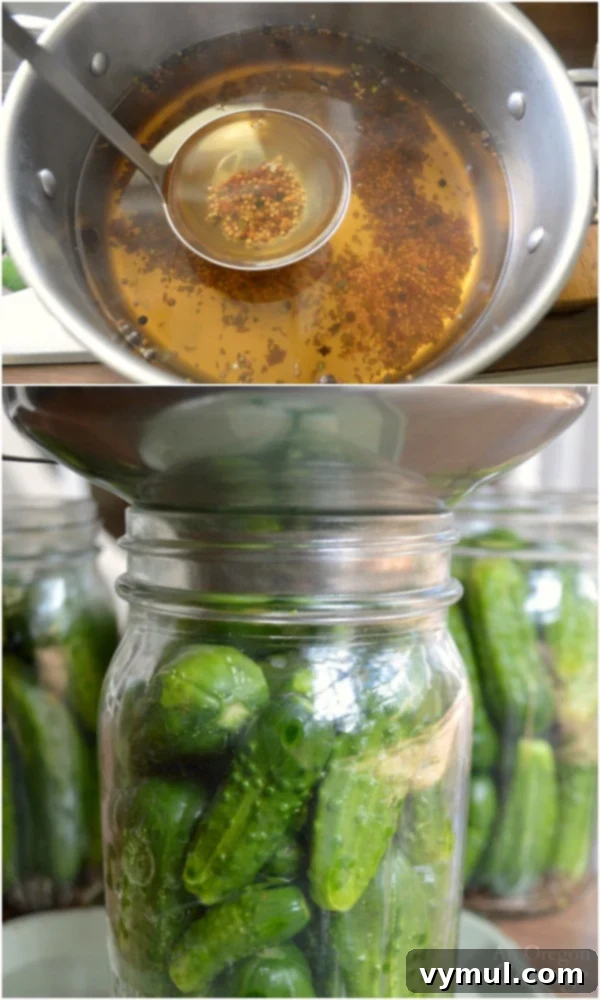
3. Prepare the Hot Brine: In a large saucepan, combine the vinegar, water, pickling spice, pickling salt, and sugar. Stir well to dissolve the salt and sugar. Bring the mixture to a rolling boil over medium-high heat. Once boiling, reduce the heat and let it simmer gently for 5 minutes. This allows the spices to infuse thoroughly into the brine.
4. Pour the Brine into Jars: Carefully ladle the hot brine over the cucumbers in each jar. Use a canning funnel to prevent spills and ensure precise pouring. Fill the jars until all cucumbers are submerged, leaving approximately 1/4 inch of headspace (the empty space between the brine’s surface and the rim of the jar). Since these are refrigerator pickles, the exact headspace isn’t as critical as it would be for traditional water-bath canning; the main goal is to ensure all cucumbers are covered by the brine, but without overflowing when the lid is applied.
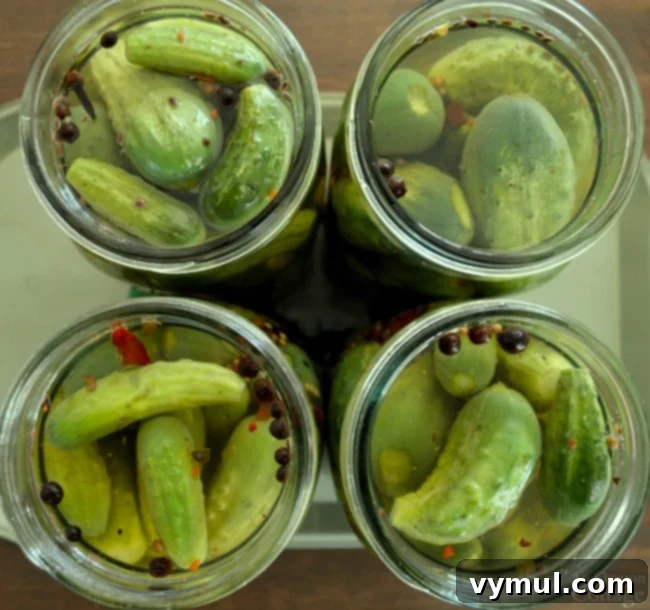
5. Seal and Label: Securely attach the lids to your jars. Once sealed, allow the jars to cool completely to room temperature on your countertop. After cooling, it’s a good practice to label the lids with both the date you made them and the year. This helps you track their curing time and ensures you consume them within their optimal storage period.
6. Refrigerate and Cure: Transfer the labeled jars to your refrigerator. While technically edible sooner, these pickles require a curing period to develop their full flavor. Allow them to “cure” in the refrigerator for at least 3 to 4 weeks before tasting. The longer they sit, the more the flavors will meld and penetrate the cucumbers, resulting in a truly exceptional pickle. They continue to improve in flavor over several months in storage.
Update: I’ve received questions regarding the waiting period for these pickles. To clarify, this waiting time is not a safety requirement. It’s purely for flavor development. The brine needs time to fully permeate the cucumbers, reaching the very center, to achieve the best possible taste and texture. If you taste them earlier and enjoy them, by all means, go ahead! However, for the peak pickle experience, patience is rewarded.
That’s it! You’ve successfully made a batch of the most delicious, crisp garlic dill pickles you’ll likely ever taste. Enjoy your homemade culinary triumph!
Reader Raves
“Love this recipe! Thank you so much for sharing and also for sharing your best practices. Not going to lie – normally I skip right down to the recipe, however with your useful extra information and easy to follow writing I really enjoyed your entire post from start to finish.” -Anna
“Sooo good, last year did a half bushel, this year my son and I did a bushel and a half. Everyone just loved them.” -Dave
“They were so delicious! I made 2 jars and now about to make more because I ate them too fast.” -Vivian
“I made this and it comes out exactly as described. I am making them again and have this recipe printed and saved in favorites! 100 out of 10 it’s that good.” -Carol
I genuinely hope you and your family enjoy these easy refrigerated dill pickles as much as we do. Please make sure to leave a rating and review so I know how you liked them!

Print Recipe
Pin Recipe
Save
Saved!
★
★
★
★
Easy Refrigerator Garlic Dill Pickles (And Why It’s Better Than Canning)
15 minutes
5 minutes
20 minutes
1
quart
Jami Boys
Equipment
-
1 quart jar canning or reused jar
-
1 storage lid
-
3 quart saucepan
-
ladle and funnel
Ingredients
For each quart (increase as needed for each quart added):
- 1 quart pickling cucumbers enough to fill a qt. jar, washed and blossom-ends cut off
- 4 garlic cloves peeled and sliced in half
- 1 to 2 large fresh dill heads add up to 1 tsp. dried dill seed, if desired for more dill flavor*
- 1/4 teaspoon red pepper flakes, optional
- 1¼ cups cider vinegar (or white vinegar)
- 1¼ cups water
- 2 teaspoons pickling spices
- 1 tablespoon + 1 teaspoon salt, pickling or sea salt
- 1½ teaspoons sugar, or to taste
Instructions
-
Prepare the number of quart jars equal to amount of pickles you have by running through the dishwasher or boiling for 10 minutes in a pot of water to sterilize.
-
Place the garlic and dill in the bottom of each jar, along with optional red pepper flakes. Pack the cucumbers on top, leaving about 1/2 of headspace (you want the brine to be able to cover the cucumbers).
-
In a large saucepan, combine water, vinegar, spices, salt and sugar. Bring to a boil, reduce heat, and simmer for 5 minutes.
-
Ladle the brine into the jar leaving 1/4 inch of head space to cover the cucumbers. Attach lids.
-
Let cool to room temperature, label the lids with day and year and then store in the refrigerator.
-
The pickles can be eaten after 3-4 weeks and continue to improve over the months of storage.**
Notes
**How Long Do They Store? I’ve stored them for 12-15 months and they just increase in flavor. Occasionally a jar doesn’t store well and I have to toss it, but it’s very rare (the pickles became shrunken and or cloudy/slimy).
Nutrition
Calories: 19kcal |
Carbohydrates: 3g |
Protein: 1g |
Fat: 1g |
Saturated Fat: 1g |
Sodium: 587mg |
Potassium: 133mg |
Fiber: 1g |
Sugar: 2g |
Vitamin A: 76IU |
Vitamin C: 3mg |
Calcium: 17mg |
Iron: 1mg
Did you make this recipe?
Mention @anoregoncottage or tag #anoregoncottage!
More Easy Pickling Recipes To Try
- Garlic Spiced Canned Pickled Beans
- Quick & Easy Sliced Pickled Jalapenos
- Easy Pickled Beets for Canning or Refrigerator, Jar-by-Jar
Note: this article was originally published in 2009 and has been updated with current information, all new photos, clearer formatting, and a printable recipe.
Disclosure: affiliate links in this article will earn commission based on sales, but it doesn’t change your price. Click here to read my full disclaimer and advertising disclosure.