Mastering Sourdough: Your Ultimate 7-Day Guide to an Easy Homemade Sourdough Starter
Embark on a delightful culinary journey with this comprehensive sourdough guide! We’ll show you how to create a vibrant, healthy sourdough starter from scratch using our simple 7-day tutorial. Discover the best practices for storing and maintaining your active culture for years to come, along with a timeline of exciting recipes you can bake as your starter matures. With this resource, you’ll soon be crafting your own delicious, homemade sourdough bread, waving goodbye to store-bought loaves for good!
Looking for more fantastic sourdough creations? Explore our collection on the Best Bread Recipes page.
Over the years, as I’ve immersed myself in the fascinating world of sourdough baking, countless questions have popped up: “How do I grow a starter?” “How do I keep it alive?” “What are some easy sourdough recipes?” I’ve shared many insights, from valuable tips learned during my initial sourdough journey to a variety of recipes that beautifully utilize an active starter.
Many of these inquiries revolve around the fundamental process of cultivating your very own sourdough starter and ensuring it remains robust and healthy. People often wonder about the best ways to incorporate the starter into recipes as it develops its strength. That’s why I’m excited to share the straightforward sourdough starter recipe I’ve personally used twice to establish thriving cultures that have sustained me for years.
My first starter flourished for over six years. Unfortunately, during a move and several months of living with family while searching for our current home (our charming farmhouse), I had to let it go. However, I successfully grew a second starter, which continues to be strong and active many years later, proving the reliability of this method.
A Note on Longevity: Sourdough starters are incredibly resilient and can endure for decades! I’ve heard amazing stories from readers who have maintained their starters for 30, even 50 years. So, if circumstances allow, always try to save your precious starter during transitions or moves!
What Exactly is Sourdough and How Does it Work?
Sourdough is far more than just a recipe; it’s a living culture, a symphony of natural yeasts and beneficial bacteria, primarily lactic acid bacteria, that are naturally present in flour and the surrounding air. When combined with water, these microorganisms begin to ferment, creating a robust “starter.” This unique process is why sourdough from different regions, like the renowned San Francisco sourdough, boasts distinct flavors—the local environment’s microbial makeup plays a crucial role. It’s a fascinating interplay of nature and nurture, where your climate subtly influences your starter’s character.
The magic happens as these wild yeasts and lactic acid bacteria work in harmony. They consume the sugars in the flour, producing carbon dioxide gas and organic acids. It’s this gas that creates the airy bubbles and causes bread to rise, while the acids contribute to sourdough’s signature tangy flavor and unique texture. Furthermore, the starter’s naturally low pH level and the presence of antibacterial agents act as a protective shield, preventing unwanted yeasts and harmful bacteria from taking hold. This inherent resilience is precisely why a well-maintained sourdough starter can literally thrive for many, many years, becoming a cherished kitchen companion.
Understanding this biological process highlights a key aspect of sourdough baking: patience. The activity level of your starter can vary. Factors like your kitchen’s ambient temperature, the type of flour you use, and even the local microbial environment can influence how quickly your starter develops. Therefore, your starter might grow faster or slower than the timeline I’ve outlined. As I’ve often emphasized on my sourdough tips page, the most crucial lesson I’ve learned over the years is the importance of patience – not just with your starter, but also with the dough itself.
Why Cultivate Your Own Sourdough Starter?
Beyond the simple joy of baking, there are numerous compelling reasons to embark on the journey of creating your own sourdough starter:
- Unparalleled Flavor and Texture: Sourdough bread offers a depth of flavor—a delightful tanginess—and a wonderfully chewy texture that simply can’t be replicated by commercial yeast breads. Each loaf carries the unique character of your starter.
- Improved Digestibility: The fermentation process breaks down complex carbohydrates and gluten in the flour, making sourdough bread often easier to digest for many people compared to conventionally leavened bread.
- Nutritional Benefits: Fermentation can also increase the bioavailability of nutrients in flour, meaning your body can absorb more of the vitamins and minerals.
- Cost-Effective: Once you have a starter, you only need flour and water to keep it alive. This makes homemade sourdough bread a significantly more economical choice than buying artisan loaves from a bakery.
- Empowerment and Connection: There’s a profound satisfaction that comes from creating something so foundational from just flour and water. It connects you to ancient baking traditions and gives you a sense of control over your food.
- Flexibility in Baking: An active starter opens up a world of baking possibilities, from rustic loaves to pancakes, crackers, pizza crusts, and more.
Easy Sourdough Starter Recipe: Your 7-Day Journey
(Recipe adapted from Heavenly Homemakers)
This detailed guide walks you through each day of the sourdough starter creation process. For a concise, printable version, you can jump directly to the recipe card below.
Choosing Your Flour: The Foundation of Your Starter
You have a lot of flexibility when it comes to the type of flour you use for your sourdough starter. Even gluten-free flours can work! However, many experienced bakers find that incorporating a portion of whole wheat or rye flour, especially when beginning a new starter, can significantly boost its initial activity. These flours are richer in nutrients and natural yeasts, providing a more fertile ground for your culture to thrive. While many successful starters have been made solely with all-purpose flour, I personally have only cultivated and maintained whole wheat starters (initially incorporating rye). I once tried feeding my established whole wheat starter with all-purpose flour during a pandemic-induced shortage, and it hardly grew or doubled at all. This experience highlights the importance of consistency.
Therefore, my strong suggestion is to commit to the specific type of flour you begin with. If you wish to experiment with different flour types (e.g., a rye starter and a whole wheat starter), it’s best to maintain separate jars for each. However, I’ve also heard from many fellow bakers who successfully feed their starters with whatever flour they have on hand, so feel free to experiment if you’re feeling adventurous!
Water Quality Matters
The quality of your water is more important than you might think. Ideally, use non-chlorinated, good-quality water. If your tap water is heavily chlorinated or has other additives, you have a couple of options: either boil the water and let it cool completely before using, or simply let it sit out uncovered for 24 hours. This allows the chlorine to evaporate. Avoid using overly filtered or distilled water, as your starter actually benefits from some of the natural minerals found in good water.
Essential Equipment for Your Sourdough Journey
Before you begin, gather these simple items:
- Glass Jars or Bowls: You’ll need at least one 1-quart glass jar or a 4-quart glass bowl. Glass is crucial because sourdough is acidic, and metal or plastic containers can react with the culture or harbor unwanted bacteria. Wide-mouth jars are easiest for mixing and observing.
- Breathable Cover: Muslin cloth, cheesecloth, or a loose-fitting jar lid. This allows air circulation while protecting your starter from dust and insects. Avoid airtight lids during the initial growth phase.
- Spatula or Spoon: For mixing.
- Kitchen Scale (Optional but Recommended): For precise measurements, especially if you want to achieve consistent hydration ratios.
- Rubber Band or Tie: To secure the cloth cover (optional).
Day 1: The Beginning of Your Sourdough Starter
- Begin by combining 1/2 cup whole wheat flour and 1/2 cup rye flour (for a total of 1 cup flour). While you can use all whole wheat, rye flour is often recommended for kickstarting a robust starter. If weighing, use equal amounts: 100 grams of flour.
- Add 1 cup of warm water (around 70-75°F or lukewarm tap water). Warm water is key, as it encourages the wild yeasts to become active more quickly. If weighing, use 100 grams of warm water.
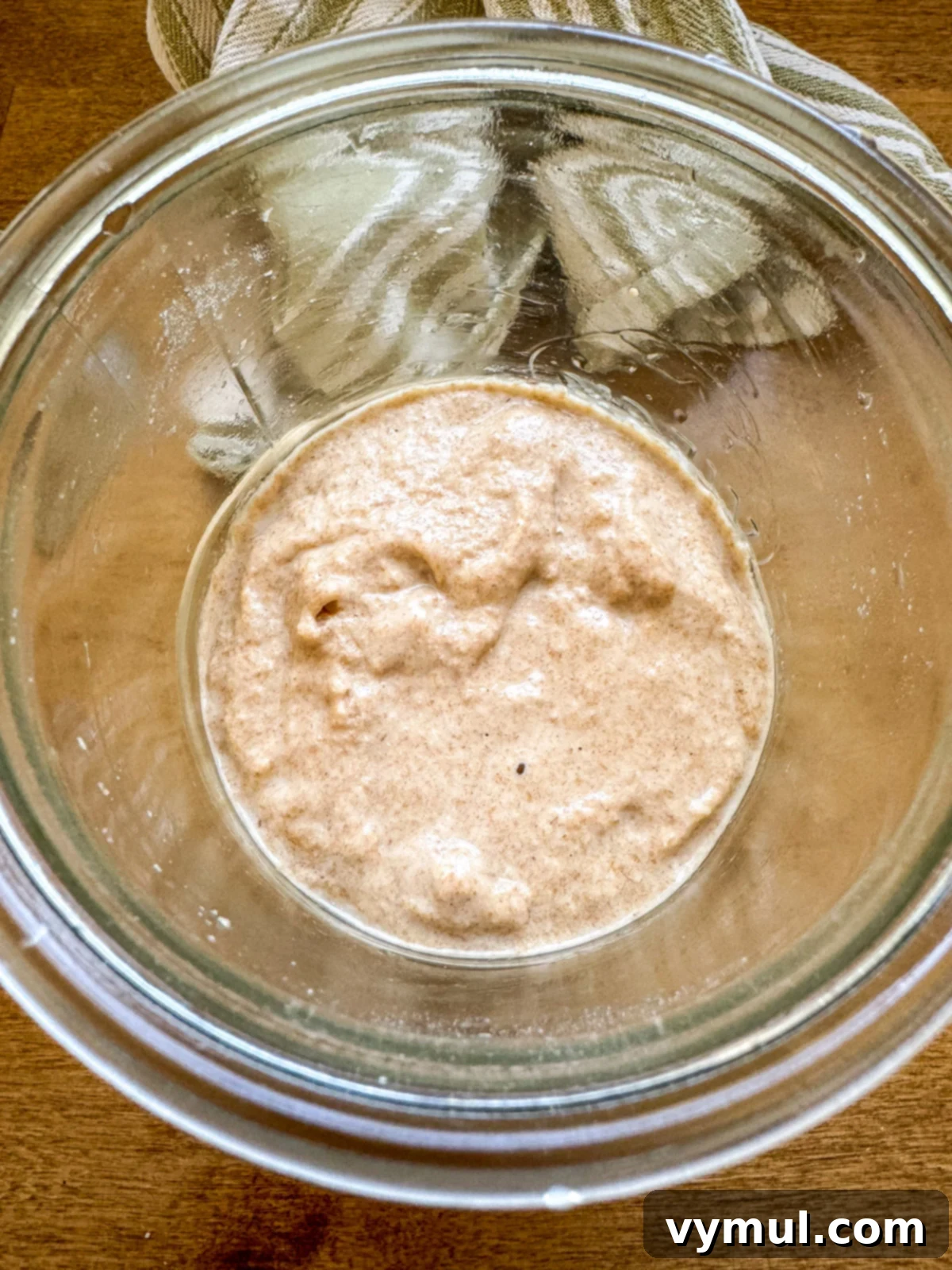
- In your chosen glass jar or bowl, thoroughly mix the flour and water until no dry clumps remain. The mixture should resemble a thick pancake batter.
- Cover the container loosely with muslin or cheesecloth, securing it with a rubber band if desired. This allows vital air circulation for bacteria to enter, while keeping out contaminants.
- Place your starter in a warm location, ideally between 70-75°F (21-24°C). The top of a refrigerator or a warm spot in your kitchen is often ideal.
A Note on Reducing Waste: From Day 2 onwards, once you observe initial bubbling and activity, you can choose to use smaller amounts of flour and water for feeding (e.g., 1/2 cup or even 1/4 cup of flour with an equal amount of water) to minimize discard. If your starter’s activity seems to stall, revert to slightly larger feeding quantities.
Day 2: First Signs of Life
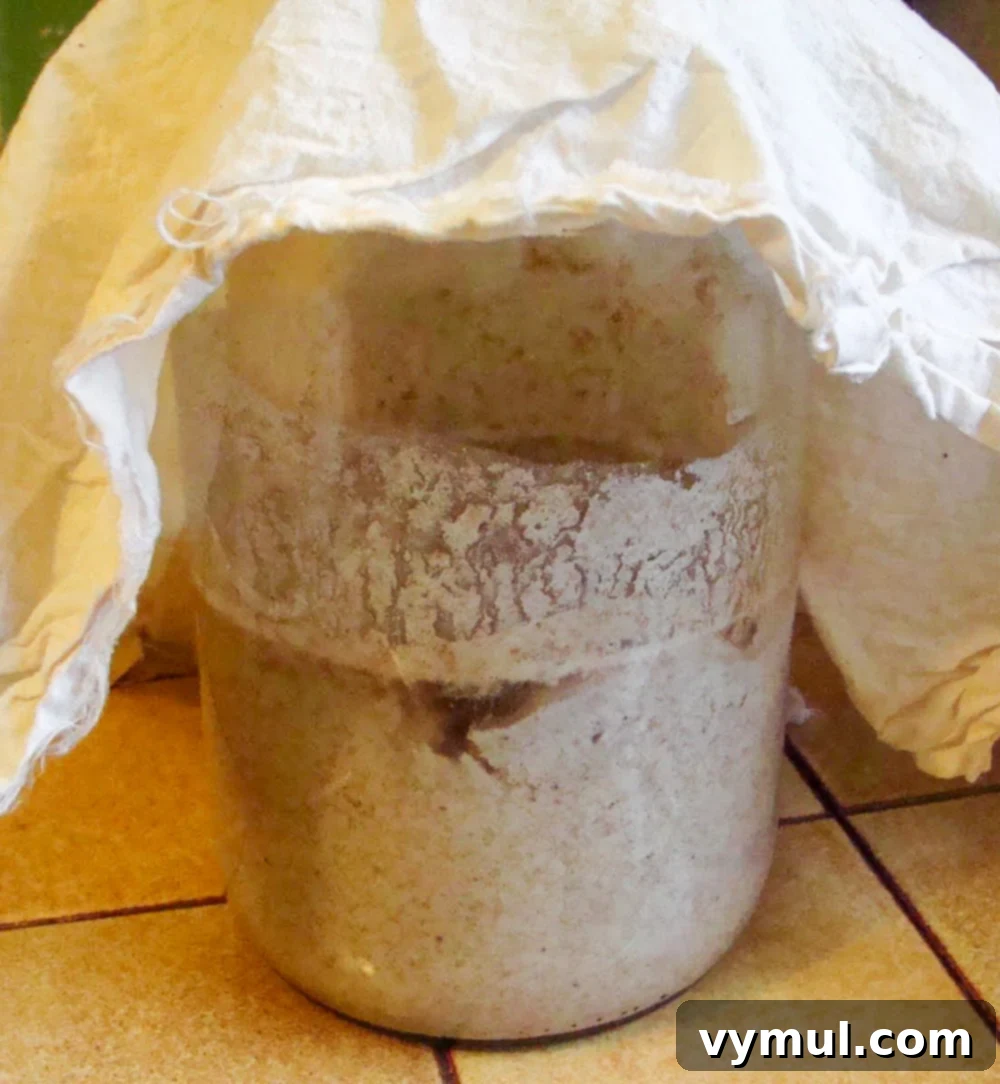
- After 24 hours, you might notice some separation in your starter, forming a dark liquid layer on top. This is called “hooch” and is completely normal. It’s an indication that your starter is getting hungry. You can either pour it off for a milder sourdough flavor or mix it back in for a more pronounced sourness in your future bakes.
- Transfer your starter to a fresh, clean glass jar or bowl. This daily transfer helps maintain cleanliness and significantly reduces the rare chance of mold developing.
- Important: Do not discard any portion today. Add 1/2 cup of your chosen flour (whole wheat or your preferred blend) and 1/2 cup of warm water. Stir thoroughly, making sure to scrape down the sides of the jar to incorporate all the flour.
- Replace the breathable cover and return the jar to its warm spot. At this stage, your starter might not yet have a distinctly sour aroma, and that’s perfectly fine; it’s still in its infancy.
Day 3: The First Discard
- Again, pour off any accumulated hooch (dark liquid) or mix it back in.
- Now, it’s time for your first discard. Remove and discard approximately half of the starter mixture. This step is crucial for managing the volume of your starter and ensuring a consistent feeding ratio for the developing culture.
- Transfer the remaining starter to another clean glass jar or bowl. Add 1/2 cup of flour and 1/2 cup of warm water. Mix well.
- Cover and return to its warm spot. You should start noticing small bubbles or a slight rise, along with a more complex smell.
Day 4: Observing Activity and Consistency
- Repeat the steps from Day 3: address any hooch, discard half of the starter, transfer to a clean jar, and feed with 1/2 cup of flour and 1/2 cup of warm water.
- By now, your starter may have risen noticeably, developed a faintly sour scent, and exhibit small bubbles. Don’t be concerned if yours looks slightly different or has less activity; every starter develops at its own pace. The key is to continue the daily feeding routine.
Day 5: Continued Fermentation
- Follow the same routine as Days 3 and 4: discard half, move to a clean jar, and feed with 1/2 cup of flour and 1/2 cup of water.
- The smell of your starter might be quite strong or even slightly unpleasant at this stage – this is normal and indicates active fermentation. It’s not a sign that your starter has gone bad. You might also observe more liquid and surface activity. Just keep going!
Day 6: Adjusting Hydration for Strength
- Today, your starter should display clear signs of bubbling activity, and possibly some liquid if your previous feeding was wetter.
- Discard half of the starter, then transfer the remainder to a clean jar.
- This is a key adjustment: Add 1/2 cup of flour, but only 1/3 cup of warm water. I’ve found that maintaining a slightly drier consistency (less water than flour) encourages better rise and growth, and can result in a finished bread that is slightly less sour.
- This reduced water ratio is ideal once your starter is consistently bubbly and active. If your starter seems sluggish, it’s best to stick to the equal 1:1 ratio of water to flour.
Day 7: Assessing Maturity and Readiness
- Repeat the feeding process from Day 6 (discard half, transfer, then feed with 1/2 cup flour and 1/3 cup water).
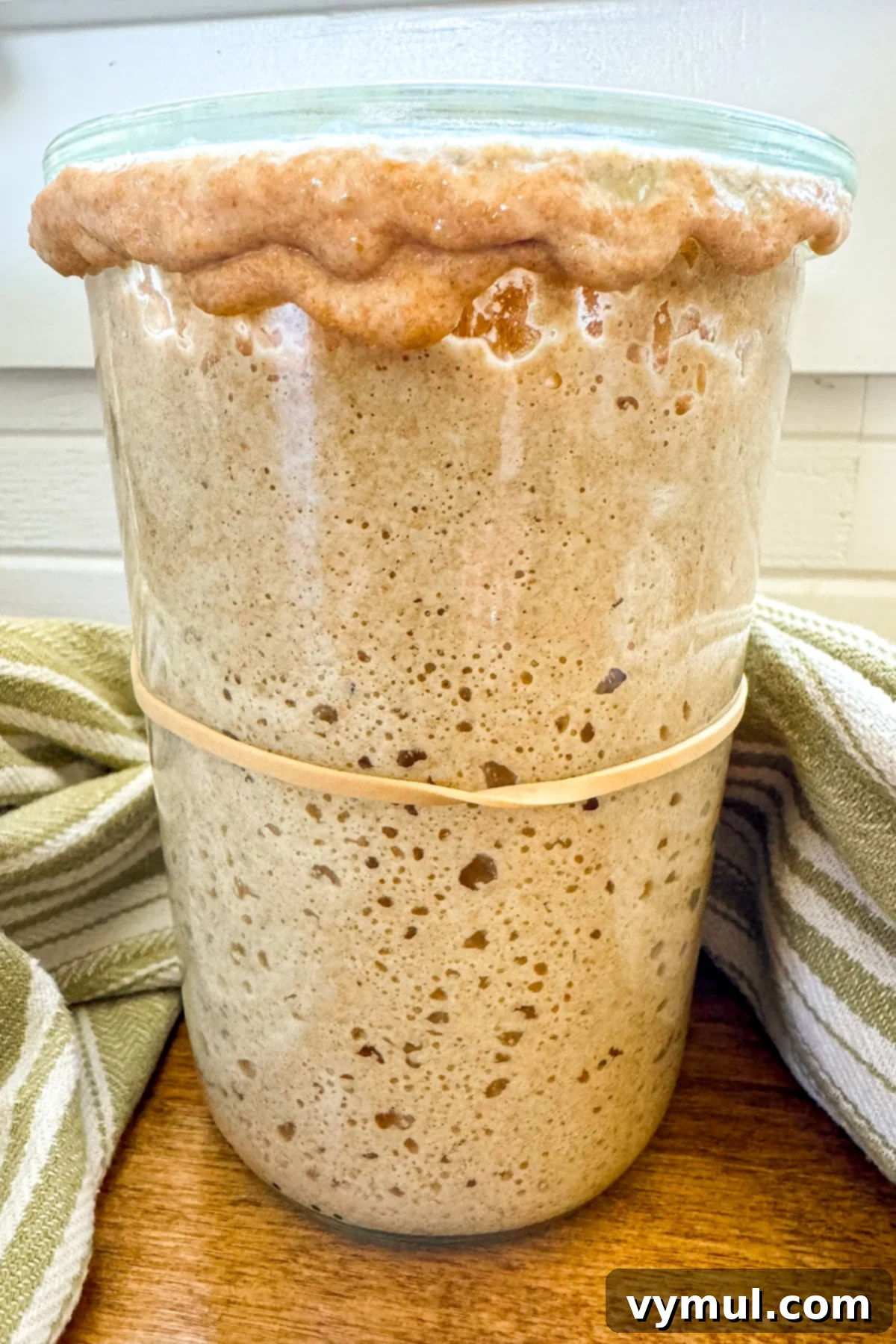
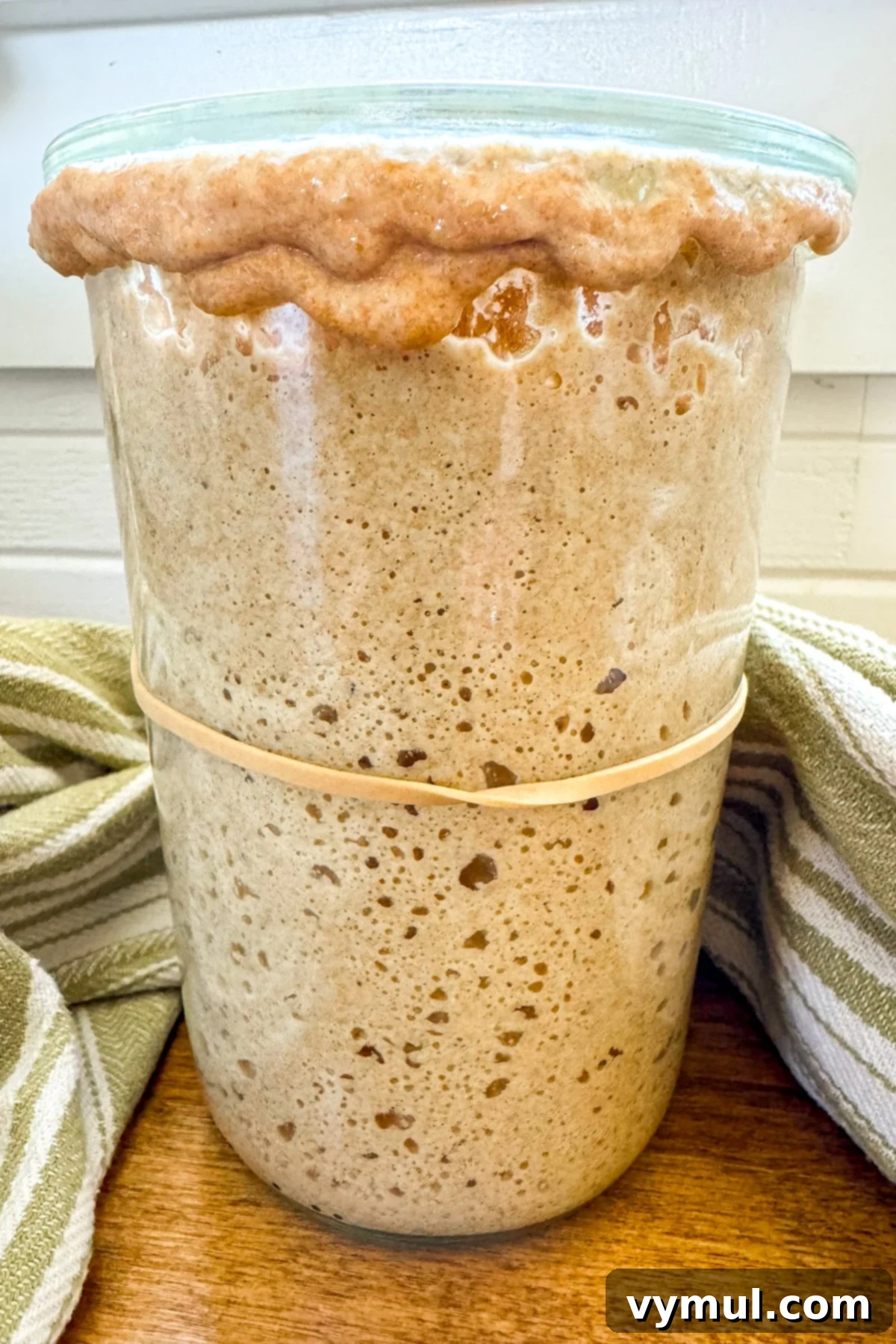
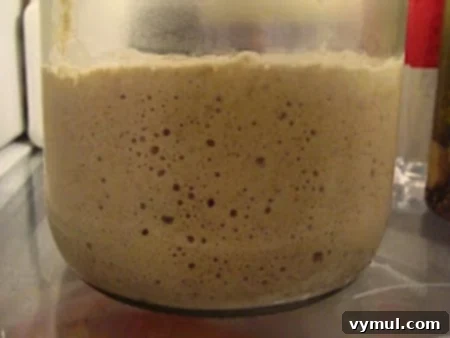
- By the end of Day 7, you should consistently observe significant signs of life: vigorous bubbling and a clear doubling in size within a few hours of each feeding. This indicates a robust and active starter.
- If your starter is not showing these consistent signs of activity, don’t worry. You might need to troubleshoot: discard most of the mixture and return to feeding equal amounts of water and flour, or even consider starting the process over, carefully reviewing your equipment, water quality, and ambient temperature.
Day 8: Welcome Your Active Sourdough Starter!
- Congratulations! By Day 8, your sourdough starter should be noticeably bubbly and have clearly grown in its container, indicating it is officially an ‘active’ starter.
- Option 1: Storing for Infrequent Baking: If you plan to bake occasionally, take at least 1/4 cup of your active starter and transfer it to a clean glass jar. Place a lid on the jar, but don’t seal it tightly (just rest it on top or use a loose-fitting lid), and store it in your refrigerator. This refrigerated portion will be your “mother” starter, which you will feed and refresh each time you wish to bake.
- Option 2: Continuing to Grow for Frequent Baking: If you intend to bake often and desire a larger, more consistently active starter, remove 1/4 to 1/2 cup of the starter and continue to feed it daily as you’ve been doing. If a specific recipe requires a substantial amount of starter, you can feed your starter without discarding between feedings. Simply add the necessary flour and water ratios (e.g., if you have 1 cup of starter, feed it 1 cup of flour and 3/4 cup water, maintaining the slightly drier consistency) until you accumulate the desired quantity for your recipe. Always ensure you reserve a small amount to continue feeding your main starter.
- What to Bake with Your New Starter? While your starter looks active, I’ve learned from experience that a brand-new Day 8 starter isn’t always mature enough to provide a strong rise for traditional bread loaves. Instead, this is the perfect time to use your “discard” (the portion you remove before feeding, or simply any excess) for recipes that don’t rely heavily on leavening. My top recommendations for Day 8 include these incredible sourdough waffles, a batch of addictively crispy sourdough whole wheat crackers, or some savory sourdough discard veggie fritters. These recipes are delicious ways to use your developing starter and celebrate your progress!
Maintaining Your Sourdough Starter: Week 2 and Beyond
Once your starter is active and you’ve decided on your storage method, consistent maintenance is key to keeping it robust and ready for baking. Here’s how to care for your starter in the long term:
- Regular Feeding Schedule: For refrigerated starters, aim to feed your sourdough culture once a week or at least every other week. Remove your jar from the fridge and pour the starter into a mixing bowl.
- Feeding Ratios: Feed your starter with an amount of flour equal to its weight or volume, and slightly less water. For instance, if you have 1 cup of starter, feed it 1 cup of whole wheat flour and approximately 3/4 cup of water. Stir thoroughly until well combined. If using a kitchen scale for precision, aim for equal weights: 50 grams of starter, 50 grams of flour, and 50 grams of water for a 1:1:1 ratio, or 50g starter, 50g flour, 35-40g water for a slightly stiffer starter.
- Activation Before Use: After feeding, leave your starter at room temperature for 12 to 24 hours to allow it to become active again. A healthy, well-fed starter should reliably double in size during this period. Depending on how long it has been refrigerated, it might require more than one feeding to reach peak activity. Continue feeding (discarding as needed) until it consistently doubles in size. For bread baking, your starter should ideally double in 6 hours or less after feeding.
- Preparing for Storage: Once your starter is bubbly and active, remove all but 1/4 to 1 cup (or your desired amount) to a fresh, clean glass jar. This portion is your “mother” starter that goes back into the fridge. The remaining portion is your “discard” and is ready to be used in your baking projects!
Pro Tip: To avoid introducing unwanted chemicals or residues, I recommend cleaning your starter storage jar with warm water only, skipping soap whenever possible. If you must use soap, ensure a very thorough rinse.
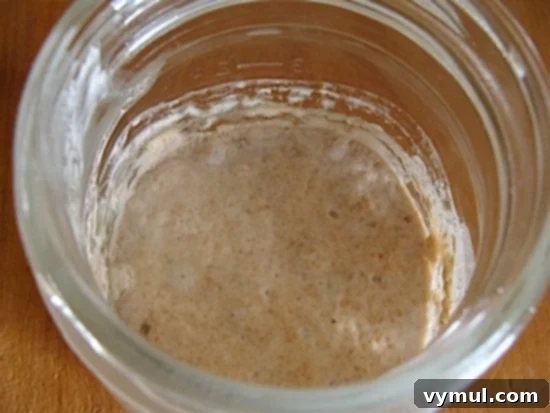
The overarching goal is to establish a consistent routine of using your starter regularly. This involves bringing it to room temperature, feeding it until it reliably doubles in size (which may take several feedings if it’s been dormant), baking with a portion, and then returning a refreshed portion to the fridge for future use. Each time you feed and use your starter, it continues to mature and gain strength, resulting in even better bakes!
What if I’ve neglected my starter for a long time? Don’t despair! Even after weeks or months in the fridge, a neglected starter often isn’t truly dead. Scroll down below the recipe card to read about my own experience with a neglected starter – spoiler alert, it survived!
Suggested Baking Timeline for Your Maturing Sourdough Starter
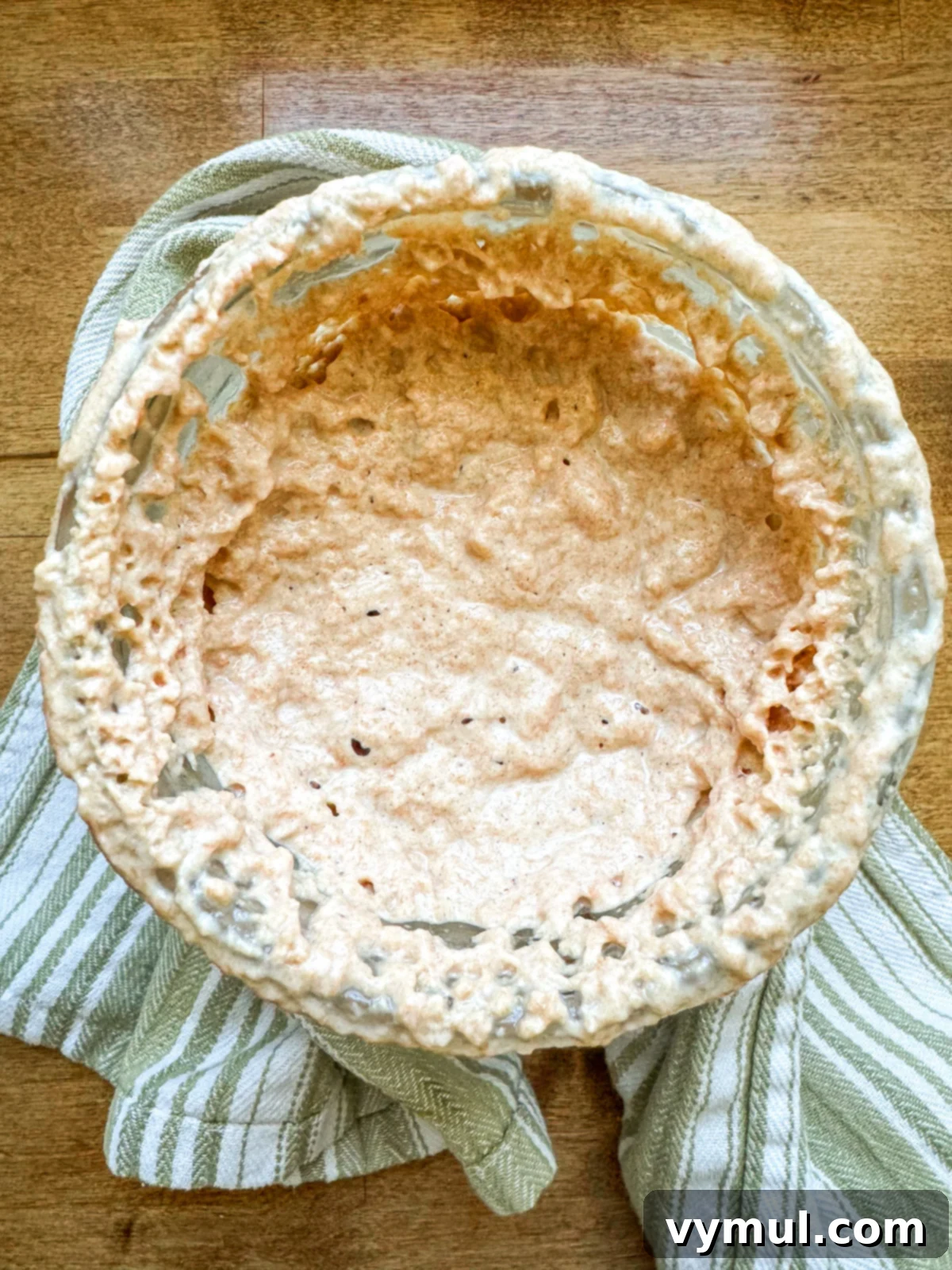
Your sourdough starter develops strength and complexity over time. Here’s a recommended timeline for introducing different types of recipes, ensuring your starter is robust enough for the task:
- Week 1: Focus entirely on growing and feeding your starter. No baking during this foundational week.
- Weeks 2-3: Your starter is young but active. Perfect for recipes that don’t rely heavily on a strong rise, such as light and fluffy sourdough waffles, delicious pancakes, and crisp whole wheat sourdough crackers.
- Weeks 4-5: Your starter is gaining more strength. Experiment with recipes like easy whole wheat sourdough English muffins, chewy sourdough bagels, or try a King Arthur Flour sourdough recipe that often incorporates a touch of commercial yeast for guaranteed lift.
- Weeks 6-7: Your starter is becoming more robust. This is a great time for cheesy sourdough batter bread – a fantastic choice as batter breads typically don’t require extensive kneading and are more forgiving.
- Week 8 and Beyond: Your starter should now be fully mature and consistently strong! It’s finally time to tackle those classic sourdough recipes like a traditional soft sourdough sandwich loaf or this incredibly satisfying perfect one-day artisan bread!

Print Recipe
Pin Recipe
SaveSaved!
Easy Sourdough Starter Recipe (7 Day Process)
Equipment
-
quart glass jars or equivalent glass bowl
-
muslin cloth or loose fitting jar lid
Ingredients
- 1 cup flour* (whole wheat is my preference)
- 1 cup warm water
- plus more flour and warm water for the full 7 days
Instructions
Day 1: Initial Mixing
-
Gather your equipment: a 1-quart glass jar (or a 4-quart glass bowl), muslin cloth/cheesecloth or a loose lid. For ingredients, you’ll need 1/2 cup whole wheat flour + 1/2 cup rye flour (or 1 cup total whole wheat flour), and 1 cup warm water. Ensure your water is non-chlorinated or has been left out for 24 hours.
-
For precision, use a kitchen scale to measure equal amounts of water and flour, such as 100 grams each.
-
Combine the flour and warm water in your glass container and stir well until smooth. Cover loosely with cloth or a lid.
-
Place in a warm spot, ideally 70-75°F (21-24°C), for 24 hours.
Day 2: First Feeding (No Discard)
-
After 24 hours, you may see “hooch” (dark liquid) on top. Mix it in or pour it off.
-
Transfer the entire starter mixture to a clean jar or bowl to prevent mold.
-
Do not discard any starter today. Add 1/2 cup whole wheat flour and 1/2 cup warm water. Stir well. Cover and return to its warm spot for another 24 hours.
Day 3: The First Discard and Feed
-
Address any hooch. Discard approximately half of the starter mixture.
-
Transfer the remaining starter to a new clean jar. Feed it with 1/2 cup flour and 1/2 cup warm water. Cover and place back in its warm spot for 24 hours.
Day 4: Consistency is Key
-
Repeat the steps from Day 3: discard half, transfer to a clean jar, and feed with 1/2 cup flour and 1/2 cup warm water.
-
Look for rising, a slightly sour smell, and small bubbles. Don’t worry if activity varies.
Day 5: Steady Progress
-
Repeat Day 3 and 4 steps: discard half, transfer to a clean jar, and feed with 1/2 cup flour and 1/2 cup water.
-
The smell might be strong or even vinegary – this is part of the process. Expect variations in liquid and surface appearance.
Day 6: Adjusting for a Stronger Starter
-
You should now see significant bubbles. Discard half of the starter and move to a clean jar.
-
Feed with 1/2 cup of flour and 1/3 cup of warm water. A slightly drier consistency can encourage better rise and a less sour bread.
-
Use this 1/2 cup flour to 1/3 cup water ratio if your starter is active. If sluggish, revert to a 1:1 ratio.
Day 7: Final Check for Activity
-
Repeat the Day 6 feeding process (discard half, move to clean jar, feed 1/2 cup flour and 1/3 cup water).
-
By now, your starter should be consistently bubbling and doubling in size between feedings. If not, consider a larger discard/feed with equal flour and water, or restart.
Day 8: Active Starter & First Uses
-
Your starter is now officially ‘active’! It should show vigorous bubbles and significant growth.
-
To store: Place at least 1/4 cup of starter in a glass jar with a loose lid in the refrigerator. This is your “mother” starter for future bakes.
-
To continue growing/bake more often: Remove 1/4 to 1/2 cup, feed it as usual (e.g., 1 cup starter, 1 cup flour, 3/4 cup water). If you need more for a recipe, feed without discarding until you reach the desired amount, always leaving some to feed again.
-
Use the remaining “discard” for recipes that don’t require significant rise, like waffles, crackers, or fritters. Note: A new starter typically needs at least 4 weeks to mature enough for rising a loaf of bread. See the timeline in the post for more recipe ideas!
Notes
Changing flours in starter: My personal experience suggests sticking to one type of flour for a starter. I haven’t had success using all-purpose flour to feed my whole wheat starter. My recommendation is to stick with the flour you start with. If you wish to maintain different types of starters, use separate jars for each. However, some bakers report success feeding their starter with whatever flour they have available, so feel free to experiment with caution!
Nutrition
Received a Gifted Sourdough Starter? Here’s How to Get Started!
If you’re lucky enough to receive an established sourdough starter from a friend, congratulations! You’ve bypassed the initial 7-day creation process. However, you’ll still need to bring it back to full activity and maintain it. Here’s what to do:
- Initial Feeding: As soon as you receive it, give your new starter a good feed. Measure the amount you have (anywhere from 1/4 cup to 1 cup) and add an equal amount of flour and water if you prefer a 100% hydrated starter (e.g., 1 cup starter, 1 cup flour, 1 cup water). For a thicker, potentially less sour starter, you can use slightly less water (e.g., 1/2 cup starter, 1/2 cup flour, and about 1/3 cup water).
- Activate and Strengthen: After the initial feeding, continue to discard a portion (usually half) and feed daily until your starter consistently doubles in size within 6 hours or less. This indicates it’s strong enough for baking bread.
- Prepare for Baking and Storage: Once active, remove the amount you need for your recipe, ensuring you leave at least 1/4 cup behind to feed again.
- Using Discard: The starter you remove before feeding, often referred to as “discard,” is perfect for making delicious items like crackers, pancakes, or waffles.
Depending on the age and activity level of your gifted starter, this activation process might be very quick, sometimes taking just a day or two to reach peak performance!
Reviving a Neglected Sourdough Starter: A Story of Resilience
After years of faithfully using my sourdough starter at least once a month (and sometimes wishing I could do it every week!), I found myself feeling a bit tied down. One summer, with less bread baking on my mind, my starter languished in the refrigerator. Seven months passed without a single feed. I genuinely believed it was beyond saving.
Then came a snowstorm, cutting our power and forcing us to move all perishable fridge contents into coolers. I left my forlorn sourdough starter, now with a thick, two-inch layer of dark hooch on top, out in the cold, convinced it had met its end. Who could blame me? Seven months without food, and then freezing conditions!
However, once our power was restored and the chaos subsided, I decided to take a sniff. To my surprise, it still carried that unmistakable sourdough aroma. (A crucial note: some people discard their starter at this stage, mistaking natural surface activity for mold. True mold will appear as black, gray, pink, or orange fuzzy spots. My starter’s hooch simply had some white, foamy bubbles – a normal sign of prolonged fermentation – so always inspect carefully before tossing out your precious culture!).
With a hopeful heart, I started the feeding process again, discarding and re-feeding daily for a week. And what happened? It sprang back to life! Seven months and five days after being neglected, and surviving a power outage, it was bubbling with renewed vigor. I waited a full week of consistent feeding to ensure it was truly robust before I dared to bake with it.
The result? A batch of artisan bread that my daughter declared was “the best sourdough yet!”
The moral of the story? Never give up on your sourdough starter. Their resilience is truly astonishing!
More Sourdough Resources & Recipes to Explore
Ready to expand your sourdough repertoire? Check out these additional articles and recipes:
- Sourdough Tips for the Occasional User (Includes detailed guidance on waking up a refrigerated starter.)
- Amazing Sourdough Waffles: A perfect way to use your developing or discard starter.
- Easy Whole Wheat Sourdough Crackers: This dough is incredibly satisfying to work with!
- Easy Whole Wheat Sourdough English Muffins: A delicious and approachable bake for a maturing starter.
- How to Make Sourdough Bagels: Elevate your breakfast game with homemade sourdough bagels.
- Cheesy Sourdough Batter Bread: A flavorful and less labor-intensive bread option.
- Easy Sourdough Artisan Bread: Master the art of artisan bread with this straightforward recipe.
This comprehensive guide and recipe have been updated to provide even more detail and clarity; it was originally published in March of 2014.