Homemade Garlic-Mint Insect Spray: Your Ultimate Natural Solution for a Pest-Free Organic Garden
Tired of relentless pests wreaking havoc on your beloved plants? Discover this incredible, all-natural insect spray for plants, meticulously crafted from potent natural ingredients like garlic and mint. This homemade garden spray is not only easy to prepare and use but also astonishingly effective. We put it to the test on severely damaged basil plants and a flowering vine, and witnessed remarkable results after just two applications! Bid farewell to harsh chemicals and welcome a healthier, vibrant, and greener garden into your life.
“SIX Stars!! Oh my goodness…..this is the BEST insect plant spray I have come across!!! I was so tired of grasshoppers (or something) eating and destroying my dwarf cantas! They were still trying to bloom, but they looked awful! Mixed this and sprayed. THREE days later, my cantas have new, shiny, beautiful leaves again!! This stuff is AMAZING!” -Cheryl B.

Welcome to one of our most celebrated gardening DIYs: how to effortlessly create a powerful natural insect spray from common pantry ingredients like garlic and mint – a solution that genuinely delivers! For a deeper dive into this incredible bug repellent, make sure to explore these additional resources:
- A follow-up video demonstrating the step-by-step making and application process, including its proven effectiveness on green beans.
- A Frequently Asked Questions page packed with answers to the most common inquiries we’ve received, along with compelling reader testimonials detailing both positive and mixed experiences in their gardens.
I am absolutely thrilled to finally share the incredible outcomes of a garden bug-busting experiment I’ve been diligently conducting on my severely damaged basil plants and a struggling trumpet vine. I know I’ve kept you waiting with hints about my testing for a while now, but I assure you, the anticipation will be worth it! Every gardener, whether novice or expert, eventually encounters persistent pests, so I’m confident you’ll be just as delighted by these results as I was.
The Gardening Challenge: Battling Pests Organically
The inspiration behind this experiment is a narrative all too familiar to many organic gardeners – and perhaps even to aspiring gardeners who’ve felt defeated when confronted with seemingly destroyed plants. The struggle against garden pests can be disheartening, often leading to:
- Years of either ignoring the escalating issue, resulting in significant plant loss or living with unsightly, damaged foliage.
- Frustration from trying numerous different remedies, each with its own set of challenges. From diatomaceous earth (which can be effective on many pests but often requires tedious, frequent reapplication, can be difficult to source, and might unintentionally harm beneficial insects) to simple soap and water solutions (which, in my garden at least, rarely yielded noticeable improvements).
For some inexplicable reason, while our large main garden typically only suffers from minor cucumber beetle issues (and most years, plants recover well), our dedicated herb garden tells a different story. Since we integrated it into our backyard, some unknown pest (or multiple pests!) has consistently devoured our basil plants every single year. This recurring problem became my personal mission to solve.
The Genesis of Our Powerful Natural Insect Spray
Driven by the annual assault on my basil, I began to adapt a spray formula (initially inspired by a Keeper of the Home article). In its early iterations, I didn’t meticulously track its efficacy, largely because I was unsure if it would truly work. However, I distinctly recall that it *did* provide some positive results, even if I wasn’t documenting them.
The following year, when our basil was hit particularly hard once again, alongside some marigolds I had planted among the herbs, and even a trumpet vine climbing our nearby gazebo, I decided it was time for a serious investigation. I mixed up a fresh batch of the spray, meticulously recorded the recipe this time, and committed to documenting the process with photographs. My aim was clear: if this natural solution truly worked, I would be able to share its secret with all of you.
Prepare to be amazed by just how effective this spray proved to be! In fact, as I was compiling this article, I thought I might need to add disclaimers to the photos like, “I promise these are genuinely the same plants,” just to ensure you’d believe the incredible transformation!
DIY Natural Insect Spray For Plants: The Experiment in Detail
1. Case Study: The Resilient Basil Plant
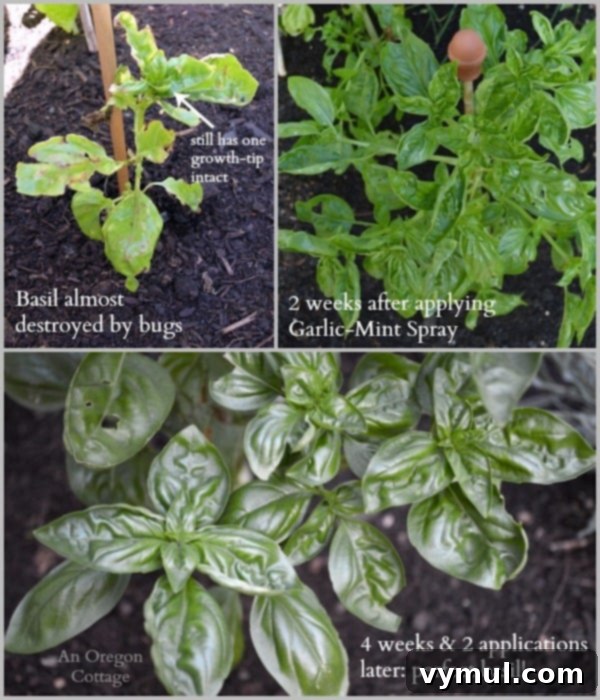
I cross my heart, pinky-swear, or offer whatever solemn oath you need: the three photos in the collage above truly, honestly depict the same plant, tracked from its sorry state at the beginning to its flourishing condition four weeks later. I know, it’s almost unbelievable!
And I’ll be completely honest: even after more than 20 years of dedicated gardening, witnessing stunted, bug-eaten plants like my poor basil can sometimes make me want to abandon the whole endeavor. It’s just… disheartening. These were three basil plants I had carefully nurtured from seed, only to see them reduced to such a deplorable state just a few weeks after planting them out. It’s truly a tough sight for any gardener.
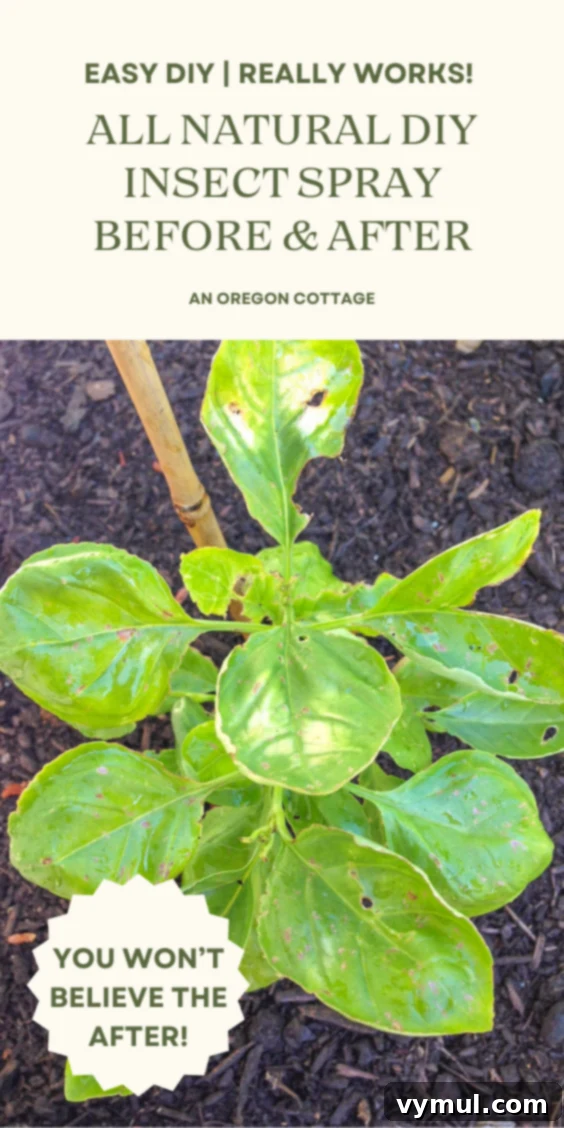
Despite my doubts, I generously sprayed my homemade garlic-mint repellent all over that ailing basil plant. At that point, I truly didn’t hold much hope for its survival. It had only one surviving growing tip, and frankly, just look at the “before” picture (above left) – who would have given that little plant a fighting chance?
To my astonishment, I began to see encouraging results within mere days – unmistakable signs of new growth! After a week, a sliver of skepticism lingered – were those genuinely new leaves, or just older, bug-bitten ones looking slightly better? But by week two, all doubts vanished; we clearly had a winner. I eagerly snapped another picture before applying one more light spraying, then patiently waited for another two weeks to pass.

Behold this beautiful, utterly healthy basil plant! You might spot a tiny bug-bite here or there, but that’s a minor imperfection I can certainly live with (a common reality for us organic gardeners, I might add, a-hem). Crucially, most of the new growth is absolutely blemish-free, and I’ve already begun harvesting its fragrant leaves to create our not-so-secret-ingredient frugal pesto for freezing. The transformation is truly incredible!
2. Case Study: Basil on the Brink of Death
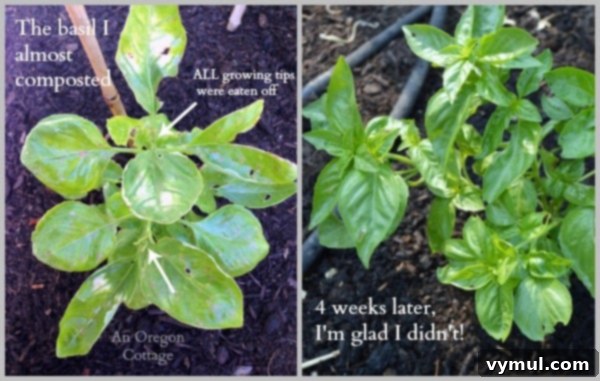
I absolutely had to share this particular triumph with you as well, even though the lighting for the photos wasn’t ideal. The basil plant depicted on the left, above, was the most severely afflicted of the three. It was stunted beyond anything I had ever witnessed, with every single growing tip devoured and its remaining leaves rendered hard and leathery by pest damage.
Its condition was so dire that I actually dug it up, on the verge of consigning it to the compost heap (which I likely would have done had I not been planning to share this experiment with you all, ha!). But at the very last moment, a surge of optimism propelled me to replant it in an empty spot in our main garden, giving it a generous dousing with the garlic-mint spray.
While this particular plant took a bit longer to rebound, I captured the photo on the right just a few days ago, still hardly believing the incredible recovery unfolding before my eyes. Is this concoction a miracle worker, or what? I should also mention that after its initial application, we experienced a week of heavy rain, which made me almost certain the spray’s effectiveness would be washed away. Yet, it persisted and worked its magic.
Truly a garden M-I-R-A-C-L-E.

3. Case Study: The Flourishing Trumpet Vine
And, you can probably anticipate where this narrative is heading (perhaps I should have saved all the “after” shots for the grand finale? But I was simply too eager to share the success with you all!). Here, we have a clear reminder of the extensive damage inflicted upon the trumpet vine. This particular insect (I still haven’t identified it; I’ve never actually seen it, suggesting it’s likely nocturnal) munched on leaves just like other pests, but it seemed to specifically target the tender new growing tips. This type of damage is particularly detrimental, as it’s a surefire way to stunt or even kill a plant.
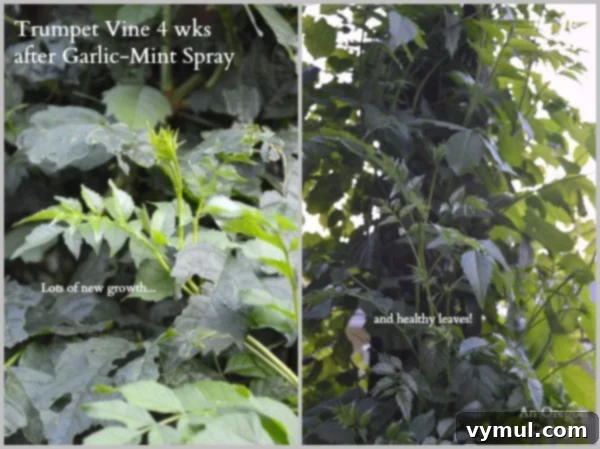
Now, thanks to our natural insect spray, the vine is thriving and growing exactly as trumpet vines are famously known to do (that would be vigorously, even out-of-control, for those unfamiliar with these tenacious climbers, ha!). It’s bursting with lush, lovely leaves and abundant new growing tips. I estimate this vine has shot up at least three feet in just a couple of weeks, which highlights just how severely the insects had stunted its growth before treatment. It’s a truly magnificent rebound.
Why Garlic and Mint? The Science Behind the Repellent
You might be wondering, what makes such simple kitchen ingredients so effective against garden pests? The power lies in their natural compounds. Garlic, specifically, contains allicin, a sulfur compound released when garlic is crushed. This compound acts as a powerful broad-spectrum repellent, confusing pests with its strong odor and making plants unappetizing. Many insects, including aphids, slugs, and nematodes, find garlic’s scent highly offensive and steer clear. Mint, on the other hand, is rich in menthol, which also emits a strong aroma that disorients and deters a wide variety of bugs, including ants, mosquitoes, and certain beetles. When combined, these two ingredients create a synergistic effect, amplifying their repellent capabilities and providing a safe, natural shield for your garden plants.
All Natural Insect Spray Video (with even more examples)
How to Make A Natural Insect Spray for Plants
So, are you absolutely eager to learn what goes into this miraculous spray and how you can create it yourself? The good news is, it’s incredibly straightforward and utilizes ingredients that are either easily found in your pantry or simple to grow in your garden. I developed this effective formula by thoughtfully combining insights from a couple of sources, none of which offered a perfectly clear, step-by-step “recipe.” That’s why I’ve meticulously detailed the instructions for you here, ensuring you can whip up a batch whenever your plants need a natural defense. (Refer to the comprehensive recipe card below for precise measurements and additional tips.)
- **Prepare the Base:** Begin by using a food processor or a blender to finely grind a generous amount of fresh mint (leaves and stems included for maximum potency) along with several whole heads of garlic.
- **Simmer with Spice:** Transfer this aromatic mixture to a large stockpot. Add 12 cups of water and a couple of teaspoons of dry cayenne pepper, which adds an extra layer of repellent power.
- **Infuse Overnight:** Bring the mixture to a rolling boil, then immediately remove it from the heat. Allow it to steep and infuse overnight; this crucial step ensures all the potent compounds are fully extracted.
- **Strain and Emulsify:** The next day, strain the cooled mixture thoroughly using a fine-mesh strainer or cheesecloth to remove all solids. Pour the liquid into a couple of clean spray bottles or a large-gallon garden sprayer. Finally, add a few squirts of biodegradable dish soap; this acts as an emulsifier, helping the spray adhere to plant leaves more effectively.
That’s all there is to it! Remember to shake the bottle vigorously before each use to ensure the ingredients are well mixed. Then, thoroughly spray all over your plants, paying special attention to the undersides of the leaves where many pests hide. Monitor your plants’ response after about a week or two, and reapply if necessary. In my experience, just one or two applications are often sufficient to help the plant recover its strength and withstand further bug attacks. I am so delighted to share this effective, eco-friendly solution with you because I truly believe you’re going to find it as indispensable as I do!
Oh, and that mint? It really makes this spray smell quite pleasant – no unpleasant, stinky concoctions here for you to dread using! (Update: Some users have mentioned that the garlic-pepper scent during the boiling process can be strong, so please ensure you use adequate ventilation when preparing the spray indoors.)
Testimonials and FAQs: Further Insights
Don’t forget to explore the comprehensive Testimonials & FAQ page! There, you’ll find in-depth answers to the most frequently asked questions about this spray, along with a collection of real-world results and feedback from other gardeners who’ve tried it in their own gardens.
Looking for More Easy Gardening Ideas?
- How to Plant a Garden the Easy Care Way
- Organic Vegetable Gardening 101: Essential Tips for Beginners
- Easy Organic Weed Control: Using Paper Mulch for a Healthier Garden

Print
Pin
SaveSaved!
Natural Insect Spray for Plants Recipe
Tools You’ll Need
-
Food Processor or Blender
-
Large Stockpot (minimum 4-quart capacity)
-
Fine-Mesh Strainer or Cheesecloth
-
Spray Bottles (for smaller applications) or a Large Gallon Garden Sprayer
Materials / Ingredients
- 2 whole HEADS of garlic, cloves separated and peeled. Fresh garlic is key for potency!
- 3 cups fresh mint leaves and stems – for maximum repellent effect, I just throw it all in! Peppermint or spearmint work well.
- 2 teaspoons dry cayenne pepper, adds an extra deterrent for chewing pests.
- 12 cups water, for simmering and dilution.
- 2 small squirts of biodegradable dishwashing liquid, acts as a ‘sticker’ to help the spray adhere to leaves.
Instructions for Preparation
-
Prepare Ingredients: Add the peeled garlic cloves and fresh mint leaves and stems to a food processor or high-speed blender. Pulse for a few seconds until finely chopped but not pureed.
-
Combine and Simmer: Transfer the chopped mixture to a large stockpot. Add the 2 teaspoons of dry cayenne pepper and 12 cups of water. Stir everything together.
-
Boil and Infuse: Bring the mixture to a rapid boil over medium-high heat. Once boiling, immediately remove the pot from the heat. Cover the pot and allow the mixture to sit and infuse overnight (at least 8-12 hours) to maximize the extraction of pest-repelling compounds.
-
Strain and Add Soap: The next morning, strain the cooled liquid through a fine-mesh strainer or several layers of cheesecloth into your chosen spray bottles or gallon garden sprayer. Press down on the solids to extract as much liquid as possible. Add two small squirts of biodegradable dish soap to the strained liquid. This acts as a surfactant, helping the spray spread and adhere better to plant surfaces.
-
To Use the Spray:
-
Shake Well: Always shake the spray bottle well before each and every use to ensure the ingredients are evenly distributed.
-
Thorough Application: Spray all the leaves on affected plants generously, ensuring you coat both the tops and, crucially, the undersides of the leaves where many pests hide. For best results and to prevent potential leaf burn, apply the spray on a cloudy day or in the late evening, avoiding direct strong sunlight.
-
Observe and Reapply: Wait a few days (typically 3-7) to carefully observe the effect on your plants and the pest activity. If pests persist, apply more spray as needed. Many gardeners find that only one or two applications are sufficient to get the problem under control.
Watch the Video Tutorial
Important Notes and Tips
– For edible plants, wait a few days after application before harvesting to ensure there are no spicy residuals. In my experience, using only 1-2 applications over an entire summer meant there was never any detectable taste to our produce.
– This natural spray primarily works by repelling bugs due to its strong scent and irritating compounds. While it may kill some smaller, more sensitive insects upon direct contact, its main function is to deter them from your plants.
– The distinct scent effectively keeps harmful pests away, but I have consistently observed that beneficial insects like ladybugs and bees remain abundant in my garden. This is likely because I only use the spray sparingly and precisely when needed.
Storage: Over time, the potency of this homemade spray tends to diminish. To extend its effectiveness, store it in the refrigerator if possible and aim to use the batch within one month for optimal results.
For even more detailed answers to common questions and to see how this spray has performed in other gardeners’ spaces, be sure to visit our Garden Spray FAQs page.