Transforming Our Farmhouse Fixer Kitchen: A Comprehensive Design and Remodel Journey
Embark on a captivating journey through our farmhouse fixer kitchen remodel, where we blend timeless design with modern functionality. Discover our strategic plan, innovative design ideas, and carefully selected resources, all while honoring the home’s original character. From preserving authentic beadboard to creating highly functional spaces, we’re crafting a classic farmhouse kitchen that truly feels like home.
Remodeling a farmhouse fixer-upper is a labor of love, marked by ambitious goals and a deep desire to restore a home’s inherent charm while enhancing its livability. When we first embarked on the extensive renovation of our beloved farmhouse, we established three primary objectives to guide our efforts:
- Foundation Reinforcement: Our most critical task was replacing the original 100-year-old rock and boulder foundation. This century-old structure, while surprisingly resilient, presented significant issues, including noticeable sloping in various areas and one corner practically resting on bare dirt. A stable foundation was paramount for the long-term integrity and safety of the entire home.
- Master Suite Expansion: We aimed to expand a small back bedroom by eight feet, creating a spacious and comfortable master bedroom on the main floor. This transformation also involved thoughtfully reconfiguring the adjacent spaces, including appropriating a few feet from the bedroom to enlarge the main bathroom, design a practical walk-in closet, and establish a highly functional mudroom and laundry room combination.
- Kitchen Reconfiguration: Our final major goal involved a complete overhaul of the kitchen, primarily by removing a dividing wall to open up the space and dramatically improve its flow and functionality.
We’re thrilled to report that the first two goals are largely complete – with only the final decorative touches remaining on the master suite. Now, our full attention has turned to the kitchen, and it’s incredibly satisfying to watch our vision for this central space come to life.
With the kitchen renovation nearing its exciting conclusion, and the prospect of moving back in just around the corner, we wanted to share our comprehensive plan. This detailed overview will illuminate not only the aesthetic direction we’ve taken but also how every design decision contributes to a highly functional and inviting farmhouse kitchen.
My design philosophy for this crucial space was driven by two key aspirations:
- Architectural Enhancement: From an architectural standpoint, our primary goal was to dramatically open up the kitchen. This involved removing restrictive walls, installing new windows to flood the space with natural light and frame picturesque views, crafting a more intuitive and usable layout, and meticulously reintroducing the character and charm often found in older homes.
- Timeless Decor: For the interior decor, I drew significant inspiration from our previous cottage kitchen. Elements like classic white cabinets, warm butcher block countertops, and elegant glass-front cupboards were non-negotiable. However, I learned from past experience that I needed lighter countertops to better accommodate food photography. Additionally, I desired to incorporate antique brass hardware and lighting throughout the space, harmonizing with the aged hardware on the vintage doors we’ve thoughtfully integrated elsewhere in the farmhouse.
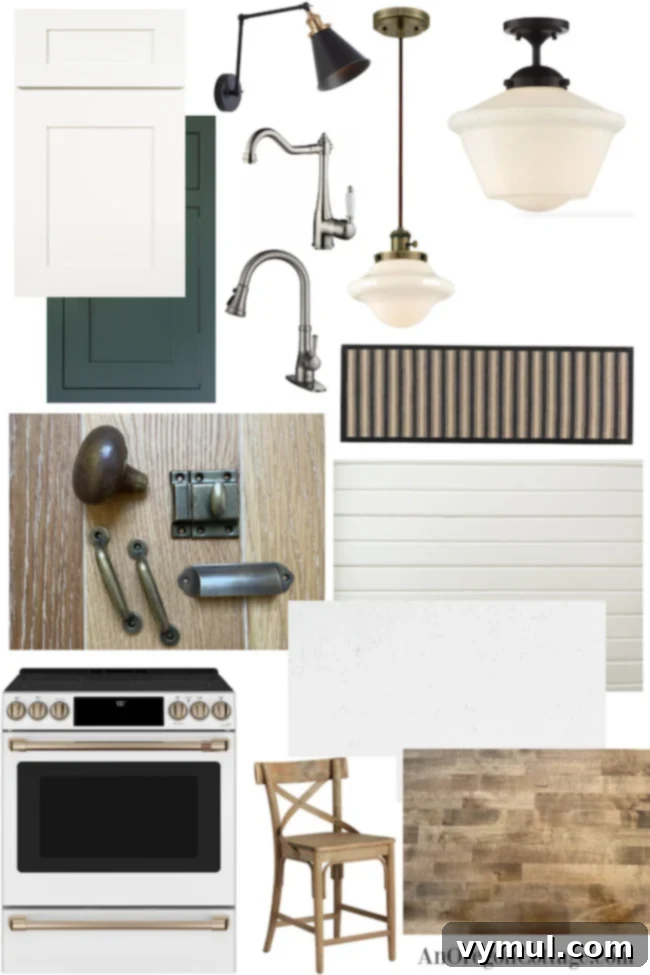
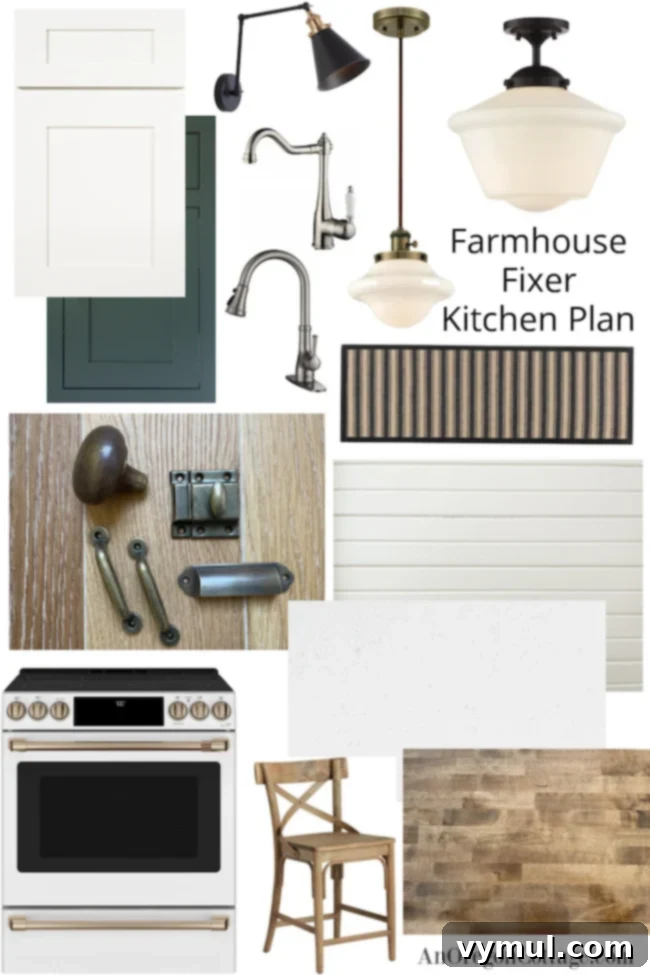
As beautifully illustrated in the mood board above, our chosen aesthetic embraces a light, airy, and inviting atmosphere. We’ve woven in beloved farmhouse elements, such as iconic schoolhouse lights, and even ventured slightly beyond my usual all-white comfort zone by introducing a subtle touch of green to add depth and warmth. This combination promises a kitchen that is both fresh and timeless.
I am already overflowing with excitement at the thought of cooking, capturing beautiful photographs, and filming engaging videos in this wonderfully transformed space! This kitchen is not just a place to prepare meals; it’s designed to be a vibrant hub for creativity and connection.
To fully appreciate the transformation, let’s begin by looking at the kitchen’s original state. Following that, I’ll share some glimpses of its current progress and then meticulously list all the design resources and elements that have shaped this stunning farmhouse kitchen.
Our Farmhouse Fixer Kitchen: The “Before” Story
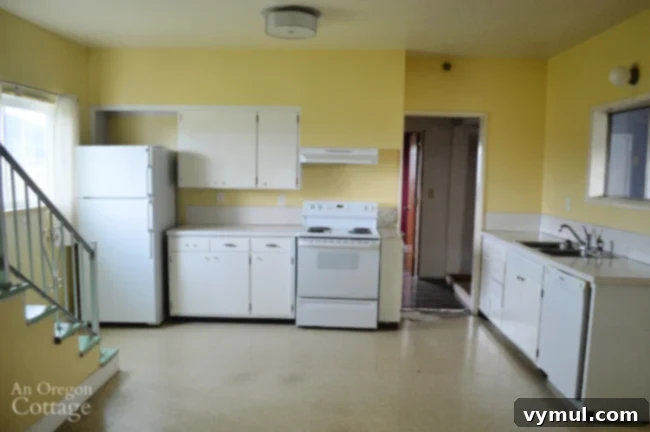
This image captures our very first impression of the kitchen as we stepped in from the adjacent living-dining area. The previous occupants had placed a dining table squarely in the center of the room, further highlighting the space’s inherent challenges. While the kitchen wasn’t inherently small, its layout was undeniably awkward, offering minimal storage solutions and severely limited counter space. This configuration made daily tasks inefficient and entertaining a challenge.
Natural light was also scarce, with only a single window providing direct outdoor views. The window positioned over the sink was a remnant from an earlier, ill-conceived porch remodel, offering little in terms of aesthetic appeal or practical illumination.
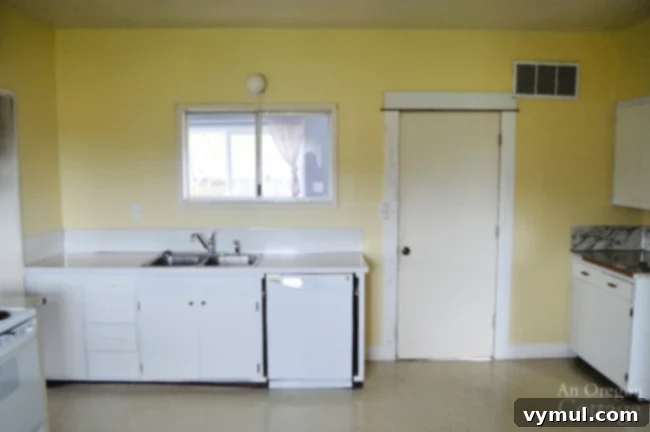
The area beyond that window and door was being utilized as a combined laundry room and mudroom. One can only imagine the “scenic” view from the kitchen sink, which was directly into this utilitarian space – hardly inspiring! This immediately sparked the idea of opening up this dividing wall, seamlessly integrating that valuable square footage into the main kitchen area. This expansion would not only create a more spacious kitchen but also allow for the installation of a central island where the original sink once stood.
Furthermore, a significant portion of the enclosed porch was underutilized, presenting a clear opportunity for a more thoughtful and functional design.
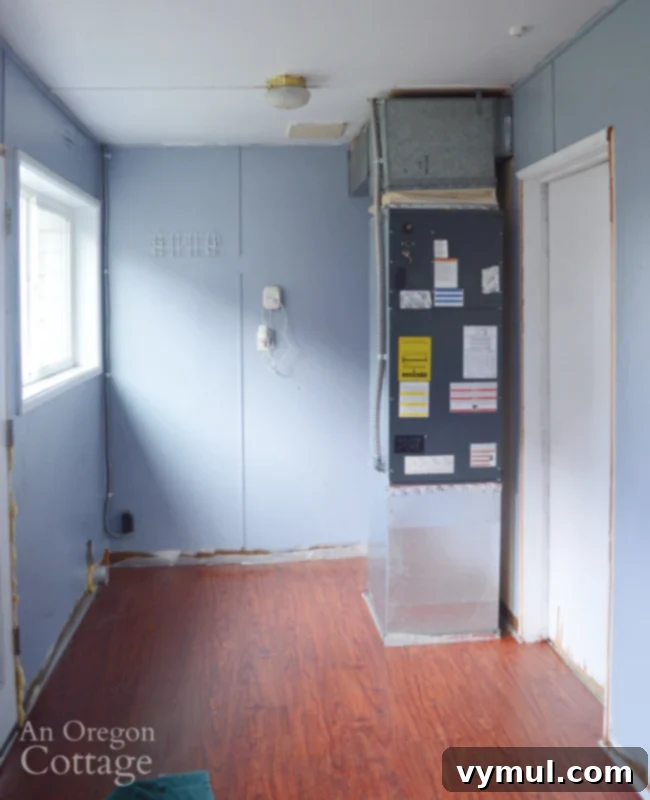
This particular corner of the enclosed porch housed the dryer vent, electrical plug, and the furnace, further complicating any potential layout. It was a clear candidate for strategic relocation or clever concealment.
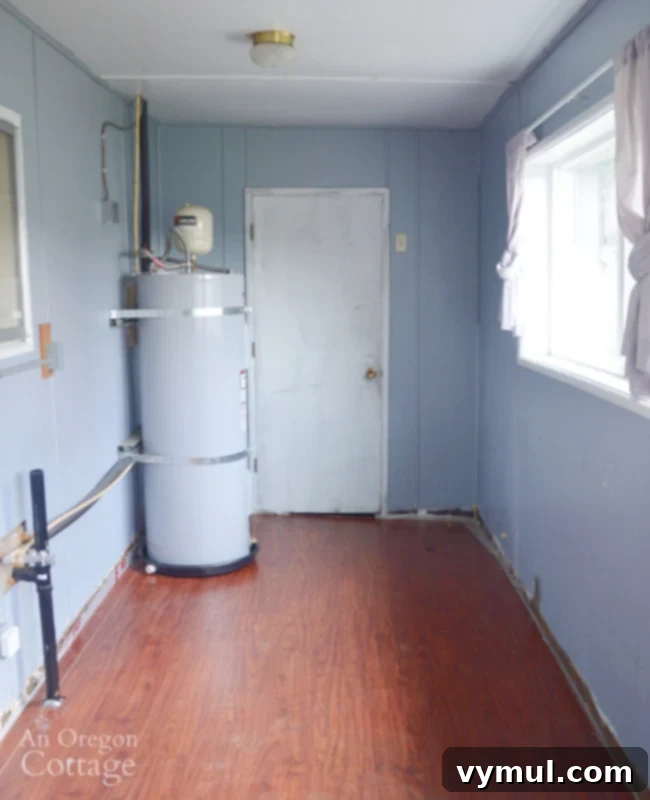
On the opposite side of the door, the washing machine was situated directly across from the kitchen sink, separated by the wall we intended to remove. Beyond that white door lay a windowless, moldy storage room – a truly undesirable space. This area would eventually be transformed into our much-needed dedicated laundry and mudroom, a testament to the home’s potential. (Noticeably, the sloping floor in the right corner of this image served as a stark reminder of the underlying foundation problems we had to address).
While this article primarily focuses on the design and aesthetics of our kitchen transformation, it’s important to acknowledge the immense structural and practical challenges we overcame. We won’t delve into the extensive plumbing issues, persistent leaks, hazardous electrical wiring, or the aforementioned rock foundation here. However, if you’ve been following our renovation progress, you’ll undoubtedly understand why it has taken us considerable time and effort to reach the exciting stage where we can finally share the design and decor aspects of this ambitious project!
Crafting the New Farmhouse Fixer Kitchen Plan
For me, visualizing big ideas and conceptualizing spaces has always come naturally. The true challenge, however, lies in determining the feasibility of these visions and, more importantly, successfully executing them. It’s a delicate balance between dreaming big and navigating the practicalities of a major renovation.
Below, you’ll find a photo of the initial rough sketch I meticulously drew during our first year of planning. What’s remarkable is how little this foundational concept has changed, demonstrating the clarity of our vision from the outset:
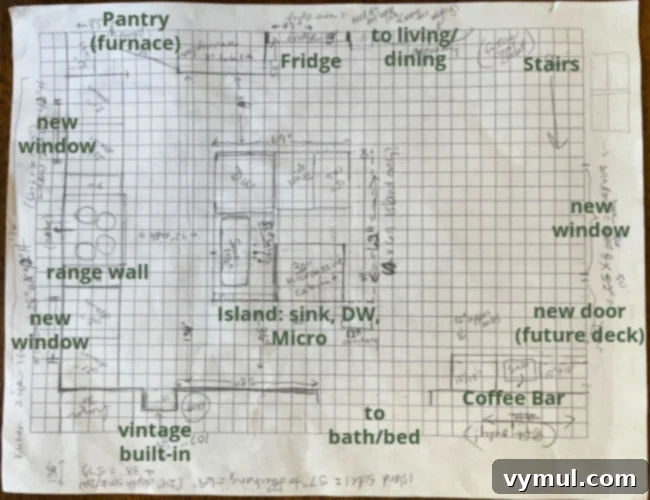
Designing this kitchen required working around several fixed structural elements, including the furnace and a staircase. Moreover, the kitchen also functions as a vital passageway to the bathroom, laundry area, and master bedroom. This dictated a layout that prioritized clear pathways and an open, inviting feel.
A core desire was for the space to flow seamlessly and comfortably accommodate family and friends, ensuring that the person cooking in the kitchen never felt isolated from the activity. This commitment led me to firmly stick with my original idea of a central island, rather than opting for a peninsula. While a peninsula might have maximized wall space, an island better facilitated open communication and movement, creating a truly connected living experience.
Brian and I engaged in extensive discussions regarding the inclusion of a bar sink at the coffee station. He initially had reservations, having grown up in a home where a bar sink went largely unused. However, in our daily routine, we prepare coffee and tea multiple times a day, and the main kitchen sink isn’t always conveniently close. This practical consideration convinced us of its utility. Furthermore, the bar sink is strategically positioned on the path leading to our future outdoor deck, promising easy access to water for outdoor entertaining and gardening needs.
Bringing the New Farmhouse Kitchen Plan to Life: Renovation Progress
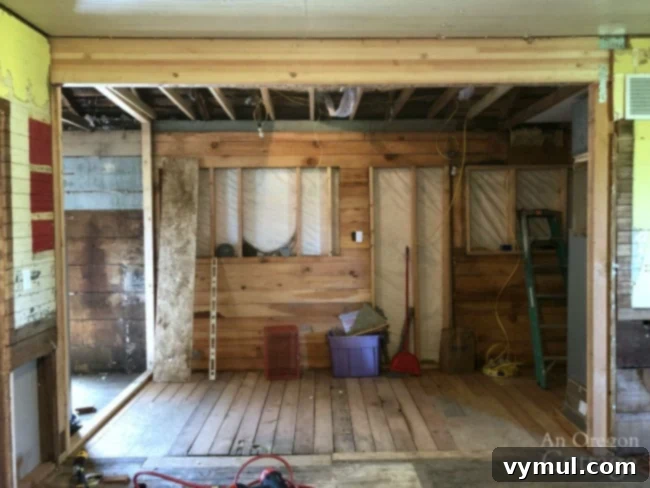
The first significant hurdle was obtaining the necessary permits to remove the load-bearing wall that separated the original kitchen from the enclosed porch. Once approved, the wall came down, and in its place, we meticulously installed a robust laminated beam supported by sturdy 4×4 posts. These posts extended securely into new cement footings poured deep within the crawlspace, ensuring the structural integrity of the newly opened space.
With the main structural changes complete, we began constructing the new side walls that would help define the expanded kitchen area. It was an incredibly exciting moment as we immediately witnessed the kitchen taking its intended shape, transitioning from a confined space to an expansive, open concept.
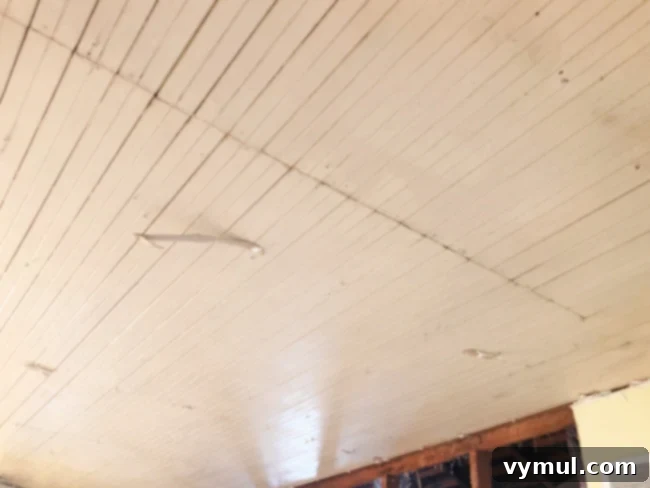
During the demolition phase, as we removed the old wallboard from the kitchen walls and the water-damaged ceiling, we made a truly heartwarming discovery: original 100+ year old beadboard in remarkably good condition! Although an upstairs bathroom leak had caused some staining on the ceiling, we were incredibly fortunate that it hadn’t led to any significant rot in the beadboard. This unexpected find was a treasure, instantly infusing the space with authentic farmhouse character.
To seamlessly extend this vintage charm into the newly enclosed porch area, we diligently sourced a supplier for almost identical tongue and groove beadboard. The match was so precise that the newly installed sections blend flawlessly with the original, creating a cohesive and historically rich aesthetic. The result has exceeded our expectations:
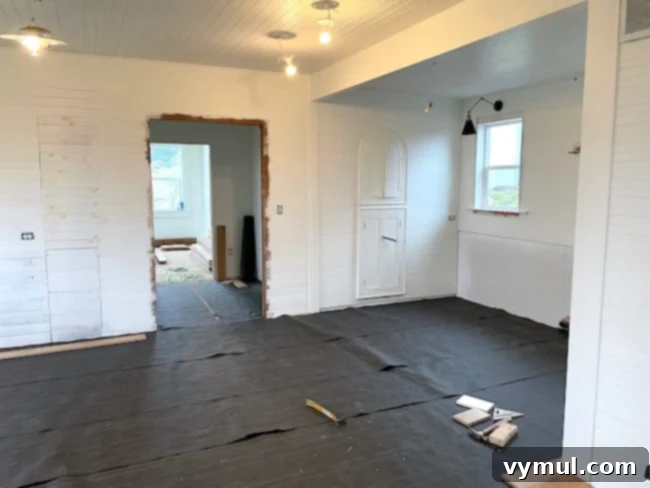
Doesn’t it look as if it has always been this way? I am absolutely enchanted by how beautifully it’s turning out – far surpassing even my initial dreams and imaginings during those very first walk-throughs of the fixer-upper. The preservation of original elements combined with strategic new additions has created a truly special atmosphere.
Now that we are finally on the cusp of completion, I am excited to reveal the mood board and the comprehensive list of design resources that have served as our guiding light throughout this intricate and rewarding process. Our aim is to provide valuable insights for anyone contemplating their own kitchen renovation or design updates in the future.
Farmhouse Fixer Kitchen Design Mood Board & Resources Breakdown
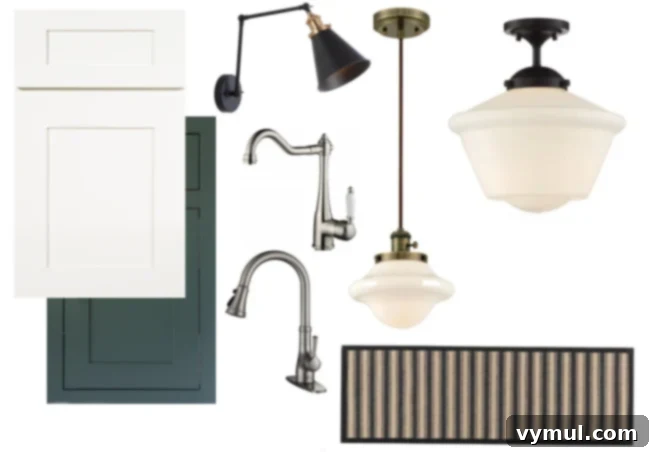
Cabinets: Crafting a Timeless Farmhouse Aesthetic
For the perimeter of our kitchen, encompassing both the wall-mounted and base cabinets, we opted for a classic shaker style. These will be meticulously painted in Benjamin Moore’s Simply White, a crisp, versatile shade that brightens the space and provides a timeless backdrop for other design elements. The coffee station, a focal point of functionality and charm, features a slightly different design. I collaborated with my carpenter stepfather to custom-build these cabinets, inspired by vintage step-back cupboards that sit directly on the counter. These too will be finished in the elegant Simply White.
Adding a captivating pop of color and defining the central island, the island cabinets will be painted in a beautiful custom green hue. This specific shade, affectionately known as ‘Boxwood,’ was discovered on Miss Mustard Seed’s blog. Having previously used this rich green on the glass front cabinet in our bathroom, where it strikingly contrasts with white, I am confident it will create a stunning visual anchor in the kitchen, offering both warmth and a touch of unexpected sophistication.
Lighting: Illuminating with Vintage Charm
Thoughtful lighting is crucial for both function and ambiance in a farmhouse kitchen. We’ve carefully selected fixtures that evoke a classic era while providing ample illumination:
- Kitchen Sconces over Windows: We chose these Black Adjustable Arm Metal LED Wall Sconces. At under $50 each, they offer an excellent balance of style and affordability, providing focused task lighting and a touch of industrial farmhouse appeal.
- Kitchen Island Pendants: To beautifully illuminate the island, we selected these Antique Brass Mini Pendants. Found at Home Depot for under $50, their antique brass finish complements our vintage hardware scheme perfectly.
- Main Ceiling Light: For ambient lighting in the main kitchen area, we picked a Schoolhouse Semi-Flush in Oil Rubbed Bronze. This timeless design is a quintessential farmhouse element, diffusing light warmly throughout the space.
A Note on Finishes: To ensure a cohesive look, all gold or bronze components of our lighting fixtures will be coordinated using antique brass Rub n’ Buff (or sometimes European Gold, depending on the exact shade needed to achieve our desired aged patina). This allows us to unify various elements and achieve that authentic, vintage brass feel.
Faucets: Marrying Aesthetics with Practicality
My heart initially longed for a classic bridge faucet, reminiscent of our previous kitchen. However, after careful consideration, practicality prevailed, leading me to a clean-lined single arch faucet for the main sink. Several factors influenced this decision:
- Ease of Cleaning: A bridge faucet typically requires four openings (three for the faucet and one for the sprayer), which, as I learned from experience, adds extra time to cleaning around each fixture.
- Streamlined Island Aesthetics: Our main sink and faucet will be prominently featured on the island, visible from the living room. I desired the island to maintain the simplest, most uncluttered aesthetic possible.
- Protecting the Quartz: The selected quartz for the island is a significant investment. I was hesitant to drill multiple holes if I wasn’t absolutely certain about the faucet choice – and clearly, I wasn’t entirely committed to the bridge style in this instance!
Main Sink Faucet: Ultimately, we chose a Single Handle Stainless Steel Brushed Nickel Faucet with Pull Out Sprayer. This choice requires only one hole in the precious quartz countertop, a significant advantage. I’ve even foregone a separate soap dispenser, opting instead for the convenience and simplicity of foaming soap.
Bar Sink Faucet: Since a sprayer wasn’t a necessity for the bar sink, I was able to indulge my preference for a bridge-style single hole faucet here. This choice provides a touch of classic elegance in a less prominent location.
Rug: Adding Warmth and Texture
To ground the space and add a layer of warmth and visual interest, a Vintage Black Striped Rug from Target is planned for placement in front of the main sink. Its classic pattern and neutral tones will complement the overall farmhouse aesthetic beautifully.
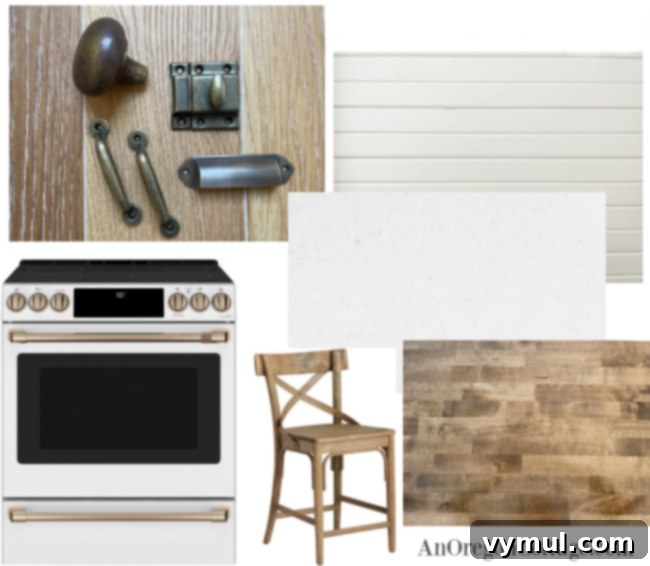
Flooring: Enduring Hardwood for a Classic Look
The foundation of our kitchen’s aesthetic begins with durable and beautiful flooring. We selected Essence Oak Solid Hardwood flooring (though now discontinued). A similar option that captures its timeless appeal is Tiger’s Eye French Oak. Our chosen flooring features a classic 5-inch width, offering a slightly more traditional feel compared to wider planks often seen in modern designs. Solid hardwood not only adds warmth and character but also promises longevity and an authentic connection to the home’s historic roots.
Cabinet Hardware: Infusing Authentic Vintage Details
The cabinet hardware plays a pivotal role in achieving the authentic farmhouse look. A beautiful, salvaged knob from a 100-year-old door we acquired served as our primary inspiration, guiding all our finish selections. This personal touch ensures the hardware feels truly integrated with the home’s history.
- Vintage brass cabinet latches are chosen for their classic appeal, adding a tactile and visual element that harks back to simpler times.
- For drawers, we’ve selected vintage-style bin pull handles, a quintessential farmhouse detail that combines beauty with practicality.
- Completing the look are antique brass utility pulls, providing functional and stylish accents throughout the cabinetry.
Both the original and reproduction beadboard, a defining feature of our farmhouse kitchen, will be painted in Benjamin Moore Simply White. This choice ensures a cohesive, bright backdrop that allows the warmth of the wood and the charm of the hardware to truly shine.
Countertops: A Blend of Beauty and Durability
Our countertop selection balances aesthetics, durability, and practicality, featuring two distinct materials for specific functional zones:
- Island Countertop: For the central island, which will be a high-traffic area and a focal point, we selected Carrara Morro Quartz. This engineered stone offers the luxurious look of natural marble with superior durability, stain resistance, and minimal maintenance. It was expertly fabricated and installed by a trusted local company, Oregon Natural Stone.
- Cabinet Countertops along Walls: For the perimeter countertops, we chose classic Butcherblock from Lowes. To enhance its natural beauty and ensure durability, we stained it with Early American and finished it with a robust water-based polyurethane.
Two important notes regarding our wood counters:
- Proven Durability: I have invested considerable time researching various wood counter finishes. This specific combination of stain and water-based polyurethane has been successfully used and lived with in two of our previous homes. This experience cemented my preference, as I was keen to avoid the high maintenance demands associated with many other wood counter sealing options, even newer formulations on the market.
- Sourcing Solid Butcher Block: Our previous cottage featured DIY counters installed by Brian using solid oak butcher block from Ikea. He even created a video demonstrating the cutting technique here, and I discussed our long-term experience with them in this video. Sadly, Ikea’s current “wood” counters are now typically veneer, offering only limited solid options. Fortunately, both Home Depot and Lowes offer solid birch counters at competitive prices. As Home Depot was out of stock, we opted for Lowes, which conveniently provided free delivery.
Appliances and Seating:
For our cooking needs, the Cafe Matte White Electric Range captured my heart entirely. Its aesthetic perfectly aligns with our farmhouse vision. While I also adored the matching fridge, it unfortunately wouldn’t fit our space – but that’s a story for another time!
For comfortable island seating, we selected Distressed Wood Bistro Counter Stools from World Market. My criteria included comfort, a supportive back, and ease of cleaning (absolutely no fabric!). This bistro style consistently drew me back, and I believe its light, distressed finish will beautifully complement both the hardwood floors and the striking green island, creating an inviting spot for casual meals and conversations.
There you have it – our comprehensive plan for the farmhouse fixer kitchen! What are your thoughts? Have you used any of these same materials or made similar design choices in your own projects? Were any of my selections particularly surprising to you? We’d love to hear your feedback!
Stay tuned for the final reveal and our long-awaited move-in – the anticipation is almost unbearable!
More DIY Kitchen Inspiration from Our Projects
See how we transformed an 80’s Ranch into a Farmhouse Fresh DIY Kitchen Refresh
Learn about our DIY Remodeling journey and first kitchen redo in a Portland Bungalow
Disclosure: affiliate links in this article will earn commission based on sales, but it doesn’t change your price. Click here to read our full disclaimer and advertising disclosure.