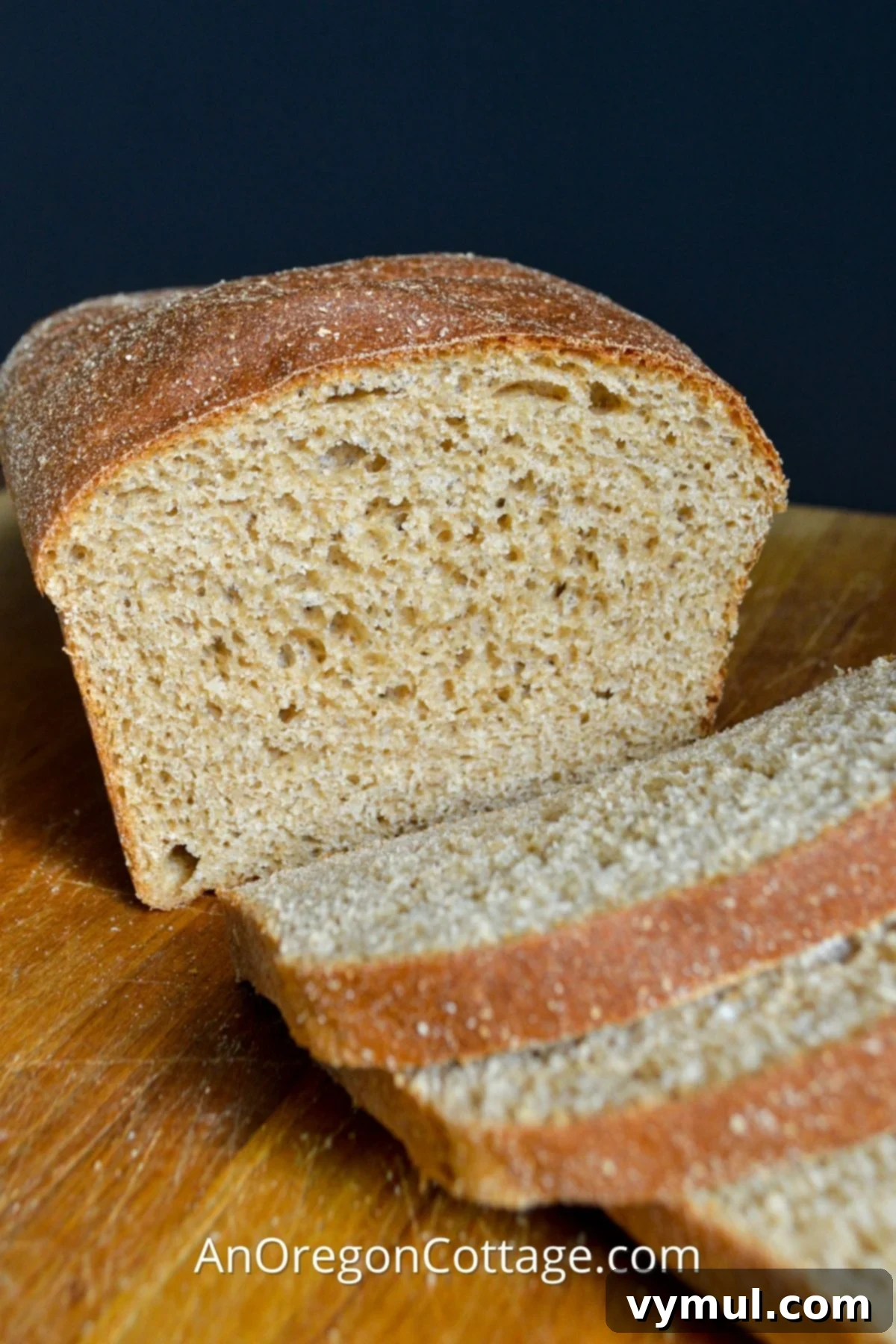
Homemade Soft 100% Whole Wheat Sandwich Bread: Your Ultimate Easy Recipe Guide
Say goodbye to bland, store-bought loaves forever! This step-by-step tutorial reveals the secret to baking incredibly soft, delicious, and wholesome 100% whole wheat sandwich bread. Featuring a quick 15-minute sponge and requiring just one rise, this recipe simplifies homemade bread baking, making it accessible even for beginners. Get ready to transform your kitchen into a bakery and enjoy the satisfying taste of real bread.
Craving more fantastic bread creations? Explore our collection of Best Bread Recipes here.

Please note: Some links in this article are affiliate links. If you click and make a purchase, I may receive a small commission at no extra cost to you. This helps support my work in bringing you valuable content.
Welcome, fellow home bakers! Prepare to embark on a delightful journey to creating perfect, wholesome whole wheat sandwich bread.
Many years ago, long before the internet became a vast repository of recipes, I embarked on a personal mission to master the art of bread making. It was a journey filled with trial and error, during which my incredibly patient family endured countless “leaden” loaves without a single complaint. Their unwavering support fueled my quest to discover an easy, consistently delicious 100% whole wheat bread recipe that was ideal for sandwiches, toast, and everything in between.
Over time, I experimented with a wide array of flours and techniques – from barley-rye-spelt blends to various kneading methods. Through all this exploration, I ultimately refined and adapted a truly exceptional recipe. This method is not only quick and straightforward but also reliably produces a tender, flavorful loaf every single time. It was this very recipe that finally allowed my family to completely stop purchasing sandwich bread from the grocery store. Seriously, it’s that good!
I want to spare you the years of experimentation and frustration I went through. That’s why I’m sharing this comprehensive, step-by-step tutorial. My goal is to equip you with all the knowledge and tips you need to confidently bake magnificent loaves of whole wheat bread from your very first attempt, liberating you from store-bought alternatives for good!
Before we dive into the delicious details, let’s explore why baking your own bread is such a rewarding endeavor:
- Unbeatable Taste: The flavor of freshly baked, homemade whole wheat bread is truly incomparable. It boasts a rich, nutty depth that store-bought versions simply cannot match, along with an incredible aroma that fills your home and evokes a comforting, nostalgic feeling.
- Complete Ingredient Control: When you bake your own bread, you know precisely what goes into it. This means no unpronounceable additives, unnecessary preservatives, or artificial ingredients. You choose high-quality, wholesome ingredients, ensuring a healthier and more trustworthy loaf for your family.
- Surprising Time Efficiency: While it might seem like a significant time commitment, the hands-on time for this recipe is remarkably minimal. Once you get the hang of the process, baking a batch of bread takes less active time than making a special trip to the grocery store, much like preparing other pantry staples from scratch.
- Incredible Savings: Homemade bread is remarkably economical. These two generous loaves cost approximately 75 cents each to make, and that’s likely an overestimate! Over time, especially for families who consume a lot of bread, these savings truly add up to a substantial amount.
- Deep Sense of Accomplishment: There’s immense satisfaction and pride in pulling warm, golden-brown loaves from your oven. It’s a comforting, primal act that connects you to generations of bakers and nurtures a wonderful sense of self-sufficiency. The cheers from your family when they see fresh bread are priceless!
- The Aroma and Experience: Beyond the taste, the entire experience of baking bread – the intoxicating smell, the comforting warmth it brings to your kitchen, the anticipation of that first slice – is a delightful sensory journey that transforms your home into a cozy haven.
Convinced yet? I certainly hope so! I want to assure you that you absolutely possess the ability to make wonderful bread. Please don’t be discouraged by any less-than-perfect loaves you might produce along the way. Even a dense loaf makes excellent toast or breadcrumbs, and every attempt is a valuable part of the learning process. Trust me on this – I’ve been there! Just keep practicing, and you’ll soon be a seasoned bread baker, enjoying the fruits of your labor.
How to Make Soft 100% Whole Wheat Sandwich Bread: A Detailed Tutorial
This recipe focuses on simplicity and achieving a consistently soft texture, a common challenge when working with 100% whole wheat flour. Follow these steps closely for the best results, and you’ll be enjoying homemade goodness in no time!
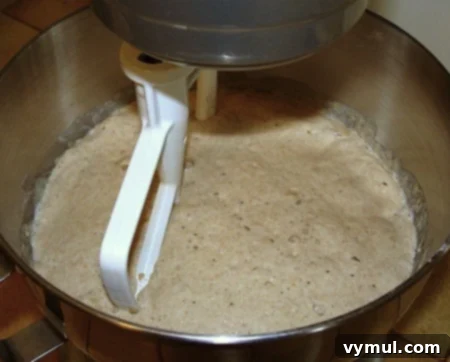
1. Create the Yeast Sponge
The first crucial step in achieving a truly soft whole wheat loaf is to create a “sponge.” In the bowl of your stand mixer (or a large mixing bowl if kneading by hand), combine the warm water, yeast, and 2 cups of the whole wheat flour. Stir these ingredients together until they are just combined and no dry spots remain. This mixture should then rest for 15 to 20 minutes in a warm place. This critical period allows the yeast to activate fully and begin fermenting the flour, which develops a richer flavor and ensures a lighter, softer texture in the final bread. You’ll know your sponge is perfectly ready when it appears bubbly, frothy, and slightly risen.
*A quick note on water temperature: I typically use the warmest tap water without issues, especially if it’s already a good temperature. However, if you’re uncertain or if your kitchen is particularly cool, it’s always best practice to use a thermometer. Aim for water between 105 and 110 degrees Fahrenheit (40-43°C). Water that is too hot will kill the delicate yeast, preventing your bread from rising at all, while water that is too cold will inhibit its activity, resulting in a slow or poor rise.
PRO TIP: A robust stand mixer is a genuine game-changer for whole wheat bread, as the dough can be quite dense and requires thorough kneading. The Kitchenaid mixer I use has been an incredibly reliable workhorse, particularly after my previous Artisan model struggled with the consistent demands of weekly whole wheat baking. While it represents an initial investment, the efficiency, ease, and reduced effort it brings to mixing and kneading (not to mention its versatility for other baking projects) make it an incredibly worthwhile addition to any baker’s kitchen.

2. Incorporate Oil and Honey (The Smart Way!)
After your sponge has fully developed, it’s time to add the liquid sweeteners and fats. First, measure and add the oil to the mixer bowl. Then, immediately follow with the honey, pouring it directly into the same measuring cup that held the oil. This clever little trick ensures that the thick, sticky honey slides effortlessly and completely out of your measuring cup, leaving virtually no residue behind. The oil acts as a lubricant, making cleanup a breeze and ensuring you get every last drop of that golden sweetness into your dough. The honey not only provides natural sweetness but also helps to tenderize the crumb and promote a beautiful golden-brown crust, while the oil contributes significantly to the bread’s soft texture and keeps it moist for longer.
3. Add Salt and Remaining Flour
Next, add the salt and the remaining 4 cups of whole wheat flour to the mixer bowl. If you choose to use vital wheat gluten (which I’ll discuss further in the FAQs regarding its optional use), this is the optimal stage to incorporate it as well, sprinkling it over the dry ingredients. Begin mixing these ingredients on a low speed with your stand mixer’s paddle attachment. Continue mixing until the dough starts to come together, forming a shaggy mass, and just begins to pull away from the sides of the bowl. At this point, it will look something like the image below, with visible streaks of flour still needing to be fully incorporated and the dough appearing somewhat uneven.
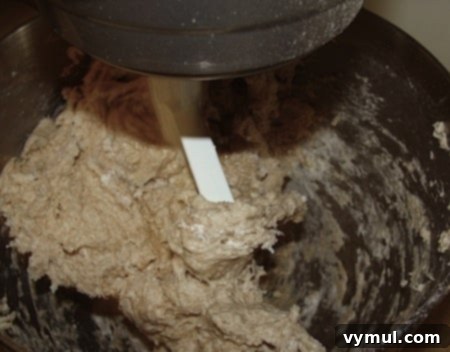
4. Switch to the Dough Hook and Begin Kneading
Once the dough has formed a shaggy mass and the ingredients are mostly combined, remove the paddle attachment from your stand mixer and replace it with the dough hook. This specialized attachment is designed to mimic the stretching and folding motions of hand kneading, which is essential for developing the gluten strands in the dough. If you’re kneading by hand, transfer the dough onto a lightly floured surface at this point. This is where the magic truly begins, transforming a sticky mixture into a smooth, elastic, and workable dough that will result in beautifully structured bread.
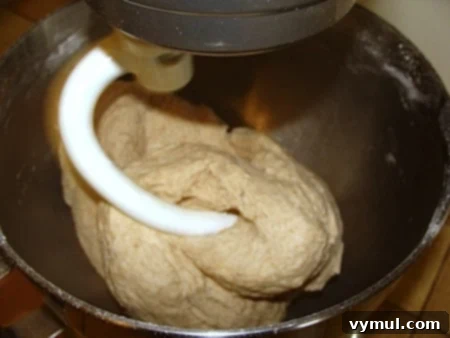
5. Knead the Dough for Optimal Texture
Knead the dough with the dough hook for a precise 6 to 7 minutes on medium speed. If you’re kneading by hand, this process will require a bit more effort and time, typically around 10 minutes, to achieve the desired elasticity. During kneading, the dough should gradually become smoother, more elastic, and less sticky. After about 6 minutes in the mixer, you should observe the dough beginning to clean the sides of the bowl, pulling away from them as it works its way around. If the dough seems excessively sticky and clings stubbornly to the sides, you can add a small amount of additional flour, one tablespoon at a time, until it reaches the desired consistency.
The Golden Rule for Whole Wheat Dough Hydration: It’s absolutely crucial not to add too much flour. Whole wheat dough, unlike its white flour counterpart, should remain slightly tacky to the touch. When you lightly press your finger into it, it should feel a little sticky, but not slick or wet. It’s perfectly normal – and even desirable – for whole wheat dough to still stick slightly to the very bottom of the mixer bowl; this is a key indicator that it’s properly hydrated and will result in a soft, tender loaf. An over-floured dough will inevitably produce a dense, dry, and crumbly bread, so err on the side of caution with flour additions.
CRITICAL TIP FOR SOFT BREAD: Resist the urge to add too much flour! The dough should not be completely dry or stiff, nor should it roll out of the bowl on its own. A slightly tacky dough is the secret to a moist and tender 100% whole wheat loaf. Trust the process and the feel of the dough.

6. Prepare Your Loaf Pans
While your dough is busy kneading and developing its gluten, take a moment to prepare your loaf pans. You’ll need two standard 9 x 5 inch pans. Thoroughly grease them using your preferred method: a neutral cooking oil, softened butter, or even by lining them completely with parchment paper for effortless removal. My personal go-to method involves a Mr. Misto sprayer filled with olive or avocado oil – it’s a reusable and economical way to achieve an even coating without relying on aerosol sprays. To ensure every nook and cranny, especially the corners, is well-coated, I then use a small silicone brush; this prevents any stray crumbs or paper bits that can sometimes adhere from a regular brush.
*Important Pan Size Update TIP: For a more consistent and notably higher rise, especially if you find your loaves aren’t reaching their full potential, I now recommend using slightly smaller pans. These 8.5×4.5 inch USA loaf pans are a personal favorite because they offer an outstanding non-stick performance and their size seems to be perfectly suited for the volume of dough in this recipe, resulting in beautifully domed loaves.
7. Divide the Dough
Once the kneading is complete and your dough is smooth and elastic, gently turn the well-kneaded dough out onto a lightly floured surface. If your countertop isn’t suitable for direct dough handling, a clean tea towel dusted with a thin layer of flour works beautifully. This not only prevents sticking, reducing the need for excess flour, but also makes cleanup remarkably simple afterward. Gently flatten the dough into an even oval shape – aim for a uniform thickness. Then, using a dough scraper or a regular long, sharp knife, carefully cut the dough in half, ensuring each portion is as roughly equal in size as possible. This step prepares your dough for individual loaf shaping.
8. Shape Your Loaves with Confidence
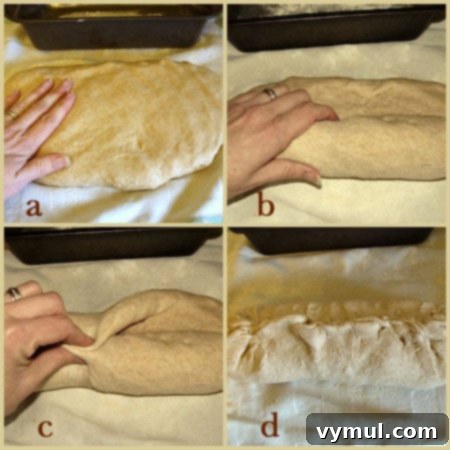
Shaping bread doesn’t need to be intimidating! Here’s a simple, effective method for creating perfectly formed loaves that will rise beautifully:
- a) Flatten Each Half into an Oval: Take one half of the divided dough and gently pat it into a relatively even oval shape. The length of this oval should roughly correspond to the length of your loaf pan. Don’t overthink this step or feel the need to roll it out extensively with a rolling pin – just enough to create a foundation for rolling.
- b) Roll Up Gently: Starting from one of the longer sides of your oval, gently but firmly roll the dough tightly towards the opposite side. Aim for a snug roll, but avoid compressing it too much. This rolling action creates internal tension in the dough, which is crucial for a good, even rise and a consistent crumb structure in your baked bread.
- c) Pinch and Seal the Seam and Ends: Once rolled, you’ll have a seam running along the bottom of your newly formed log of dough. Firmly pinch this seam together along its entire length to seal it securely. Then, turn the loaf so the ends are facing you. Pinch the ends of the dough and neatly tuck them inwards towards the main seam, creating a smooth, tidy loaf. This final sealing ensures the loaf holds its shape well during the rising and baking process.
- d) Final Shape: The goal is a compact, uniform loaf, as beautifully depicted in example (d) of the accompanying image. Repeat this entire shaping process for the second half of your dough.

9. Position Shaped Loaves in Pans
Carefully transfer each perfectly shaped loaf into its prepared, greased pan. Ensure they fit snugly but aren’t forced or compressed, allowing room for expansion during the rise. If you chose to use a tea towel for shaping, simply give it a gentle shake over the sink to remove any excess flour. Then, use this same tea towel to loosely cover your pans. This is an easy, eco-friendly, and convenient alternative to grabbing a new towel or using plastic wrap, especially if you shaped your loaves on a cutting board.
10. Allow the Dough to Rise (The Single, Efficient Rise!)
Now comes the crucial rising period, but don’t worry – this recipe is designed for efficiency and only requires one main rise! Place your covered pans in a warm, draft-free spot. An ambient counter temperature in a moderately warm kitchen is usually sufficient, or even on top of a refrigerator where it’s slightly warmer. It’s important to avoid cold drafts, as these can significantly slow down or even halt yeast activity, impacting your rise. In colder months, I often utilized a cupboard directly above our heating vent, which provided a consistently warm environment. However, in warmer weather, a simple counter spot works perfectly fine.
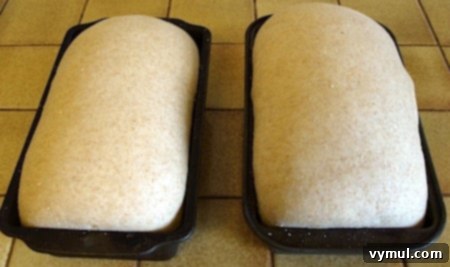
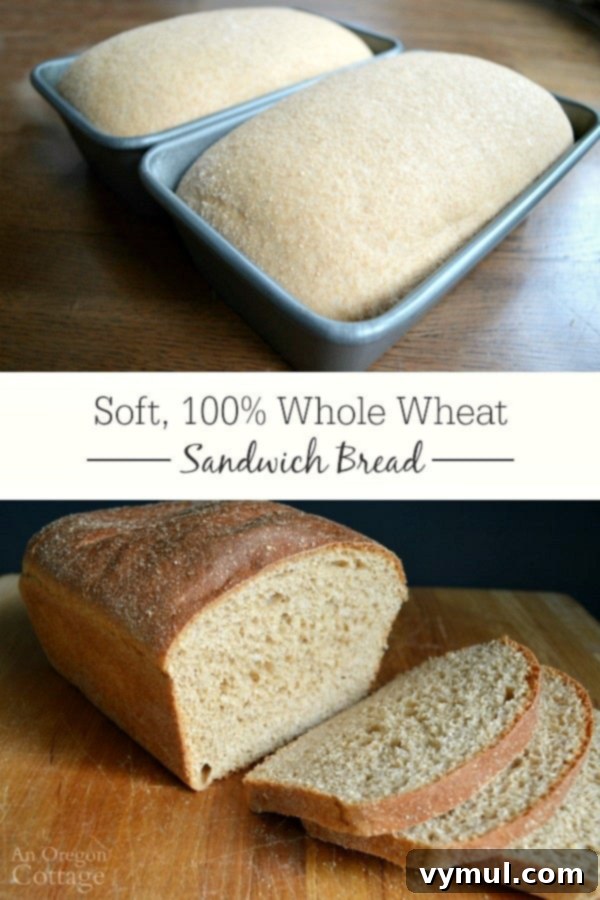
Timing is Key for a Perfect Rise: Set a timer for 50 minutes. Towards the very end of this rising period, specifically during the last 10 minutes, preheat your oven to 350 degrees Fahrenheit (175°C). Your loaves are ready to bake when they have visibly risen approximately 1/2 to 1 inch above the rim of the pans. The loaves pictured in this guide typically took about 1 hour to reach this ideal stage. It’s important to be cautious not to over-rise the dough, as this can lead to a phenomenon known as “oven spring collapse,” where the loaves fall during baking, resulting in a dense, disappointing texture.
11. Bake Your Homemade Whole Wheat Bread
Once your loaves have achieved their ideal rise (typically 1/2 to 1 inch above the pans, which should take around 60 minutes), carefully transfer them into your preheated 350°F (175°C) oven. Bake for an initial 15 minutes. After this time, gently rotate the pans 180 degrees – this ensures even browning and consistent cooking throughout both loaves. Continue baking for another 15 minutes, bringing the total baking time to 30 minutes.
Don’t fret if your loaves aren’t perfectly symmetrical or if one side seems to have a slightly larger “bubble” or growth – much like the one visible on the side of a loaf in the image. These small imperfections are charming hallmarks of truly homemade bread and don’t affect the delicious taste or soft texture in the slightest. Embrace the rustic beauty and unique character of your hand-baked creations!
12. Remove and Briefly Cool in Pans
After precisely 30 minutes of baking, your loaves should be beautifully golden brown and smell absolutely incredible. To confirm they are thoroughly baked, you can carefully remove a loaf from its pan (using oven mitts!) and tap the bottom; a hollow sound is a good indicator of doneness. Alternatively, for a precise reading, insert an instant-read thermometer into the very center of the loaf; it should register between 200-220 degrees Fahrenheit (93-104°C). However, rest assured that if your oven temperature is accurate at 350°F, 30 minutes is typically sufficient for these loaves.
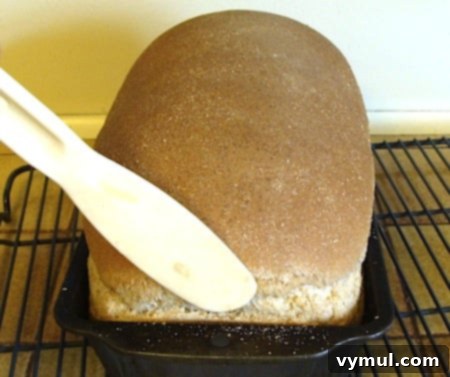
Allow the baked loaves to cool in their pans for just 10 minutes. This brief cooling period helps the bread set slightly and firms up the crust before being moved. Immediately after this brief rest, run a thin, flexible spatula or knife around the entire edges of each loaf to loosen any parts that may have stuck to the pan, ensuring a clean and easy release onto your cooling rack.
ESSENTIAL BAKER’S TOOL TIP: That incredibly flat, thin spatula shown in the image is one of my all-time favorite kitchen gadgets – it truly is the BEST. It’s made of durable plastic but boasts a surprisingly thin, almost sharp edge, making it absolutely perfect for scraping every last bit of dough from a bowl. More importantly for this step, its thin, flexible design makes it far superior to a knife for gently loosening bread from pans without scratching non-stick surfaces or cutting into your beautiful loaf. It’s a must-have for any serious baker!
13. Cool Completely on Racks Before Slicing
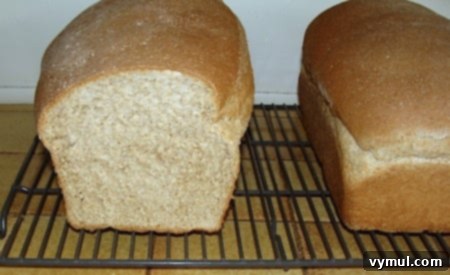
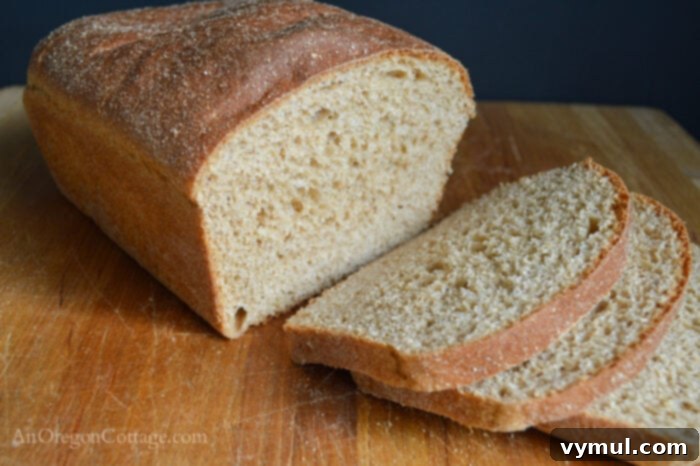
This final step requires a good deal of patience, but it is absolutely essential for the best possible results! Immediately after removing them from their pans, turn your warm loaves out onto wire cooling racks and allow them to cool for at least 30 minutes to a full hour (or even longer, especially if your kitchen is warm) before attempting to slice them. Resist the temptation to cut into them too early! Slicing hot bread will inevitably compress the tender crumb, resulting in a gummy, squished, and unappealing texture. While it’s incredibly hard to wait when your kitchen is filled with that irresistible fresh bread aroma, trust me – the patience will be amply rewarded with perfectly formed, beautifully sliceable bread.
Once cooled slightly, if you’re anything like me, you’ll immediately grab one of those beautiful, crispy end pieces, slather it with a generous dollop of real butter, and take that first blissful bite. There’s truly nothing quite like the soft, slightly crispy wonder of fresh-out-of-the-oven bread – it’s a moment of pure culinary joy!
For optimal storage or freezing, ensure the loaves are completely cool to room temperature. Warm bread stored in an airtight environment will quickly trap moisture, leading to a soggy texture and premature mold growth.
Soft Whole Wheat Sandwich Bread FAQs
The traditional advice for storing bread suggests wrapping it tightly in a linen or plastic bag and keeping it at room temperature for 2-3 days. Refrigeration is often advised against, as it can accelerate the staling process by promoting starch recrystallization. However, if your household doesn’t consume bread quickly, you might find that it molds before it goes stale at room temperature, especially in humid climates. For this reason, I frequently refrigerate our homemade bread! It remains perfectly delicious for toast, and a quick warming in a toaster oven will restore much of its original softness. To prolong freshness even further, consider slicing one loaf and freezing half if you anticipate not finishing it within a few days, ensuring you always have fresh-tasting bread on hand.
Freezing is an excellent way to preserve your homemade whole wheat bread for longer periods, allowing you to bake in batches. To do so, ensure each loaf is completely cooled to room temperature. Then, double-wrap each loaf securely in plastic bags (reused produce bags work wonderfully for an eco-friendly approach) or in foil, followed by a plastic freezer bag. This double layer helps to prevent freezer burn and keep the bread fresh. You can freeze loaves whole or, for ultimate convenience, slice them before freezing. I always pre-slice my loaves, as it allows for easy removal of individual slices as needed, without having to thaw the entire loaf. Frozen loaves maintain their quality for up to 4 months. With a freezer stash of your own homemade bread, you’ll truly never have to make an emergency run to the store for bread again!
This is one of the most common questions I receive about my bread recipes, and while I personally don’t use a bread machine, it is often possible to adapt traditional recipes for use in these convenient appliances. Different bread machine models have varying capacities, programming cycles, and heating elements, so some adjustments may be necessary. Generally, you’ll need to pay close attention to liquid ratios, and potentially the order in which ingredients are added, as specified by your machine’s manual. A fantastic resource for this is King Arthur Flour’s detailed guide: How to convert your favorite recipes to a bread machine. I highly recommend checking their comprehensive advice for the best results with your specific bread machine model.
Update on Using Vital Wheat Gluten: For many years, my original recipe included vital wheat gluten to aid in the rise and textural development of whole wheat bread, as whole wheat flour can sometimes be challenging to work with due to its lower gluten content compared to white flour. However, as of November 2010, I made a conscious decision to no longer add extra gluten. I had read that many Americans already consume a significant amount of gluten in their daily diets, and I simply feel better personally not adding more. While my current loaves might not achieve quite the same towering height or chewiness as those pictured in some older photos here (which used added gluten), they are still wonderfully soft, flavorful, and perfectly suitable for my family’s needs. Therefore, I have now listed vital wheat gluten as an optional ingredient in the recipe card below. Feel free to use it if you prefer a slightly higher rise and chewier texture, or omit it for a still-delicious, slightly less-processed loaf, knowing it will still be fantastic!

Print Recipe
Pin Recipe
Save
Saved!
Easy & Soft 100% Whole Wheat Sandwich Bread
1 hour
30 minutes
30 minutes
2 hours
2
loaves
Jami Boys
Equipment
-
Two 9×5 inch OR 8.5×4.5 inch loaf pans
Ingredients
- 6 to 6½ cups whole wheat flour*
- 2½ cups warm water between 105-110 degrees F (40-43°C)
- 1½ tablespoons instant active dry yeast OR regular active dry yeast
- 1/3 cup honey
- 1/3 cup oil**
- 2½ teaspoons salt
- 1½ tablespoons vital wheat gluten OPTIONAL (I don’t use this anymore for dietary reasons, but it can enhance rise)
Instructions
-
In a large mixing bowl (preferably a stand mixer), combine the warm water, yeast, and 2 cups of the whole wheat flour. Stir briefly until just combined. Let this mixture sit undisturbed for 15-20 minutes to form a bubbly sponge. Warmer ambient temperatures will lead to a faster sponge (around 15 minutes), while cooler conditions might require up to 20 minutes for full activation.
-
Add the oil, then the honey (the oil helps the honey slide right out of the measuring cup!). Follow with the salt, the vital wheat gluten (if you are using it), and the remaining 4 cups of whole wheat flour. With the paddle attachment, mix on low speed until the dough just starts to come together and pulls away from the sides of the bowl. Switch to the dough hook (or transfer to a floured surface for hand kneading). Knead for 6 to 7 minutes with the mixer, or approximately 10 minutes by hand, until the dough is smooth and elastic. If the dough is overly sticky, add flour one tablespoon at a time, being careful not to add too much; the dough should remain slightly tacky to the touch.
-
Divide the kneaded dough into two equal halves. On a lightly floured surface, shape each half into a loaf and place them into your greased 9×5 inch pans (or 8.5×4.5 inch pans for a slightly higher, denser rise). Cover the pans loosely with a clean tea towel or plastic wrap. Allow the loaves to rise in a warm, draft-free place for about 60 minutes, or until the dough crests about 1/2 to 1 inch above the pan rims. If your kitchen is cool, this might take an extra 15-30 minutes. Avoid over-rising, which can cause the loaves to deflate during baking. About 10 minutes before the rising time is complete, preheat your oven to 350 degrees Fahrenheit (175°C).
-
Bake the risen loaves in the preheated oven for 30 minutes. For even cooking and browning, rotate the pans halfway through the baking time (after 15 minutes).
-
Immediately upon removing from the oven, turn the loaves out onto a wire cooling rack. Allow them to cool completely before attempting to slice them (at least 30 minutes to 1 hour). Slicing warm bread can compress the crumb and result in a gummy texture.***
Notes
**For the oil, I frequently use Trader Joe’s cold-expeller-pressed sunflower oil. Light olive oil, melted unsalted butter, or refined coconut oil (refined so it doesn’t impart a coconut flavor to your bread) are all great alternatives. Choose a neutral-flavored oil to let the natural whole wheat flavor shine.
***Using a good quality serrated knife or an electric knife will help you achieve clean, even slices. Typically, I get about 14-15 slices from each loaf.
****Pan sizes are important for optimal rise. While 9×5 inch pans work, I’ve found that the smaller 8.5×4.5 inch pans provide a more consistent and robust rise, as the flour amount is perfectly suited for them.
Nutrition
|
Calories: 110kcal
|
Carbohydrates: 19.7g
|
Protein: 2.4g
|
Fat: 2.4g
|
Saturated Fat: 0.3g
|
Cholesterol: 0mg
|
Sodium: 136mg
|
Fiber: 0.7g
|
Sugar: 2.8g
Did you make this recipe?
Mention @anoregoncottage or tag #anoregoncottage!
Explore More Delicious Homemade Bread Recipes:
If you’ve enjoyed mastering this soft whole wheat sandwich bread, you might be ready to expand your baking repertoire. Here are a few more popular and highly-rated bread recipes from our collection to inspire your next kitchen adventure:
Easy 10-Grain Sandwich Bread
The Original Soft 100% Whole Wheat Dinner Rolls
Easy Artisan Bread (No-Knead Option)
Disclosure: Please be aware that this article contains affiliate links. If you make a purchase through these links, I may earn a small commission at no additional cost to you. For more detailed information, you can review my full disclaimer and advertising disclosure by clicking here.