Beyond the Hype: Uncovering the Truest No-Fail Perennial Flowers for Your Low-Maintenance Garden
Are there truly “no-fail perennial flowers” that thrive effortlessly in every garden, for every gardener? While absolute certainty is rare in the dynamic world of horticulture, there are undoubtedly many easy-to-grow perennials that demand significantly less attention and offer more reliable performance than others. My aim here is to cut through the noise and share insights from years of hands-on gardening experience, particularly in the unique climate of the Pacific Northwest (PNW).
This article delves into a popular national magazine’s list of recommended perennial flowers, scrutinizing their selections against my practical experience. You’ll discover why some widely promoted “no-fail” options might actually lead to disappointment, and more importantly, uncover my top seven truly low-maintenance perennial flowers that have consistently proven their worth in my garden and can help you cultivate a beautiful, easy-care landscape you’ll love.
Some links in this article are affiliate links, and if you click on them, I will receive a small commission at no additional cost to you. This helps support my work in bringing you valuable gardening insights.
My interest was piqued when I stumbled upon an article from Better Homes and Gardens that purported to list “no-fail perennials” for various U.S. regions, including the Pacific Northwest. I was eager to see if their selections aligned with my extensive gardening journey in this specific climate. (Note: The BHG article has since been re-titled “low-maintenance perennials,” but my original assessment and recommendations remain unchanged.)
To my surprise and a chuckle, not a single flower on their list was one I would confidently recommend for the average home gardener seeking genuine low-maintenance, high-reward perennials. Perhaps it’s my particular approach to gardening, focusing on plants that truly earn their keep without constant fuss, but I’ve had personal experience with most of their listed perennials. And the unfortunate truth is, many of them simply failed to deliver on the “no-fail” promise.
Those that didn’t outright fail often proved to be rather uninspiring, or sported colors that clashed with a desired garden aesthetic. While not a complete failure in every sense, these plants certainly wouldn’t make it onto my curated list of easy, long-blooming perennial flowers that truly contribute to a beautiful, low-effort garden. Given these discrepancies, I felt compelled to share my perspective, offering a more realistic guide based on actual performance and minimal intervention.
Below, you’ll find the list of plants originally suggested by Better Homes and Gardens, alongside my candid thoughts and reasons for disagreement. Following this critical review, I will present my definitive list of perennials – the true champions, the real keepers for anyone seeking genuinely easy, long-blooming, and consistently beautiful flowers, particularly suited for the Pacific Northwest climate but adaptable to many regions.
(Not So) No-Fail Perennials – A Critical Look at the BHG List
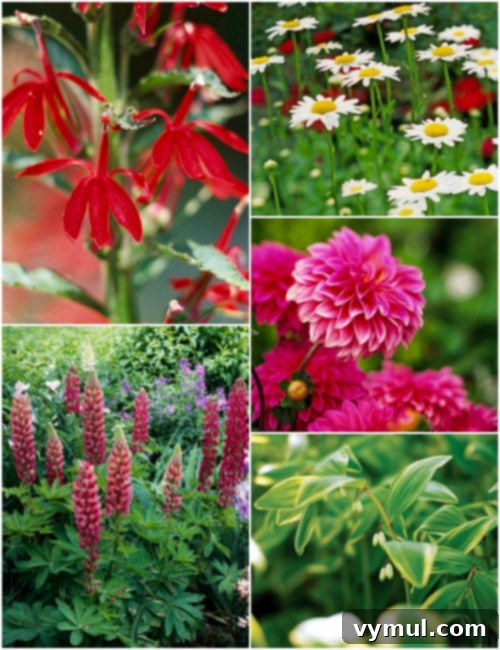
Let’s examine the plants suggested by the national magazine, clockwise from top right:
- Shasta Daisy: I’ll concede that the Shasta Daisy is a quintessential cottage garden flower, and I even have a few in my own landscape. However, its practicality as a “no-fail, low-maintenance” perennial is questionable. Firstly, they have a distinctly strong, some might say unpleasant, scent that makes them unsuitable for indoor arrangements. More critically, their tall stems often require staking to prevent flopping, adding an extra chore that contradicts “low maintenance.” But the biggest drawback is their fleeting beauty; they bloom for only a few short weeks before their spent flowers leave them looking ragged and unattractive, demanding constant deadheading to maintain any semblance of appeal. Three strikes for me.
- Dahlia: While the flamboyant blooms of Dahlias are undeniably stunning, classifying them as a “perennial” in the Pacific Northwest without significant caveats is misleading. Dahlias grow from tubers, and in regions with cold winters like the PNW, these tubers generally need to be dug up, cleaned, and stored indoors each autumn if you hope to see them return the following spring. Leaving them in the ground almost guarantees they’ll turn to mush in a cold snap, as all mine did last year. This annual excavation and replanting process is far from “no-fail” or “low maintenance.” Furthermore, their large, heavy blooms necessitate substantial staking, and they are notorious magnets for earwigs, often found crawling all over their petals.
- Sword Fern: The Sword Fern is, without a doubt, ubiquitous in the Pacific Northwest. It grows wild along roadsides, in forests, and under trees with absolute ease. And yes, this means it’s inherently “no-fail” in its natural habitat and requires virtually no human intervention there. However, for a cultivated garden, adding something that is so commonplace and unextraordinary can feel, well, boring. While it certainly won’t fail, its lack of visual interest in a designed landscape often makes it a less desirable choice compared to other vibrant, truly garden-worthy perennials.
- Solomon’s Seal: This recommendation genuinely amused me, despite never having grown it myself. The reason? It’s explicitly described as a “moist shade” plant. The reality of gardening under the towering Douglas Firs and Pines common in the PNW is that their extensive root systems act like giant sponges, sucking up every last drop of moisture. This leaves the ground beneath them bone dry, making “dry shade” the predominant challenge. A plant requiring consistent “moist shade” simply won’t thrive in many PNW gardens without constant, unsustainable irrigation, which defeats the purpose of “no-fail” and “low-maintenance.” Our truly resilient plants must tolerate, and ideally prefer, dry shade.
- Primrose: Initially, I thought they might be referring to the charming little primroses that brighten nurseries in early spring. I actually enjoy these and often plant them; they frequently surprise me by re-blooming in the fall. However, the article specifies Evening Primrose (Oenothera), which is an entirely different beast. From all my research and observation, Evening Primrose can be quite invasive. I’ve personally never risked planting it due to its reputation. Moreover, it’s typically a biennial plant, meaning it grows foliage in its first year, flowers in the second, and then dies. While it vigorously self-seeds and can sprout from leftover root fragments, this cycle demands managing its spread and dealing with its short lifespan, making it far from a truly low-maintenance, long-term perennial solution.
- Wild Ginger: Much like Solomon’s Seal, Wild Ginger is another plant that explicitly requires “moist shade” to flourish. As previously explained, achieving consistently moist shade in many parts of the Pacific Northwest, especially under large native trees, is a significant horticultural challenge. Therefore, this ground cover, despite its charm, is not a practical “no-fail” option for many PNW garden scenarios without extensive and often artificial intervention.
- Cardinal Flower (Lobelia): This is perhaps the only plant from their entire list that I would cautiously agree could be a nice, potentially no-fail perennial for those whose aesthetic preferences align with its vibrant red hue. I wouldn’t know for certain from personal experience, as I tend to avoid planting red or orange flowers in my garden palette. If you appreciate these colors, the Cardinal Flower is a native option. However, it is also noted for being somewhat short-lived, which again detracts from the long-term “no-fail” characteristic expected of a true perennial workhorse.
- Lupine: Lupines are breathtaking when they bloom wild across the PNW landscape in spring. Their tall spires of flowers are truly magnificent. However, integrating them into a cultivated garden often introduces one major problem: bugs, specifically aphids. In fact, a particular aphid species, the lupin aphid, is named for its affinity for these plants. They can quickly decimate the foliage to the point where the plants look unsightly by mid-bloom or shortly after, often necessitating early cutting back to improve appearance. The need for constant pest management, spraying, or premature cutting back fundamentally undermines any claim of “low maintenance.”
Truly No-Fail, Low-Maintenance Perennial Flowers for a Thriving Garden
After dissecting a national magazine’s questionable recommendations, let’s pivot to the real stars of the low-maintenance perennial world. These are the plants that have consistently performed beautifully in my garden with minimal intervention, offering vibrant blooms and lush foliage year after year. They are resilient, long-blooming, and truly deserve the title of “no-fail.”
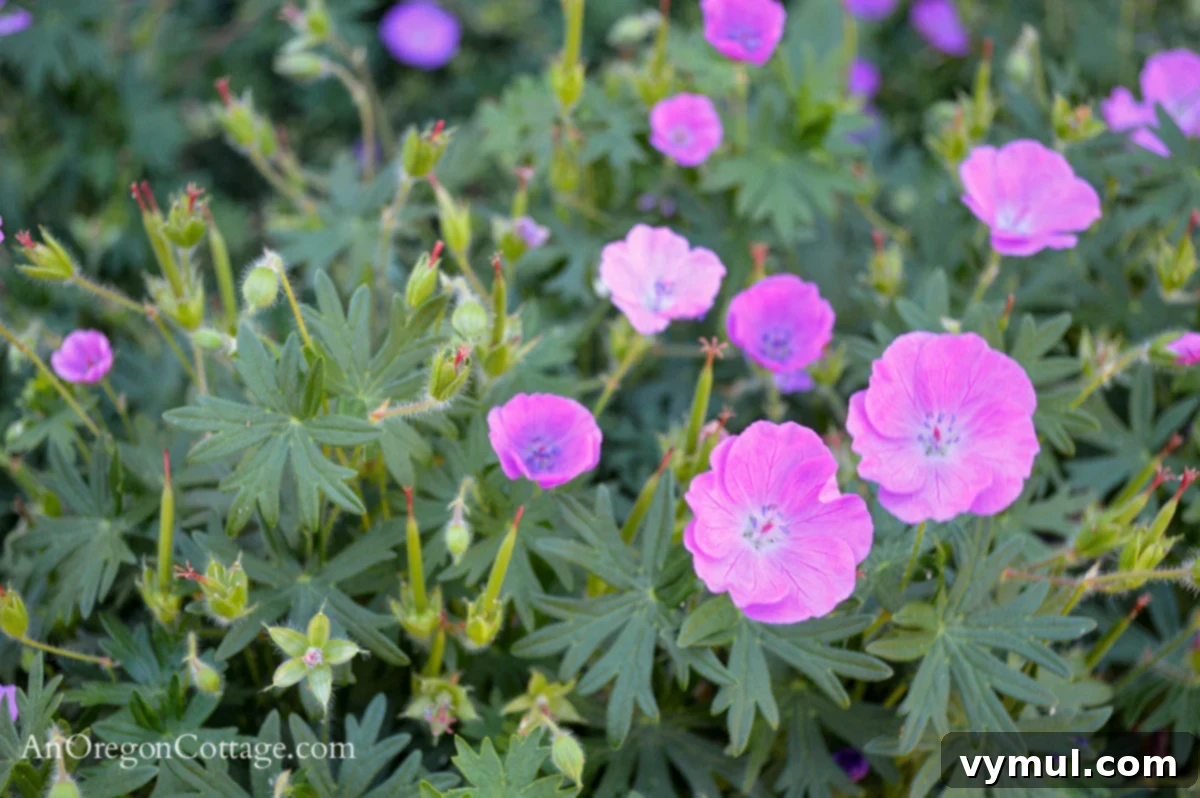
1. Hardy Geranium (Cranesbill)
The Hardy Geranium, commonly known as Cranesbill, is an absolute gem for any gardener seeking reliable, long-blooming performance. There are numerous varieties available, each with its own charm, and while bloom durations vary, most provide several months of continuous color. The specific variety pictured above, a vigorous type often nicknamed ‘monster‘ due to its impressive growth, consistently blooms from early June right through to mid-October in my garden. That’s almost five months of vibrant flowers!
While it can indeed grow quite large, it responds exceptionally well to a simple shearing back after its initial flush, which often encourages another wave of blooms. I’ve successfully propagated countless new plants from just one specimen, sharing its abundant beauty with friends and filling other garden beds. Although plants in full sun might not bloom for quite as long as those in partial shade, any perennial that delivers nearly half a year of bloom with minimal fuss is undeniably a “no-fail” winner in my book.
2. Yarrow (Achillea)
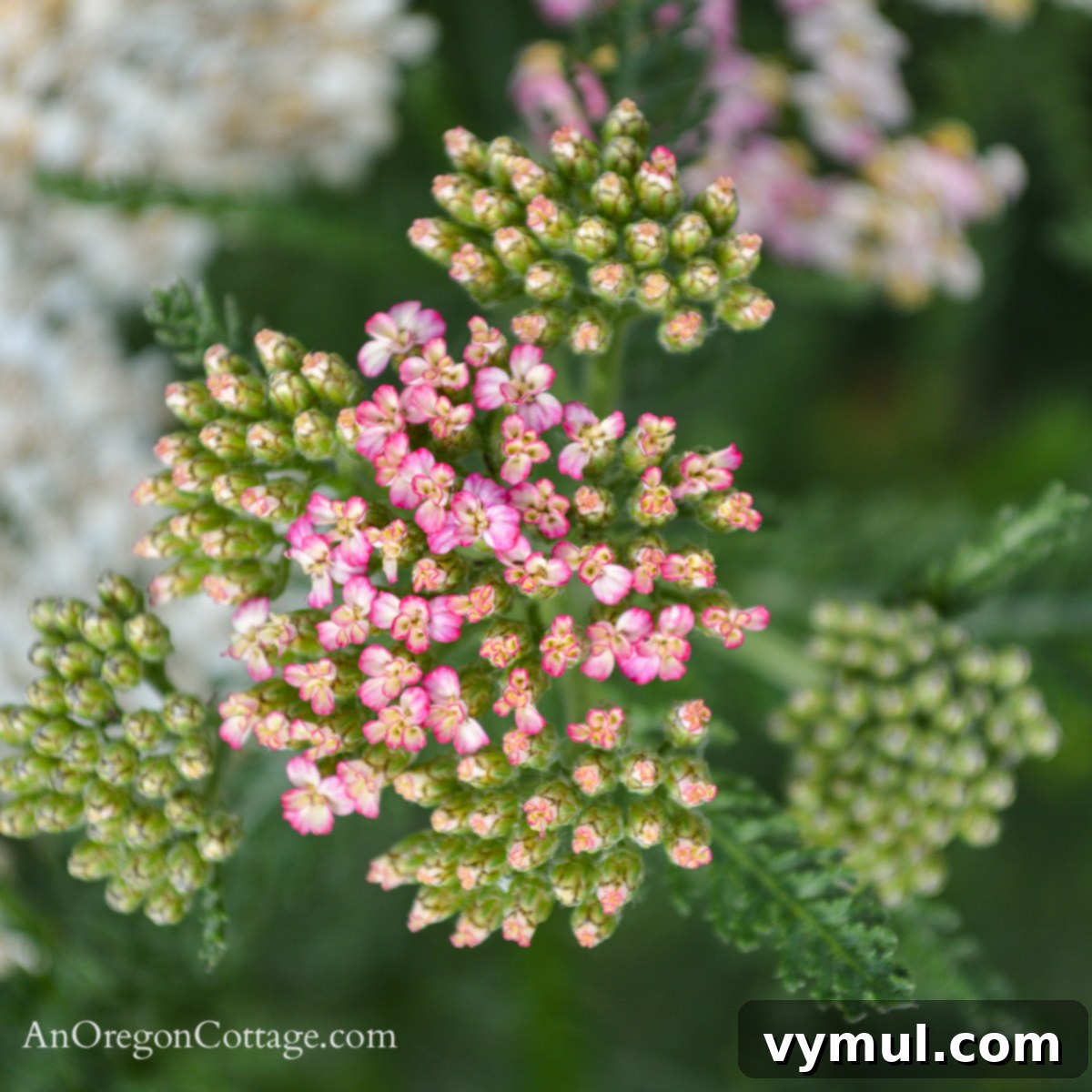
For gardeners battling challenging conditions, Yarrow plants (Achillea) are a true blessing. These resilient perennials are incredibly adaptable, thriving even in poor soil conditions and exhibiting exceptional drought tolerance once established. Their sturdy stems and fern-like foliage are attractive, but their real magic lies in their prolific, long-lasting blooms that reliably adorn the garden almost all summer long. A simple mid-summer cut-back often encourages a second flush of flowers, extending their colorful display even further.
While the classic bright yellow yarrow provides a bold statement and pairs beautifully with purple perennials like asters, I personally gravitate towards the mixed pastel varieties for a softer, more harmonious look. Yarrow also boasts a gentle spreading habit, making it easy to divide and share plants in the spring, or fill other areas of your garden without fear of it becoming aggressive or taking over. This generosity, combined with its resilience, makes Yarrow an indispensable component of any low-maintenance perennial border.
3. Heuchera (Coral Bells)
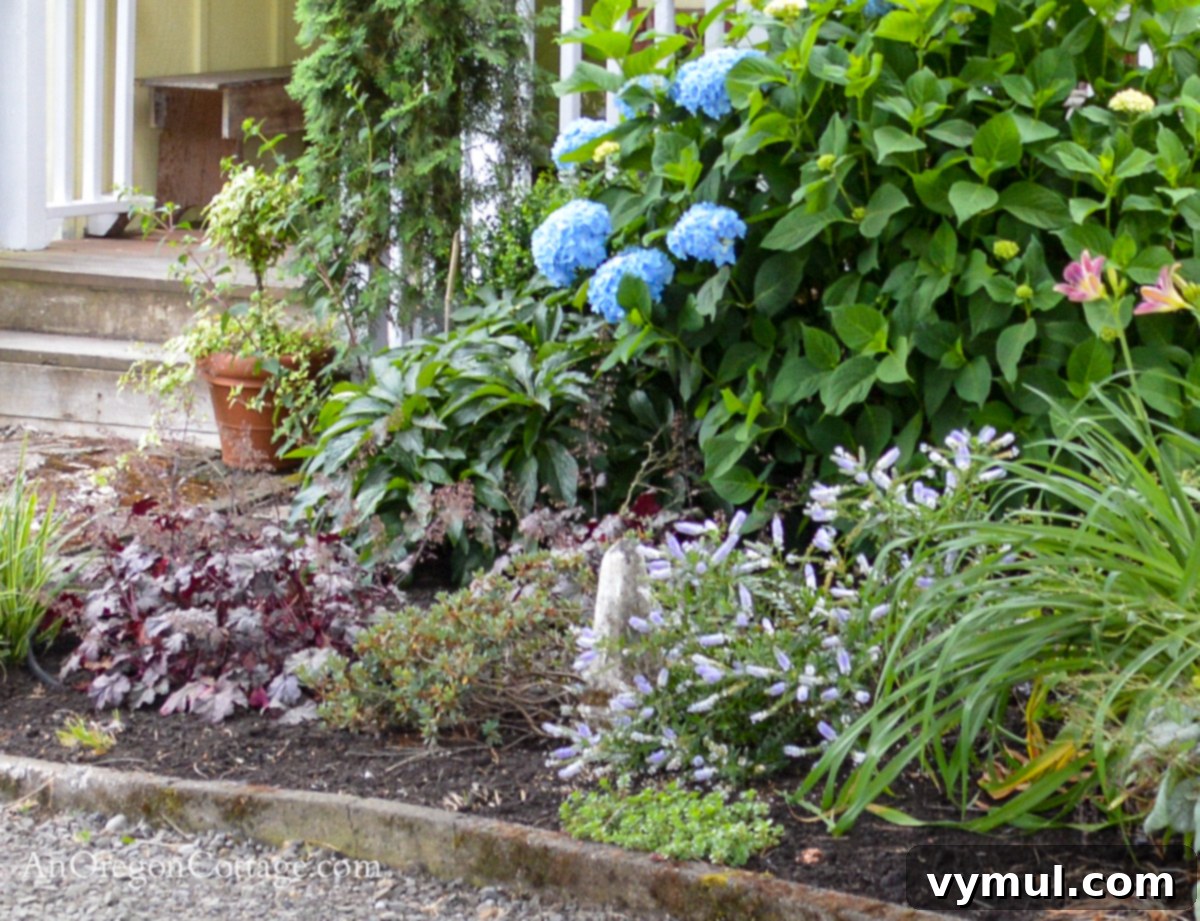
Heuchera plants, widely known as Coral Bells, are celebrated for their enduring beauty, offering both delicate, airy blooms and incredibly striking foliage that lasts throughout the season. Modern breeding has produced an astonishing array of varieties, far beyond the traditional green ‘coral bells’ that graced our grandmothers’ gardens. Today, you can find leaves in shades of deep burgundy, vibrant lime green, silvery-purple, and even variegated patterns, providing continuous visual interest long after the flowers have faded.
The plant pictured above on the left, with its dark, silvery leaves (reminiscent of varieties like ‘Mahogany Monster’), has thrived and bloomed beautifully in a semi-dry shade area of my garden. Its rich foliage provides a stunning contrast to its companion plants, creating depth and texture. One of the best qualities of Heuchera is that its spent flower spikes often retain an attractive form, so I usually leave them, eliminating the need for tedious deadheading. This means essentially no maintenance is required beyond occasional watering during prolonged dry spells, making it a truly hands-off beauty that delivers consistent elegance.
4. Hebe (Shrubby Veronica)
Discovering Hebe was a delightful surprise for my garden! Hailing from New Zealand, many Hebe varieties, including the one I grew, perform exceptionally well even under challenging conditions. My particular Hebe flourished beneath a Japanese Maple, a tree notorious for hogging most of the available moisture and creating significant dry shade. Despite this, it bloomed prolifically for an extended period, proving its incredible resilience.
Technically classified as a small, evergreen shrub, Hebe provides year-round structure and interest. While some varieties can be a bit tender in harsh winters, I’ve found that even if it dies back significantly, it often regrows from the roots the following spring. It primarily blooms in the summer, but I’ve witnessed it sending out sporadic, charming light purple blooms all the way into October, adding unexpected color late in the season. Despite the occasional winter setback, its unparalleled ability to thrive in dry shade makes it a perennial I would always endeavor to have in my garden.
NOTE: Since my initial experience, I’ve found Hebes to be increasingly difficult to locate in nurseries or even online. A fantastic and more readily available substitute that offers a similar flower form is Perennial Veronica. However, it’s important to note that unlike Hebe, Veronica is not evergreen and typically requires full sun to perform its best.
5. Brunnera (Siberian Bugloss)
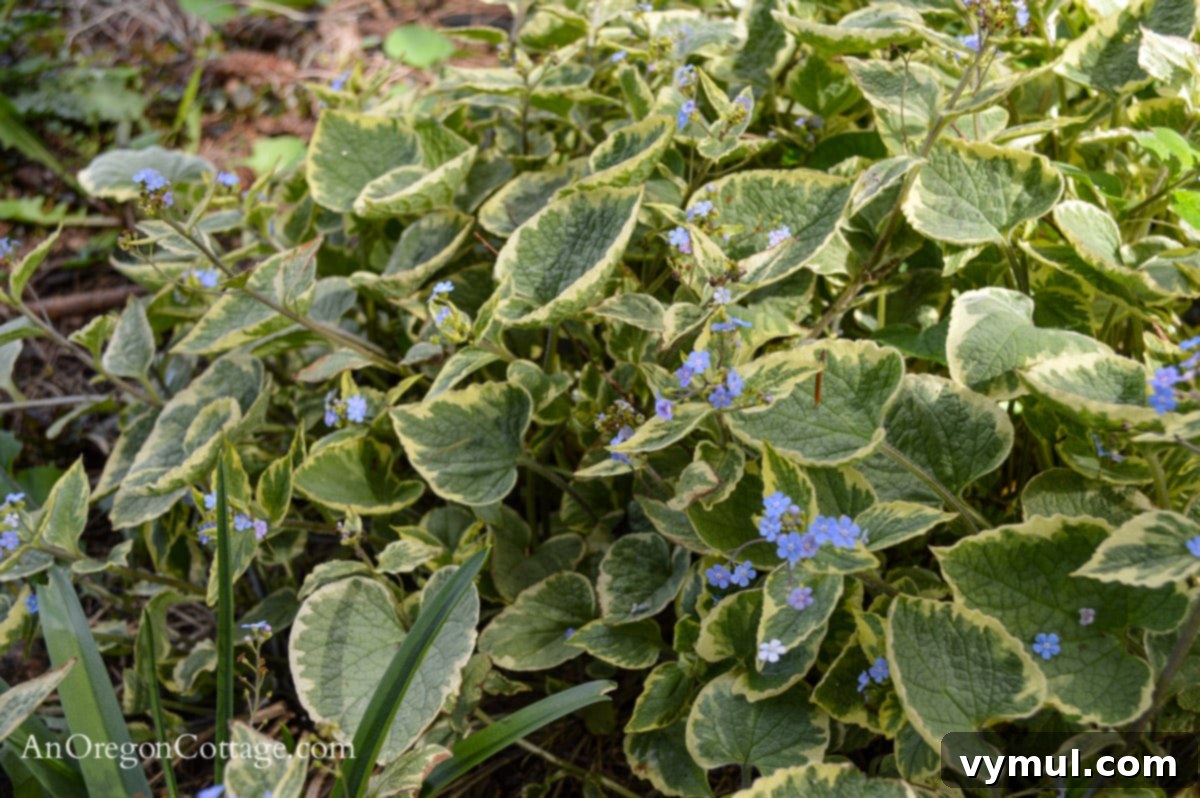
For gardeners with challenging dry shade areas, Brunnera macrophylla stands out as my absolute favorite plant, and I genuinely adore it! In early spring, it gracefully sends up delicate spikes of enchanting blue, forget-me-not-like flowers that persist for several months, providing a refreshing burst of color. But its appeal doesn’t end there.
Even after the blooms fade, Brunnera continues to captivate with its lush, heart-shaped leaves and often glowing, variegated foliage, maintaining a beautiful presence throughout the entire growing season. This truly shade-loving plant has proven its versatility by thriving equally well in both dry shade and areas with more consistent moisture. An added bonus that makes it truly low-maintenance for many gardeners is its natural resistance to deer. The variety pictured above showcases variegated leaves, but the striking silver-leafed version known as ‘Jack Frost’ is particularly popular for its luminous qualities. I appreciate all types and welcome its gentle self-seeding, which has allowed me to easily harvest and plant new specimens or share them with fellow gardeners over the years.
6. Japanese Anemone
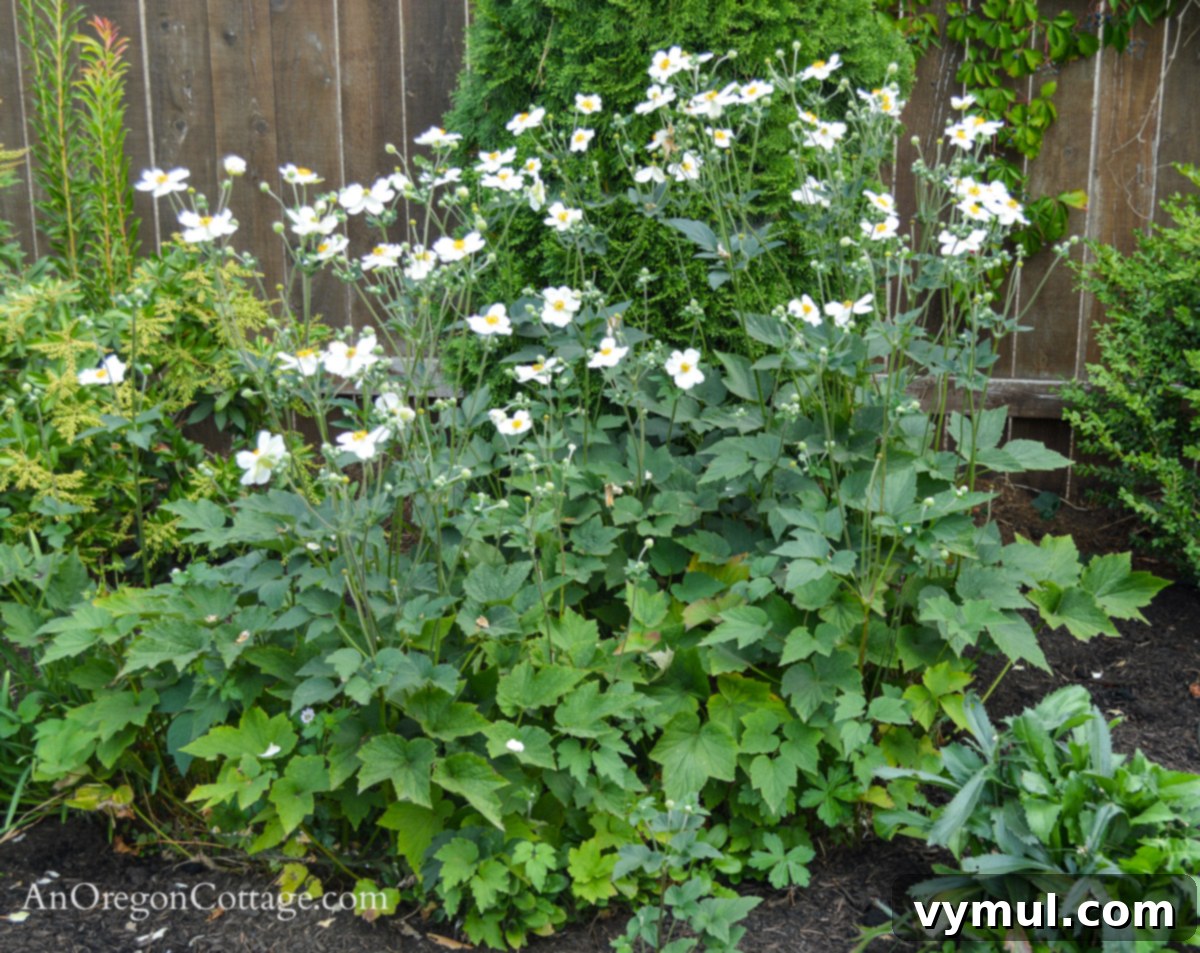
The Japanese Anemone is a phenomenal plant that truly shines when many other garden performers are beginning to wane. These elegant plants start their prolific blooming around the end of August and continue their magnificent display until the first hard frost finally brings their season to an end. This late-season performance is an absolute joy, filling a crucial gap in the garden when most plants have given up the ghost.
I also appreciate its tendency to spread, gracefully filling in empty spaces in the border. This spreading habit is generally quite polite and manageable, particularly when planted in full sun, though it tends to spread more vigorously in shaded conditions. For those concerned about its root spread, Japanese Anemones also adapt well to containers or raised beds, which naturally contain their roots. Its consistent and late blooming habit, paired with its capacity to fill such a vital late-season niche, makes any minor trimming required a worthwhile trade-off. Available in both crisp white and a delightful soft pink, these flowers bring a refined beauty to the late summer and autumn landscape.
NOTE: It’s crucial to select your Japanese Anemone variety carefully, as some cultivars are known for being much more aggressive in their spreading than others, potentially becoming invasive. Always read plant labels diligently. I’ve heard excellent reports that the ‘Wild Swan’ anemone is a particularly well-behaved and desirable cultivar, offering beautiful blooms without the worry of excessive spread.
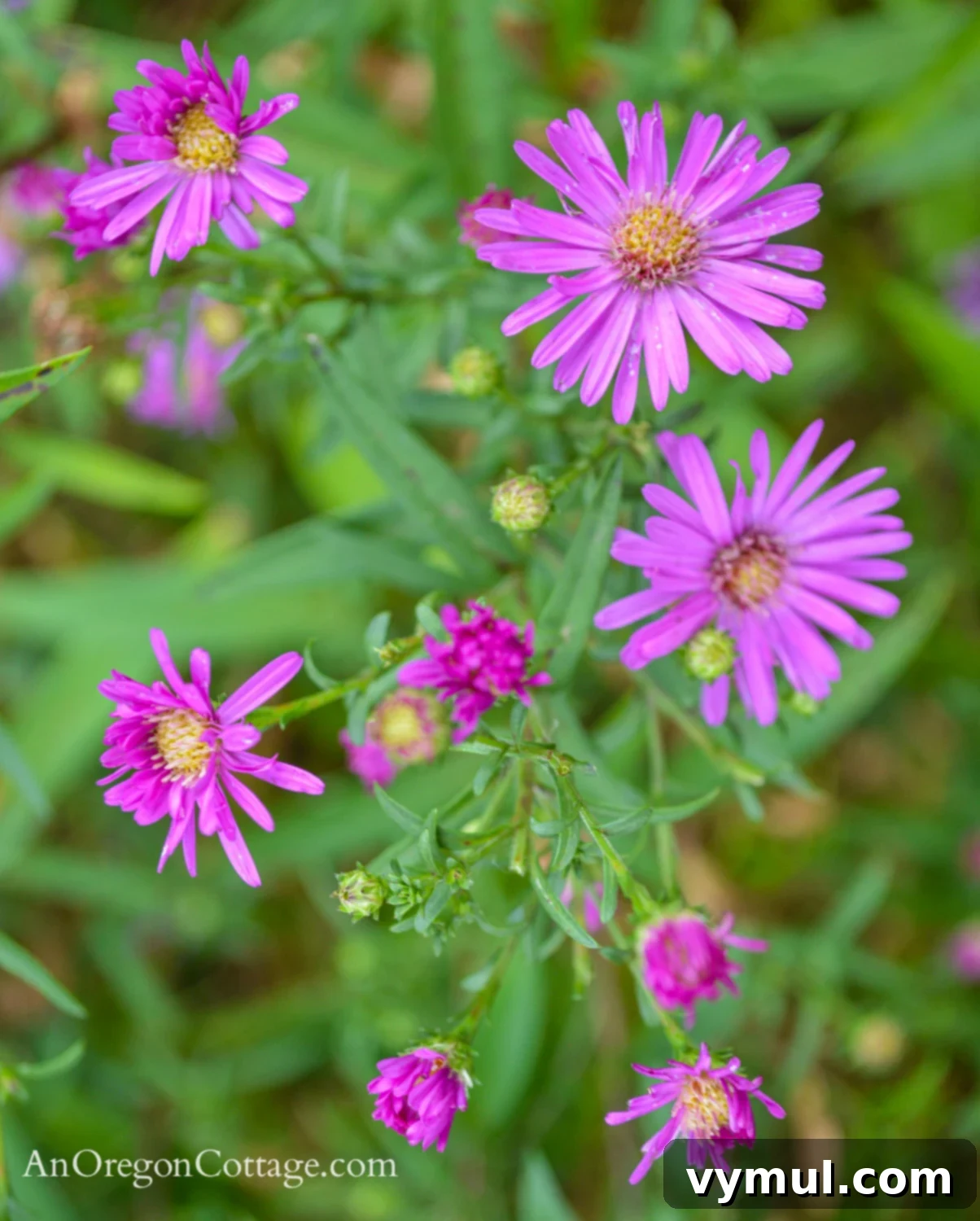
7. Aster (New England Aster)
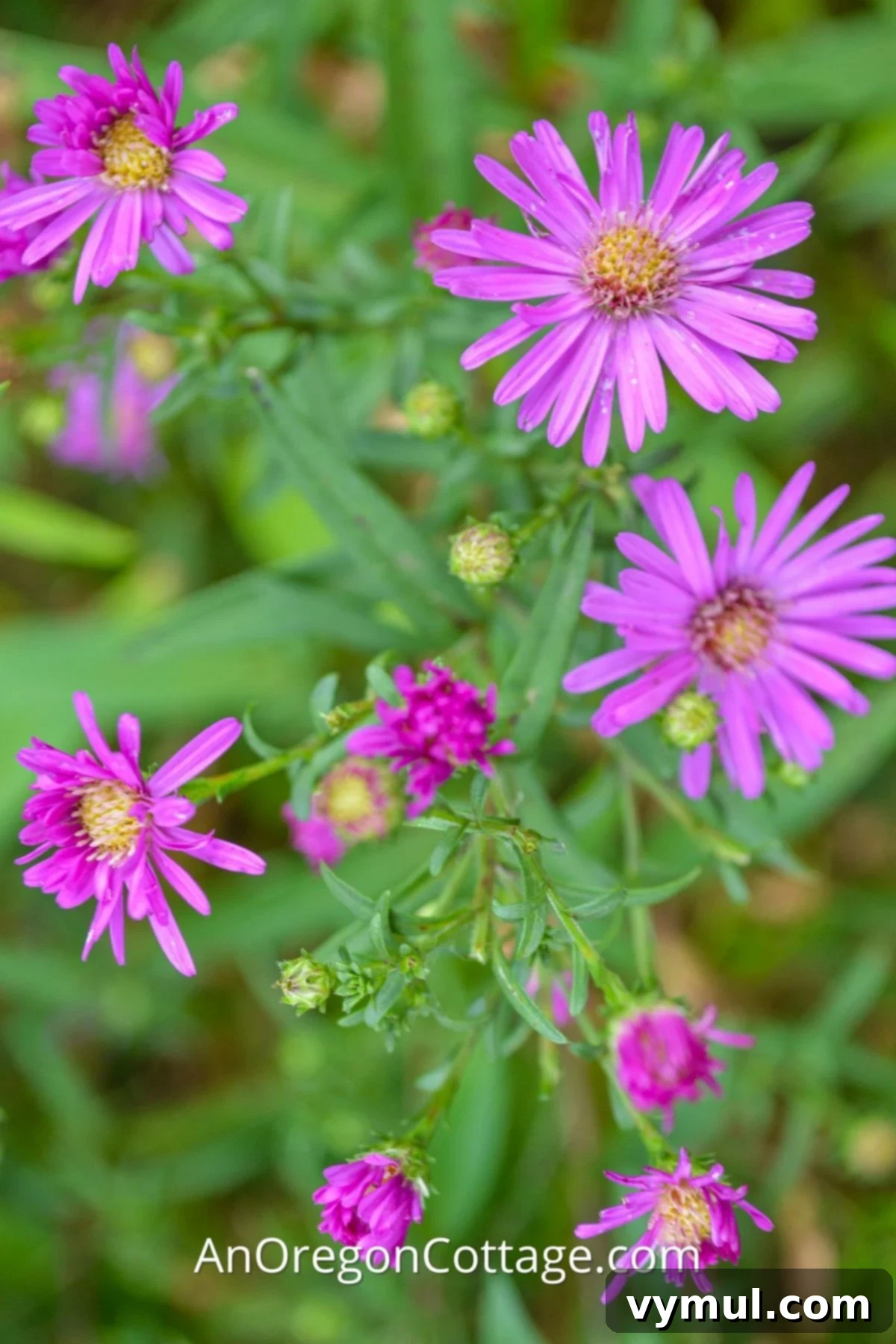
Last but certainly not least, we have the humble yet spectacular New England Aster. For much of the spring and summer, this plant maintains a modest profile, forming a pleasing green bush that serves as an excellent backdrop for earlier bloomers. It quietly provides texture and structure, allowing other flowers to take center stage.
However, when autumn arrives, the New England Aster undergoes a breathtaking transformation. It bursts into a glorious profusion of vibrant purple, pink, or white daisy-like flowers, utterly covering the plant in long-lasting blooms. This explosion of color breathes new life into the fall garden, providing essential sustenance for late-season pollinators like bees and butterflies, which is an invaluable ecological benefit.
But the true testament to its “no-fail” status comes from its incredible adaptability and resilience. I have personally taken cuttings from a single New England Aster plant and successfully transplanted them into a diverse range of challenging environments: shaded areas, sun-drenched borders, beds with notoriously poor soil, and those with rich, fertile soil. In every single one of these varied conditions, the New England Aster not only survived but actively grew and thrived, demonstrating an almost unparalleled hardiness. That, my friends, is the definition of a truly “no-fail” perennial that every gardener, regardless of their skill level or garden conditions, should consider planting for a reliable and rewarding display.
More on Flowers to Inspire Your Garden
- 11+ Easy Cottage Garden Flowers To Grow for Timeless Charm
- 15+ Reliable Fall Flowers to Plant for Extended Beauty
- 7 Beautiful Summer Flowers to Grow for Vibrant Displays
- 14 Plants for Spring Blooms to Kickstart Your Garden
Perennials FAQs
Perennials are a class of flowering plants that return year after year, or for most years, depending on the local climate and the specific hardiness of the plant variety. This characteristic distinguishes them from annuals, which complete their entire life cycle – from seed to flower to seed – within a single growing season and then die, requiring replanting each spring. There are also biennial plants, which typically grow foliage in their first year and produce flowers and seeds in their second year before dying back.
The primary advantage of perennials is their longevity, saving gardeners the effort and expense of replanting every year. However, the trade-off for this extended lifespan is often a shorter individual bloom time. Many perennials might only bloom for a month or so, although as demonstrated in this list, many varieties exist that offer continuous blooms for several months. In contrast, most annuals are bred for extended flowering periods, often blooming continuously for 4-5 months, from spring through fall, until they are finally killed by frost. Annuals provide instant and prolonged color, while perennials offer structural permanence and a more naturalized feel.
The plant tag or label at the nursery is usually the most reliable indicator of whether a plant is an annual or perennial. If a label is absent, consider how the plants are displayed: plants often referred to as “color spots” or those sold in hanging baskets are almost invariably annuals. Perennials are typically grouped together, often with signage explicitly stating they are perennials, or by their botanical names which can often be cross-referenced.
In your own garden, annuals will completely die back and show no signs of life after the first frost, leaving bare soil. Perennials, on the other hand, while they may die back to the ground over winter, will typically exhibit new growth from their crown or roots the following spring. Common annuals you’ll frequently encounter for sale include Marigolds, Petunias, Pansies, Begonias, and Zinnias. Conversely, popular perennials include the plants highlighted in my list of easy-to-grow perennials, as well as familiar favorites like Daylilies, Coneflowers, Black-Eyed Susans, and Peonies.
Now, I’d genuinely love to hear from you! What are your absolute favorite perennials, and what makes them your go-to choices? There’s always room for one more fantastic plant recommendation in any gardener’s repertoire!
Disclosure: Affiliate links in this article will earn commission based on sales, but it doesn’t change your price. Click here to read our full disclaimer and advertising disclosure.