
Mastering Homemade Whole Wheat Sourdough English Muffins: A Delicious Discard Recipe
There’s nothing quite like the warmth and rich aroma of freshly baked bread. These whole wheat sourdough English muffins elevate that experience, offering a surprisingly easy path to a homemade staple that tastes infinitely better than anything you’ll find in a store. Forget about bland, mass-produced versions; these muffins boast a tender crumb, the perfect chew, and those coveted nooks and crannies, ready to soak up butter or your favorite toppings. Ideal for a wholesome breakfast, versatile sandwiches, delightful mini pizzas, or simply a satisfying snack, this recipe also provides a brilliant and delicious way to utilize your sourdough “discard.”
✩ What readers are saying…
“I have tried several different whole wheat English muffin recipes and these are the best!!! They are so delicious and so simple once you make them a couple times and get all of the little tricks down. I now make them weekly and freeze. I’ll never buy English muffins again!” – Michelle
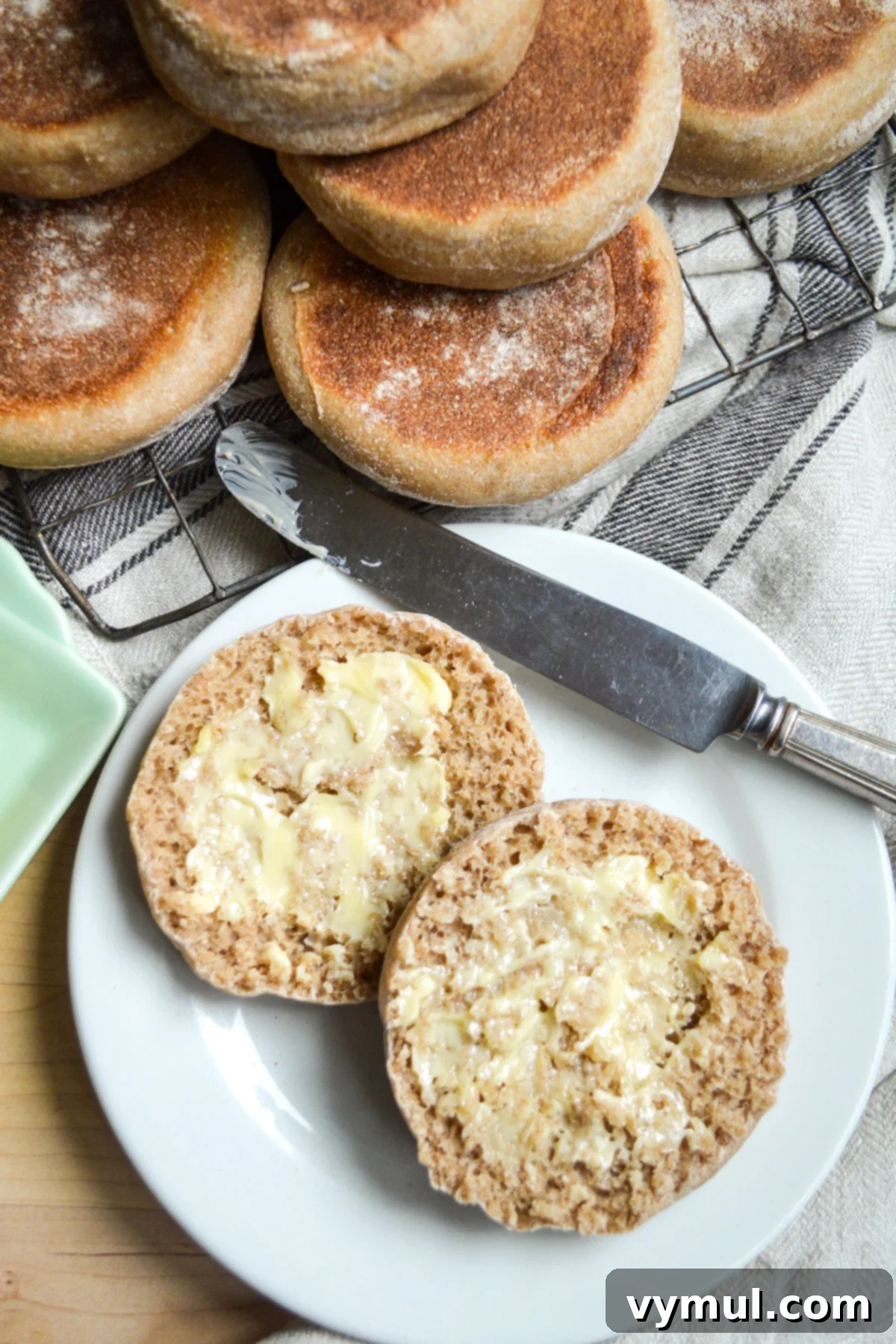
The Joy of Baking Homemade English Muffins with Sourdough
For many years, the idea of baking something as seemingly complex as English muffins at home seemed utterly foreign to me. Like so many other pantry staples that I later discovered were surprisingly simple to make from scratch, English muffins fell into the category of “store-bought only.” When you haven’t grown up with the tradition of bread making or a culture of extensive home baking, it’s easy to assume that certain foods are just too challenging or specialized to tackle in your own kitchen. This perception often leads us to rely on commercially produced alternatives, which, while convenient, often lack the superior flavor, texture, and nutritional benefits of homemade versions, especially when embracing whole grains and natural fermentation.
The journey into real food and homemade cooking quickly demystified many of these assumptions. I learned that making bread wasn’t some ancient art reserved for a select few; it was a skill anyone could cultivate with a little patience and the right guidance. And sourdough? That was an even bigger revelation. Once perceived as an exclusive delicacy hailing only from places like San Francisco, sourdough baking has become an accessible and incredibly rewarding practice for home bakers everywhere, offering gut-friendly benefits and an unparalleled depth of flavor.
Now, in addition to crafting delicious sourdough sandwich bread and rustic artisan bread, I’ve discovered the immense satisfaction of making English muffins from scratch. Not only is it entirely possible, but the resulting muffins are truly incredible. Their delicate tang, satisfying chew, and famously irregular texture (the “nooks and crannies”) are unmatched. The best part? They are genuinely easy to make – I promise you, even if you’re new to sourdough, this recipe is incredibly forgiving and yields fantastic results, making it perfect for both novice and experienced bakers alike.
Embrace Your Sourdough Discard: A Key Ingredient for Flavor and Sustainability
One of the most appealing aspects of this recipe is its brilliant use of sourdough discard. The term “discard” can be a bit misleading, as it implies throwing something away – and you certainly don’t want to waste this precious and flavorful ingredient! From the perspective of maintaining a strong and viable sourdough starter, discard refers to the portion you remove before feeding to keep the starter active and balanced. However, this “discard” is gold for your baking endeavors.
If your sourdough discard has been fed within the last 6-12 hours, it’s considered “active” and can be used in various bread-making projects. But even if it’s older, perhaps from the first few months of your starter’s life, or from waking up a sleepy starter that’s been in the fridge, it’s perfectly suited for “low-rise” recipes. The sourdough culture, even when less active, still imparts a wonderful flavor and contributes to the dough’s texture without providing the primary lift. These recipes include delicious items like sourdough crackers, moist quick bread, and, of course, these fantastic English muffins. Using discard not only prevents food waste but also imparts a subtle, desirable tang and contributes to the unique texture of your baked goods. It’s a win-win for flavor and sustainability, allowing you to get the most out of your sourdough journey.
If you keep your starter on the counter for more frequent baking, you might accumulate a good amount of discard in the fridge. This refrigerated discard can be used unfed in any recipe that relies on chemical leaveners like baking soda or baking powder, ensuring none of your valuable starter goes to waste. It’s a testament to the versatility and economic benefits of maintaining a sourdough starter, transforming what might be considered waste into a valuable culinary asset.
New to sourdough and eager to start your journey? Explore my easy guide to all things sourdough here, covering everything from creating and maintaining your starter to essential baking tips and common troubleshooting solutions.

The #1 Secret to Perfect Homemade English Muffins: The Overnight Sponge
While this recipe is remarkably straightforward, there’s one crucial step that, if overlooked, can impact your results: remembering to start the overnight sponge the night before. This isn’t just a suggestion; it’s the secret to developing deep flavor, a soft crumb, and those characteristic airy pockets that make English muffins so delightful. The long fermentation period allows the sourdough to work its magic, breaking down starches, creating complex flavors, and contributing to a healthier, more digestible final product.
I’ve learned this lesson the hard way more than once! To ensure I don’t forget, I sometimes resort to leaving myself a prominent note, perhaps even on my pillow, as a clear reminder that no bedtime can commence until the initial dough is mixed. Whatever method works for you – setting an alarm, writing a sticky note, or telling a family member – make sure this crucial first step happens. You absolutely won’t regret the small effort when you bite into your perfectly textured, homemade English muffins the next morning, knowing the depth of flavor came from that overnight wait.
Essential Ingredients for Your Whole Wheat Sourdough English Muffins
Gathering your ingredients is the first step towards baking success. This recipe uses readily available components, with a focus on whole wheat flour to boost nutritional value and add a hearty flavor, perfectly complemented by the sourdough’s tang. Here’s what you’ll need to create your batch of delicious muffins:
Overnight Sponge Ingredients:
- 1/2 cup (100g) Sourdough Starter: This can be fed or unfed discard. The key is its presence for flavor development and to kickstart the fermentation process.
- 1 tablespoon (20g) Honey: Provides a touch of natural sweetness and helps to feed the sourdough culture, encouraging its activity. Maple syrup or granulated sugar can be substituted if preferred.
- 1 cup (240g) Milk: Using milk contributes significantly to the muffins’ tenderness and richness, yielding a softer crumb. While water can be used as a dairy-free alternative, expect a slightly less tender result. Plant-based milks might work, but results may vary in terms of texture.
- 2 cups (240g) Whole Wheat Flour: For optimal texture and a lighter muffin, I highly recommend using white whole wheat flour, whole wheat pastry flour, or spelt flour. A 50/50 blend of regular whole wheat and all-purpose flour also works wonderfully. Using only regular whole wheat flour can sometimes result in a denser muffin due to its higher protein content and coarser grind.
For the Muffins (Morning Addition):
- 1½ teaspoon (7.5g) Baking Soda: This acts as a powerful leavening agent, reacting with the acidity of the sourdough to create an impressive final rise and those signature air pockets during cooking.
- 1 teaspoon (5g) Sea Salt: Essential for balancing and enhancing all the flavors in the muffin, preventing them from tasting flat.
- 1/2 cup (60g) Whole Wheat Flour: This additional flour is crucial for achieving the perfect dough consistency during the final kneading phase. Have a bit extra on hand (a tablespoon or two) as you might need slightly more or less depending on your specific flour, starter hydration, and ambient humidity.
Step-by-Step Instructions: Crafting Your Sourdough English Muffins
Following these detailed steps will guide you through creating perfect whole wheat sourdough English muffins with ease, from the initial sponge to the final golden-brown delight.
The Night Before: Preparing Your Sourdough Sponge
The crucial first step takes only about five minutes: In an 8-cup measuring bowl or a large batter bowl, combine your 1/2 cup sourdough starter, 1 tablespoon honey, 2 cups of whole wheat flour, and 1 cup milk. Stir all ingredients together thoroughly until well combined and no dry pockets of flour remain. This mixture is your overnight sponge, also known as a “ferment,” which will build flavor and begin the leavening process.
Using milk instead of water makes for a more tender English muffin. If you need a dairy-free option, water will work, but the texture might be slightly less delicate. I haven’t experimented extensively with milk substitutes, so I can’t guarantee the same tenderizing effect. Once mixed, cover the bowl (plastic wrap or a plate works well) and leave it at room temperature overnight, allowing the sourdough to develop its characteristic flavor and some initial leavening. This slow, cool fermentation is key to the muffins’ unique taste and texture.
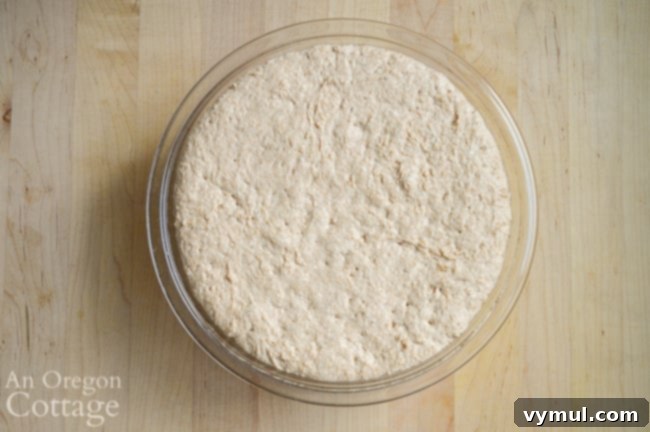
By morning, your sponge will have transformed. It might look similar to the image above, or it could have risen higher and then fallen back slightly, depending on the activity level of your specific starter, the ambient room temperature, and how recently your starter was fed. Don’t worry too much about its exact appearance; English muffins are wonderfully forgiving. As long as you see some bubbles and signs of activity, you’re on the right track, and the flavors will have had ample time to develop.
In the Morning: Mixing and Kneading the Dough
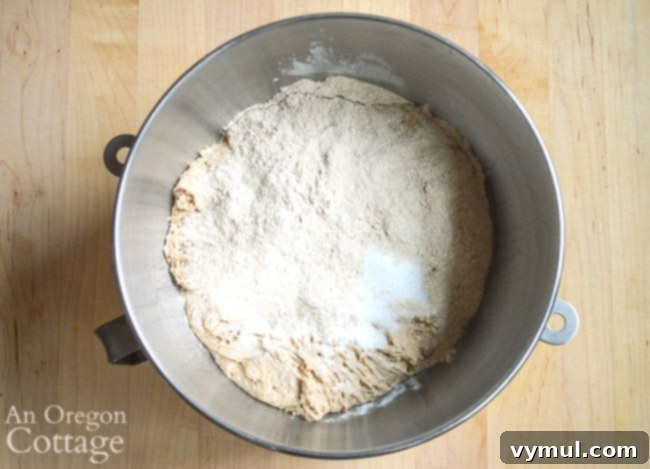
Transfer the risen sponge into the bowl of a stand mixer fitted with a paddle attachment, or into a large mixing bowl if you’re kneading by hand. Add the 1½ teaspoon baking soda, 1 teaspoon sea salt, and the initial 1/4 cup of the remaining whole wheat flour to the sponge. Mix these ingredients thoroughly until just combined.
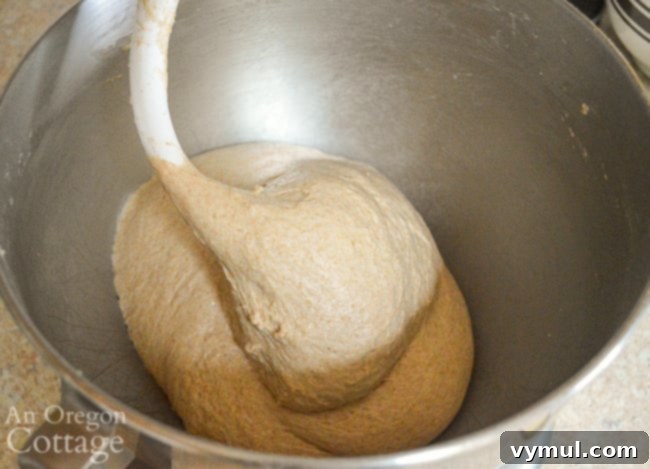
If using a stand mixer, switch to the dough hook attachment and knead for 3-4 minutes on medium-low speed. During this kneading process, gradually add the remaining 1/4 to 1/3 cup of flour, a tablespoon at a time. The goal is a dough that is moist enough to stick slightly to the bottom of the bowl but is only a bit tacky when touched with a clean finger. It should pull away from the sides of the bowl. If a significant amount of dough sticks to your finger, add another tablespoon of flour, being careful not to exceed 1/3 cup total beyond the initial 1/4 cup. For hand kneading, continue working the dough on a lightly floured surface for about 5 minutes, achieving the same tacky but manageable consistency. Resist the urge to add too much flour.
A crucial tip for all bread making, including English muffins: too much flour is the enemy of tender bread. It’s always better for the dough to be slightly sticky and require a spatula to scrape it from the bowl, rather than being dry and stiff. Over-flouring results in a dense, tough muffin. This precise dough consistency ensures a lighter, softer final product with those sought-after nooks and crannies. Trust the process, and don’t be tempted to add excessive flour.
Shaping and Second Rise
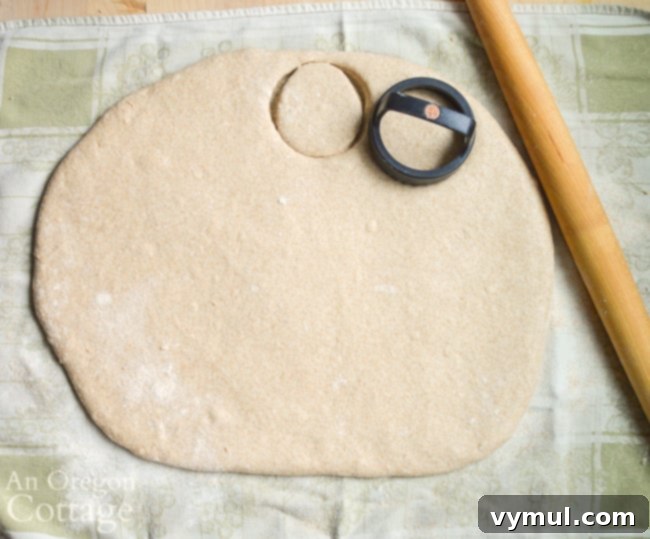
Turn the dough out onto a lightly floured surface. I find a lightly floured tea towel to be excellent for this step; it not only makes cleanup easier but also helps minimize the amount of extra flour absorbed by the dough during rolling. Gently knead the dough a few times to form it into a cohesive round shape.
Using a rolling pin, roll the dough evenly to a thickness of approximately 1/2 inch. Now, cut your English muffin rounds using a 3-inch biscuit cutter. If you don’t have a biscuit cutter, any round object of similar size will work, but cutters ensure uniform muffins and make the process incredibly quick. While some recipes suggest hand-shaping each muffin, using a cutter is a significant time-saver and delivers consistent, professional-looking results.
It’s perfectly fine to gather the dough scraps, gently re-roll them, and cut out more muffins. I haven’t noticed any difference in texture or quality between the first batch of cut muffins and those made from re-rolled dough, ensuring you maximize your yield.

Carefully place the cut dough rounds onto a baking sheet that has been lined with parchment paper or a silicone mat and lightly dusted with cornmeal or a bit of flour. Ensure there is about an inch or two of space between each muffin, as they will expand slightly during the rise and cooking, and you don’t want them to stick together. Dust the tops of the muffins with a little more cornmeal or flour for a classic finish and to prevent sticking to the towel.
Cover the baking sheet with a clean kitchen towel and let the muffins rise in a warm place for one to two hours. During this second rise, they won’t dramatically increase in size; rather, they will subtly puff up. The image above shows the muffins after a full 2-hour rise. While a 1-hour rise will still yield good muffins, allowing them the full two hours promotes larger, more pronounced holes (the “nooks and crannies”) inside, which is a hallmark of a truly great English muffin.

As you can see from the photo, after the rise, the muffins are only slightly puffed, not doubled. This is exactly what you want. They will achieve their full height and airy texture once they hit the griddle, thanks to the baking soda and residual sourdough activity.
Cooking Your English Muffins on the Griddle
Preheat a griddle or a heavy-bottomed pan to a medium to medium-low setting, aiming for approximately 275 degrees Fahrenheit. The precise temperature might require a bit of adjustment based on your specific stove and pan, but a slightly lower temperature is key. This allows the muffins enough time to cook through to the center without burning the exterior, ensuring a perfectly cooked, golden-brown crust and a thoroughly baked interior.
Transfer the risen dough rounds to the dry, ungreased griddle surface, leaving a few inches between each to allow for even browning and easy flipping. Do not grease the griddle, as this helps achieve that characteristic uniform brown crust and prevents a greasy exterior.

Transferring Tip: English muffins can sometimes stick to the parchment or silicone even with a dusting of flour or cornmeal. To prevent this, as you slide a spatula under a muffin to lift it, try to pick up a tiny bit of the cornmeal/flour along with it. Then, crucially, invert the muffin onto the heated griddle. This places the dusted, slightly flatter side down first, promoting better browning and preventing sticking to the griddle.
Cook on the first side for about 4-5 minutes, until they are beautifully browned and puffed. Then, flip each muffin and gently flatten it slightly with the back of your spatula. This helps create that iconic English muffin shape and encourages even cooking. Continue to cook for another 4-5 minutes on the second side, ensuring both sides are a nice golden brown and the muffins feel light and cooked through. The internal temperature should reach around 200-210°F (93-99°C) if you want to be precise.
Cooling and Storing Your Homemade Delights
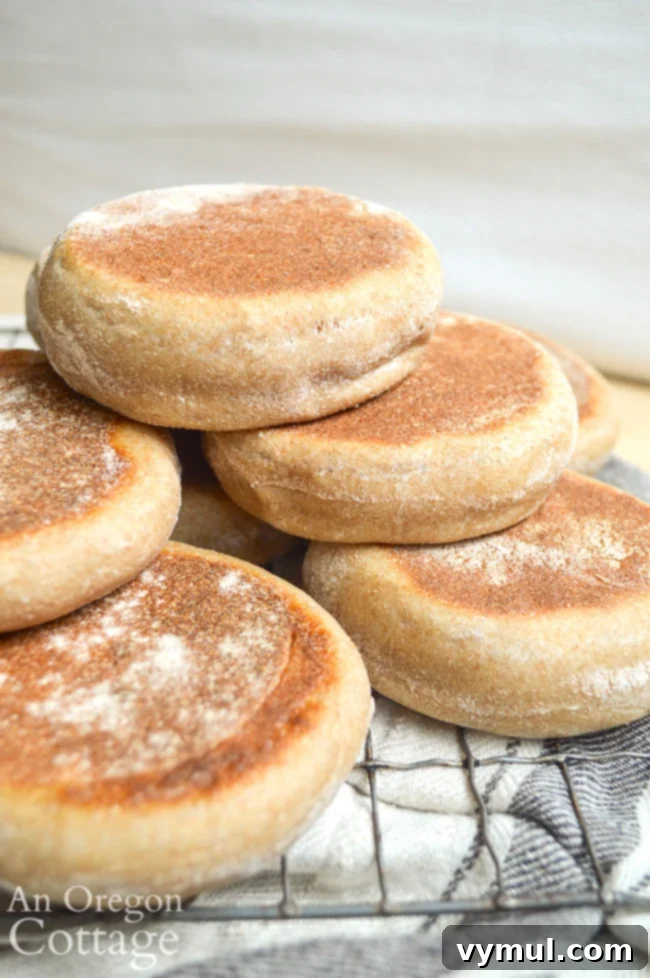
Once cooked, transfer your hot English muffins to a wire baking rack to cool completely. Cooling on a rack is important as it allows air to circulate around them, preventing them from becoming soggy and ensuring a crisp exterior and tender interior. While they are tempting to eat immediately, allowing them to cool improves their texture and makes them much easier to split with a fork.
These homemade English muffins are best enjoyed fresh within a day or two. Store them in a sealed airtight container at room temperature to maintain their freshness. For longer storage, they freeze exceptionally well. Simply place cooled muffins in a freezer-safe bag or container and they’ll keep for several weeks, ready to be toasted straight from the freezer whenever a craving strikes for a quick and wholesome snack or breakfast.
Serving Suggestions: Unlock Those Nooks and Crannies!
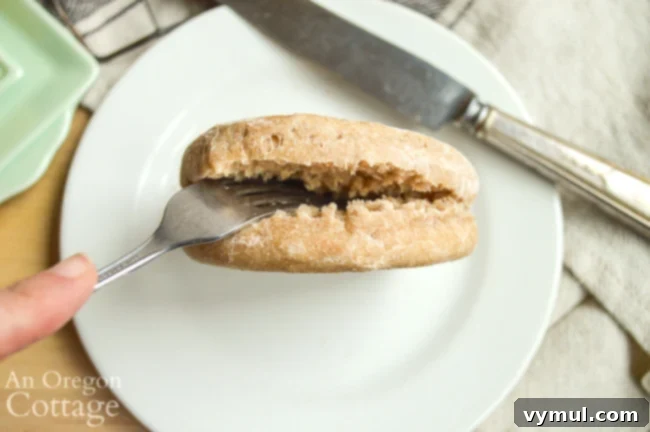
To truly appreciate the unique, irregular texture of an English muffin, resist the urge to slice it cleanly with a knife. Instead, gently split it open with a fork by working around the circumference. This technique preserves all those wonderful, irregular nooks and crannies, which are perfect for trapping melted butter, jam, or any other topping you desire. Toast your split muffin to golden perfection, then butter generously, just as you would with any English muffin, and prepare to be amazed.

Prepare yourself for a significant taste difference compared to anything store-bought! The sourdough tang combined with the wholesome whole wheat flour creates a depth of flavor that is simply unparalleled and utterly addictive. These aren’t just breakfast items; they’re culinary canvases awaiting your creativity. Beyond traditional butter and jam, consider these versatile ideas:
- Savory Sandwiches: Use them as a base for breakfast sandwiches with egg, cheese, and bacon, or for a quick lunch with deli meats and your favorite spreads.
- Mini Pizzas: Spread with tomato sauce, sprinkle with cheese and your favorite toppings, then bake until bubbly for a fun snack.
- Sweet Treats: Top with cream cheese and fruit, or a drizzle of honey and a sprinkle of cinnamon.
So, let’s quickly recap the sheer simplicity of this process, which might seem involved but is truly manageable:
- A brief, five-minute mix the night before to create the flavor-building sponge.
- Another quick stir and knead in the morning, requiring minimal active hands-on time.
- A simple roll-and-cut method – no tedious hand-shaping required.
- A gentle rise, where the muffins mostly just puff rather than dramatically double.
- A super-quick eight to ten-minute cook on the griddle, done in batches.
All in all, you’re looking at approximately 20-25 minutes of active, hands-on time, spread across two easy phases. That’s a remarkably small investment for a baker’s dozen of truly exceptional, fresh English muffins that cost you pennies compared to store prices. The reward in superior flavor, satisfying texture, and the pride of homemade goodness far outweighs the minimal effort. While these are utterly amazing simply adorned with butter, one of our family’s favorite ways to savor these muffins is as the foundation for a decadent Eggs Benedict, especially when paired with my super easy Hollandaise sauce – pure culinary bliss that elevates any brunch!

Print Recipe
Pin Recipe
SaveSaved!
Easy Whole Wheat Sourdough English Muffins Recipe
Ingredients
Overnight Sponge:
- 1/2 cup (100 g) sourdough starter, fed or unfed discard
- 1 tablespoon (20 g) honey (or maple syrup or sugar)
- 1 cup (240 g) milk (can use water, but milk makes them more tender)
- 2 cups (240 g) whole wheat flour*
For the Muffins:
- 1½ teaspoon (7.5 g) baking soda
- 1 teaspoon sea salt (5 g)
- 1/2 cup whole wheat flour (60 g) (you may need a bit more during kneading, up to 1/3 cup total beyond the initial 1/4 cup)
Instructions
-
The night before: In an 8-cup measuring bowl or batter bowl, thoroughly mix the 1/2 cup sourdough starter, 1 tablespoon honey, 1 cup milk, and 2 cups whole wheat flour until well combined. Cover the bowl and leave it at room temperature to ferment overnight.
-
In the morning: Transfer the risen sponge to the bowl of a stand mixer (or a large mixing bowl for hand kneading). Add the 1½ teaspoon baking soda, 1 teaspoon sea salt, and the initial 1/4 cup of the whole wheat flour.
-
If using a stand mixer, use the paddle attachment to mix, then switch to the dough hook. Knead for 3-4 minutes, gradually adding another 1/4 to 1/3 cup flour, one tablespoon at a time. Continue kneading until the dough is just tacky to the touch, clears the sides of the bowl, but still sticks slightly to the bottom. If too much sticks to your finger when pressed, add one more tablespoon of flour (totaling no more than 1/3 cup extra).
-
If making by hand, stir the ingredients well, then turn the dough onto a lightly floured surface. Knead for about 5 minutes, adding the same 1/4-1/3 cup of additional flour gradually until the dough is tacky but no longer excessively sticky to your fingers.
-
From the mixer (or after hand kneading), turn the dough out onto a lightly floured surface (a floured tea towel works great). Gently knead a few times to form a round. Use a rolling pin to roll the dough evenly to approximately 1/2-inch thickness. Cut into uniform rounds using a 3-inch biscuit cutter. Gather and re-roll scraps to cut additional muffins.
-
Place the cut muffin rounds on a baking sheet lined with parchment paper or a silicone mat, and lightly sprinkled with cornmeal or flour. Ensure about 1-2 inches of space between each muffin to prevent sticking during rising. Dust the tops with a bit more cornmeal or flour.
-
Cover the baking sheet with a clean towel and allow the muffins to rise in a warm place for 1 to 2 hours. They will subtly puff up, not dramatically double in size. A longer rise (2 hours) promotes better internal “nooks and crannies.”
-
Preheat a griddle or heavy-bottomed pan to a medium-low setting (around 275 degrees F). This moderate heat is crucial for cooking the muffins through without burning the outsides.
-
Carefully transfer the muffins, one at a time, to the dry, heated griddle (do not grease the griddle for even browning). To prevent sticking when transferring, slide a spatula under the muffin, picking up a little dusting of cornmeal/flour, then invert the muffin onto the griddle. Cook for about 4-5 minutes on one side until nicely browned. Flip the muffins, gently flatten slightly with the back of a spatula, and cook for another 4-5 minutes on the other side until both sides are golden brown and cooked through.**
-
Remove the cooked muffins to a wire rack to cool completely. Store for a couple of days in an airtight container at room temperature, or freeze for longer storage (up to several weeks).
Notes
*For the best texture and rise, try using white whole wheat flour, whole wheat pastry flour, or spelt flour. A 50/50 blend of regular whole wheat and all-purpose flour also works beautifully. Using only regular whole wheat flour can result in a slightly denser muffin, though still flavorful.
**If, after cooking on the griddle, your muffins are browned but still seem a little undercooked in the center (unlikely if cooked on medium-low), you can transfer them to a 350°F (175°C) oven for 5 to 10 minutes to finish baking through. Note: The sides of the muffins may initially appear a bit doughy, but they will firm up considerably as they cool.
Nutrition
More Delicious Sourdough Recipes to Explore
If you’ve enjoyed making these whole wheat sourdough English muffins and are looking for more ways to use your versatile sourdough starter (especially that discard!), here are some other fantastic recipes you might love. Expand your sourdough baking repertoire and discover new homemade favorites that are both rewarding to make and delightful to eat:
- Easy Whole Wheat Sourdough Discard Crackers: A crunchy, savory snack perfect for using up excess starter, offering a wholesome alternative to store-bought crackers.
- Easy Sourdough Artisan Bread Recipe (Ready in 1 Day): Achieve bakery-quality bread with a beautiful crust and open crumb in your own kitchen with minimal effort.
- Amazing Whole Wheat Sourdough Waffles Recipe: Start your day with light, fluffy, and incredibly flavorful waffles that are perfect for a special breakfast or brunch.
- How To Make Easy Sourdough Bagels: Master the art of chewy, homemade bagels with a distinct sourdough twist, offering a delightful texture and taste.

This recipe has been updated and refined for optimal results, reflecting years of baking experience and reader feedback – it was originally published in 2011.