From Garage to Dream Living Space: Our Ranch House Transformation Journey
Embarking on a significant home renovation can be a daunting yet incredibly rewarding experience. For us, it meant transforming a typical 1980s ranch house into a charming, timeless cottage-farmhouse – a space that truly feels like home and perfectly suits our family’s needs. This ambitious project, detailed in previous installments of our remodeling series, involved a complete overhaul, with the most dramatic change being the conversion of our attached garage into essential new living areas. We’re now revisiting these posts, offering fresh “before and after” perspectives and delving into even more intricate details of how we achieved this seamless transformation. If you’re considering a garage conversion or a major home remodel, our journey offers practical insights and inspiration.
Our home search was largely dictated by what was available in our desired area and, crucially, what we could afford. Choices were limited, which meant we anticipated the need for significant remodeling from the outset. The 1600 square foot ranch house we ultimately purchased, while not inherently small for a family of four with three bedrooms and two baths, presented a challenge with its open-concept layout. The living, dining, and kitchen areas flowed into one large room, leaving no dedicated space for essential functions. Brian, an independent contractor, desperately needed a home office, and we yearned for extra room for hobbies like sewing, a dedicated workout area, and general storage that didn’t infringe on our main living zones.
Shortly after moving in, with our initial “office” temporarily set up in the living room, we engaged a trusted contractor friend to kickstart our ambitious project. The plan was clear: convert the existing attached garage into three distinct, highly functional rooms, complemented by a new porch that would elegantly connect this addition to the house’s original facade. While our contractor friend handled the core structural work, we eagerly took on a substantial portion of the project ourselves. Once the shell was complete, we dove into all the electrical work and extensive finishing touches, including installing trim, laying flooring, applying wall texture, and hanging new doors. This hands-on approach allowed us to customize every detail and achieve significant cost savings, ensuring the final result perfectly aligned with our vision for a cohesive and integrated living space.
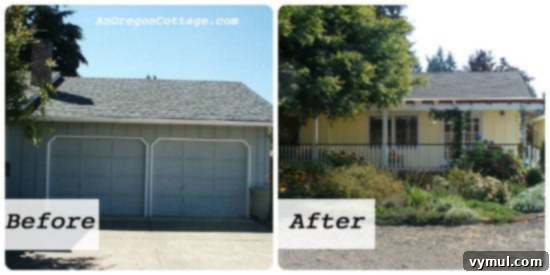
The “before” picture vividly illustrates a typical ranch house garage, unremarkable in its utilitarian appearance. Interestingly, the primary entry point to our home was through this area, via a narrow walkway that led to the left, past the living room window, to reach the front door. This somewhat awkward approach was one of many elements we aimed to improve, as evidenced by our full exterior remodel; when we first viewed the property, the actual front door was practically hidden from view! The “after” photograph, however, tells a completely different story. We meticulously replaced the imposing garage doors with elegant double French doors, instantly elevating the aesthetic. To further enhance the facade, we relocated a set of windows from the side of the garage to the front, strategically positioning them to match the existing windows on the house. This thoughtful design choice immediately integrated the new section, creating a harmonious and inviting curb appeal that belied its former life as a garage.
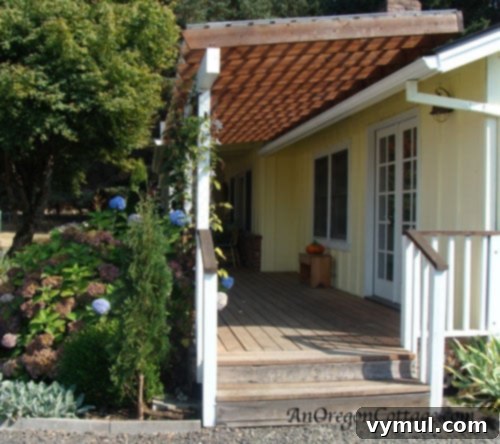
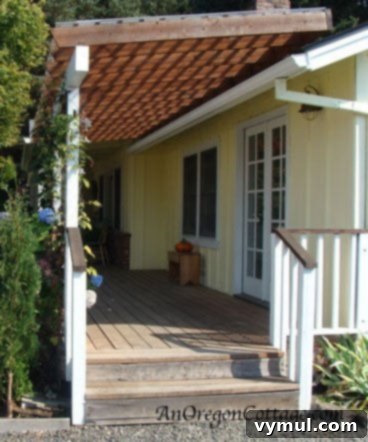
One of the most crucial elements in ensuring the new living space seamlessly blended with the original house was the addition of an expansive front porch. To achieve this, we constructed a raised deck that spans the entire front of the house, incorporating stylish rails and functional steps at each end. This not only provided an inviting new entry point but also visually unified the entire facade. To manage costs without compromising on functionality, we ingeniously built a pergola that attaches directly to the original porch structure using “L” brackets. Later, clear panels were added to the pergola’s roof, providing essential protection from the elements, especially the unpredictable Oregon weather, while still allowing natural light to filter through. This thoughtful design created a truly cohesive and welcoming exterior, completely erasing any visual cues of the former garage.
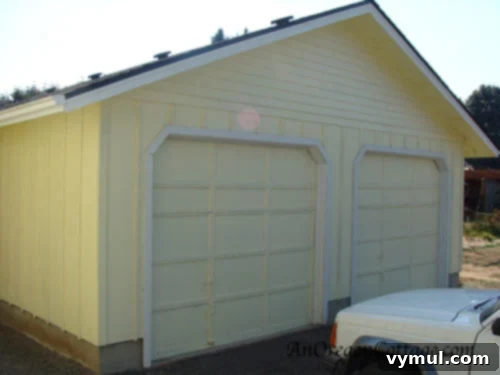
While converting the attached garage was a priority for expanding our living space, we were well aware that we would eventually need a new, dedicated garage. This phase of our home improvement journey came a few years later. During the interim period, all our essential “garage items” – tools, paint supplies, and various odds and ends – found temporary, albeit less-than-ideal, shelter in a leaky, mouse-infested shed. Needless to say, the day our new, free-standing garage was completed was a monumental relief and a truly good day indeed! In an effort to be resourceful and sustainable, we were able to reuse the old garage doors. We had carefully stored them in another shed and, with the purchase of a new section, modified them to fit the 8-foot opening required for parking our beloved vintage trailer comfortably inside the new structure. This not only saved on costs but also gave a second life to quality materials, aligning with our DIY ethos.
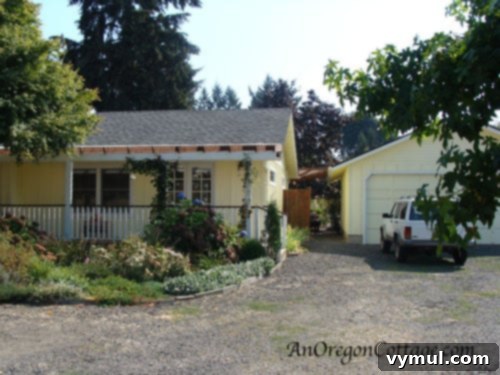
With a newly converted living space and a separate garage, a practical connection between the two became essential. To brave Oregon’s frequent rain, we added a covered walkway between the main house and the new, free-standing garage. This simple yet effective addition ensures that unloading groceries, retrieving tools, or simply moving between the structures can be done without getting soaked. It’s these thoughtful, functional details that truly enhance daily living and contribute to the overall enjoyment and efficiency of our home layout.
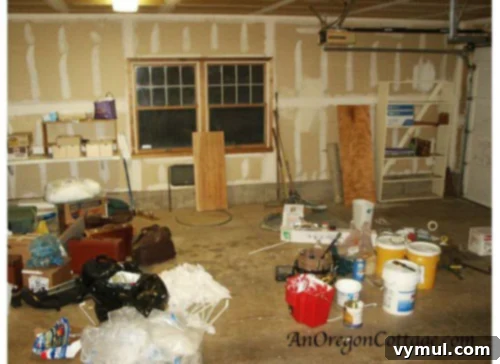
Peeking inside the “garage before” photo might not inspire awe; it largely resembles any unorganized garage interior you’ve ever seen. However, in our defense, at this particular stage, the rest of the house was undergoing a complete renovation – painting, wallpaper removal, and various repairs were in full swing. This meant the garage temporarily served as our essential staging area, filled with tools, supplies, and displaced household items. Far from its final purpose, this chaotic image truly highlights the raw potential that lay within, awaiting its remarkable transformation into functional, beautiful living spaces.
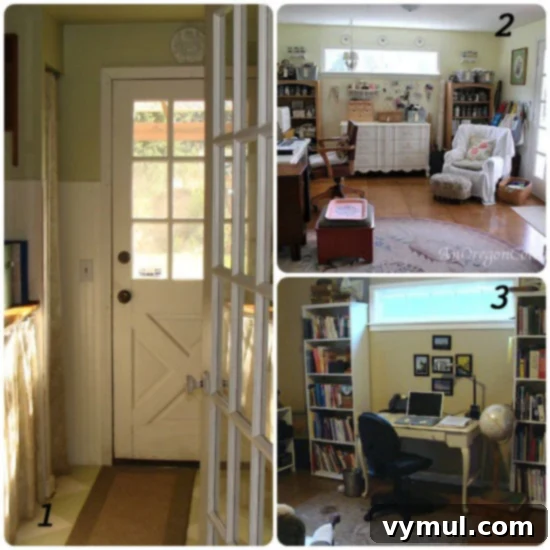
The original garage footprint, measuring a generous 24×28 feet, provided an excellent foundation for our expansion. From this substantial space, we meticulously crafted three distinct and highly functional rooms, each designed to address specific needs and enhance our family’s daily life:
- A Versatile Laundry/Mudroom: This room quickly became one of our favorite additions. Featuring a charming French door, it cleverly conceals the washer and dryer behind custom cabinetry, maintaining a clean and aesthetically pleasing environment. Beyond laundry, it offers ample space for our extra freezer and all our gardening supplies. No more trudging out to a cold, dirty garage to do laundry; this bright, organized space has utterly revolutionized our routine and is a true testament to practical design.
- A Spacious Multipurpose Workroom: Designed with flexibility in mind, this large room serves multiple functions. It’s a vital storage area, a comfortable guest space when needed, and home to our exercise equipment. However, its primary role is as my personal workroom. This is where I dedicate time to blogging, pursuing my passion for sewing, and engaging in various creative projects. The ample space and natural light make it an ideal environment for focused work and creative endeavors, allowing me to pursue my interests without cluttering other areas of the house.
- Brian’s Essential Home Office: Crucially, this room provides Brian with the much-needed, private home office he required. The inclusion of a solid door to close is paramount for his work as an independent contractor, ensuring a professional and quiet environment for client calls – a stark contrast to the potential sounds of kids arguing in the kitchen! While I’ve offered my organizational and styling expertise, Brian prefers his functional setup, and I’ve learned to respect his boundaries here. Regardless, this dedicated space has been indispensable for his productivity and professionalism.
When undertaking the garage-to-living-space conversion, our overarching goal was to ensure the remodeled areas felt entirely original to the house, avoiding any awkward transitions or tell-tale signs of their former purpose. This commitment to seamless integration is key to a successful conversion. If you’re considering transforming a garage or any area of your home to look like it’s always been there, here are some invaluable strategies we employed that might prove helpful for your project:
Achieving Seamless Garage Conversions: Eliminating the “Driveway to Door” and “Step Down” Anomalies
- Raise the New Floor to Match Existing Levels: This was arguably the most critical step in creating a seamless interior transition. While it added to the cost, raising the new floor to precisely meet the height of the rest of the house eliminated any dreaded “step down” into the former garage space. This design choice instantly makes the new area feel like an original part of the home, promoting natural flow and a cohesive aesthetic.
- Match Connecting Flooring Materials: Continuity in flooring is essential. For the new hallway connecting to our existing kitchen, which features oak floors, we simply purchased additional oak planks and extended them into the newly converted space. For the individual rooms, we opted for more budget-friendly plywood, which we either painted (as in the laundry room) or stained for significant savings. You can read more about our specific flooring choices here, including the techniques we used to achieve a durable and attractive finish.
- Utilize Original Doors and Hardware: Wherever possible, salvage and reuse existing architectural elements. We were fortunate to repurpose doors from our bathroom remodel for the new office and workroom. These six-panel doors perfectly matched others throughout the house, providing not only aesthetic consistency but also the solid, quality construction that modern doors often lack. This detail contributes significantly to the feeling of established permanence.
- Create Exterior Continuation with a Porch or Architectural Elements: Externally, a well-designed porch can work wonders. Our extended porch was instrumental in making the former garage appear as though it had always been an integral part of the house. Beyond its visual appeal, it fulfilled my long-held dream of having a welcoming front porch, providing both aesthetic beauty and functional outdoor living space. Consider how existing architectural lines or details can be extended or mirrored in the new addition.
- Strategically Relocate Original Windows: Rather than installing all new windows, consider moving existing ones. We relocated original windows from the side of the garage to the front facade. This simple act helped match the style and size of other windows on the house, creating instant continuity and significantly enhancing the curb appeal of the converted area. Reusing original elements in prominent locations is a smart way to achieve visual cohesion.
- Remove or Modify the Existing Concrete Driveway: The presence of a concrete driveway leading directly to a living space is a dead giveaway of a garage conversion. If removing it entirely isn’t feasible, at least jackhammer and remove six feet or so directly in front of the new addition. We took this a step further, meticulously keeping all the concrete pieces and reusing them creatively for charming garden edgings and new walkways elsewhere on the property, turning a demolition byproduct into a design asset.
- Replace the Concrete Drive with a Lush Garden Bed: Once the concrete is removed, transform the area into a beautiful garden bed. Our new bed seamlessly extends the existing landscaping in front of the house. By choosing plantings that repeat across the entire front space, we achieved a cohesive and natural look, further cementing the illusion that the new addition has always been part of the home’s landscape. This softens the hard lines and integrates the structure into its surroundings.
- Re-route the Driveway for a Natural Approach: If space allows, completely re-routing the driveway can dramatically alter the perception of the former garage. We were incredibly pleased to have the room to move our gravel drive to the right side of where the old driveway used to be. This not only provided a more logical and aesthetically pleasing approach to the property but also created a more defined front yard area, entirely distinct from its former utilitarian purpose.
So, how has this transformed space truly impacted our lives? It unequivocally changed the way we live in and interact with our home. We now enjoy a generous 2200 square feet of living space, eliminating any feelings of being cramped and providing ample room to comfortably host gatherings with friends and family. The investment and effort were absolutely worth every moment.
However, the most gratifying compliment, and indeed the ultimate measure of our success, comes from new guests who, upon seeing our home, simply cannot believe that this beautiful, integrated part of the house was once a garage.
Goal achieved.