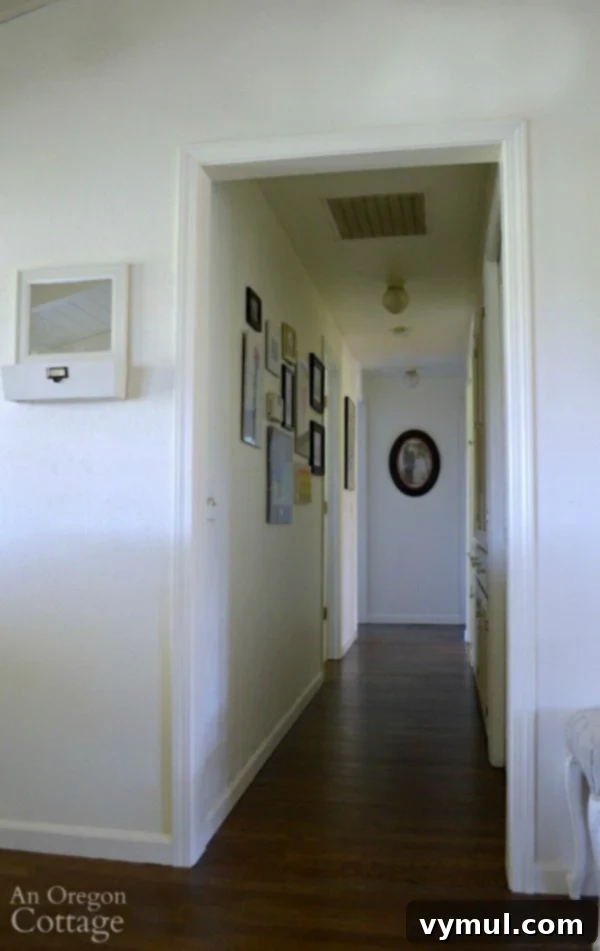
Easy DIY Door Trim: Transform Plain Doorways with Timeless Character and Style
This comprehensive guide provides an easy-to-follow tutorial for upgrading existing plain wallboard doorways with elegant DIY door trim, instantly adding classic old-house character to any home, regardless of its age. We’ll walk you through all the essential steps, along with practical tips for finishing and adapting the project to various doorway configurations.
Please note: Some links in this article are affiliate links. If you click on them and make a purchase, I may receive a small commission at no extra cost to you. Your support helps maintain this content.
One of the most impactful and surprisingly simple ways to infuse a newer house with the charm and warmth of an older, character-rich home is by installing trim and molding around interior windows and doors. Many modern homes, particularly those of the “builder-grade” variety, often feature doorways and windows that are merely painted sheetrock, lacking the architectural detail that distinguishes more traditional or custom residences. This absence of trim, alongside features like textured walls and ceilings, is often a tell-tale sign of contemporary construction.
But here’s the exciting news: adding this beautiful, defining trim is an entirely achievable DIY project for almost anyone! While the goal is not necessarily showroom perfection – especially when retrofitting existing structures – the outcome will undoubtedly elevate your home’s aesthetic. Small imperfections are part of the charm of a handmade project, and as you’ll discover below, we have plenty of tips to elegantly conceal them. The philosophy here is that a home, much like a well-loved cottage, should feel warm, welcoming, and authentically lived-in. True beauty often lies in that subtle edge of imperfection, making a space feel real and inviting, rather than sterile or unapproachable.
Beyond the aesthetic appeal, upgrading your home with DIY door trim (or even window trim, as we’ve done in our new farmhouse) significantly enhances its overall character and perceived value. It’s a project that delivers dramatic visual improvement and a sense of completeness to your interior spaces.
The finished project consistently looks awesome, even with its unique qualities, minor flaws, and charming imperfections!
Easy DIY Door Trim Tutorial + Expert Tips
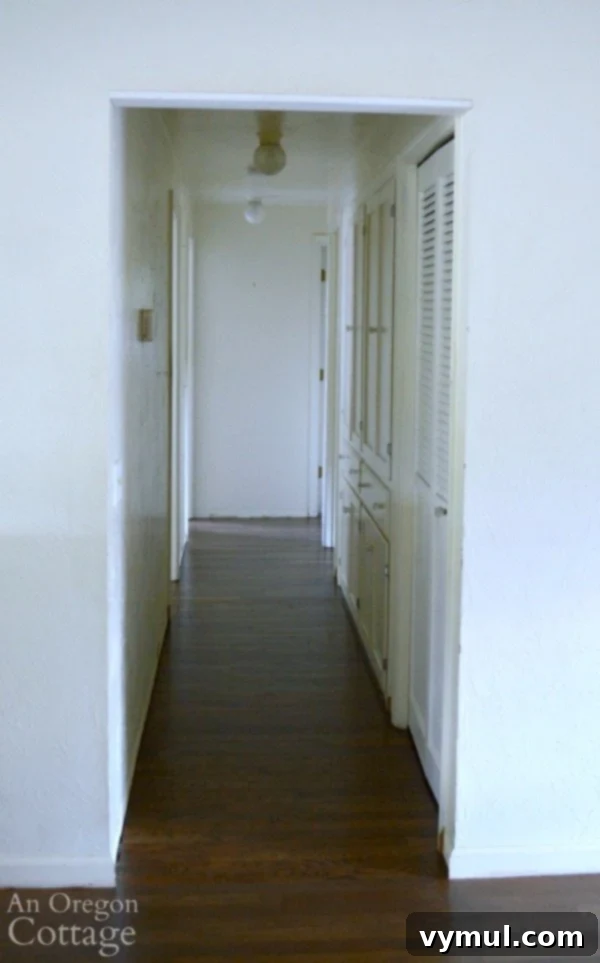
Our Project: Upgrading the Doorway from Entryway/Living Room to Main Hallway
This particular hallway doorway in our home had always been a design sore spot. Sitting in the living room, my gaze would invariably fall upon it, thinking, “that doorway desperately needs a frame.” Over time, as the edges of the plain sheetrock began to chip more prominently (and let’s be honest, who consistently touches up those flimsy metal sheetrock corners that seem to invite paint flaking?), it wasn’t just an aesthetic concern; it started to look genuinely neglected and unfinished.
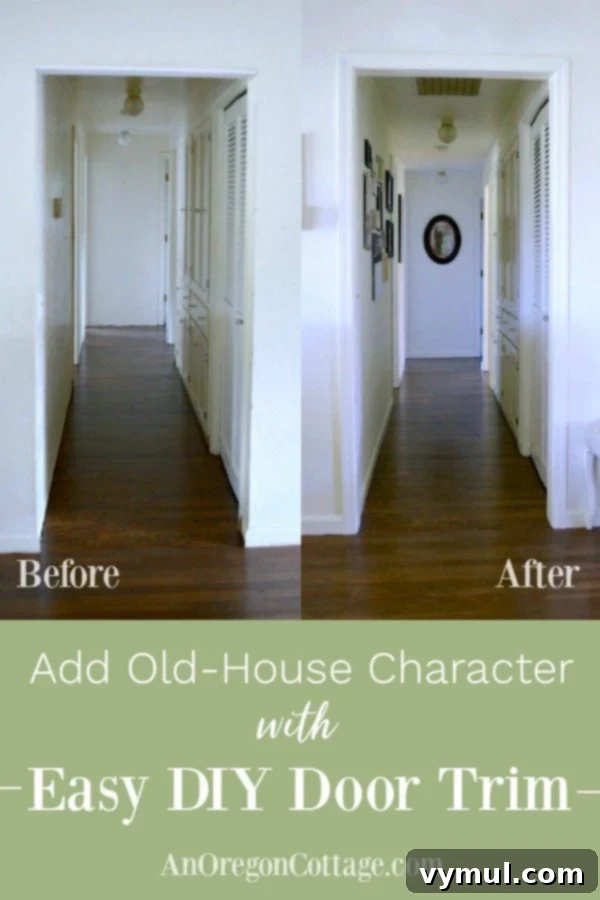
A quick note: The accompanying “before” photos were captured during our home’s floor refinishing and painting phase. This explains why the walls appear bare, but it certainly contributes to a more striking before-and-after comparison, don’t you agree?
Adding to its awkwardness, this was the sole doorway in our entire house that lacked any form of trim or frame, making it stand out as an anomaly. This was particularly noticeable when contrasted with the similar hall doorway leading to our converted garage, which boasted full trim. The chipping, sheetrock-edged doorway had to be addressed.
The timing of our wall painting project presented the perfect “now-or-never” opportunity. In fact, we were so eager to begin that construction started before I even remembered to snap a proper “before” picture of the entire doorway (which is why you’ll notice the top 1×6 already installed in some of the initial photos).
Gather Your Essential Supplies for DIY Door Trim
Having all your tools and materials ready before you begin will make the installation process much smoother and more efficient. Here’s what you’ll need:
- 3 pieces of 1×6 wood (or similar dimensions) for the inside door frame: Your choice of material – pine, MDF (Medium-Density Fiberboard), or pre-primed wood – will depend on your desired finished look and budget. We opted for primed MDF due to its smooth finish and ease of painting. These three pieces should be precisely cut to fit your door opening: first, measure and cut the small top section, then measure and cut the two vertical side pieces from the installed top piece down to the floor.
- Trim molding to match your home’s style: Select molding that complements your existing interior trim or achieves your desired aesthetic for both sides of the doorway. Carefully measure to ensure you have sufficiently long pieces to accommodate mitered corners, if your chosen trim style requires them. Some craftsman-style trims, for example, are designed for butt joints rather than miters.
- Miter saw or miter box & hand saw: Essential for achieving precise, angled cuts, especially if your molding requires mitered corners for a clean, professional finish.
- Fastening tools: A hammer with 2-inch finish nails and a nail set, or a pneumatic nail gun (air gun), depending on your comfort level and tool availability.
- Finishing supplies: White acrylic latex caulk, a caulking gun (indispensable for seamlessly filling gaps and hiding minor imperfections, especially when painting your trim), and a supply of rags for cleanup.
- Primer and paint: To match your existing moldings. Our preferred paint for trim is “Creamy White” by Behr.
- Optional tool for baseboards: If you wish to install the new trim without removing existing baseboards, an oscillating ‘multi-tool’ saw is invaluable. This tool allows you to precisely cut away sections of the baseboard for a flush fit. (Here’s one similar to ours on Amazon, though more budget-friendly options can be found at places like Harbor Freight).
DIY note: As with many of our home improvement endeavors, my partner Brian and I employ a collaborative approach: he handles the construction and installation, while I take charge of the caulking and painting – the crucial steps that truly bring the project to a beautiful makes it look good finished state.
DIY Door Trim Tutorial: Step-by-Step Guide
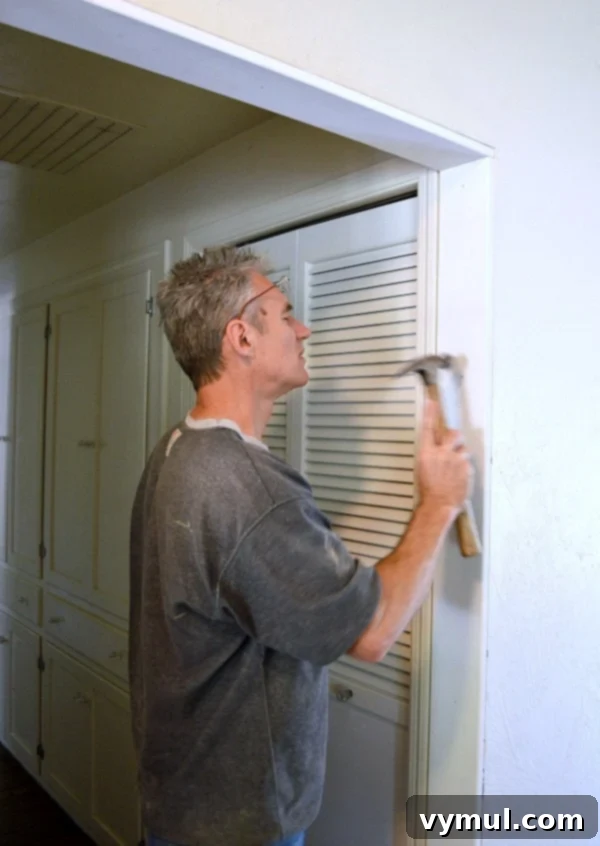
- Install the Top Frame Piece: Begin by attaching the smallest 1×6 board to the top of your doorframe opening. Use your preferred fastening method, ensuring it’s centered and level, then securely nail it into place, sinking the nail heads slightly below the surface of the wood.
- Attach the Side Frame Pieces: Next, install each of the long side 1×6 boards in the same manner. It is crucial to ensure that the bottom edge of these side pieces, where they meet the floor, is perfectly even and level. This area will be highly visible and cannot be easily concealed with caulk, making a precise fit paramount. Trim and sand as necessary to achieve a flush fit against the floor.
- Prepare Baseboards (Optional): If you haven’t already removed your baseboards (or if you prefer not to), you’ll need to prepare them for the new trim.
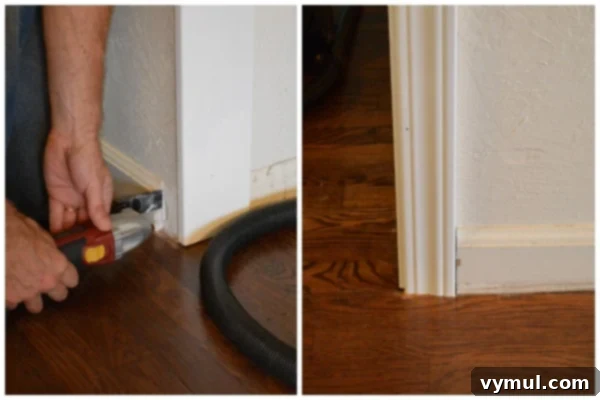
Utilize an oscillating multi-tool saw to carefully cut away the section of the existing baseboard where your new trim will sit. Exercise extreme caution to avoid gouging or damaging your finished flooring. A useful tip: ideally, tackle this step *before* you finish your floors, saving you from a potential small, unfinished section peeking out later. (A minor detail, but one that can cause a sigh of regret!)
- Measure and Cut Outside Molding Pieces: Accurately measure the lengths required for your exterior trim pieces. If your chosen molding style dictates mitered corners, cut them precisely using your miter saw or miter box. For tips on achieving clean, tight miter cuts, refer to this helpful article. Dry-fit the pieces before fastening to ensure a perfect join.
- Attach Outside Doorway Molding: Begin by attaching the top piece of your exterior molding, ensuring it’s perfectly aligned. Nail it securely into place, sinking the nail heads, then proceed to install the vertical side pieces. Double-check alignment as you go to maintain a crisp, professional look.
Expert Tips for Handling Odd Doorways and Imperfections
This is where the magic of “perfectly imperfect” truly comes into play when adding trim to an existing doorway. You’re almost guaranteed to encounter irregular spots, unexpected gaps, or uneven surfaces that will make you pause and ponder the best solution. In our household, these types of DIY projects invariably lead to brainstorming sessions – *every single time*. You are absolutely not alone in this experience!
Our discussions often follow a familiar pattern:
Brian: “It’s fine. There’s nothing we can do about that space, gap, area, etc.”
Me: “But that will look unfinished – and how will we ever paint (or clean, or live with) that later?”
Yes, the classic challenges of combining marriage and DIY projects! However, after 25 years together, we’ve certainly developed a rhythm and always manage to devise a solution that satisfies us both.
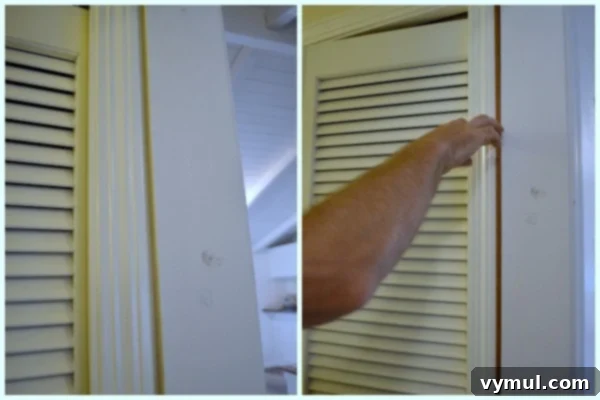
The Problem We Faced: In this specific instance, we observed an approximate 1/4-inch gap between the existing closet molding and the new 1×6 board we used to frame the door. This type of gap, while small, would be highly noticeable once painted and would detract from the custom look we were aiming for.
The Ingenious Solution: Brian came up with the clever idea to rip a thin piece of wood from our stash of scraps and carefully glue it into the gap. While it wasn’t an exact, factory-perfect fit, it created a surface that could be seamlessly integrated. This is a prime example of how a bit of caulk and paint can perform wonders in covering up these kinds of minor adjustments and making everything look custom-built.
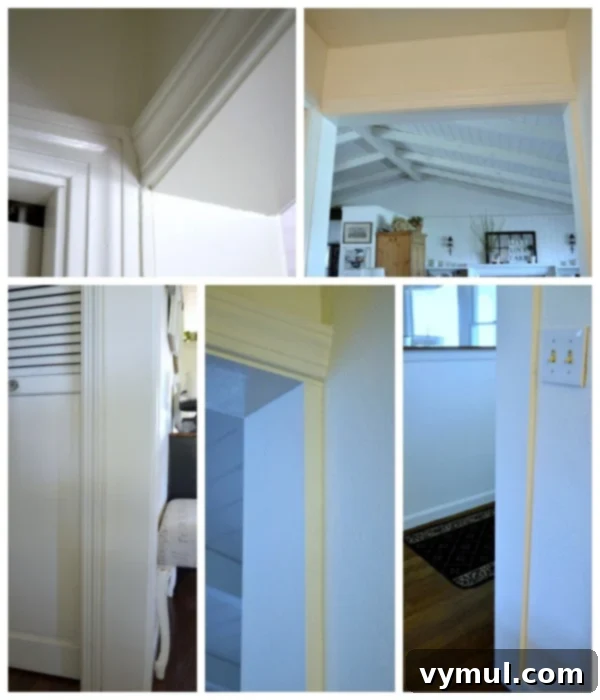
- Finish Off the Inside Doorway (if applicable): Step six involves addressing the inside of your doorway. If your door frame has sufficient depth, you might be fortunate enough to simply repeat the exterior molding application, sidestepping the “brainstorming-discussion” phase entirely. Lucky you!
As you can see in our project, we chose to leave the 1×6 molding plain on the right side, directly against the wall (which features a light switch above). On the top inside, we added a piece of the same molding trim used on the exterior, but without the need for mitered corners. The key here is to assess your unique situation and do what you can to make it look aesthetically pleasing and cohesive with the rest of your new trim. The goal is a clean, intentional finish.
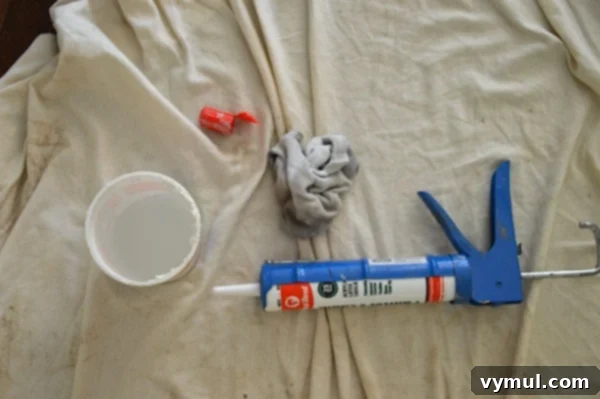
- The Art of Caulking: Now, it’s time to retrieve your trusty caulk and caulking gun. This step is transformative, as it allows you to fill all those inevitable gaps, seams, and minor imperfections before painting. I cannot overstate my love for caulk – it truly elevates the finish of countless DIY projects, making them appear professional and custom-made!
You’ll also need a small container of water and a clean rag close by for optimal smoothing. Prepare yourself for getting your hands a little dirty, but the results are well worth it. Here are some pro tips for achieving a flawless caulk bead:
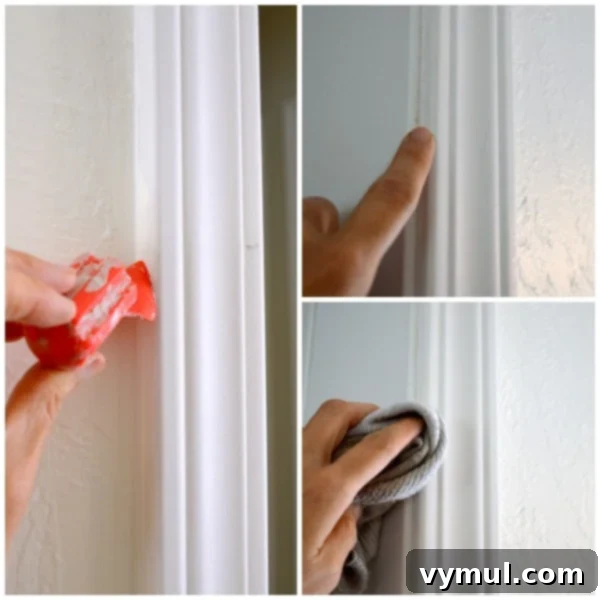
Professional Caulking Tips for a Smooth Finish
- Embrace the Mess (Initially): There are various techniques for achieving a smooth caulk bead, but invariably, your hands will get a little messy. This is part of the process, so don’t be afraid to get hands-on.
- Specialized Smoothing Tools: A number of years ago, I discovered a red cap smoothing tool (similar to the one on the left in the image above). While I’m unsure if that exact model is still produced, this tool with excellent reviews appears to function similarly. These tools are excellent for long, clearly defined angles, such as where the outside trim meets the wall. Even with a tool, a final pass with a damp rag ensures ultimate smoothness.
- The Versatility of a Wet Finger: For smaller angles, tight corners, or intricate details, a wet finger remains one of your most effective tools for smoothing a caulk bead. The warmth and flexibility of your finger allow for precise shaping. Always follow up with a damp rag.
- The Damp Rag – Your Best Finisher: The damp rag is truly your secret weapon for a professional finish. It effortlessly smooths away any remaining bumps, ridges, or excess caulk after using a tool or finger, leaving a perfectly smooth, ready-to-paint surface. Wipe lightly and frequently rinse the rag to avoid smearing.
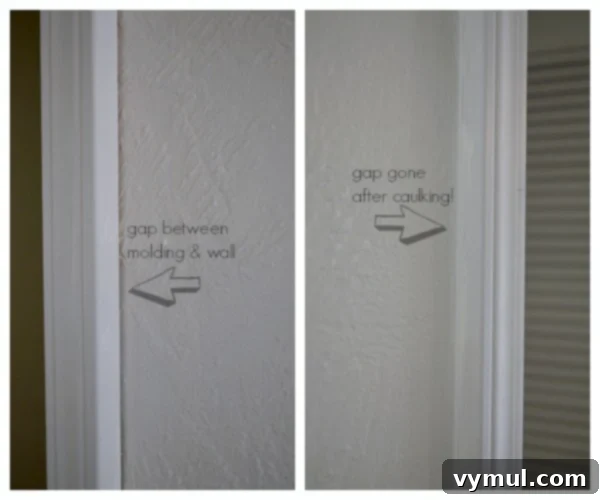
Observe the incredible transformation caulk provides! It’s not just a filler; it seamlessly blends the individual pieces of molding into a cohesive unit, making your DIY door trim appear like a high-quality, built-in feature rather than just pieces of wood tacked onto a wall.
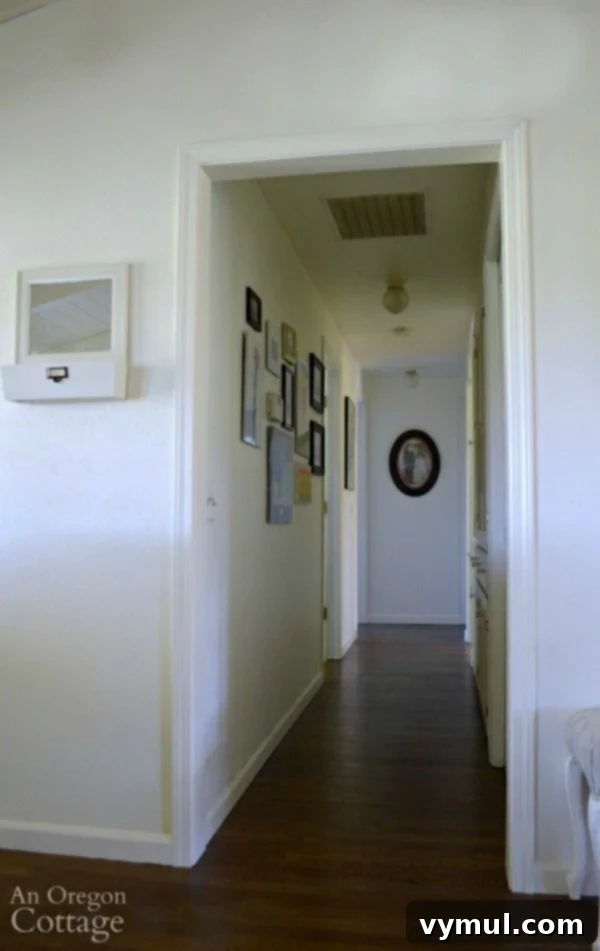
- Paint for a Flawless Finish: The final and most rewarding step is to apply a primer (if your wood isn’t pre-primed) and then paint your newly installed trim. Ensure the caulk has fully cured according to manufacturer instructions before painting. Choose a high-quality trim paint that matches your existing moldings for a consistent look. Once painted, step back and fully appreciate your handiwork. This is arguably the most satisfying part of any DIY project, isn’t it?
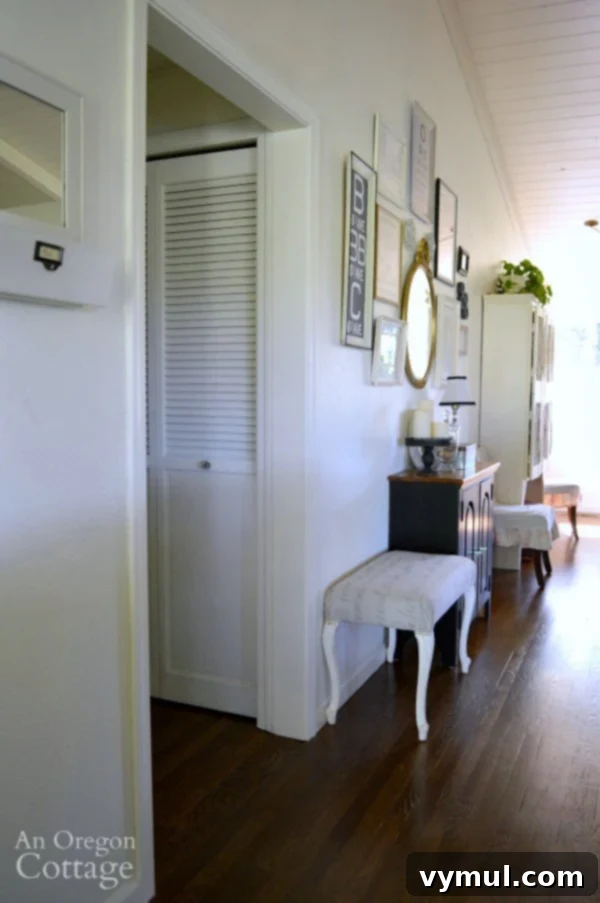
The Transformed Result: Adding Timeless Charm
The result of this DIY door trim project? Pure delight! The doorway now feels entirely integrated with the rest of our home’s design, no longer an isolated, unfinished element. It brings a sophisticated and polished look to this entryway wall, which is often one of the first features guests notice upon entering.
Moreover, this project represents another valuable step in our ongoing journey to infuse our 80s rancher with charming cottage character – and that’s what truly brings me the most joy. It demonstrates that with a little effort and the right approach, even simple additions like door trim can dramatically alter the ambiance and aesthetic of your living space.
Feeling inspired to add some architectural trim to your own home?
Disclosure: Affiliate links within this article may generate a commission based on sales, but this will not affect your purchase price. Click here to review my full disclaimer and advertising disclosure policy.