Transform Your Home: The Ultimate Guide to Painting Baseboards and Trim for a Fresh Look
Painting baseboards and refreshing your home’s trim is one of the most impactful yet simple ways to rejuvenate any room and make it truly shine. This comprehensive guide offers tried-and-true techniques to make your baseboard and trim painting project quick, easy, and exceptionally rewarding.
Some links in this article are affiliate links, meaning that if you click on them and make a purchase, I may receive a small commission at no additional cost to you. This helps support the content I create.
There’s something undeniably appealing about crisp white trim. It creates a clean, elegant boundary that frames a room beautifully, making spaces feel larger, brighter, and more inviting. My personal journey with white trim began years ago when I set out to transform our ranch house into a charming cottage. This involved not only adding character with new door trim but also meticulously painting every baseboard and piece of trim throughout our home.
Prior to this transformation, our home was dominated by a surprisingly dark brown trim – not just the trim, but also the cabinets, wood ceilings, and even the wood floors. Living in often gray and rainy Western Oregon, I craved a light and bright sanctuary, a stark contrast to the overwhelming dark tones. The solution was clear: a fresh, clean palette. Nearly everything received a couple of coats of brilliant white paint, instantly uplifting the atmosphere, with only the floors and specific key elements like our half-wall ledge and countertops retaining their original character.
The Inevitable Reality of White Trim: Wear and Tear
While the aesthetic benefits of white trim are immense, there is an unavoidable drawback – one that, in my opinion, is entirely worth the effort: white trim is susceptible to showing scuffs, dents, and general wear and tear over time. After a few years, even the most pristine white baseboards can begin to look a bit dingy, losing their initial sparkle.
Life happens! Our vacuum cleaner often leaves tell-tale marks, moving furniture inevitably leads to nicks and scratches, and the occasional scuff from shoes or playful pets contributes to the gradual decline of that perfectly clean finish. Over time, you might notice your baseboards looking something like this:
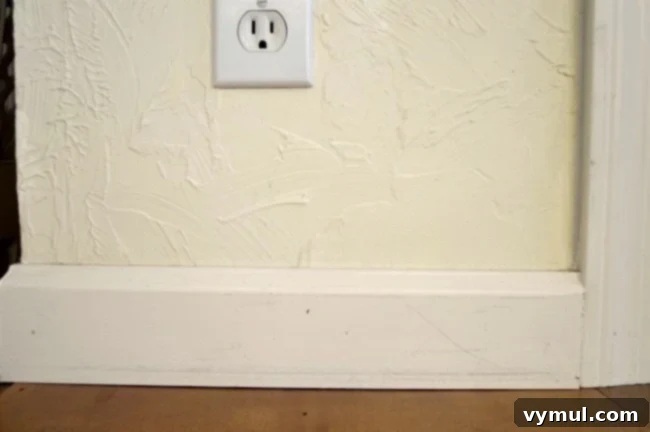
While not catastrophic, these imperfections detract from the overall brightness and cleanliness of a room. Having experienced the transformative power of freshly painted trim, I know just how significant an impact it has on the entire space. Throughout our 12 years in this home, I’ve touched up the baseboards and trim at least once, and in high-traffic areas, probably twice. Each time, the difference was remarkable.
As we prepared to list our cottage for sale, a quick touch-up was essential. I wanted every room to sparkle and create the best possible first impression for potential buyers. Knowing how easily fresh paint can revitalize a space, I dedicated time to meticulously refresh all the baseboards and trim that needed attention.
Why Quality Painter’s Tape is Your Best Friend for Trim
Although I’ve previously shared techniques for painting without tape, this specific touch-up project called for the precision of quality painter’s tape. The primary reason was practical: we no longer had any usable wall paint left for most of the rooms. This meant absolutely no room for error. Using painter’s tape ensured that walls and floors remained pristine, preventing any stray paint from accidentally coloring surfaces it shouldn’t.
Painter’s tape creates a clean, sharp line, which is especially crucial when you’re working with contrasting colors (like white trim against a wall color you can’t easily fix) or when protecting finished floors. It’s an invaluable tool for achieving professional-looking results without the headache of costly mistakes.
Essential Tips for Painting Baseboards and Trim Like a Pro
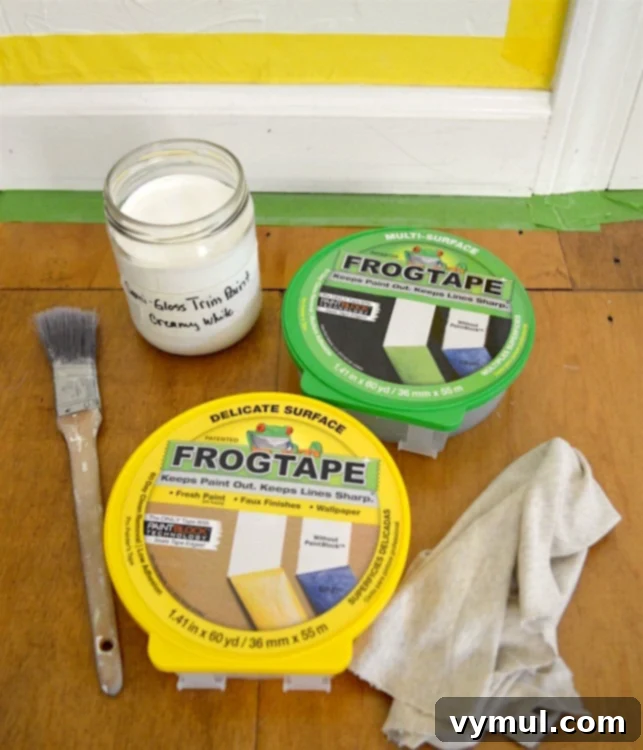
Gather Your Supplies
When painter’s tape is necessary, I consistently reach for FrogTape® brand painter’s tape. Its patented PaintBlock® Technology delivers those incredibly crisp, clean lines that are the hallmark of a professional finish. FrogTape® offers two excellent versions tailored for different needs:
- The yellow “Delicate Surface” version: This tape features a lower adhesion level, making it ideal for freshly painted surfaces (cured for at least 24 hours), wallpaper, or other delicate finishes. It can be left on surfaces for up to 60 days without residue.
- The original Multi-Surface green tape: Designed for use on a variety of common household surfaces, this tape offers medium adhesion and delivers excellent results on cured paint, wood, metal, and glass.
For my trim touch-up project, I strategically used both: the yellow Delicate Surface tape for the walls to protect their integrity, and the green Multi-Surface tape for the floors, ensuring no finish was compromised. When you don’t have access to the original wall paint for quick fixes, this dual-tape approach provides maximum protection.
In addition to your chosen painter’s tape, you’ll need these essential tools:
- A small, narrow, angled brush: I find a 1-inch brush works best for most trim work, though a 1-1/2-inch brush can also be effective. The crucial element here is the angled bristle design; it provides superior control and makes painting trim significantly easier, allowing you to cut in clean lines with precision.
- Quality Trim Paint: For baseboards and trim, I highly recommend a semi-gloss finish, or even high gloss if you prefer a more reflective, durable surface. Semi-gloss paints are more resilient to scuffs and easier to clean. The trim paint we used throughout our cottage is Behr’s Premium Plus Semi Gloss in ‘Creamy White’, a perfect choice for that bright, cottage aesthetic.
- A small rag: Keep a clean, damp rag close by to quickly wipe away any accidental drips or mistakes before they dry. Speed is key here!
- Newspapers, a piece of cardboard, or a large towel rag: This serves as a mobile drop cloth for your painting supplies. I like to set my paint can/jar and brush on it and simply slide it along the floor as I move, keeping my workspace tidy.
Step-by-Step Painting Guide for Flawless Trim
1. Thoroughly Clean Your Baseboards and Trim
Before any paint touches the surface, preparation is paramount. If your baseboards are like mine, a simple dusting won’t suffice. Accumulated grime, dust, and scuffs need more attention. Use a slightly damp rag or a foam eraser (like a Magic Eraser) to scrub them truly clean. This step is critical; paint adheres much better to a clean, smooth surface, ensuring a durable and professional finish. Skipping this step can lead to paint peeling or an uneven appearance.
2. Carefully Apply Tape to the Wall
Begin by applying the appropriate painter’s tape (the yellow Delicate Surface tape is recommended for walls) along the edge where the trim meets the wall. Once the tape is in place, use your fingernail or a credit card to firmly seal the edge that will be painted against. This creates a barrier, preventing paint bleed-through. As seen in the photos, even walls with a slight texture can achieve perfect results with proper tape application and sealing.
3. Apply Tape to the Floor
Next, apply tape to the floor directly adjacent to the baseboard. While you could use one type of tape for both walls and floors, I prefer using the Multi-Surface green tape for floors as it offers robust protection. Again, ensure you firmly seal the edge of the tape that will be painted against, using your fingernail or a credit card. This prevents any paint from seeping underneath onto your flooring.
PRO TIP 1: Mastering Irregular Trim To apply tape effortlessly around trim pieces that aren’t perfectly straight or have intricate curves, simply tear small pieces of tape and fit them individually around the contours of the trim. This technique is particularly effective for touch-up painting, where you only need to protect the floor directly below the affected area, not necessarily create one long, continuous straight line.
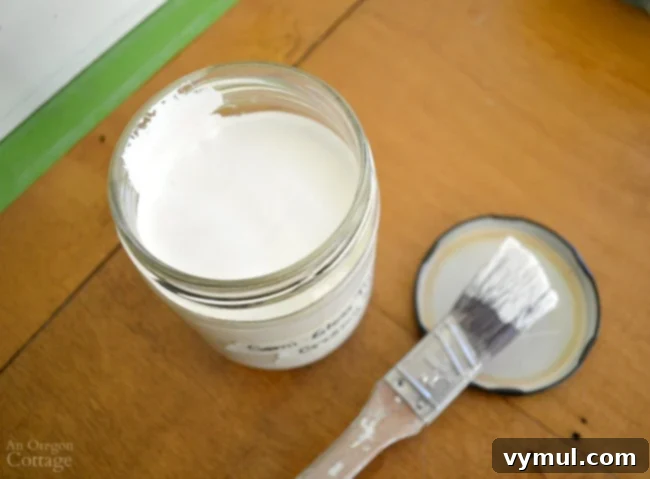
PRO TIP 2: Smart Paint Storage & Brush Management For maximum convenience and efficiency with trim and touch-up painting, store your trim paint in a small, clearly labeled jar. This makes it incredibly easy to grab and use whenever a touch-up is needed. When loading your brush from the jar, remember to press and wipe off excess paint on the top sides of the jar opening, not on the very top rim. This simple trick ensures your lid always remains clean, allowing for easy-on and easy-off access every single time. It also prevents dried paint from flaking into your fresh paint.
BONUS TIP: The clean lid of your paint jar can also serve as an excellent, temporary resting spot for your brush during short breaks, keeping it readily accessible and preventing mess.
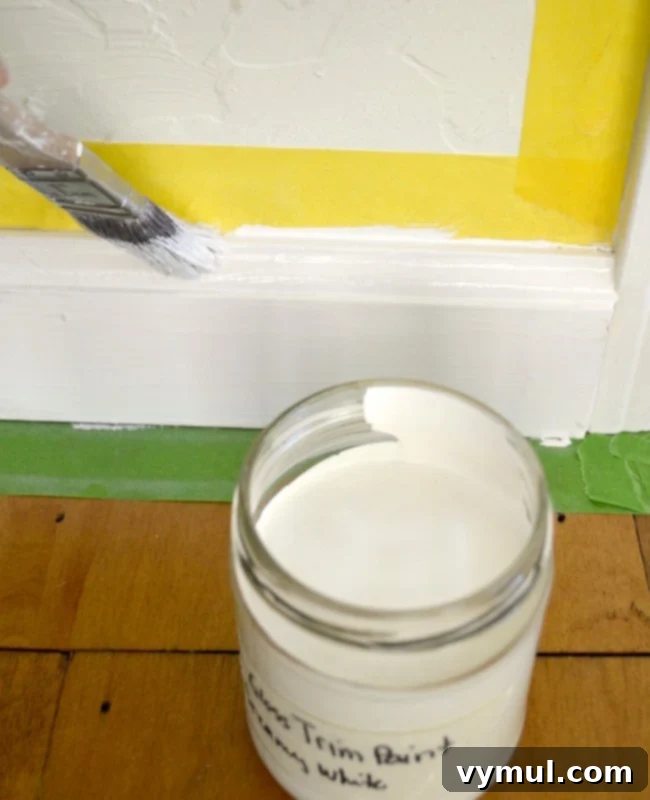
4. Expertly Paint Your Baseboards and Trim
Now comes the satisfying part: applying the paint. For touch-ups, a single, well-applied coat is often sufficient to cover existing scuffs and bring back that fresh look. If you’re painting trim a brand new color, you will likely need two coats for full, even coverage. Utilize the angled part of your brush for precision work along the edges and tops of the trim, where it meets the wall and floor. Use the flatter part of the brush for covering the broader, flat surfaces of the baseboard. Apply paint in smooth, even strokes, avoiding overloading your brush to prevent drips and streaks. Work in manageable sections, ensuring each area is fully covered before moving on.
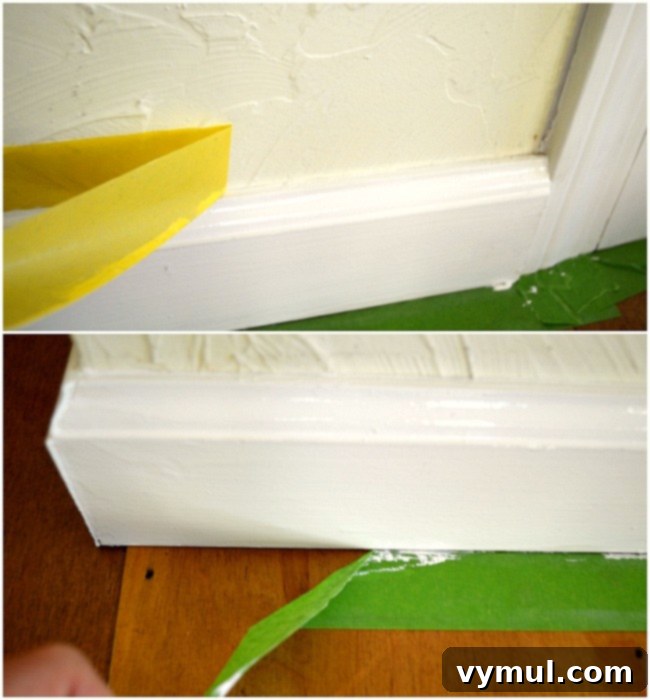
5. Remove Tape While the Paint is Still Wet
This is a critical step for achieving those perfectly crisp lines. As soon as you’ve finished painting a section, or the entire room, begin removing the painter’s tape while the paint is still wet to the touch. Pull the tape slowly and at an angle (roughly a 45-degree angle) away from the painted surface. Removing wet tape prevents the paint from curing onto the tape, which can cause it to tear or pull off small flakes of paint along your beautifully crisp edge. If you’re anything like me, you’ll experience a satisfying thrill seeing those immaculate surfaces and sharp, clean lines!
PRO TIP 3: Mess-Free Tape Disposal To minimize mess and keep your workspace clean, roll the removed tape with the wet paint side inward as much as possible. Keep a piece of old newspaper or cardboard nearby to roll the paint-laden tape onto. As you accumulate tape, simply roll up the newspaper with the wet tape inside and dispose of it. This method contains all the wet paint, preventing it from getting on your hands or making a mess in your trash can, making cleanup a breeze.
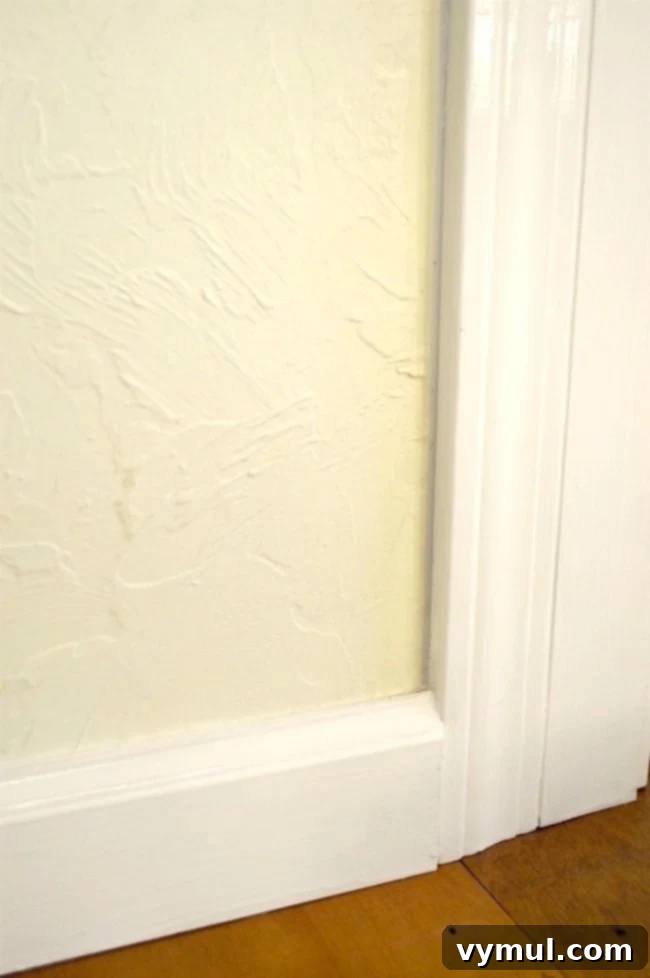
6. Enjoy Your Sparkling Trim and Refreshed Room!
After the paint has dried, step back and admire your handiwork. I’m delighted to report that by following these steps, all the wall paint remained undisturbed, and the trim now looks impeccably clean and fresh. This transformation instantly reminded me why I adore white trim so much – its ability to elevate an entire room is unparalleled.
For a fairly large room, this entire process took me about an hour and a half. For a typical 12×12 bedroom, you could realistically expect to touch up the trim and baseboards in approximately an hour, depending on the extent of the damage and your painting speed. Of course, the time investment will vary based on the amount and complexity of the trim you have. For instance, our 1900 farmhouse boasts significantly more intricate trim, which naturally takes a bit longer. Regardless of the time, the revitalized appearance is always, always worth the effort to me!
Do you have any personal trim painting tips or tricks you’d love to share? We’d love to hear them in the comments!
This article has been updated to provide the most current and comprehensive information; it was originally published in June of 2016.
Disclosure: Affiliate links within this article are designed to earn a commission based on sales, which helps support this site, but it will not change the price you pay for any products. Click here to read our full disclaimer and advertising disclosure for more information.