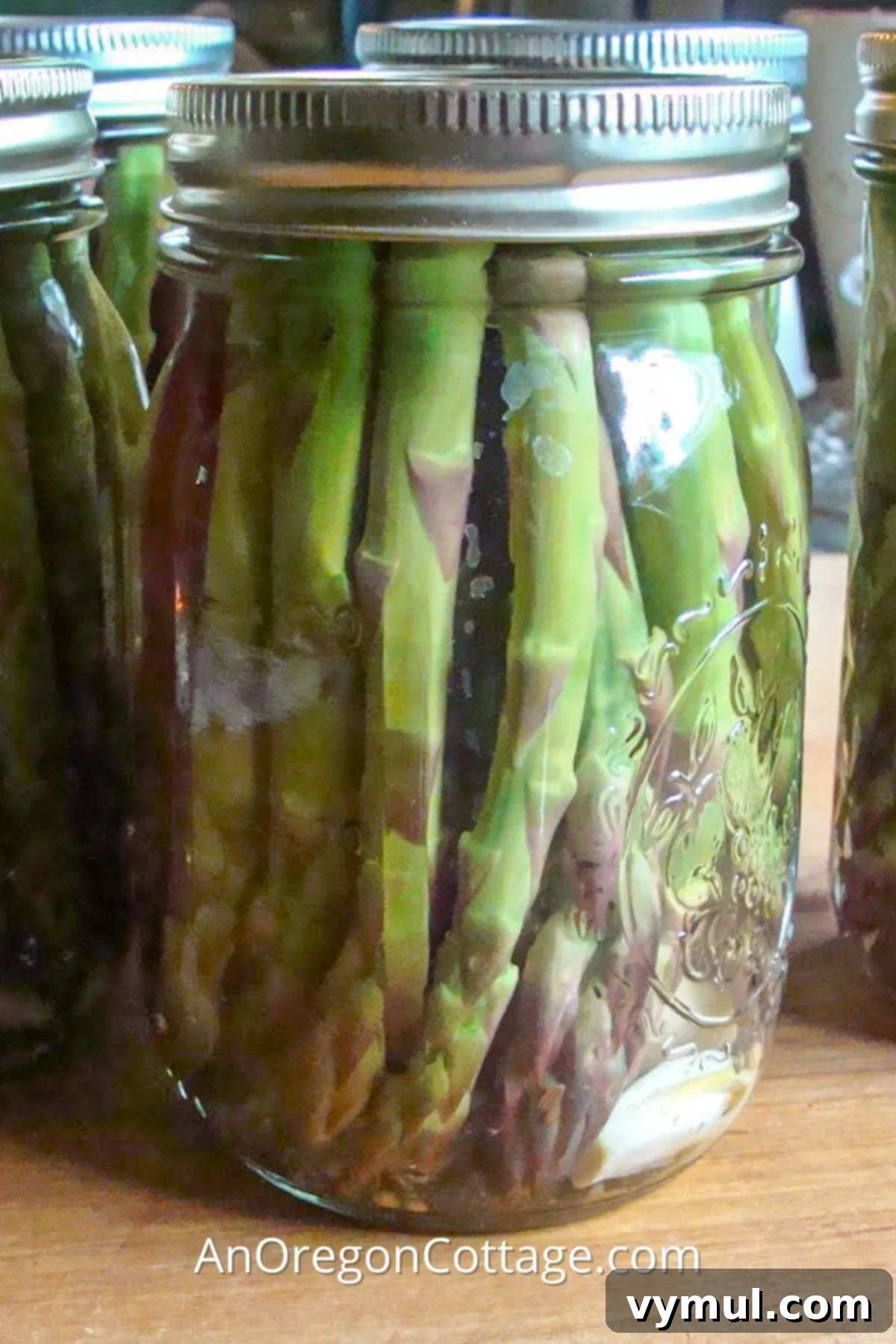
Homemade Pickled Asparagus: Your Ultimate Guide to Canning & Refrigerator Preservation
Imagine having a jar of crisp, tangy pickled asparagus ready in your pantry or refrigerator, perfect for elevating salads, adding a gourmet touch to appetizers, or rounding out a sophisticated cheese plate. This comprehensive, step-by-step tutorial will show you exactly how to achieve that, walking you through both the traditional canning process for shelf-stable storage and a simpler refrigerator method for quick enjoyment. Get ready to transform your fresh asparagus into a versatile, flavorful condiment that lasts!

Some links in this article are affiliate links and if you click on them and purchase I will receive a small commission at no cost to you.
Is your garden overflowing with fresh asparagus, or did you score a fantastic haul at the farmer’s market? After you’ve enjoyed your fill of perfectly roasted asparagus – perhaps drizzled with olive oil, garlic, salt, and pepper, then cooked to tender-crisp perfection in a 400-degree oven for just 10-15 minutes – or easily grilled with an amazing spice rub, what do you do with the delicious remainder? Don’t let that beautiful green bounty go to waste! There’s a fantastic way to preserve its fresh taste and enjoy it year-round.
My absolute favorite method for preserving asparagus is pickling it! The transformation is truly magical. Tangy, subtly spicy, and wonderfully garlicky, homemade pickled asparagus spears are a delight straight out of the jar. They add a vibrant crunch and zesty flavor to salads, make an impressive addition to charcuterie and cheese boards, and are the star ingredient in quick, delicious appetizers, like a rolled-up treat with softened cream cheese, minced garlic, and thinly sliced meat. Seriously, I could (and often do!) make an entire meal out of these flavorful spears.
The beauty of pickling asparagus lies in its simplicity and versatility. Whether you opt for a traditional water-bath canning method to create pantry-stable jars or prefer the convenience of refrigerator pickles for shorter-term storage, the process is straightforward and incredibly rewarding. This tutorial will guide you through each step, ensuring your success in preserving this springtime delicacy.
How to Pickle Asparagus: An Overview
The process of pickling vegetables, including delicious asparagus, is surprisingly simple and accessible for home cooks. You have two main options for storage: boiling-water canning for shelf-stable jars that can be stored in your pantry, or simply storing them in the refrigerator, where they’ll remain crisp and delicious for up to a year, much like homemade refrigerator pickles. Both methods result in fantastic flavor, with refrigerator pickles often retaining a slightly crisper texture.
Here’s a quick glance at the essential steps involved in making these gourmet pickled asparagus spears:
- Preparation: Gather your fresh asparagus, along with chosen spices and garlic.
- Brine Creation: Whisk together a flavorful pickling brine using water, vinegar, salt, and a touch of sugar.
- Jar Packing: Carefully arrange the asparagus spears in sterilized jars and fill them with the hot brine.
- Preservation: Either refrigerate the jars immediately for quick use or process them in a boiling-water canner for long-term, pantry-stable storage.
While boiling-water canning does add a few extra steps, it only extends the overall process by a minimal amount of time. The benefits of having jars of homemade pickled asparagus readily available in your pantry throughout the year far outweigh the small additional effort. I’ll walk you through every detail, ensuring you gain the confidence to create your own impressive, fancy pickled asparagus.
Note: This tutorial includes a generous number of pictures. I’ve found that when it comes to canning, clear, step-by-step visual aids are incredibly helpful for beginners and experienced canners alike. They ensure you can confidently follow along and achieve perfect results every time.
Detailed Tutorial for Pickled and Canned Asparagus (and Refrigerator Pickles)
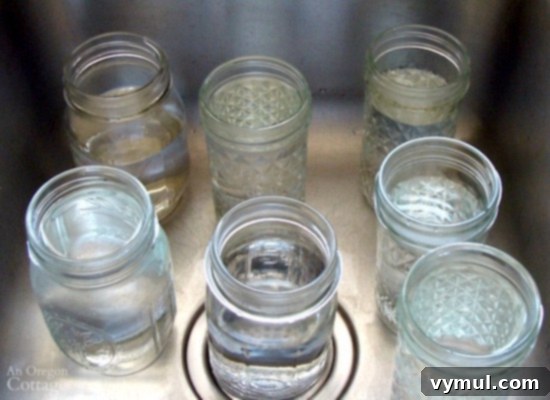
Step 1: Prepare Your Canning Jars
Cleanliness and proper jar preparation are paramount for successful canning and safe food preservation. Begin by preparing your jars according to these guidelines:
- Jar Quantity and Size: A standard canner load typically accommodates 7 jars. For pickled asparagus, I often use regular pint jars or, for an even more aesthetically pleasing presentation, 12-oz quilted jars. The straight-sided 12-oz jars are particularly good as they showcase the long asparagus spears beautifully.
- Thorough Cleaning: Always clean your jars meticulously with hot, soapy water. A sturdy bottle brush makes this task much easier, ensuring every crevice is spotless. Rinse them thoroughly to remove all soap residue.
- Keeping Jars Warm (Crucial for Canning): If you plan to water-bath can your asparagus, it’s essential to keep the jars warm until you’re ready to fill them. This prevents thermal shock, which can cause the jars to crack when placed in the hot canner water. The classic Ball Blue Book Guide to Preserving suggests placing jars directly into the warm canner water. However, I find it cumbersome to remove them quickly for filling. My preferred method is to simply fill the clean jars with the hottest tap water available and let them sit in the sink. If the water cools, I refill them. Another excellent option, favored by a friend, is to place the jars upside down on a towel-lined tray in a 200-degree Fahrenheit oven. The key is to maintain their warmth right up until the moment you fill them with hot brine.
- For Refrigerator Pickles: If you’re simply making refrigerator pickles and skipping the canning step, you only need to ensure your jars are thoroughly clean. Warming them is not necessary in this case.
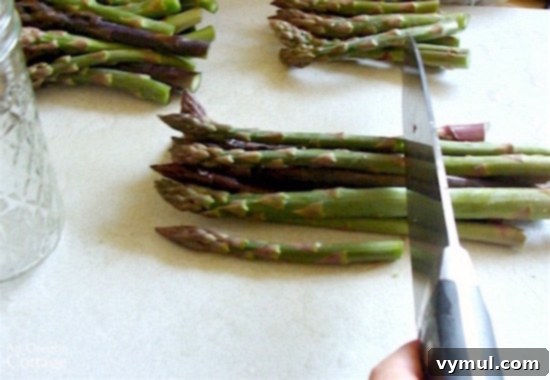
Step 2: Prepare the Asparagus and Garlic
Proper preparation of your produce is key to perfectly pickled asparagus. Follow these steps for best results:
- Trim Asparagus Spears to Fit: The goal is to have the asparagus spears fit snugly in your chosen jars without touching the lid. To do this, take one asparagus spear and place it in an empty jar. Trim it so that it sits about 1/2 inch below the top rim of the jar. Use this perfectly sized spear as a guide for cutting all the remaining asparagus. You can either snap off the tough, woody ends (they’ll naturally break where they’re tender) or use a knife to cut them.
- PRO TIP: To help visualize and manage the quantity, I often create seven distinct piles of trimmed asparagus, one for each jar I plan to fill. This makes it easy to see if I have enough and helps distribute the spears evenly among the jars.
- Prepare the Garlic: Peel 7 large cloves of fresh garlic. To ensure the garlic infuses maximum flavor into your pickles, cut each clove in half. This increases the surface area exposed to the brine.
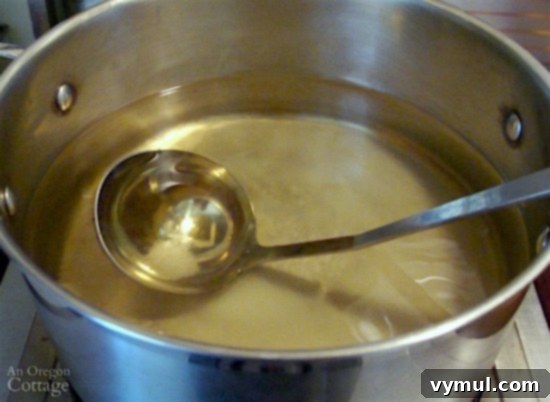
Step 3: Make the Flavorful Brine
The brine is the heart of your pickled asparagus, providing both preservation and delicious flavor. Crafting it correctly is essential:
- Measure Liquids: In a large, non-reactive pot (stainless steel or enamel-coated are ideal to prevent metallic flavors), combine 5 cups of water and 5 cups of vinegar. The type of vinegar significantly impacts the final taste. I prefer apple cider vinegar for its slightly milder, fruitier notes, while others enjoy the crispness of white wine vinegar. Regular white vinegar is also perfectly acceptable and will give a classic pickle flavor.
- Add Salt and Sugar: Stir in 5 tablespoons of canning or pickling salt (ensure it’s pure salt without anti-caking agents, as these can make the brine cloudy) and 4 tablespoons of sugar. While you can adjust the sugar amount to your preference for sweetness, it’s crucial to maintain the salt ratio for safe pickling, especially if you are canning.
- Heat the Brine: Stir the mixture well to dissolve the salt and sugar. Bring the brine to a slow, steady boil over medium-high heat. Keep it warm and ready while you pack your jars.
Step 4: Pack the Jars with Asparagus and Spices
Careful packing ensures even pickling and a beautiful presentation. Here’s how to do it efficiently:
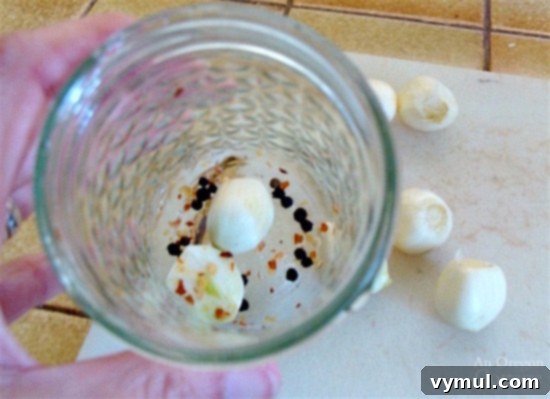
- Empty and Spice: Take one of your warm, clean jars and carefully drain out the hot tap water. Into the bottom of the empty jar, place one of the halved garlic cloves. Now is also the time to add your chosen spices: a homemade pickling spice blend, a few whole peppercorns, or a dash of red pepper flakes for a subtle kick.
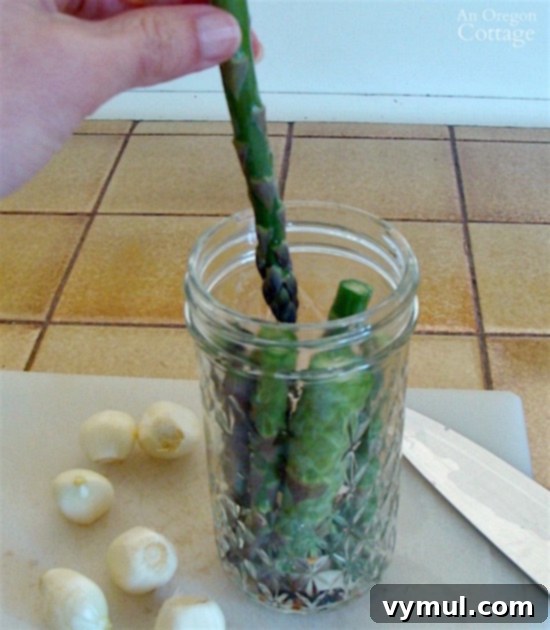
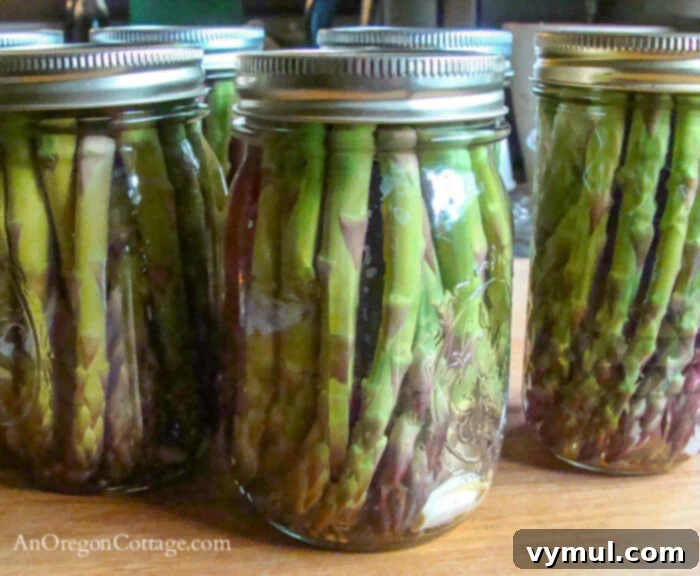
- Pack Asparagus Spears: Begin packing the trimmed asparagus spears into the jar. While some people prefer them pointing up, I like to arrange them pointed-end down. The goal is to fit as many spears as possible into each jar without breaking them. Pack them tightly, as they will shrink slightly during the pickling and canning process.
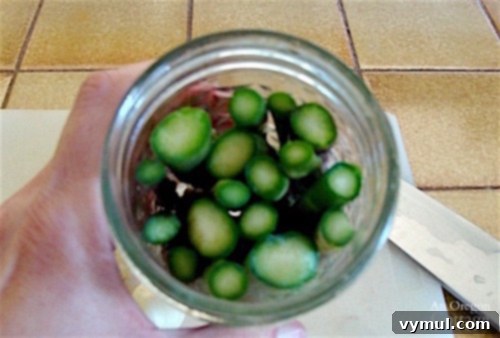
PRO TIP: To streamline the process, I find it most efficient to have all the jars packed with asparagus and spices before I start adding the hot brine. This allows me to move quickly through the next steps without interruptions. I’ve never experienced issues with jars cooling too much by doing it this way, especially when immediately filling them with boiling hot brine. However, if you are concerned about jars cooling, you can certainly complete one jar at a time: drain, fill with vegetables and spices, add hot liquid, attach lid, and then set it in the canner (or aside if refrigerating) before moving on to the next jar.
Step 5: Prepare Canning Lids and Set Up Your Canner
While the process for lids has simplified over the years, proper handling is still important:
UPDATE as of 2015: The common practice of simmering canning lids in hot water for 3-5 minutes is no longer necessary. Modern canning lids are designed to seal effectively without this step. Now, you simply need to wash the lids thoroughly with soap and hot water before use. Always use brand new two-piece canning lids (specifically, the flat metal discs) when water-bath canning to ensure a proper, safe seal. You can often find sets of 120 lids at a good price. However, if you are only making refrigerator pickles, you can absolutely reuse old, clean canning lids and rings.
IF CANNING: If your plan is to water-bath can these pickled asparagus jars for shelf stability, now is the time to prepare your canner. Fill your water bath canner or a large stockpot about 1/2 to 3/4 full with water and place it on your stove to begin heating to a boil. It needs to be hot and ready when your jars are filled.
Need a canner? I highly recommend upgrading to a stainless steel 20-qt. stock pot with a glass lid paired with a dedicated canning rack. This was one of the best canning investments I’ve ever made! The transparent glass lid allows you to monitor the boil without constantly lifting it, saving heat and energy, and it sits perfectly flat on my modern glass cooktop, ensuring efficient heating.

Step 6: Fill Jars with Brine and Remove Air Bubbles
Once your jars are packed and the brine is boiling, it’s time to fill. Work quickly and efficiently:
- Pour the Brine: When the vinegar mixture is at a rolling boil and your lids are ready, carefully pour the hot brine into one jar at a time. Use a stainless steel ladle and a stainless steel canning funnel for precision and safety, as you are working with very hot liquids.
- Achieve Proper Headspace: Fill each jar with brine to within 1/2 inch from the top rim. This space is called “headspace” and is critical for creating a strong vacuum seal during canning.
Complete the following steps for each individual jar before moving on to the next one:
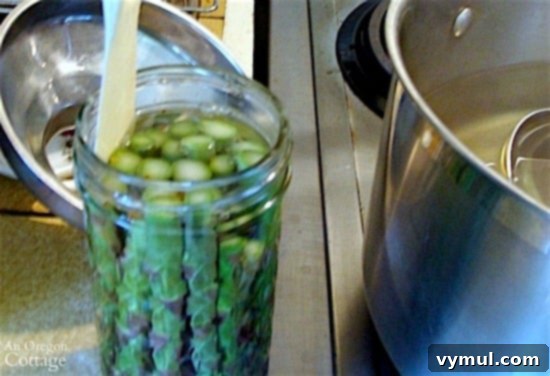
- Remove Air Bubbles: Insert a non-metallic spatula (flat plastic ones like these work perfectly) into the jar. Gently move it around the edges of the jar, pressing against the asparagus spears, to release any trapped air bubbles. Air pockets can prevent a proper seal.

- Recheck Headspace: After removing air bubbles, re-measure the headspace. The liquid level should still be at 1/2 inch from the top. If it has dropped, add more hot brine to achieve the correct headspace. You can use a ruler or a dedicated canning tool for headspace measurement.
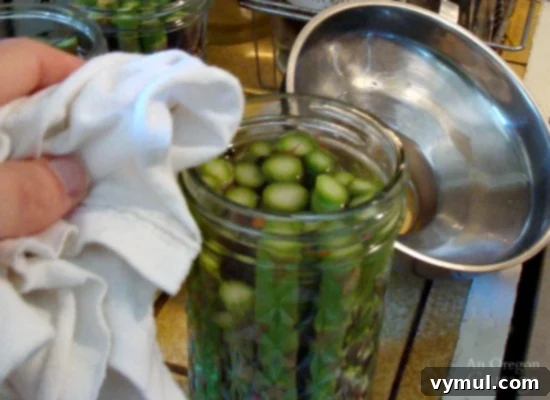
- Wipe Jar Rim: Dip a clean cloth or paper towel in warm water and carefully wipe the rim of the jar. Any food particles or brine residue on the rim can prevent the lid from sealing properly. I often use a clean piece of an old t-shirt, as seen in the photo above.

Step 7: Attach Lids and Rings
The final step before processing (or refrigerating) is securing the lid and ring:
- Place the Lid: Center a clean, new flat canning lid onto the jar rim. In the past, specialized “lid lifters” (magnets on a wand) were popular for retrieving hot lids, but since lid pre-warming is no longer required, you can simply use clean hands. Just try to avoid touching the underside of the lid directly to maintain sterility.
- Screw on the Ring: Place a screw band (ring) over the lid and screw it on until it is just fingertip tight. This means tightening it until you feel resistance, then giving it a slight turn. Do not overtighten, as this can prevent air from escaping during processing and lead to seal failures.
If you are opting for refrigerator pickles, congratulations – you are done with the main process! Simply move the filled and lidded jar to the side. Continue this process for any remaining jars. Allow them to cool on the counter for a bit, then transfer them to your refrigerator for storage. They will be ready to enjoy after a few days for the flavors to meld.
For those proceeding with canning, here’s a video demonstration showing how easy boiling-water canning can be:
Water-Bath Canning Steps for Pickled Asparagus
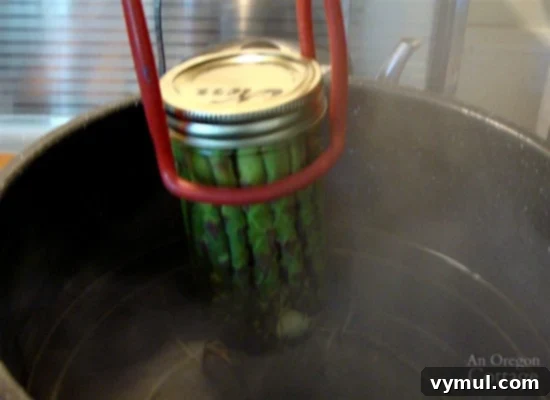
Step 8: Add Filled Jars to the Water-Bath Canner
Once all your jars are filled, sealed with lids and rings, and your canner water is simmering, it’s time to load them:
- Load the Canner: With the water in your water-bath canner at a steady simmer, carefully use a jar lifter to lower each jar onto the canning rack. The rack can either be positioned at the bottom of the canner, as mine is in the photo, or you can use a style that sits up higher, fill it with jars, and then lower the entire rack into the water. A jar lifter is an absolutely essential tool for canning; attempting to use regular kitchen tongs can be precarious and may result in dropped or broken jars, as I’ve learned from experience!
- Ensure Water Coverage: Continue filling each jar and placing it gently into the canner. Once all jars are in, ensure that the water level in the canner covers the tops of the jars by at least 1 inch. If needed, add more boiling water carefully.
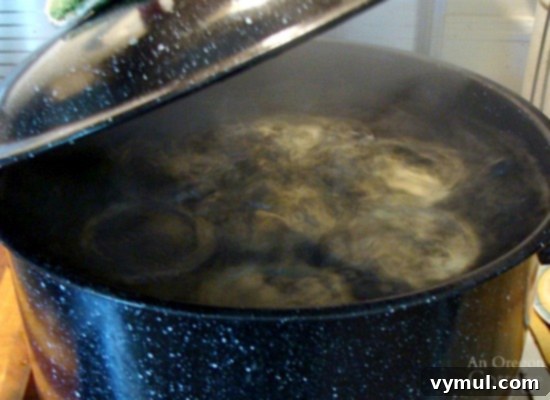
Step 9: Process the Jars
Processing is where the magic of preservation happens, creating a vacuum seal for long-term storage:
- Bring to a Boil: Place the lid on your canner and increase the heat to high. Bring the water to a full, rolling boil. This means the water should be bubbling vigorously and continuously.
- Set Timer and Process: Once a full boil is reached, set a timer for 10 minutes. Adjust the heat as needed to maintain a steady, gentle boil, ensuring the water doesn’t boil over. On my stove, this typically means a medium to medium-high setting.
As I mentioned earlier, discovering the stainless steel canners with clear glass lids has made monitoring this boiling process incredibly simple and efficient, especially compared to constantly lifting the heavy lid of my old enamel canner!
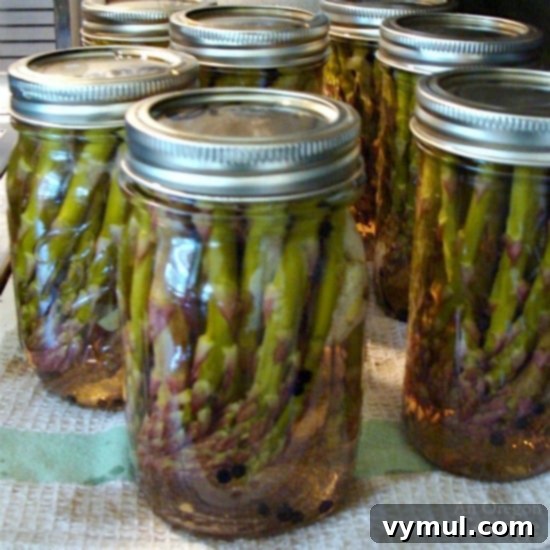
Step 10: Cool and Store Your Pickled Asparagus
The cooling process is vital for ensuring a good seal and quality preservation:
- End Processing: When the 10-minute processing time is complete, turn off the heat and carefully remove the canner lid.
- Initial Cooling: Set another timer for 5 minutes. Allow the jars to remain undisturbed in the hot, cooling canner for this duration. This brief cooling period helps the jars adjust to the temperature change, reducing the risk of seal failure and thermal shock.
- Prepare Cooling Surface: While the jars are resting, prepare a clean, level surface where your jars can sit for 24 hours without being disturbed. Lay a thick towel or several layers of newspaper down to absorb heat and prevent direct contact with a cold counter, which could also cause cracking.
- Remove Jars: Using your reliable jar lifter, carefully remove each hot jar from the canner. Place them gently onto the prepared towel-lined surface, ensuring there is some space between each jar for air circulation.
Step 11: Check Seals and Prepare for Long-Term Storage
After a full day of cooling, it’s time to confirm your hard work paid off:
- Undisturbed Cooling: Leave the jars to sit completely undisturbed for a full 24 hours. Resist the urge to touch or move them during this critical sealing period.
- Check for Proper Seals: After 24 hours, carefully inspect each jar. The center of the lid should be concave and depressed, indicating a vacuum seal. However, don’t rely solely on visual inspection. Unscrew each ring and gently try to lift the lid with your fingertips. A properly sealed lid will not move or come off under slight pressure. If a lid lifts, it means the jar did not seal properly.
- Storage Guidelines: Any jars that did not seal properly should be immediately stored in the refrigerator and consumed within a few weeks. For jars with good seals, remove the screw rings before storing them in your pantry. Storing jars without rings prevents false seals and allows you to easily identify any potential spoilage if a seal breaks during storage. (If you’re gifting jars, you can, of course, put the rings back on for presentation.) Store the sealed jars in a cool, dark place.
PRO TIP (for pickled beans, too): It’s common for the asparagus spears (and pickled green beans) to appear somewhat shriveled or wrinkled for the first few weeks after pickling. When this happened to me the first time, I thought I had made a mistake! Rest assured, this is a normal part of the pickling process. After a couple of months, as the pickles fully cure and flavors develop, the spears will plump up and look normal again. So, don’t worry, they will be delicious!
What Do You Do with Leftover Pickling Brine?
It’s a common occurrence: you never seem to make the exact right amount of pickling brine. And honestly, having a little too much brine is always preferable to running out midway through packing your jars! The good news is, you absolutely don’t have to throw out that flavorful leftover brine. Here are my favorite resourceful ways to use it up:
Three Creative Ways to Utilize Excess Pickling Brine:
- Save for Future Pickling: Pour any extra brine into a clean quart-sized jar (or smaller, depending on the amount you have left) and store it in your refrigerator. This saved brine can patiently wait for your next pickling adventure. When you’re ready to make another batch, simply reheat it and combine it with fresh brine ingredients. This adds an extra layer of flavor and reduces waste.
- Quick Refrigerator Pickles: This is a fantastic method for using up small amounts of various garden vegetables. You can add vegetables like cucumber slices, carrot sticks, bell pepper strips, or even small florets of cauliflower directly to the leftover brine in a jar. Keep this jar in the refrigerator for a few weeks, allowing the vegetables to absorb the tangy flavors. They’ll be ready to enjoy after about a month. I often add an extra clove of garlic to this mix for more robust flavor – it’s a brilliant way to use up those odds and ends of produce.
- Vinaigrette Base: The tangy, seasoned flavor of pickling brine makes it an excellent base for homemade vinaigrette dressings. Substitute some or all of the vinegar in your favorite vinaigrette recipe with the leftover brine for a unique and delicious twist.
Whatever you decide, resist the urge to discard it! That flavorful liquid is a valuable resource in a resourceful kitchen.
I genuinely hope you enjoy this recipe and tutorial for homemade pickled and canned asparagus. If you make it, please take a moment to leave a recipe rating so I know how much you loved it!
Print Recipe
Pin Recipe
SaveSaved!
Pickled And Canned Asparagus – Step By Step
Equipment
-
20-21 qt. boiling water canner
-
7 pint or 12-oz canning jars
-
7 two-piece canning lids
-
jar lifter
-
large stock pot
Ingredients
- 10 to 12 pounds asparagus
- 7 large cloves garlic, cut in half
- 5 cups water
- 5 cups vinegar
- 5 tablespoons canning/pickling salt, or pure sea salt
- 4 tablespoons sugar (can adjust this to taste)
Optional additions per jar:
- 1/2 teaspoon whole peppercorns
- 1/4 teaspoon red pepper flakes, or to taste
- 1/2 to 1 teaspoon pickling spice using this easily customizable pickling spice recipe
Instructions
-
Clean 7 pint or 12-oz jars, along with the lids and rings well with soap and hot water. Keep the clean jars warm by placing into warm canner water, filled with hottest tap water in the sink. **See notes below for refrigerator pickling.**
-
Prepare asparagus: Put one spear in a jar and cut it to 1/2″ below the jar top, then use that as a measure for cutting the remainder of the asparagus. Have all the asparagus cut before proceeding.
-
Fill a water-bath canner 1/2 to 3/4 full of water and bring to a low boil.
-
Add water, vinegar, canning salt and sugar to a large, non-reactive pot. Stir well and bring to a slow boil.
-
Pack the jars: place a garlic clove and the optional peppercorns and red pepper flakes in the bottom of each jar and fill with asparagus spears point-side down. Pack them in tight, as they’ll shrink when heated.
-
Fill the jars, one at a time, with the hot vinegar mixture, leaving a 1/2-inch headspace. Remove air bubbles with a non-metal spatula, replace any brine as needed to keep headspace, and wipe rim with a damp towel.
-
Attach lid and ring, tightening to just fingertip tight.
-
Lower each jar as you fill it into the canner (or set them on a rack resting on the canner) using a jar lifter. Continue filling each jar and placing them in the canner until done.
-
Bring the canner to a rolling boil over high heat. Set a timer for 10 minutes and adjust the heat so the canner continues at a soft boil.
-
When the timer goes off, turn off the burner, remove the lid, and let jars sit for 5 minutes (USDA recommendation). Use the jar lifter to remove each jar and set on a towel-lined surface as gently as possible.
-
Leave to sit undisturbed for 24 hours. Check lids and seals, store any unsealed jars in the fridge and store the rest, without the rings, in a cool, dark, place. The jars are best used within a year to 18 months (but we’ve eaten 2-year-old jars and they’ve been fine).
Notes
- Clean jars, but don’t worry about keeping them warm, and fill with vegetables, spices and vinegar mixture as outlined.
- You can fill the brine all the way to the top, since headspace doesn’t matter.
- Attach lids as outlined, let sit on the counter for a bit until cooled and place in the refrigerator for storage. They will last 6 months to a year.
High Altitude Adjustment: If processing at an altitude of higher than 1000 feet above sea level you’ll need to adjust the processing time according to this chart.
Nutrition
Frequently Asked Questions About Pickled Asparagus
Like many canned and pickled products, pickled asparagus will have a higher sodium content compared to fresh or frozen asparagus due to the pickling salt used in the brine. If you are monitoring your salt intake, it’s advisable to enjoy them in moderation. Beyond the sodium, however, most of the natural nutritional value of asparagus, including vitamins and minerals, remains largely intact after pickling and canning. Incorporating pickled asparagus into your diet through appetizers, salads, or cheese boards can be a healthy and flavorful way to enjoy this vegetable.
It’s a common observation to find white or gray flecks or sediment developing on pickled asparagus over time. Rest assured, these are typically harmless. These flecks are usually a protein buildup called rutin, which is a natural flavonoid present in asparagus. Rutin can sometimes react with the vinegar in the brine, creating these crystalline formations. They do not indicate spoilage and are perfectly safe to consume. It’s simply a natural occurrence in the pickling process.
While some pickling recipes call for blanching asparagus before canning, it is generally not a required step for this recipe. The heat from the water-bath canning process itself effectively “cooks” or tenderizes the spears sufficiently. I’ve found that skipping the blanching step does not compromise the texture or safety of the pickled asparagus. Even for the refrigerator pickle version, the hot brine is usually enough to soften the asparagus to a pleasant, crisp-tender texture without pre-blanching.
Properly water-bath canned pickled asparagus, with intact seals, will remain shelf-stable and safe to eat for 18 months when stored in a cool, dark pantry. It’s always a good practice to regularly inspect the seals and the contents of your jars; discard any jars that show signs of spoilage, such as a bulging lid, leakage, or unusual odors. If you are making refrigerator pickles (which involve skipping the water-bath canning step), they will maintain their quality and safety for about 3-4 months when stored consistently in the refrigerator.
Once a jar of water-bath canned pickled asparagus has been opened, it must be treated like any other perishable food item. Any leftover spears should be transferred to the refrigerator and consumed within a few weeks to maintain quality and safety. For refrigerator pickles, they must always be kept refrigerated from day one.
More Easy Preserving Tutorials and Recipes
If you enjoyed learning how to pickle asparagus, you’ll love exploring more ways to preserve fresh produce and stock your pantry with delicious homemade goods. Here are some of my other favorite preserving recipes and tutorials that are simple, rewarding, and perfect for home cooks:
Click For Recipe
Click For Recipe
Click For Recipe
Click here for a list of more preserving recipes, plus tips and resources.
Go here to see all our preserving recipes in a visual index.

This comprehensive tutorial for pickling and canning asparagus was originally published in 2009, updated with new insights and visual guides in 2017, and further refined in 2022 to provide the most current and accessible information. We hope it helps you enjoy your asparagus harvest all year long!
Disclosure: affiliate links in this article will earn commission based on sales, but it doesn’t change your price. Click here to read my full disclaimer and advertising disclosure.