Beyond the Pages: My 2015 Reading Journey – 31 Books Reviewed & Recommended for Your Next Read
After navigating a period in 2014 where life felt overwhelmingly busy, leaving no time for reading, I, a lifelong book lover, made a significant commitment in 2015. My goal was simple yet ambitious: to read at least one book each month. I deeply believed that dedicating time to both non-fiction and fiction, even amidst the busiest schedules, was crucial for personal well-being. Reading offered a vital escape, a way to infuse new concepts into my life, and an opportunity to broaden my perspective beyond my immediate surroundings.
The outcome of this renewed commitment was astonishing: 31 books read in total! This achievement felt like a true triumph, a moment to “high-five a million angels” (bonus points if you recognize that pop culture reference!). Indeed, I rediscovered that reading is fundamental to my personal growth and overall enjoyment of life. It also taught me a valuable lesson: when you truly prioritize something, you can often exceed even your most modest aspirations. To help me reach and surpass my goal, I adopted several effective strategies gleaned from articles on integrating reading into a busy lifestyle:
- Always having a book readily available to pick up.
- Reading more than one book concurrently (typically a fiction and a non-fiction).
- Designating specific time in the evenings for reading.
- Embracing all forms of reading: digital ebooks, traditional print books, and convenient audiobooks.
My impressive list of 31 books spanned a wide array of genres and formats. It included concise ebooks, engaging audiobooks (especially after discovering a cost-effective library app), captivating novels, and insightful non-fiction works aimed at professional and spiritual enrichment. I openly admit that the collection is quite eclectic, reflecting my diverse tastes and life experiences. One consistent criterion, however, is that you won’t find any dark, disturbing, or morally corrupt narratives here. There’s enough of that in real life, and I prefer not to intentionally fill my mind with more such content.
I frequently shared my thoughts on many of these books in my weekly “Three Things” posts throughout the year. Now, I’ve gathered all those reviews and insights into one comprehensive post for your convenience. Be warned: this is a lengthy compilation (given the 31 books, naturally!), but I assure you it’s packed with valuable recommendations. In fact, it grew too long to include my planned “Top 5 Picks,” so keep an eye out for that dedicated post coming soon!
Within this list, you’ll discover some truly excellent books that I hope you’ll consider adding to your reading queue, alongside a few that you might decide to skip. (Note: My affiliate links are included below. Should you use them, thank you for supporting AOC for another year!)
My 2015 Book Selections & In-Depth Reviews
1. The Lazy Girls Guide to Furniture Painting – Allison Griffith (Read: Jan 24)
As someone who enjoys frequent DIY projects, particularly furniture painting, I’m always on the lookout for ingenious shortcuts and efficient methods. This book by Allison Griffith felt like a revelation! While I’ve certainly discovered my own tricks over the years, such as my no-tape painting tip and the easiest way to paint turned furniture legs, this guide offered fresh, practical advice. My absolute favorite tip? Using a large, old mug from a thrift store to hold paint. The handle provides a much more comfortable grip than my usual plastic yogurt containers. It’s one of those simple, brilliant ideas that makes you wonder, “Why didn’t I think of that sooner?” Sometimes, it truly is the smallest adjustments that make the biggest difference in a DIY endeavor, saving time and frustration.
 2. Emotionally Healthy Spirituality (Read: Jan 31)
This book provided several profound insights into the nature of our emotions and spiritual well-being. A key takeaway for me was the understanding that all our emotions, not just the pleasant ones, originate from God. This includes feelings like anger, worry, and frustration – emotions vividly expressed by figures like Job and the Psalmists – alongside peace, love, and joy. It challenges the notion that certain emotions are “unspiritual.” Furthermore, the book highlighted two particularly impactful principles:
- “Jesus was not self-less. He did not live as if only other people counted. He knew his value and worth. He had friends. He asked people to help him. At the same time Jesus was not self-ish. He did not live as if nobody else counted. He gave his life out of love for others.” This concept of a balanced, healthy self-awareness, neither selfish nor self-effacing, resonated deeply as an ideal for mature spiritual living.
- “The journey with Jesus calls us to a life of undivided devotion to him. This requires that we simplify our lives, removing distractions. Part of that will mean learning to grieve our losses and embrace the gift of our limits.” This emphasis on simplification and accepting our boundaries is a powerful call to intentional living and spiritual focus.
 3. Giving God The Worst of Me – Dana White (Read: Feb 13)
This ebook, penned by my friend Dana White, was a truly delightful, enjoyable, and inspiring read. In “Giving God The Worst of Me,” Dana candidly shares a condensed version of her adult journey, detailing the experiences that ultimately led her to launch her hugely popular blog, A Slob Comes Clean, and author helpful ebooks like “Drowning in Clutter?” and “28 Days to Hope For Your Home.” Her distinctive sense of humor shines through, making even serious topics approachable and engaging. Beyond the humor, the book delivers a deeply moving truth: embracing true authenticity can be daunting, but it’s often in these vulnerable moments that we are most effectively used and find the greatest fulfillment. The best part? Dana generously offers this heartfelt ebook for free. You can download your copy here.
 4. Me Before You, Jojo Moyes (Read: Feb 20)
I had frequently encountered “Me Before You” on numerous “best of 2014” lists, so when the Kindle version went on sale, I promptly acquired it. It’s a relatively quick fictional read with a cast of intriguing characters. However, I must confess that I didn’t understand its inclusion on those “best of” lists. I found myself profoundly disliking the story, primarily due to the intense selfishness displayed by the character we are seemingly meant to empathize with. This aspect left me with an unsettling feeling for days after finishing the book. While I could delve into more specific criticisms, I’ll refrain, as I seem to be in the minority on this one. Consequently, I cannot personally recommend it, but I leave it to your discretion should you choose to read it (for more thoughts on this, see my review of “The Art of Work” below).
 5. Art of Work – Jeff Goins (Read: Mar 12)
Jeff Goins’ “Art of Work” is a truly beautiful and inspiring book, filled with compelling narratives of individuals who courageously embraced risks to pursue their true calling. It powerfully illustrates how each of us can discover our authentic vocation. The most significant takeaway for me was Jeff’s profound emphasis that “a calling is more than a career; it is a life well-lived.” This redefines the concept of vocation, shifting it from mere professional achievement to a holistic approach to life. Here are a couple of other powerful quotes from this wonderful read:
“I used to think that your calling was about doing something good in this world. Now I understand it’s about becoming someone good – and letting that goodness impact the world around you.”
“Life is not an inconvenience to the work we dream of; it’s the reason we do it in the first place. A calling does not compete with or even complement your life. Your life, when lived well, becomes your calling…{and} we won’t appreciate this until the end.”
Such profound insights resonate deeply, encouraging a more intentional and purpose-driven existence.
Extra: Contrasting Thoughts – The Art of Work vs. Me Before You:
I read “The Art of Work” directly after “Me Before You,” and my disappointment with the latter, coupled with its widespread popularity, made Jeff Goins’ introduction particularly poignant. His words articulated precisely why “Me Before You” had bothered me so much:
What happens when the life you end up living doesn’t look like the one you planned? Each of us has setbacks in life, disappointments that have disrupted what we thought was the way…We can’t control what life throws our way, but we can control how we react to it…To do this, though, we have to let go of what we think we deserve and embrace what is, which just might lead to something better than we ever could have imagined. – The Art of Work, Jeff Goins
This perspective, I believe, captures what a life well-lived truly entails. Goins further illustrates this by interviewing a father whose five-year-old son was paralyzed after a brain tumor removal. The father shared their profound realization:
More people are watching your life and…are gaining strength in their own lives and in their own challenges because of what you’re going through. I promise you: your life matters, your life is significant, and things are happening that you don’t even fully understand yourself.
Regardless of life’s unexpected turns, we cannot foresee all the ramifications. Incredible and unforeseen opportunities can emerge from circumstances we never planned for – if only we resist the urge to give up because we are solely focused on our immediate desires. Let us celebrate these resilient lives and draw inspiration from them, appreciating the enduring beauty of a life lived with grace and purpose, even when it deviates from our initial expectations.
 6. Peace Like a River – Leif Enger (Read: Mar 28)
I added “Peace Like a River” to my reading list based on a recommendation from Modern Mrs. Darcy, where it was hailed by some as their favorite book ever written. I appreciated the quality of the prose and the unique narrative perspective, told years later by the narrator recalling his boyhood memories. However, despite its emotionally charged storyline, I personally found it lacking in emotional resonance. I struggled to connect with the characters and ultimately found myself simply trying to reach the conclusion rather than truly immersing myself in the journey. While well-crafted, it didn’t quite capture my heart as I had hoped.
 7. Crazy Love – Francis Chan (Read: Apr 16)
Francis Chan’s “Crazy Love” has been a prominent title for a while, and I had always wanted to read it, especially after my teenage daughter described it as “life-changing” – a powerful endorsement from a teen! I can confirm it is absolutely worth reading and indeed incredibly challenging, in the most beneficial way. One of my favorite quotes, perfectly encapsulating the book’s message towards the end, is:
“God has called us each to live faithful and devoted lives before Him, by the power of His Spirit. You do not need to preach to your pastor or congregation; you simply need to live out in your daily life the love and obedience that God has asked of you.” This profound statement serves as a daily reminder and a guiding principle for authentic living.
 8. Gilead – Marilynne Robinson (Read: May 16)
“Gilead” is another book I acquired based on glowing recommendations from fellow bloggers, who lauded it as “the best book ever” and “so well-written.” Regrettably, I found it a genuinely painful read to push through. I simply couldn’t immerse myself in the story due to its unconventional structure – no chapters, and written entirely in diary form. This stylistic choice felt jarring, especially when the narrator would recount pages of quoted conversations, stretching the bounds of what one could realistically recall for a diary entry. It left me feeling disconnected and constantly trying to piece things together. The biggest letdown was that I had been looking forward to this as the beginning of a trilogy. Thankfully, my reading list is extensive, so there are plenty of other captivating books waiting to be discovered.
 9. Boundaries – Henry Cloud & John Townsend (Read: May 25)
My husband Brian and I read “Boundaries” as part of a class at our church, and it proved to be incredibly timely and helpful. We had been grappling with internal conflicts regarding our responsibilities to our families, particularly discerning the line between genuine love and unintentional enabling. This book provided a biblically grounded framework for understanding our roles and how to love our family members in healthy and appropriate ways. If there’s one book on this entire list that I believe everyone could benefit from, it is unequivocally this one. I highly recommend both the book and attending a related class, if available. It offers profound clarity on a multitude of relational issues, especially concerning parenting, navigating relationships with adult children, caring for aging parents, and cultivating healthy friendships.
 10. Dear Mr Knightly, Katherine Reay (Read: Jun 20)
“Dear Mr. Knightly” was a delightful and thoroughly enjoyable read – finally, a blogger recommendation I could enthusiastically endorse! This charming novel is lighthearted and written entirely in a letter format, which I particularly appreciated for its ease of reading in short bursts. While I initially expected something more reminiscent of Jane Austen, the main character’s affection for Austen and English literature merely sets a charming tone rather than defining the style. The story itself is sweet and wholesome, brimming with wonderful insights and genuine emotions, all with just a touch of gentle romance. I’ve since become a fan of Katherine Reay’s work and have read her other books; you’ll find another one of her titles on this list (though I didn’t finish her third until early 2016).
 11. Hope: Thriving while unemployed, Angi & Carl Schneider (Read: Jun 22)
My friend Angi’s book, “Hope: Thriving while unemployed,” arrived at a perfectly opportune time, resonating with our family’s experience of underemployment during 2014-2015. I especially valued that it wasn’t a lengthy, overwhelming tome, but rather a concise and practical guide. It’s filled with actionable steps that can be implemented immediately, coupled with profound wisdom and encouragement, reminding readers that such challenging seasons are temporary and surmountable. It served as a much-needed beacon of hope during a difficult period, offering both practical guidance and emotional support.
 12. One Bite At a Time, Tsh Oxenreider (Read: Jul 1)
This ebook was a free inclusion from a bundle purchase. Having had the pleasure of hearing Tsh Oxenreider speak at a conference a few years prior, I was eager to delve into her insights on simplifying life through manageable steps. To be frank, the information presented wasn’t entirely new to me, but I deeply appreciated the book’s organized format and its emphasis on practical, actionable advice for anyone seeking simplification. I believe this book would be particularly valuable for individuals just beginning their journey toward a more minimalist or simplified lifestyle, or for parents with young children, as many of the “bites” revolve around managing family life effectively. Its clear, concise approach makes the concept of simplification feel accessible rather than daunting.
 13. Shave 10 Hours off Your Workweek, Michael Hyatt (Read: Jul 5)
This free ebook from Michael Hyatt (available with an email sign-up) is a quick and impactful read, offering tangible strategies for improving time management. As a long-time follower of Michael Hyatt, an influential industry leader, it was a pleasure to gain a glimpse into his personal tips and tricks. I am constantly seeking new ways to streamline my schedule and maximize productivity, and this book provided several fresh perspectives and actionable ideas to consider. It’s a valuable resource for anyone looking to optimize their workflow and reclaim precious time.
 14. Tasty Food Photography, Lindsay Olstrum (Read: Jul 15)
I had long wanted to read Lindsay Olstrum’s book on food photography, so its inclusion in the Ultimate Photography Bundle available in June was a strong incentive for my purchase. I particularly appreciate that Lindsay isn’t a professional photographer, and her early food photos strikingly resembled my own past attempts, making her journey incredibly relatable. This relatability, combined with her very practical “to-dos,” made the book highly valuable. I gleaned several excellent tips and gained a deeper understanding of utilizing manual settings on my camera, which significantly helped me improve my food photography skills.
 15. The Martian, Andy Weir (Read: Aug 3)
I was genuinely surprised by how much I enjoyed Andy Weir’s “The Martian”! I initially decided to read it for two main reasons: the upcoming movie adaptation and the consistent feedback from numerous bloggers who, like me, were unexpectedly captivated by it. While the book is indeed quite scientific, I found myself selectively skimming the more technical portions without losing the overall narrative thread. The core story is incredibly fun, exciting, and filled with ingenious problem-solving. I’ve since loaned it to many friends and family members, and it has universally been a hit with men, women, and teens alike. (A minor caution: the book does contain a few instances of strong language, unfortunately.) It’s a true testament to human ingenuity and resilience in the face of impossible odds.
 16. Life Changing Magic of Tidying Up, Marie Kondo (audio) (Read: Aug 8)
This book, “The Life-Changing Magic of Tidying Up” by Marie Kondo, was… an experience. You’ve likely heard a great deal about it, and perhaps my review deviates from the norm! Don’t misunderstand; it contains genuinely valuable ideas. I firmly believe that decluttering unused items profoundly impacts one’s mental well-being, and I fully intend to implement her “KonMari” method of cleaning by category. However, I often found myself laughing out loud (even with earbuds in!) at some of her more unique concepts. While I was aware of her suggestion to thank clothes for their service before discarding them, her philosophy extends much further:
- Socks, according to Kondo, are on a “vacation” in our drawers and cannot properly rest if bundled into balls (i.e., paired together for convenience).
- She advises emptying the entire contents of your purse or bag every night, questioning how one could sleep with such a heavy burden.
- One should greet their house upon returning home and thank it for safeguarding everything in their absence.
And then there was this, which didn’t provoke laughter but rather empathy: Kondo states she was a lonely child and found her first experience of unconditional love from her personal objects. This detail, for me, was quite poignant. So, my ultimate takeaway is this: embrace the beneficial aspects of her method and respectfully set aside the rest. And always remember – Marie Kondo is not married or a mother, and her full-time profession is tidying. Whenever she’d remark, “that may seem like a lot of time (for this little thing),” I made sure to remind myself of her unique circumstances!
 17. The Gluten Lie, Alan Levinovitz (audio) (Read: Aug 10)
“The Gluten Lie” highlighted a significant drawback of audiobooks: the narrator. The reader for this particular book was, unfortunately, terrible, reminding me of sensationalist TV hosts. The book itself, I believe, aims to be controversial, evident in the polarized Amazon ratings. The author, Alan Levinovitz, doesn’t deny the existence of celiac disease or genuine gluten sensitivity (the historical overview of celiac disease was, in fact, the most fascinating part of the book). Instead, he argues that the anti-gluten movement has gone to extremes, a point I largely agree with – I even saw “gluten-free” prominently displayed on a lemonade bottle recently! He also explores the history of various food fads, which I found quite interesting.
As you know, I’m a strong advocate for moderation in all types of food, a philosophy that has helped me achieve my healthiest weight ever and maintain good health. So, I align with the author on the moderation aspect. However, I do believe our Western diet is excessively heavy on sugar and grain-based carbohydrates, and the author seems to suggest that none of this truly matters, advocating for eating whatever one desires. I believe that thoughtful dietary changes can profoundly impact our lives. Transitioning to a real, whole-foods diet, for instance, often leads to significant health improvements. Sometimes, this shift is prompted by a specific health issue, leading individuals to focus on eliminating specific culprits like gluten, sugar, or fat. Improved wellness often follows, but the question remains: was it the absence of that specific food, or the overall healthier diet, that brought about the change? Is it sustainable? Is it universally applicable?
This complexity underscores one of my key takeaways from the book: nutrition science is notoriously difficult. It’s almost impossible to isolate variables, research is often anecdotal, relies on imperfect recollection, and is heavily influenced by the placebo effect (which I view as a positive tool for wellness, a way our mind can aid our bodies!). I think it’s wise to remain skeptical of individuals who stand to profit significantly from promoting a particular viewpoint, especially when it lacks robust, independent scientific backing. Am I endorsing this book? No, especially given its dismissive stance on myths and religion. However, you might find value in borrowing it from the library and focusing on the historical sections; they are genuinely educational and eye-opening.
 18. If Walls Could Talk – An Intimate History of the Home, Lucy Worsley (audio) (Read: Aug 14)
I stumbled upon “If Walls Could Talk” while browsing my library app. As a history enthusiast (it was one of my college majors), I decided to listen to it while engaged in canning. Being a British book, its focus was primarily on English history, which still offered a broad overview of Western civilization. The book delves into fascinating details often overlooked in standard history texts: the dietary habits of different eras, evolving fashion, sleeping arrangements, and the architectural evolution of homes. At times, it ventured into rather personal territory, if you catch my meaning, prompting the judicious use of the fast-forward button! Overall, though, I thoroughly enjoyed it. It profoundly increased my appreciation for the ease and conveniences we enjoy in these aspects of life today, highlighting how much daily living has transformed over centuries.
 19. Brooklyn, Colm Toibin (audio) (Read: Aug 20)
The trailer for the movie adaptation of “Brooklyn,” depicting an Irish immigrant’s journey in 1950s Brooklyn, suggested a fun, feel-good narrative. However, the book itself, in my opinion, was merely adequate. This is one of those rare instances where I suspect I might enjoy the movie more than the book, as the trailer seemed to possess more vitality and cheer than the literary version. To be clear, it wasn’t a terrible read, just somewhat lackluster. And I was particularly frustrated by the abrupt, unresolved ending. This experience highlighted a drawback of audiobooks: the conclusion can catch you by surprise since you don’t visually anticipate its approach. I found myself rewinding multiple times, convinced I must have missed something, only to realize it was simply an abrupt finish. It left me wanting more closure for the characters.
 20. The 4-Hour Workweek, Tim Ferris (audio) (Read: Aug 24)
I have encountered a tremendous amount of discussion surrounding Tim Ferriss’s “The 4-Hour Workweek” over the years and had long desired to read it. Discovering it through my library’s audio app was a fortunate find, and I am so glad I finally listened to it! This book is truly brimming with innovative ideas and inspiration for optimizing work and life. While I wouldn’t blindly follow every recommendation (some approaches could indeed be perceived as selfish, potentially leaving others to manage the fallout of one’s perceived irresponsibility), I absolutely loved how Ferriss challenges deeply ingrained assumptions about traditional workdays and the “busy work” we often engage in, which merely creates a sense of productivity without actual impact. I am certainly guilty of this! He powerfully highlights how this “busy work” detracts from pursuits that are genuinely important and fulfilling. Here’s a profound quote that resonated with me:
Doing something unimportant well does not make it important.
In fact, I was so impressed that I purchased the Kindle version and encouraged Brian to listen to it as well, which I consider a strong endorsement!
 21. The 5 Love Languages, Gary Chapman (audio) (Read: Aug 30)
I had heard so much about Gary Chapman’s “The Five Love Languages” that I questioned whether there was anything new left for me to discover. Yet, I’m genuinely glad I took the time to listen to the audiobook. It’s a concise yet profoundly inspiring book that showcases the immense positive impact that understanding our own and our loved ones’ love languages can have on relationships. It immediately sparked a lively and insightful conversation within my family about what each of us believed our primary love language to be. It was incredibly revealing! Wondering what mine is? It’s remarkably straightforward; no one in my family had any doubt: Acts of Service. My children, especially, are well aware, having grown up hearing phrases like, “all I want is help with ________” for every Mother’s Day, birthday, or any occasion, really!
 22. The Hunger Games, Suzanne Collins (Read: Sep 4), 23. Catching Fire, S Collins (Read: Sep 11), 24. Mockingjay (Read: Sep 23) (audio)
When I discovered “The Hunger Games” trilogy available on my library’s audio app, it seemed like the perfect way to make the height of canning season pass more quickly. My daughter had read it in middle school and enthusiastically recommended it to everyone she knew. While it’s not a series I would typically sit down to read in print, listening to it was a fantastic experience. It felt akin to a long, immersive TV show or movie, making the hours fly by. This trilogy’s popularity is well-deserved; it’s a skillfully written and compelling read, despite its dystopian future setting and the grim premise of sadistic games. As with any strong narrative, the characters are exceptionally well-developed, drawing you into their struggles and triumphs. It’s a compelling story that truly hooks the reader with excellent storytelling. I’d heard from my kids (who read it years ago with their friends) that many were left unsatisfied by the final book. Reflecting on it, I’d agree, largely because it lacks a strong moral conclusion, offering instead a somewhat empty “this is life without the games” ending. I was curious to see if the final movie adaptation would alter the ending for a more satisfying resolution. (Note after seeing the movies: the film adaptations actually softened the ending, and my daughter even preferred it to the book, which is a rare feat for book-to-movie adaptations!)
 25. Simply Tuesday, Emily P. Freeman (Read: Oct 9)
I thoroughly enjoyed this lovely book by Emily P. Freeman. Her reflections on finding contentment in “smallness” and embracing a slower pace of life resonated deeply with my desire for a simple, imperfectly perfect existence. Here are a couple of quotes that I felt compelled to record:
“I’m thankful we have a God who sometimes chooses to tell His big story in small, delightful, quiet ways.”
“When it comes to our work…may we simply plant, act, build, and offer, releasing the outcomes into (God’s) hands because they are not our business.”
These thoughts offer a refreshing perspective on purpose, challenging the constant pursuit of grand achievements and instead encouraging appreciation for the quiet, significant moments and trusting in a higher plan.
 26. Far Away Home (Read: Oct 24)
After immersing myself in a couple of non-fiction titles, I was ready for an engaging and easy-to-read historical novel. At just $0.99 on Amazon, this book seemed like the perfect choice (yes, I admit, I’m often swayed by a good deal!). To my pleasant surprise, “Far Away Home” exceeded my expectations. It featured commendable attention to historical detail, interesting characters, and a sweet romance that was tastefully handled without unnecessary explicit descriptions. The only significant disappointment was the lack of closure at the ending – the heroine’s fate remains unresolved. Compounding this, the book was written several years ago without a sequel. I did learn on Amazon, however, that the author is now reportedly working on a sequel, stating she didn’t realize readers would want to know what happened. (My thought: of course! You can’t leave your main character on a train after an argument with her fiancé and expect readers not to demand a resolution!)
 27. Daring Greatly, Brene Brown (Read: Oct 27)
Brene Brown’s books have been widely recommended by countless bloggers and businesswomen, so when “Daring Greatly” became available as an audiobook, I decided to give it a listen while working on a DIY project. I’m somewhat embarrassed to admit that I simply didn’t connect with it. In fact, I didn’t even finish the entire book, instead fast-forwarding through the latter chapters, pausing occasionally. I can’t quite pinpoint why, but I felt largely underwhelmed by the content. The central premise that “vulnerability is painful” felt self-evident. I didn’t find many groundbreaking insights, and the author’s frequent emphasis on her own expertise and research, while undoubtedly valid, came across as a bit “me, me, me,” which ultimately detracted from my engagement with the message.
 28. The Best Yes, Lysa TerKeurst (Read: Nov 10)
I absolutely loved “The Best Yes” by Lysa TerKeurst and recommend it wholeheartedly. The book’s core message revolves around the power of saying “no” to certain things in order to say “yes” to the most important priorities in life. This concept could easily be misconstrued as selfish, but TerKeurst masterfully presents it as quite the opposite. She provides clear, compelling examples of how declining a difficult request – one that might make us feel selfish in the moment – can actually pave the way for something far more wonderful to unfold. (Incidentally, this principle aligns beautifully with the teachings of “Boundaries”!). I believe its faith-based perspective is also key, encouraging us to seek God’s guidance for our “best yes,” ensuring our decisions are not solely driven by personal desires but by a deeper purpose. It’s a truly empowering and liberating read for anyone struggling with overcommitment.
 29. Money Making Mom, Crystal Paine (Read: Nov 7)
My overarching impression of Crystal Paine’s “Money Making Mom” was one of profound inspiration. This is by no means exclusively a blogging book; rather, it’s a resource for any woman working in any field, filled with a wealth of examples from women engaged in diverse types of businesses. What truly brings this book to life is Crystal’s remarkable honesty and her real-life anecdotes. I have consistently found her to be incredibly relatable, and with this book’s perfect balance of inspiration and practical, actionable steps, I found myself resonating with many of her insights. I also deeply appreciated the book’s strong emphasis on living and working with a clear purpose – a purpose that extends far beyond merely achieving the biggest business or owning the best car. It champions gratitude for what we already possess and reinforces the idea that if we are successfully meeting our family’s goals and are able to give back to others (whether through time or financial contributions), then that is indeed “enough” and certainly worthy of celebration. It’s a powerful reminder to align work with personal values and impact.
 30. Whistling Past the Graveyard, Susan Crandall (Read: Dec 07)
This is precisely the kind of book I would typically never choose based on its title alone, which sounded a bit unsettling to me. However, I kept seeing “Whistling Past the Graveyard” highly recommended across various platforms, and I am so incredibly glad I decided to read it. The title, it turns out, refers to an old saying that means to dismiss or ignore worries, essentially to “whistle past them” – perhaps a common Southern idiom. The writing itself is absolutely superb, and the author does an extraordinary job of narrating the story from the perspective of a sharp and observant nine-year-old girl; it’s truly remarkable. The book seamlessly weaves together heartwarming moments, genuinely frightening sections, and a thoughtful exploration of race relations, all set in the American South during the early 1960s. I wholeheartedly recommend setting aside time to experience this powerful and engaging story.
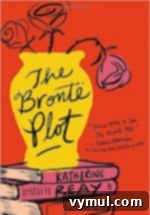 31. The Bronte Plot, Katherine Reay (Read: Dec 23)
I managed to listen to “The Bronte Plot” while baking Christmas cookies, a perfect way to squeeze in one last book before the year concluded, even during a hectic season. This novel was just as charming and sweet as Reay’s “Dear Mr. Knightly,” though the latter remains my favorite. While “The Bronte Plot” was a good read, I didn’t connect with the characters quite as deeply. Nevertheless, I continue to recommend all of Katherine Reay’s books. It is incredibly refreshing to discover an author who writes contemporary fiction that is both lighthearted and infused with deeper meanings, without resorting to dark, twisted, or morally ambiguous themes. If your literary preferences align with mine, I am confident you will thoroughly enjoy anything she publishes.
Disclosure: This post contains affiliate links. By clicking on these links, you help support AOC at no extra cost to you – thank you so much! Please be assured that I only share products and resources that I genuinely love and recommend. (You can always read our entire disclosure page here for more details.)