Elevate Your Fall Decor: A Step-by-Step Guide to DIY Scripted Newsprint Pumpkins
As the leaves begin to turn and the crisp autumn air settles in, our thoughts naturally drift to cozy fall home decor. While beloved rustic turkeys, shimmering mercury glass pumpkins, and clever shelf-styling ideas already grace many homes, there’s always room for a touch of unique elegance. This year, I found myself captivated by the sophisticated charm of the October Pottery Barn catalog, which inspired a fantastic transformation. With a simple, often overlooked green plastic pumpkin and a trusty bottle of Mod Podge, I set out to create an upscale, custom piece for our autumn mantel: a beautifully decoupaged pumpkin.
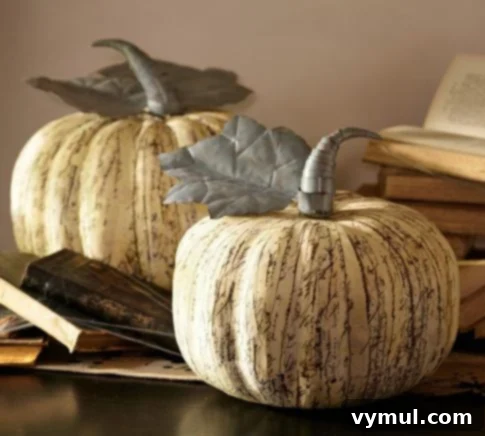
This isn’t just any decoupaged pumpkin, though. My inspiration stemmed from a particular design that instantly caught my eye in the catalog:
The Allure of Distressed and Scripted Decor
If you’re a fan of creative thrift store transformations, you’ve likely noticed a prevailing trend towards distressed, vintage-inspired white items. There’s an undeniable charm in pieces that look like they carry a history, adding character and warmth to any space. This vintage aesthetic deeply resonates with me, and it was precisely this sentiment that drew me to the Pottery Barn pumpkin.
Initially, from the catalog photo alone, it was difficult to discern the exact texture and material of the Pottery Barn papier-mache pumpkins. It wasn’t until I read the description – “Fanciful scribbles cover these artistic interpretations…” – that the true beauty was revealed. While book-page-covered pumpkins have been a popular craft for some time, the PB pumpkins distinguished themselves with two key features that made them truly unique:
- They were crafted from scripted newsprint, suggesting elegant, handwritten text.
- The paper was applied sideways, creating an unconventional and artistic pattern.
This distinct combination of scripted text and a unique application method offered a fresh take on a classic decoupage technique, making it a perfect candidate for a DIY project. My goal was to replicate this sophisticated look, bringing that catalog-worthy charm into our home using readily available materials.
From Humble Beginnings: Selecting Your Pumpkin

The inspiration pumpkins in the catalog boasted impressive sizes, reaching 10 and 15 inches high. However, for my first attempt, I opted for a more humble beginning: a small, 4-inch plastic pumpkin I scored for a mere fifty cents at a local thrift store. This choice perfectly embodies the spirit of using what you have and proving that even a small item can make a significant impact. It’s about creating something “small, but mighty,” transforming an inexpensive find into a cherished decorative piece.
When selecting your pumpkin, consider various options: plastic, foam, ceramic, or even real pumpkins (though these won’t last as long). Plastic and foam pumpkins are ideal for decoupage due to their smooth, durable surfaces and longevity. Different sizes will offer different challenges and aesthetic outcomes, so don’t hesitate to experiment.
Gather Your Supplies for This Elegant Fall Craft
Before diving into the creative process, ensure you have all your materials organized. Here’s what you’ll need for your DIY scripted newsprint pumpkin:
- Pumpkin: A plastic, foam, or faux pumpkin of any size.
- Mod Podge: Matte or satin finish is usually best for a vintage look.
- Scripted Clip Art: Digital handwriting samples or old letter scans.
- Printer Paper: Standard computer paper works well if you don’t have newsprint.
- Tea Bags & Hot Water: For staining paper (optional, but highly recommended for an aged effect).
- Soft Paint Brushes: One for Mod Podge, another for dampening paper.
- Scissors: Sharp scissors for precise paper cutting.
- Small Bowl of Water: For dampening paper strips.
- Jar or Bottle: To use as a drying stand for the pumpkin.
- Optional Embellishments: Metal leaf, twine, raffia, ribbon.
- Optional Sealant: Clear spray sealant (matte or satin) or antiquing gel/wax.
The Decoupage Process: Patience and Precision
Let’s be honest, this project requires a touch of patience. Cutting the right-sized strips and meticulously adhering them with Mod Podge can be a somewhat tedious process, especially as you strive to smooth out every wrinkle. However, the end result is incredibly rewarding, and a few charming crinkles can even enhance the vintage appeal, adding to its handmade character.
Here are the detailed steps to craft your own beautiful Scripted Newsprint Pumpkin:
- Source Your Scripted Clip Art: Begin by downloading a piece of elegant scripted clip art. I utilized this lovely Spencerian handwriting sample from Graphics Fairy. When choosing your script, look for a sample with a good density of text – ideally, the lines of writing should be relatively close together, mimicking the appearance of an old, handwritten letter. There are many free resources online; simply search for “vintage handwriting clip art,” “antique script,” or “Spencerian calligraphy.”
- Prepare Your Paper for an Aged Look: If you’re fortunate enough to have access to actual newsprint, you can print your clip art directly onto it for an authentic feel. If not, don’t worry! Print your chosen script onto regular computer paper. To achieve that coveted aged, antique look, prepare a weak brew of tea (black tea works best) and gently brush or dip your printed paper into the tea water. This process stains the paper, giving it a beautiful sepia tone. Let the paper dry completely; you can air dry it, or for a faster process, use a hairdryer on a low setting or lay it on a baking sheet in an oven set to its lowest temperature (watch it carefully!).
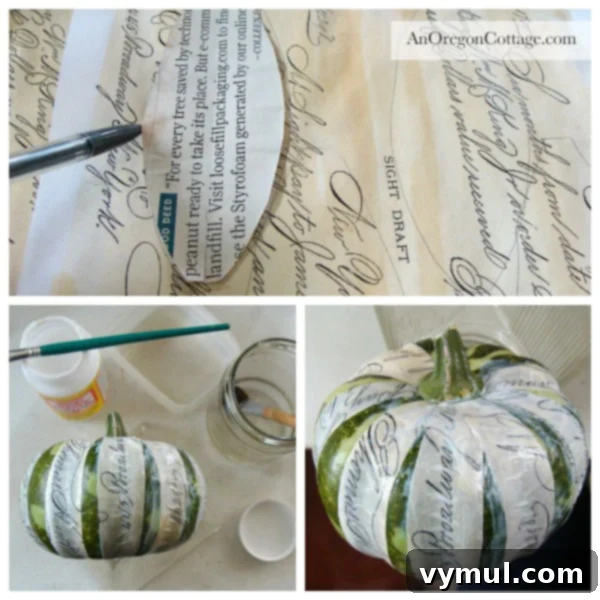
- Create Your Paper Templates: The key to a smooth finish on a curved surface like a pumpkin is accurate paper strips. Measure your pumpkin from top to bottom. Then, cut a rough paper template that is this length, with slightly rounded sides, to fit into the natural depressions or “ribs” of your pumpkin. It’s better to start with slightly larger pieces – you can always trim them down. The template is crucial for ensuring that each paper strip you cut will contain enough of the desirable script and will conform well to the pumpkin’s shape.
- Cut Your Scripted Strips: Using your template as a guide, cut enough scripted paper pieces to cover each depression of the pumpkin, as well as the rounded rib parts in between. Initially, you might be tempted to cover both sections with one large piece, but this often leads to frustrating wrinkles and tears due to the paper’s inflexibility on such a curved surface. It is significantly easier and yields a much smoother finish to work with thinner, individual strips that are cut to fit each distinct section of the pumpkin.
- Apply the First Layer of Mod Podge: Using a soft paint brush, apply an even, moderate layer of Mod Podge to the first section of the pumpkin you intend to cover. Work from the stem down to the bottom, covering the area precisely where your first paper strip will go. Don’t apply too much, as this can make the paper overly saturated and difficult to handle.
- Dampen Your Paper Strips: This is a crucial step for achieving a smooth finish! Lightly dampen the back of each paper strip just before applying it. Dip a clean brush into a small bowl of water and gently brush a thin film of water onto the back of the paper. This light dampening makes the paper more pliable and helps it adhere more smoothly to the curved surface of the pumpkin, significantly reducing wrinkling.
- Carefully Apply the Scripted Strips: Immediately after dampening, apply the paper strip to the Mod Podge-covered section of the pumpkin. Position the top of the strip snugly against the pumpkin’s stem. Use your Mod Podge brush to apply another layer of Mod Podge directly over the top of the paper, working your way down the strip. As you apply the top coat, gently smooth the paper with the brush, pushing out any air bubbles or excess Mod Podge. For a truly smooth edge, you can also use your finger to press and smooth the very edges of the paper.
- Continue Around the Pumpkin: Repeat steps 5-7, working your way around the entire pumpkin until all the main depressions are covered. Once completed, carefully set the pumpkin on the mouth of a jar or bottle to allow it to dry without disturbing the newly applied paper. This ensures even drying and prevents sticky spots from adhering to your work surface.
- Complete the Second Layer (Ribs): Since Mod Podge can be quite sticky, it’s highly recommended to allow this first layer of paper to dry completely before moving on. Once dry, repeat the entire process (steps 5-7) to cover the rounded rib sections of the pumpkin that remain exposed. Ensure that all of the original pumpkin surface is covered with your elegant scripted paper. Take your time to make sure there are no visible gaps.
- Seal for Durability and Finish (Optional but Recommended): Once your entire pumpkin is covered and fully dry, you may choose to apply a clear sealant. While Mod Podge itself offers some protection, a dedicated sealant provides a more durable finish and can offer different aesthetic qualities. Some crafters prefer a matte finish for a truly vintage look, while others enjoy a slight sheen. Spray sealants are often easiest to apply evenly. If you desire a different look or extra protection, this step is entirely up to your personal preference.
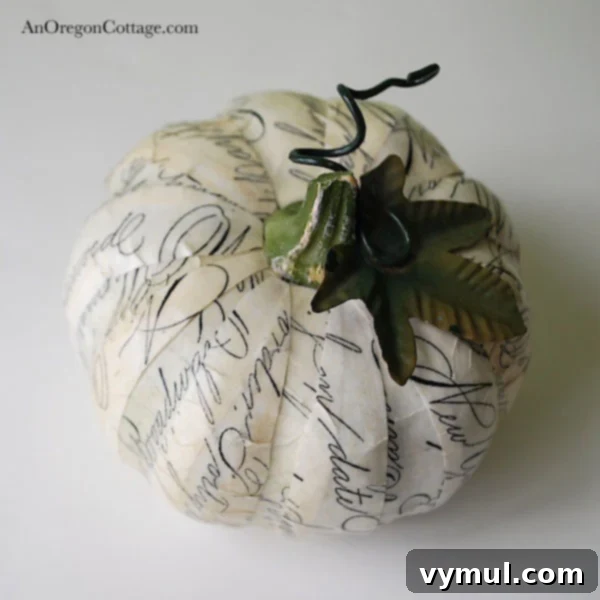
Adding the Finishing Touches and Styling Your Creation
To pay homage to the original Pottery Barn inspiration, I salvaged a small metal leaf from another decorative pumpkin I owned and hot-glued it to the top of my newly decoupaged pumpkin. This subtle embellishment is entirely optional, but I find it adds a charming, refined touch that truly elevates the piece.
In hindsight, I realized that rubbing on a bit of antiquing gel or wax would have given this pumpkin even more of that distressed, aged look reminiscent of my inspiration. It’s a fantastic technique for adding depth and simulating wear and tear on decorative items. Simply apply a small amount of gel or wax with a cloth, working it into the crevices, and then wipe away the excess for a beautifully weathered effect. I forgot this step during my initial creation, but the beauty of DIY is that you can always go back and add it later if you wish!
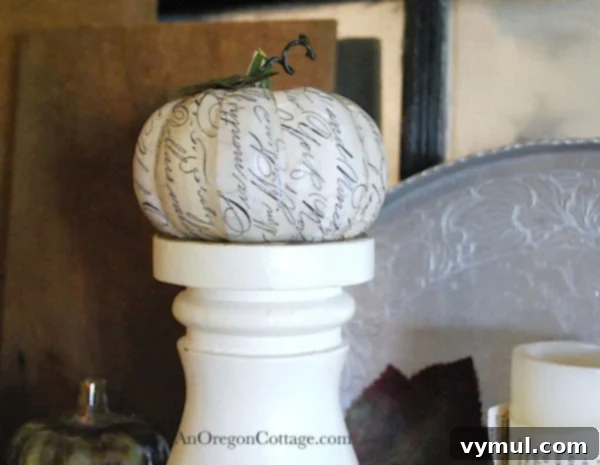
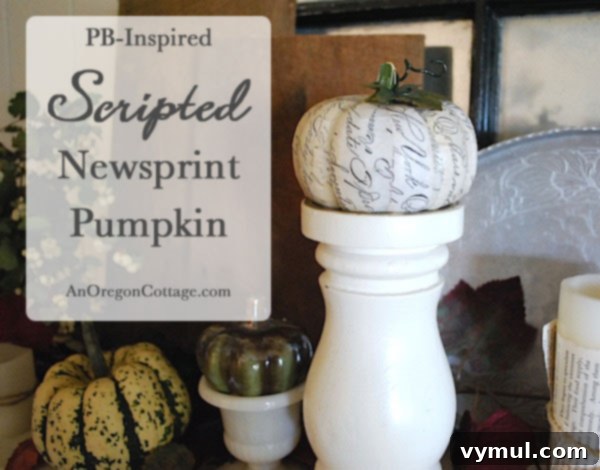
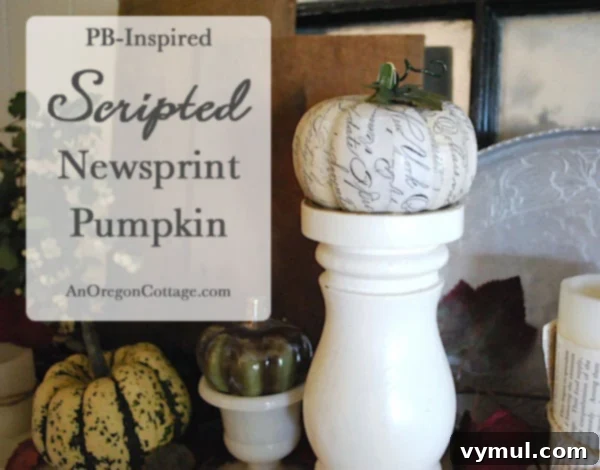
This little scripted newsprint pumpkin, with its worn and artistic elements, brings a truly unique charm to our fall mantel. Its small size, rather than being a limitation, became an opportunity for creative styling. By placing it atop a tall candlestick, I instantly gave it more height and visual importance, allowing it to stand out amidst other fall decorations.
The success of this project has me already scouting for larger pumpkins to decoupage in the same style. I envision creating a striking trio – perhaps in varying sizes – to serve as an elegant centerpiece on a dining table or an inviting console display. The possibilities for these custom, high-end look pumpkins are endless.
Have you ever experimented with decoupaging a pumpkin or other decorative items? Share your creative projects and tips in the comments below! This project is a testament to the fact that with a little inspiration and some craft supplies, you can transform everyday items into unique, personalized decor that truly reflects your style.
This post is part of our ongoing series on creative home transformations. If you’re curious to explore more budget-friendly decor ideas, you can delve into the full introduction to 31 Days of Thrift Store Transformations here.