The Ultimate Onion Guide: Growing, Harvesting, Curing, Storing, and Delicious Recipes
Welcome to the definitive guide on onions! From the initial planting to harvesting, curing, and long-term storage, this comprehensive resource covers everything you need to know. We’ll also dive into a treasure trove of the best recipe ideas to utilize your bountiful onion harvest, ensuring no culinary opportunity is missed.
Onions are, without a doubt, the unsung heroes of nearly every kitchen. They form the aromatic base of countless dishes, adding depth, sweetness, and a delightful pungency that transforms ordinary ingredients into extraordinary meals. It’s rare for a day to pass without reaching for an onion in some capacity, whether sautéing for a stir-fry, caramelizing for a soup, or chopping raw for a fresh salad.
While readily available and inexpensive at any grocery store, there’s immense satisfaction and a unique flavor profile that comes from growing your own onions. They are remarkably forgiving plants, making them an excellent choice for gardeners of all experience levels. Onions don’t demand a vast amount of garden space and offer the unique advantage of being harvestable at various stages—from tender green shoots to mature, flavorful bulbs.
For me, growing onions adds a personal touch to my culinary creations. There’s nothing quite like the pride of saying I grew everything in my homemade salsa or my rich roasted tomato sauce. This level of self-sufficiency and connection to my food is one of the most rewarding aspects of gardening.
In this ultimate guide, part of our series of Ultimate Guides, I’ll share proven tricks and techniques I’ve refined over the years to maximize your garden space for onion cultivation. We’ll explore effective methods for drying and curing your harvest to ensure longevity, along with practical storage solutions. Even if you primarily purchase your onions, this guide offers invaluable insights into selecting, preserving, and cooking with them, providing a curated collection of terrific preserving and cooking recipes to inspire your next kitchen adventure.
Exploring Onion Varieties: A World of Flavor
The world of onions is diverse, offering a spectrum of flavors, textures, and storage capabilities. Understanding the different varieties is key to choosing the right onions for your garden and your culinary needs.
- Sweet Onions: Famous for their mild flavor and high water content, sweet onions like ‘Walla Walla’ and ‘Vidalia’ are perfect for eating raw in salads or sandwiches, or for gentle caramelization. They typically have a shorter storage life.
- Storage Onions: These varieties, such as ‘Stuttgart’, ‘Ebenezer’, or ‘Yellow Globe’, are characterized by their pungent flavor, thicker skins, and excellent keeping qualities. They are ideal for cooking, roasting, and long-term storage throughout the winter months.
- Heirloom Onions: Varieties like ‘Capra’ offer unique flavors, colors, and histories. They are often chosen for their distinct characteristics and genetic diversity.
- Bunching Onions (Scallions/Green Onions): Varieties such as ‘Evergreen Hardy White’ don’t form large bulbs but rather produce slender green stalks that are harvested young. They can often be cut repeatedly for a continuous harvest.
- Red Onions: Known for their beautiful purple-red skins and milder flavor than yellow storage onions, red onions are often used raw in salads or for pickling. They also caramelize beautifully.
- White Onions: Offering a crisp texture and sharper flavor than yellow onions, white onions are common in Mexican cuisine and great for dicing and sautéing.
Each variety also falls into a “day-length” category (short-day, intermediate-day, or long-day), which dictates how many hours of daylight they need to form bulbs. Knowing your region’s day length is crucial for successful bulbing. For example, ‘Walla Walla’ (a long-day onion) and a robust storage onion (often also long-day for my climate) are consistent performers in my garden. For detailed descriptions and to explore more options, a good seed catalog can be an invaluable resource.
Starting Your Onion Journey: Seeds vs. Sets
The journey to a bountiful onion harvest begins with either tiny seeds or small bulbs known as “sets.” Each method has its advantages and challenges.
Onion seeds are incredibly small, resembling tiny black specks. When planting, simply scatter them thinly on the surface of your growing medium and lightly cover with a fine layer of compost or seed-starting mix. From my experience, direct sowing onion seeds outdoors in the garden has not yielded consistent success. The delicate seedlings often struggle with unpredictable weather and competition from weeds.
Therefore, I highly recommend starting onion seeds indoors, typically 8-10 weeks before your last frost date. This controlled environment provides the ideal conditions for germination and initial growth. For a step-by-step guide on starting various plants from seed, you can refer to this detailed tutorial. Once the seedlings are robust enough, they can be transplanted outdoors after the threat of frost has passed.
Historically, I relied solely on growing onions from seed and transplanting the seedlings. This approach is often touted as the best way to cultivate a wider range of varieties and maintain greater control over the growing process. However, I often encountered significant setbacks; for various reasons, only about half of my seedlings would thrive. This resulted in just enough onions for immediate consumption during the growing season, but rarely enough for long-term storage.
My gardening journey took a turn when I began experimenting with onion sets. Onion sets are essentially small, immature onion bulbs that have been partially grown and then dried. While red onion sets sometimes tend to bolt (go to seed prematurely), a common issue with sets that leads many to prefer seedlings, I found tremendous success with white storage onion sets. They grew beautifully and consistently, finally providing me with a generous harvest that lasted well into mid-March of the following year.
My best tip for aspiring onion growers is a hybrid approach: **grow both onion sets AND seedlings.** Utilize seedlings for growing sweet, mild varieties that you intend to consume fresh throughout the growing season. Reserve onion sets for your storage varieties, which typically perform reliably and produce substantial bulbs perfect for curing and keeping through the colder months. This dual strategy ensures a diverse and abundant onion supply.
How to Grow Onions: From Preparation to Thinning
Successful onion cultivation begins with proper site selection and diligent planting. Onions thrive in full sun—at least 6-8 hours daily—and well-drained, loose soil with a pH between 6.0 and 7.0. Amending your soil with plenty of organic matter, such as compost, before planting will significantly improve drainage and fertility.
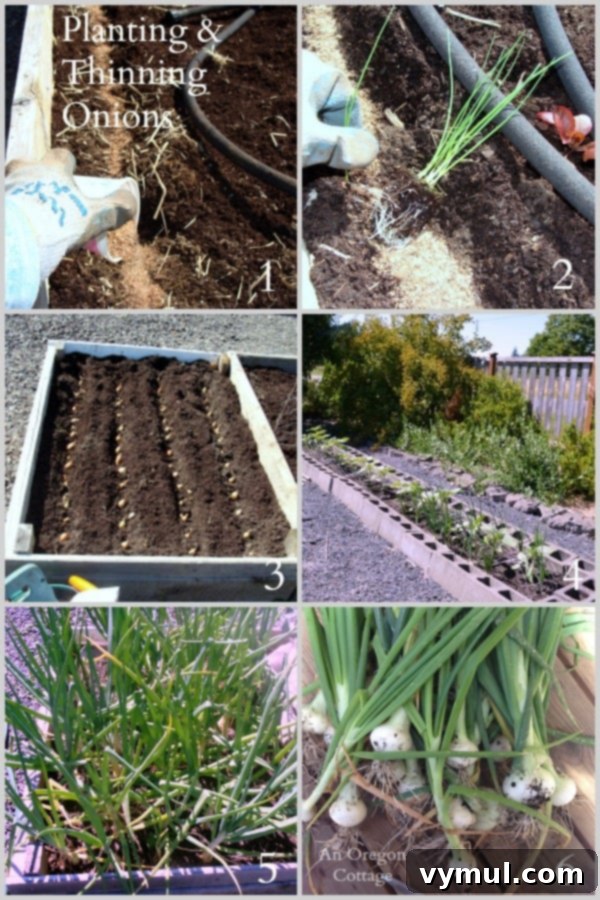
- Planting Seedlings: If you’ve started your own seedlings indoors or purchased them from a nursery, prepare your planting bed by digging a shallow trench, approximately 3-4 inches deep. Add a generous layer of balanced organic fertilizer (like a granular all-purpose vegetable fertilizer) to the bottom of the trench, then mix it thoroughly with the soil. Though not always visible in photos, this crucial step provides a nutrient boost directly to the developing roots.
- Spacing Seedlings: Carefully separate your onion seedlings, taking care not to damage their delicate roots. Lay them out individually along your prepared trench, spacing them purposefully close—about 2 inches apart. This initial close spacing allows you to harvest tender green onions by thinning them out as they grow, maximizing your yield from a single planting. Once spaced, gently fill in the trench, firming the soil around each seedling to ensure good root-to-soil contact.
- Planting Onion Sets: For onion sets, which are typically easier and quicker to establish, use a trowel to create furrows or individual holes. Space these furrows about 6 inches apart to accommodate future bulb growth. Lay the onion sets into the furrows, positioning them about 2 inches apart, similar to seedlings. This allows you to visually confirm spacing before covering. Cover the sets with soil, ensuring only the tip of the bulb is visible, and firm the soil around them.
- Initial Watering and Care: After planting, water all your newly planted onions thoroughly. Consistent moisture is vital, especially during establishment and bulb formation, so water regularly if rainfall is scarce.
- Innovative Planting Schemes: To optimize garden space, I often implement a rotating planting scheme. For instance, I use a long raised bed to grow onions in the early spring. As the onions mature and are ready for harvest, I simultaneously plant sunflowers in the same bed. By the time the sunflowers require significant space and nutrients, the onions have already been harvested, creating an efficient succession planting system.
- Strategic Thinning for Continuous Harvest: Observe your onion bed as the season progresses. Even with initial close spacing, you’ll find that your onions are still quite dense. In May and June, for our Pacific Northwest climate (where we plant in early spring), we begin thinning. Select every other onion to remove, carefully pulling them up. These ‘thinnings’ are perfect mid-season harvests, yielding delicious green onions or small, tender bulbs that are fantastic for grilling or incorporating into any recipe. This practice ensures that the remaining onions have ample room to mature and form full, healthy bulbs.
- Weeding and Fertilizing: Keep the onion patch free of weeds, which compete for nutrients and water. Onions have shallow root systems, so weed by hand or use a shallow hoe to avoid disturbing the roots. Side-dress with a nitrogen-rich fertilizer every few weeks during the early growth phase to promote strong foliage, but reduce nitrogen as bulbs begin to form.
- Pest and Disease Management: While generally resilient, onions can be susceptible to pests like onion thrips or diseases such as downy mildew. Monitor your plants regularly. Good air circulation, proper watering techniques (watering the soil, not the foliage), and crop rotation are key preventative measures.
How to Harvest Onions: Timing is Everything
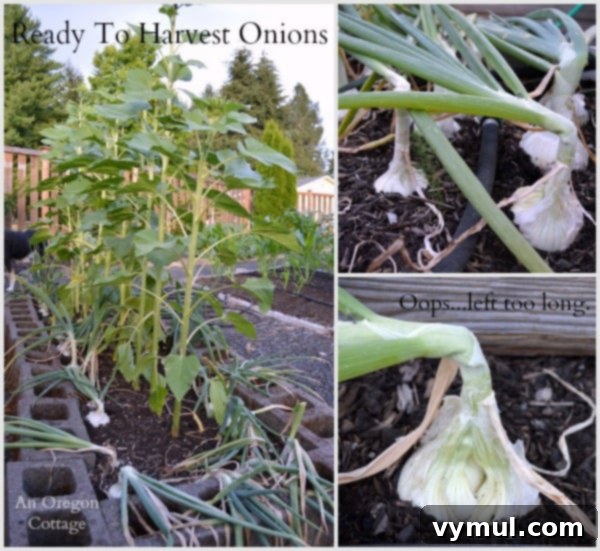
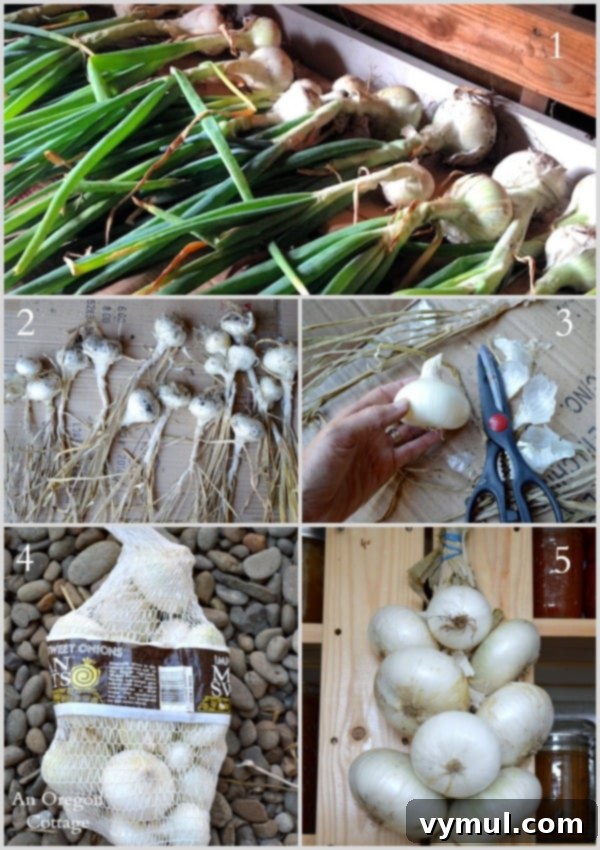
Knowing precisely when to harvest your bulbing onions is crucial for ensuring their flavor, size, and storage potential. The primary indicator that your onions are ready for harvest is when the majority of their leafy green tops begin to fall over and naturally dry out. This signals that the plant has redirected its energy from foliage growth to bulb development, reaching its peak.
It’s important not to delay harvesting once this stage is reached. Overly mature onions left in the ground can develop thicker necks, become more susceptible to disease, or even split. Additionally, if possible, cease watering your onion patch for the few weeks leading up to the anticipated harvest date. Reducing water intake at this stage helps the outer skin to dry and toughen, which is vital for good storage; excessive moisture can lead to outer layers rotting and significantly diminish their keeping quality.
My own experience often serves as a cautionary tale. I frequently observe a few tops falling over and mistakenly think, “Just a little longer, perhaps the bulbs will grow even bigger.” This procrastination, as seen with the splitting bulb in the corner of the photo, is a common pitfall. Once the tops begin to fall, the bulbs have largely finished expanding. Waiting longer will not increase their size but will instead increase the likelihood of the bulbs splitting, compromising their integrity and storage life. Learn from my mistakes: when those tops start to tumble, it’s time to harvest!
To harvest, gently loosen the soil around the bulb with a trowel or garden fork, then carefully pull the onion from the ground. Avoid bruising the bulbs, as any damage can lead to premature spoilage during storage. Shake off excess dirt, but do not wash the onions at this stage.
How to Cure and Store Onions for Longevity
Curing is a critical post-harvest step that prepares your onions for long-term storage, especially for robust storage varieties. It involves drying the outer layers and neck of the onion, forming a protective seal that prevents moisture loss and inhibits the entry of pathogens that cause spoilage.
- Initial Curing Process: Immediately after harvesting, lay your onions out in a single layer. This can be done on cardboard, newspaper, or a wire screen to ensure good air circulation around all sides. Choose a dry, well-ventilated, and somewhat warm area for curing, such as a shed, garage, or even a covered porch. Direct sunlight can scald the onions, so a shaded, airy spot is ideal. During this period, the outer skins will dry and tighten, and the necks will shrivel closed.
- Assessing Readiness for Storage: After approximately two weeks of curing (though this can vary based on humidity and temperature), the onion tops will have completely dried and become crispy. The outer skins should be papery and firm, and the neck should feel dry and tight. This indicates they are properly cured and ready for trimming and final storage.
- Trimming and Cleaning: Once cured, it’s time to prepare your onions for their final storage method. Gently brush off any remaining loose soil with your hands; avoid washing them as this reintroduces moisture. Using sharp scissors or garden snips, trim off the dried roots close to the bulb. Next, trim the dried tops to within about an inch of the top of the bulb. Onions with the thinnest, tightest necks tend to store the best, as a thick neck can indicate moisture still present, making them prone to rot.
- Optimizing Storage Conditions: Store your trimmed onions in mesh bags, old nylon stockings, or reused onion bags. These allow for continuous air circulation, which is essential to prevent mold and sprouting. When loading the bags, place onions with the thinnest necks and firmest bulbs at the bottom, as these are typically the longest-lasting. Store these bags in a cool, dry, and dark location. The ideal storage temperature is between 35-50 degrees Fahrenheit (2-10 degrees Celsius), and humidity should not exceed 70%. Temperatures above 50°F can encourage sprouting, while high humidity promotes mold and rot.
- Braiding for Aesthetic and Practical Storage: For an attractive and space-saving storage solution, you can braid your onions. This method requires keeping the dried tops intact, as they form the “strands” of the braid. Group 3-5 onions together, intertwining their dried tops tightly. As you add more onions, continue weaving their tops into the growing braid. Secure the end with twine or a durable rubber band, which I’ve found to be particularly effective as its elasticity helps hold the braid together even as the tops continue to dry and shrink slightly. Hang braided onions in your cool, dry storage area.
- Regular Inspection and Rotation: Even with ideal storage conditions, it’s crucial to check your stored onions regularly—at least once a week. Look for any signs of softening, sprouting, or mold. Remove any affected onions immediately to prevent spoilage from spreading to healthy ones. Prioritize using any onions that appear to be softening or showing early signs of deterioration, ensuring you get the most out of your harvest.
Embracing Onions in the Kitchen: Preserving and Cooking Delights
Once you’ve successfully harvested and stored your homegrown onions, the culinary possibilities are endless. Onions are incredibly versatile, transforming into sweet, savory, or tangy components depending on how they’re prepared. Below is a collection of inspiring recipes, categorized for preserving your bounty and incorporating them into everyday cooking.
Preserving Recipes: Extend Your Onion Harvest
Preserving onions allows you to enjoy their distinct flavor long after the harvest season has passed. These recipes transform fresh onions into delightful condiments, ingredients, and staples for your pantry.
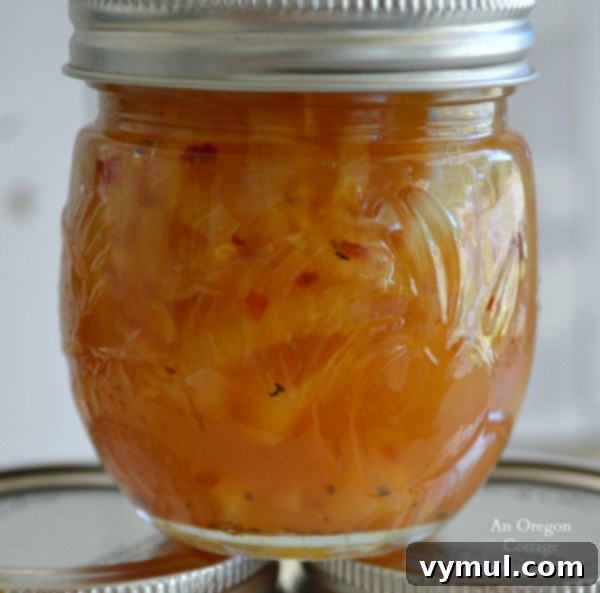
Sweet & Spicy Onion Marmalade
Dehydrating Green Onions & Regular Onions @ Well Preserved
How to Freeze Onions @ Money Saving Mom
Pickled Red Onions @ The Cafe Sucre Farine
Pickled Pearl Onions @ Nat’l Center for Food Preservation
Canned Caramelized Onions @ Little House Living
Balsamic Rosemary Onion Jam @ Love and Olive Oil
Onion Chutney @ Closet Cooking
Sweet Onion Jelly @ Food.com
Onion Jam @ Tasty Kitchen
Caramelized Onion Jam @ Taste of Home
Dry Onion Soup Mix @ Stockpiling Moms
Cooking Recipes: Everyday Onion Inspiration
From main courses to delectable appetizers and side dishes, onions are the star or a supporting player in these fantastic recipes, showcasing their incredible versatility in cooking.
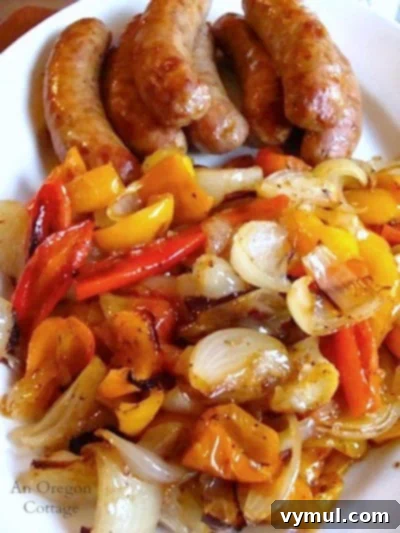
Roasted Sausages with Peppers & Onions
Green Beans with Caramelized Onions & Tomatoes
Potato & Caramelized Onion Frittata
How to Dice an Onion @ Well Preserved
Onion Strings @ Pioneer Woman
Crispy Baked Onion Rings @ Sally’s Baking Addiction
Crockpot Caramelized Onions @ Family Fresh Meals
French Onion Chip Dip @ My Baking Addiction
Baked Blooming Onion @ Gimme Some Oven
Hot Sweet Onion “Crack Dip” @ White on Rice Couple
Hot Caramelized Onion Dip with Bacon and Gruyere @ Spicy Southern Kitchen
French Onion Soup @ Your Homebased Mom
Baked Stuffed Onion @ Martha Stewart