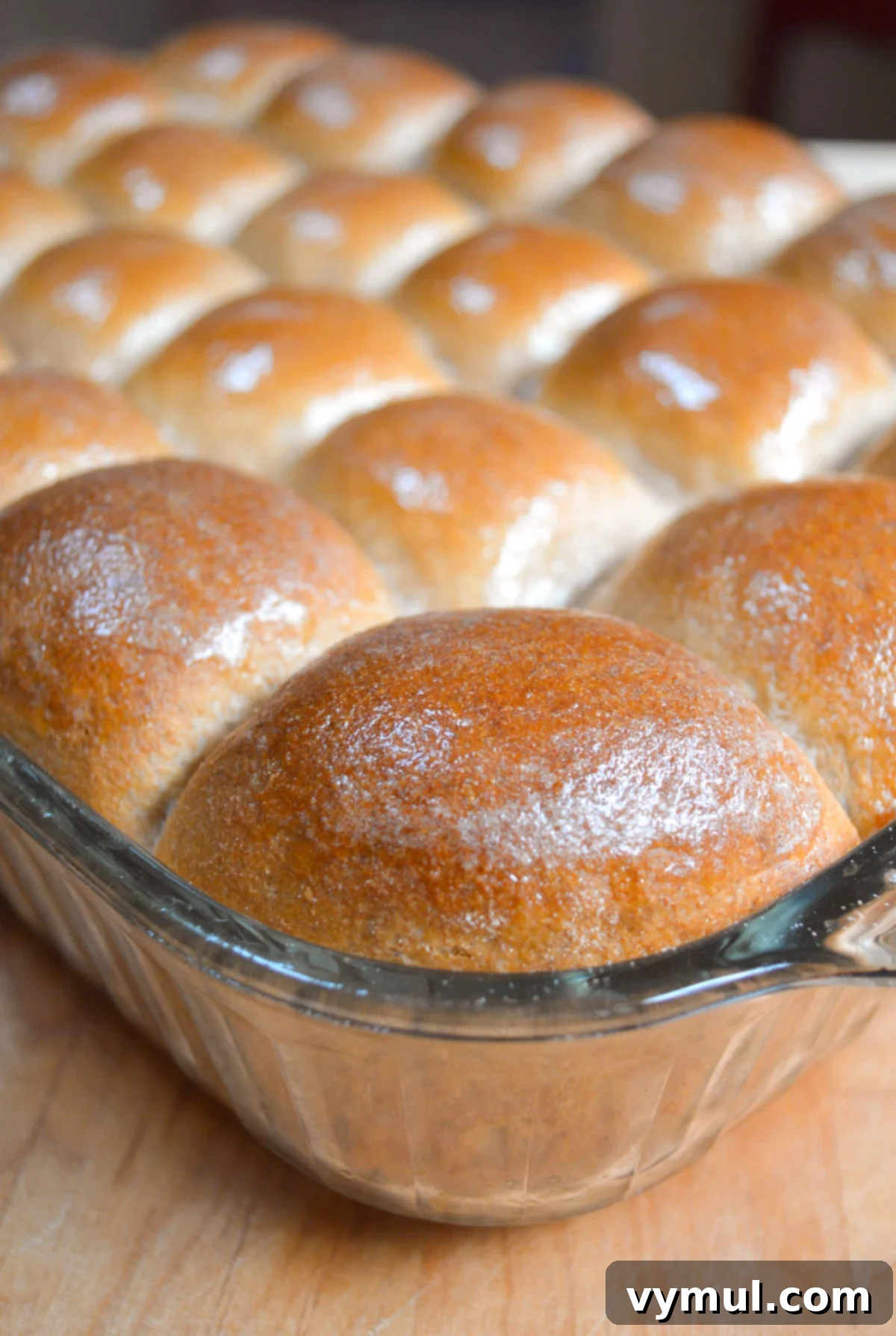
Effortlessly Soft & Fluffy 100% Whole Wheat Dinner Rolls: Your Ultimate Recipe Guide
Welcome to the definitive guide for crafting the most incredibly soft, tender, and bakery-style dinner rolls, made entirely with wholesome 100% whole wheat flour! Forget everything you thought you knew about whole wheat bread being dense or dry. This recipe, cherished by countless home bakers and boasting hundreds of five-star reviews, has consistently proven that fluffy, delicate rolls are not only achievable but also surprisingly easy to create. Perfect for any occasion, from cozy weeknight meals to grand holiday feasts, these wholesome yeast rolls are guaranteed to become a family favorite. With updated expert tips, comprehensive answers to your most common questions, and a detailed step-by-step tutorial, you’ll soon be baking the perfectly fluffy, subtly sweet dinner rolls you’ve always dreamed of. Prepare for rave reviews – this recipe delivers on its promise of deliciousness!
✩ What readers are saying…
“I have been looking forever for a whole wheat dinner roll that would not disappoint. Most are heavy, dry and have a tougher “chewy” feel to them, etc. This roll is THE WHEAT ROLL to end all wheat rolls! Lightly crisp on the outside, SO SOFT and FLUFFY inside. Fragrant and wonderfully wholesome!” -Tanie
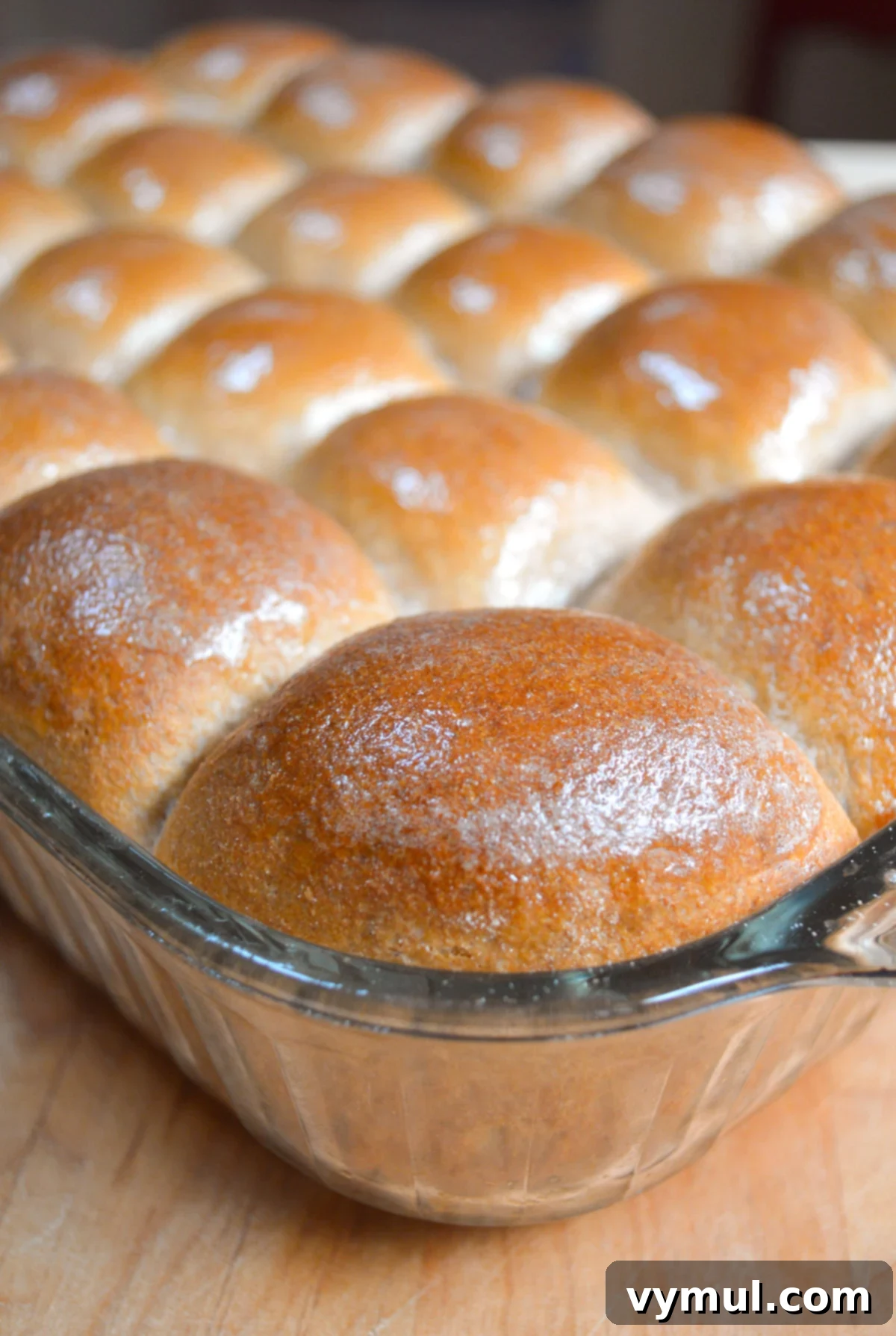
This truly is the best dinner roll recipe you’ll ever encounter. First published in 2009, this remarkable all-whole-wheat dinner roll recipe has consistently ranked as one of our most popular creations. It’s a testament to its unparalleled taste and texture – I’ve even had a friend confess that she dreams about these rolls! If you’re searching for soft, fluffy whole wheat dinner rolls that genuinely impress, you’ve found your holy grail.
To ensure your success, you’ll find both a detailed picture tutorial and a helpful video below, guiding you through every single step. Even if you’re a complete novice to bread making, these resources will empower you to create these incredibly soft dinner rolls with confidence. They are genuinely amazing, and once you try them, you’ll understand why. Make sure to explore the “Your Questions Answered” section after the recipe card; it’s packed with invaluable insights and troubleshooting tips to perfect your baking journey.
Some links in this article are affiliate links and if you click on them I will receive a small commission at no cost to you.
My family absolutely adores this whole wheat dinner rolls recipe. Along with my 100% whole wheat sandwich bread, these honey-sweetened rolls were the game-changer that finally convinced me that “soft” and “whole wheat” could, in fact, coexist harmoniously in a bread. This recipe changed my perception of healthy baking forever.
Can You Really Have Fluffy and Soft Dinner Rolls That Are 100% Whole Wheat?
The resounding answer is yes, absolutely! It might sound unbelievable, but after tasting these rolls, many people are genuinely surprised to learn they are made with 100% whole wheat flour, and not even a special type – just plain old regular whole wheat. Often, people assume I must have added at least some all-purpose flour to achieve such a tender crumb.
But it’s true: these incredibly soft and fluffy dinner rolls are crafted solely with standard “hard red” whole wheat. For those curious, I’ve also achieved excellent results using all spelt flour and all whole hard white wheat. The secret to their irresistible lightness and delicate texture lies in a carefully balanced combination of ingredients: eggs, butter, and honey. These elements work synergistically to create a roll so good, you won’t be able to stop at just one. They are so light and fluffy that they almost don’t need any butter when served – though, of course, a little extra butter never hurts!
When you bring (or serve) these magnificent rolls to any dinner gathering, whether it’s a casual weeknight or a festive holiday, everyone will undoubtedly be asking for your recipe. And the best part? They are genuinely easy to make, especially once you become comfortable working with a slightly wetter dough than traditional white bread recipes often call for.
Still skeptical? Follow along with our detailed guide, and I’ll show you every step, including exactly what the dough should look and feel like at each stage. You’ll see for yourself that the promise of soft, wholesome whole wheat rolls is entirely achievable. Join the thousands of others who have made these rolls and become the star of their gatherings! (New for 2025: I’ve meticulously reviewed over 1000 comments and integrated a wealth of reader tips, variations, and answered questions throughout this article to further enhance your baking experience!)
Recipe Ingredient Notes
Over the years, I’ve received numerous questions and comments regarding the ingredients and successful substitutions. Initially, I might have been too rigid, suggesting the recipe shouldn’t be halved (it definitely can be!) or that substitutions would compromise the soft and tender result (many have proven me wrong!). Here’s what I’ve personally used and learned from extensive testing and reader feedback:
- Yeast: I’ve successfully used both active dry yeast (which I typically buy in bulk) and instant yeast over the years without needing any adjustments to the recipe, with identical fantastic results. The amount often raises questions; some wonder about packet equivalents (use 2 standard packets), while others believe 2 tablespoons is excessive. Rest assured, it’s not a mistake – this recipe benefits from the specified amount for its tender, low-knead structure. While you’re free to experiment with less, I can’t guarantee the same perfect outcome.
- Warm Water: When the recipe calls for “warm” water, I’m referring to a temperature range of 90 to 110 degrees Fahrenheit (32-43°C), which is usually the temperature I get directly from my tap. If you prefer not to use tap water, feel free to heat cold water, but it’s crucial not to exceed 120 degrees Fahrenheit (49°C), as higher temperatures can kill the yeast and prevent your rolls from rising.
- Butter: I always recommend using pure, salted butter for its rich flavor, which complements the whole wheat wonderfully. However, for those with dairy sensitivities or preferences, many readers have successfully substituted oil for butter, achieving excellent results.
- Honey: Honey is my preferred sweetener for these rolls, as its unique flavor perfectly enhances the nutty notes of whole wheat. For various reasons, some prefer not to use honey. I’m happy to report that maple syrup or regular cane sugar can be successfully substituted. You can also slightly decrease the amount of any sweetener, but I strongly advise using at least 1 tablespoon to provide immediate nourishment for the yeast, which is essential for a robust and reliable rise.
- Eggs: The recipe specifies standard large eggs. For those with egg allergies, numerous commenters have reported great success using a flax egg substitution, allowing more people to enjoy these delightful rolls.
- Lukewarm Milk/Buttermilk: I primarily use regular milk (1%, 2%, or whole milk interchangeably). “Lukewarm” here means slightly cooler than warm, ideally around 95-100 degrees Fahrenheit (35-38°C). Many readers have successfully used milk substitutes like coconut milk and almond milk. Combined with oil instead of butter, these substitutions make the rolls suitable for dairy-free diets. Furthermore, using these dairy and butter substitutes along with flax eggs and sugar transforms the recipe into a delicious vegan option. Some have even used just water, reporting good results.
- Flour: This recipe uses regular “hard red” whole wheat flour, which is the most common type found in grocery stores. This is the whole wheat flour I use most often, and this lighter whole wheat flour can produce an even more delicate roll. Readers have also confirmed its success with sprouted wheat flour and freshly milled flour (find more details on this in the FAQs). Important Note: I do not recommend using whole wheat pastry flour. This type of flour is milled from soft red or white wheat and contains less protein, which is crucial for forming the gluten structure needed in yeast and sourdough breads to achieve that desirable rise and texture.
- Salt: The measurement provided for salt is for regular table salt or fine-grain sea salt. If you’re using kosher salt or any other coarse-ground salt, you will need to adjust the amount, likely increasing it, as coarser salts take up more volume for the same weight of sodium.
TIP: If you find your whole wheat rolls have a slightly “cornmeal-like” texture, as some comments have mentioned with regular whole wheat, trying white (also known as golden) whole wheat flour might help. While this hasn’t been my personal experience with standard whole wheat, everyone’s palate and preferences are unique.
Whole Wheat Rolls Video Tutorial
A few notes on the video to clarify some points:
- Water discrepancy. You might notice in the video that it appears I’m using 1 cup of water, but please follow the recipe card explicitly: you only need 1/2 cup of warm water. I apologize for any confusion caused by the video’s visual; the 1/2 cup listed in the written recipe is correct and essential for the right dough consistency.
- Halving the recipe. In the video, I suggest that this recipe isn’t ideal for cutting in half due to the three eggs, and I often recommend freezing excess rolls for later convenience. However, I’ve been delighted to learn that MANY people have successfully halved the recipe! Common methods include using two small eggs, or whisking a second egg and using precisely half of it (a large egg is typically 1/4 cup when whisked, so 2 tablespoons would be half), or even simply using just one egg.
- Ingredient substitutions. My earlier comment in the video, “this isn’t the time for substitutions,” was poorly phrased and I regret it. My intention was not to dismiss the needs of individuals with allergies or health issues who often have no choice but to seek alternatives. I was primarily referring to the debate between butter and margarine (as I consider margarine less of a “real food” option and would now only recommend an oil replacement for butter if needed). I am incredibly grateful for the grace of our community and the many readers who have experimented with various substitutions, allowing so many more people to enjoy this wonderful recipe today!
Make Soft 100% Whole Wheat Dinner Rolls Step-by-Step
Note: This section provides a detailed picture tutorial. For the complete printable recipe card with exact measurements, please scroll to the bottom of the page.
Step 1: Activate the Yeast. Begin by dissolving the yeast in 1/2 cup of warm water – remember, warm, not hot. Simply measure the warm tap water into a glass measuring cup, add your yeast, stir it gently with a whisk until dissolved, and then set it aside to allow the yeast to activate. You should see it become slightly foamy after a few minutes, indicating it’s alive and ready.
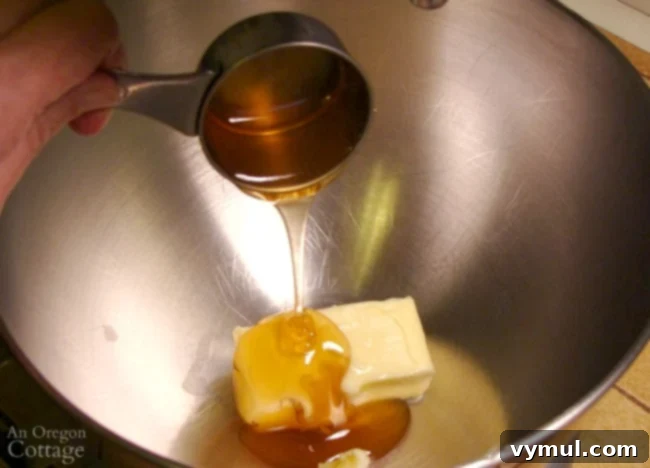
Step 2: Cream Butter and Honey. In the bowl of a stand mixer, add your softened butter and honey. Using the paddle attachment, cream these two ingredients together until they are well combined and lightened. If you don’t have a stand mixer, a hand-held mixer or even mixing vigorously by hand with a wooden spoon will work – refer to the FAQs for more tips on hand mixing.
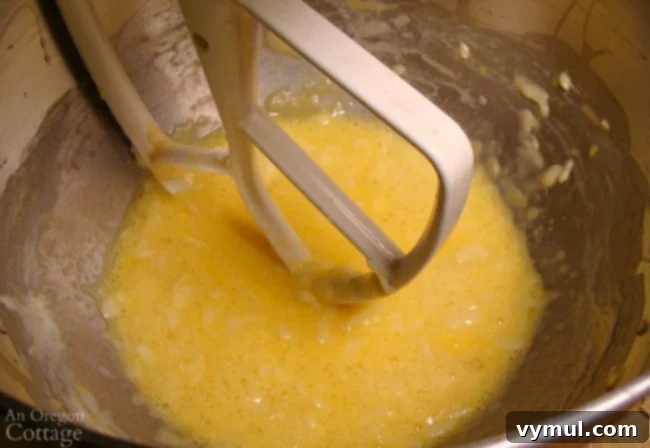
Step 3: Combine Wet Ingredients. Add the eggs to the creamed butter and honey mixture and beat thoroughly, making sure to scrape down the sides of the bowl to incorporate everything. Next, pour in your warmed buttermilk (or milk) and the activated yeast mixture. Note: At this stage, the mixture will likely not be perfectly smooth; it’s completely normal and acceptable to see small lumps of butter floating around, as shown in the picture above.

Step 4: Incorporate Flour and Salt. Add 4-1/2 cups of whole wheat flour along with 1-1/2 teaspoons of salt to the wet mixture. Mix everything thoroughly until just combined. Trust me on the salt – omitting it or using too little will result in a bland roll, and I speak from experience!
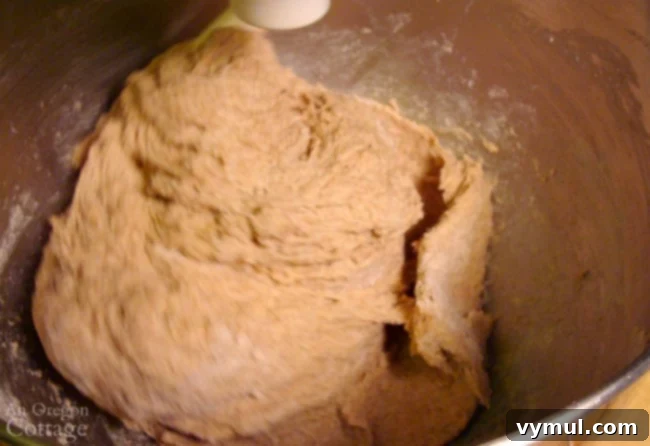
Step 5: Light Kneading. Switch to the dough hook attachment on your stand mixer and knead the dough for only one to two minutes. The goal here is not to heavily develop gluten, but rather to lose the extreme stickiness. If needed, add just a couple more tablespoons of flour, one at a time, being very cautious not to add too much.
IMPORTANT TIP: Resist the urge to add too much flour! If you continuously add flour and keep kneading, the flour will eventually absorb, making the dough less sticky to the touch but potentially resulting in dense rolls. You should knead for only about a minute or so, adding a minimal amount of flour as needed and scraping down the sides of the bowl, just until the dough is no longer tacky when gently touched.

Step 5b: Dough Consistency Check. While challenging to capture perfectly in a photograph, when you touch the surface of the dough with your finger, it should not come away with any dough sticking to it. Even though the dough itself still appears quite sticky and will cling to the sides of the bowl (which is good!), if your finger comes away clean, it’s perfectly ready for its first rise.
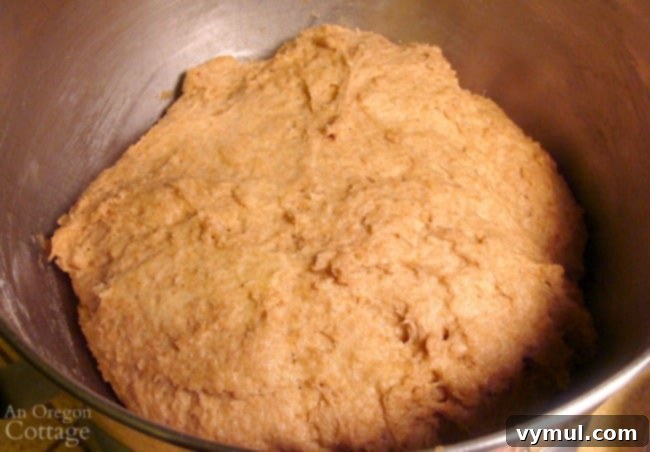
Step 6: First Rise. Leave the dough in the mixing bowl, cover it with a clean kitchen towel, and let it sit at room temperature for one hour. The image above shows the dough after its initial hour of rising. As you can observe, it has risen somewhat, but it won’t necessarily have “doubled” in size, which is perfectly normal for this recipe. Don’t worry, the rolls will undergo a significant rise later in the baking pan.
IMPORTANT NOTE: If you’re unsure about the ideal dough consistency, especially regarding its stickiness, the video tutorial can be incredibly helpful. The most common pitfall for new bakers of this recipe is adding too much flour, which inevitably leads to dense, heavy rolls instead of the desired light and fluffy ones. The video specifically addresses what the dough should look like, recommended equipment, and reiterates the critical warning against over-flouring. (Again, a friendly reminder: even if the video seems to show 1 cup of water, only use 1/2 cup as specified in the printable recipe card below.)
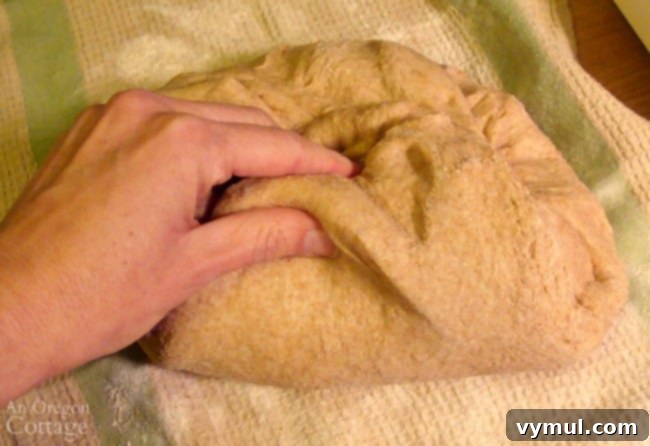
Step 7: Brief Rest. Gently turn the risen dough out onto a lightly floured surface. Knead it a few times with your hands to gently deflate it and bring it together. Then, cover the dough again with a towel and let it rest for a brief 3 minutes. This short rest allows the gluten to relax, making the dough easier to handle and shape.

Step 8: Prepare Baking Pan. While your dough is resting, take out a 13×9-inch baking pan and generously butter or oil the bottom and sides. This prevents sticking and contributes to the lovely soft crust of the rolls.
HANDLING TIP: If you don’t have suitable counter space for rolling out dough, a lightly floured, clean tea towel spread on your table or countertop works wonderfully. Not only does it provide a great non-stick surface, but it also helps minimize the amount of flour needed for handling and makes cleanup a breeze!
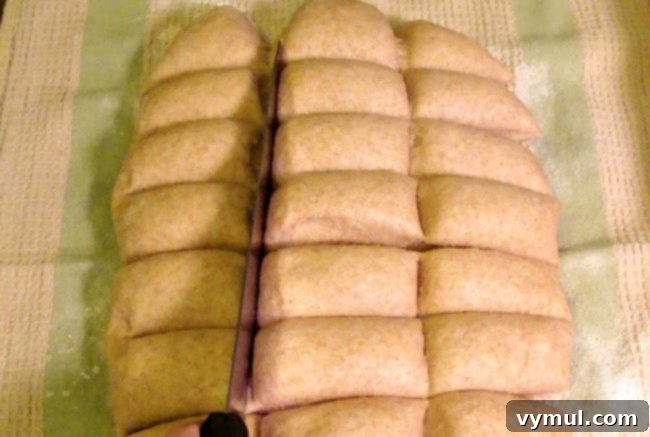
Step 9: Divide the Dough. After resting, flatten the dough into a roughly rectangular shape on your lightly floured surface. Using a sharp knife or a bench scraper, cut the dough into 24 as-even-as-possible pieces. As depicted in the image, you might find some middle pieces are larger than the corner ones. Simply adjust by carefully cutting small portions from the larger pieces and adding them to the smaller ones until you achieve approximate uniformity.
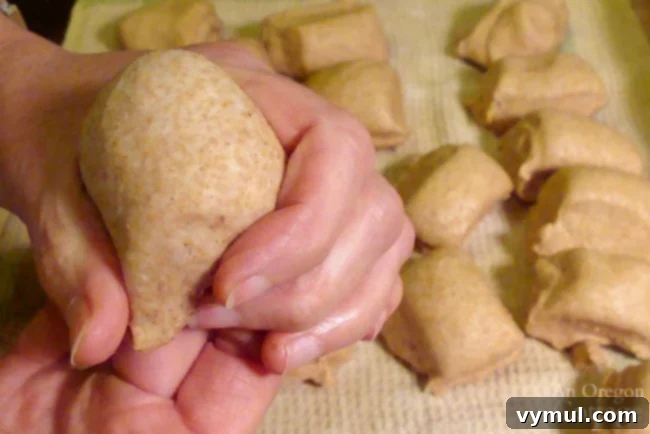
Step 10: Shape the Rolls. Now it’s time to shape your dough pieces into beautifully rounded balls. To achieve that classic smooth, domed top and create a bit of surface tension, I have a preferred method: push a dough piece through your thumb and fingers from the middle, then turn the newly formed ball over and firmly pinch the ends together to seal the seam. Alternatively, you can roll the dough into balls on a non-floured, marble-like surface, pulling them towards you to shape and create tension against the surface.

Step 11: Arrange in Pan. Place the shaped dough balls, seam-side down, into your generously buttered baking dish. Arrange them in rows of four across and six down. It’s crucial that the rolls are touching each other in the pan. This closeness encourages them to bake into soft, pull-apart rolls with incredibly tender sides – the center ones are often my absolute favorite!
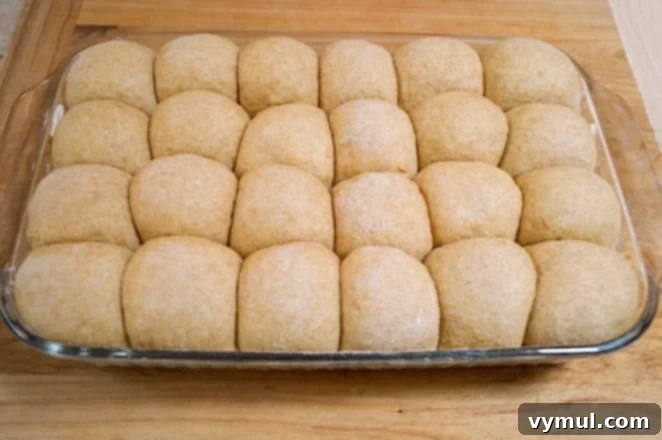
Step 12: Second Rise (Proofing). Cover the pan (using a clean kitchen towel or a reusable cover, shaking off any excess flour from a towel) and let the rolls rise for another hour. The image above illustrates what they should look like after this hour of proofing. They won’t be dramatically spilling over the edges of the pan, but they will have expanded significantly, with all sides now firmly touching. Ensure they rise sufficiently but avoid over-proofing, especially if your kitchen is particularly warm.
PRO TIP: To manage your baking time efficiently, set a timer for 45 minutes after the rolls begin their second rise. This will remind you to preheat your oven to 350 degrees Fahrenheit (175°C). Then, set a second timer for the remaining 15 minutes of the rising time, ensuring your oven is perfectly ready when the rolls are.
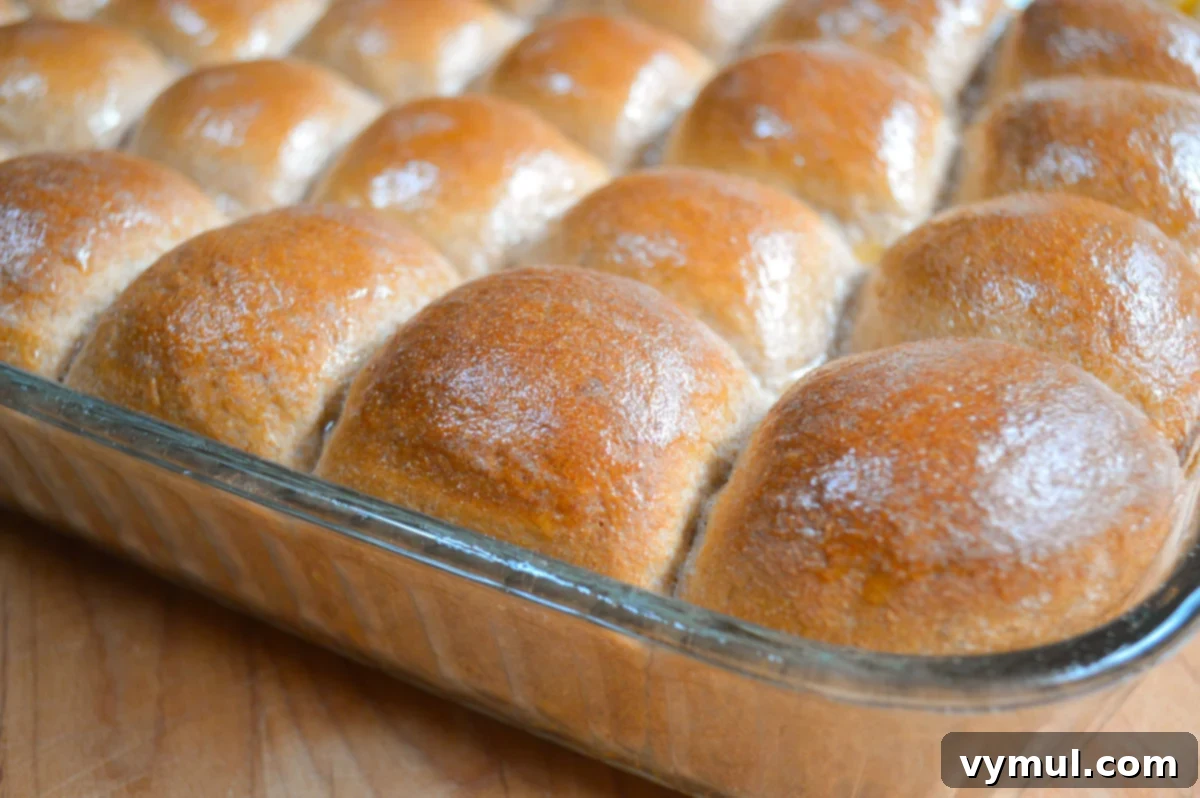
Step 13: Bake and Butter. Bake the rolls for 20-25 minutes in your preheated oven, or until they achieve a beautiful golden brown color on top. For even browning across the entire pan, I recommend rotating the pan halfway through the baking time, typically after about 10 minutes.
FINISHING TOUCH TIP: Immediately after taking the rolls out of the oven, generously brush their tops with softened butter. This step creates an irresistible glossy finish, adds another layer of rich flavor, and helps keep them incredibly soft. Trust me, you’ll be so glad you did! For an alternative finish, some bakers like to brush the rolls with an egg wash before baking (sometimes followed by a sprinkle of sesame seeds) for an extra golden sheen.
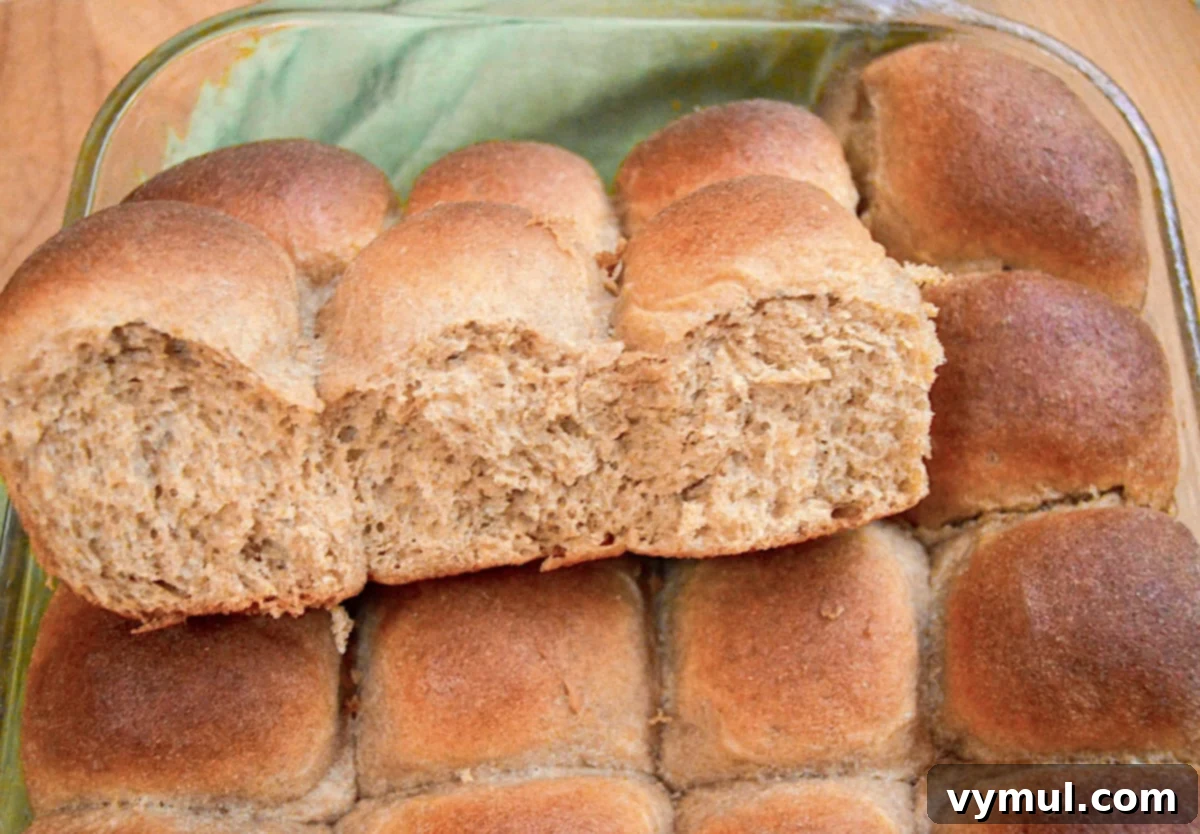
Once the rolls have cooled slightly to a comfortable temperature, gently pull them out of the pan and separate them for serving. The tender, soft sides are part of their charm!
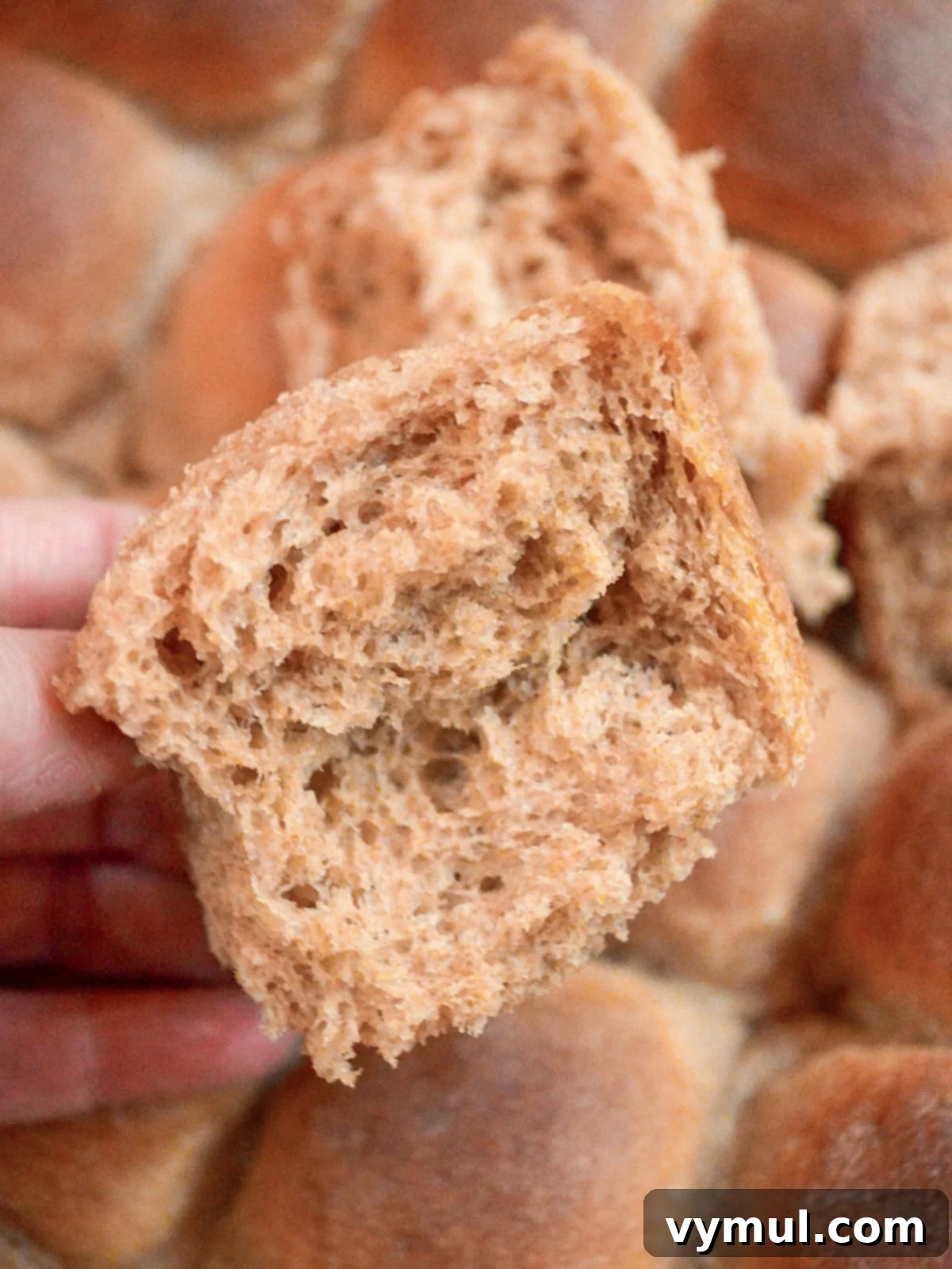
Just look at that incredible texture – no heavy, dense whole wheat rolls here! These are truly a delight, and I sincerely hope you give this recipe a try. You won’t regret it!
To Make Ahead
Preparing these delicious whole wheat dinner rolls in advance is a fantastic way to save time, especially when entertaining or for busy weeknights. My preferred method for make-ahead success is to bake them fully first:
- Bake and Freeze: You can bake these rolls up to 4 months in advance. Once baked, let them cool completely in the pan. Carefully remove the entire batch as one piece, then separate them into two sections of 12 rolls each. Place each section into a gallon-sized freezer bag, ensuring it’s airtight, and freeze until you’re ready to serve.
- Thaw and Reheat: When you’re ready to enjoy them, simply take the frozen rolls out of the freezer in the morning to allow them to thaw. Wrap the 12-roll section snugly in aluminum foil and heat them in a preheated 300-350 degree Fahrenheit (150-175°C) oven for 15-20 minutes, or until they are thoroughly warmed through and soft again.
2. Overnight Refrigeration Technique (Inspired by Aiden Hutchinson!): For those who prefer to prepare dough the day before, this intriguing method comes from NFL Lion’s defensive end, Aiden Hutchinson! He suggests: “I ‘blast-chilled’ the full case of biscuit-soft babies in the chest freezer for seven minutes prior to overnight refrigeration. I figure that they will need an extra 30 minutes to rise from 40 degrees F.” This technique aims to quickly cool the dough to halt the rise before slow proofing overnight in the fridge.
Storage Guidelines
Proper storage ensures your whole wheat dinner rolls remain fresh and delicious:
- Countertop Storage: For optimal freshness, store these rolls at room temperature, covered tightly, for 1-2 days. Keeping them in an airtight container helps prevent them from drying out.
- Refrigerator Storage: You can store the rolls in an airtight container in the refrigerator for 2-3 days. Be aware that bread, in general, tends to go stale more quickly when refrigerated, so this is generally not the preferred method for long-term storage or for maximizing tenderness.
- Freezer Storage: For longer preservation, wrap the rolls airtight (e.g., in heavy-duty foil then a freezer bag) and freeze them for up to 4 months. Thaw and reheat according to the instructions provided in the “Make Ahead” section above for best results.
Hear What Our Readers Rave About
“Thank you so much for this delicious recipe. It was not only a hit with my entire family, but it was easy to make (this is a big deal for someone who never has success with anything involving yeast)! I would have to say that these are the best rolls I have ever had!” -Katie
“My family loves these rolls, I have been making them for a couple of years. The best whole wheat rolls ever and I have tried a lot of recipes.” -Joyce
“Great recipe!!! After several years of trying to find a 100% whole wheat yeast rolls, I found a keeper. I stumbled across this recipe 2-2 1/2 years ago. I made it for Thanksgiving and now everyone ask me to make them at all of our family gatherings. Thank you.” -Shellie
I genuinely hope you love this 100% whole wheat dinner roll recipe as much as my family and I do. Your feedback is invaluable, so please don’t hesitate to leave a comment and a rating to let me know how they turned out for you!

Print Recipe
Pin Recipe
SaveSaved!
Soft 100% Whole Wheat Dinner Rolls Recipe
Equipment
-
stand mixer or a hand-held mixer with dough hook or by hand
-
1 13×9 inch baking pan
Ingredients
- 2 tablespoons active dry yeast* (instant works, too) OR 2 packets of yeast
- 1/2 cup warm water (90 to 110 degrees F)
- 1/2 cup butter, softened (can use oil)
- 1/4 cup honey (can use cane sugar or maple syrup)
- 3 large eggs (flax eggs work for those with allergies)
- 1 cup lukewarm buttermilk or milk (or milk substitute), 95-100 degrees F
- 4½ to 5 cups whole wheat flour** (regular red hard wheat – hard white or golden wheat works, as well as spelt)
- 1 ½ teaspoons sea salt (regular grain salt, not kosher or coarse grind)
Instructions
-
Dissolve the yeast in the 1/2 cup warm water in a glass measure and set aside until foamy.
-
Cream the softened butter and honey in the bowl of a stand mixer with the paddle attachment (or by hand). Add the eggs and mix well, scraping the sides of the bowl. Pour in the warmed milk along with the yeast mixture, mixing until just combined (lumps of butter are fine).
-
Add 4½ cups of whole wheat flour and the salt, mixing until the flour is fully incorporated. Switch to the dough hook and knead for about 2 minutes only, just until the dough is no longer excessively tacky to the touch. If needed, add a tablespoon or two of flour at a time, being very cautious not to add too much. (This is KEY for soft rolls!) Alternately, by hand: Knead for a minute or two on a lightly floured surface until the dough is smoother but still a bit tacky. Again, be very careful not to over-flour.
-
Leave the dough in the bowl, cover it with a towel, and let it rise at room temperature for one hour. After the first rise, turn the dough out onto a lightly floured surface, knead a couple of times to deflate it, then let it rest for 3 minutes, covered.
-
While the dough rests, generously butter or oil a 13×9-inch baking dish. Divide the dough into 24 equal pieces. Shape each piece into a smooth ball, creating some tension on the surface. Place the shaped balls seam-side down in the prepared baking dish, ensuring the pieces are touching each other to create soft, pull-apart sides.
-
Cover the pan (with a clean towel or reusable cover) and let the rolls rise for another hour. They should expand and fill the pan, rising to about an 1/2 inch above the pan’s rim. (If your kitchen is very warm, they may rise faster, so watch them closely to avoid over-proofing.)
-
Preheat your oven to 350 degrees F (175°C). PRO TIP: Set a timer for 45 minutes to start the oven preheating, then set a second timer for the final 15 minutes of the rolls’ rising time.
-
Bake for 20-25 minutes, or until the rolls are beautifully golden brown on top. For even browning, rotate the pan halfway through baking. Remove from oven and immediately brush tops with softened butter, if desired.
Notes
**To accurately measure flour, I always use the scoop and level method: gently scoop flour into the measuring cup until overflowing, then level it off with the back of a straight knife.
Make Ahead and Freezer Instructions:
- To Freeze: You can prepare and freeze these rolls up to 4 months in advance. Once baked, allow them to cool completely in the pan. Carefully remove the entire batch as one cohesive piece, then separate it into two sections of 12 rolls. Place each section into a gallon-sized freezer bag, ensuring all air is squeezed out for airtight storage. Freeze until you are ready to use them.
- To Reheat: When you’re ready to serve, transfer the frozen rolls to the refrigerator or counter to thaw for a few hours (or overnight if refrigerated). Once thawed, wrap a 12-roll section snugly in aluminum foil and heat in a preheated 300-350 degree F (150-175°C) oven for 15-20 minutes, or until they are warm and soft throughout.
Nutrition
Your Questions Answered
Yes, absolutely! This recipe works beautifully with freshly ground wheat flour, following the instructions as written. Tip from a commenter: Freshly milled flour is notably “thirsty,” meaning it absorbs more liquid. Therefore, you must be extra diligent not to incorporate too much additional flour. The dough will feel very sticky after the 3-minute kneading with the dough hook, but it will continue to absorb water as it rests. Many find it helpful to lightly oil their hands when shaping the rolls to prevent sticking.
For this recipe, two standard packets of yeast will work perfectly. Each packet typically contains about 2 1/4 teaspoons, so two would give you 4 1/2 teaspoons, which aligns well with the 2 tablespoons specified (1 tablespoon = 3 teaspoons).
Yes, I have successfully used both active dry yeast and instant yeast without making any changes to the recipe or process, and the results have been consistently excellent.
You can certainly use less honey, decreasing it to as little as 1 tablespoon. However, I strongly advise against omitting it completely for two important reasons: the sweetener provides immediate “food” for the yeast, which helps ensure a strong and consistent rise, and honey’s unique flavor really helps to complement and balance the robust taste of whole wheat flour. Many readers have also successfully substituted honey with either regular cane sugar or maple syrup, achieving delightful results.
Yes, many enthusiastic bakers have reported great success using a 50/50 blend of whole wheat and all-purpose flour. If you choose this variation, I would recommend closely monitoring the rise time. All-purpose flour is lighter and has less bran, which can sometimes lead to a quicker rise, so you might find that your dough needs slightly less proofing time.
While I personally haven’t halved the recipe (as it takes roughly the same amount of effort, I prefer to make a full batch and freeze the extras), a significant number of commenters have successfully done so! When dealing with the three eggs, some creative solutions include using two small eggs. Most commonly, people achieve 1.5 eggs by whisking a second large egg and then accurately measuring out half of it (a large egg is typically about 1/4 cup when whisked, so you’d use 2 tablespoons). Additionally, some ingenious bakers have even made 1/3 of the recipe, producing 8 rolls baked conveniently in a loaf pan.
Yes, many readers have successfully adapted this recipe for their bread machines! The common approach is to use the bread machine for the kneading cycle and the first rise. Typically, they let the bread machine knead the dough for about 10 minutes and then allow it to complete the first rise (usually an hour) within the machine. After this, they proceed to shape the dough into rolls and let it rise again in the pan before baking. Here are some specific tips from our community:
“I added all the ‘wet’ ingredients to the bread machine, then added the flour, and finally, I put the salt and yeast on top (I don’t ever ‘proof’ yeast). The dough was beautiful!”
“[I used the] dough setting on the bread machine and two packets of quick rise yeast, and it worked perfect for the first rise.”
I haven’t personally tried baking this dough as a loaf; for a soft whole wheat sandwich bread, I typically use this dedicated recipe. However, some adventurous readers have left comments saying they have indeed baked this dinner roll dough in a loaf pan and enjoyed the outcome! One person did note that the dough was a bit too soft to handle and shape like a traditional sandwich bread loaf, but it still produced a tasty bread.
You can certainly make these rolls without a stand mixer! After combining the wet ingredients with the flour and salt, turn the dough out onto a lightly floured surface. Knead it by hand for just a minute or two, until it becomes smoother but still maintains a slight tackiness. The key is to be extremely careful not to add too much additional flour during hand kneading, as this is the most common reason for dense rolls. Alternatively, if you have a hand mixer with dough hook attachments, those can also be used effectively for the initial light kneading stage.
Yes, this dough is wonderfully versatile and several commenters have confirmed that it works beautifully for shaping into burger buns or other larger rolls, rising “beautifully” in the process. For example, one person successfully shaped the dough into 10 buns, making a mix of half burger buns and half sub rolls. When making larger buns, you’ll need to adjust the cook time to ensure they are thoroughly cooked through. A useful technique is to use an instant-read thermometer; bake until the internal temperature of a bun reaches approximately 200 degrees Fahrenheit (93°C). Make a note of how long this takes for future reference.
I’ve always relied on volume measurements and the visual cues of the dough’s look and feel, which is why I’ve included all the process photos to guide you. When measuring cups of flour, I use the “scoop and level” method: gently scoop flour into the measuring cup until it overflows, then level it off with the back of a straight knife or similar flat edge.
To ensure your center rolls are perfectly cooked, I recommend using an instant-read thermometer. Insert it into the center of one of the middle buns to check the internal temperature, and continue baking until it reaches approximately 200 degrees Fahrenheit (93°C). Don’t be afraid to let the rolls cook for a little longer if needed. If the outer rolls start to brown too much before the center is done, simply cover just those outer rows of buns loosely with aluminum foil to prevent over-browning while the center continues to bake.
It can be frustrating when the dough consistency doesn’t match the pictures, and I’m not entirely sure why this happens for some bakers. Factors like regional humidity, the specific brand or grind of flour used, or even slight variations in egg size can all play a role. One reader, who had experienced this “too-wet dough” issue (similar to a few other comments), found success with this modification: In a separate bowl, they combined 2 tablespoons of yeast and 1.5 tablespoons of organic sugar with 2 cups of warm water. They stirred this mixture and covered it, allowing the yeast to fully activate and rise (typically a few minutes). After this initial yeast activation, they then proceeded to follow all the other steps in this amazing recipe as written, and their rolls turned out beautifully! This suggests that ensuring robust yeast activation and possibly slightly adjusting initial hydration might be beneficial in some environments.
More Delicious Ways to Use This Versatile Dough
This incredible 100% whole wheat dough is surprisingly versatile, extending far beyond classic dinner rolls. Here are more creative and tasty ideas to put it to use:
- I’ve developed a delightful variation of this dough, perfect for larger gatherings: my Soft 100% Whole Wheat Crescent Shaped Rolls! They offer a beautiful presentation and are just as tender.
- These rolls make truly terrific whole wheat slider rolls. Imagine making all your favorite sliders a little healthier and even more delicious! They’re the perfect size and texture for miniature sandwiches.
- A number of enthusiastic commenters have successfully used this very dough to create amazing whole wheat cinnamon rolls. If I were to try it, my initial approach would be to divide the dough into two equal halves after the first rise. Then, roll out each half into a rectangle, apply your favorite cinnamon filling, roll it up tightly, slice, and place the spirals in a buttered baking pan for the second rise and baking.
- You can also easily make 12 larger rolls or buns. Simply divide the dough into 12 equal portions, shape them into larger buns, and arrange them in rows (e.g., 3 across and 4 down) on a baking sheet or in a larger pan. Adjust the baking time slightly, typically around 23 minutes, for these bigger sizes.
- Alternate shaping ideas: One clever person made their rolls a larger size and then used scissors to snip the top before baking. This created a natural perforation, making them easier to open and butter once baked.
- Alternate baking methods: Another reader found success by dividing the rolls between two cast iron pans and baking them at 375F. This can provide a different crust texture and allow for multiple batches if your oven space is limited.
Explore More Easy, Never-Buy-Bread-Again Recipes
If you’ve enjoyed making these whole wheat dinner rolls, you’re in for a treat! Discover more of my favorite, fool-proof bread recipes that will have you happily baking from scratch and saying goodbye to store-bought loaves forever:
- Whole Wheat, Soft & Easy Sandwich Bread – Your everyday go-to for healthy, homemade sandwiches.
- Easy Artisan Bread (Yeast) – Achieve bakery-quality crust and crumb with minimal effort.
- Quick & Tender Homemade Hamburger Buns (or Breadsticks) – Perfect for your summer BBQs or as delightful breadsticks.
- Tutorial: Simple French Baguettes Recipe (or The Bread You Can’t Stop Eating) – Master the classic French baguette with this simple guide.
- Easy Sourdough Artisan Bread Recipe (Ready in 1 Day) – Dive into sourdough baking with a recipe designed for speed and simplicity.
This recipe has been thoroughly updated to bring you the best results. It was originally published in 2009, with significant updates in 2018 and again in 2025.
Disclosure: Affiliate links in this article may earn a commission based on sales, but this will not affect your purchase price. Click here to read my full disclaimer and advertising disclosure for more information.