Soft, Fluffy, and Healthy: Your Guide to 100% Whole Wheat Crescent Rolls
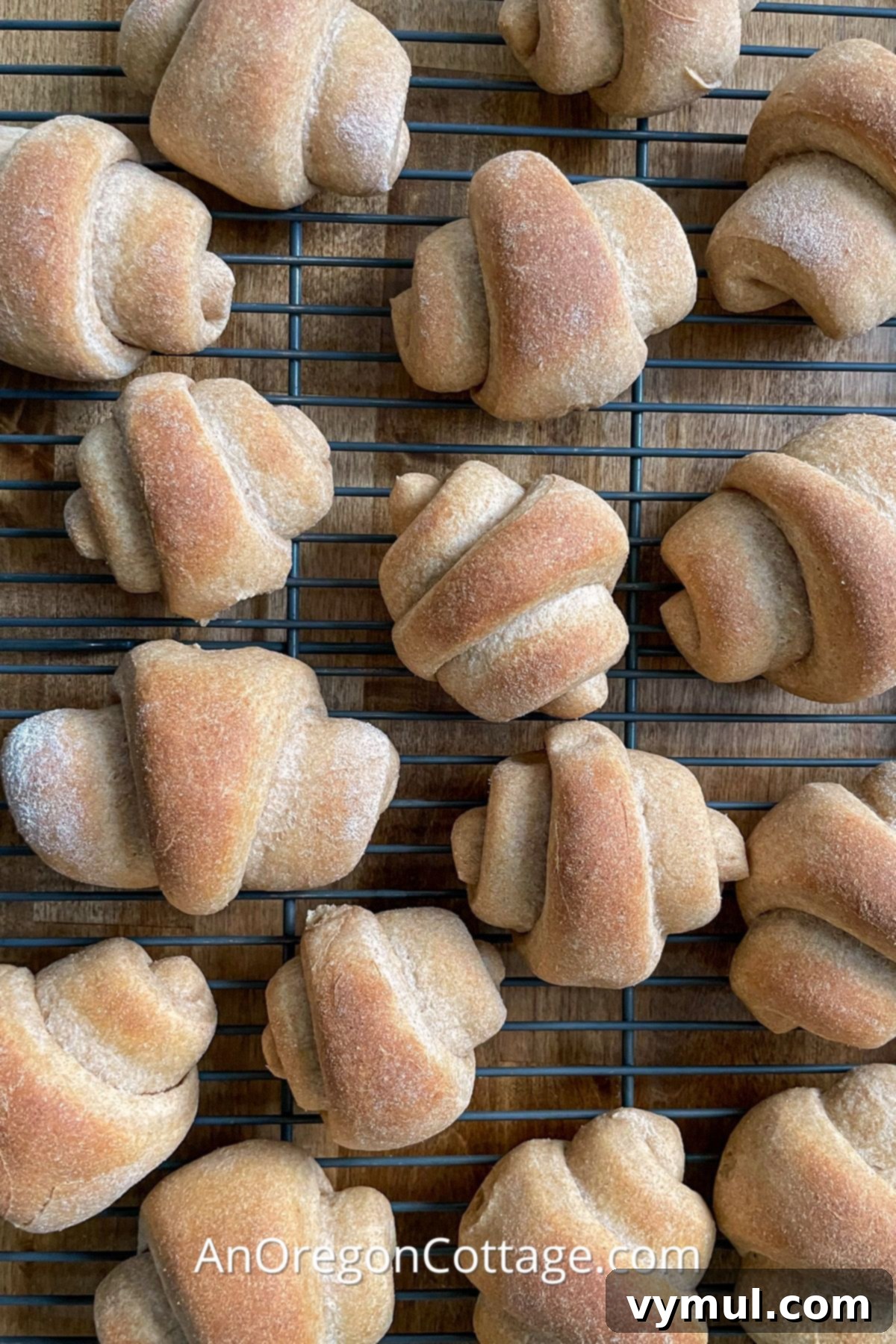
Welcome to a culinary adventure that transforms a beloved classic into something even more spectacular: buttery, soft, and utterly delicious **whole wheat crescent rolls**! This recipe takes our highly popular soft whole wheat dinner rolls and reimagines them in a fun, elegant crescent shape. The result? A generous batch of 32 rolls, perfect for sharing at family dinners, festive celebrations, or simply for stocking your freezer with homemade goodness.
Some links in this article are affiliate links and if you click on them I will receive a small commission at no cost to you. This helps support the content we create and allows us to continue sharing wonderful recipes with you.
We are incredibly thrilled to finally share this fantastic recipe with you! Imagine the light, airy texture and slightly crispy crust of your favorite dinner rolls, but now in a beautiful crescent form. This simple adjustment not only makes them visually appealing but also yields more rolls from a single batch of dough, making them ideal for larger gatherings or when you want to impress with homemade baking.
What makes these whole wheat crescent rolls truly stand out is their incredible versatility and the delightful experience of baking them. They retain all the desirable qualities of their dinner roll counterpart – a rich, buttery flavor, a tender crumb, and a wholesome goodness that comes from 100% whole wheat flour. Yet, their unique shape adds a touch of sophistication to any meal. Best of all, they’re just as effortless to prepare as traditional dinner rolls, requiring only a slight modification in the shaping process.
Instead of rolling the dough into individual balls, you simply divide it in half, roll each portion into a large circle, and then use a pizza cutter or a sharp knife to create uniform triangles. A quick roll from the wide end to the narrow tip, a brief rise on the baking sheet, and into the oven they go. In no time, you’ll have a tray of golden-brown crescent rolls, far superior and healthier than any store-bought white rolls.
The satisfaction of serving these homemade, tender rolls is unparalleled. You’ll be proud to bring them to any potluck, holiday feast, or simply enjoy them as a comforting addition to your everyday family meals. Their rustic charm and inviting aroma are sure to win over even the pickiest eaters, proving that healthy can indeed be delicious.
Bonus Tip (because who doesn’t love more convenience?): You can effortlessly make these incredible rolls ahead of time using two simple methods:
- Bake them completely, allow them to cool, and then freeze. When ready to serve, simply wrap them in foil and warm them in the oven for that “freshly baked” experience.
- Alternatively, freeze the shaped, unbaked rolls. This method is fantastic for having truly fresh rolls whenever the craving strikes! Simply bake them from frozen when you’re ready for warm, homemade bread.
Are you ready to elevate your bread-baking game and discover a new favorite way to enjoy wholesome whole wheat rolls? Let’s dive into the details of creating these delightful crescent rolls!
Crafting Your 100% Whole Wheat Crescent Rolls
Creating these sensational whole wheat crescent rolls begins with a solid recipe and the right ingredients and tools. The beauty of this recipe is that it leverages the same fantastic dough as our beloved dinner rolls, ensuring consistent, delicious results every time.
Essential Ingredients for Perfect Crescent Rolls
You’ll find these ingredients are common pantry staples, making this recipe accessible and easy to whip up. Each component plays a crucial role in achieving the desired soft texture and rich flavor:
- Active Dry Yeast: This is the magic behind the rise, giving the rolls their light and fluffy structure. Instant yeast also works beautifully for a quicker process.
- Warm Water: Essential for activating the yeast. The temperature should be warm to the touch, but not hot, to ensure the yeast thrives.
- Softened Butter: Adds incredible richness, tenderness, and flavor. Ensuring it’s softened allows it to cream smoothly with the honey.
- Honey: Not just for sweetness, honey also feeds the yeast, contributing to the dough’s rise, and adds a subtle, wholesome flavor profile.
- Eggs: Provide structure, richness, and help tenderize the dough, contributing to that desirable soft crumb.
- Buttermilk or Milk: Adds moisture and a slight tang (if using buttermilk), which enhances the overall flavor and tenderness of the rolls. Lukewarm milk helps maintain optimal dough temperature.
- Whole Wheat Flour: The star of the show! We use regular whole wheat flour for its nutritional benefits and hearty flavor. For a slightly lighter color and milder taste, white whole wheat flour or even spelt flour can be substituted successfully, maintaining that whole grain goodness.
- Salt: A crucial ingredient that balances the sweetness, enhances flavor, and regulates yeast activity.
- Melted Butter for Brushing (optional but highly recommended): A final brush of melted butter after baking adds a glossy finish, extra flavor, and keeps the crust wonderfully soft. Don’t skip this for maximum indulgence!
Handy Supplies for an Effortless Baking Experience
While this recipe is approachable for bakers of all levels, having a few key tools can make the process even more enjoyable and efficient:
- A Stand Mixer: This is a game-changer for dough recipes. It makes kneading a breeze and ensures perfectly developed gluten for soft rolls. The robust mixer I personally rely on handles this dough with ease, though a smaller model will certainly get the job done. If you don’t have a mixer, you can knead the dough by hand, or some bakers have even had success using the dough cycle in a bread machine.
- Bench Scraper, Pizza Cutter, or Chef’s Knife: These tools are essential for efficiently dividing and cutting the rolled-out dough into triangles. A bench scraper is excellent for clean cuts and handling dough, a pizza cutter is super fast, and a chef’s knife offers precision.
- Two Large Half Sheet Baking Pans (17×12 inches): You’ll need two pans to accommodate all 32 rolls without overcrowding, allowing for even baking. My favorite USA Pan provides superior non-stick performance, eliminating the need for parchment paper or extra greasing.
Step-by-Step Instructions for Perfect Crescent Rolls
The initial dough preparation for these crescent rolls mirrors that of our famous dinner rolls. If you’re new to the process, we recommend checking out the original dinner roll recipe page for visual guides or watching the dough-making segment of the accompanying video.
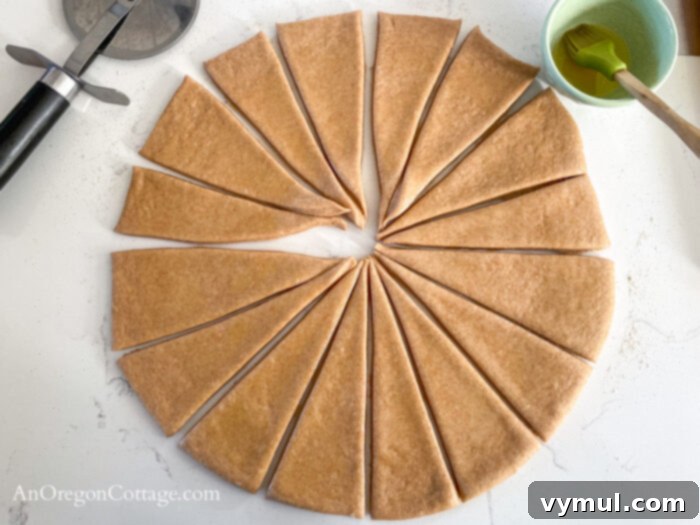
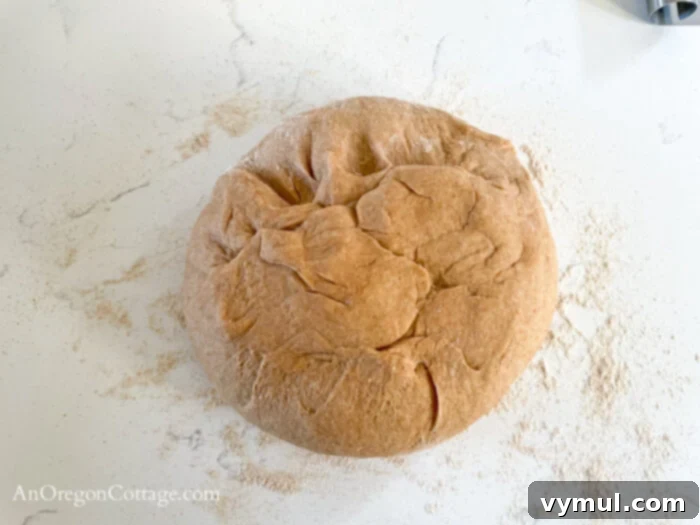
After your dough has completed its first rise, a few quick kneads, and the essential 3-minute rest (refer to step 4 in the original dinner rolls recipe for full details), you’re ready for the exciting part: shaping your beautiful crescent rolls:
- Divide the Dough: Carefully divide the risen dough in half. This makes the rolling process more manageable.
- Roll into a Circle: Take one half of the dough and, using a rolling pin on a lightly floured surface, roll it out into a roughly 15-inch diameter circle. Don’t stress about perfection here! If your circle is a bit oblong or not precisely 15 inches, your rolls will still turn out wonderfully. The charm of homemade lies in its slight imperfections.
- Brush with Butter (or Season!): Now for a truly decadent step. Brush the surface of your rolled-out dough circle with melted butter. While optional, we strongly recommend it for that irresistible buttery flavor and tender interior. This is also a fantastic opportunity to get creative! Sprinkle on some garlic powder, Italian seasonings, freshly chopped parsley, or even finely minced garlic for savory variations.
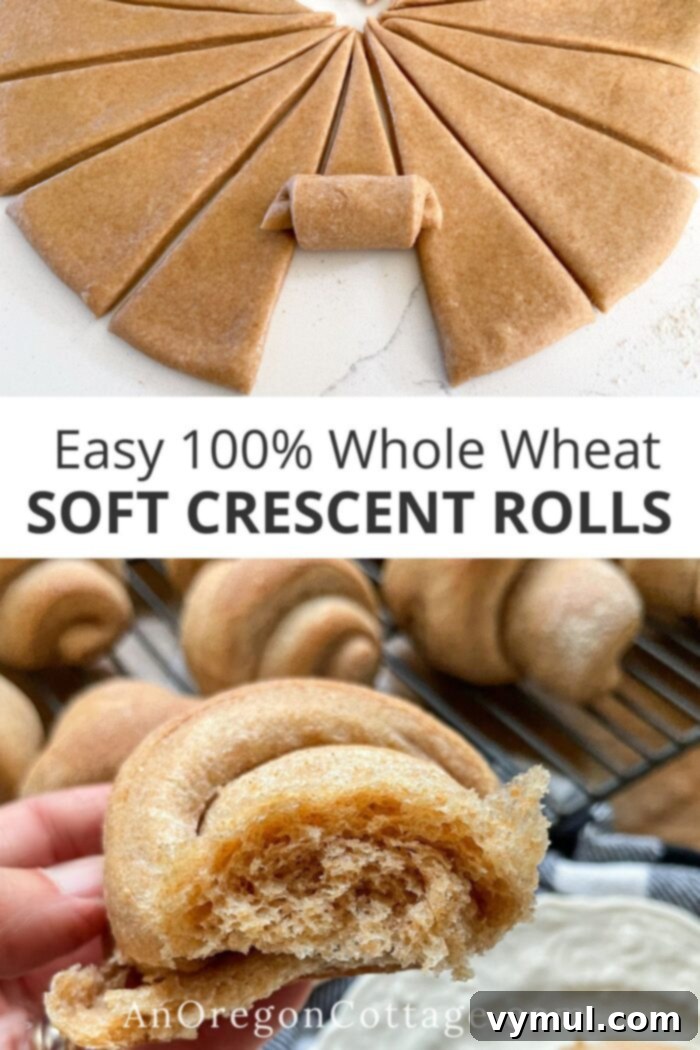
- Cut into Triangles: Grab your bench scraper, pizza cutter, or chef’s knife and cut the large circle into 16 triangles. Again, precision isn’t paramount. Your triangles will likely be different sizes, which is actually a bonus – it means everyone can pick a roll that perfectly suits their appetite, whether they prefer a bigger or smaller bite!
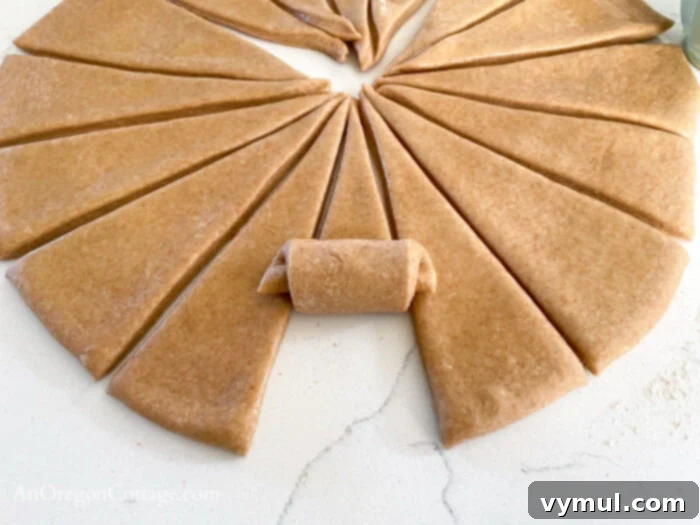
Once cut, gently roll each triangle from its widest point down to the smallest tip. As you roll, the dough naturally forms that iconic crescent shape. Place each shaped roll onto a large baking sheet (lined with parchment paper if not using non-stick pans like USA Pan) with the narrow point facing down on the pan. This simple trick prevents them from unraveling during baking, ensuring they maintain their beautiful form.
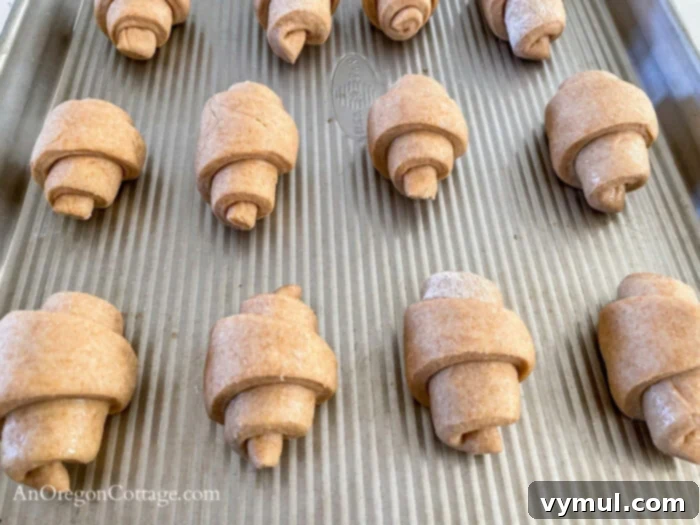
Repeat this shaping process with all the triangles from the first dough half. Once the pan is full, lightly cover it with a clean kitchen towel. Then, proceed to shape the remaining half of the dough on a second large sheet pan, covering it with a towel once done. This two-pan approach prevents overcrowding and allows each roll ample space to rise.
Allow the shaped rolls to rise for approximately one hour in a warm, draft-free place. This second rise is crucial for achieving that characteristic light and airy texture. You’ll notice them visibly puffing up and becoming even more inviting.
PRO TIP: Set a timer for 45 minutes for the rising period. During the final 15 minutes, begin preheating your oven. This ensures your oven is perfectly heated and ready as soon as your rolls have finished rising, saving you time and ensuring optimal baking conditions.
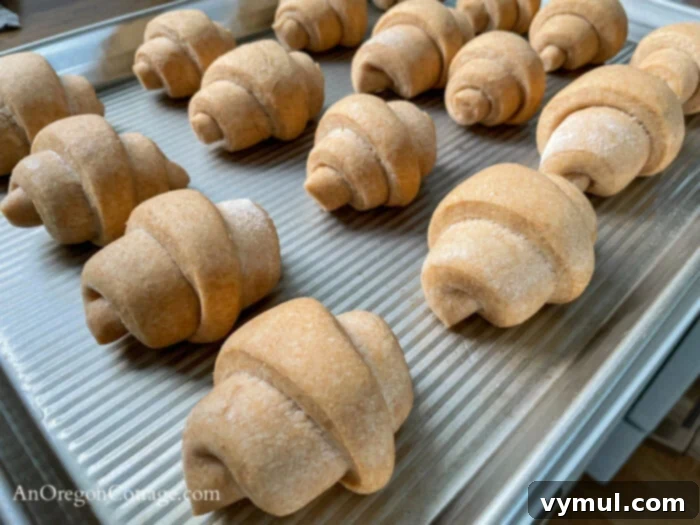
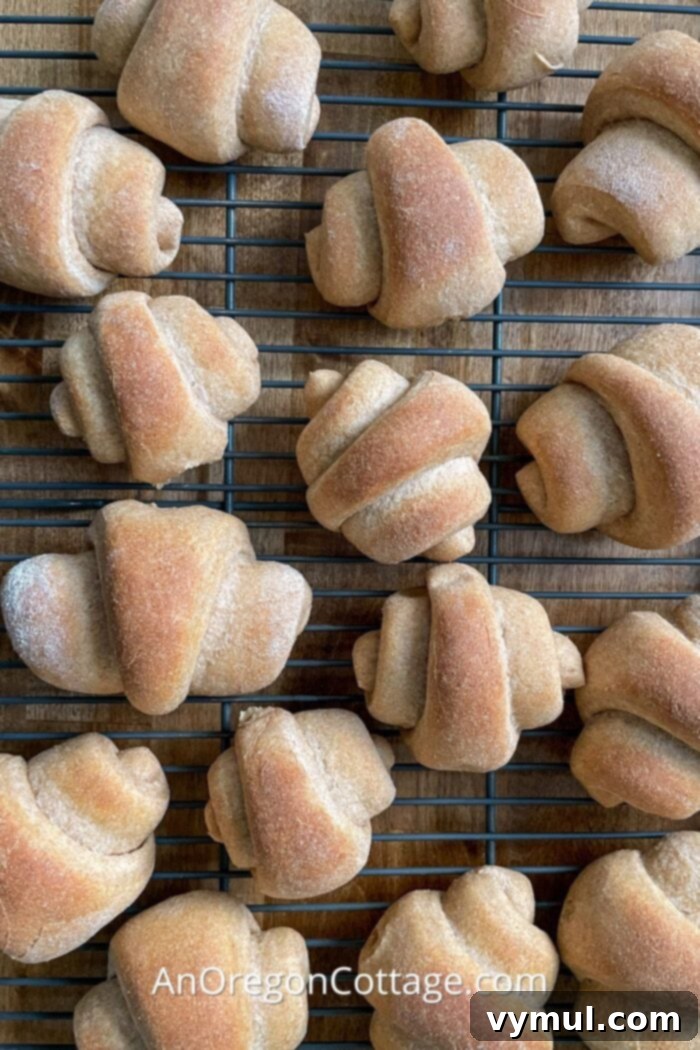
As you can see, the crescent rolls will have developed a beautiful volume after their full hour of rising, ready for their transformation in the oven.
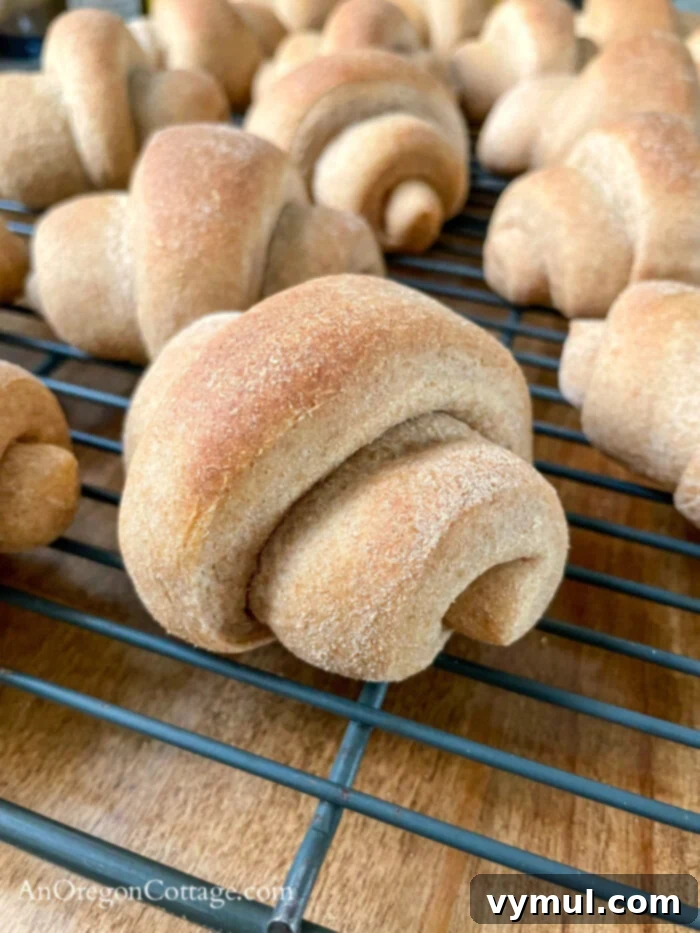
Bake your glorious crescent rolls for 10-12 minutes, or until their tops and bottoms are beautifully browned and golden. If you’re using two pans, remember to alternate them halfway through the baking time to ensure even cooking. For an extra touch of indulgence, brush them with more melted butter while they are still warm from the oven. (I usually do, though I regrettably forgot this step before snapping these photos!) This final brush adds another layer of flavor and contributes to a wonderfully soft crust.
Allow them to cool for a few minutes before diving in and enjoying them warm. The aroma alone is heavenly! If you’re planning ahead, let them cool completely before freezing them for later enjoyment. You’ll be amazed at how well they reheat.
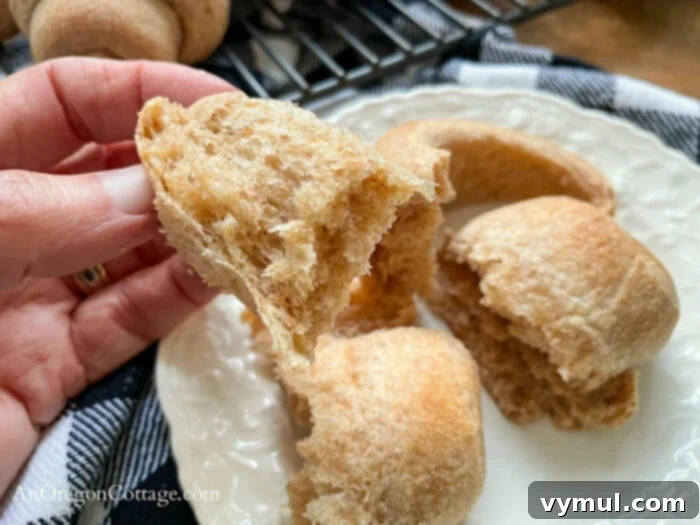
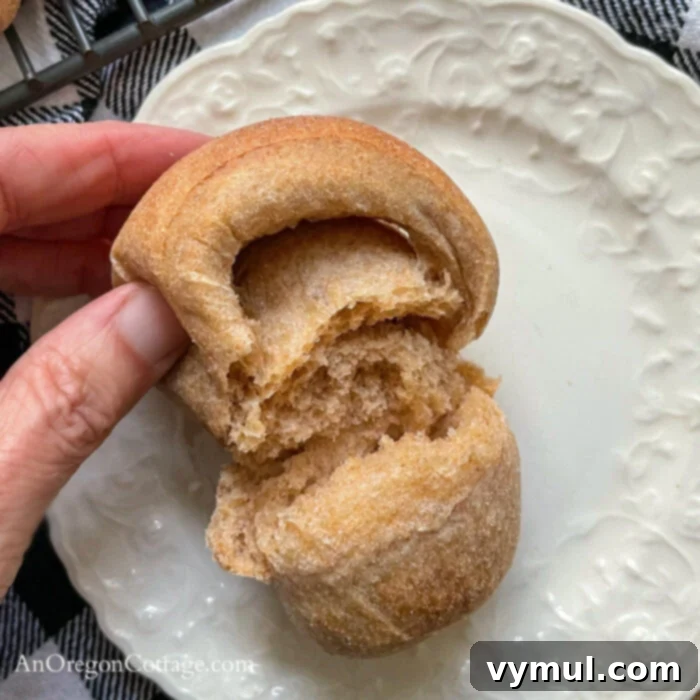
Just look at that tender crumb! It’s hard to believe these are made with 100% regular whole wheat flour, isn’t it? The softness and lightness are truly remarkable, proving that whole wheat baking can be just as, if not more, delicious than its white flour counterparts.
I find these rolls so flavorful on their own that I never feel the need to add extra butter or anything to the dough itself, especially since I usually give them that final brush of melted butter after baking. All you truly need is one of these warm, fresh from the oven, and you’ll be transported to bread heaven. They are the perfect accompaniment to any meal, from a hearty soup to a holiday roast, or simply enjoyed as a wholesome snack.
Whole Wheat Crescent Rolls FAQs
Absolutely! These whole wheat crescent rolls are wonderfully suited for making ahead, offering fantastic flexibility for busy schedules. You have two excellent options:
1. Fully Bake and Freeze: Bake the rolls as directed, let them cool completely, and then freeze them. To reheat, cover the frozen rolls loosely with foil to prevent drying, and place them in the oven alongside other dishes you might be cooking. They typically warm through in about 12 minutes at 350°F (175°C), or 8-10 minutes at 400°F (200°C), depending on your oven and other items. They will emerge soft and warm, tasting almost freshly baked.
2. Freeze Shaped, Unbaked Rolls: This method allows you to enjoy truly “fresh from the oven” rolls with minimal effort on the day of serving. After shaping the rolls, arrange them on a baking pan and freeze until solid. Once frozen, transfer them to an airtight freezer container or bag for up to two months. When you’re ready to bake, simply remove as many rolls as you need, place them on a greased baking sheet (or use a non-stick pan), cover them with a clean towel, and let them thaw and rise on the counter for 4-5 hours. Then, bake them at 375°F (190°C) for 8-10 minutes, or until golden brown. Don’t forget that final brush of melted butter for ultimate flavor!
While this recipe is specifically developed for and shines with 100% whole wheat flour, you do have some flexibility. I have primarily tested these crescent rolls with regular whole wheat flour, which provides a hearty flavor and excellent nutritional benefits. However, based on my experience with the base dinner roll recipe, I can confidently say that white whole wheat flour or spelt flour would also work beautifully. White whole wheat offers a slightly milder taste and lighter color, while spelt flour provides a unique nutty flavor and can be easier for some to digest. If you were considering all-purpose flour, you certainly *could* use it, but it would somewhat defeat the purpose of creating a healthier, fiber-rich whole-grain product. The beauty of these rolls lies in their wholesome ingredients and the delightful texture achieved with whole wheat.
When comparing real, homemade food to highly processed packaged alternatives, the answer is a resounding “yes!” My whole wheat crescent roll recipe stands in stark contrast to most store-bought options.
Consider the ingredients in a typical packaged tube of crescent dough: while they contain basic components like flour, sugar, salt, and baking powder (instead of natural yeast), they often also include soybean and palm oils, hydrogenated and fractionated palm oils, various emulsifiers like mono and diglycerides, preservatives like TBHQ, vital wheat gluten, dextrose, and potassium chloride. Many of these additives are for shelf stability and texture manipulation rather than pure nutrition.
In contrast, my homemade crescent dough recipe features wholesome, real food ingredients: 100% whole grain flour, real butter, natural honey, active yeast, fresh buttermilk (or milk), and eggs. This results in a product that is not only packed with significantly more fiber, protein, and essential vitamins and minerals but is also free from artificial additives and unhealthy fats. Beyond the nutritional advantages, I firmly believe they taste infinitely better – a difference you can truly savor!
While both croissants and crescent rolls share a similar iconic shape, they are fundamentally different in their preparation and resulting texture, falling into distinct categories of baked goods.
Crescent Rolls are essentially a type of enriched bread. They typically use yeast as their primary leavening agent, resulting in a soft, fluffy, and tender texture, much like a dinner roll but in a distinct crescent shape. The dough is mixed and kneaded, allowed to rise, shaped, and then baked, producing a comforting and hearty bread product.
Croissants, on the other hand, are a classic French pastry. They start with a yeast-leavened dough, but the magic happens through a process called laminating. This involves repeatedly folding and rolling the dough with layers of cold butter, creating dozens of thin layers. When baked, these butter layers create steam, which causes the dough to puff up into a wonderfully light, incredibly flaky, and distinctly buttery pastry. While both are delicious, a croissant’s characteristic flakiness and crisp layers are what set it apart from a soft, bread-like crescent roll. (It’s also worth noting that puff pastry, while flaky, does not contain yeast; its lightness comes solely from the butter and dough layers.)
Print Recipe
Pin Recipe
SaveSaved!
Soft 100% Whole Wheat Crescent Rolls
Ingredients
- 2 tablespoons active dry yeast* (instant works, too)
- 1/2 cup warm water
- 1/2 cup butter softened
- 1/4 cup honey
- 3 eggs
- 1 cup lukewarm buttermilk or milk
- 4½ to 4¾ cups whole wheat flour
- 1 ½ teaspoons salt
- melted butter for brushing (optional)
Instructions
-
Dissolve the yeast in the 1/2 cup warm water in a glass measure. Set aside.
-
Cream the butter and honey in the bowl of a stand mixer with the paddle attachment. Add the eggs and mix, scraping the sides. Add the warmed milk along with the yeast mixture (it will be lumpy, that’s okay).
-
Add 4½ cups of flour and the salt, mixing until combined. Change to dough hook and knead for 2-3 minutes only, just until no longer tacky (sticks to bowl some, but not to finger), adding only a tablespoon or two of flour at a time, if needed. (Do NOT add too much flour.)
-
Let dough sit in bowl, covered, to rise for one hour. Turn out onto a floured surface and knead a couple of times, then let rest 3 minutes.
-
Divide dough in half, setting one half aside. Using a rolling pin, roll one half into a thin circle, about 15 inches in diameter (okay if this isn’t perfect).
-
Use a pizza cutter, bench scraper, or knife to cut the circle into 16 triangles. Brush the circle with melted butter and any seasonings you’d like like garlic or herbs (optional, but highly recommended).
-
Then roll up each triangle from the widest point to the smallest, placing each roll on a greased or lined (if needed) large baking sheet, small point down. Fill the baking sheet with the remaining crescent rolls.
-
Roll, brush, cut, and shape the remaining dough half, placing these 16 rolls on another large baking sheet.
-
Cover the pans and let the rolls rise for 1 hour (start preheating the oven to 375 at 45 minutes).
-
Bake for 10-12 minutes, alternating pans halfway if needed, until browned on the tops and bottoms. Brush with more melted butter while warm (optional but again, recommended).
-
Let cool a bit before serving warm, or cool completely to freeze for later.**
Notes
**To Make Ahead, There are Two Options:
- Fully bake, let cool, and then freeze. To reheat, cover frozen rolls with foil and place in oven with other food you are cooking (about 12 minutes in a 350 degree oven, 8-10 in a 400 degree oven, and so on).
- After shaping, freeze the rolls on the pan, then move them to a freezer container for up to two months. Remove as many as you need to a greased baking sheet and thaw on counter for 4-5 hours, covered with a towel. Bake at 375 for 8-10 minutes until browned. Brush with butter.
Nutrition

Explore More Easy & Wholesome Bread Recipes
If you’ve enjoyed making these whole wheat crescent rolls, you’ll be delighted to discover our other simple yet satisfying bread recipes, all designed to bring homemade goodness to your table with ease. Elevate your baking skills and enjoy the wonderful aroma of freshly baked bread in your home!
Click For Recipe
Click For Recipe
Click For Recipe
Click For Recipe
Disclosure: affiliate links in this article will earn commission based on sales, but it doesn’t change your price. Click here to read our full disclaimer and advertising disclosure.