Beyond the Basics: 6 Powerful Weight Loss Tips for Lasting Health and Real Food Enjoyment
Welcome back to our series on achieving sustainable weight loss and cultivating a healthier relationship with food. In this article, we delve into six additional, highly effective tips, tricks, and techniques designed to help you shed pounds and maintain your ideal weight, all while savoring delicious, real, and whole foods.
Some links in this article are affiliate links, meaning if you click on them and make a purchase, I may receive a small commission at no additional cost to you.
If you’re just joining us, be sure to explore the initial six essential weight loss tips here. You’ll find links to all other valuable parts of this comprehensive series further below.
We hope the first set of tips provided a solid foundation and valuable insights to support your dietary aspirations, whether your primary goal is effective weight loss or simply cultivating more intentional eating habits for improved health and well-being. Ultimately, fostering a conscious relationship with the food we consume should be a universal objective, regardless of our current weight. It’s about nourishing our bodies responsibly and mindfully.
Ready to discover even more impactful strategies? This next collection of techniques culminates in what is arguably my most cherished and effective tip of all!
Advanced Weight Loss Strategies: More Tips, Tricks, and Techniques for Eating Well
Here are tips 7 through 12, representing further key learnings and practices that have personally empowered me to achieve and maintain weight loss through the enjoyment of real, unprocessed, whole foods:
7. Embrace Regular Weigh-Ins: At Least Weekly for Mindful Progress
While opinions vary, extensive research consistently highlights that regular self-weighing is a critical tool for both successful weight loss and long-term weight management. Many studies, readily accessible through a quick online search, demonstrate a clear correlation between consistent tracking and sustained results. Some proponents even advocate for daily weigh-ins, but I personally find the natural daily fluctuations in body weight can be demotivating. For me, weighing myself once a week, or perhaps two to three times a week, provides sufficient data without causing undue stress or discouragement. This frequency offers a realistic perspective on trends rather than momentary shifts.
In my own experience, relying solely on how my clothes fit to gauge weight gain proved to be a delayed and often regretful strategy. By the time my clothes felt snug, I often realized I had gained a significant amount of weight – ten pounds, for instance, which is considerably harder to tackle than two, three, or even five pounds. It’s astonishing how much weight clothes can subtly accommodate before sending a clear signal! Regular weighing acts as an early warning system. It’s a vital reminder to pay attention to my eating habits, especially to counteract that “unthinking” eating pattern that has historically been a challenge for me. If I notice a couple of pounds creeping back, it’s a gentle nudge to realign and get back on track with my mindful eating strategies. Yes, it’s “just a number,” but it’s a powerful feedback mechanism for maintaining focus on your weight loss goals.
8. Mindful Eating: Prioritize Favorite Foods, Stop When Full, and Save Leftovers
We’ve all been there – encountering food so incredibly delicious that it’s hard to stop eating. The key to navigating this common challenge is mindful consumption and strategic planning. A powerful technique is to deliberately cut larger portions in half and immediately store a portion in containers for a future meal, like lunch the next day. Utilizing glass containers makes reheating simple and convenient, allowing you to enjoy that favorite food again without the temptation to overeat in one sitting.
When living with others, I’ve even resorted to putting a post-it note with my name on containers in the fridge to ensure my planned leftovers are there for my next meal. Knowing that a favorite dish awaits me helps me consume a smaller, satisfying portion in the present moment, effectively preventing feelings of deprivation. This strategy reinforces the idea of enjoying food responsibly.
Now, let’s address the counterintuitive notion of eating your favorite foods first. Initially, this might seem to go against conventional wisdom. As a child, this strategy would have been disastrous, leading to meals consisting primarily of bread, meat, and desserts! However, as an adult with refined tastes and health goals, it means I prioritize the components of my meal I enjoy the most. For me, this often includes delicious roasted or grilled vegetables, or a lean protein. Foods like potatoes and rice, while fine, are less appealing to me and are typically consumed last, often leaving some on the plate.
The crucial shift in mindset here is to move away from the habit of filling up on “must-eat” foods – often less appealing or nutrient-dense options – only to then eat what we truly desire (and feel we “deserve” after consuming the other items), even if we are already past the point of fullness. This mindful approach extends to meals featuring dessert. If dessert is part of the plan, consciously adjust your main meal portions downwards to accommodate a small, satisfying serving of dessert without overindulging. This fosters a balanced approach to pleasure and nutrition.

9. Limit Unconscious Eating: Minimize “Tasting” While Cooking
Ah, the insidious habit of “tasting” during cooking – a prime example of unconscious eating that can significantly impact daily calorie intake. These small bites, often consumed without much thought or tracking, can accumulate rapidly. Through the process of sharing these tips, both in this article and Part One, I’ve gained a deeper appreciation for my personal journey toward intentional eating. It’s about truly thinking about what I consume, rather than mindlessly grazing. To be honest, there were many years when I actively resisted thinking about my diet, feeling utterly fatigued by the constant internal struggle.
What has changed for me now? The fundamental difference is that my current approach to food doesn’t feel like a “diet.” I’m not eating specialized “diet food” or making drastically different choices from those around me. Consequently, I don’t feel like I’m constantly obsessing over what I eat. I no longer keep a food journal, although I acknowledge its proven benefits for many individuals. I don’t purchase expensive “diet” products or adhere to restrictive eating plans. Furthermore, I don’t meticulously measure and weigh every single item of food. Instead, I incorporate tools like measuring prep bowls, which visually help with portion control but feel like regular kitchenware. This subtle shift allows me to be mindful without feeling burdened, turning conscious eating into a sustainable lifestyle rather than a temporary regimen.
10. Reframe the “Don’t Waste Food” Mindset for Healthier Habits
This tip challenges a deeply ingrained societal belief, particularly prevalent when it comes to children’s plates. The idea that we “must” finish every scrap of food to avoid waste can be detrimental to our weight loss efforts. A small amount of uneaten food is not truly wasted if it means preventing extra, unneeded calories from adding to our waistline. In fact, if those extra bites contribute to unwanted pounds, *that* is the real waste – a waste of your health goals and personal well-being.
If a significant portion of food remains, by all means, save it as a planned leftover for another meal. However, for smaller remnants, release yourself from the guilt and simply discard them. The more effective strategy for reducing waste is to prevent it at the source: be more mindful when serving food. Start by giving slightly smaller portions, especially when plating up for children or yourself. This proactive approach ensures food isn’t wasted on your body or in the bin, promoting both healthier eating habits and genuine waste reduction in the long run.
11. Conquer Unconscious Eating Triggers: Break Habits Like Eating While Alone or Reading
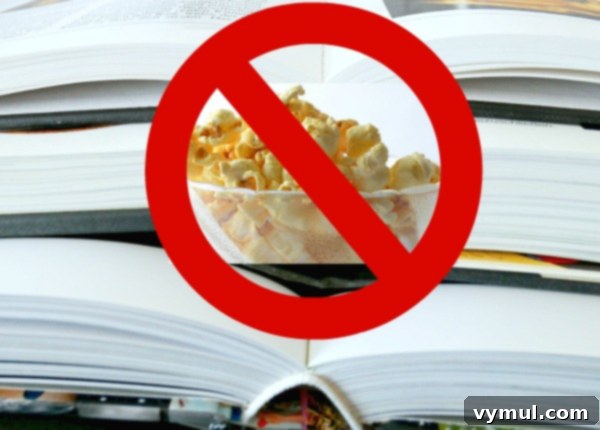
For me, this has been, and continues to be, one of the most challenging habits to overcome. These deeply rooted behaviors began subtly in elementary school, where I developed a pattern of eating after school when I was alone, often with a book in hand. Over time, this evolved into habitually consuming less-than-healthy foods specifically when I was by myself. Even now, when my family is away and I find myself alone, one of the first thoughts that often springs to mind is, “What’s there to eat?” This occurs regardless of whether I’m genuinely hungry, highlighting the powerful conditioning behind the habit.
The comfort I associated with munching on something while immersed in a book became a strong trigger. Consequently, I now make a very conscious effort to avoid eating while reading. The only real exception I permit myself is during my lunch break on workdays, when I read mail at a table. In this structured scenario, the food is on a plate, and the setting is more formal, which naturally limits mindless consumption. However, the dangerous combination of a book and a bag or container of snacks on the couch is a double no-no for me – that bag can be emptied before I even fully register what’s happening!
I’ve discovered that chewing mint gum or enjoying a refreshing mint can be an effective substitute to redirect the desire to eat in these triggering situations. To support this, I strategically keep mints in various locations around my home and in my purse. My absolute favorite used to be Newman’s Own Wintergreen Mints, which had a perfect balance of mintiness and natural ingredients, but sadly, they are no longer available. Now, I rely on Simply Mints as a helpful alternative to break the cycle of unconscious snacking.
And now, for the grand finale – my absolute favorite and most rewarding tip:
12. Harness the Power of Dark Chocolate to Satisfy Sweet Cravings
My love for chocolate is profound and unwavering. Discovering this particular trick allowed me to wholeheartedly embrace daily chocolate consumption without any lingering guilt, and it has been a game-changer for my weight loss and healthy eating journey. Yes, I eat chocolate every single day!
Years ago, I read a fascinating book titled The Fat Fallacy. This book, which I thoroughly enjoyed, chronicled the author’s experience of moving to France and successfully losing weight while eating real, full-fat foods. It was through this reading that I learned the empowering truth: it’s not only acceptable but potentially beneficial to enjoy a small piece of dark chocolate after dinner. This revelation freed me from years of internal struggle regarding sweet treats.
And here’s the amazing part: the more I consciously choose dark chocolate, the less I crave the milk chocolate candies and highly processed sweets that I once adored. This is a classic example of how a more basic, whole food – dark chocolate, with its higher cocoa content, less dilution from milk, and lower sugar profile – proves to be far more satisfying and satiating. I honestly never imagined a day would come when I would turn down a Snickers or M&M, but now, if they aren’t dark chocolate, they taste disappointingly bland and overly sweet. They simply aren’t worth the calories. Who knew such a profound shift in taste preferences was possible?
This daily dark chocolate ritual is also a significant reason why my family is content with having traditional desserts only occasionally. We genuinely don’t feel deprived because that small square of rich dark chocolate after dinner feels incredibly decadent and satisfying. It’s like our little secret pleasure: “Shhh, don’t tell anyone, but we eat chocolate after *every* dinner!” This simple habit transforms the craving for elaborate desserts into a perfectly managed, guilt-free indulgence.
So, there you have it – these are the twelve most impactful tips, tricks, and techniques (at least all that come to mind right now!) that I’ve personally employed over the past few years to successfully lose weight, maintain it, and significantly improve my overall health and well-being. These strategies emphasize a balanced, sustainable approach to eating real, whole foods.
Now, it’s your turn! What are some of your go-to strategies that help you lose weight, maintain a healthy lifestyle, and feel truly satisfied with your eating habits? Share your insights!
EXPLORE THE FULL SERIES ON ACHIEVING WEIGHT LOSS WITH REAL, WHOLE FOODS:
- A Weighty Issue – My personal journey and perspective on weight and body image.
- How I Lost Weight Eating Real Food {More Than Ever!} – The foundational story of my transformation.
- Tips, Tricks, and Techniques For Weight Loss – The first installment of practical advice.
- Portion Control: Real Life, Real Food – A deep dive into managing portions effectively.
- Is Exercise Necessary For Weight Loss? – Examining the role of physical activity.
- A Simple, Easy Workout {+ Printable} – Practical exercise routines to complement your diet.
Disclosure: This article contains affiliate links that may earn a commission based on sales, but this will not affect your purchase price. Click here to read our full disclaimer and advertising disclosure policy.