
Reclaimed Wood & DIY Garden Projects: Enhancing Your Homestead with Sustainable Style
Welcome to a new episode of Simple Homemade Life, where we delve into the rewarding world of sustainable living, cost-effective DIY projects, and enhancing your home’s natural beauty. In this installment, we’re excited to share invaluable insights gleaned from our experiences at our charming 1900s farmhouse. We’ll explore the art of harvesting and thoughtfully reusing old wood, transforming what some might consider waste into beautiful, functional pieces that tell a story. While working with reclaimed wood presents its unique set of challenges, the unparalleled aesthetic appeal, significant reduction in environmental waste, and the substantial financial savings make it an incredibly worthwhile endeavor. Beyond the farmhouse walls, we’ll venture into the garden to showcase our recent planting efforts in the beds outside the main fence and unveil our newest addition: a stunning garden gate arbor. This DIY project, completed for less than $100, has dramatically boosted our property’s curb appeal, proving that impactful improvements don’t have to break the bank. Join us as we uncover how to infuse character and sustainability into every corner of your homestead.
Explore Simple Homemade Life: Video & Audio
For those who prefer a visual or auditory experience, this episode of Simple Homemade Life is available in multiple formats. You can watch our detailed video walkthrough to see our reclaimed wood projects and garden arbor come to life, or listen to the podcast version while you tackle your own projects.
Listen to the SHL Podcast Episode
Prefer to listen on the go? You can find this enriching episode on all popular podcast listening applications. Tune in via Apple Podcasts, Google Podcasts, Stitcher, and TuneIn Radio to get your dose of inspiration for sustainable living, DIY, and gardening.
SHL Episode Transcript: Read At Your Own Pace
If you prefer to digest information by reading, a full transcript of this podcast episode is available. This allows you to easily reference specific tips and ideas at your convenience. Click here to open the transcript in a new window and read along, ensuring you don’t miss any valuable details about reclaimed wood projects and garden enhancements.
Please note: Some links in this article are affiliate links. If you click on them and make a purchase, I will receive a small commission at no additional cost to you. These commissions help support the content we create.
Transforming Spaces: Reclaimed Wood in Our Farmhouse Bathroom
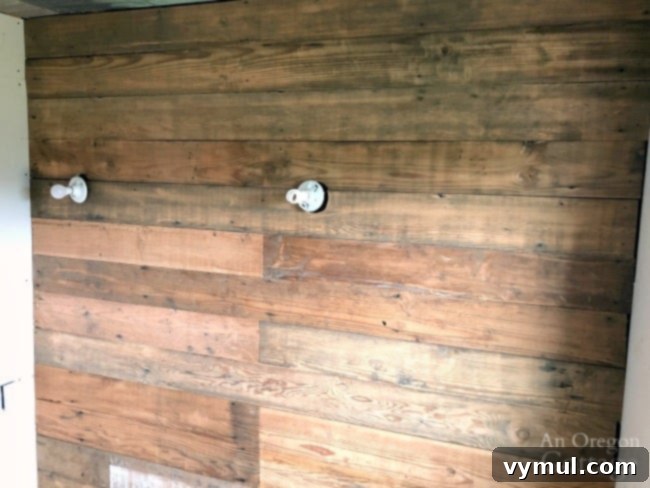
Embracing History: The Pros and Cons of Reclaimed Wood
In this segment, we openly discuss the various advantages and disadvantages of integrating reclaimed wood into home renovation projects. While, at first glance, the list of potential drawbacks might seem longer than the benefits, our experience consistently reinforces the immense value of reusing wood. The unique character, deep sense of history, and undeniable cost savings (especially when the wood is salvaged or acquired affordably) make it an irresistible choice for us. Reclaimed wood brings an authentic, rustic charm that new materials simply cannot replicate, adding a layer of warmth and story to any space.
The “downsides” typically include the labor-intensive process of cleaning, de-nailing, and preparing the wood. You might encounter uneven surfaces, unexpected damage, or even hidden pests in some extreme cases. Finding pieces of consistent size and quality can also be a challenge, requiring patience and adaptability. However, these perceived hurdles are easily overcome with the right mindset and tools. The aesthetic payoff—the unique grain patterns, the worn textures, and the beautiful imperfections—far outweighs these initial efforts, creating truly one-of-a-kind results.
The “Cottage Mentality”: A Key to Successful DIY with Reclaimed Materials
Through our many years of lovingly updating old homes, we’ve distilled a crucial philosophy we affectionately call the “cottage mentality.” This approach is centered around one simple yet powerful principle: EMBRACE IMPERFECTIONS. This mindset is a game-changer when working with reclaimed materials. It smooths over so many potential bumps and frustrations, allowing you to appreciate the inherent beauty in aged wood rather than striving for unattainable factory-perfect finishes. In fact, it’s those very imperfections—the nail holes, the subtle variations in color, the gentle wear—that imbue reclaimed wood with its irreplaceable character. This unique character is not something that can ever be purchased or replicated with new materials; it’s earned through time and history.
Essential Tools for Harvesting and Utilizing Reclaimed Wood
Working with reclaimed wood can be immensely satisfying, and having the right tools makes the process significantly easier, safer, and more efficient. Whether you’re carefully deconstructing an old structure or preparing salvaged planks for a new project, these tools are invaluable for transforming raw, aged timber into beautiful finished pieces:
- 15 Amp 10 in. Sliding Compound Miter Saw: This versatile saw is crucial for making precise crosscuts, miter cuts, and bevel cuts. Its sliding feature allows it to handle wider boards, which is often necessary when dealing with varied sizes of reclaimed lumber. Essential for cutting planks to length for accent walls, shelves, or furniture components.
- 12 Amp Corded Reciprocating Saw: Often called a “Sawzall,” this powerful tool is indispensable for demolition and rough cuts. It excels at cutting through old nails, screws, and wood quickly, making it ideal for dismantling structures or breaking down larger pieces of reclaimed wood into manageable sections.
- Cordless Variable Speed Oscillating Multi-Tool: This multi-purpose tool is a DIY enthusiast’s best friend. With various attachments, it can sand, scrape, cut, and grind in tight spaces. For reclaimed wood, it’s perfect for trimming flush cuts, removing old caulk or adhesive, or fine-tuning small adjustments where precision is key. Its cordless nature offers excellent portability.
- 10 in. Table Saw with Folding Stand: A table saw is fundamental for ripping (cutting along the grain) reclaimed boards to a consistent width. This is particularly important for projects requiring uniform dimensions, such as flooring, paneling, or tabletops. The folding stand adds portability, making it suitable for various workspace setups.
- Portable Electric Air Compressor and 18-Gauge Brad Nailer Combo Kit: For assembly, a brad nailer provides a quick, clean, and strong fastening method with minimal visible holes. It’s ideal for attaching reclaimed wood panels, trim, or decorative elements. The portable air compressor makes this setup highly versatile for both workshop and on-site projects.
- 10 in. Claw Bar: A heavy-duty claw bar is essential for safely and effectively prying apart old wooden components. Its design provides excellent leverage for removing stubborn nails and separating joined pieces without causing excessive damage to the wood you intend to reclaim.
- 3-piece Pry Bar Set: A set of pry bars in varying sizes offers versatility for different tasks. Smaller bars are great for delicate work and tight spaces, while larger ones provide more power for heavier demolition. They are indispensable for carefully separating planks and removing old fasteners from reclaimed wood.
Boosting Curb Appeal: Our DIY Garden Gate Arbor
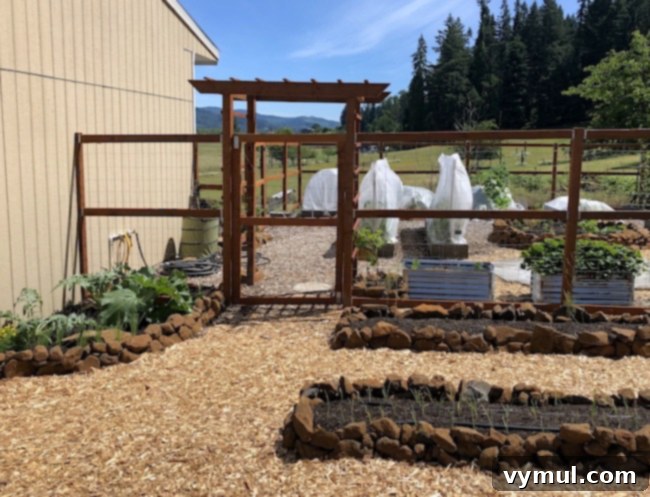
The latest addition to our outdoor space is a simple yet incredibly impactful garden arbor, meticulously crafted by Brian for our garden gate. This project was truly the finishing touch the vegetable garden needed. While it’s a straightforward DIY, the statement it makes is anything but small, especially in an area like ours that is prominently visible from both the driveway and the street. An arbor instantly adds a sense of welcome, structure, and charm, transforming a utilitarian gate into an inviting focal point.
This budget-friendly project cost us less than $100, proving that you don’t need a massive budget to achieve significant enhancements to your home’s exterior. The beauty of a DIY arbor lies in its simplicity and the ability to customize it to fit your garden’s aesthetic. It provides a perfect framework for climbing plants, which will eventually drape over the structure, creating a living tunnel that guides visitors into the garden. This kind of thoughtful design significantly elevates curb appeal and adds character to the entire property.
Build Your Own: How to Make a Garden Gate Arbor
Inspired to create your own beautiful garden arbor? We’ve made it easy for you to follow along with our detailed tutorial. Turn your plain garden gate into a classic, charming arbor for less than $100. It’s a project that brings immense satisfaction and lasting beauty.
Watch our step-by-step How to Make a Garden Gate video right here on this page, or head over to YouTube to view it directly: here on YouTube.
Deer-Proof Planting Strategies for Your Garden
Alongside the garden arbor project, I also shared my planting strategy for the area surrounding it and in the rock-wall beds situated outside the main fenced garden. The primary goal for these specific areas is deer deterrence, as we experience significant deer pressure on our property. Therefore, I carefully selected varieties that deer are (supposedly) less likely to eat, allowing us to expand our growing space while protecting our crops.
Here are the robust and resilient varieties I discussed, strategically placed to thrive even with local wildlife challenges:
- Himrod Green Table Grape: This vigorous, seedless green grape variety is growing beautifully over the new arbor, inside the main garden fence. Grapes are perfect for arbors, providing both shade and delicious fruit, while their robust growth can quickly cover the structure.
- Victoria Rhubarb: Planted in the outer beds, rhubarb is an excellent choice for deer deterrence due to its highly toxic leaves. While the stalks are culinary delights, the leaves serve as a natural warning to hungry deer, keeping them away from this particular plant and potentially nearby edibles.
- Green Globe Artichokes: These striking plants are positioned to showcase their architectural beauty and their spiky, tough leaves. Artichokes are generally disliked by deer, making them a fantastic, dual-purpose addition for both their unique appearance and their deterrent qualities.
- Bunching Green Onions & Bulb Onions: The strong, pungent scent of onions is a known deterrent for deer. Planting both bunching green onions for continuous harvest and bulb onions for storage provides a perimeter of natural aroma that deer tend to avoid. They are easy to grow and offer great culinary value.
- Marigolds – ‘Lemon Gem’ and ‘French White’: These cheerful annuals are not only beautiful but also serve a practical purpose. Marigolds are well-known for deterring various garden pests, and their strong scent can also contribute to discouraging deer. ‘Lemon Gem’ offers bright yellow blooms, while ‘French White’ provides a softer, elegant touch.
- Asparagus: While generally considered deer-resistant, I must confess that deer have sampled at least one of our asparagus spears! This highlights that no plant is truly 100% deer-proof, but asparagus is still a worthy perennial crop to include, offering delicious harvests for years once established. Its fern-like foliage can also add texture to the garden.
- Bulb Onions: Similar to green onions, bulb onions provide a strong scent that deer find unappealing. These are grown for their mature bulbs, offering a long-lasting deterrent and a staple for the kitchen.
I will certainly keep you updated on how this area fares against the deer population throughout the growing season. It’s an ongoing experiment in harmonious coexistence!
What’s Next on Simple Homemade Life
In our upcoming episode, we’re diving deep into practical gardening solutions with a detailed guide on how to customize soaker hoses. We’ll show you how to cut them up and reconfigure them to perfectly fit a variety of different bed sizes and shapes, ensuring efficient and targeted watering for all your garden needs. This simple hack can save you time, water, and make your irrigation system much more effective.
Thank you sincerely for watching, listening, or reading our latest episode! Your engagement means the world to us. If you enjoyed what you learned and found value in our content, please consider helping us grow our community. You can make a real difference by telling your friends about the show, subscribing to our channel on YouTube or on podcast platforms like iTunes, and leaving us a thoughtful review. Your subscriptions and reviews are incredibly important as they help others discover Simple Homemade Life and our mission of inspiring sustainable and creative living.
For more daily inspiration and updates from An Oregon Cottage, make sure to follow us on social media: find us on Instagram at @AnOregonCottage, like our page on Facebook, and explore our boards on Pinterest. Additionally, don’t miss out on exclusive content and updates by subscribing to the AOC newsletter.
Have you missed any previous episodes of Simple Homemade Life? No worries! You can easily catch up on all our past discussions and projects by visiting our archive here.
Disclosure: As a friendly reminder, this post contains affiliate links. This means that if you make a purchase through these links, I may earn a small commission based on sales, but rest assured, it will not change your purchase price. Your support helps keep An Oregon Cottage thriving! Click here to read my full disclaimer and advertising disclosure for more details.