Effortless Spring Refresh: DIY 10-Minute Terrarium & Green Home Decor Ideas
As the last vestiges of Easter celebrations fade, many of us feel an undeniable urge to refresh our living spaces. The pastel hues and egg-themed accents, while charming for a season, often give way to a desire for something more enduringly fresh and vibrant. This post details my journey of transitioning from playful Easter decor to a more sophisticated, green-focused spring aesthetic, including a super easy, 10-minute DIY terrarium project that promises lasting beauty with minimal effort.
While pastels have their place, especially when they appear in the natural beauty of spring blossoms, my personal style gravitates strongly towards a palette of lush greens and serene neutrals. These foundational colors provide a calming backdrop, allowing occasional pops of coral, purple, or yellow to truly shine without overwhelming the senses. It’s about creating a harmonious and inviting atmosphere that celebrates the awakening of nature without feeling overly themed.
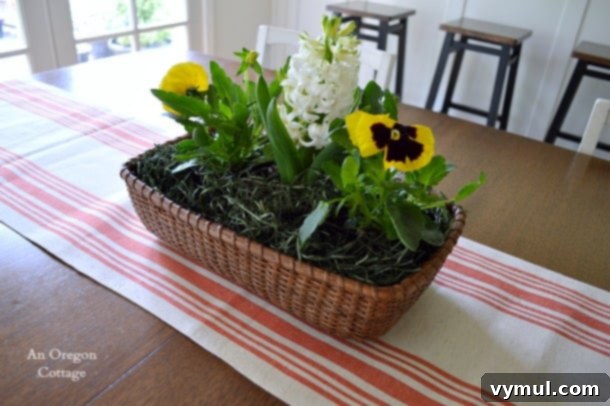
One of my favorite ways to infuse instant cheer into a room is with a simple floral centerpiece. The image above perfectly encapsulates my “happy place”: a collection of fresh flowers and plants artfully arranged in a charming thrifted basket. Coupled with some inexpensive paper filler from a dollar store, this entire arrangement comes together in literally five minutes. It’s a small touch, but the impact is significant. Even on the gloomiest, rain-soaked days, a glance at this vibrant display is enough to bring a smile to your face, reminding you of the beauty that spring holds, both indoors and out.
Revitalizing the Spring Mantel with a Green and White Garden Theme
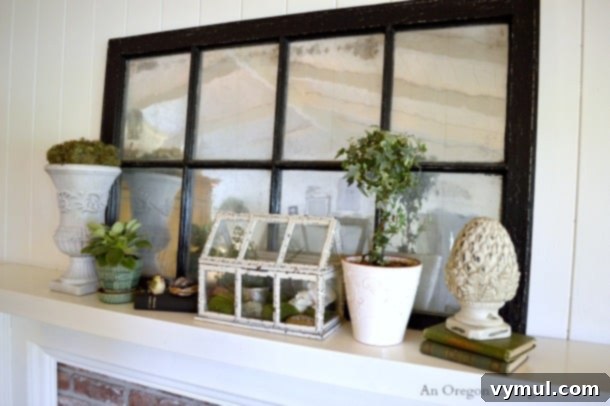
After carefully packing away the last of the Easter-themed items and a whimsical upholstery-webbing banner that adorned our early spring mantel, I took a fresh look at what remained. What emerged was a beautiful, cohesive theme of green and white, reminiscent of a serene garden. This discovery immediately inspired me to lean into this natural aesthetic. I rearranged existing pieces, adding another verdant plant and an elegant urn filled with moss, to amplify the garden-inspired feel.
The beauty of this neutral background is its incredible versatility. As my garden springs to life, I can easily incorporate freshly picked flowers, whether they’re delicate daffodils, vibrant tulips, or fragrant lilacs. Any splash of color I choose to introduce will seamlessly blend with this tranquil green and white foundation, creating an ever-evolving display that mirrors the changing seasons outside our window. It’s a low-stress approach to decorating that always feels fresh and inviting.
The 10-Minute Terrarium: An Easy-Care Green Oasis
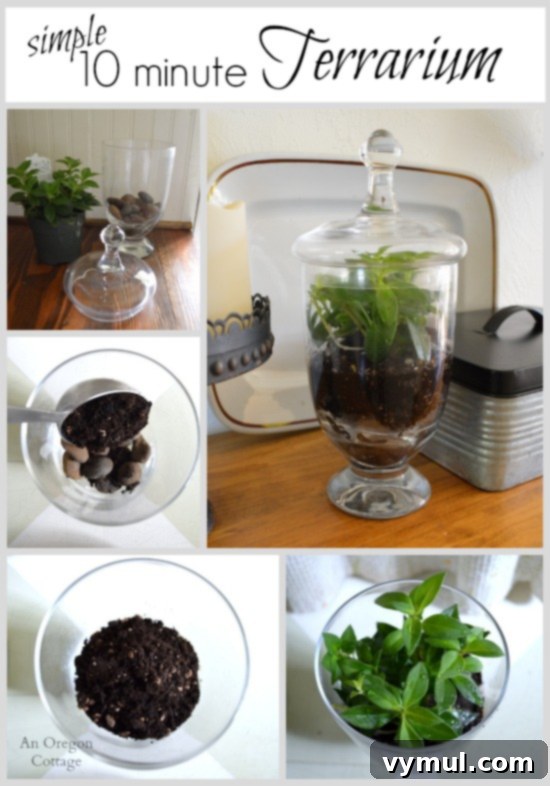
My desire to incorporate more living greenery into our home led me to a fantastic, easy-care project: the terrarium. Inspired by my friend Amy of Mom Advice, I set out to create a simple terrarium. The best part? It took me just 10 minutes to assemble using basic supplies readily available at most home and garden stores, and even some items found right in our own yard. This miniature ecosystem not only adds a touch of nature but also requires remarkably little maintenance, making it perfect for busy individuals or anyone who considers themselves to have a “black thumb.”
Gathering Your Terrarium Supplies:
- A Clear Container: I chose the largest apothecary jar I owned. While it was a good starting point, as you’ll see, bigger is often better for giving plants room to thrive. Look for glass jars with lids, cloches, or even old fishbowls.
- Drainage Layer (Pebbles/River Rock): Essential for preventing root rot by allowing excess water to collect beneath the soil. I collected river rock from our yard, but you can purchase decorative pebbles or gravel.
- Activated Charcoal (Optional, but Recommended): A thin layer between the pebbles and soil helps filter the air and water within the terrarium, preventing mold and odors. This is a wise precaution, as suggested by a helpful reader, even if you haven’t experienced issues previously.
- Potting Soil: A light, well-draining potting mix suitable for indoor plants.
- Small Tropical Plants: Choose plants that thrive in high humidity and low light, such as ferns, fittonia, small ivies, or peperomias.
- Tools: A small trowel or spoon, a watering can with a fine spout, and possibly tongs or chopsticks for placing plants.
Step-by-Step Terrarium Assembly:
- Create the Drainage Layer: Begin by adding a layer of river rock or pebbles, about 1-2 inches deep, to the bottom of your chosen container. This is crucial for preventing waterlogging.
- Add Activated Charcoal (Optional): If using, spread a thin layer (about half an inch) of activated charcoal over the pebbles.
- Introduce Potting Soil: Add a sufficient layer of potting soil (2-3 inches, or enough for your plant’s roots) on top of the charcoal. Create a small well for your plant.
- Plant Your Greenery: Carefully remove your chosen plant from its nursery pot. Gently loosen any tightly bound roots. Place the plant in the prepared well, ensuring its roots are covered.
- Add More Soil: Lightly add more potting soil around the plant, patting gently to secure it. Leave some space between the soil and the container lid.
- Water Thoroughly: Water the plant well, ensuring the soil is moist but not saturated. The goal is to create a humid environment.
- Seal the Ecosystem: Replace the lid on your container. This traps moisture, creating a self-sustaining environment.
The “Divide and Conquer” Plant Strategy
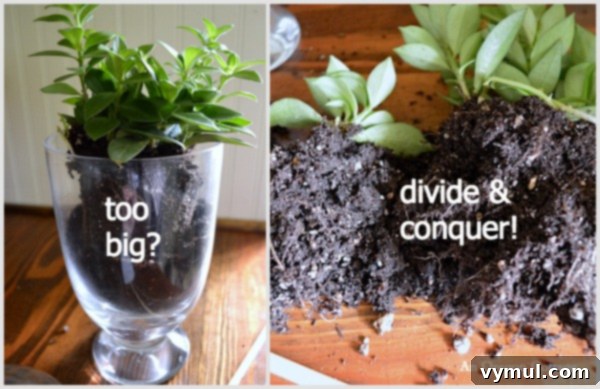
A common challenge when creating terrariums, especially with smaller lidded containers, is finding appropriately sized plants. Most basic home and garden store plants tend to be too large, and truly tiny “terrarium” plants often come with a disproportionately high price tag. But I have a secret weapon: the “divide and conquer” method!
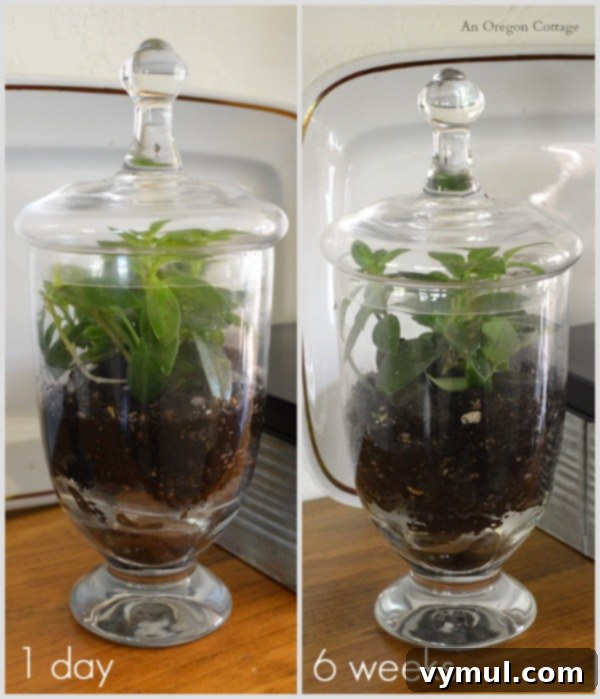
As you can see from the image, this was precisely the situation I faced. My chosen plant, while beautiful, was simply too large for the apothecary jar. Instead of despairing, I embraced the opportunity to divide it. This not only solved the size problem but also resulted in an even better deal: I ended up with three separate planted containers for the price of one! Don’t be afraid to gently pull the roots apart. Many plants, especially if they are a bit root-bound in their original pot, actually benefit from this kind of “root pruning” and will thrive even more vigorously in their new homes.
Identifying the Mystery Plant and General Care Tips
You might be wondering what kind of plant I used for this project. And that’s a good question! One I wish I had a definitive answer for. Despite my diligent efforts to keep the tag, all it provided was the generic label “Tropical Plants” along with very broad care instructions: “no direct sun, don’t let get too wet.” So, unfortunately, I can’t offer a specific name. If any seasoned plant enthusiasts recognize it, please do let us know in the comments!
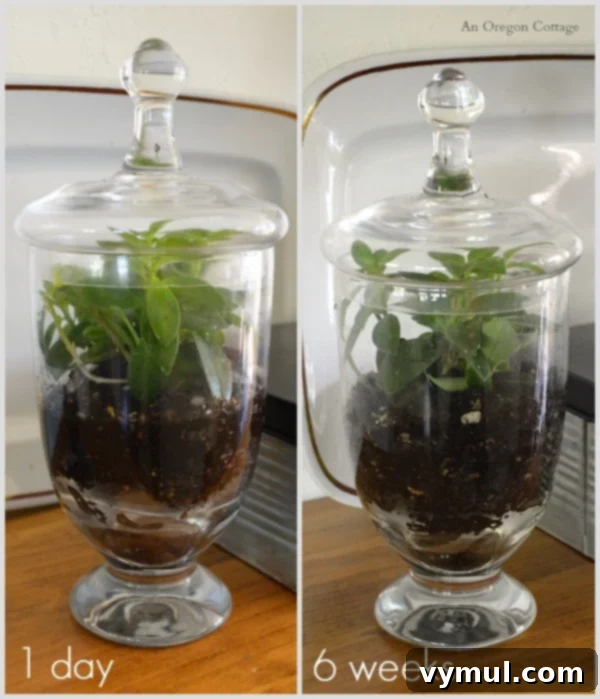
However, the lack of a specific name doesn’t hinder its success. Whatever its exact species, this tropical plant has been absolutely thriving in our entryway, an area that is decidedly *not* bright. I actually assembled this terrarium quite a while ago, which allows me to share a truly compelling before-and-after: what it looked like on day one versus six weeks later. The transformation is remarkable; it now appears even more healthy, vibrant, and settled into its new miniature world.
The Ultimate Easy-Care Plant Solution
What makes this terrarium truly exceptional is its incredibly low maintenance. In the entire six weeks since its creation, I have not needed to add *any* water, nor have I even removed the lid. This thing is truly E-A-S-Y! The sealed environment creates its own miniature water cycle, where moisture evaporates from the soil and plant leaves, condenses on the cool glass, and then drips back down, effectively watering itself.
So, if you’ve always believed you possess a “black thumb” when it comes to plants, a terrarium might just be the perfect solution for you. It’s a forgiving project that allows even the most hesitant gardener to successfully introduce lush, living greenery into their home without the constant worry of watering schedules or wilting leaves.
Of course, a terrarium isn’t the only option. One of the plant divisions I removed from the original plant was potted up in a regular pot and has been flourishing happily in our living room for the same duration. While it has, naturally, required a couple of waterings, I did cover the top of the soil with a layer of moss. This simple trick helps to retain moisture, preventing the soil from drying out too quickly and extending the time between waterings. Whether you opt for a self-sustaining terrarium or a beautifully potted plant, embracing living greenery is a wonderful way to celebrate spring indoors.
Here’s to a beautiful, green, and effortlessly stylish spring in your home!