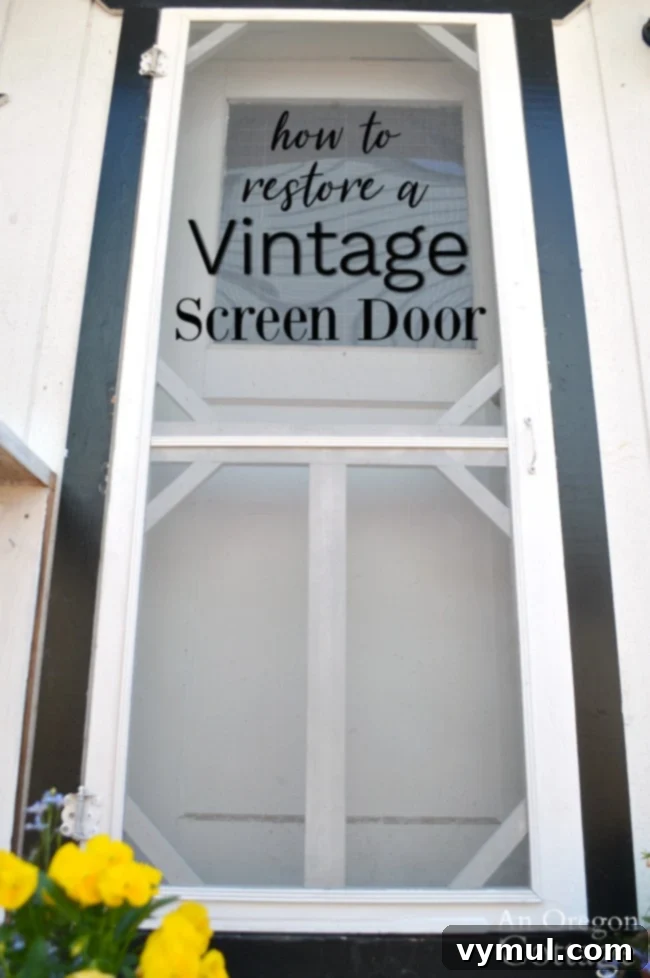
Ultimate Guide to Restoring a Vintage Screen Door: Revive Classic Farmhouse Charm
Use this comprehensive tutorial to transform a forgotten, rusty, and moldy vintage screen door into a clean, fresh, and fully functional entryway. Imagine the satisfying “thump” of a beautifully restored farmhouse screen door echoing through your home all summer long, bringing both charm and sweet breezes. This step-by-step guide will help you breathe new life into an antique treasure, ensuring its smooth operation and lasting appeal.
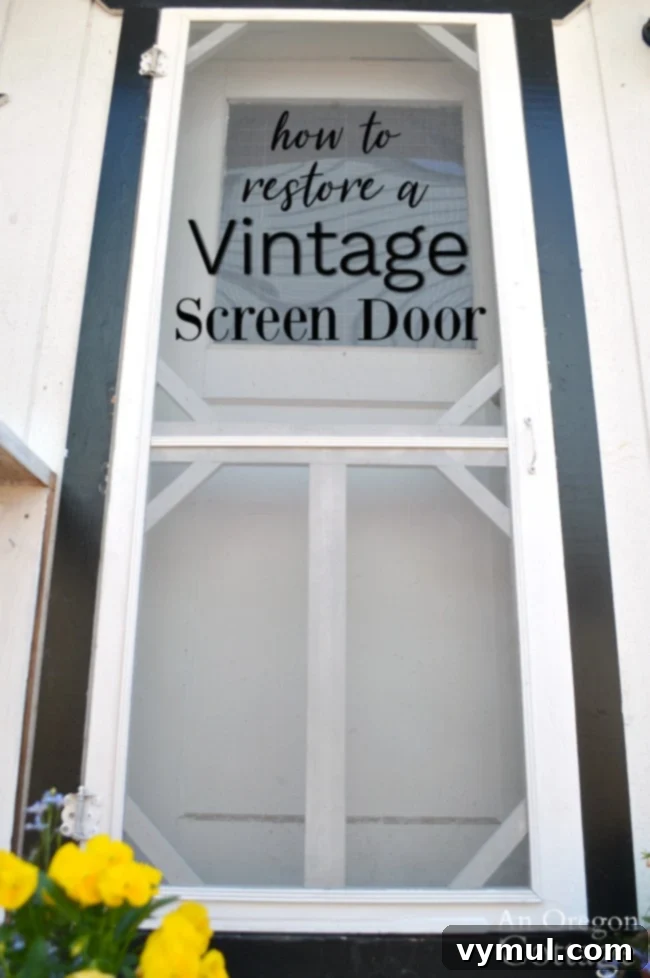
This article is proudly sponsored by 3-IN-ONE® Multi-Purpose Oil, an essential product for achieving professional-grade restoration results, especially for stubborn hardware.
There’s an undeniable allure to wooden vintage screen doors. They possess a character and warmth that modern doors simply can’t replicate, instantly evoking feelings of nostalgia and simpler times. Beyond their aesthetic appeal, they symbolize the promise of warm weather, gentle breezes wafting through the house, and the comforting sounds of summer.
The distinctive sound a wooden screen door makes when it softly shuts—that gentle, rustic knock—is, for many, the quintessential sound of summer in the countryside. It’s more than just a door; it’s an experience, a piece of living history that connects your home to a timeless tradition.
But the charm of old screen doors isn’t limited to exterior use. These versatile pieces of vintage hardware can be repurposed *inside* your home, adding a unique architectural element. Consider using them to conceal closets, pantries, or even as decorative room dividers. Their vintage appeal, complete with original hardware, offers a distinctive solution for interior design.
For instance, in this room transformation, I incorporated a set of double screen doors for a pantry and a single screen door, boasting delightfully chippy paint, for a storage closet. To maintain a tidy appearance, I lined the screens with fabric to discreetly hide the contents within. However, this step is entirely optional if your storage areas are aesthetically pleasing on their own.
Where to Find Your Own Vintage Screen Door
Embarking on a vintage screen door restoration project begins with finding the perfect candidate. The hunt itself can be a rewarding part of the experience. Start your search on platforms like Craigslist, where individuals often list old building materials. Regularly visit Habitat for Humanity’s ReStores or any local architectural salvage yards and building recycle centers – these treasure troves are excellent places to score unique old doors.
Don’t overlook local garage sales, estate sales, or barn sales, which can often yield unexpected finds. Patience is key when searching for vintage items; what you’re looking for might not appear immediately, but the wait is often worth it for that perfect, character-filled door.
Unfortunately, our own farmhouse fixer didn’t come equipped with an existing old screen door, so we are actively on the lookout for one, learning the true meaning of patience in the process!
The Transformation Begins: An Old Screen Door “Before”
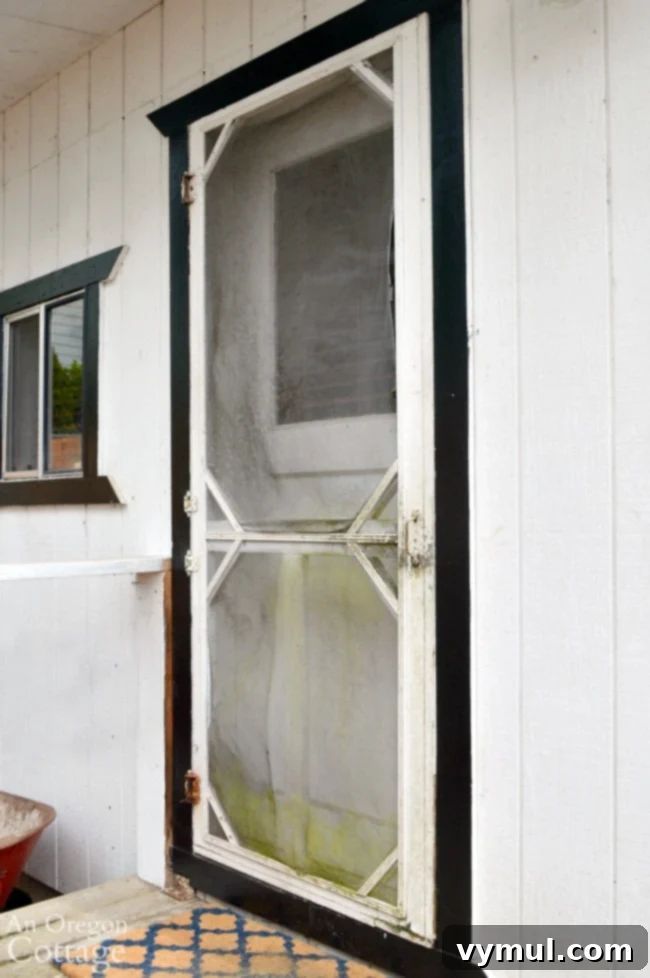
While we continue our search, my brother recently acquired an older cottage that came with its own authentic vintage screen door. As is often the case with such finds, it arrived complete with noticeable mold growth, several holes in the screen mesh, and hinges heavily seized with rust. Despite these imperfections, the underlying structure of the door was remarkably sturdy and well-crafted, typical of older construction. It simply needed a dedicated spruce-up, a fresh new screen, and some much-needed attention to its charming, scalloped hinges.
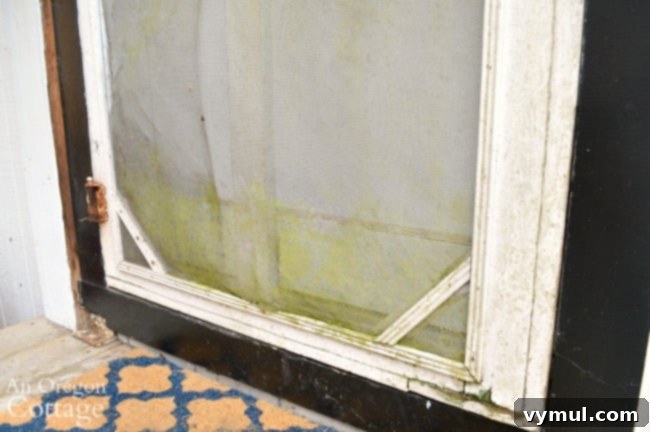
Indeed, this particular screen was in dire need of a complete overhaul. Recognizing the potential for a satisfying DIY project, and since I was once again partnering with 3-IN-ONE to showcase the incredible magic their multipurpose oil can work on lubricating and quieting old, stubborn hinges, I eagerly volunteered to restore this door for my brother. The prospect of bringing such a character-filled piece back to its former glory was truly exciting.
This really is an accessible and rewarding DIY project. If you ever stumble upon a vintage screen door that captures your heart, don’t hesitate! Grab it, follow this detailed tutorial, and you’ll soon possess a truly unique and special door, unlike anything you’d find in a store. It’s a wonderful way to add a personal, historic touch to your home.
How to Restore A Screen Door Video Tutorial
Watch our video guide for a visual walkthrough of the entire screen door restoration process.
Comprehensive Steps to Restore a Vintage Screen Door
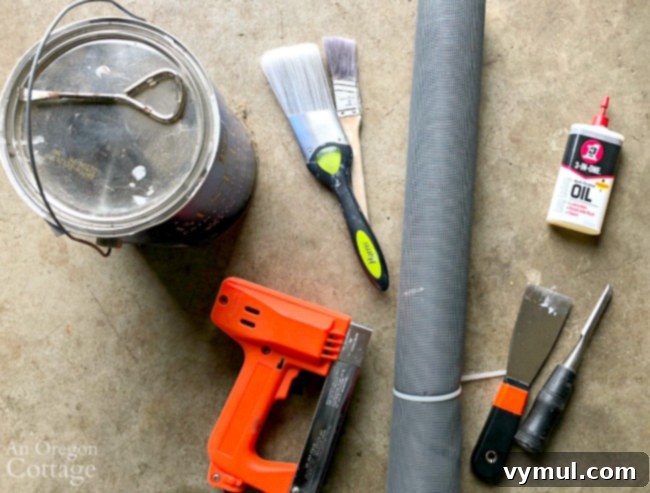
Some links in this article are affiliate links. If you click on them and make a purchase, I may receive a small commission at no additional cost to you. This helps support our content creation.
One of the beauties of this restoration project is that it primarily utilizes basic supplies that many DIY enthusiasts already have in their garage or workshop. The only item you might need to purchase specifically, particularly if your screen is as damaged as the one featured here, is replacement screening. All other tools and materials are generally common household items or readily available at hardware stores.
Supplies Needed for Your Restoration Project
- Exterior Paint: Choose a durable, weather-resistant paint in your desired color. If you plan to use the door indoors, interior paint will suffice.
- Paint Brushes: A 2-inch brush is ideal for the main door frame, while a smaller 1-inch brush works perfectly for intricate details and molding pieces.
- 3-IN-ONE® Multi-Purpose Oil: A true classic, this oil has been trusted since 1894. It’s unparalleled for making metal parts look and function like new. Its powerful formula lubricates moving components, penetrates and breaks down rust, and cleans and protects tools. The integrated, easy-to-use drip spout ensures precise application, making it perfect for restoring and revitalizing rusty hinges and other vintage hardware.
- Molding Removal Tool: A sturdy, thin tool is needed to carefully pop off old molding. While a putty knife can work, a small wood chisel often performs better due to its stiffness and sharper edge, minimizing damage to the wood.
- Replacement Screening: Select a durable material like fiberglass, aluminum, or even pet-resistant screening, depending on your needs.
- Heavy-Duty Stapler: An electric stapler is highly recommended for ease and efficiency when attaching the new screen. A manual heavy-duty stapler can also work but will require more effort.
- (Not Pictured but Essential) Needle-Nose Pliers: Indispensable for removing stubborn nails and staples.
- Electric Hand-Held Sander: For efficient sanding of larger surfaces, paired with Sanding Block: For smaller areas and hand-sanding touch-ups.
- Medium-Grit Sandpaper: Essential for smoothing surfaces and preparing wood for paint.
- Cordless Screwdriver or Drill: For removing and reattaching the screen door. (We personally used this model).
- Optional: Wood Filler: For repairing minor imperfections, cracks, or holes in the wooden frame.
- Hammer and Finish Nails: For reattaching molding pieces securely. A brad nailer can also be used for speed and precision.
- Lead Safe Respirator Mask: **CRITICAL SAFETY NOTE:** Always assume any vintage screen door (especially those pre-1978) may have been painted with lead-based paint. Wearing a lead-safe respirator mask is non-negotiable for sanding or scraping, ensuring your safety.
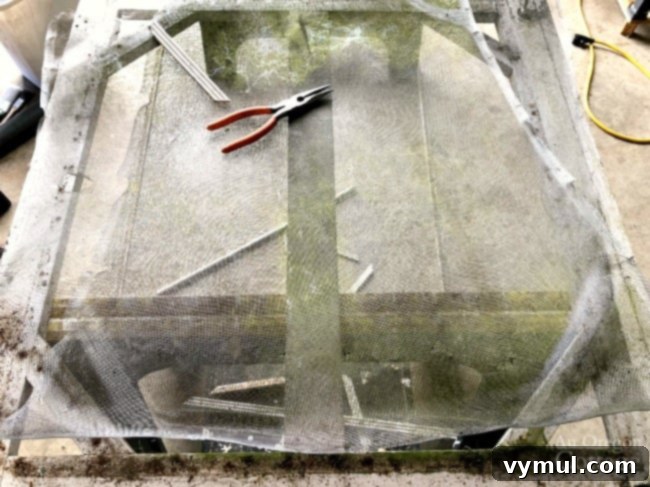
Step 1: Remove, Disassemble, and Thoroughly Clean the Screen Door
- Door Removal: Begin by carefully removing the screen door from its frame using your cordless drill or screwdriver. Store the door in a safe, flat area.
- Work Surface: Position the door on a stable work surface, such as two saw horses, to ensure it’s at a comfortable working height. This prevents strain and allows for precise work.
- Molding Removal: Using your chosen tool (putty knife or small wood chisel), gently pry off all the molding pieces that hold the screen in place. Work slowly and methodically, taking care not to damage them if you intend to reuse them, as we did.
- Old Screen Removal: Once the molding is off, pull away and discard the old, damaged screening.
- Nail and Staple Removal: Employ needle-nose pliers to remove any remaining nails, staples, or tacks embedded in the wood frame. If some are heavily rusted and break off, remove what you can, then use a hammer to tap any remaining bits flush with the wood surface. A flat surface is crucial for subsequent sanding.
- Initial Cleaning: Give the entire door frame a good scrub with a scrubber sponge and warm, soapy water. This removes surface dirt, grime, mold, and any loose debris, providing a clean canvas for the next steps. Rinse thoroughly and allow to dry completely.
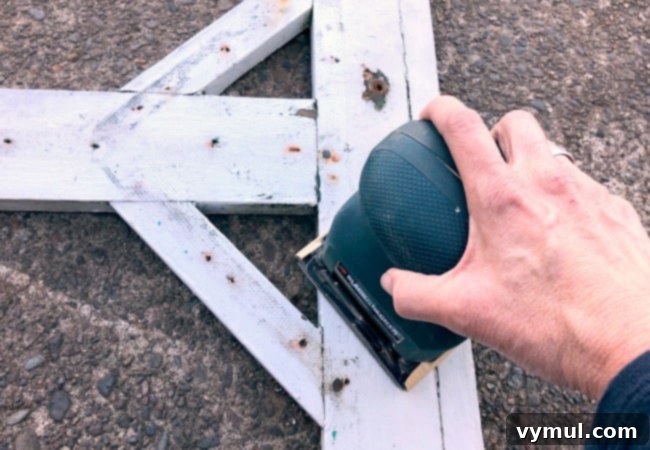
Step 2: Sand the Screen Frame & Prepare for Painting
- Flaking Paint Removal: Use a putty knife or scraper to remove any significant areas of loose or flaking paint. This creates a smoother base and prevents new paint from peeling.
- Sanding for Smoothness: Equip your electric sander or sanding block with medium-grit sandpaper. Carefully sand all surfaces of the screen door frame, focusing on smoothing out rough spots, removing residual paint, and creating an even texture. This step is crucial for paint adhesion and a professional finish.
- Lead Paint Precaution: **IMPORTANT SAFETY REMINDER:** If you are uncertain whether your vintage door has lead-based paint, always err on the side of caution. During this sanding step, it is absolutely essential to wear a certified lead-safe respirator mask to protect yourself from harmful dust particles.
- Wood Filler Application (Optional but Recommended): Inspect the frame for any cracks, divots, or minor imperfections. Apply wood filler to these areas as needed, ensuring it’s pressed firmly into the gaps. Allow the filler to dry completely according to the manufacturer’s instructions, then lightly sand smooth. I used it to seamlessly blend some smaller wood pieces added to extend the bottom of this particular screen.
- Dust Removal: After sanding, thoroughly wipe down the entire frame with a damp cloth or tack cloth to remove all sanding dust. A clean, dust-free surface is vital for proper paint adhesion.
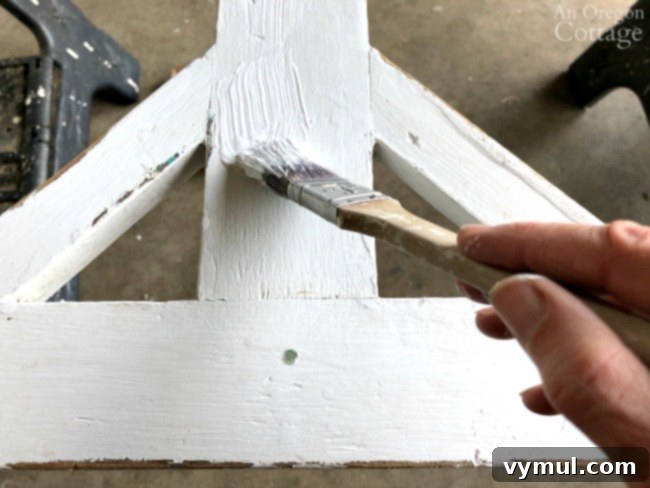
Step 3: Painting the Screen Door Frame and Molding
- Paint Molding Pieces: Lay out all the small molding pieces you intend to reuse. Apply your chosen paint color, ensuring even coverage. Allow them to dry thoroughly between coats.
- Paint the Door Frame: Begin by painting the front of the screen door frame. Apply thin, even coats to avoid drips and ensure smooth coverage. Allow the paint to dry completely according to the product’s instructions.
- Second Coat (or More): Once the front is dry, flip the door and paint the back. Repeat the process for as many coats as needed to achieve your desired finish. For this restoration, as we were maintaining the original white color, only one coat was required after proper cleaning and sanding, which speaks to the thorough preparation in the previous steps.
- Drying Time: Ensure all painted surfaces are completely dry and cured before moving on to the next steps, especially before attaching the new screen, to prevent any smudges or damage.
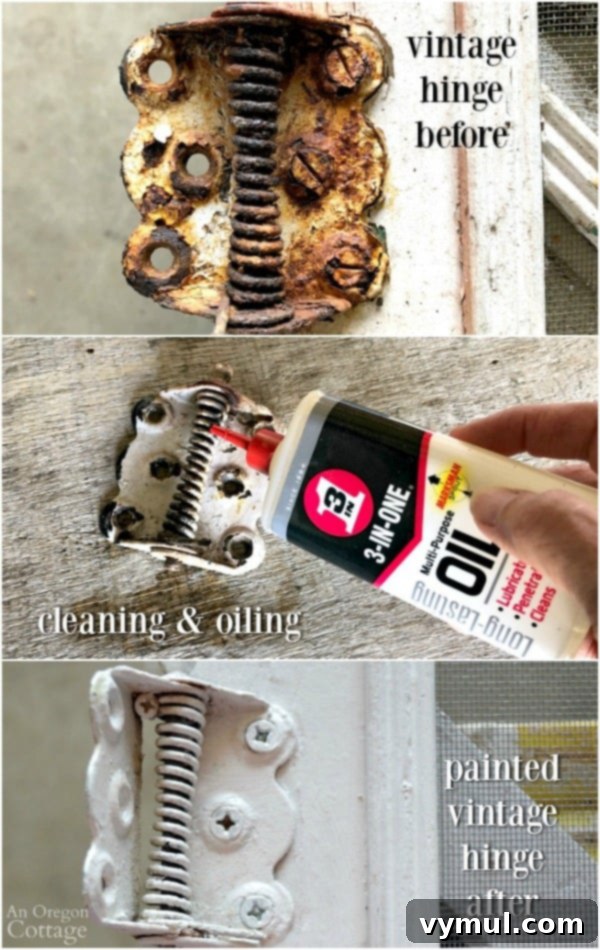
Step 4: Restore Vintage Hardware with Precision and Care
- Hardware Cleaning: Begin by cleaning the hinges and any other metal hardware as thoroughly as possible. Use a heavy-duty scrubber, wire brush, or steel wool to remove accumulated dirt, grime, and particularly, any loose rust. These beautiful scalloped hinges deserved extra attention! Note that one hinge was significantly more rusted than the other; steel wool was especially effective on the heavily corroded one. The goal is to remove as much rough rust and flaking paint as possible to create a smoother surface.
- Rust Penetration & Lubrication: To effectively penetrate stubborn rust and begin the lubrication process, apply a small amount of 3-IN-ONE® Multi-Purpose Oil directly to the base plates and moving parts of the hinges. Use your scrubber to work the oil into the metal. This application genuinely helps to even out the metal surface and loosen seized components.
- Precision Lubrication: Utilize the precision nozzle of the 3-IN-ONE® Multi-Purpose Oil to apply it directly into the spring mechanism and pivot points of the hinges. Continuously work the hinge back and forth, opening and closing it repeatedly, to ensure the oil fully penetrates all the internal workings. This action will effectively lubricate even the stiffest, squeakiest hinges, restoring them to smooth, silent operation!
- Prepare for Painting: After lubrication, use a soft cloth to wipe away any excess oil residue from the front and back surfaces of the hinges. This ensures the paint adheres properly in the next step.
- Hardware Painting (Dry Brush Technique): Using a small brush, dip it lightly into your chosen paint. Then, critically, remove most of the paint by dabbing it onto the edge of your paint can or a paper towel. You want a “dry brush” effect to apply a very light, thin coat to the hinges. The aim is to delicately coat the metal without gumming up the intricate workings with excess, runny paint. Repeat this process with soft, light coats until the hinge is coated to your satisfaction. This technique prevents paint buildup that could hinder functionality.
- Handle Restoration: If reusing the old handle, clean and sand it as you did the door frame before repainting it with the same dry-brush method for a cohesive look.
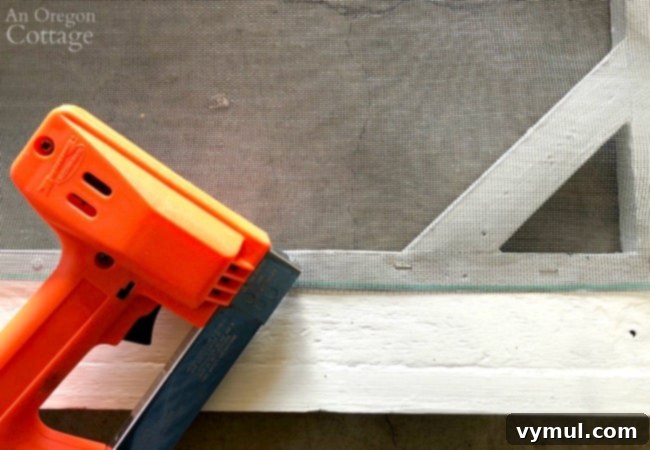
Step 5: Attach the New Screening and Reassemble Molding
- Screen Preparation: Unroll your new screening material and carefully lay it over the opening of the door frame. Trim the screening, leaving approximately an inch of overlap from the inside edge of the frame, as pictured. This excess provides enough material to tension the screen properly.
- Stapling the Screening: Begin stapling the screening, starting at the middle of one side. Then, move to the middle of the opposite side, gently pulling the screen taut as you go. Repeat this process for the top and bottom middles. This “starting from the middle” technique helps distribute tension evenly across the screen. Once the middles are secured, proceed to staple along the remaining edges, continuously pulling the screen taut to create the flattest, most wrinkle-free screen possible. Overlap staples slightly for maximum security.
- Reattaching Molding: Once the screen is securely stapled, carefully replace the molding pieces all around the edges of the screen and any center cross-braces. Use a hammer and finish nails (or a brad nailer for efficiency) to secure them firmly. For this particular door, there were many original moldings for the cross-braces that I felt visually cluttered the door. I decided not to reattach all of them, opting for a cleaner, more simplified aesthetic that highlighted the door’s original design. This decision is entirely up to your personal preference and the desired look of your restored door.
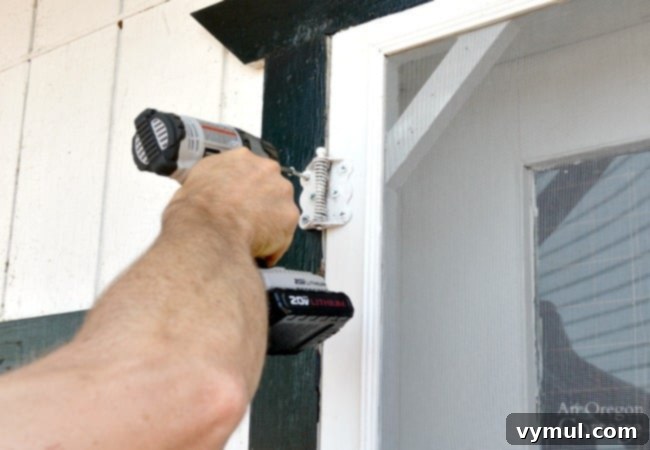
Step 6: Attach Restored Hardware & Reinstall the Screen Door
- Hardware Attachment: Carefully attach the refurbished hinges and handle back onto the screen door. We highly recommend using new screws for this step. On this particular screen door, the original hinge screws were standard slotted heads and completely rusted, making them difficult to remove and prone to stripping. We replaced them with Phillips head screws, which are much easier to work with and will facilitate future removal, should my brother wish to store the screen door during the winter months.
- Screw Head Touch-Up: To ensure the new, shiny screw heads don’t detract from the vintage aesthetic, employ the almost-dry brush technique once more. Dip a small brush into your paint, dab off most of the excess, and lightly touch up the screw heads to blend them seamlessly with the freshly painted hardware.
- Reinstall the Door: Carefully hang the fully restored screen door back into its frame, again using new Phillips head screws for secure and easy installation.
- Admire Your Work: Step back and truly appreciate your handiwork! This is always the most rewarding part of any DIY project, especially one that brings such a beautiful piece of history back to life. Enjoy the renewed charm and functionality of your vintage screen door.
The Vintage Screen Door “After”
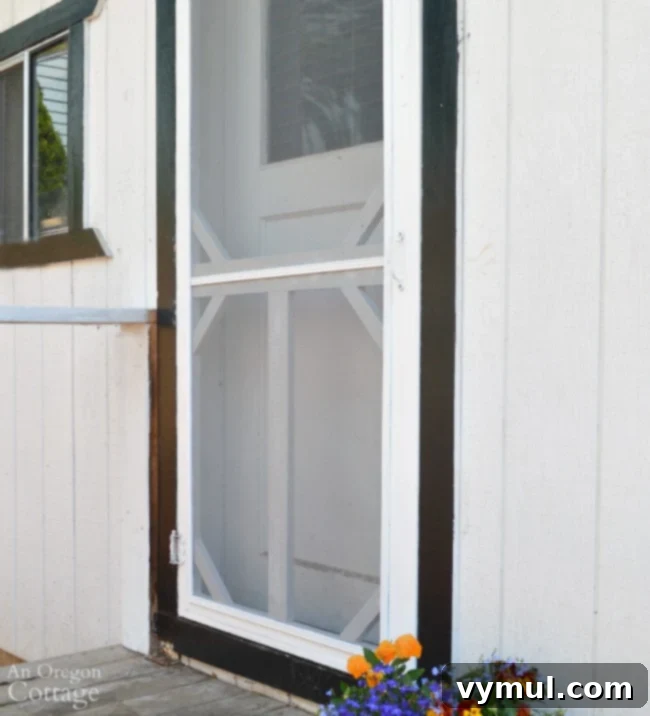
What an incredible transformation, wouldn’t you agree? The difference between the “before” and “after” is truly remarkable. I’m absolutely delighted with how it turned out and so pleased that my brother opted to preserve this beautiful piece of history rather than discarding it, as many might have done!
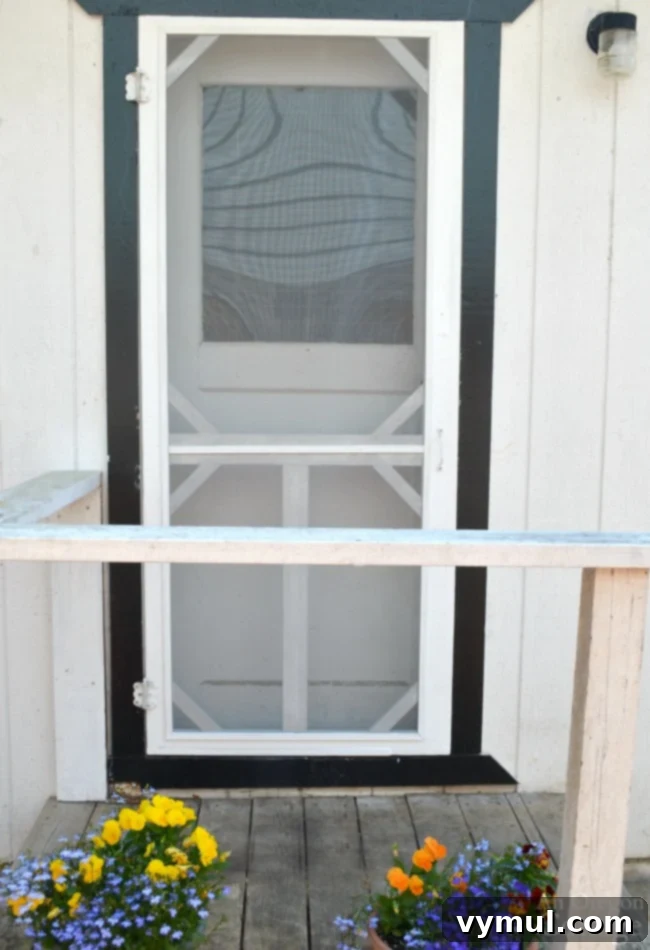
You might have observed in the initial “before” picture that the screen door originally featured two additional hinges positioned in the center. (The faint marks left in the black molding served as a testament to their previous existence.) These were merely standard cupboard door hinges and were entirely unnecessary for the structural integrity of such a sturdy, well-built door. Therefore, we chose to omit them during the reinstallation process, resulting in a cleaner, more streamlined appearance.
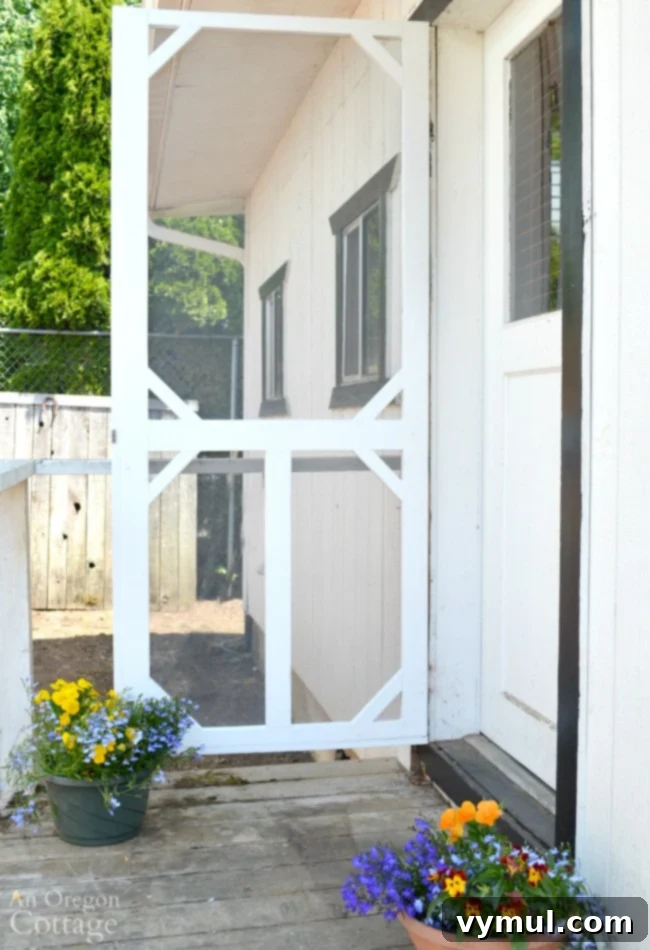
While I believe this door already looks absolutely fantastic, my brother has exciting plans to paint his charming little cottage this summer, along with redoing the exterior molding to achieve a more classic and cohesive look. Won’t this beautifully restored vintage screen door integrate even more perfectly into that refreshed aesthetic, becoming a true focal point?
Possessing a unique, restored classic old wooden screen door is more than just a functional addition; it’s a wonderful way to extend a warm and inviting welcome to guests. More importantly, it’s a constant source of joy, making you smile every single time you enter your home and hear that uniquely satisfying “thwack” that only a well-crafted wood screen door can make. It’s a testament to timeless craftsmanship and the enduring appeal of vintage charm.
Are you now inspired to embark on your own search for an old screen door, ready to bring its story back to life?
Disclosure: I received product and/or compensation for this post. As always, the opinions, thoughts, and projects shared are entirely my own, and I will NEVER promote something I don’t genuinely love and believe you will find helpful—that’s a promise! This post also utilizes affiliate links that earn commission based on sales, but this does not alter your purchase price. Click here to read my full disclaimer and advertising disclosure for more information.