Ultimate Guide to Planting Thriving Tomatoes: Expert Tips for a Bumper Harvest
Unlock the secrets to cultivating robust tomato plants that yield an abundance of juicy fruit. This comprehensive guide distills over 20 years of hands-on gardening experience into actionable tips and planting tricks, ensuring healthier tomatoes and a more bountiful harvest for every gardener.
Please note: Some links within this article are affiliate links. If you click on them and make a purchase, I may receive a small commission at no additional cost to you.
Tomatoes consistently rank as the number one vegetable cultivated in home gardens across the country, and for good reason. They offer an exceptional return on investment, with a single plant often providing enough fresh tomatoes to enjoy throughout the entire season, and even more if you’re growing prolific cherry or grape varieties. The unparalleled flavor of a sun-ripened, homegrown tomato is a delight almost everyone savors.
While tomatoes are famously resilient—even appearing spontaneously in compost piles—there are specific planting and growing techniques that can significantly boost your success. Implementing these strategies will lead to earlier harvests, a longer fruiting season, and overall healthier plants.
Over two decades of gardening, particularly in my challenging Zone 8 maritime Northwest climate, I’ve explored numerous methods for planting, cultivating, and ripening tomatoes. The often-gray summers here in Oregon mean that tomatoes, which adore sunshine and warmth, sometimes need a little extra help to thrive. The ambitious goal for many local gardeners is to harvest a ripe tomato by July 4th, a considerable feat when consistent outdoor planting isn’t reliable before the first week of May without substantial protection. I’ve personally achieved this only twice, both times by planting in early April with extensive coverings and water bottles or Wall-o-Waters for warmth, alongside ultra-early varieties. (Admittedly, they weren’t the tastiest, but they were ripe!)
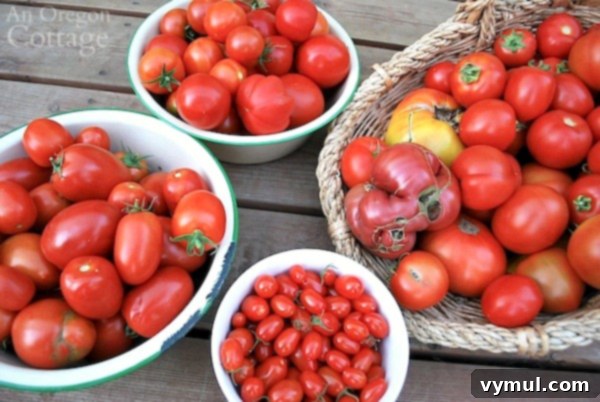
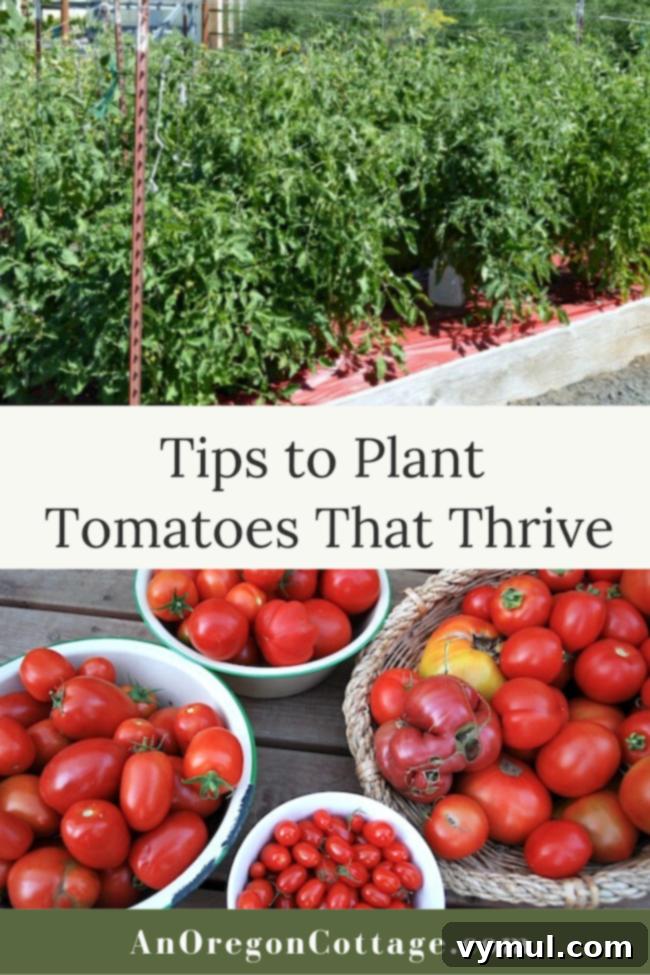
Today, I’ve shifted my focus from that ambitious early July 4th target. Instead, I aim to have several varieties ripening by the end of July, knowing that by September, my garden will be brimming with a harvest like the vibrant tomatoes shown in the photo above. Having planted tomatoes for over 20 years, I’m thrilled to share the tried-and-true planting and growing techniques I’ve gathered. These methods, some discovered through careful research and others by happy accident, consistently lead to large, healthy plants that produce an early and steady supply of those coveted, juicy, and delicious ripe tomatoes we all desire.
Growing Tomatoes: Frequently Asked Questions
What is the best time to plant tomatoes?
For gardeners in warmer climates, such as USDA plant hardiness zones 8 and 9 (like mine), starting seeds indoors as early as mid-January can give you a significant head start. If you’re in cooler regions, such as zones 3 or 4, it’s best to wait until mid- to late March or early April to begin your indoor seed starting. For outdoor planting, the golden rule is to wait at least two weeks after your last expected frost date. It’s always safer to err on the side of planting a little later, especially if you won’t be providing any protective covers for your young plants. The soil temperature should ideally be a consistent 58 to 60 degrees Fahrenheit, and nighttime temperatures should reliably stay close to 50 degrees Fahrenheit.
BIG WARNING: You’ll often see tomato seedlings appearing in garden centers far too early in the season. These plants are typically small, with weak stems and brownish leaves, indicating they’ve been stressed by cold temperatures or insufficient light in early April when light frosts are still common. Such prematurely planted seedlings will take an extended period to recover, if they recover at all, and you gain no advantage by planting them early. Avoid these struggling starts and don’t let retail schedules dictate your optimal planting time!
Do tomatoes need full sun?
Absolutely, tomatoes are sun-lovers! For optimal fruit production, they require a minimum of 8 hours of direct sunlight per day, and ideally even more. Anything less than this will result in a reduced yield, although you will still get some fruit. So, if a spot with slightly less sun is your only option, don’t hesitate to plant a few—some tomatoes are always better than none!
How often should you water tomato plants?
There’s no universal rule for watering frequency, as it heavily depends on your local climate, soil type, and the stage of your plants’ growth. However, a reliable guideline I follow during the peak of summer, without rain, is to provide deep watering once every four to five days. This amounts to approximately 1 inch of water, or about 1 gallon of water per plant, every 5 days. Remember, tomatoes develop deep root systems and much prefer infrequent, deep irrigation over light, daily sprinklings. This method encourages roots to grow deeper, making the plant more resilient to dry spells and preventing shallow rooting. This is precisely why soaker hoses or drip irrigation systems are the most effective and efficient ways to water your tomatoes, delivering moisture directly to the root zone while keeping foliage dry.
Raised beds or in-ground?
I personally utilize raised beds in our garden as an integral part of my easy-care garden design. For planting tomatoes as early as possible, using a raised bed or any type of container is almost essential. Even forming slightly raised rows in a traditional garden bed (especially if you practice no-till gardening) will prove beneficial. Raised structures ensure the soil is dryer and warms up faster in the spring, giving your tomato plants a crucial head start.
Can you grow tomatoes in pots?
Yes, growing tomatoes in containers is entirely possible and can be very successful! However, the key to success is to use the largest possible container you can accommodate. A bigger container holds more soil, which in turn retains moisture more effectively and provides a larger reservoir of available nutrients for your growing plants. For most indeterminate varieties, a 15-20 gallon pot is a good starting point. Ensure your chosen container has excellent drainage holes to prevent waterlogging.
How far apart do you plant tomatoes?
Proper spacing is vital for good air circulation, disease prevention, and ample access to sunlight. If you intend to stake or trellis your tomato plants, a spacing of approximately 24 inches (2 feet) between plants is generally recommended. This allows enough room for growth and maintenance without overcrowding.
Planting Tomatoes That Thrive Video
How to Plant Tomatoes for Robust Growth and Abundant Yield
1. Prepare your soil for optimal growth.
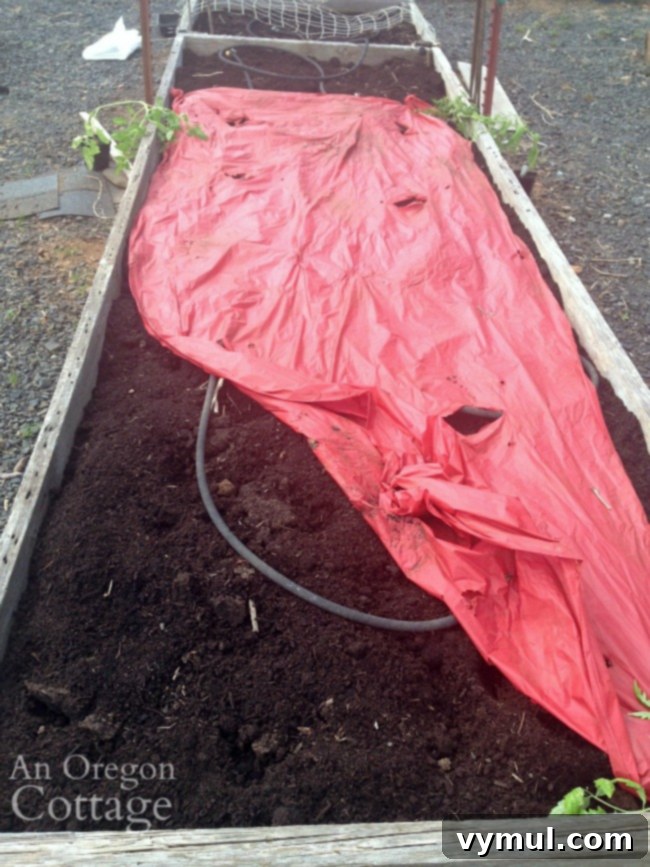
The foundation for healthy tomatoes is nutrient-rich, well-draining soil. Begin by adding a generous 2-3 inch layer of high-quality compost to your planting area. I prefer using “barnyard compost” from our local garden product company, which is enriched with chicken and cow manure, providing a fantastic slow-release nutrient boost. Compost not only feeds your plants but also improves soil structure, enhances water retention, and fosters a thriving microbial ecosystem.
Optional Step: Traditionally, some gardeners use a garden fork to lightly turn in the top layer of compost, mixing it slightly with the existing soil. You don’t need to completely invert the bed; just enough to integrate it a bit here and there, then smooth the surface with a rake.
(Update: I’ve evolved my approach over time and now primarily layer organic materials without deep digging. This “no-till” method, inspired by techniques like those of Charles Dowding, significantly minimizes soil disturbance, which helps preserve soil structure, supports beneficial microorganisms, and remarkably, helps reduce weed germination.)
2. Install a soaker hose or drip irrigation system.
Efficient and targeted watering is crucial for tomato health. Laying a soaker hose or setting up a drip system ensures water is delivered directly to the root zone, keeping the foliage dry. This technique is paramount for promoting deeper root development and significantly minimizing the risk of common leaf diseases like powdery mildew and early blight. Snake the soaker hose strategically around your planting area, securing it with garden staples if necessary to keep it in place. Consistent, even moisture is also key to preventing blossom-end rot and encouraging uniformly sized fruits. The round type of soaker hose I use (rather than flat ones) provides excellent, even saturation.
3. PRO TIP: Cover the bed with red or black plastic mulch.
This simple step can dramatically improve your tomato harvest. Red plastic mulch has been scientifically shown to increase ripe tomato yield by up to 20% (read more here). It achieves this by reflecting specific red wavelengths of light back onto the plant, signaling it to produce more fruit and ripen earlier. Alternatively, black plastic mulch is highly effective at warming the soil, which tomatoes love, and suppressing weeds. Both types of plastic mulches are excellent for maintaining consistent soil moisture, which is vital for plant health and helps prevent blossom end rot (in conjunction with adequate calcium in the soil). For me, maximizing ripe tomatoes is always the goal, so red plastic has become an integral part of my strategy for early yields. With a soaker hose and plastic mulch, you’ll only need to water every 4-7 days, depending on weather conditions. You can space your trellised tomatoes 2 to 2-1/2 feet apart when using this system.
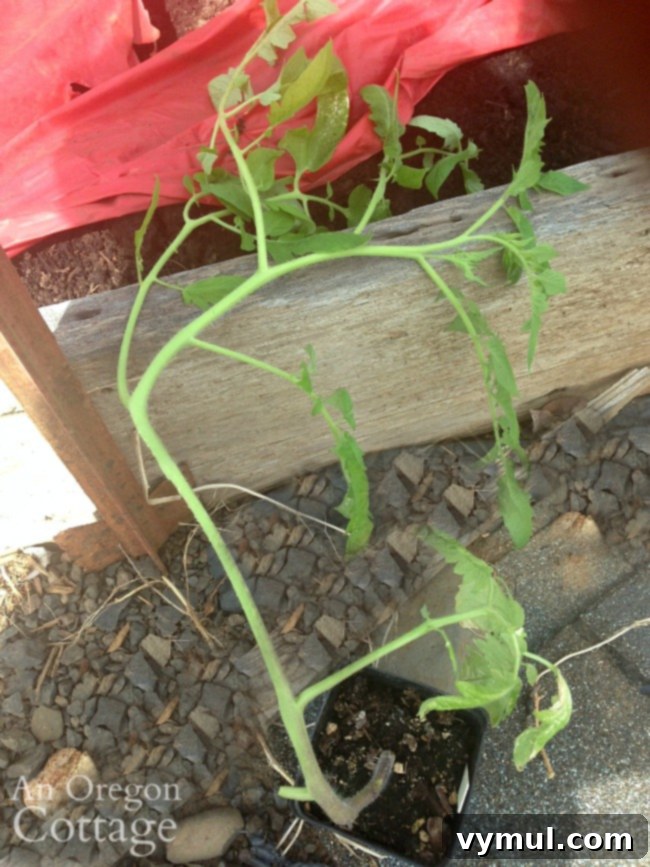
4. PRO TIP: Thoroughly water seedlings before planting.
One of the best practices to ensure the success of any newly planted vegetable or flower starts is to give them a deep watering in their nursery pots about 30 minutes to an hour before transplanting. This pre-hydration minimizes transplant shock, ensures the root ball is moist, and allows the plant to absorb water efficiently right after being moved. So, I always water my seedlings first, then proceed to prepare the planting holes, giving them the best possible start to thrive.
Note on “Lanky” Seedlings: The homegrown seedling in the photo above might appear a bit lanky or even somewhat unhealthy. However, with tomatoes, this isn’t as critical as it would be for other plants (like peppers, which are a different story). The unique advantage of tomato plants is their ability to grow roots directly from their stem when it comes into contact with soil. This means we can bury almost all of the stem, and it will develop into a robust, healthy root system. The moral of the story? Don’t discard sad-looking tomato starts because you think you’ve done something “wrong”—you’ll be pleasantly surprised by how well they often recover and perform!
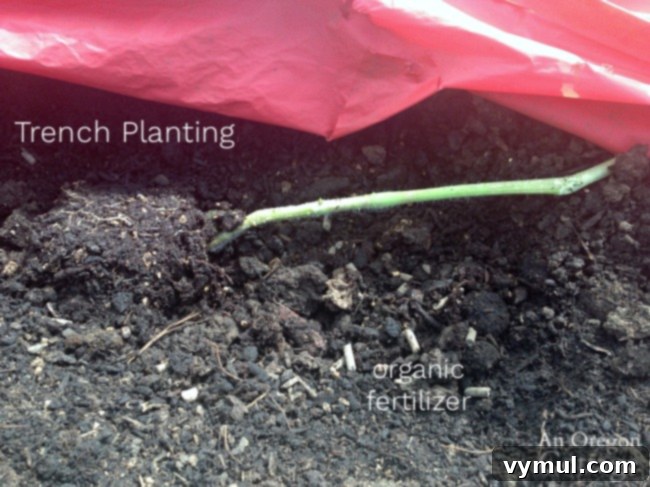
5. Dig a deep hole or trench for each plant.
To capitalize on the tomato’s unique ability to root from its stem, you want to bury as much of the plant as possible, ideally up to the first set of true leaves. Dig the deepest hole you can comfortably manage. For particularly leggy transplants, like those often seen from home growers or early garden center purchases, I employ the trench method. Dig a trench approximately 6 inches deep and to one side of where you intend your tomato plant to grow.
6. Incorporate organic fertilizer into the planting hole.
Before placing your seedling, sprinkle about a 1/3 cup of a good quality organic granular fertilizer into the bottom of the hole or trench. Gently mix it into the soil with your hand or a small trowel. This provides a slow-release nutrient boost directly to the developing root system, encouraging strong initial growth. Always refer to the specific recommended amount on your fertilizer package, as formulations can vary.
7. PRO TIP: Plant your tomato seedlings DEEP.
This is arguably the most crucial tip for planting tomatoes. As mentioned, tomatoes have a remarkable ability to develop adventitious roots—new roots that sprout directly from the stem when it’s buried in soil. By planting deep, you are essentially creating a significantly larger and more robust root system. This extensive root network anchors the plant more firmly, improves its ability to absorb water and nutrients, and ultimately supports a larger plant capable of producing a heavy yield of fruit.
If you’ve dug a 5-6 inch deep trench for a taller tomato transplant, position the root ball at one end and gently lay the stem horizontally, allowing the leafy top to emerge at your desired spot (e.g., through a hole in your plastic mulch). If using a regular deep hole, place the root ball at the bottom and backfill the soil around the stem, covering it up to the level of the first true leaves.
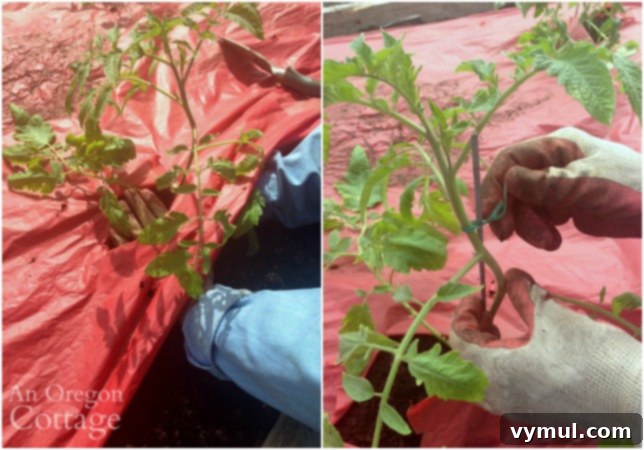
8. Firm the soil around your tomato plant.
Once the tomato seedling is in place, gently but firmly mound the compost and soil around the stem. This action removes any air pockets that could dry out the delicate new roots and ensures excellent root-to-soil contact, which is essential for nutrient and water uptake. While planting around plastic mulch can be a bit trickier, requiring careful handling to avoid tearing, remember that the benefits of the mulch (easier watering, healthier plants) are well worth the extra effort.
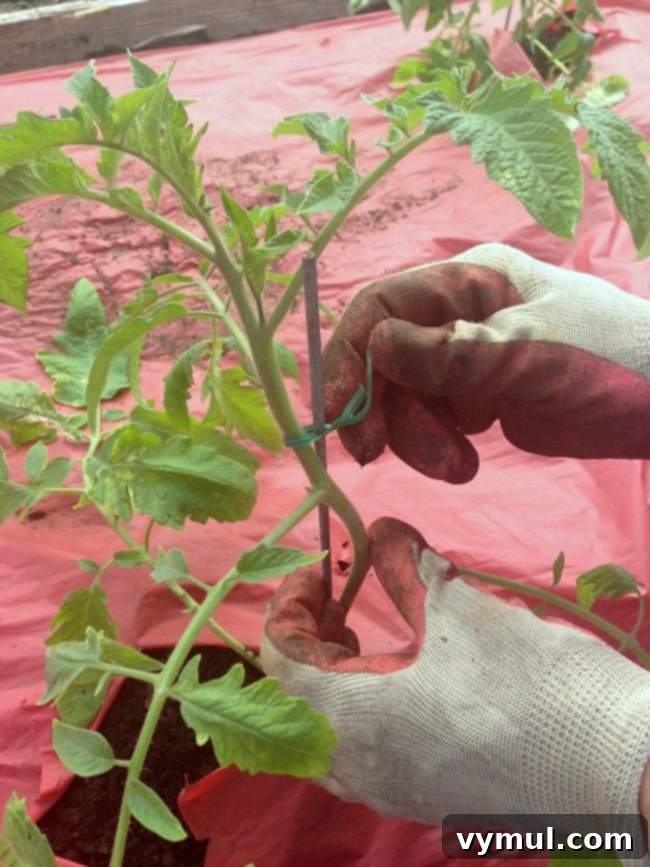
9. PRO TIP: Stake and tie the tomato stem immediately.
Don’t wait until your tomato plants are large and laden with fruit to provide support. Insert a sturdy stake (or the initial support for your chosen trellising system) right at the time of planting. Loosely tie the main stem to this stake as high up as possible. This immediate support provides stability, keeps the plant off the ground, protects it from pests and standing water, and encourages strong vertical growth from day one. For many years, I relied solely on tomato cages, but the year I started staking the transplants, I noticed a significant improvement: the plants established better, grew stronger, and were more resilient throughout the season.
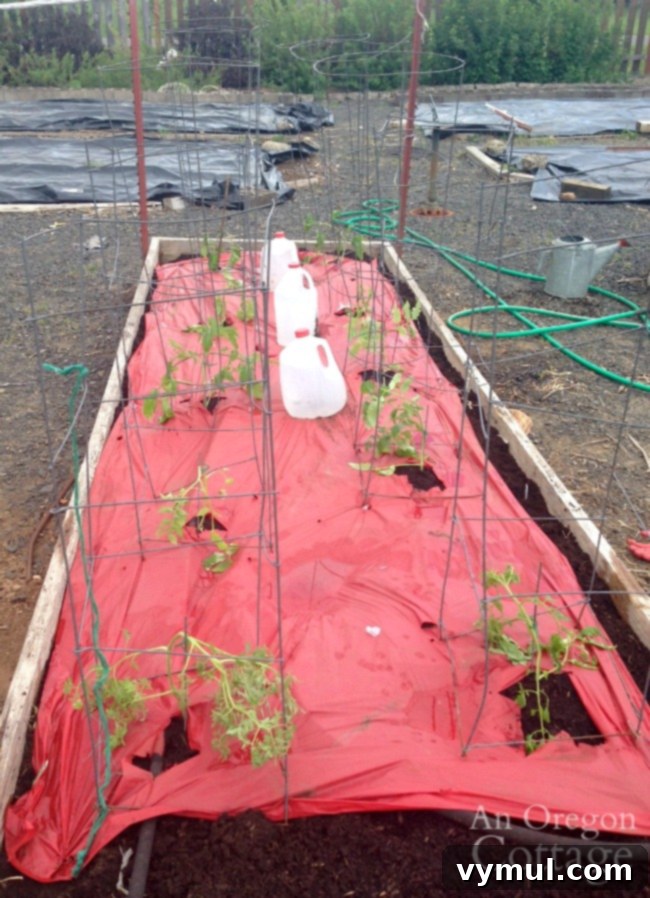
10. Trellis your tomatoes using your preferred system.
Once your plants are staked, it’s time to establish your long-term trellising system. Be mindful of your soaker hose or drip lines when inserting stakes or cages, and gently guide the seedling through the cage or onto the trellis structure. Trellising is essential for promoting good air circulation, minimizing disease, and keeping heavy fruit off the ground, where it can be susceptible to pests and rot.
The traditional cage system we used for years (as pictured above) involved reinforcing flimsy store-bought cages with additional ties and securing them with stakes at the corners of our raised beds. While this prevented the plants from flopping over under the weight of fruit, it could be cumbersome and sometimes made harvesting a bit challenging.
My new, beloved system in our farmhouse garden is a game-changer:
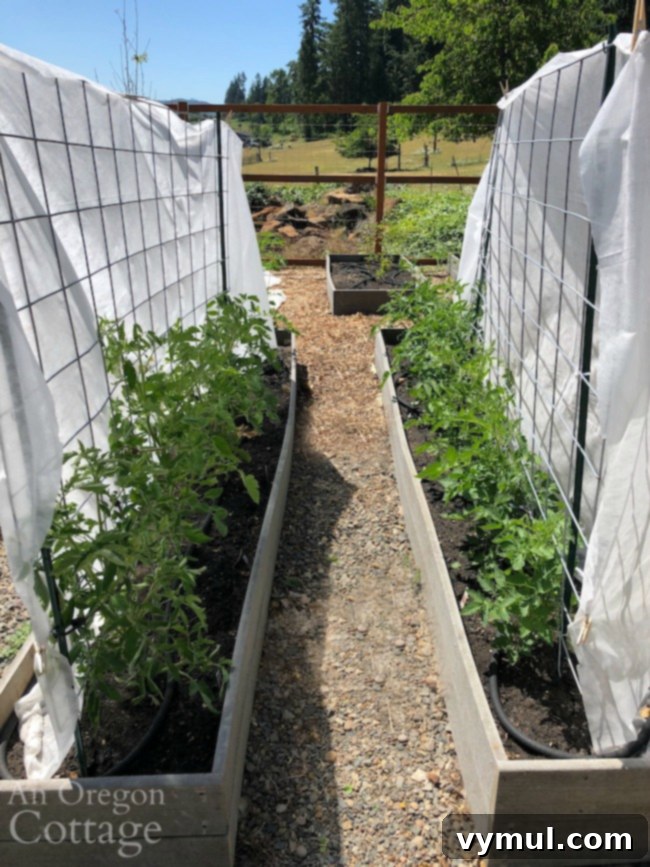
This system utilizes cattle panels attached to T-post fence stakes with zip ties in long, narrow raised beds. The tomato plants are then trained upwards along the panels using… bungee cords! This setup is incredibly easy to maintain, simplifies pruning, and makes harvesting a breeze. Plus, it results in a much tidier and more aesthetically pleasing garden. I’m forever indebted to my aunt for introducing me to this remarkably efficient system. (You can see more details of these beds in the accompanying tomato planting video).
These 10 fundamental steps will lay the groundwork for planting tomatoes that thrive. If you garden in a consistently warm climate, you might consider your work done here. BUT, if your region experiences unpredictable weather with on-and-off rain and occasional dips into the upper 30s during May, like we do here in the Pacific Northwest, providing initial protection for your transplants is critical. The following method is what I’ve developed to give my tomato seedlings the best possible start in cooler spring conditions.
NOTE: While Wall-o-Waters are effective for a few plants, filling all the small water channels becomes incredibly time-consuming when you have numerous plants in large beds (speaking from experience!). UPDATE: It appears these specific products are no longer widely available or are quite expensive now. Therefore, even for a smaller number of plants, I strongly recommend the alternative technique outlined below.
How To Protect Tomato Transplants For Healthier Early Growth
1. Utilize gallon jugs filled with water as passive solar heaters.
Collect empty gallon jugs (milk jugs work perfectly), fill them with water, securely attach their caps, and then strategically place them around your newly planted tomato bed. As the sun shines, the water in these jugs absorbs and stores solar energy. After the bed is covered, these water-filled jugs slowly release their stored warmth throughout the night, acting as mini solar heaters that provide a critical boost of ambient heat to the immediate microclimate around your young tomato plants.
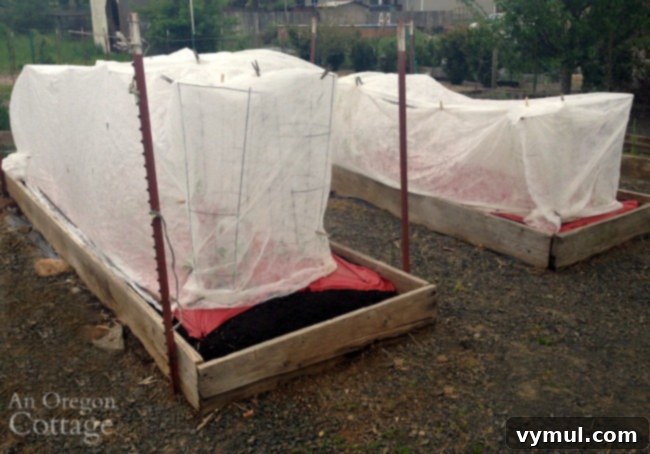
2. Cover your tomato cages or trellises with a spun row cover.
After placing your water jugs, drape a lightweight spun row cover (I use a product similar to this one) over your existing tomato cages or trellis system. Secure the cover firmly to the cages using wooden clothespins, ensuring all sides and the top are completely enclosed. To prevent the cover from being lifted or blown away by strong winds, use heavy objects like rebar pieces (my preference), rocks, or pieces of wood to hold the edges down onto the soil. This protective barrier shields young plants from cold temperatures, harsh winds, and early season pests.
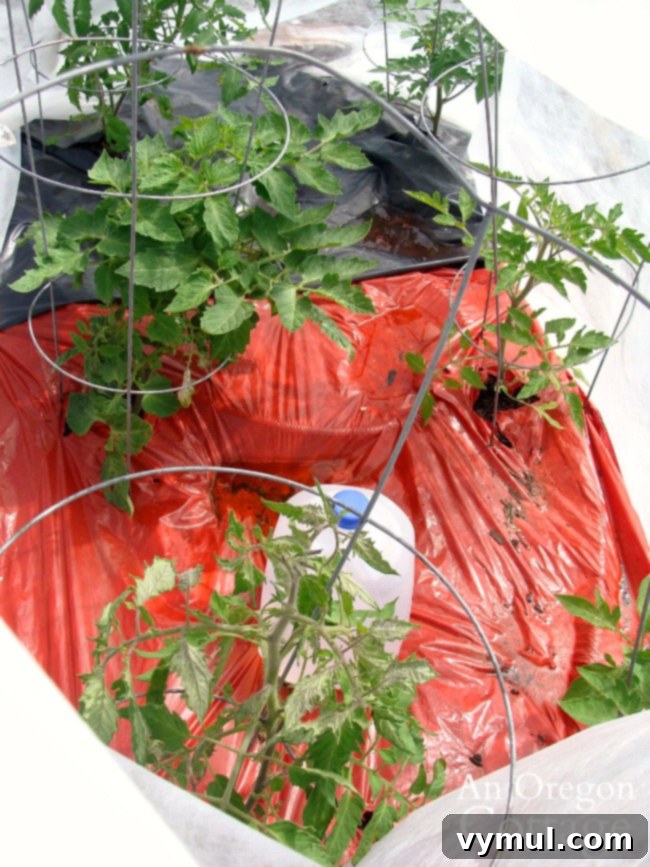
3. Regularly monitor seedlings and gradually remove covers.
It’s important to check your covered seedlings periodically to ensure they are thriving and address any issues, such as slug attacks, which can still occur even under cover. As the weather consistently warms, you can begin to “wean” your plants from the protection. Start by opening the top of the cover for a week or so during the day, allowing the plants to acclimate to outdoor conditions. Once your nightly low temperatures reliably stay within the 50-60 degree Fahrenheit range, you can safely remove the covers completely, allowing your now stronger plants full exposure to the elements.
To illustrate just how beneficial this protective cover method is (similar to how broccoli, cabbage, and cauliflower also respond well to covers), here are some photos showcasing the growth of the tomatoes later in the season:
Tomatoes in June, approximately 1-1/2 months after planting:
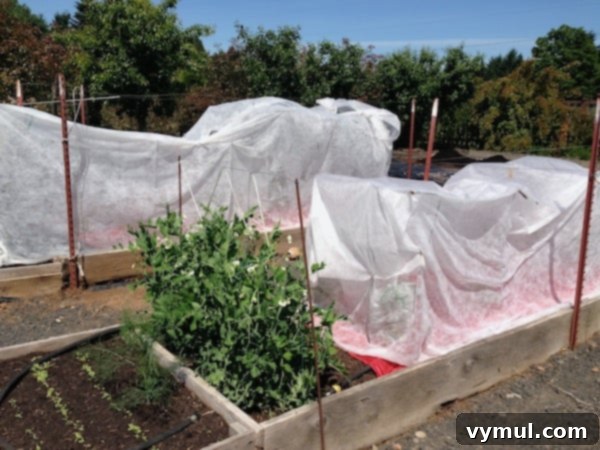
This row-cover method might not win any garden beauty contests initially, but the results speak for themselves, even through the most challenging spring weather, which in my region can include hail, frost, and abundant rain. You can clearly observe the larger, vibrant green plants happily thriving beneath their protective covers, getting a vital head start.
Tomatoes in July, approximately 2-1/2 months after planting:
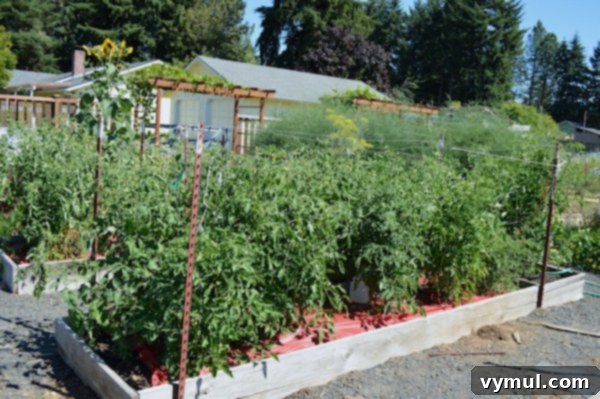
By mid-July, the covers have been completely removed since late June, and the tomato plants are robust, flourishing, and heavy with developing green tomatoes. We anticipate our first early tomatoes in just a few short weeks! (For a more extensive look, you can view a full mid-July tour of our previous raised bed vegetable garden here). While it’s not quite the elusive July 4th harvest, this approach is far more achievable and consistently delivers fantastic results with remarkable simplicity.
What are your go-to methods for planting tomatoes? Do you have any favorite tips or tricks to share? We’d love to hear them in the comments below!

This article has been comprehensively updated to include the latest tips and insights. It was originally published in May of 2014.
Disclosure: Affiliate links included in this article may generate a commission based on sales, but this does not affect the price you pay for any products. Click here to read my full disclaimer and advertising disclosure policy.