DIY French Vintage Linen Tea Towels: Crafting Rustic Charm on a Budget
Some links in this article are affiliate links, and if you click on them, I will receive a small commission at no cost to you.
Do you adore the timeless elegance of rustic vintage fabrics? Imagine the charm of grain sacks, the texture of burlap, and the subtle beauty of linen adorning your home. These materials evoke a sense of history, simplicity, and French country chic. For years, I’ve cherished the idea of incorporating these elements into my decor, hoping to stumble upon genuine vintage treasures in thrift stores. However, the landscape of thrifting has changed dramatically; truly high-quality, authentic vintage linens are now a rare and often costly find, especially since the rise of platforms like Pinterest made unique vintage discoveries incredibly popular.
The disappointment of seeing beautiful vintage linen towels, pillows, or sacks priced anywhere from $40 to $100 (or even more!) in specialty shops or online is all too familiar. While I deeply appreciate the craftsmanship and history behind such items, those price tags are simply out of reach for most home decorators and gift-givers. This challenge, however, sparked a wonderful opportunity: why not create that coveted vintage look myself? What if I could achieve the same rustic, French-inspired aesthetic using readily available materials, perhaps even repurposing beloved textiles I already own?
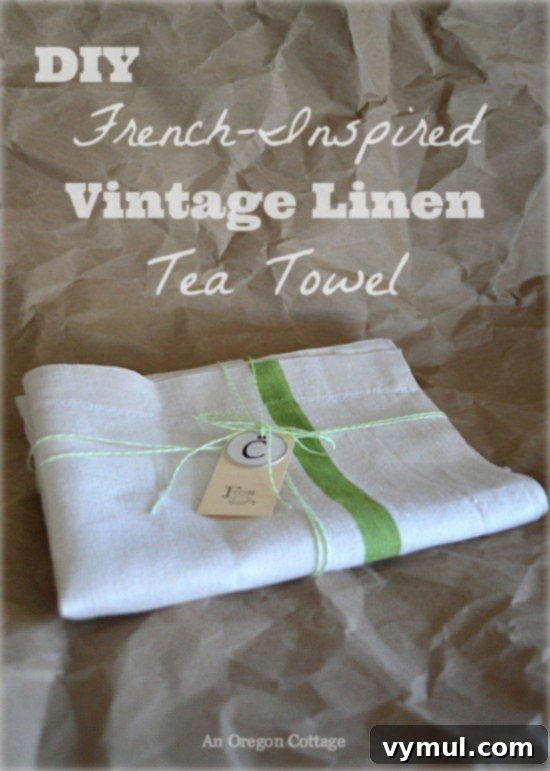
Today, I’m thrilled to share a delightful and incredibly rewarding project: how to make your own French-inspired vintage linen tea towels. This DIY approach not only allows you to capture that rustic charm for a fraction of the cost but also offers the immense satisfaction of creating something unique and personalized. Using reclaimed linen pieces – whether truly vintage or simply well-loved fabric from your stash – and a touch of craft paint, you can transform ordinary textiles into beautiful, functional works of art. These towels are perfect for adding a touch of farmhouse elegance to your own kitchen or for crafting thoughtful, inexpensive handmade gifts that truly stand out.
It’s a quick, easy, and adaptable project. You can customize the colors to match any decor, and the end result perfectly mimics the high-end, vintage offerings you see in boutiques. Get ready to embrace the art of upcycling and bring a piece of French countryside charm into your home!
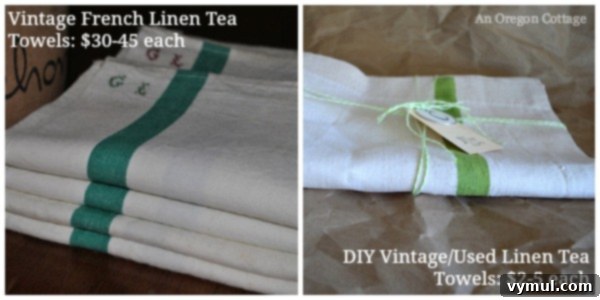
Let’s talk about value. As I was preparing this guide, I did a quick search for authentic vintage linen tea towels from France. The ones pictured on the left, similar to those found on eBay, are typically selling for $30-$45 each. While undeniably beautiful, imagine using a $45 towel for daily kitchen tasks – it feels almost sacrilegious! Most of us would hesitate to actually use them, relegating them to decorative status. Yet, I, like many others, dream of a collection of charming vintage towels for our farmhouse kitchen. This DIY project offers the perfect solution for both beauty and utility, without the hefty price tag.
My handmade version, shown on the right, costs under $5 per towel, depending on your material sourcing. If you already have some linen scraps or old textiles tucked away (as I did), your only significant cost might be the paint and fabric medium – and a single purchase will yield enough for many towels. This incredible saving allows you to create a whole set of beautiful towels for what you’d pay for just one authentic vintage piece. Plus, you get the added bonus of customizing the colors to perfectly suit your style, ensuring a truly unique and personalized touch that even expensive vintage items can’t offer.
Crafting Your Own French-Inspired Vintage Linen Tea Towels
Essential Supplies for Your DIY Project
Gathering the right materials is the first step to bringing your French vintage vision to life. The beauty of this project lies in its flexibility and reliance on repurposed items, making it not only cost-effective but also environmentally friendly. Here’s a detailed list of what you’ll need:
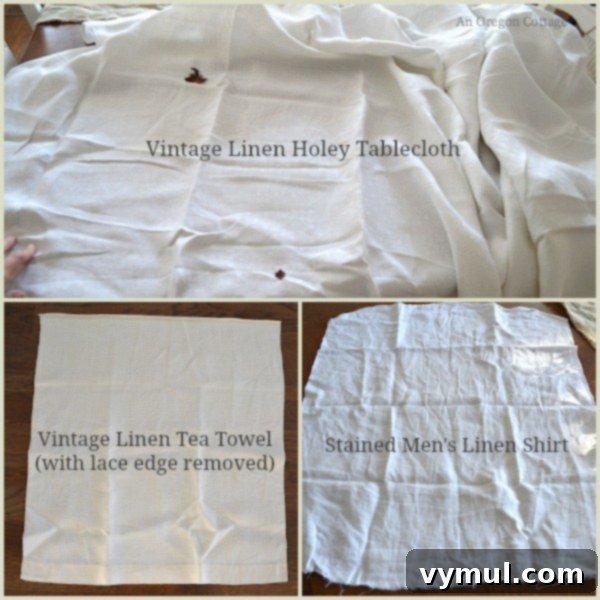
- Mid-to-heavy weight linen, cut and sewn to kitchen towel size (mine ranged from 20″ long x 18″ wide to 28″x 21″). The foundation of your tea towel! For that authentic vintage feel, aim for linen that has a good drape and some heft. You’ll need pieces cut and sewn to standard kitchen towel sizes. The beauty here is in upcycling. Look around your home or local thrift stores for hidden gems. I’ve successfully sourced my linen from a variety of places, including an old linen tablecloth that had seen better days and developed a few holes – perfect for cutting around! I also used a remnant from a heavy vintage linen tea towel, salvaging the main fabric after using its lace edge for one of our Christmas stockings. Even the back of a linen dress shirt, once worn by my husband Brian before permanent yellow stains appeared, provided excellent material. These examples highlight that “vintage” linen doesn’t have to be perfect or pristine; imperfections often add to the rustic charm. Once you have your linen pieces, you can use a simple sewing technique like this one to hem the edges, creating a neat and durable towel.
- Acrylic craft paint in desired color (most vintage tea towels have red, blue, green or black stripes). Classic vintage tea towels often feature stripes in traditional shades. The key is to select a color that complements your home decor and contributes to that aged aesthetic. I primarily used Martha Stewart’s multi-surface paint due to its quality and versatility. Don’t be afraid to experiment! I even added a few drops of an older paint I had on hand to fine-tune the shade and achieve the exact “vintage-washed” hue I was aiming for. The goal isn’t crisp, modern lines but rather a gently faded, rustic appearance.
- Fabric Medium. This is a crucial ingredient for ensuring your painted stripes are both pliable and washable. While many craft paints claim to be suitable for fabric, adding a dedicated fabric medium makes a significant difference in the longevity and feel of your finished product. I highly recommend the Martha Stewart brand fabric medium to achieve professional-looking results that will stand the test of time and countless washes.
- Painter’s tape like the Frog Tape I used. For clean, crisp stripes that define the classic French linen look, good quality painter’s tape is essential. Choose a tape that adheres well but removes easily without damaging your fabric.
- Foam brush, container to mix paint in, paper plate and paper towel or rag. A simple foam brush is ideal for applying paint to fabric, allowing for even coverage and control over the “washed-out” effect we’re seeking. Small plastic containers or old yogurt cups work perfectly for mixing. Paper plates and paper towels are essential for dabbing excess paint and for blotting.
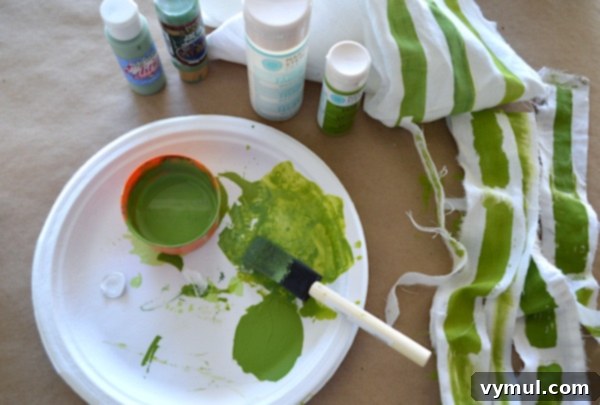
Step-by-Step Guide: Painting Your Vintage Linen Tea Towels
Preparation is Key: Master Your Paint Technique
Before you even think about applying paint to your carefully prepared linen tea towels, take the time to practice! This crucial step ensures you achieve the exact “washed-out” or “vintage-y” effect you desire for your color stripes. Don’t skip it – a few minutes of practice will save you potential frustration later.
Grab some scrap strips of the same linen fabric you’ll be using for your towels. On these strips, you’ll experiment with your paint mixture. The fabric medium, while essential for washability, will dilute the paint color slightly, so it’s important to see how your chosen shade translates onto the fabric once mixed. Start by mixing 2 parts acrylic craft paint to 1 part fabric medium in your mixing container. Apply this mixture to a test strip with your foam brush. Observe the color and how it sits on the fabric.
My goal was a truly faded, aged appearance, reminiscent of well-loved French linens. If you’re aiming for a similar look, you might find that adding a few drops of water to your paint mixture helps to thin it further, enhancing that desirable washed-out effect. I continued experimenting, adding different green hues I had on hand and adjusting the consistency until I achieved the perfect shade and translucency. This practice phase is also where you can refine your brushing technique – how much paint to load onto the brush, how much pressure to apply, and how many passes to make. Once you’re confident with your paint color and application technique, you’re ready to move on to painting your actual tea towels!
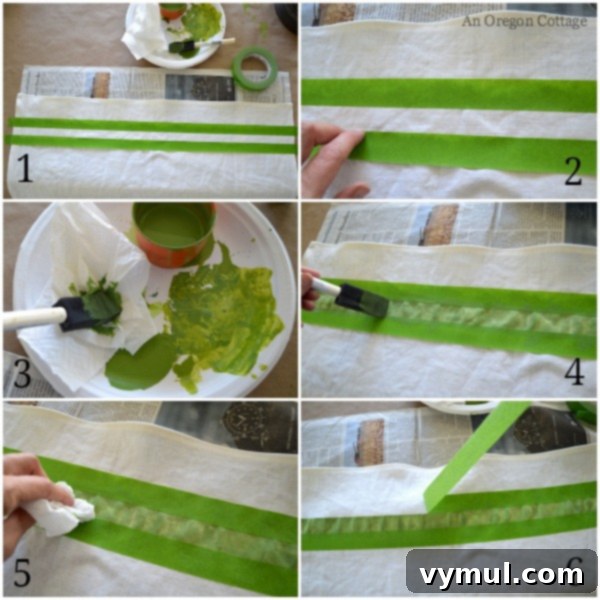
Applying the Stripes: Achieving the Perfect Vintage Look
With your paint mixed and your technique perfected on practice strips, it’s time for the main event! Follow these detailed steps to create beautiful, authentic-looking stripes on your linen tea towels:
- Prepare your surface and tape off your stripe: Lay your prepared linen towel flat on a surface covered with paper or a protective cloth. This will prevent any paint from seeping through onto your work area. Using your painter’s tape, carefully tape off the area where you want your stripe to be. Remember, classic French vintage towels almost always feature stripes running the full length of the towel, rather than across the ends. Decide on your desired stripe width and placement. For a traditional look, aim for a single stripe or a pair of thinner stripes along one or both long edges.
- Seal the tape for clean lines: This step is critical for preventing paint bleed and achieving crisp edges, even for a “washed” look. Use your finger or a credit card to firmly press down on the inner edge of the painter’s tape – the side that will be adjacent to your painted stripe. Ensure the tape is completely sealed against the fabric to prevent any paint from seeping underneath.
- Load and dab your foam brush: Dip your foam brush into your mixed paint and fabric medium. Crucially, immediately dab off any excess paint onto a paper towel or rag. We are aiming for a soft, “washed” or “faded” effect, not a thick, opaque stripe. Overloading your brush will make it difficult to achieve this subtle look and can lead to uneven application.
- Paint the stripe: With your lightly loaded brush, carefully paint within the taped-off area. You might notice the fabric puckering slightly or the paint not going on perfectly evenly – this is actually desirable for our vintage aesthetic! Embrace these natural imperfections, as they contribute to the aged, handmade charm. Continue applying paint in thin layers until you’ve reached the desired color intensity and washed-out appearance, referencing your practice pieces if needed. You can go over the stripe a few times, ensuring even coverage without saturating the fabric.
- Blot for a faded finish: Immediately after painting the stripe (before the paint dries), grab a clean paper towel or a soft rag. Gently blot and rub along the painted stripe. This step is essential for further fading the color and blending it into the linen, giving it that soft, worn-in look. Don’t press too hard, just enough to soften the edges and remove any excess surface paint.
- Remove the tape: As soon as you’re done blotting, carefully remove the painter’s tape. Pull it away slowly and at an angle to avoid pulling up any paint or damaging the fabric. Removing the tape while the paint is still wet (or at least not fully dry) helps ensure a cleaner edge and minimizes the risk of paint sticking to the tape as it dries.
The beauty of this project is that once your towels are sewn and your paint is mixed to perfection, the stripe-painting process itself moves quite quickly. You’ll be able to “crank out” several towels in a short amount of time, making it ideal for creating sets.
Feel free to get creative with your designs! While a single stripe along the long edge is classic, you could opt for two thinner stripes on each side, or even a bold stripe down the middle. For more inspiration, browse photos of authentic vintage French tea towels online. There are countless variations, allowing you to adapt the technique and create a unique design that truly reflects your personal style.
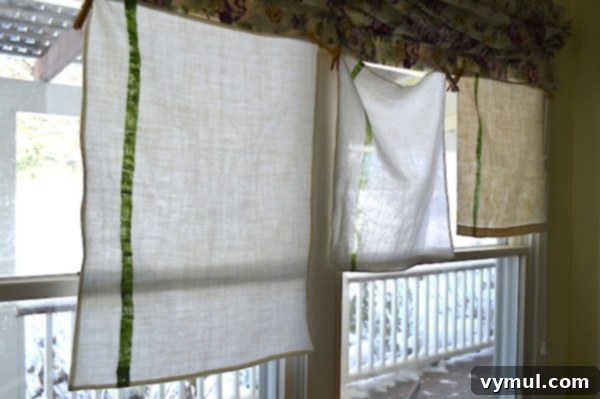
Finishing Touches: Drying and Heat Setting for Durability
Once all your stripes are painted, hang your beautiful new tea towels to dry. It’s crucial to allow them to dry for at least 24 hours to ensure the paint is thoroughly cured before the next step. Resist the urge to rush this process!
After the drying period, the most important step for making your towels washable and durable is heat setting the paint. This process permanently bonds the paint to the fabric fibers, preventing it from washing out or cracking over time. To heat set, place a clean piece of cotton fabric (like an old pillowcase or scrap cloth) over the painted area on your tea towel. Then, iron over the cotton fabric on a medium-high setting, without steam, for about 30-60 seconds over each painted section. The cotton cloth acts as a barrier, protecting your iron and preventing the paint from smudging. This ensures your French-inspired vintage linen tea towels will maintain their charm through countless washes and years of use, becoming truly cherished items in your home.
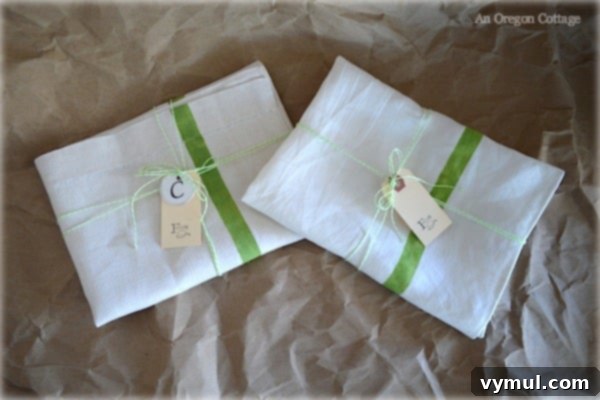
The Perfect Handmade Gift or Cherished Home Accent
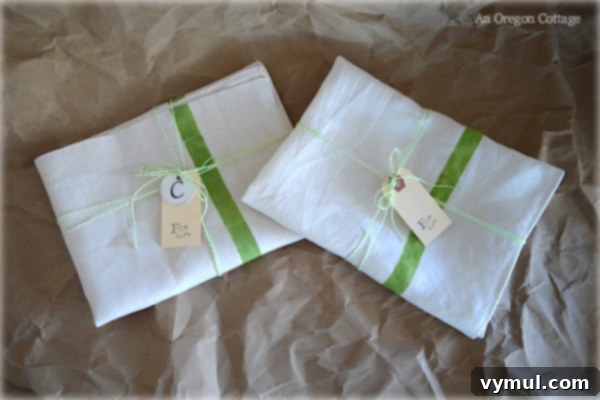
These DIY French-inspired vintage linen tea towels are not just lovely additions to your own kitchen; they also make exceptionally thoughtful and inexpensive gifts. The personalized touch of a handmade item is always appreciated, and these towels exude a sophisticated, rustic charm that suits a wide range of tastes and home styles, from farmhouse to minimalist chic. For gift-giving, consider packaging a set of towels by tying them with some natural twine and attaching a simple, stamped office store tag. You can customize the tags with a handwritten message or the recipient’s initial for an extra special touch.
Imagine giving these for a housewarming, a bridal shower, as a hostess gift, or even as part of a curated gift basket. They speak of care, creativity, and a love for timeless aesthetics. As for me? While I love to share, I’m probably keeping a few of these beauties for myself – especially since they perfectly match my color scheme and add that authentic vintage touch I’ve always craved for my own kitchen!
Print
Pin
SaveSaved!
Painted DIY French Inspired Vintage Linen Tea Towels
Materials
- Mid-to-heavy weight linen, cut and sewn to kitchen towel size (e.g., 20″ long x 18″ wide to 28″ x 21″). Upcycled options include old linen tablecloths, vintage linen tea towel remnants, or even linen dress shirts. Ensure edges are hemmed using a simple sewing technique.
- Acrylic craft paint in desired color (e.g., red, blue, green, or black for vintage styles). Consider Martha Stewart’s multi-surface paint for good results.
- Fabric Medium. Essential for pliability and washability. Martha Stewart brand fabric medium is recommended.
- Painter’s tape. For clean lines, Frog Tape works well.
- Foam brush, container to mix paint, paper plate, and paper towel or rag.
Instructions
-
Practice painting: Before applying paint to your towels, practice on scrap linen strips. Mix 2 parts paint to 1 part fabric medium. Experiment with water dilution and technique to achieve your desired washed-out, vintage look.
-
Tape off your stripe: On a paper-covered surface, use painter’s tape to mark off your stripe along the long edge of the towel.
-
Seal the tape: Press firmly along the inner edge of the tape (the side to be painted) to prevent paint from seeping underneath.
-
Apply paint: Dip your foam brush into the paint mixture, then dab off excess on a paper towel. Paint the stripe between the tape, aiming for a thin, washed-out look. Allow for slight imperfections to enhance the vintage feel.
-
Blot for fading: Immediately after painting, use a clean paper towel or rag to gently blot and rub along the stripe to further fade the color and soften edges.
-
Remove tape: Carefully remove the painter’s tape as soon as you are done blotting to ensure clean lines.
-
Dry and heat set: Hang painted towels to dry for at least 24 hours. Then, heat set the paint by placing a cotton cloth over the painted area and ironing over it on a medium-high setting (no steam) for 30-60 seconds per section. This makes the towels washable.
-
Repeat the process for any additional towels. Customize with various stripe patterns or colors if desired.
Expand Your Crafting Horizons
If you’ve enjoyed crafting these charming vintage linen tea towels, you’re likely to find inspiration in even more creative endeavors. The world of DIY and upcycling offers endless possibilities for personalizing your home and creating unique items. Don’t stop here! For a continuous flow of innovative ideas, be sure to follow me on Pinterest. You’ll discover a wealth of projects on my dedicated Handmade Gifts board, perfect for thoughtful presents, as well as my Thrift Store Transformations board, where ordinary finds are given extraordinary new life. Unleash your inner crafter and transform your home with budget-friendly, beautiful projects!
Disclosure: Please note that some links in this article are affiliate links. This means that if you click on them and make a purchase, I may receive a small commission at no additional cost to you. These commissions help support this blog and allow me to continue creating valuable content like this. Click here to read my full disclaimer and advertising disclosure for more information.