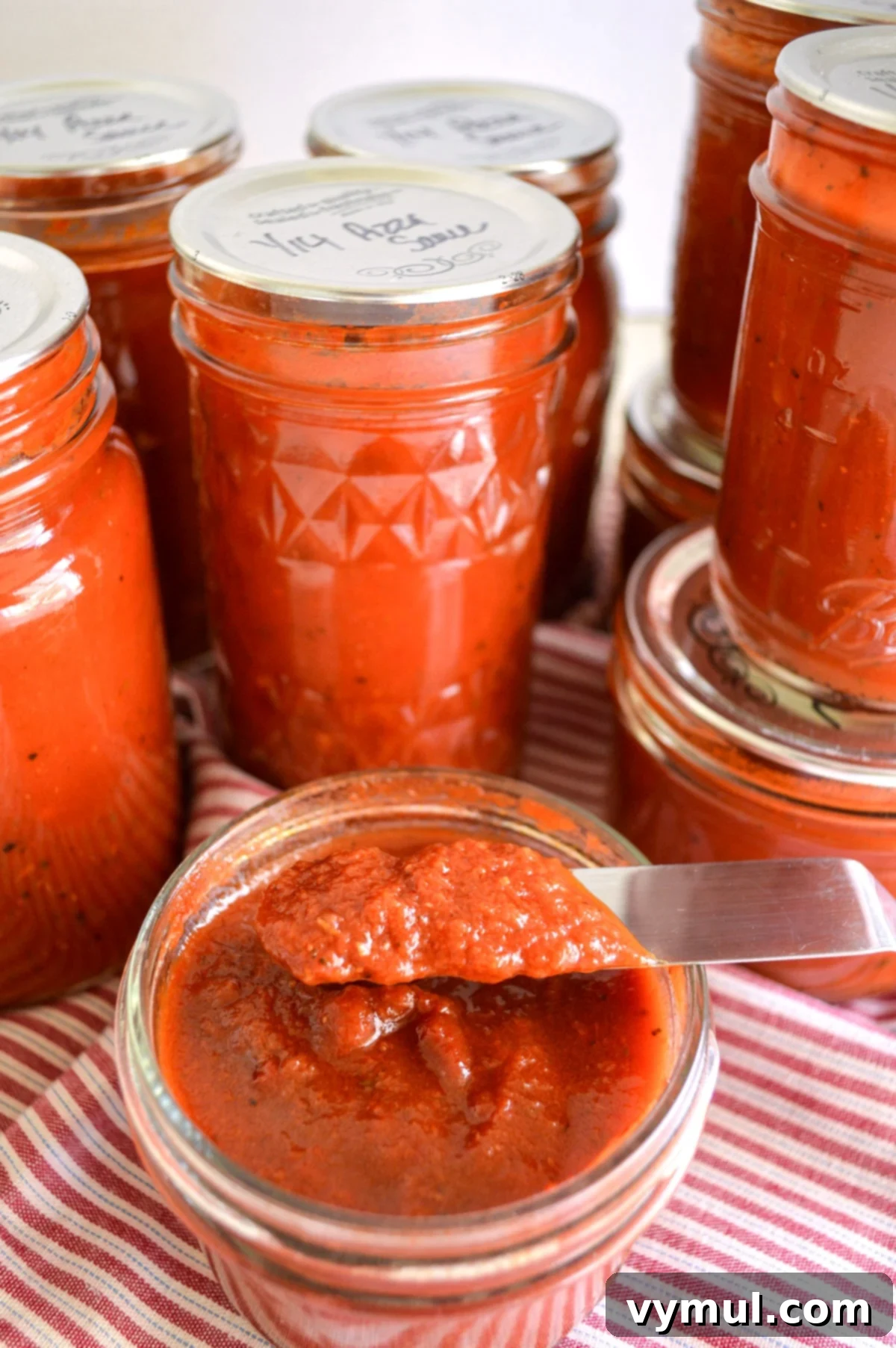
Homemade Canned Pizza Sauce: The Ultimate Guide to Crafting Delicious Sauce from Fresh or Frozen Tomatoes
Imagine the rich aroma of authentic Italian pizza sauce simmering on your stove, made with the freshest tomatoes and seasoned to perfection. This comprehensive guide will show you how to create the most delicious homemade canned pizza sauce from scratch, whether you’re using fresh tomatoes straight from the garden or convenient frozen ones. Say goodbye to bland, store-bought jars and hello to a vibrant, flavorful sauce that will elevate your next pizza night. We’ll walk you through every step, providing detailed instructions, expert tips, and invaluable canning advice to ensure you achieve the perfect consistency and flavor. The best part? Discover how using frozen tomatoes can dramatically reduce your cooking time, making this an accessible project any time of year!
✩ What readers are saying…
“This is the best…..the method and the recipe!!! I am so excited to have my own pizza sauce…It is so thick and beautiful.” -Yvonne
Some links in this article are affiliate links and if you click on them I will receive a small commission at no cost to you.
This wonderfully seasoned canned pizza sauce isn’t just a recipe; it’s a staple in my kitchen, forming part of my “Most Valuable Preserves” collection. Alongside my favorite canning salsa, rich roasted tomato sauce, and the irresistible addictive tomato chutney, this pizza sauce ensures our pantry is always stocked with homemade goodness.
During peak tomato harvest season, I dedicate time to making enough of these four essential recipes to last us an entire year. Any leftover tomatoes might be transformed into delightful extras like bruschetta topping or canned tomatoes and chilies. This systematic approach guarantees we always have our most-used items on hand, eliminating the need for store-bought alternatives that often lack the fresh flavor and quality of homemade.
The Genius of Using Frozen Tomatoes for Pizza Sauce
There was a particular year when, due to a combination of time constraints, an unusual tomato season, and other commitments, I simply couldn’t keep up with processing all our tomatoes as quickly as they ripened. With a few jars of pizza sauce still on the shelf, I decided to prioritize other tomato recipes. For the pizza sauce, I chose an innovative approach: I froze a generous quantity of paste tomatoes (along with a few heirlooms for enhanced flavor) with the intention of making the sauce later. This decision turned out to be a game-changer.
In the depths of January, I retrieved those frozen tomatoes and embarked on making the easiest, most delicious pizza sauce I had ever created. It was finished in record time, thanks to the freezing process. Since that revelation, freezing our tomatoes a day or two before making sauce has become my preferred method, even during the height of canning season. The reason is simple: less cooking time means more efficiency and enjoyment in the kitchen, and it results in an incredibly thick and flavorful sauce.
While you can absolutely make this sauce using fresh tomatoes – and I’ve provided instructions for both methods – I wholeheartedly recommend trying the frozen tomato technique. It dramatically speeds up the reduction process, yielding a thick, rich sauce much faster. Keep reading for all the specifics, including answers to common questions following the recipe card.
Essential Recipe Ingredients for Your Homemade Pizza Sauce
Beyond the star ingredient – your chosen tomatoes – you’ll need a few other pantry staples to create this flavorful sauce. These ingredients are carefully selected to enhance the rich tomato base while ensuring safety for canning.
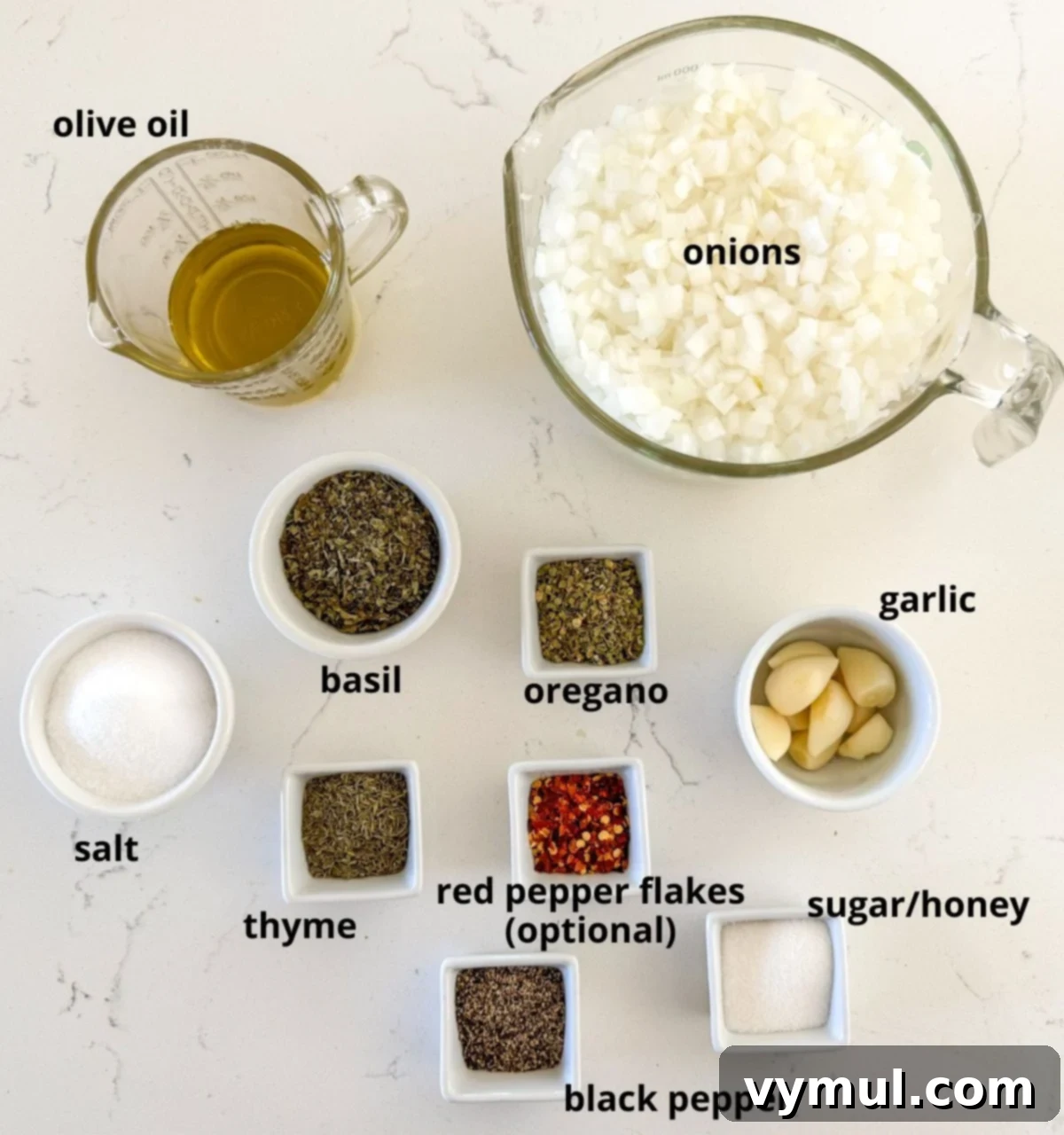
Ingredient Notes & Canning Safety
- Oil: I highly recommend using a good quality olive oil for an authentic Italian flavor profile. However, feel free to substitute with avocado oil or another oil of your choice if preferred. Rest assured, the small amount of oil used in this recipe is completely safe for canning. This recipe is rigorously tested to ensure the proper acid balance.
- Fresh Onions and Garlic: While it might be tempting to add more, it is crucial to adhere strictly to the quantities of fresh ingredients (onions and garlic) specified in the recipe card. Adding more low-acid fresh ingredients can alter the pH balance of the sauce, making it unsafe for water bath canning. If you wish to add more fresh herbs, garlic, or onions, you can always do so when serving, or opt to freeze the sauce instead of canning it.
- Salt: For canning, it’s essential to use canning salt or pure sea salt. Avoid regular table salt, which often contains anti-caking agents and iodine that can lead to discoloration or cloudy brine in your canned goods.
- Dried Herbs: Dried basil, oregano, and thyme are the classic Italian seasoning blend for pizza sauce. They offer concentrated flavor that holds up beautifully during the cooking and canning process. The beauty of dried herbs is their consistency and safety for canning.
- Sugar or Honey: A touch of sweetness helps to balance the acidity of the tomatoes and enhance the overall flavor. Adjust to your personal preference.
- Crushed Red Pepper Flakes: For those who enjoy a little kick, red pepper flakes add a wonderful warmth. Start with a smaller amount and add more to taste if you prefer a spicier sauce.
Origin and Safety of this Canned Pizza Sauce Recipe
This recipe is a trusted adaptation, based on the Ball Blue Book’s Seasoned Tomato Sauce, which is a thoroughly tested and approved canning recipe. It has been carefully scaled down and adjusted with dry spice ratios to create this specific pizza sauce profile. (You can find the original version in this most recent version of the Blue Book on page 33.) The use of specified amounts of fresh onions, garlic, and oil has been tested and deemed safe for shelf-stable canning. While you can certainly use less oil or fresh ingredients if you prefer, it is imperative not to increase the quantities of fresh onions, garlic, or other low-acid fresh herbs if you plan to water bath can the sauce. If you desire a sauce with more fresh additions, freezing is a safe and excellent alternative.
Homemade Canned Pizza Sauce Recipe: Step-by-Step Instructions
Crafting your own delicious pizza sauce is a rewarding experience. Follow these detailed steps to achieve a perfectly smooth, rich, and can-safe sauce. Refer to the full recipe card below for precise quantities.
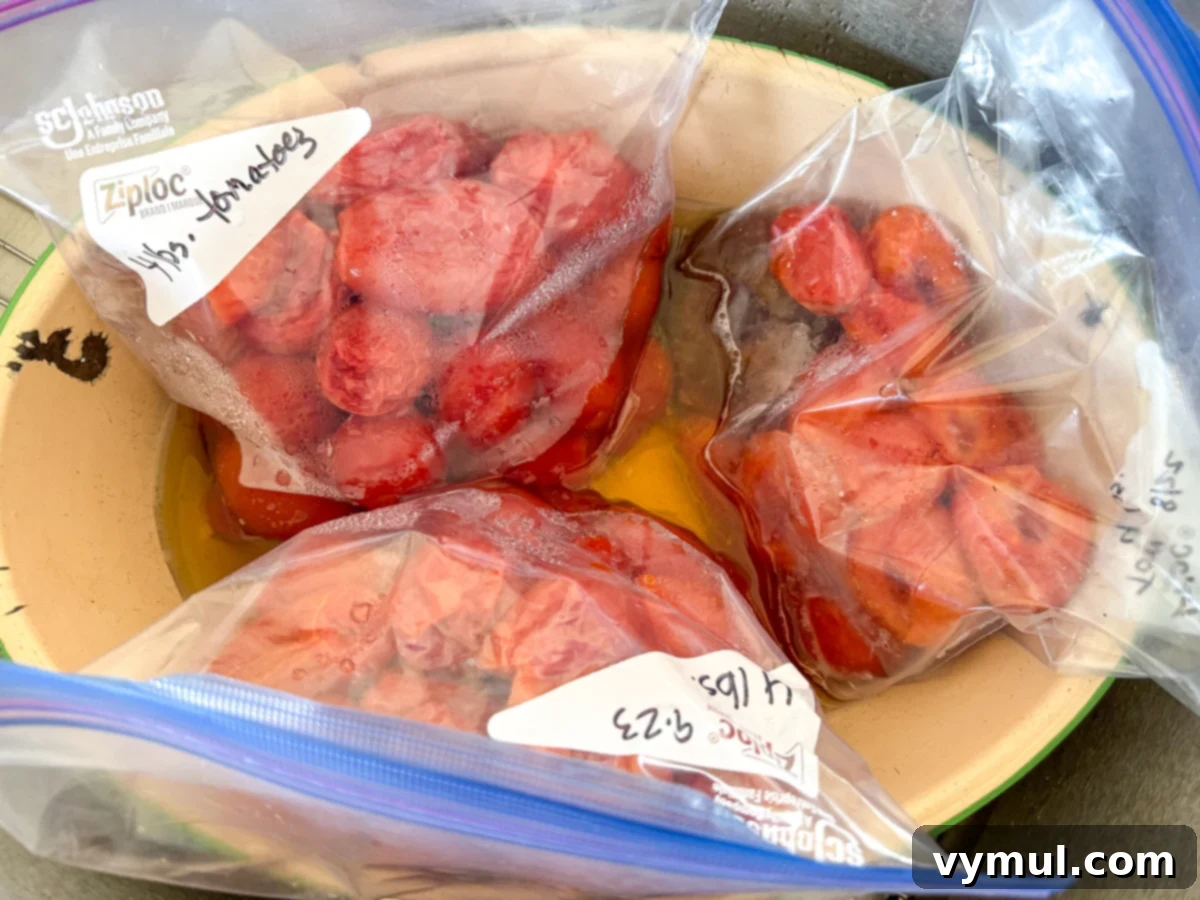
Step 1: Prepare Your Tomatoes – Thaw (if needed), Puree, and Strain
To Use Frozen Tomatoes (Highly Recommended for Efficiency!)
Using frozen tomatoes is a fantastic shortcut that significantly reduces the cooking time required to thicken your sauce. The freezing process naturally breaks down the tomato cells, making them easier to peel and puree, and releasing excess water more readily during simmering.
- Thawing: If your tomatoes were cleaned and cored before freezing, simply place the bags in a large bowl or directly in your sink to thaw overnight. This ensures any potential leaks from the bags are contained. As a helpful reader tip suggests, you can also quickly thaw and peel by filling a clean sink halfway with hot tap water and submerging a half-bag of frozen tomatoes for a few moments. The peels will then easily slide off, saving you time and effort!
- Draining Juices: Once thawed, carefully open one corner of each bag and pour off the accumulated clear liquid. This step is crucial for achieving a thicker sauce more quickly, as it removes excess water content from the outset.
- Pureeing and Straining: Run the thawed and drained tomatoes through a food mill or sauce maker to effectively remove any remaining seeds and skins. This creates a smooth, consistent tomato puree, which is the base of your incredible pizza sauce.
To Use Fresh Tomatoes
If you have an abundance of fresh, ripe tomatoes, this method is equally effective, though it may require a bit more simmering time to reduce. Select firm, ripe tomatoes, ideally paste varieties for their lower water content, but any flavorful tomato will work.
- Prepare Tomatoes: Begin by thoroughly washing your fresh tomatoes. Then, core them and cut them into halves or quarters, depending on their size.
- Pre-Cook for Softening: Place the prepared tomatoes in a large stock pot and bring them to a boil. Allow them to boil briefly until they begin to soften. This makes them much easier to process through a food mill. Once softened, remove from heat. (Pro Tip: Many find roasting tomatoes easier and faster than stovetop pre-cooking. Simply wash, halve, core, and roast at 350°F (175°C) for 20-40 minutes until softened. They’ll pass through the processor with ease and develop a deeper flavor!)
- Strain: While still warm, pass the softened tomatoes through a food mill or sauce maker to separate the skins and seeds from the rich pulp.
Three Effective Ways to Strain Tomatoes for the Smoothest Sauce
Achieving a smooth, seedless, and skinless tomato puree is key to a superior pizza sauce. Here are three popular methods:
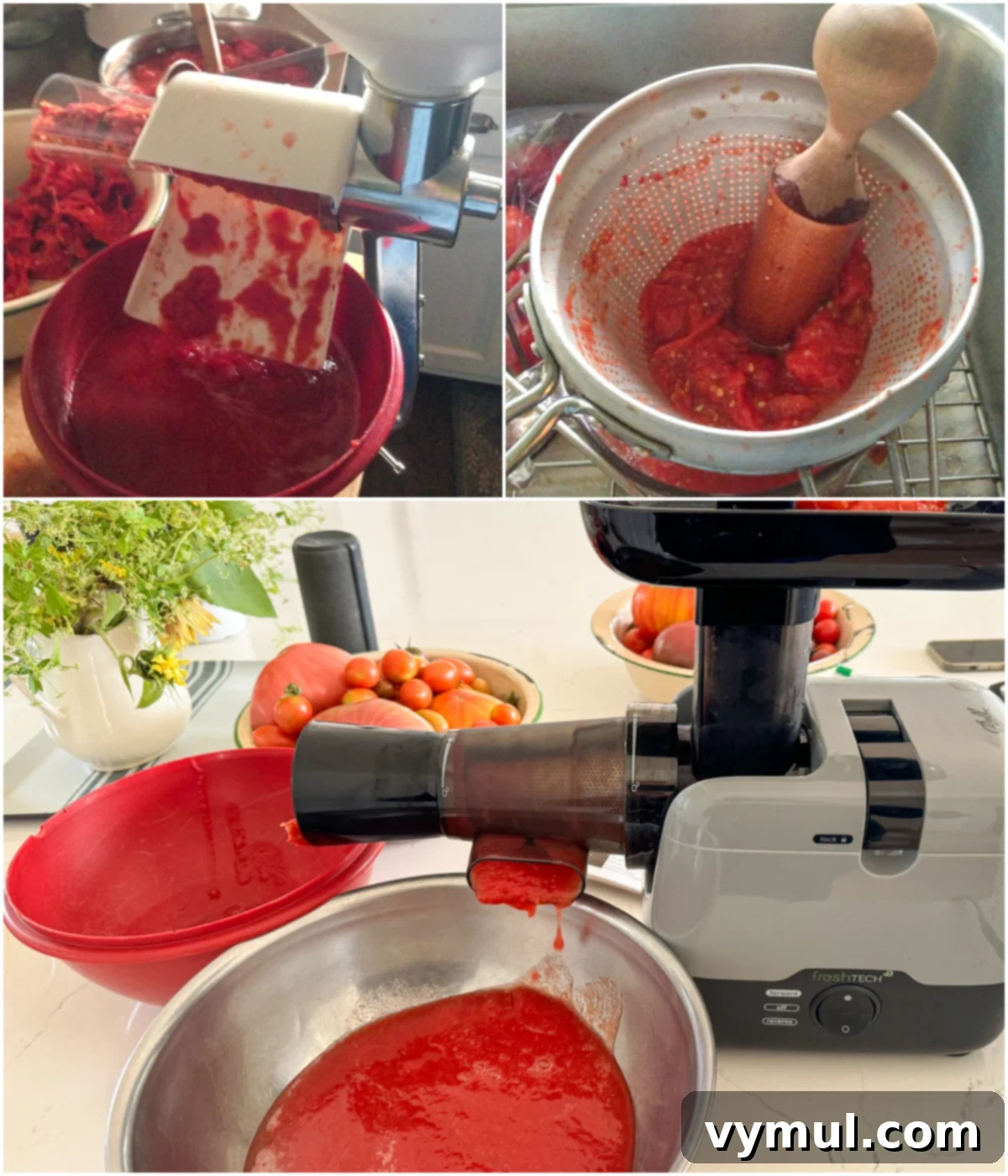
- Victorio Food Strainer and Sauce Maker (shown above top left): This traditional hand-cranked food mill is a workhorse for many home canners. While generally effective, sometimes frozen tomatoes may need a slight pre-heating to pass through more smoothly. Its efficiency can vary, but with a bit of warmth, it delivers good results.
- Tripod/Cone Food Mill (Chinois): My trusty vintage metal tripod food mill (similar new versions are still available!) is excellent for smaller batches or for getting every last drop of pulp. It requires a bit more manual effort but yields a respectable amount of usable puree, especially with softer tomatoes.
- Electric Sauce Maker: This is by far the easiest and most efficient method for processing tomatoes! Pictured above on the bottom is the FreshTech Harvest Pro Sauce Maker (though sadly no longer manufactured). I’ve used electric sauce makers with both fresh and frozen tomatoes, and they work absolutely fabulously. They eliminate the need for pre-heating and significantly cut down on prep time, making sauce making truly effortless. This machine is a worthy investment if you process a lot of tomatoes or other fruits like apples for applesauce.
Because an electric sauce maker saves so much time and effort, especially for tomato products and applesauce throughout the growing season, I’ve compiled a few excellent alternative options since my specific model is no longer produced:
- Weston Deluxe Electric Tomato Strainer, Food Mill, Sauce Maker
- VEVOR Electric Tomato Strainer, 400W Tomato Sauce Maker Machine (often a more budget-friendly choice)
- KitchenAid KSMFVSP Fruit and Vegetable Attachment Strainer (the most economical option if you already own a KitchenAid stand mixer)
Clever Tip: Don’t Waste a Drop! Repurpose Tomato Pulp from Straining
Even after straining, the leftover tomato pulp (skins and seeds) still contains valuable nutrients and flavor. Instead of discarding it, consider this smart tip:
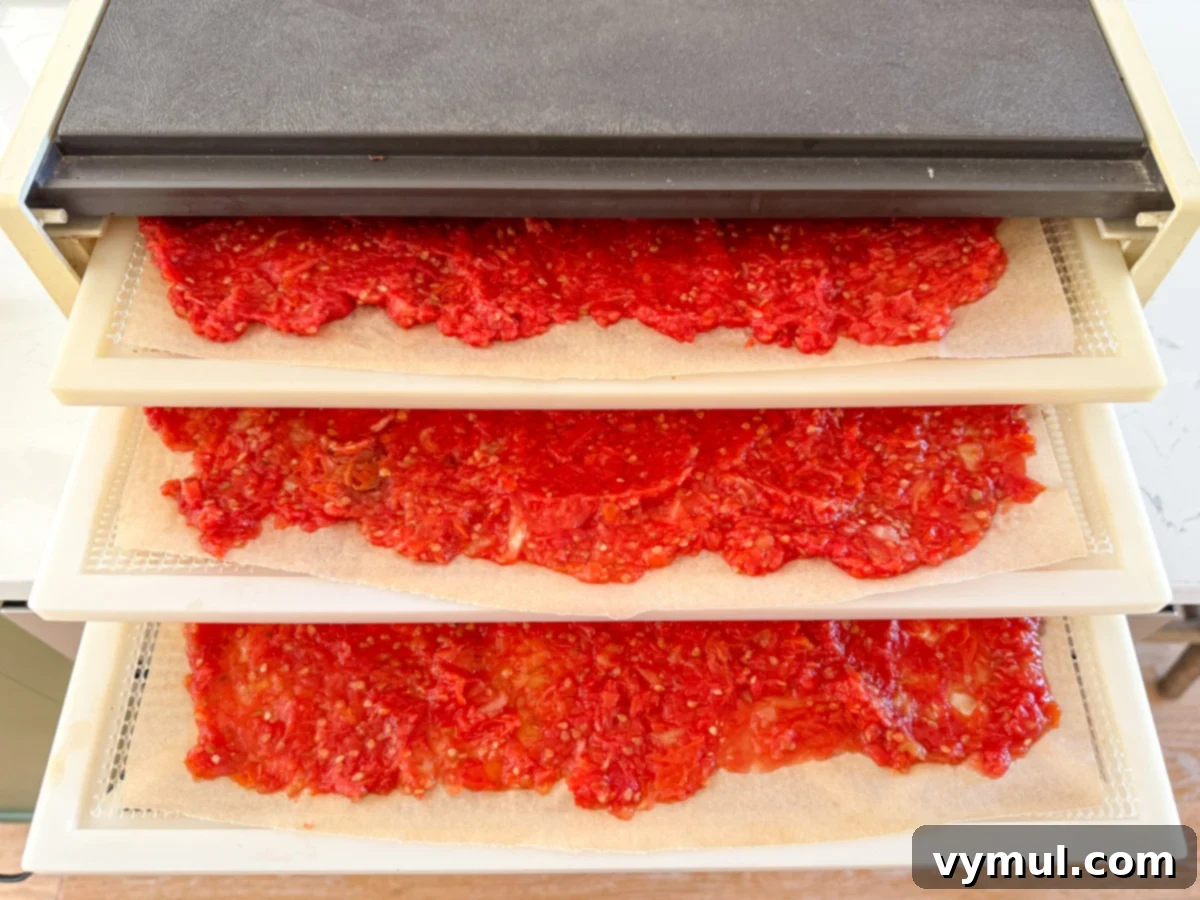
Spread the pulp as thinly as possible onto parchment-lined trays in a dehydrator. Dry it at 135°F (57°C) until it’s completely crisp and dry throughout. This process will take several hours, varying based on your dehydrator model and local humidity. Once fully dry, break the pieces into a blender or food processor and blitz until you have fine, even crumbles. Store this homemade tomato powder in a sealed mason jar on your pantry shelf. You can then add it to soups, chili, stews, or any sauces to naturally thicken them and infuse them with an extra boost of concentrated tomato flavor!
Step 2: Crafting Your Flavorful Pizza Sauce
With your tomato puree ready, it’s time to build the layers of flavor that make this pizza sauce truly special.
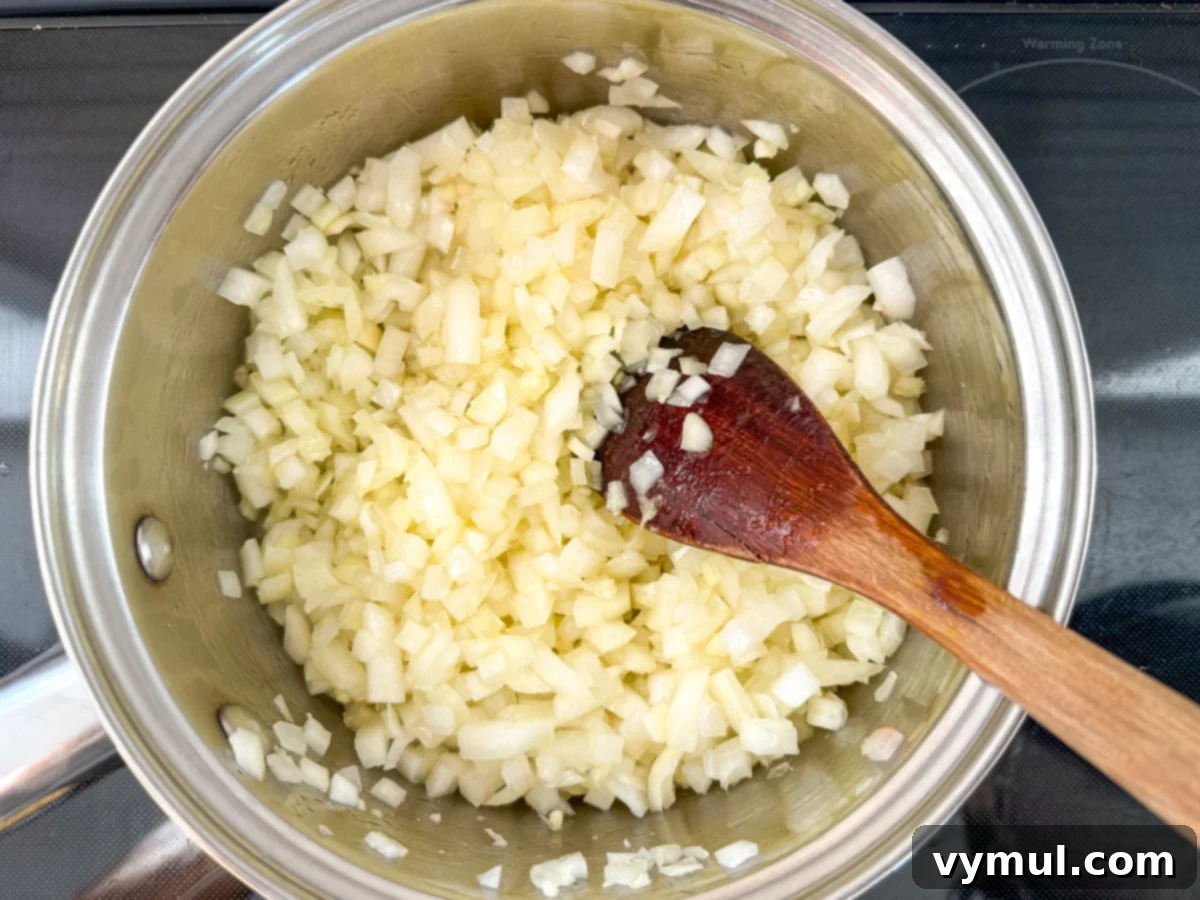
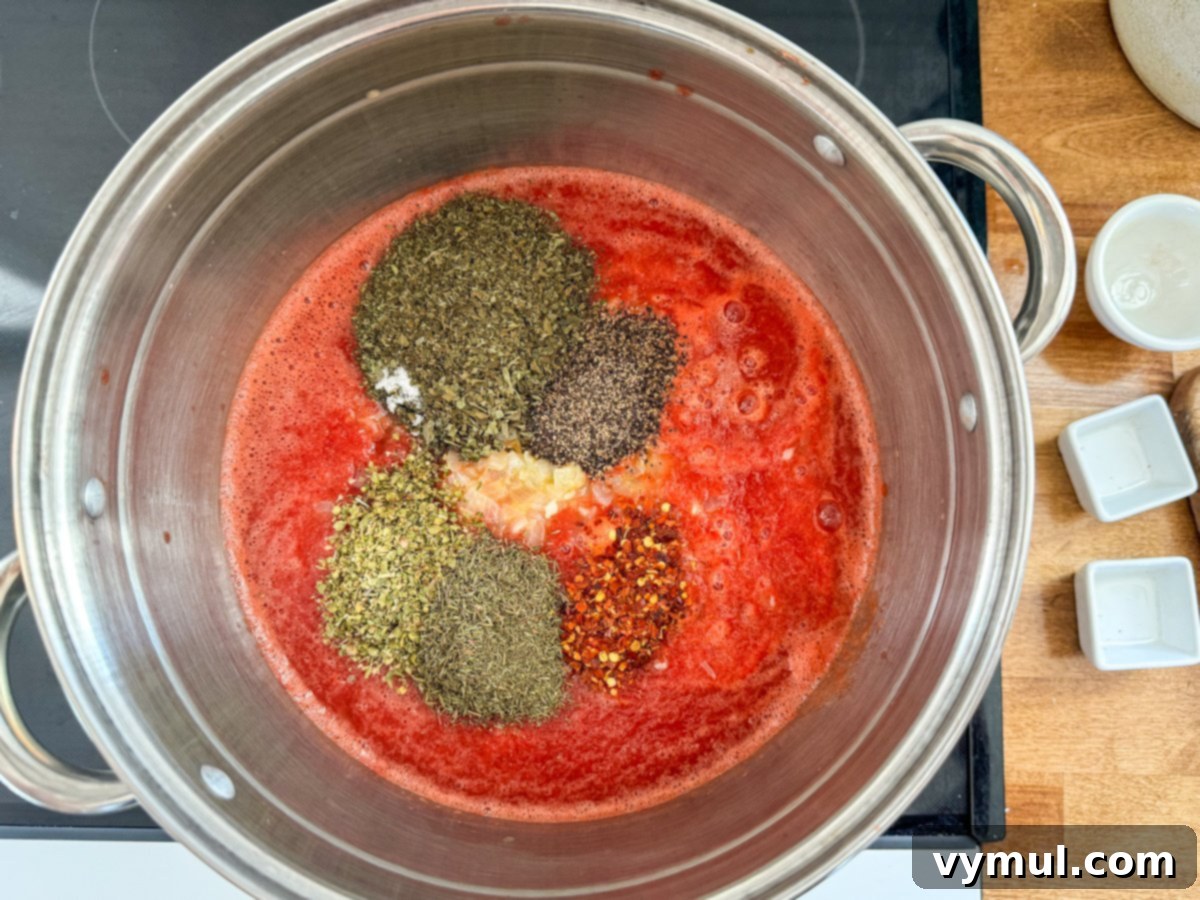
- Sauté Aromatics & Simmer: In a large, heavy-bottomed stockpot (at least 12-quart capacity), heat the olive oil over medium heat. Add the chopped onions and minced garlic, sautéing gently for about 5-10 minutes until the onions become soft and translucent, and the garlic is fragrant but not browned. Browning can make garlic bitter. Then, pour in your prepared tomato puree along with all the dried seasonings (basil, oregano, thyme, black pepper, sugar/honey, salt, and crushed red pepper flakes). Bring the mixture to a full boil, then reduce the heat to a gentle simmer and cook, uncovered, for approximately 30 minutes. This initial simmer allows the flavors to meld beautifully.
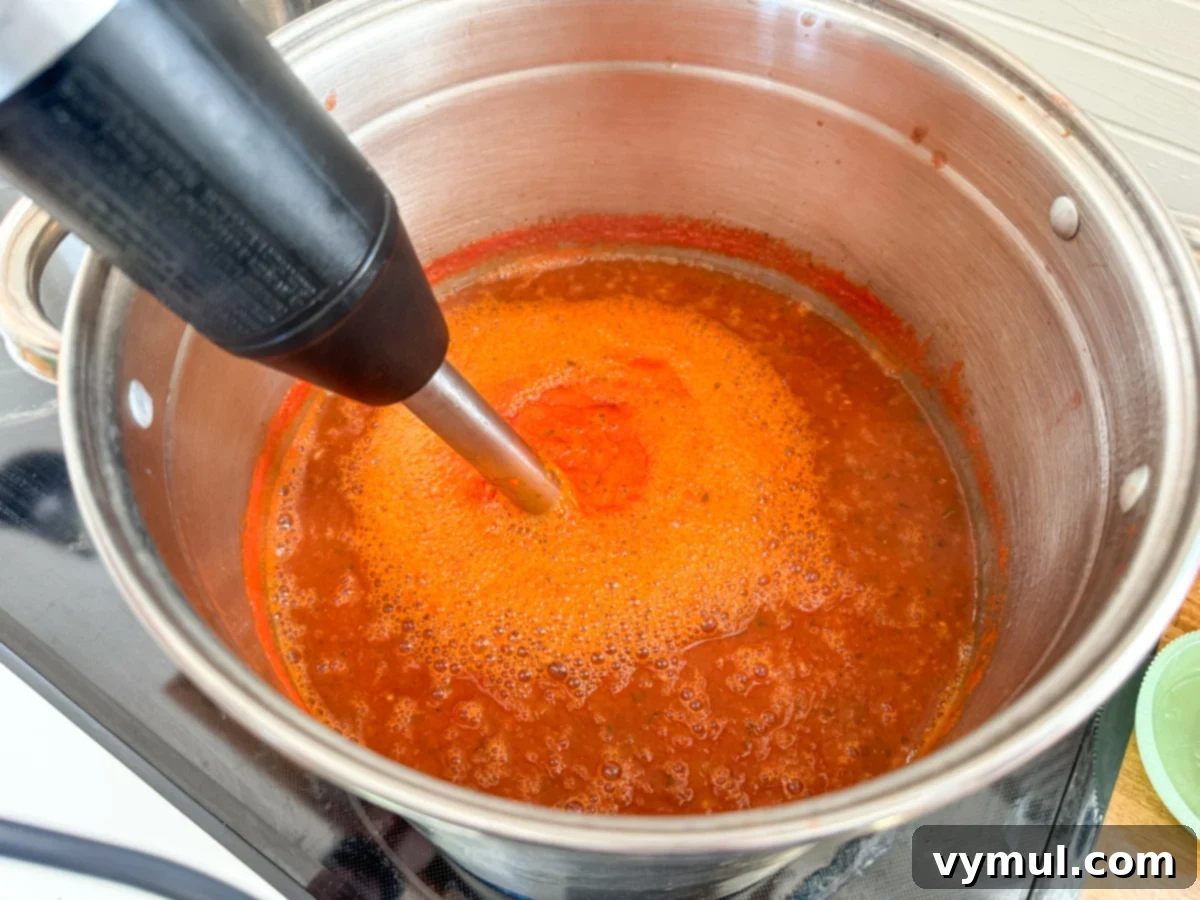
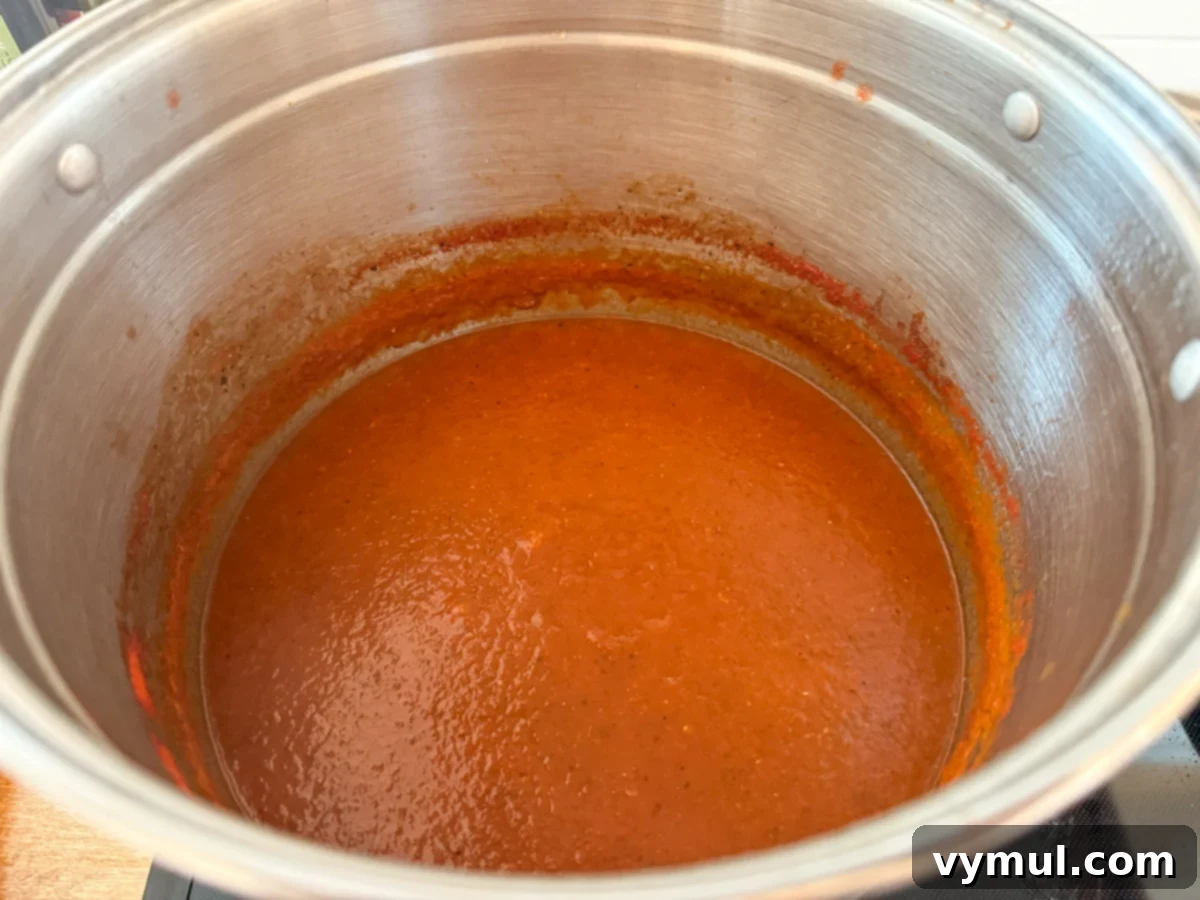
- Achieve Smooth Consistency: For an authentic pizza sauce texture, you’ll want it silky smooth. Carefully transfer batches of the simmering sauce to a standard blender, or for ultimate convenience, use an immersion hand-held blender directly in the pot. Blend until all lumps are gone and the sauce is perfectly smooth. This step ensures an enjoyable texture on your pizza crust.
- Thicken to Perfection: Return the blended sauce to a boil, then reduce the heat to a low simmer. Continue to cook uncovered, stirring occasionally to prevent sticking and scorching, especially if you’re using a thin-bottomed pot. The goal here is to let the sauce reduce and thicken to your desired consistency. This process typically takes 1-2 hours. If you started with frozen tomatoes and drained off the excess liquid, it will likely be closer to an hour. Fresh tomatoes, especially juicier slicing varieties, will require a longer reduction time. Look for the sauce to be reduced by about one-fourth to one-third, reaching a rich, spreadable consistency perfect for pizza.
TIP: Sauce taking longer to thicken than expected? This is a common question, especially when using fresh tomatoes. For example, “My sauce did not thicken after two hours of simmering (used fresh tomatoes) – why?”
Answer: The most likely reason is that your tomatoes were particularly juicy. This often happens with fresh tomatoes, especially if you don’t pour off excess liquid as you would with thawed frozen tomatoes. The type of tomato also plays a significant role; paste tomatoes (like Roma) have a higher flesh-to-water ratio and thicken faster, while slicing or heirloom varieties are much juicier and will naturally take longer to reduce. The simple solution is to keep simmering! Patience is key. This is precisely why I prefer starting with frozen tomatoes – they provide a head start on reducing the liquid content!
Step 3: Preserve Your Sauce – Water Bath Canning (or Freezing)
Once your homemade pizza sauce has reached its ideal consistency and is bursting with flavor, it’s time to preserve it for year-round enjoyment. You have two excellent options: water bath canning for shelf stability or freezing for quick access.
Note: While freezing your sauce is always a viable and easy option – simply let it cool completely, then transfer it to freezer-safe containers or bags for up to a year – water bath canning offers the ultimate convenience of a shelf-stable product, ready whenever you need it without thawing.
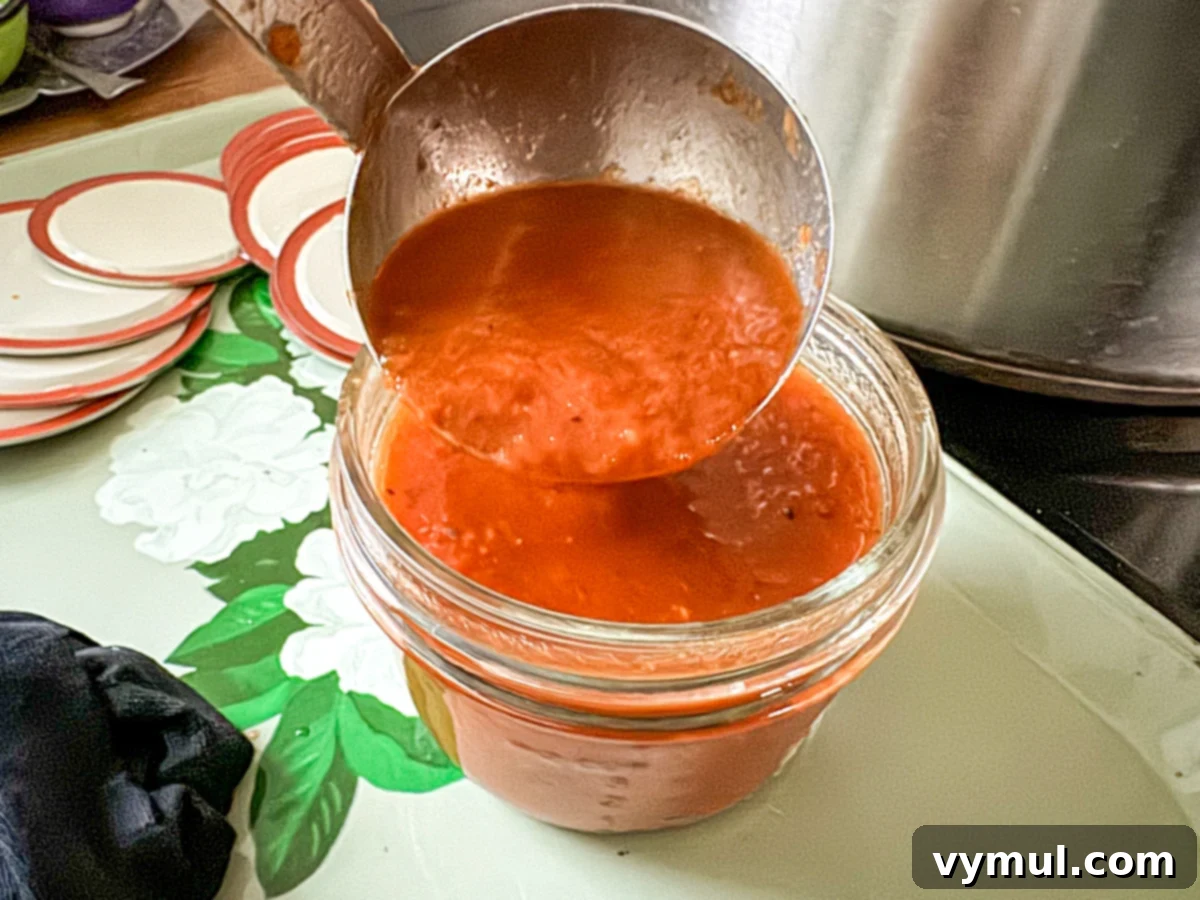
- Prepare Jars & Add Acid: Start with clean, warm canning jars. Before filling each jar with hot sauce, you *must* add a specific amount of bottled lemon juice or citric acid. This step is critical for ensuring the proper acidity level for safe water bath canning of tomatoes, as their natural acidity can vary. Fill each jar with the hot pizza sauce, leaving a 1/2-inch headspace at the top. Wipe the rims of the jars clean to ensure a proper seal, then attach the lids and rings until fingertip-tight. Work one jar at a time, immediately placing each filled jar onto the rack of your water bath canner before preparing the next. Keep your remaining sauce and empty jars warm to avoid thermal shock.
- Process Jars: Carefully lower the canning rack, with filled jars, into the preheated water bath canner, ensuring the jars are covered by at least 1 inch of boiling water. Bring the water back to a rolling boil. Process both pint and half-pint jars for 35 minutes in the boiling-water canner. This processing time ensures a safe, shelf-stable product.
- Cool and Store: Once the processing time is complete, turn off the heat and carefully remove the canner lid. Allow the jars to sit in the hot water for 5 minutes before carefully lifting them out and placing them on a towel-lined surface. Let them sit undisturbed for 24 hours to cool and fully seal. After 24 hours, check for proper seals (lids should be concave and not flex when pressed). Label your jars with the contents and date, then store them in a cool, dark place for up to 18 months.
TIP: Optimal Jar Sizes for Pizza Sauce: I’ve found that both half-pint (8-ounce) or 12-ounce jars are ideal for most medium to large pizzas. The 12-ounce jars are particularly perfect for a single pizza, though they can sometimes be harder to find. Whole pint jars (16 ounces) are often too much for one pizza, which can lead to a soggy crust center unless you consistently make two pizzas at a time. Choose the size that best suits your family’s pizza consumption habits!
If you’re new to the wonderful world of home canning, this comprehensive tutorial will guide you through each step of the boiling water canning process, ensuring your success and safety. You can also visually learn all the easy steps to water-bath canning by watching this helpful video:
How Much Pizza Sauce Should You Can for a Year?
Planning your canning quantities helps ensure you never run out of your favorite homemade staples. Our family enjoys making easy homemade pizza dough a couple of times each month, typically every other Saturday, as part of our regular meal planning routine (discover my menu planning tips here). While we sometimes opt for alternatives like chicken-pesto Greek-style pizza, the classic tomato-based pizza remains a favorite. Therefore, I aim to have a supply of 20-24 jars of pizza sauce in varying sizes on our shelves to comfortably last us a full year.
It’s also worth noting that this versatile sauce isn’t just for pizza! Its rich, balanced Italian flavors make it a fantastic base for various other dishes. It frequently finds its way into pasta sauces, lasagna, baked ziti, and even as a dipping sauce for breadsticks or mozzarella sticks. So, don’t hesitate to use it creatively in any Italian-inspired recipe!
What Readers Are Raving About This Pizza Sauce!
Don’t just take my word for it – here’s what others are saying after trying this recipe:
“I just used your recipe earlier this week & I must say kudos and thanks to you! It used up all the tomatoes from my garden perfectly and your freezer method was fabulous as my tomatoes came ripe at different times…We cannot wait to dig into this! Thanks so much for the great recipe!” -Nicole
“This is an incredible recipe. We have our jars processing in the water bath now. There was a little bit of sauce left in the pot that we ate up with bread. This recipe will be used for the years to come. Yummy!!!” -Roberta
“Thank you for the great recipe! Mine is simmering down now and smells awesome…I’m new to this canning thing so I get a little nervous but your post really was great in explaining everything.” -Susan
“This was freakin fantastic. I started with a half batch and once I tasted I knew I’d have to do more. If I wasn’t so greedy, I’d share with friends but I might like my new pizza sauce more than I like them.” -Kat
I genuinely hope you fall in love with this homemade canned pizza sauce recipe as much as we have. If you give it a try, please remember to leave a recipe rating so I know how much you enjoyed it! Have more questions? Scroll down to our comprehensive FAQ section – I’ve likely already answered them!

Print Recipe
Pin Recipe
SaveSaved!
Easy Canned Pizza Sauce Recipe With Frozen or Fresh Tomatoes
Equipment
-
Sauce maker/food sieve
-
12-quart or large stock pot
-
water bath canner and supplies if canning
-
canning jars and lids if canning (freezer containers if freezing)
Ingredients
- 22 pounds tomatoes fresh or whole frozen (preferably paste tomatoes)
- 3 cups chopped onions
- 6 cloves garlic minced
- 1/4 cup olive oil
- 2 tablespoons dried basil
- 1 tablespoon dried oregano
- 1 tablespoon dried thyme
- 1/2-1 tablespoon black pepper, or to taste if you’re not as much a pepper fan as we are
- 1 tablespoon sugar or honey or to taste, helps balance acidity
- 2 tablespoons salt, canning salt or pure sea salt (avoid iodized table salt)
- 1-2 teaspoons crushed red pepper flakes, to taste – use less if you’re unsure or omit for milder sauce
- Bottled lemon juice or citric acid: 1 tablespoon bottled lemon juice OR 1/4 teaspoon citric acid for EACH pint and 12-oz jars; 1/2 tablespoon bottled lemon juice OR 1/8 teaspoon citric acid for EACH half-pint jars I usually use citric acid, as it doesn’t add more liquid to our sauce. This is essential for safe canning.
Instructions
Prepare tomato puree from frozen tomatoes:
-
(Assuming tomatoes were cleaned and cored before freezing) Allow them to thaw for 24 hours in a bowl or sink; then carefully drain off all accumulated clear juices.
-
Pass the thawed and drained tomatoes through a food strainer (food mill or electric sauce maker) to remove any remaining seeds and peels, creating a smooth puree.
Prepare tomato puree from fresh tomatoes:
-
Wash, core, and halve your fresh tomatoes. Place them in a large stockpot (a 12-quart stockpot and a 6-quart soup pot often work well for 22 pounds of tomatoes) and bring to a boil. Cook until softened, then remove from heat.
-
While still warm, run the softened tomatoes through a food strainer to separate skins and seeds, creating a smooth puree.
Make the pizza sauce:
-
In a 12-quart or larger stockpot, heat the olive oil over medium heat. Add the chopped onions and minced garlic, cooking for 5-10 minutes until the onions are softened and translucent. Add the tomato puree and all the dry seasonings (basil, oregano, thyme, black pepper, sugar/honey, salt, and red pepper flakes). Bring the mixture to a full boil, then reduce heat and cook, uncovered, for about 30 minutes, allowing flavors to combine. Process with an immersion blender directly in the pot to make a smoother sauce (or carefully blend in batches in a standard blender).
-
Bring the blended sauce back to a boil; then reduce the heat to a low simmer. Continue to simmer, uncovered, until the sauce reaches your desired thick consistency. This typically takes 1 to 2 hours, but can vary significantly based on whether you started with frozen or fresh tomatoes and their initial juiciness. Stir occasionally to prevent sticking and scorching, especially with thin-bottomed pots. Cook until the sauce is reduced by about 1/4 to 1/3 and holds its shape on a spoon.
Water-Bath Can:
-
Add the required amount of bottled lemon juice or citric acid to each clean, warm canning jar (refer to ingredient list for amounts). Fill each jar with the hot pizza sauce, leaving exactly 1/2-inch headspace. Wipe jar rims clean to ensure a good seal, then attach lids and rings until fingertip-tight. Place each jar into the rack of your prepared water bath canner. Continue with remaining jars until the canner is full (you may need to do multiple loads, so keep unused sauce and empty jars warm). Refer to this tutorial on how to water bath can for detailed guidance.
-
Process both pint and half-pint jars for 35 minutes in a boiling-water canner. Ensure water fully covers jars by at least one inch throughout the entire processing time.
-
Once processing is complete, turn off the heat and carefully remove the canner lid. Allow jars to rest in the hot water for 5 minutes before carefully removing them to a towel-lined surface. Let them sit undisturbed for 24 hours to cool completely and seal. After 24 hours, check seals, label, and store in a cool, dark place for optimal freshness.
Notes
Adapted from Ball Blue Book’s Seasoned Tomato Sauce, 37 edition. The adaptations specifically involve the cooking/straining method and the addition of dried spices, ensuring the safety parameters for canning (including fresh ingredient ratios) remain intact.
High Altitude Adjustment: If you are processing your jars at an altitude higher than 1000 feet above sea level, you must adjust the processing time to ensure food safety. Please consult Ball’s official high-altitude canning chart for specific adjustments based on your elevation.
Nutrition
Your Questions Answered: Homemade Pizza Sauce FAQs
Here are some of the most common questions I receive about this homemade canned pizza sauce recipe, along with detailed answers to help you succeed:
Absolutely! This recipe is very flexible and can easily be scaled down. If you wish to make a smaller batch, simply halve all the ingredient measurements precisely. The cooking and processing times will remain largely similar, though the reduction time might be slightly shorter for a smaller volume of sauce. Just ensure you still add the correct amount of lemon juice or citric acid per jar size for safe canning.
No, it is not recommended to use fresh herbs when canning this particular recipe. Fresh herbs are considered low-acid ingredients, and introducing them into a tested canning recipe that relies on precise acid ratios (like this one, based on the Ball canning recipe which uses only dried herbs) can compromise the safety and shelf-stability of your canned product. For cooked and canned goods, dried herbs are preferred because they hold their flavor much better over time; some fresh herbs can actually turn bitter or lose their potency during the intense cooking and canning process. If you want to add fresh basil or oregano, it’s best to do so just before serving the sauce.
Unfortunately, no, not if you intend to water bath can the sauce for shelf stability. Both fresh basil and additional garlic are low-acid ingredients. Adding more than the tested amounts would disrupt the carefully calculated pH balance required for safe water bath canning, increasing the risk of spoilage. If you desire a sauce with a more pronounced fresh garlic or basil flavor, your safest option is to prepare the sauce with those additions and then freeze it instead of canning. Freezing is a perfectly safe method for preserving sauces with higher amounts of low-acid ingredients.
The 22 pounds refers to the total weight of the tomatoes (fresh or frozen) before any liquid is drained or skins/seeds are removed. If you’re starting with fresh tomatoes, weigh them after washing but before coring. If you’re freezing them whole, weigh them before they go into the freezer, ideally noting the weight on the outside of the baggie for easy reference. The goal is to start with the correct raw weight to ensure you achieve the expected yield of sauce.
This concern has indeed been circulating more recently (I’ve started seeing it around 2024). Many experienced canners, myself included, have successfully poured off the clear liquid from thawed tomatoes for years without issue, a method I learned from a master canner. The primary purpose of draining the clear liquid is to speed up the reduction process, resulting in a thicker sauce faster. To my knowledge, I haven’t come across any definitive, published scientific research specifically quantifying the amount of acid lost by draining this clear juice, especially when considering that tomato acidity naturally varies considerably between varieties and growing conditions. Furthermore, this recipe, like all safe tomato canning recipes, requires the addition of bottled lemon juice or citric acid directly to each jar during the canning process. This acidification step is the crucial safety measure that ensures the pH is low enough for water bath canning, regardless of minor variations in the tomatoes’ natural acidity or whether some clear liquid was drained. I remain comfortable with this method, but ultimately, you should always follow practices that you are comfortable with and that align with the most current, verified canning guidelines you trust.
No, adding thickeners like tomato paste or any other starch (e.g., flour, cornstarch) before processing is not safe for canning. Adding thickeners changes the density of the product, which can prevent heat from penetrating to the center of the jar effectively during the water bath process. This creates “cold spots” where harmful bacteria like Clostridium botulinum could survive. The processing times for this recipe have been carefully tested for its specific density. If you want a thicker sauce, the only safe way is to simply cook the sauce down longer on the stovetop until it reaches your desired consistency. You can add tomato paste *after* opening a canned jar, when you are preparing the sauce for immediate consumption.
You are correct that large amounts of oil or oil-packed items are generally not safe for home canning due to the risk of botulism. However, a small, carefully measured amount of oil used to sauté vegetables (like the 1/4 cup in this recipe) *is* considered safe in tested canning recipes, provided the recipe adheres to proper acidification and processing. This recipe is directly based on the tested Ball Blue Book’s Seasoned Tomato Sauce (found on page 33 of the most recent version). Ball has also published similar seasoned sauces online, like this basil garlic tomato sauce, which also includes a small amount of olive oil. If you followed the recipe exactly, including the specified amounts of fresh ingredients and adding lemon juice/citric acid to each jar, your sauce should be safe. Always ensure you are following a tested recipe from a reputable source for canning safety.
Yes, you absolutely can use canned tomatoes for this recipe, making it a great option even when fresh tomatoes are out of season! When selecting canned tomatoes, look for plain crushed or diced tomatoes with only “tomatoes” listed as the ingredient (avoid anything with added herbs, salt, or preservatives if possible, so you can control the seasoning). Generally, a 14.5-ounce can of tomatoes is roughly equivalent to 1 pound of fresh tomatoes. Therefore, to substitute 22 pounds of fresh/frozen tomatoes, you would need approximately 22 cans (14.5 ounces each) of plain canned tomatoes. This is a convenient way to enjoy homemade flavor year-round.
Forgetting the acid is a common mistake that even seasoned canners make! Unfortunately, without the added acid, your sauce is not safely shelf-stable via water bath canning. You have two primary safe options:
- Reprocess: This is the safest option for shelf-stability. Open all the jars, pour the sauce back into a large pot, bring it to a boil again, add the correct amount of bottled lemon juice or citric acid to each clean, warm jar, and then reprocess them in the boiling water canner for the full 35 minutes.
- Refrigerate or Freeze: If reprocessing isn’t feasible, treat your sauce as fresh. Store all the jars in the refrigerator and consume within 1-2 weeks, or transfer the sauce to freezer-safe containers and freeze for up to a year. This is what many people do when they realize the error, including myself – it happens to everyone!
Do NOT simply store unacidified jars on the shelf, as they pose a risk of botulism.
Yes, absolutely! Breaking up preserving tasks over two days is an excellent strategy to make the process more manageable and less overwhelming, especially for large batches. You can safely prepare your tomato puree (thaw, puree, and strain) on day one, then store it in a clean, covered container in the refrigerator overnight. The next day, simply retrieve the puree and proceed with making the pizza sauce and canning it as directed. This approach helps to divide the workload and ensure a more enjoyable canning experience.
The exact yield of puree from 22 pounds of tomatoes can vary based on several factors: the specific variety of tomatoes (paste tomatoes yield more pulp than juicy slicing varieties), and the efficiency of your food mill or sauce maker (some extract more liquid and pulp than others). However, as a general estimate, you can expect to get approximately 17-18 cups of raw tomato puree. This amount should then cook down to roughly 14-15 cups of thickened pizza sauce, which typically yields the 7-8 pints or 14-16 half-pints specified in this recipe. Always aim for the desired consistency through simmering, rather than relying solely on volume measurements, as evaporation rates can differ.
More Easy Canned Tomato Recipes to Stock Your Pantry
If you’ve enjoyed making this homemade pizza sauce, you’re ready to tackle more delicious tomato-based preserving projects. Expand your homemade pantry with these other fantastic and safe canning recipes:
- Water-Bath Safe Canned Roasted Tomato Sauce: A rich and savory sauce with depth from roasted tomatoes.
- Addictive Tomato Chutney: A sweet and tangy condiment perfect for meats, cheeses, or sandwiches.
- Nice and Thick Salsa for Canning: Your go-to recipe for chunky, flavorful salsa that holds up beautifully.
This recipe has been thoroughly reviewed and updated in [Current Year, assuming it’s an updated version of original 2014, if not, remove] for clarity and enhanced instructions. It was originally published in 2014.
Disclosure: affiliate links in this article will earn commission based on sales, but it doesn’t change your price. Click here to read our full disclaimer and advertising disclosure.