Easy Homemade Whole Wheat Pita Bread: Your Step-by-Step Guide to Perfect Pockets
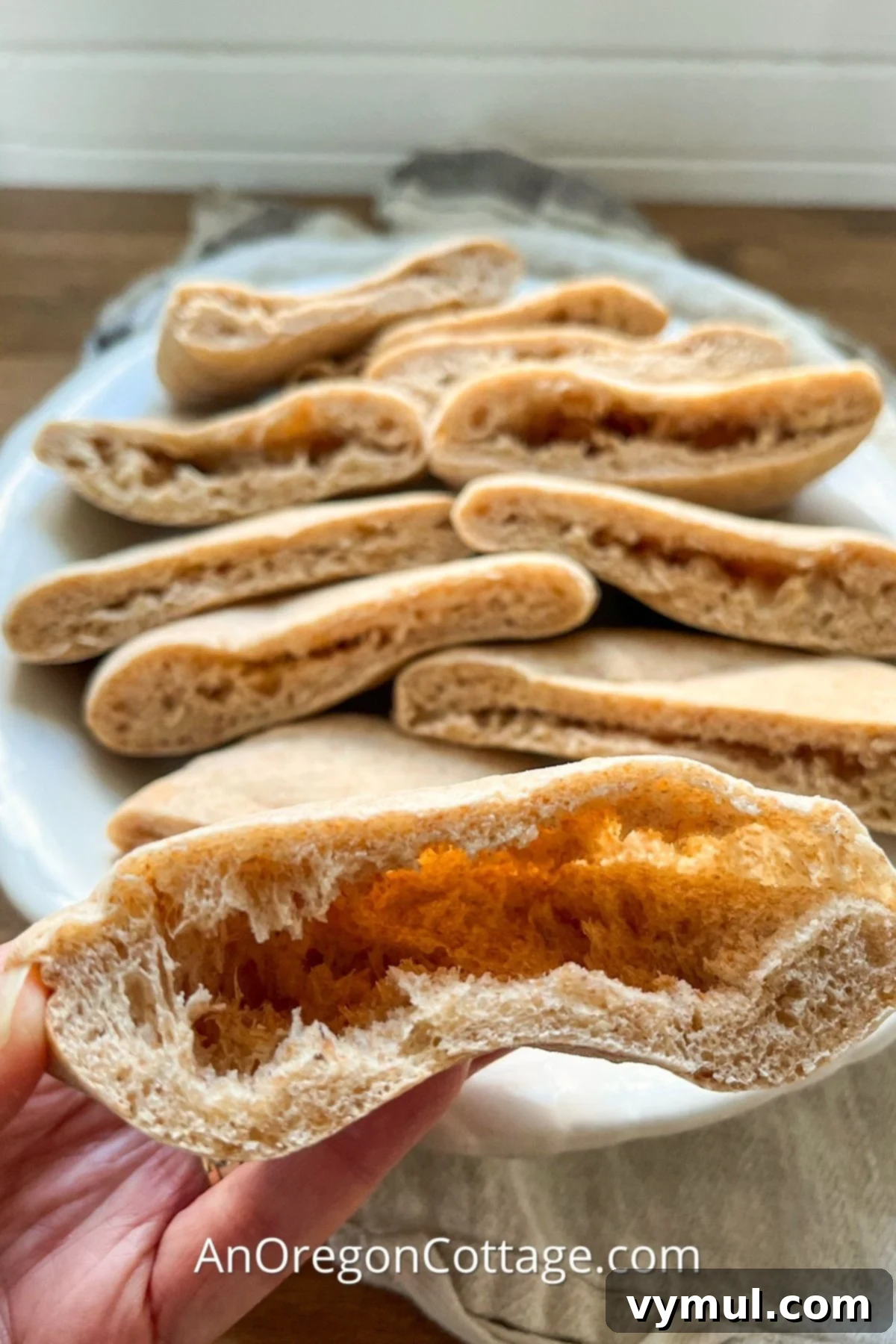
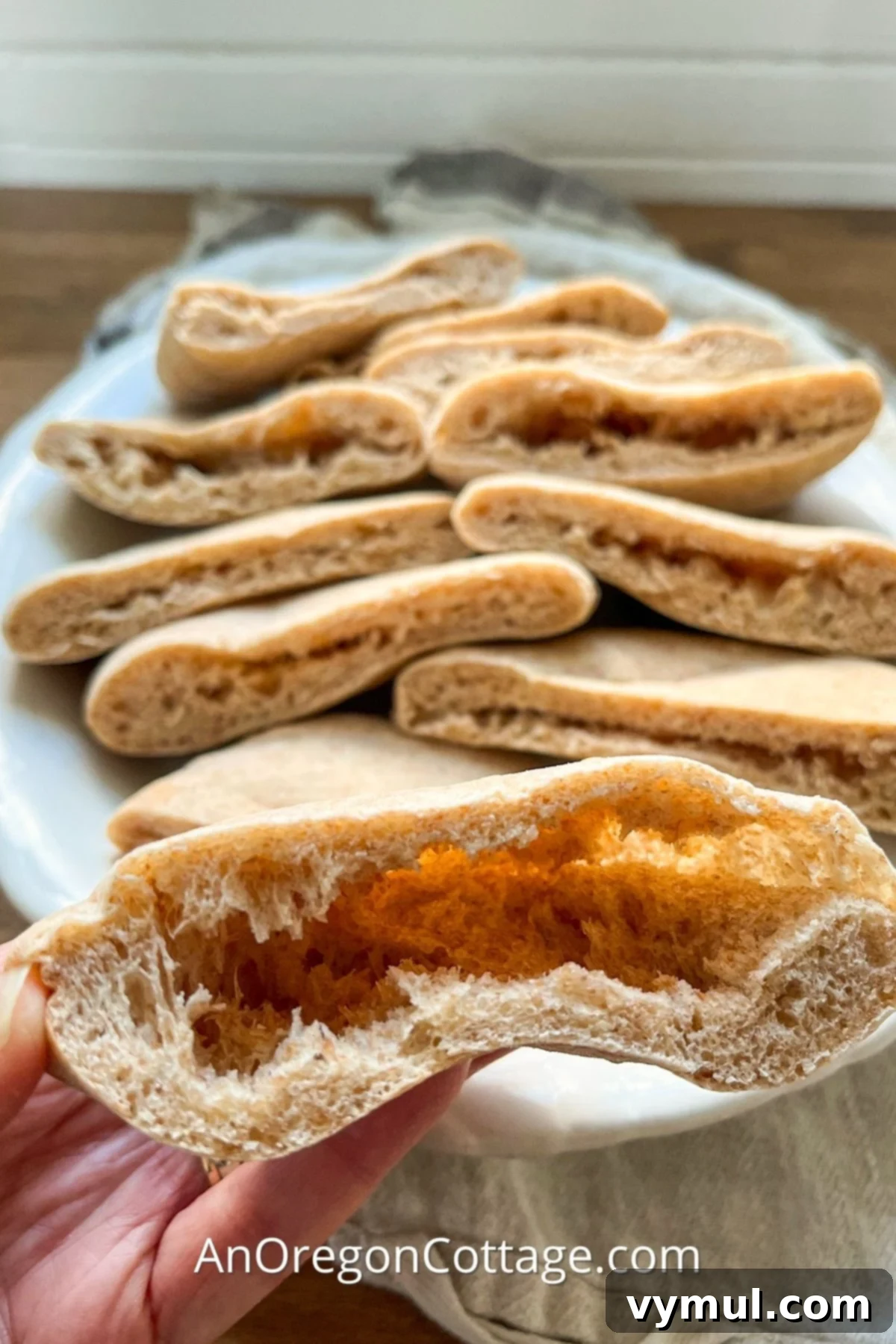
Say goodbye to bland, store-bought pita bread and hello to the incredible flavor and texture of homemade whole wheat pita! This recipe is surprisingly easy, remarkably quick to make, and tastes infinitely better than anything you’ll find on a grocery store shelf. It’s absolutely worth the minimal effort, promising fluffy, tender pockets every time. Plus, these delicious pitas freeze beautifully, making them a perfect make-ahead staple for your kitchen.
✩ What readers are saying…
“This is a great recipe! My husband is part Arabic and he says this is just like the bread that his Arabic Grandmother made. That is a compliment because she was an excellent cook. Thanks for posting this with the great demo pictures.” -Rita
Some links in this article are affiliate links and if you click on them I will receive a small commission at no cost to you.
Making your own pita bread might seem intimidating at first, but let me assure you: you absolutely can do it! This recipe demystifies the process, making it incredibly accessible even for novice bakers. It’s surprisingly easy, fairly quick (requiring only about an hour of hands-off rising time), and truly enjoyable to watch these humble dough rounds magically puff up in the oven, forming those characteristic pockets.
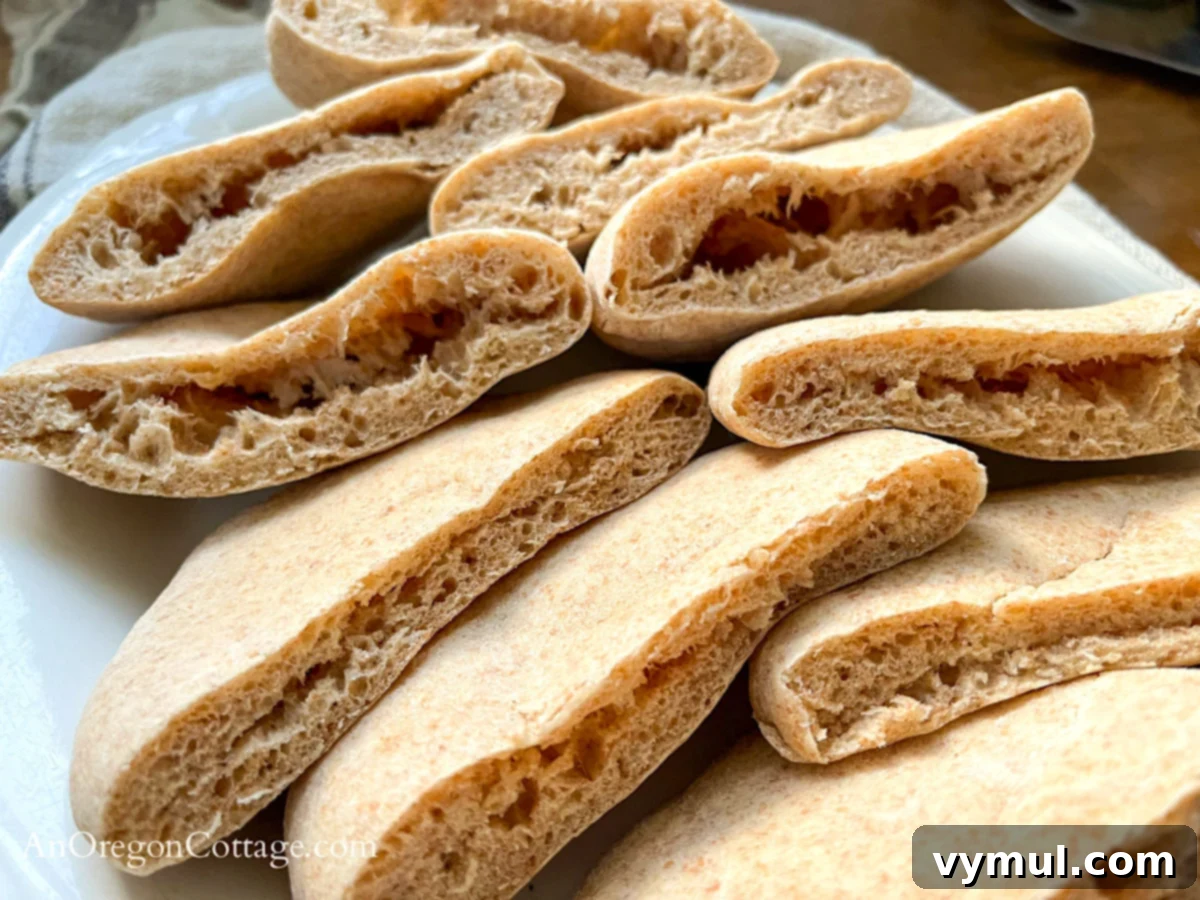
Even if some of your pitas don’t develop a perfect pocket, don’t worry! The worst that can happen is you’ll end up with a delicious, soft flatbread, much like those enjoyed in Greece. These flatbreads are absolutely wonderful with hummus, perfect for scooping up dips, or serving as a hearty wrap for gyros and other fillings. So, with this recipe, there are truly only wins – every batch results in a tasty, versatile bread.
You might be curious, though:
Why do pitas have pockets? The Secret Revealed!
The magic behind those iconic pita pockets lies in the baking process. Pita bread is baked at an incredibly high temperature – 500 degrees Fahrenheit (260 degrees Celsius) in this recipe. This intense heat causes the water within the dough to rapidly turn into steam. As the steam expands, it forces the top and bottom layers of the pita to separate, creating that characteristic hollow pocket in the middle. Once the pita cools, these layers remain separated, allowing the bread to be easily opened and filled with all your favorite ingredients. It’s a culinary marvel that’s both simple and brilliant!
To ensure your success, I’ve provided detailed pictures of every step, along with a helpful video. When I first tried making homemade pita, I wasn’t sure it would be easy, but it truly is! Follow along, and you’ll soon be enjoying fresh, warm pita bread. Be sure to check out the convenient timeline at the end of this guide to see exactly how little hands-on time this impressive recipe truly requires. Imagine yourself effortlessly baking these delicious whole grain pita breads!
Not only do these homemade pitas taste vastly superior to anything you’ll buy pre-packaged, but they are also incredibly cost-effective. Compared to those small bags of four pitas that can cost $4 or more at the store, making your own at home will save you a significant amount of money in the long run. It’s a win-win: better taste and better value!
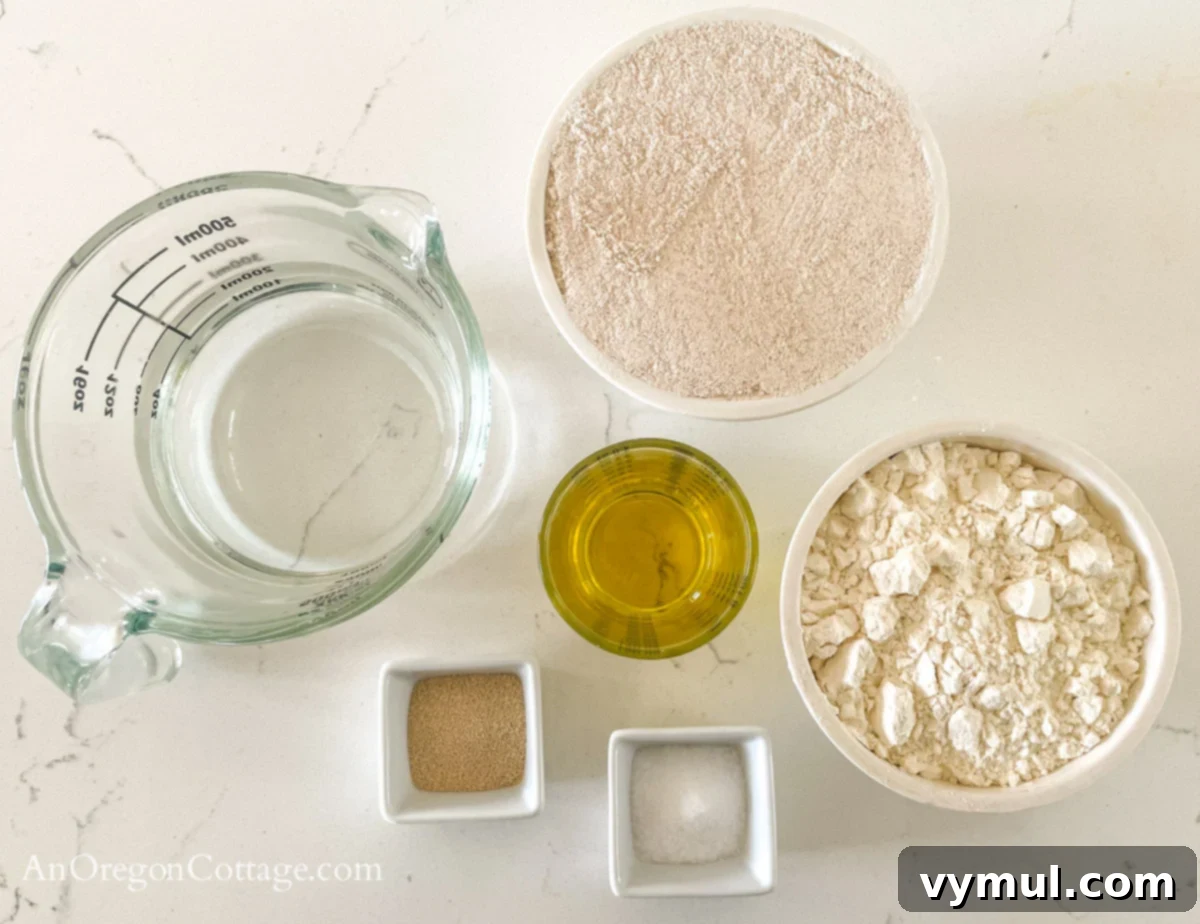
Ingredients Needed for Authentic Whole Wheat Pita
- Whole Wheat Flour: This forms the base of our wholesome pita. You can use standard whole wheat flour for a robust flavor, spelt flour for a slightly nuttier taste and lighter texture, or white whole wheat flour, which is milled from a lighter variety of wheat and offers the nutritional benefits of whole grains with a milder flavor and softer texture, often closer to white flour.
- Unbleached White Flour: If you’re using regular, heavier whole wheat flour, adding about a cup of unbleached white flour can help achieve a lighter, more pliable pita. However, if you opt for white whole wheat flour (which is naturally lighter), you might find you don’t need the additional white flour. Feel free to experiment with different flour combinations to discover your preferred taste and texture!
- Salt: Essential for flavor and helps regulate yeast activity.
- Instant Yeast: This is my preferred choice for its convenience. I use this bulk instant yeast, which is significantly more economical. Store the main package in the freezer and a small working amount in an airtight jar in the fridge to keep it fresh for a year or more.
- Warm Water: Crucial for activating the yeast and bringing the dough together.
- Olive Oil: Adds richness, moisture, and a lovely subtle flavor to the pita.
Steps to Make Perfect Pocket Pita Bread
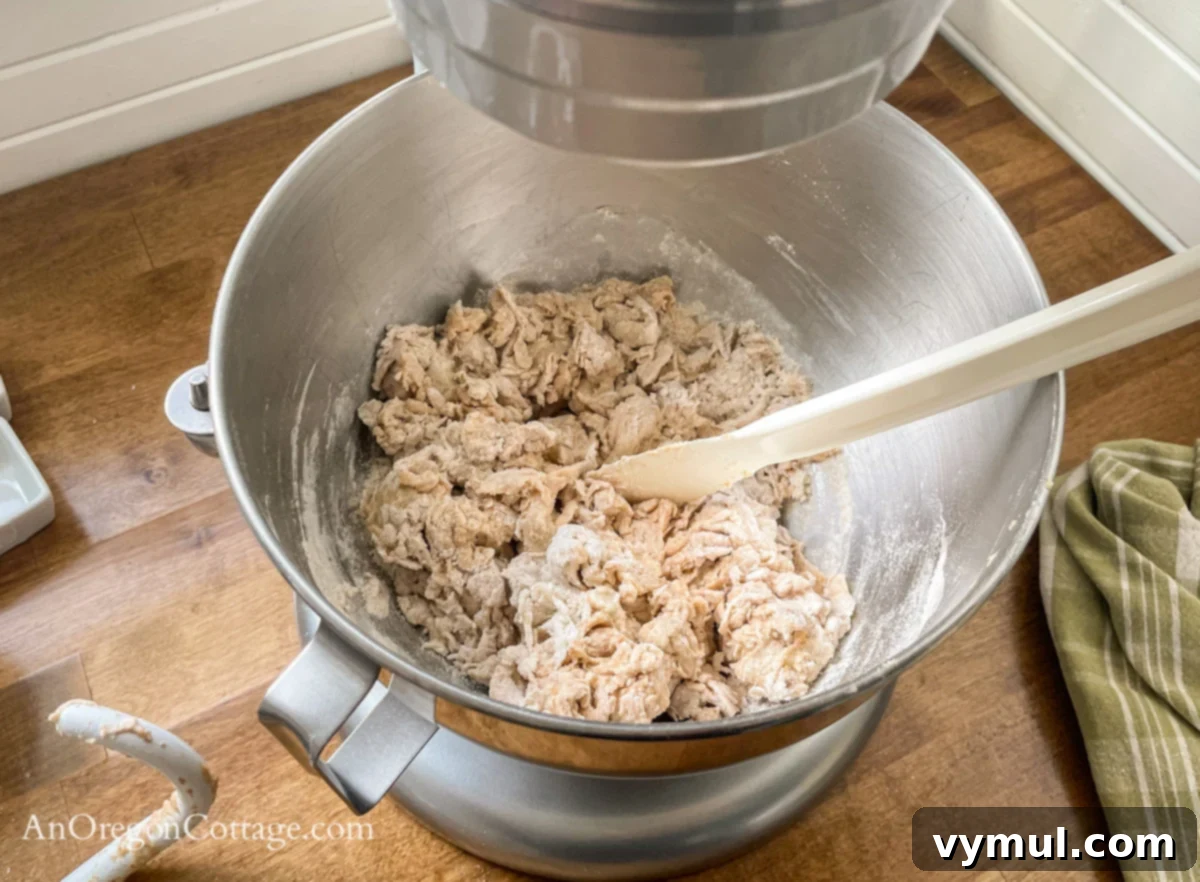
1. Mix Up Your Dough: The Simple Start
Begin by adding all your dry ingredients – the whole wheat flour (or your chosen blend), salt, and instant yeast – into the bowl of a stand mixer. Then, pour in the warm water and olive oil. Yes, it’s that easy! Just dump everything together. There’s no need to pre-mix or activate the yeast separately (thanks to instant yeast). Once all ingredients are in the bowl, stir them together with the paddle attachment or a sturdy spoon until a shaggy, somewhat cohesive dough forms. It won’t look smooth yet, and that’s perfectly fine!
Note on Mixing: While using a stand mixer makes this process incredibly easy and hands-off, you can certainly mix and knead the dough by hand. It will just require a bit more arm strength and time. The first mixing/kneading cycle of a bread machine could also work, but always double-check the flour and liquid amounts against your machine’s recommendations.
Note on Yeast Types: Instant yeast is a fantastic shortcut because it can be added directly with the dry ingredients without prior proofing (dissolving in water first). If you only have active dry yeast, you can still make this recipe. Simply proof it first by dissolving it in a small amount of the warm water (about ¼ cup) for 5-10 minutes until it becomes foamy, then subtract that amount from the total water when you add it to the other ingredients. This ensures your yeast is active and ready to work.
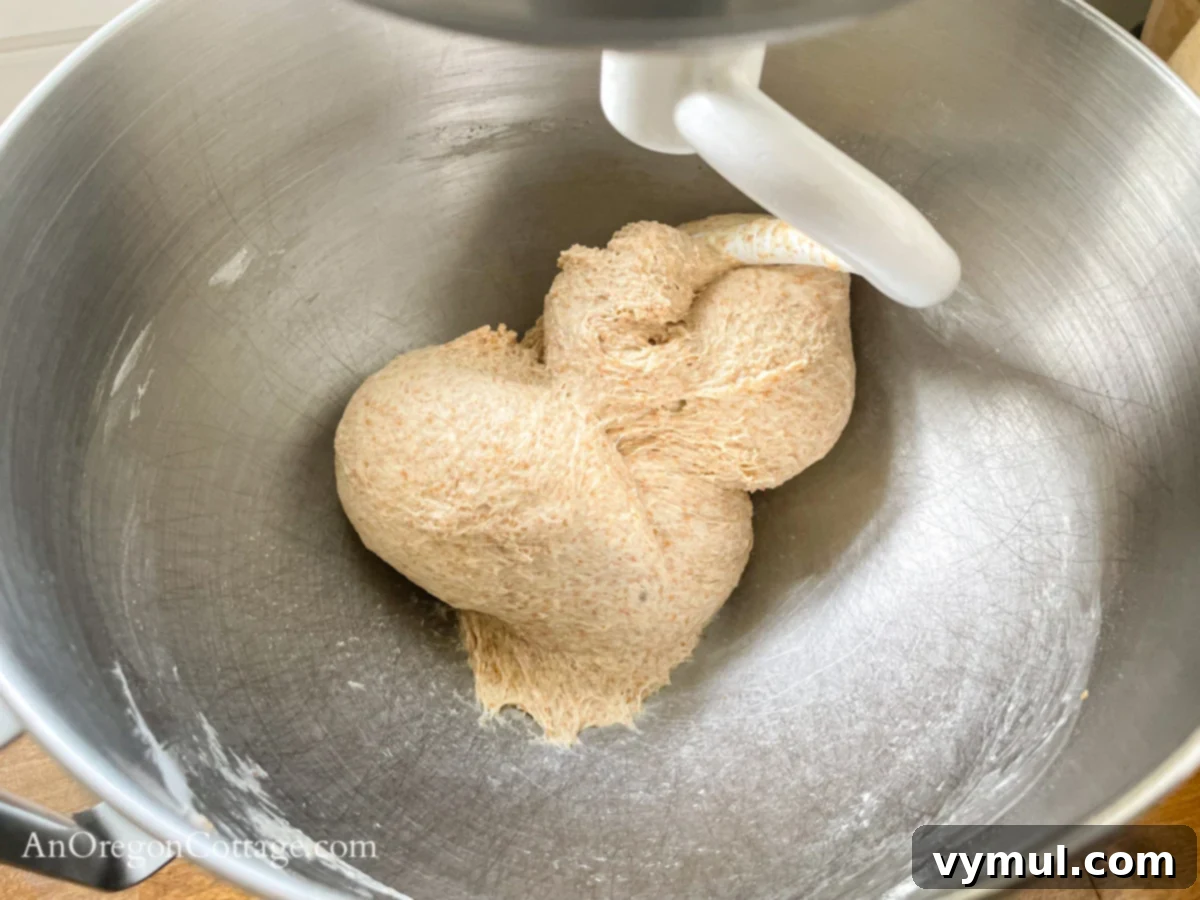
2. Knead the Dough to Perfection: Achieve the Right Consistency
Once your dough is shaggy, switch to the dough hook attachment on your stand mixer and knead for 5 minutes. If you’re kneading by hand, aim for about 8 minutes of consistent kneading. During this process, the dough will transform from a rough mixture into a smooth, elastic ball.
TIP for Whole Grains: Whole grain flours behave a little differently than all-purpose flour. Your dough might still stick slightly to the very bottom of the bowl, even after adequate kneading. This is perfectly normal and desired for a soft dough. If the dough seems excessively sticky and isn’t pulling away from the sides of the bowl at all, add a tiny bit of flour – just a small spoonful at a time – and continue kneading until it achieves the correct consistency. Be cautious not to add too much flour, as we are aiming for a soft, slightly tacky dough for the best pita texture.
Here’s a clearer illustration of what a “soft dough” should look like and feel like:
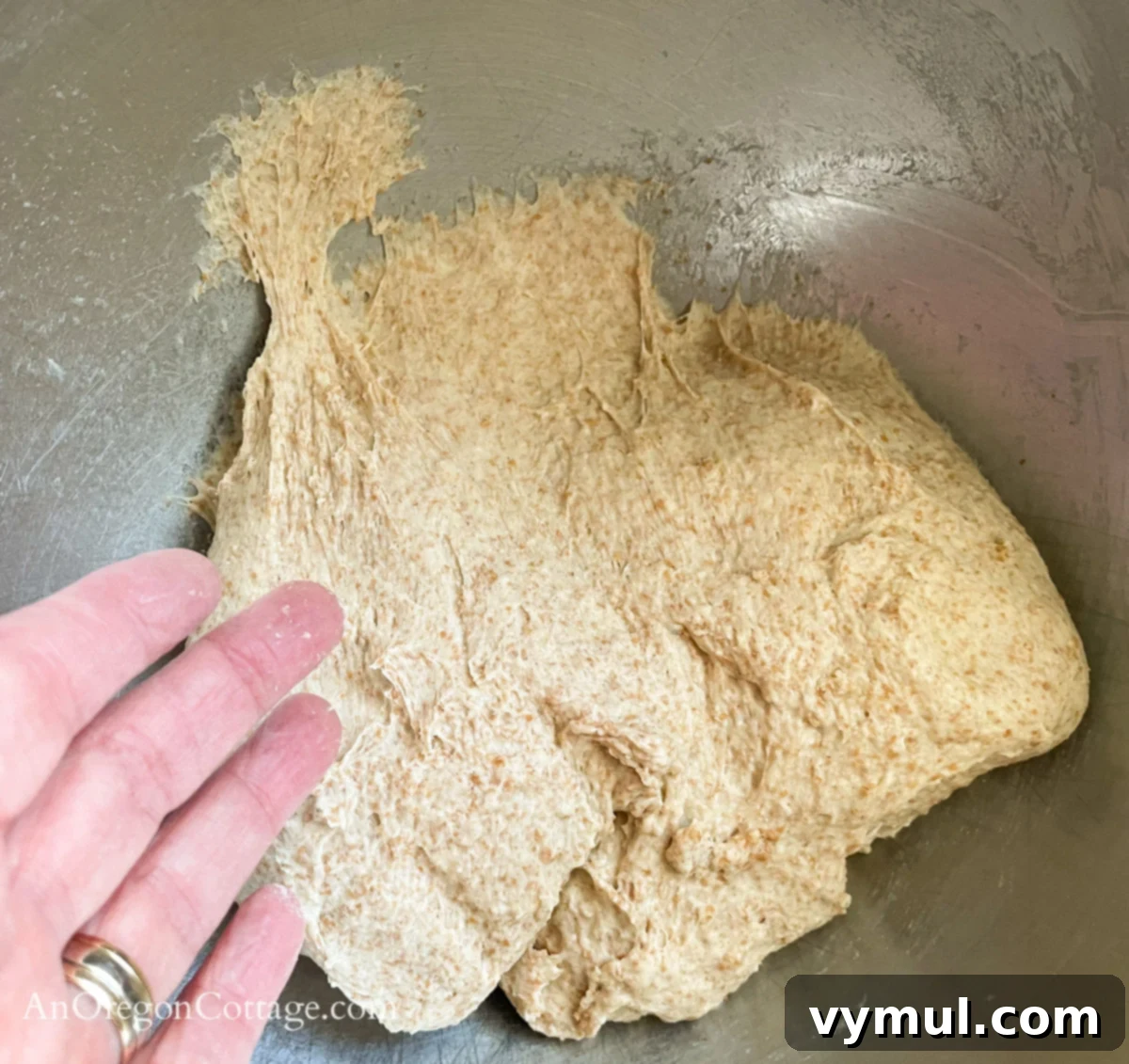
I want to highlight these visual cues because, when I was learning to bake bread, instructions like “soft dough” often felt mysterious, leading me to frequently add too much flour. Understanding these hallmarks will greatly improve your bread-making success:
Hallmarks of a Perfectly Soft Dough
- Stickiness to the Bowl: Observe the dough in the photo above. It has pulled away from the sides of the mixing bowl, creating a relatively clean surface, but it still adheres to the very bottom. This subtle stickiness is exactly what you want. If your dough easily rolls out of the bowl on its own without any resistance, it’s likely too firm, indicating you’ve added too much flour.
- Tacky to the Touch: Gently pat the dough with a clean finger. It should feel slightly tacky, like a sticky note, but not aggressively sticky where it transfers dough onto your finger. This is illustrated in the image where my finger gently touches the dough. If dough particles stick to your finger, it needs a little more flour (again, a small spoonful at a time) and a brief additional kneading period to reach that perfect, barely-tacky stage.
For any light, airy bread with a good rise – and who doesn’t desire that? – your whole grain bread dough should always exhibit these characteristics. The key takeaway? Resist the urge to add too much flour. A soft, slightly tacky dough will yield a much more tender and pliable pita.
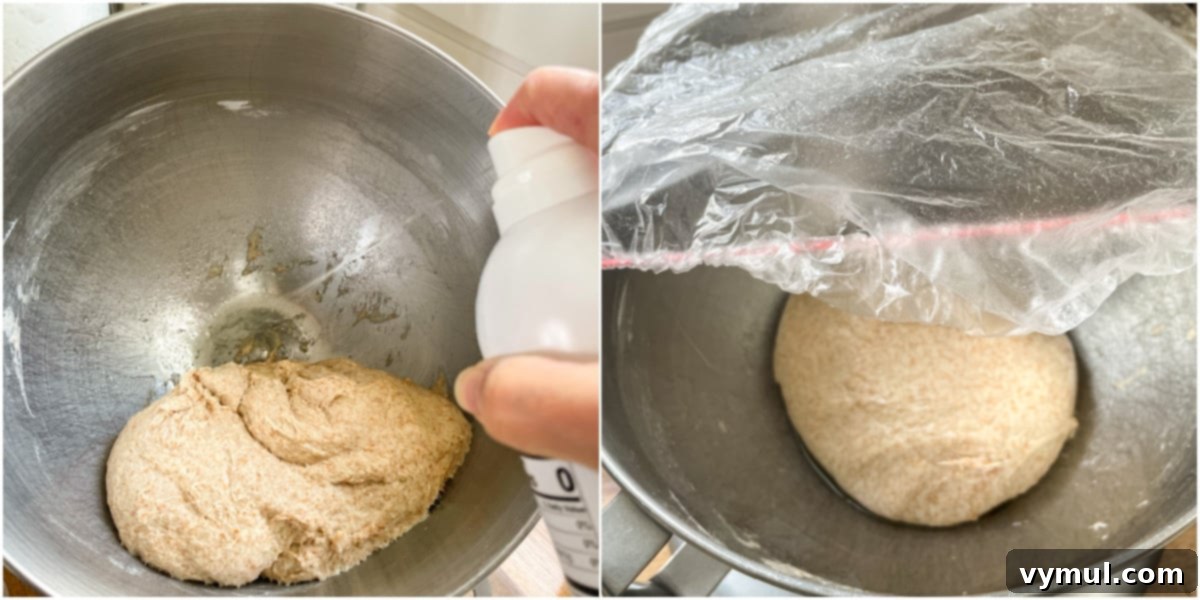
3. Let the Dough Rise: Patience for the Perfect Puff
Once your dough is beautifully kneaded, it’s time for its first rise. Lightly oil the mixing bowl (or a clean bowl), place the dough ball inside, turning it once to coat with oil. Cover the bowl tightly with plastic wrap or a reusable bowl cover. Then, find a warm spot in your kitchen and let the dough rise until it has doubled in size. This usually takes between 1 to 1½ hours, depending on the ambient temperature of your rising spot. A warmer environment will result in a faster rise.
MORE TIPS – Smart Bread Hacks for an Easy Rise:
- One-Bowl Method: The photo on the left illustrates one of my favorite bread hacks. Instead of dirtying another bowl, I simply push the kneaded dough to one side of the mixing bowl, spray that side with cooking oil, then roll the dough over to coat it and spray the other side. This clever trick oils the entire bowl without extra dishes! I highly recommend an avocado oil spray or an olive oil spray for this.
- Reusable Dough Covers: On the right, you can see the shaped dough ready to rise, covered with a plastic “shower cap” style cover. These reusable covers are a game-changer! They keep your dough perfectly moist during rising, unlike towels that can dry out the dough or create crusts. I’ve been using the same set for years for all sorts of culinary tasks. They’re eco-friendly and incredibly effective. I particularly like this set that includes an XL size for larger bowls.
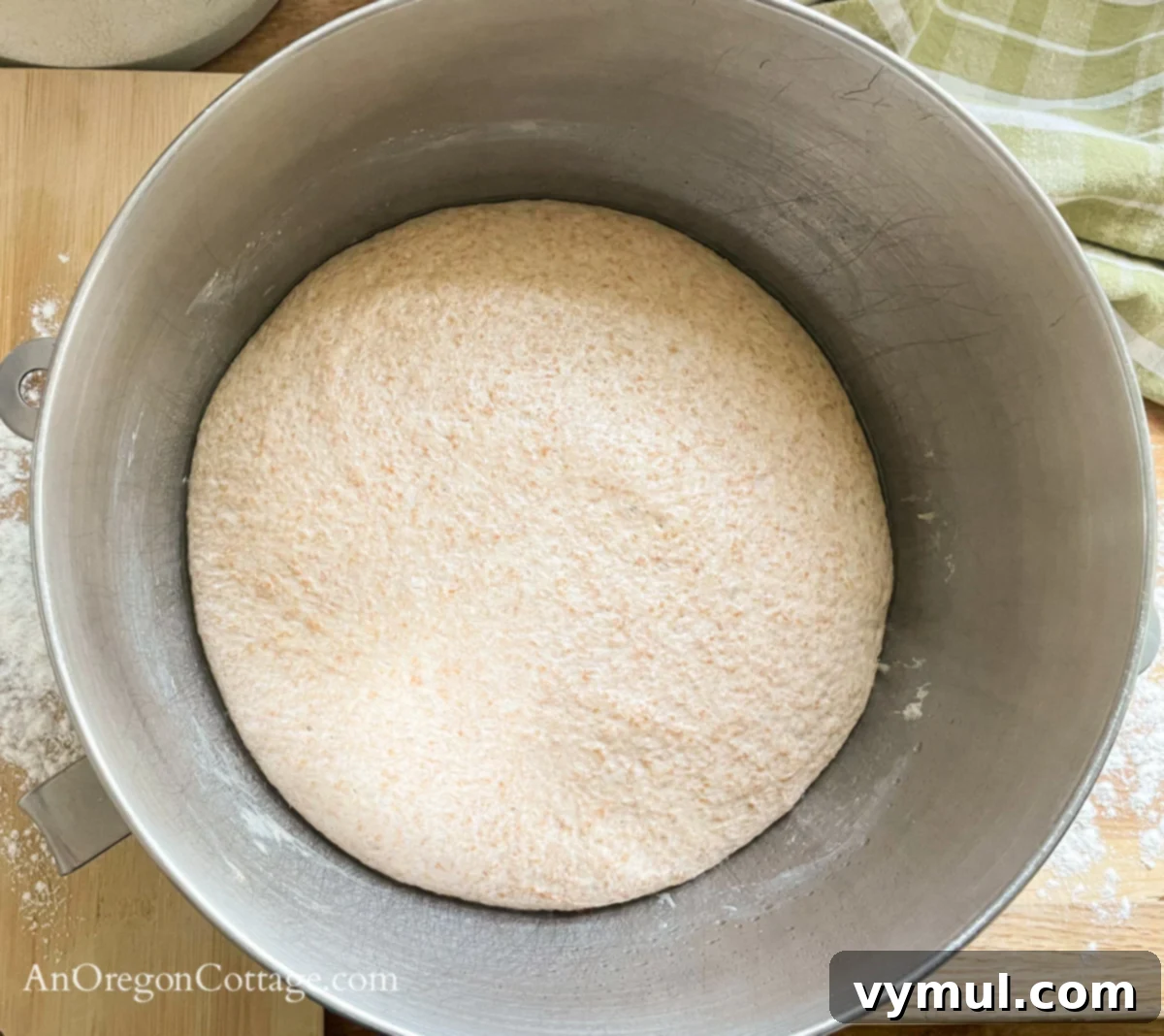
This is approximately what your dough will look like after it has successfully doubled in size – light, airy, and ready for the next step.
4. Preheat the Oven to a Sizzling Temperature
Once your dough has risen beautifully, it’s time to get your oven ready. Preheat your oven to a scorching 500 degrees Fahrenheit (260 degrees Celsius). This incredibly high temperature is not a mistake – it’s one of the most critical secrets to achieving those perfectly puffed pita pockets. The intense heat instantly creates steam within the dough, causing it to inflate rapidly and separate into two distinct layers.
5. Cut & Shape Your Pitas: Creating Uniform Rounds
Carefully remove the risen dough from the bowl and place it onto a lightly floured surface. Using a bench scraper (which makes cutting and moving dough incredibly easy) or a sharp knife, cut the dough in half. Place one of these halves under a slightly dampened clean cloth to prevent it from drying out while you work. Now, divide the remaining half into four relatively equal portions. You can get precise and weigh each portion for uniform pitas, but I honestly don’t bother; a slight variation in size just means a variety of pita choices! Shape each of these four pieces into a neat ball. I find it easiest to gather all the ends together on one side, then cup the dough in my hand and gently roll it against the counter to create a smooth, round shape. As you shape each ball, immediately place it under the damp cloth. Repeat this process with the second half of the dough until you have eight perfectly shaped dough balls.
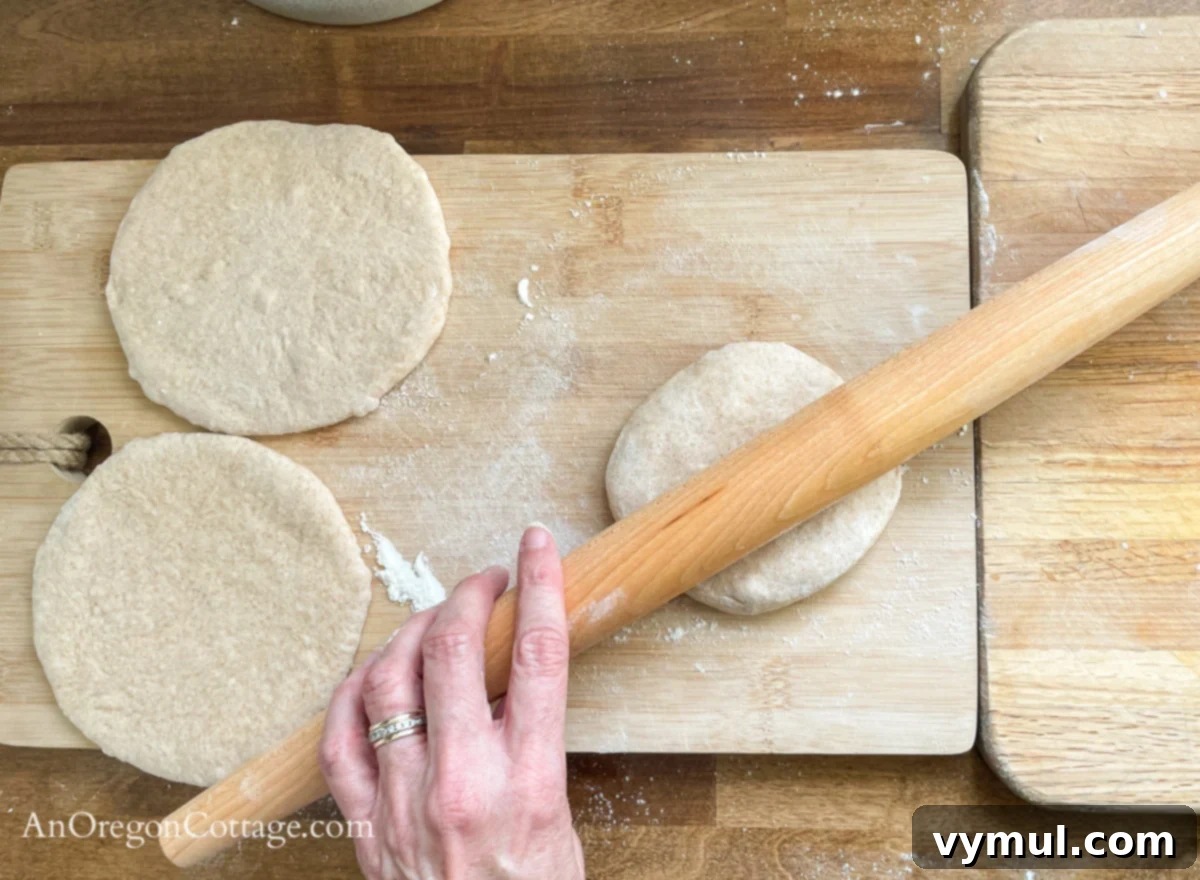
6. Roll Out the Pitas: Thin and Even
Once all your dough balls are shaped, let them rest for about 5 minutes. This brief rest period allows the gluten to relax, making the dough much easier to roll out. To be completely honest, I usually just start rolling the first set of balls as soon as I’m done shaping them all; by then, enough time has typically passed, and they roll out beautifully.
Working one at a time, place a dough ball on a lightly floured surface. Using a rolling pin (I adore my French rolling pin for its control), roll out each ball into a circle approximately 6 inches (15 cm) in diameter and about ¼ inch (0.6 cm) thick. Use as little flour as possible to prevent sticking, but enough so the dough doesn’t slide around. The goal is an evenly thin circle. Place the rolled pita on a separate cutting board, a pizza peel, or a clean baking sheet lined with parchment paper. Continue rolling out two or three pitas before moving on to baking.
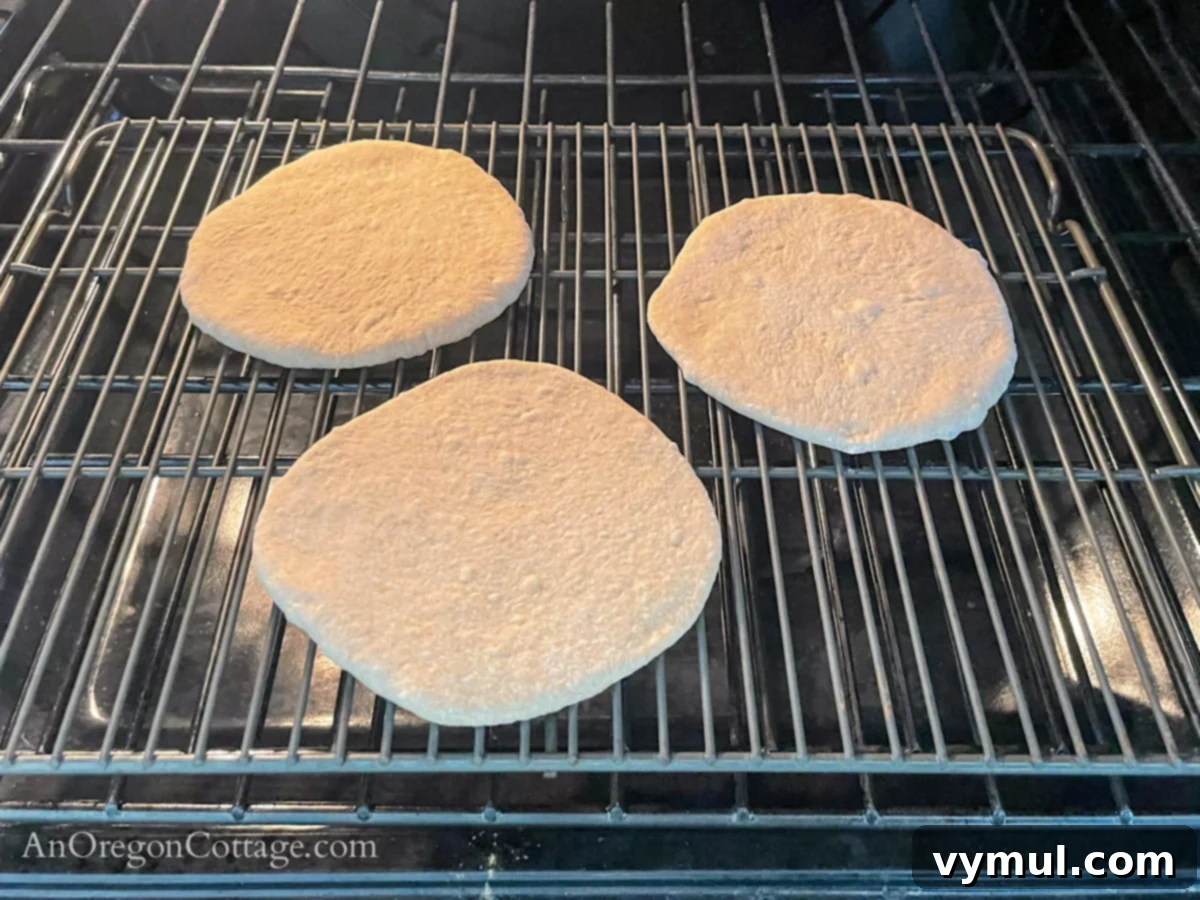
7. Bake the Pitas: Watch Them Puff!
For the best results, place a baking cooling rack directly on top of your oven rack. Alternatively, a baking stone works wonderfully if you have one, but a simple cooling rack is perfectly effective. Gently lay 2-3 of your rolled-out pitas directly onto the hot rack. Don’t fret too much about perfect shapes or if an edge slightly falls through a crack – they cook incredibly fast, and those charmingly imperfect shapes are a true testament to homemade goodness!
Set a timer for 4-5 minutes. In my oven, 4 minutes is usually perfect. The high heat will cause them to puff up dramatically. There is no need to flip or turn the pitas during baking. While one batch is cooking, continue rolling out the next set of pita dough balls, ensuring you have a continuous flow.
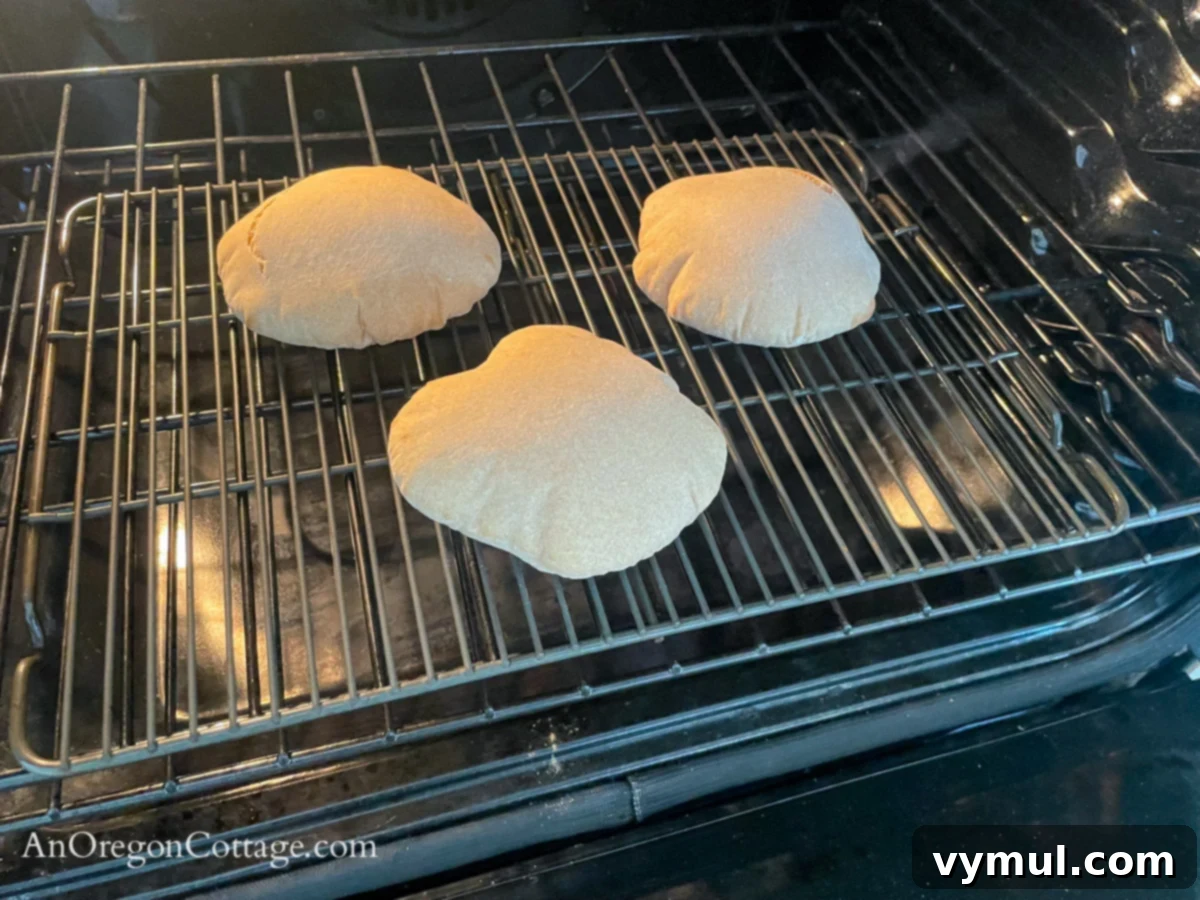
When you peek into the oven, you’ll be greeted by the delightful sight of beautifully puffy little pita pockets. It’s truly a moment of culinary magic, especially fun for kids to witness!
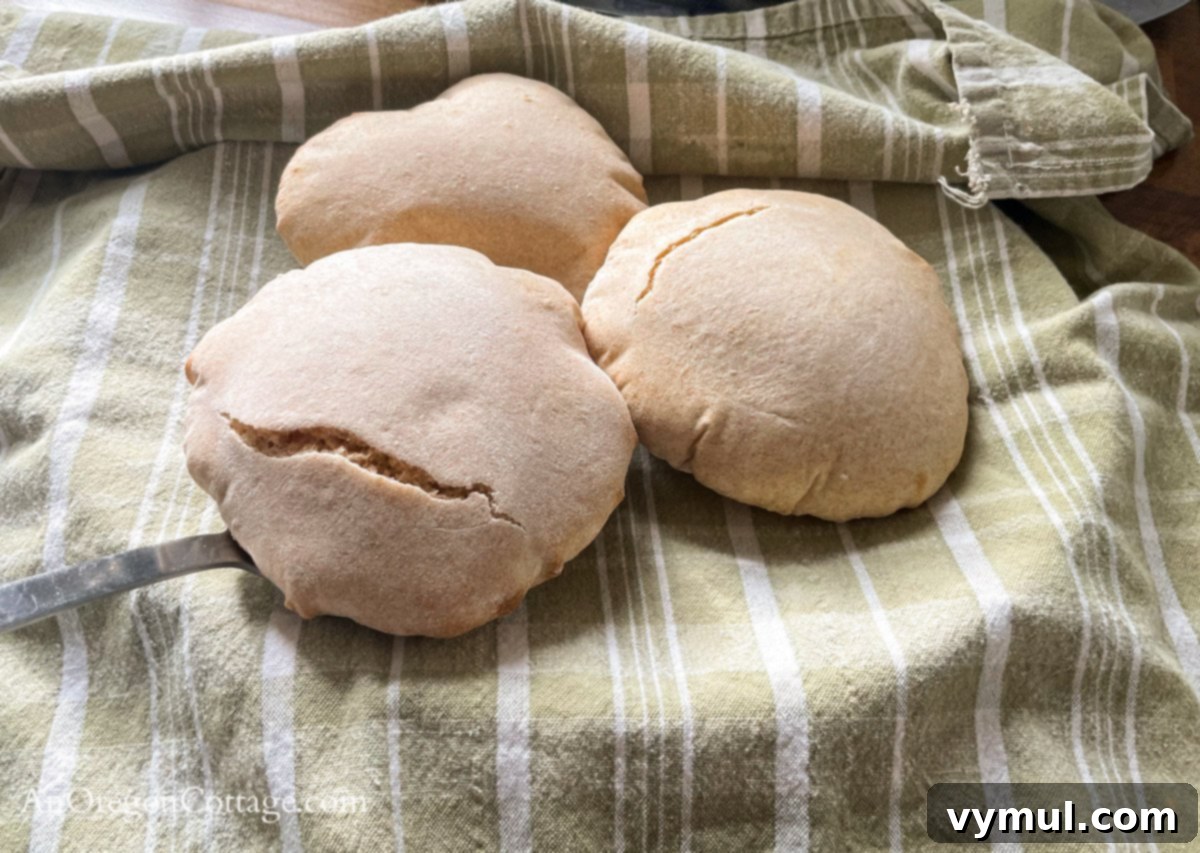
8. Cover & Continue Baking: Keeping Pitas Soft
As soon as you remove the baked pitas from the oven, immediately stack them together and wrap them completely in a clean kitchen towel. This is a crucial step to trap the steam and keep them wonderfully soft and pliable. If left exposed to the air, they will crisp up as they cool. Don’t delay! Immediately add the next set of prepared pitas to the hot oven, repeating the rolling and baking process until all your dough has been cooked. Continue to keep all the cooked pitas covered in the towel until you’re ready to serve or store them.
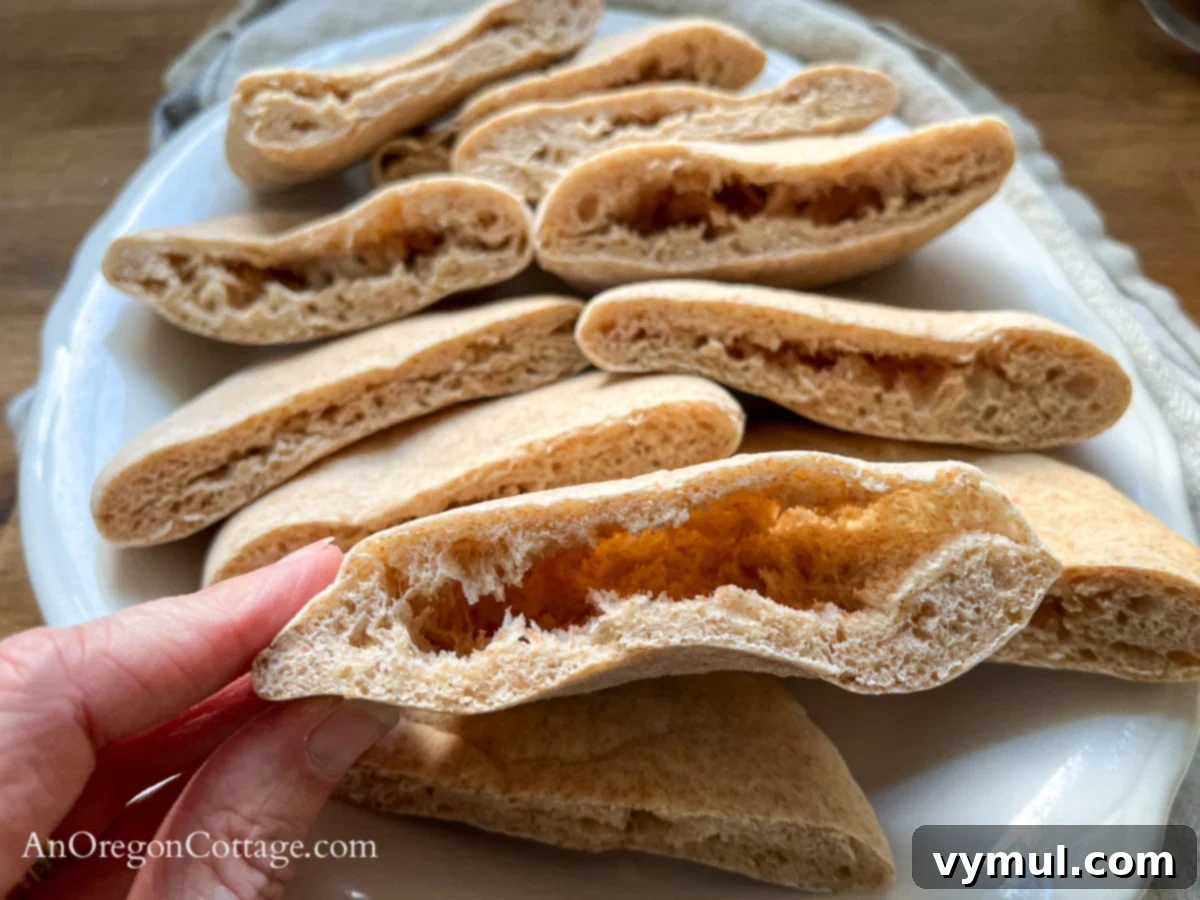
Once the pitas have cooled slightly, you can cut them in half to create perfect pockets for filling, or leave them whole to use as wraps or for dipping. Serve them warm for the best experience, or let them cool completely before freezing them for up to 3-6 months. They reheat beautifully!
Pita Bread Timeline: Hands-On Time vs. Total Time
Let’s break down the time commitment for this recipe. If you’re cooking 2-3 pitas at a time, you’ll have roughly 3 rounds of baking for eight pitas. This amounts to about 12 minutes of actual baking, perhaps 15 minutes if you include the initial rolling time for the first batch. It’s surprisingly efficient!
- Mixing Ingredients: 5 minutes
- Kneading Dough: 5 minutes
- First Rise: 1 hour (hands-off)
- Rolling and Baking: 15 minutes
That means you’re looking at only about 25 minutes of active, hands-on time for these incredible homemade pitas!
See? It really is incredibly easy and quick to have your own fresh, delicious whole wheat pita bread at home.
Pita Bread FAQs: Your Questions Answered
Pita bread is a beloved type of leavened flatbread that originated in the Middle East, particularly in regions west of the Mediterranean Sea. It’s traditionally made from a simple mixture of flour, water, yeast, salt, and olive oil, then baked at high temperatures in an oven or on a griddle. Its most distinguishing feature is the unique “pocket” that forms in the middle, allowing it to be easily opened and filled with a variety of delicious ingredients, from savory meats and vegetables to creamy dips.
When we visited Greece, we discovered that Greek pita, often referred to as Mediterranean pita or Greek flatbread, is quite different from the “pocket pita” many are familiar with. Greek pita typically does not have a hollow pocket. Instead, it’s a bit softer, thicker, and more pliable, designed to be folded or wrapped around fillings rather than stuffed into a pocket. It’s famously used as the traditional wrap for gyros, souvlaki, and often served alongside various mezze plates.
Absolutely! Pita bread freezes beautifully, making it an excellent candidate for meal prep. To freeze, ensure the pitas are completely cooled, then wrap them tightly in plastic wrap or aluminum foil. For extra protection against freezer burn, place the wrapped pitas in a freezer-safe bag. When you’re ready to enjoy them, you can thaw the bread at room temperature, gently warm it in the microwave, or even toast it lightly for a fresh-from-the-oven feel.
Pita bread is incredibly versatile and can be enjoyed in countless ways! Its natural pocket makes it ideal for stuffing with sandwich fillings like falafel, grilled chicken, hummus, or various vegetables. It also serves as an excellent base for quick pizzas, a perfect accompaniment to creamy dips such as hummus or baba ganoush, or a hearty side for soups and stews. Greek-style flatbread pitas are, of course, a must-have for classic gyros and wraps.
More Reader Raves for This Recipe!
“Spectacular and simple! Not a good bread maker but this was no fuss and they turned out splendidly!!” -Sarah
“Thank you for posting this recipe. After trying this recipe I will never purchase the ready made pita bread in the store.” -Kay
“I did it! I feel like a genius making my own pitas.” -The Sopers
Delicious Recipes to Serve With Your Homemade Pita Bread
- Homemade Hummus without Tahini
- Authentic Greek Salad Tips & Recipe
- Greek Tuna Salad with Artichokes, Olives & Feta
- Mediterranean Fish Bake
Print Recipe
Pin Recipe
SaveSaved!
Homemade Whole Wheat Pita Bread
Ingredients
- 2 ¼ cups whole wheat flour, such as regular whole wheat, spelt, or white whole wheat
- 1 cup unbleached all-purpose flour*
- 1 ½ teaspoons fine sea salt
- 1 ½ teaspoons instant yeast**
- 1 ⅓ cups warm water
- 2 tablespoons olive oil
Instructions
-
Combine all ingredients: In the bowl of a stand mixer (or a large bowl if kneading by hand), add the whole wheat flour, unbleached flour, salt, instant yeast, warm water, and olive oil. Mix until a shaggy dough forms.
-
Knead the dough: Attach the dough hook to your mixer and knead for 5 minutes, or knead by hand for about 8 minutes. The dough should become soft and slightly tacky to the touch, pulling away from the sides of the bowl but still sticking lightly to the bottom. Add a small spoonful of flour if it’s too sticky, being careful not to over-flour.
-
First rise: Lightly oil the bowl. Place the dough in the oiled bowl, turning once to coat. Cover the bowl tightly with plastic wrap or a reusable cover. Let the dough rise in a warm spot until it has doubled in size, typically 1 to 1½ hours.
-
Preheat oven: When the dough is nearly doubled, preheat your oven to a very hot 500°F (260°C). This high temperature is key to the pita puffing up.
-
Divide and shape dough: Turn the risen dough out onto a lightly floured surface. Cut the dough in half. Place one half under a slightly dampened cloth. Divide the other half into four equal portions, then shape each portion into a smooth ball. Place these shaped balls under the damp cloth. Repeat with the remaining dough half, so you have 8 dough balls in total.
-
Rest the dough balls: Let the dough balls rest for 5 minutes to relax the gluten, making them easier to roll.
-
Prepare baking surface: Place a baking/cooling rack directly on one of your oven racks (or use a preheated baking stone).
-
Roll out pitas: On a lightly floured surface, roll each dough ball one at a time into a circle about 6 inches (15 cm) in diameter and ¼ inch (0.6 cm) thick. Work with minimal flour to prevent sticking. Roll out 2-3 pitas before baking.
-
Bake the pitas: Gently place the rolled pitas directly onto the hot baking rack in the oven. Set a timer for 4 minutes. Observe for puffing and light browning. If needed, continue cooking for up to 1 more minute, but typically 4 minutes is sufficient. There is no need to turn them.
-
Prepare next batch: While the first pitas are baking, continue rolling out the next batch of dough balls so they are ready to go into the oven immediately.
-
Cover cooked pitas: As soon as you remove baked pitas from the oven, stack them and wrap them completely in a clean kitchen towel. This traps steam and keeps them soft.
-
Continue baking: Immediately add the next batch of rolled pitas to the oven, repeating the baking and covering process until all the dough has been cooked.
-
Serve or store: Serve your homemade pita bread warm, or allow it to cool completely before storing it in an airtight bag at room temperature for a day, or freeze for longer storage.
Notes
**If using active dry yeast instead of instant yeast, you will need to proof it first. Dissolve 1½ teaspoons of active dry yeast in about ¼ cup of the warm water for 5-10 minutes until it becomes foamy. Then, subtract this ¼ cup from the total water amount when adding it to the remaining ingredients.
Make Ahead Tips: Pita bread is best enjoyed on the day it’s made, but you can certainly bake it in the morning and keep it in an airtight container until needed later in the day. For longer storage, allow pitas to cool completely, then freeze them individually or stacked with parchment paper in a freezer-safe bag for 2 to 3 months. Thaw at room temperature or gently warm in the microwave or oven.
Nutrition
More Easy Breads to Try at Home
Click For Recipe
Click For Recipe
Click For Recipe
This recipe has been updated and enhanced for your baking pleasure. It was originally published in July of 2009.
Disclosure: Some links in this article are affiliate links. If you click on them and make a purchase, I will receive a small commission at no extra cost to you. Click here to read our full disclaimer and advertising disclosure.