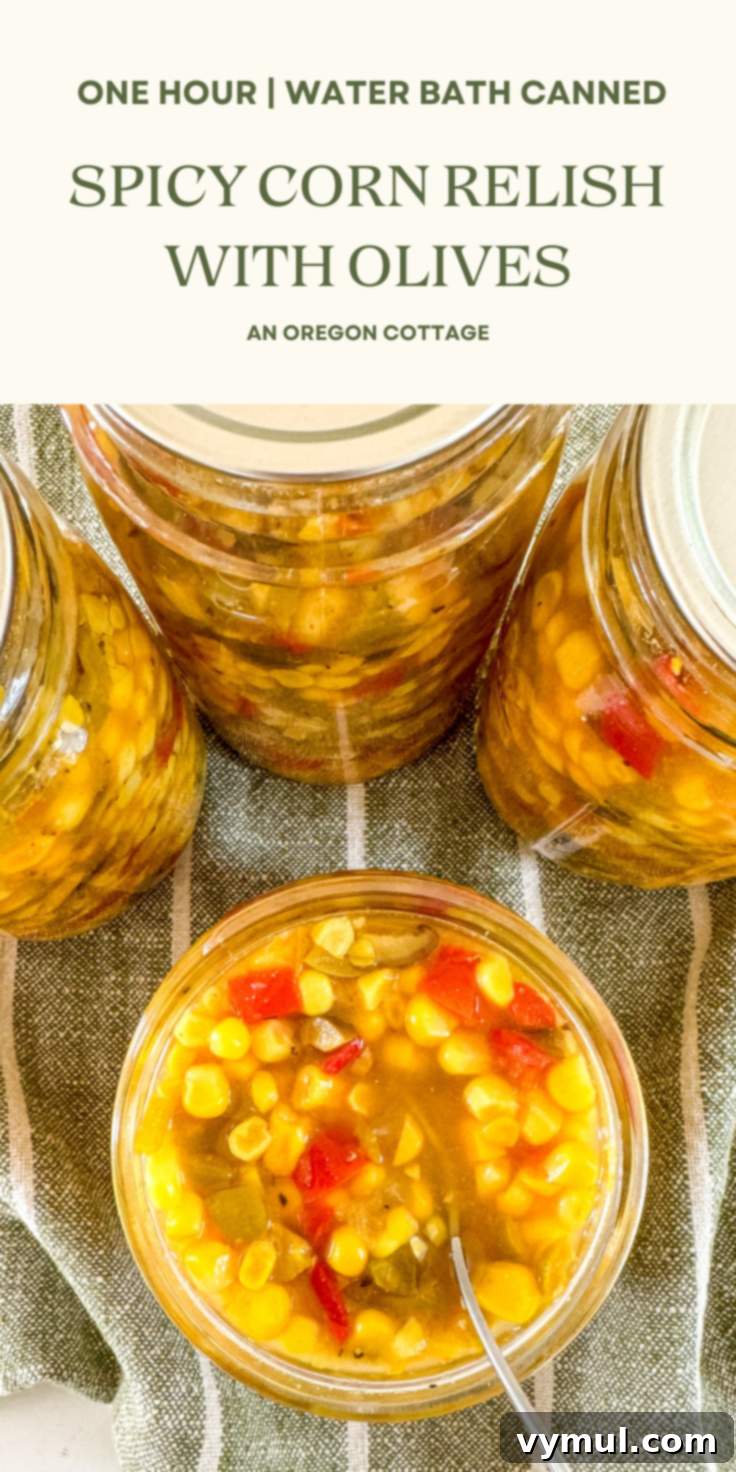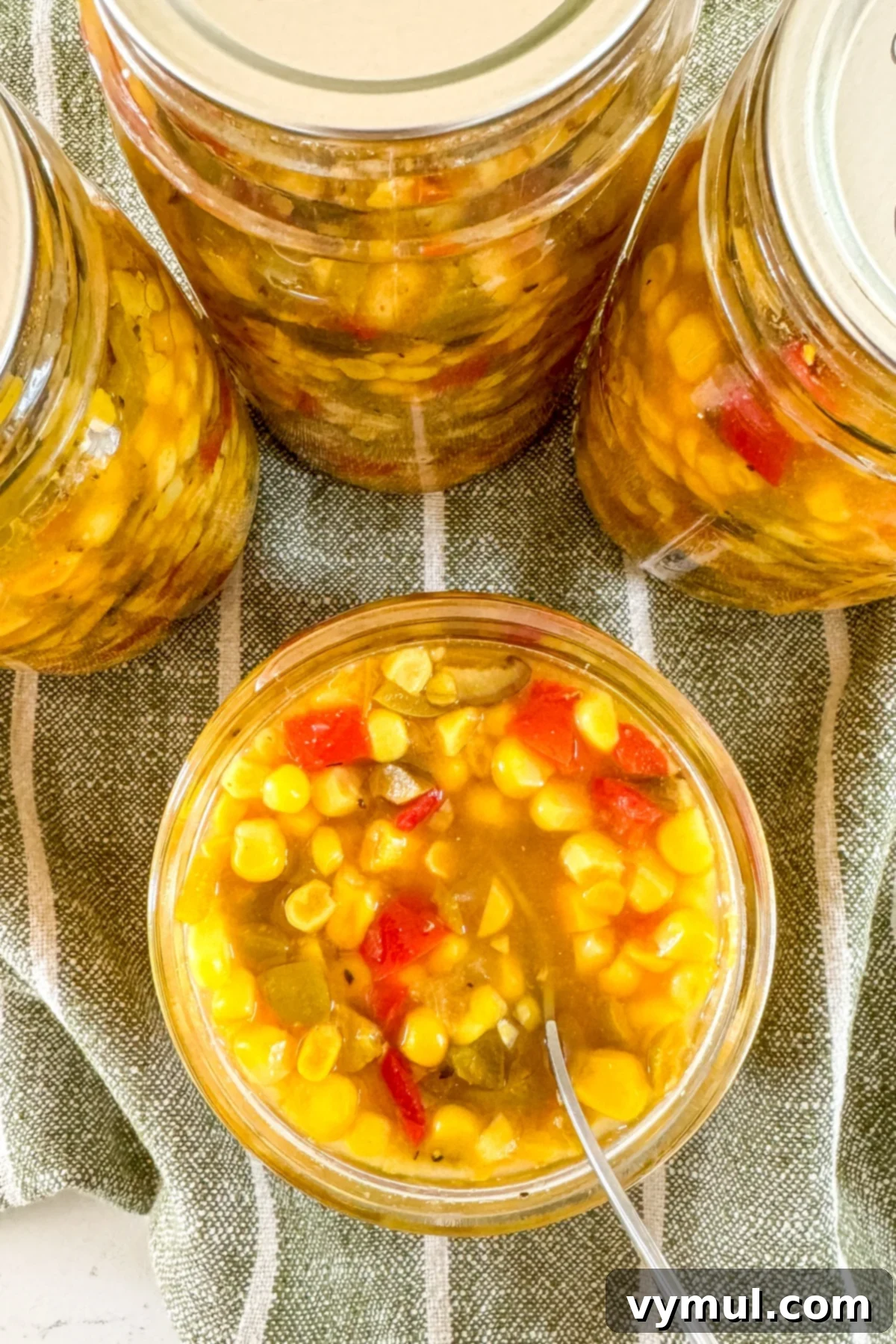
Spicy & Tangy Homemade Corn Relish with Olives: A Water Bath Canning Recipe for Year-Round Flavor
Prepare to elevate your culinary creations with this incredibly easy and utterly delicious homemade spicy corn relish recipe! Bursting with vibrant flavors, this relish combines the natural sweetness of corn with the zesty kick of hot peppers (customizable to your preference), the tangy bite of green olives, and the crisp freshness of red bell peppers. It’s the perfect condiment to add a “zip” to a wide array of dishes, transforming everyday meals into something special.
More than just a delicious topping, this recipe offers a fantastic way to utilize the abundance of seasonal corn and other produce. By employing the straightforward technique of water bath canning, you can preserve this delightful relish, ensuring you have a taste of summer on your pantry shelves all year long. Imagine topping juicy burgers, adding flair to nachos, or enhancing simple salads with this homemade goodness – your family and friends will undoubtedly request it again and again!
Seeking more delicious corn-centric recipes? Be sure to explore our Simple Corn, Pepper and Onion Sauté for a quick side, dive into the comforting Creamy Fresh Baked Corn Recipe (a consistent family favorite!), or try the savory Simple Sausage Pie with Corn & Easy Press-in-Pan Crust.
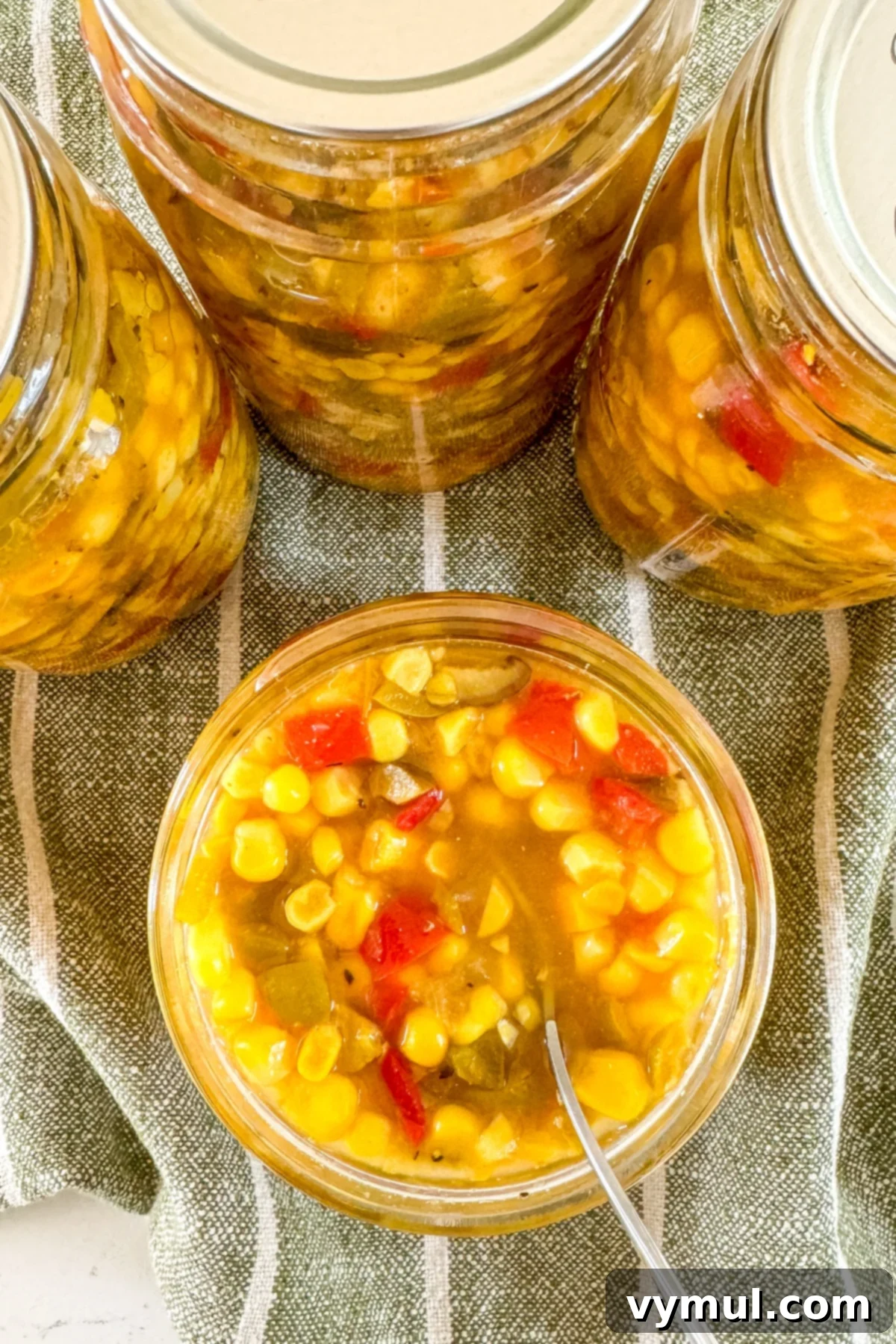
This particular corn relish recipe has become a staple in our home because it perfectly balances all the elements we adore: a delightful tanginess from the vinegar, a customizable level of spice from the peppers, and a natural sweetness derived directly from the fresh corn. What truly sets this condiment apart, however, is the inclusion of green olives. Their distinctive briny and tangy flavor elevates the entire relish, taking it from merely good to absolutely outstanding.
Over the years, as we’ve consistently preserved our abundant corn harvests (made remarkably simple with this truly weed-free planting method!), I’ve experimented with various canned corn relish recipes. While many were passable, none quite captured the “wow” factor we were seeking. They simply didn’t stand out, unlike this fermented corn relish which is an absolute sensation on salads and tacos, though it offers a shorter shelf life.
My quest for the perfect canned corn relish finally led me to a version from Better Homes and Gardens that featured a green olives variation. The idea of incorporating olives immediately intrigued me, and I knew I had to test it to see if their unique flavor would make the difference I was looking for. Of course, no recipe is truly “mine” until I’ve put my own spin on it, especially when it comes to canning. I made several safe adjustments, replacing the plain green bell peppers with a mix of mild and spicy hot peppers, and significantly reducing the sugar content – even offering an option for zero added sugar!
The result of these careful modifications is this truly next-level corn relish canning recipe. It’s been an instant hit, finding its way onto everything from savory tacos and loaded nachos to juicy burgers, crisp salads, and satisfying wraps. The flavor profile is simply unparalleled, offering a burst of freshness and spice with every bite. I genuinely hope you’ll give this recipe a try and discover for yourself just how incredibly delicious and versatile it is.
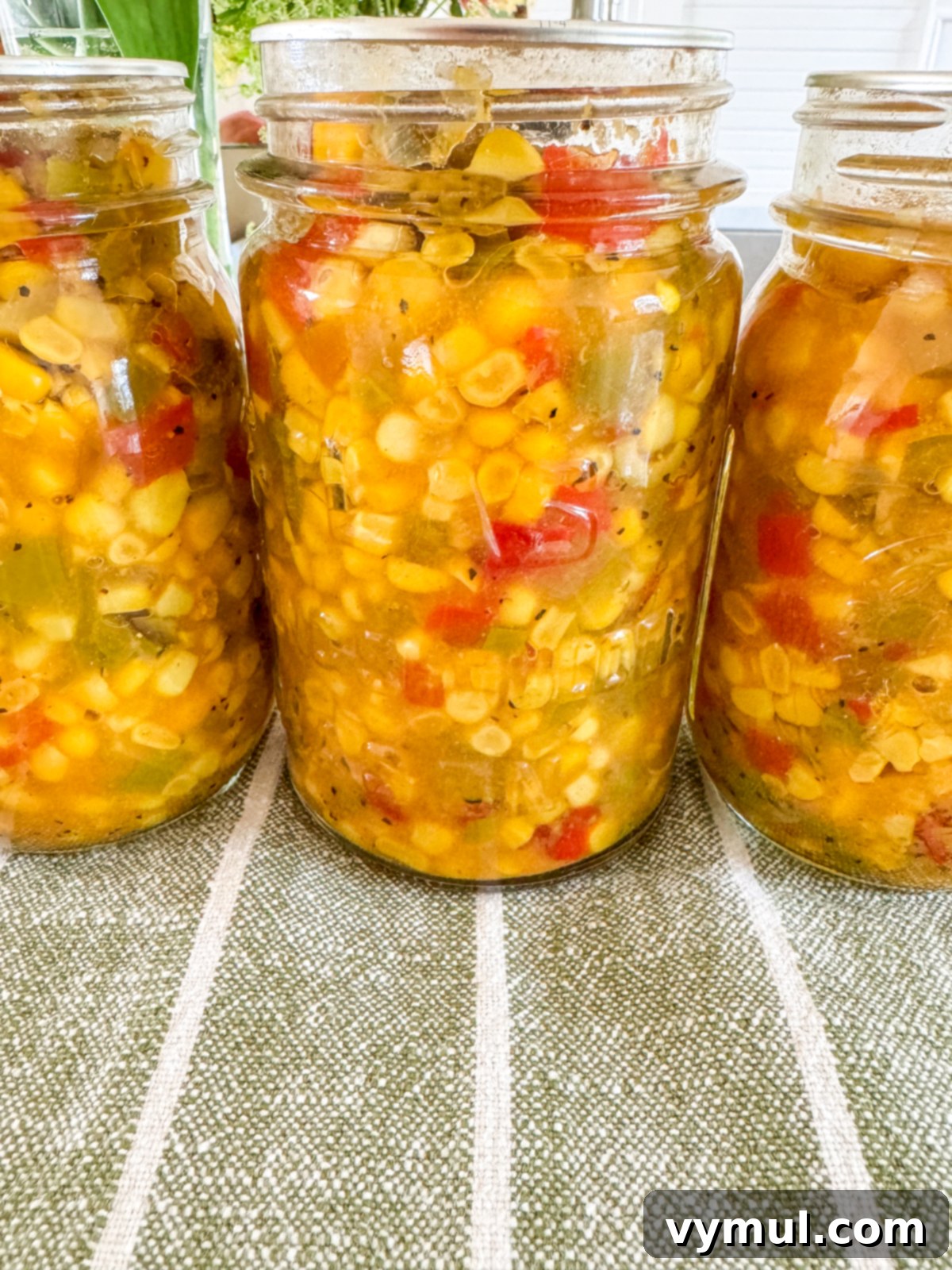
Ingredient Notes & Safe Substitutions for Canning
When undertaking water bath canning, adhering to tested recipe ratios is paramount for safety. While many elements must remain consistent, there’s still room for customization with certain ingredients like dry spices, sugar, and the types (but not the total quantity) of vegetables. Here are some key areas where you can safely adapt this recipe to suit your taste:
- Corn Kernels: While fresh corn off the cob is ideal for its sweetness and texture, you can also use frozen corn. If using frozen, ensure it is fully thawed and drained before adding it to the pot to avoid excess liquid. Aim for plump, sweet kernels for the best flavor.
- Peppers: The recipe calls for a total of 4.5 cups of chopped peppers. This amount is crucial for the overall volume and acidity balance, but the specific types of peppers are flexible.
- For less spice: Completely omit the diced jalapeño. You can replace it with an equal volume of sweet bell peppers (red, yellow, or orange) or even more mild green hot peppers like poblanos.
- For more spice: Increase the amount of jalapeños, or introduce a small quantity of hotter peppers such as serranos or habaneros (use with caution and appropriate safety measures like gloves).
- Color variety: Feel free to use a mix of red, yellow, and orange bell peppers for a visually appealing relish.
- Olives: The green olives are a signature flavor in this relish, providing a wonderful tangy, briny element. If green olives are not to your liking, you can certainly substitute them with an equal quantity of canned black olives, which offer a milder, fruitier note. Ensure all olives are pitted and coarsely chopped.
- Vinegar: The acidity of the vinegar is critical for the safety of water bath canning. The recipe specifies 4 cups of vinegar. You can use all white distilled vinegar, or you may use 3.5 cups of vinegar combined with 0.5 cup of bottled lime or lemon juice. It is crucial to use *bottled* citrus juice, not fresh, as bottled juices have a consistent, standardized acidity level necessary for canning safety. Do not reduce the total liquid acid amount.
- Honey/Sweetener: The original recipe called for a substantial amount of sugar (nearly 2 cups!). I found that the natural sweetness of fresh corn, combined with the other flavors, meant such a high sugar content was unnecessary and often too sweet for our preference. I’ve reduced it to 1/3 cup of honey and now often omit it entirely. You have the flexibility to adjust the sweetener to your taste, or even leave it out for a less sweet, more savory relish. If honey isn’t suitable, cane sugar can be used as a direct substitute. Remember, sugar is for flavor and texture, not for canning safety in this high-acid recipe.
- Dry Seasonings: The combination of dry mustard, salt, black pepper, granulated garlic powder, and optional cayenne, turmeric, and cumin creates a complex and delicious flavor profile. These dry spices do not impact the safety of the canning process, so you can freely adjust their quantities or omit any that you don’t prefer. Just remember to use granulated garlic powder, not fresh garlic, as fresh garlic has a different pH and can compromise safety in canning.
Let’s Make This Delicious Corn Relish Recipe
You’ll be delighted by how straightforward this recipe is, making it perfect for both seasoned canners and adventurous beginners. The full, detailed instructions with precise ingredient measurements are conveniently located in the printable recipe card below. For now, let’s walk through the main steps to give you a clear overview and some helpful tips.
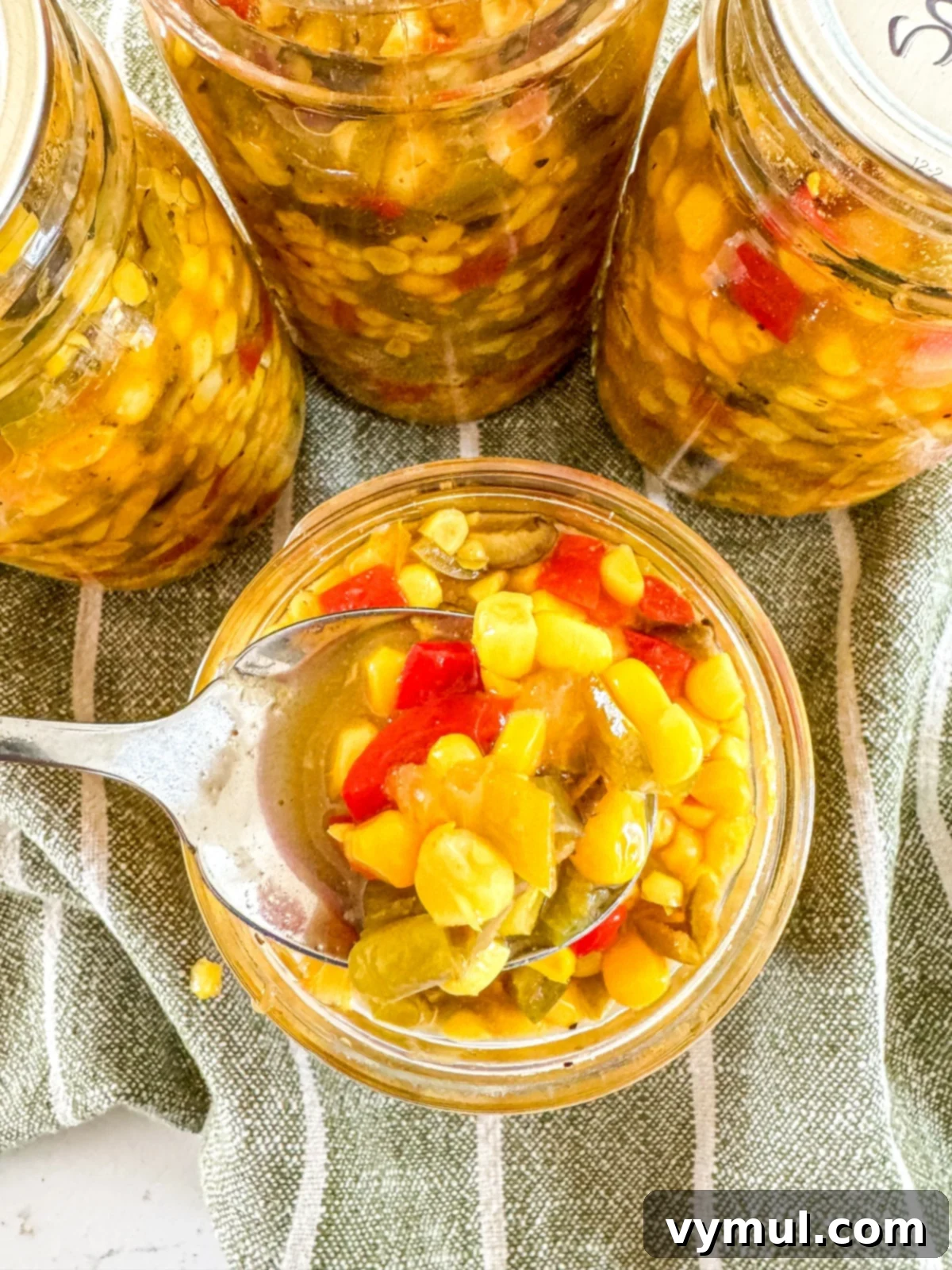
The entire process boils down to three simple, manageable steps:
- Prep and Combine All Ingredients in a Large Stockpot: This is truly the easiest part! Begin by thoroughly preparing all your vegetables: chop the red peppers, mild green hot peppers, jalapeños (if using), and onion. Coarsely chop the green or black olives. If using fresh corn, cut the kernels off the cobs. Add all these prepared ingredients, along with the specified vinegar, honey (if using), dry mustard, salt, black pepper, granulated garlic powder, and any optional spices like cayenne, turmeric, or cumin, into a single large, non-reactive stockpot. A 12-quart pot is ideal for comfortably holding all ingredients, but an 8-quart pot will also suffice if carefully managed to prevent overflowing during boiling.
- Cook the Relish & Prepare Canning Supplies: Once all ingredients are in the pot, bring the mixture to a rolling boil over medium-high heat. Stir occasionally to prevent sticking and ensure even cooking. After it reaches a boil, reduce the heat to a gentle simmer and let it cook for approximately 25 minutes. This simmering time allows the flavors to meld beautifully and the vegetables to soften to the perfect relish consistency. While the relish is simmering, you can efficiently prepare your canning equipment. Fill your water bath canner (a stainless steel canner is highly recommended for its durability and even heating) with water and begin heating it. Wash six pint-sized canning jars, their new lids, and reusable rings in hot, soapy water. Keep the jars warm to prevent thermal shock when filling them with hot relish. Set up a clean, organized filling station with essentials like a damp cloth for wiping jar rims, a canning funnel for neat filling, a jar lifter for safe handling of hot jars, and a non-metallic spatula or chopstick for removing air bubbles. A small tray can be a useful addition to catch any spills and make cleanup effortless.
- Fill Jars and Process in the Canner: Once the relish has simmered for the designated time, it’s time to fill your jars. Working with one warm pint jar at a time, use your canning funnel to carefully ladle the hot relish into the jar, leaving a precise ½-inch headspace at the top. This headspace is crucial for proper sealing and vacuum formation. Insert your non-metallic spatula or chopstick down the sides of the jar to release any trapped air bubbles. Adjust the headspace again if necessary by adding or removing a small amount of relish. Wipe the rim of the jar thoroughly with the damp cloth to ensure a clean sealing surface. Center a new lid on the jar and screw on a ring finger-tip tight (meaning just snug, not overly tightened, to allow air to escape during processing). Place the filled jar onto the elevated canning rack in your hot canner. Repeat this process with the remaining jars. If you end up with a small amount of relish that doesn’t completely fill a jar, simply refrigerate it and enjoy it fresh! Once all jars are in the rack, carefully lower the rack into the water, ensuring the jars are covered by at least 1-2 inches of water. Bring the water back to a full, rolling boil and begin timing for 15 minutes, adjusting for your specific altitude as needed (consult a canning guide for altitude adjustments). Maintain a steady, even boil throughout the processing time. After 15 minutes, turn off the heat, remove the canner lid, and allow the jars to rest in the hot water for an additional 5 minutes. This helps to equalize the temperature and reduce the chances of siphoning. Finally, use the jar lifter to carefully remove the hot jars, placing them upright on a towel-lined surface where they can cool undisturbed for 12-24 hours. During this cooling period, you’ll hear the satisfying “ping” as the lids seal.
Need a comprehensive water bath canning refresher or a detailed tutorial? Visit this page for all the step-by-step instructions, complete with a helpful video to guide you through the process.
Jami’s Favorite Canning Essentials
For those looking to invest in reliable canning equipment, here are some personal recommendations:
I highly recommend this exact stainless steel canner model, which I’ve been using successfully since 2016. Its flat bottom makes it suitable for glass-top stoves, and the glass lid allows for easy monitoring of the water bath.
Within this canner, I use a flat rack similar to this one – I’ve found flat racks superior to divided ones and wouldn’t go back!
If you have an induction stovetop, or simply want a newer, highly-rated option, here’s a canner-rack combo with excellent reviews (though at a slightly higher price point) that is specifically designed to work with induction cooktops.
Storage and Enjoyment
Once your jars have cooled completely (typically after 12-24 hours), it’s essential to check their seals. To do this, gently press the center of each lid; it should not flex or pop. Another method is to remove the screw bands and gently try to lift the lid with your fingertips. A properly sealed lid will remain firmly attached. Any jars that haven’t sealed securely should be refrigerated immediately and consumed within three months.
For properly sealed jars, remove the screw bands (these can be washed and reused for future canning projects) and label each jar with the contents and the date (month and year). Store your jars in a cool, dark, and dry place, such as a pantry shelf or cellar. Stored correctly, this vibrant corn relish will maintain its quality and flavor for up to 18 months, allowing you to enjoy the taste of summer long after the season ends.
Canning Alternative (Refrigeration Method): If you prefer not to water bath can, you can still enjoy this delicious relish! Simply prepare the relish as instructed, then transfer it into clean jars and store them in the refrigerator. In the fridge, the relish will keep wonderfully for up to three months, making it a fantastic make-ahead condiment for shorter-term enjoyment.

What is Corn Relish Used For? Endless Culinary Possibilities!
The versatility of this spicy corn relish is truly one of its greatest assets. Its bright, tangy, and subtly spicy profile makes it an exceptional addition to a vast array of dishes, offering a fresh burst of flavor wherever it’s used. Here are some fantastic ways to incorporate this homemade condiment into your meals:
- Tacos and Burritos: Spoon it generously over your favorite tacos, especially with grilled fish or shrimp tacos, for a vibrant and zesty topping. It also adds a wonderful texture and flavor inside breakfast burritos.
- Nachos & Enchiladas: Elevate a plate of loaded nachos or a pan of bubbling enchiladas with a generous sprinkling of corn relish for added freshness and crunch.
- Grilled Meats & Poultry: Serve it alongside grilled chicken, steak, or pork chops as a bright, refreshing condiment that cuts through the richness of the meat.
- Quesadillas & Wraps: Fold it inside a simple cheese quesadilla or spread it inside chicken or veggie wraps for an instant flavor boost.
- Green Salads: Use it as a vibrant and flavorful spoonful to top a simple green salad, offering texture and a tangy dressing alternative.
- Hot Dogs & Sausages: Move beyond traditional condiments! A dollop of this relish on a hot dog, bratwurst, or sausage dog is a game-changer.
- Burgers & Pulled Pork: Brighten up a classic beef burger, turkey burger, or a hearty pulled pork sandwich with a spoonful of this relish instead of pickle.
- As a Dip: Serve it chilled as a unique and refreshing dip for tortilla chips or sturdy crackers.
- Grilled Cheese Sandwiches: Add a layer of corn relish to your grilled cheese for an unexpected burst of flavor and texture that complements the melted cheese beautifully.
- Eggs & Omelets: Stir it into scrambled eggs or spoon it over a freshly made omelet for a delightful breakfast or brunch upgrade.
- Chili & Stews: Offer it as a fresh, bright garnish for bowls of chili, hearty stews, or even a simple black bean soup.
- Sandwiches: Spread it on any sandwich or sub for an added layer of zest and garden-fresh taste.

More Questions Answered About Corn Relish
While technically possible, I generally don’t recommend freezing corn relish, primarily due to potential texture changes. The high vinegar content means this relish keeps exceptionally well in the refrigerator for months, making freezing a less ideal option. Freezing can sometimes cause the vegetables to become softer or mushier upon thawing, which might compromise the crisp, vibrant texture we aim for in this relish. If you must freeze, ensure it’s in airtight, freezer-safe containers and leave adequate headspace for expansion.
Absolutely! When it comes to water bath canning, safety is my utmost priority, and I adhere strictly to tested recipes, only modifying elements that do not impact the critical acid-to-low-acid ingredient ratio. For this particular recipe, I began with a published recipe from a reputable source, Better Homes and Gardens preserving magazine, which included the unique olive variation. However, recognizing the importance of consistent acidity, I cross-referenced and adjusted ratios with the National Center for Home Preservation’s basic corn relish guidelines. This involved strategically increasing the vinegar content beyond the original BHG recommendation, thereby boosting the overall acidity of the relish. Combined with the reduction in sugar (which does not affect canning safety in high-acid recipes), the result is a relish that is not only better tasting – less sweet and more savory – but also unequivocally safer for water bath canning. You can prepare and enjoy this recipe with full confidence in its safety.
Corn relish is deeply rooted in the culinary traditions of the Southern United States. It emerged as a practical and delicious way to preserve the abundant corn harvests, particularly during the late summer and early fall months. Historically, relishes and pickles were essential for extending the shelf life of fresh produce before modern refrigeration. Over time, various regional variations developed, incorporating local spices and vegetables, but the core concept of a tangy, sweet, and often spicy corn condiment remains a hallmark of Southern American cuisine.
For the best results, sweet corn (such as ‘Silver Queen,’ ‘Mirai,’ or ‘Peaches and Cream’) is highly recommended. Its natural sweetness perfectly complements the tangy and spicy elements of the relish. Freshly picked corn, straight from the cob, will provide the most vibrant flavor and crisp texture. If fresh is unavailable, good quality frozen corn kernels (thawed and drained) are an excellent alternative.
For canning safety, it is imperative to use vinegar with at least 5% acidity. Distilled white vinegar is the most common choice due to its clear color and neutral flavor, allowing the other ingredients to shine. Apple cider vinegar (also 5% acidity) can also be used for a slightly fruitier flavor, but it will make the relish a darker color. Do NOT use homemade vinegars or vinegars with unknown acidity levels, as this can compromise the safety of your canned goods.
I genuinely hope you thoroughly enjoy preparing and savoring this exceptional spicy corn relish recipe! If you do make it, please take a moment to leave a rating and review on the site. Your feedback is invaluable and helps me understand how much you loved it!

Print Recipe
Pin Recipe
SaveSaved!
Spicy Corn Relish Recipe with Olives (Water Bath Can)
Equipment
-
8 to 12-quart stockpot
-
water bath canner
-
6 pint canning jars
-
6 lids (new) and rings (can be used)
Ingredients
- 8 cups corn kernels, about 16 medium ears (fresh or thawed frozen)
- 2 cups chopped sweet red pepper, about 2 large (or other colors)
- 2 cups chopped mild green hot peppers, like poblano or anaheim
- 1/2 cup diced jalapeno peppers (can omit for less spice, or increase for more)
- 1 cup chopped onion
- 1 cup coarsely chopped green olives or black olives, pitted
- 4 cups distilled white vinegar option: 3.5 cups vinegar + 1/2 cup bottled lime or lemon juice (5% acidity)
- 1/3 cup honey optional, or cane sugar (see notes)
- 1 tablespoon dry mustard
- 2 teaspoon salt, to taste (canning salt preferred)
- 2 teaspoon black pepper, freshly ground preferred
- 1 teaspoon granulated garlic powder (do not use fresh garlic for canning safety)
- 1 teaspoon cayenne pepper, optional, for extra heat
- 1 teaspoon turmeric, optional, for color and flavor
- 1 teaspoon cumin. optional, for a smoky depth
Instructions
-
Add all the prepared ingredients (corn, peppers, onion, olives, vinegar, honey/sugar if using, and all dry seasonings) into a large, non-reactive stockpot (such as stainless steel). Stir well to combine. Bring the mixture to a rolling boil over medium-high heat, stirring occasionally. Once boiling, reduce the heat to a gentle simmer and continue to cook for 25 minutes, allowing the flavors to meld and vegetables to soften slightly.
-
While the relish is cooking, prepare your boiling water canner. Fill it with water and begin heating. Wash and sterilize 6-7 pint jars, ensuring they are hot when filled. Prepare new canning lids and clean rings. Refer to this detailed video for a comprehensive step-by-step guide on water bath canning. (See notes below for a canning alternative if you prefer not to process.)
-
Working with one warm pint jar at a time, use a canning funnel to carefully pack the hot relish into the jar, leaving exactly 1/2 inch of headspace (the empty space between the food and the rim of the jar). Run a non-metallic spatula or a chopstick around the inside of the jar to release any trapped air bubbles. Re-check the headspace and adjust if necessary. Wipe the rim of the jar thoroughly with a clean, damp cloth to ensure a perfect seal. Center a new lid on the jar, then screw on a band finger-tip tight (do not overtighten). Place the filled jar onto the elevated rack inside your canner. Repeat this process with the remaining jars. If you have a small amount of relish leftover that doesn’t fill a jar completely, simply refrigerate it to enjoy fresh.
-
Once all jars are filled and prepared, carefully lower the canning rack into the canner, ensuring the jars are covered by at least 1-2 inches of water. Place the lid on the canner. Bring the water to a vigorous, rolling boil and begin timing for 15 minutes to process the jars. Remember to adjust the processing time if you are canning at an altitude higher than 1000 feet above sea level (consult a reliable canning chart). Throughout the process, monitor the canner to ensure the water maintains a steady, even boil without boiling too aggressively.
-
When the 15-minute processing time is complete, turn off the heat and carefully remove the canner lid. Allow the jars to rest undisturbed in the hot water for an additional 5 minutes. This crucial resting period helps to prevent siphoning (liquid loss from jars) and ensures a stronger seal. After 5 minutes, carefully remove the jars one at a time using a jar lifter and place them upright on a towel-lined surface or a cooling rack. Ensure they are not touching each other and are in an area where they will not be disturbed for 12-24 hours.
-
After the jars have completely cooled (usually 12-24 hours), remove the screw bands. Check all the seals by gently pressing down on the center of each lid; it should not flex. Alternatively, try to lift the lid with your fingertips; it should remain firmly sealed. Any jars that did not seal (which is rare if all steps are followed correctly!) should be immediately refrigerated and consumed within three months.
-
Label and date the sealed lids with the contents and the month/year of canning. Store the jars in a cool, dark, and dry place (like a pantry) for optimal flavor and quality retention. This corn relish will be best enjoyed within 18 months.
Notes
Canning Alternative (Refrigeration): If you prefer not to engage in the water bath canning process, you can simply prepare the relish, transfer it into clean jars, and store it in the refrigerator. This method will keep the relish wonderfully fresh for up to three months.
–High Altitude Adjustment: If you are processing your jars at an altitude higher than 1000 feet above sea level, you will need to adjust the processing time according to established guidelines. Please refer to this Ball Mason Jars chart or a similar reliable canning resource for the correct adjustments.
–Unsealed Jars: In the rare event that some of your jars do not seal properly after cooling, do not re-process them. Instead, store these unsealed jars in the refrigerator and prioritize consuming their contents within three months.
Nutrition