
The Ultimate Guide to Spring Garden Clean Up: Achieve Beautiful, Weed-Free Flower Beds All Season Long
Welcome the warmer days with an invigorating spring garden clean up! This comprehensive guide will walk you through transforming your flower beds from winter dormancy to vibrant life. Discover effective techniques for cutting back old growth, diligent weeding, and maintaining a weed-free environment throughout the entire growing season, ensuring you can fully enjoy the beauty of your blooms. We’ll share inspiring before-and-after transformations and proven strategies to simplify your garden maintenance.

For any dedicated gardener, the arrival of late winter and early spring signals an exciting transition: the time to get those garden beds cleaned up, refreshed, and perfectly prepared for the new season. This annual ritual is more than just tidying; it’s an essential step in fostering healthy plant growth, maximizing blooms, and minimizing future garden chores. There’s an undeniable satisfaction that comes with seeing your garden beds emerge from their winter slumber, ready to burst forth with new life.
You can likely relate to the profound sense of accomplishment when major garden tasks are completed early in the season. For instance, achieving two significant milestones by mid-March sets the stage for a productive and enjoyable spring:
- The vegetable garden receives its initial awakening, often involving crucial tasks such as mulching the asparagus beds, strategic pruning of fruit trees and bushes, meticulous removal of all dead plant material, and preparing specific beds with mulch, making them ready for early plantings like peas and spinach.
- A high-visibility flower bed, typically one close to the house, is thoroughly cleaned and meticulously weeded, instantly enhancing the curb appeal of your home.
While I’ve previously shared detailed insights into prepping the vegetable beds, this article will focus specifically on sharing proven tips and effective techniques for the essential spring cleaning of your ornamental flower beds. This proactive approach is key because if you tackle these tasks as soon as weather permits, you can dramatically reduce weeding and maintenance for the rest of the season. This isn’t just an optimistic claim; it’s a game-changer for garden lovers.
To illustrate these techniques, we’ll use a specific shrub and perennial bed, visible in the initial photo above, as our prime example. While it now appears neat and tidy, it began that morning looking quite different, a common sight for many gardeners after winter:

Indeed, this is the very same bed, I assure you. The image starkly reveals brown, desiccated stalks from the previous year, intertwined and mingling with the vibrant new spring growth that has already begun to fill out the space. This mix of old and new, alongside the inevitable presence of weeds, serves as a clear indicator of the work ahead. Far from being a deterrent, this initial state makes it easier to identify precisely what needs to be done, highlighting the areas requiring attention.
Why Cleaning Your Garden in Spring is Often Best
Many gardeners, myself included, opt for a spring garden clean-up rather than tackling the extensive work in the fall. There are several compelling reasons why this timing proves more advantageous for both the gardener and the garden itself:
- Fall Busyness: In the autumn months, the focus often shifts to harvesting and preserving the bountiful produce from the garden. This intensive period leaves little time or energy for the substantial task of general garden clean-up, making spring a more practical window.
- Winter Protection: A significant benefit of leaving plant debris in place over winter is the natural insulation it provides. The dried stalks and foliage act as a protective blanket, helping to shield plant crowns and roots from harsh winter temperatures, frost heaving, and desiccating winds, thereby improving overall plant survival.
- Wildlife Support: Dried flower heads often contain seeds that serve as a vital food source for birds during the lean winter months. Leaving these in place contributes to local biodiversity and supports beneficial wildlife through the colder season.
- Optimal Pruning Times: Many plants, particularly roses and certain shrubs, benefit most from spring pruning. This timing allows you to assess winter damage, remove dead wood, and shape the plant just as it’s emerging from dormancy, promoting vigorous new growth and abundant blooms.
Furthermore, in regions like the western Oregon valley where I reside, gardens often maintain their beauty well into October. This extended period of aesthetic appeal means there’s less motivation to perform a thorough clean-up until November. By then, however, the focus quickly shifts to the busy holiday season, making gardening tasks less of a priority. Consequently, early spring becomes the ideal and most practical time to rejuvenate the garden.
Your Step-by-Step Spring Garden Clean Up Strategy
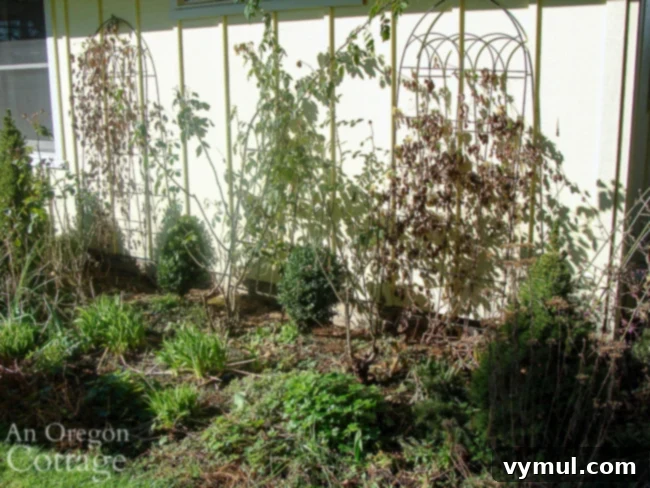
Let’s delve into the transformation of our example bed. This particular shrub and perennial bed measures approximately 6 x 20 feet and is thoughtfully planted with a mix of resilient evergreen shrubs, elegant roses, and various perennials. The entire transition from the “before” state (as seen above) to its beautifully refreshed “after” state took a mere one and a half hours – a testament to the efficiency of this systematic approach:
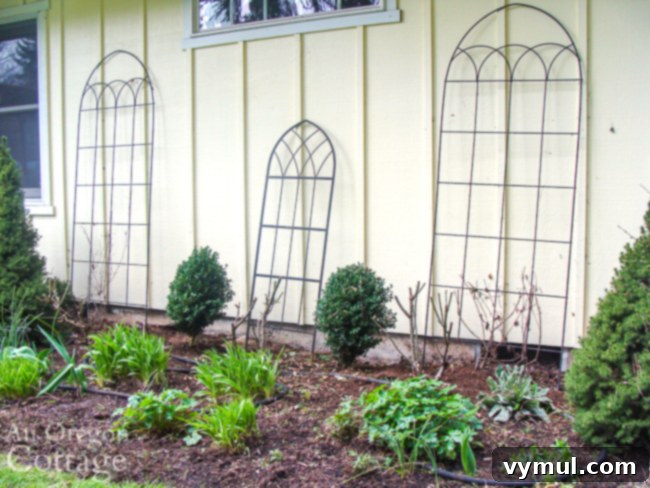
Here’s how to efficiently tackle a spring garden clean-up like this:
- Prioritize Tallest, Most Overgrown Plants: Begin your clean-up by addressing the largest and most unwieldy plants first. In this specific bed, the roses and clematis were the primary candidates. I meticulously cut all these back to a height of approximately 2-3 feet. For the shrub rose varieties, given our persistent issue with black spot disease in this climate, a hard prune has proven most effective. While this might delay their initial flowering slightly, it significantly contributes to much healthier growth, particularly at the start of the season. The clematis varieties in this bed exhibit vigorous growth, often extending many feet annually, so a robust cutback ensures they remain appropriately sized and structured for their trellises.
- Prune Evergreens as Needed: This early spring period is the most opportune time for pruning and shaping your evergreens. Doing so before the surrounding perennials fully emerge and grow larger will provide easier access and better visibility, allowing for more precise work. In our example bed, I focus primarily on shaping the boxwoods to maintain their desired size and form within the garden’s design. Remember to use sharp, clean pruners to ensure healthy cuts.
- Methodical Weeding and Dead Plant Removal: Systematically work your way across the bed, starting from one side and progressing to the other. This ensures no areas are missed. Diligently pull out all weeds, making sure to remove as much of the root system as possible to prevent regrowth. Simultaneously, snip off any remaining dead plant parts or stems from last season’s growth. This step not only improves the bed’s appearance but also removes potential overwintering sites for pests and diseases.
- Prune and/or Cut Back Existing Perennials: Address each perennial according to its specific needs. While some require a complete cutback to the ground, others only need dead foliage removed. (Refer to the specific examples for coreopsis and yarrow further below for more detailed guidance.) This encourages fresh, vigorous new growth and helps maintain the plant’s health and vigor throughout the season.
- Edge the Bed for a Polished Look: If your garden bed borders a lawn or pathway, now is the ideal time to redefine its edges. A crisp, clean edge instantly elevates the appearance of the entire garden. This step is particularly crucial in areas like the Pacific Northwest, where grass can aggressively encroach upon garden spaces. Consider using a spade or a dedicated edging tool to create a defined barrier, making future maintenance easier.
- Implement the Newspaper and Mulch Method for Weed Control: This is my not-so-secret, highly effective technique for achieving a virtually weed-free flower border, a method I’ve advocated for years! Begin by laying down several layers of newspaper directly onto the cleared soil, around your existing plants. Overlap the edges to ensure complete coverage. Then, cover the newspaper with a generous layer of organic mulch, such as compost or bark chips. This layered approach creates an impenetrable barrier that smothers existing weeds and prevents new weed seeds from germinating. I promise, adopting this strategy will make your gardening life SO much easier!
EXPERT TIP: For a more in-depth visual guide and additional details on this highly effective organic weed control method, be sure to watch the accompanying video on easy organic weed control with paper and mulch here. It breaks down the process step-by-step.
Here’s the crucial takeaway – if you meticulously execute all these steps as early as possible in the spring, you will find yourself with remarkably little to do in a bed like this for the entire growing season. Your ongoing maintenance will be reduced to merely occasional deadheading and pulling a stray weed or two that might manage to sprout. This truly transforms garden care.
Seriously, the difference is profound.
However… a word of caution: if you get to step 5 (edging and preparing for mulch) but then lack either the compost, the newspaper, or the time to lay the mulch promptly, and you delay for even 1-2 more months, you will inevitably have to weed the bed all over again. By then, the new flush of weeds will be so established and out of control that simply covering them with paper and mulch will be ineffective. This, unfortunately, I know from ample, albeit regrettable, experience… sigh.
Specific Tips to Cut Back Flowering Perennials
Understanding how to properly cut back different types of perennials is crucial for their health and continued bloom. Let’s look at a few examples:

Coreopsis (e.g., Moonbeam Coreopsis)
The photograph above vividly illustrates what a Moonbeam Coreopsis plant typically looks like after being left untouched over the winter months. This particular variety is one that I specifically choose not to cut back in the fall, even if I were to perform a general fall clean-up in other beds. My extensive experience has shown that the most reliable way to ensure consistent overwintering success for this plant is to leave its dead growth in place, allowing it to act as a crucial protective cover during the colder season.
There was a period when I favored a more thorough fall clean-up approach across my entire garden, and during that time, I frequently found myself needing to purchase and replant coreopsis year after year due to winter die-back. However, since adopting the practice of leaving its foliage over winter, my coreopsis plants have not only consistently survived but have also grown progressively larger and more robust each season, thriving beautifully.
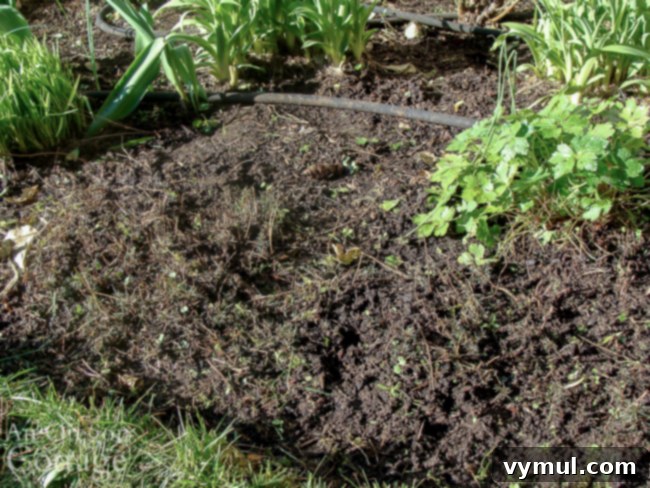
To properly clean up non-woody perennials like coreopsis in the spring:
- Precision Cutting: Using sharp bypass pruners, meticulously cut back all the dead, completely browned stems. Aim to cut them close to the ground or just above any emerging new green growth.
- Avoid Pulling: It’s crucial to resist the urge to simply pull on these stems. Many perennials, including coreopsis, are relatively shallow-rooted, and pulling can easily dislodge or completely uproot the entire plant, causing unnecessary damage.
- Combined Technique: Often, the most efficient approach is a combination of cutting and gentle pulling. Focus predominantly on cutting the main dead stems, then use a light, careful pulling motion to remove any smaller, stubborn brown stems that remain intertwined within the new growth.
- Weed and Seedling Removal: As you work, diligently remove any weeds that have taken root around the plant, as well as any encroaching seedlings from other nearby plants that might compete for resources.
A Note on Volunteer Seedlings: The vibrant green leaves visible in the “before” photo are actually seedlings of an early spring-blooming geranium-type plant, which I carefully pulled during the clean-up. This particular geranium isn’t overly aggressive, and its early blooming and leafing-out habits mean it provides early season interest before many other plants awaken. Therefore, I typically allow it to grow, simply pulling excess seedlings and occasionally replanting them in more challenging areas of the garden where other plants struggle. You can clearly see a clump I intentionally left to the right in the “after” photo, showcasing its charming early growth.
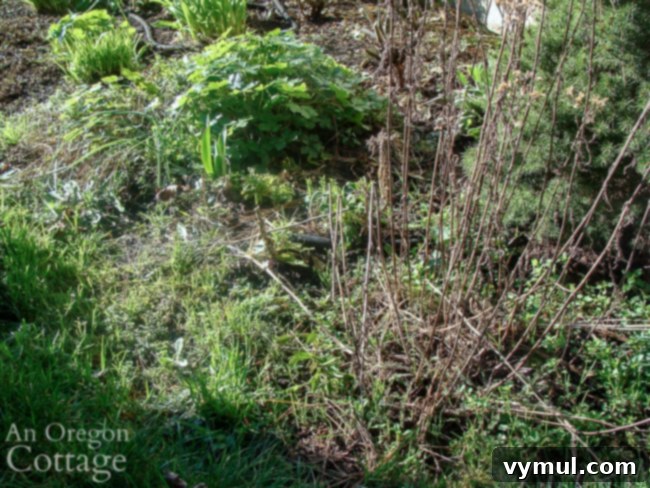
Yarrow, Sweet William, Hardy Geranium
This particular section represents the farthest corner of the flower bed from the house, and it is home to a robust collection of plants: yarrow (prominently featured in the right corner), vibrant sweet william (occupying the center stage), and a charming mystery hardy geranium (nestled in the upper left). As the “before” image clearly shows, this area had unfortunately seen significant encroachment, with grass having really taken over much of the available space, demanding a thorough clean-up.

After a substantial effort involving strategic cutting back of old growth using the techniques previously outlined, and a thorough weeding process to remove the encroaching grasses, this area once again resembles a well-maintained and thriving flower bed. The transformation is striking, highlighting the impact of diligent spring maintenance.
Yarrow Clean-up Tip: For yarrow, I often don’t perform a complete clean-up immediately in early spring. This is largely because yarrow can sometimes struggle to overwinter successfully in my garden, and I prefer to wait and see precisely where the new growth is vigorously emerging. I typically revisit and clean up the yarrow a bit more thoroughly in May, once it’s clear which parts have survived and which need to be removed. This careful approach helps preserve the plant’s health and ensures robust growth.
Now, with the beds thoroughly cleaned and all plants properly pruned, the only remaining crucial step is to meticulously layer on the newspaper and then cover it with a generous layer of mulch. This final, critical action is what truly sets the stage for a low-maintenance season. With this comprehensive clean-up followed by the strategic application of layered paper and compost mulch, you will find that you won’t have to perform any significant maintenance on this bed throughout the entire growing season, beyond the simple task of deadheading spent blooms. The organic compost, as it gradually breaks down, will continually enrich the soil and provide all the essential fertilizing nutrients the plants will require, fostering robust and healthy growth naturally.
Want more easy gardening tips & techniques? Check out these valuable articles:
- 8 Easy Steps To Establishing a Beautiful New Shrub and Flower Bed
- Spring Clean Up Essentials: Mastering Asparagus and Strawberry Beds
- Simple Steps to Spring Garden Cleanup (& a Handy Printable Checklist)
- Inspiring Spring Garden Ideas Directly from Magnolia Silos

This article has been thoroughly updated and expanded to provide the most current and comprehensive advice; it was originally published in March of 2013.