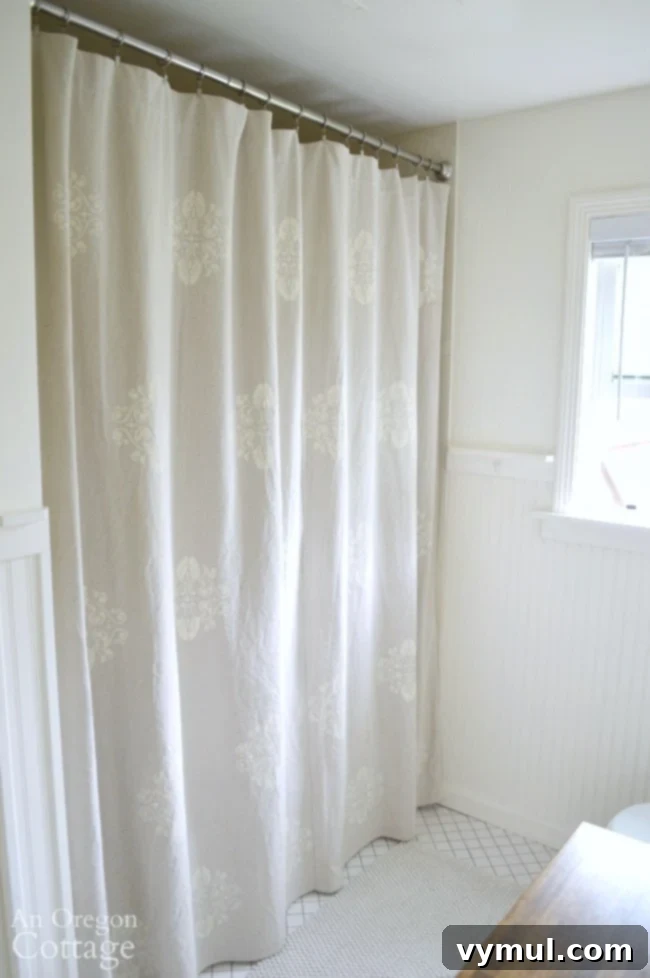
DIY Custom Stenciled Drop Cloth Shower Curtain: Achieve a Designer Bathroom Look on a Budget
Are you dreaming of a bathroom refresh but worried about the cost of stylish decor? This comprehensive guide will show you how to easily transform an ordinary painter’s drop cloth into a custom, designer-inspired shower curtain using stenciling techniques. Say goodbye to generic, ill-fitting curtains and hello to a perfectly sized, unique statement piece that elevates your bathroom’s aesthetic, all for a fraction of the price of store-bought alternatives. Whether you need an extra-long curtain or a standard size, this DIY project offers unparalleled flexibility and endless creative possibilities.
Please note: This article contains affiliate links. Should you click and make a purchase, I may receive a small commission at no extra cost to you. This helps support the content I create.
Revitalize Your Bathroom: The Power of a New Shower Curtain
There’s an undeniable truth in home decor: changing your shower curtain can dramatically refresh the entire feel of your bathroom. As often the largest textile element in the room, it plays a pivotal role in establishing the overall tone and style. A fresh curtain can instantly update a tired space, introduce new colors, or infuse a touch of personality. However, finding the perfect shower curtain – one that boasts a unique design, fits your specific dimensions, and doesn’t break the bank – can be a significant challenge. Many store-bought options are limited in length and pattern, and specialty sizes come with a hefty price tag.
This is where the magic of a painter’s drop cloth comes in. Renowned for its affordability, durability, and neutral canvas, drop cloth has become a beloved material for a myriad of DIY home decor projects, from slipcovers to Roman shades. Its versatility makes it an ideal foundation for a custom shower curtain, allowing you to bypass the limitations and high costs associated with retail options. Imagine a shower curtain that perfectly complements your bathroom’s color scheme and expresses your unique design aesthetic, crafted entirely by you.
My old shower curtain, while perfectly functional, had simply run its course. It was time for a change, a new visual anchor for the space. If you’ve ever felt that familiar urge to refresh your surroundings, to inject new life into a room, then this project is perfectly aligned with your desire for transformation.
Essential Tips for Custom Shower Curtain Creation
Before diving into the stenciling process, let me share a game-changing tip that liberates you from the constraints of standard shower curtain designs. This insight allows you to utilize virtually any fabric – be it a custom-sized drop cloth, pre-made curtain panels, or even vintage textiles – for your shower curtain project. The secret lies in simple, yet effective hardware:
- Versatile Curtain Rings with Clips: These ingenious 2-inch curtain rings with clips are your best friend for creating custom shower curtains. They eliminate the need for complicated buttonholes or grommets, making it incredibly easy to attach any fabric. Simply clip your chosen material to the rings, and you’re good to go. Most standard shower curtain rods accommodate these rings effortlessly, though in some cases, you might need to temporarily remove the rod’s end pieces to slide them on. This flexibility means you can achieve any desired length or width, making your shower curtain truly unique and perfectly fitted.
When it comes to the liner, you have a couple of practical options. For a seamless, full-length look, consider purchasing an extra-long fabric shower liner. This can be clipped to the same curtain clips as your drop cloth curtain, creating a cohesive appearance. If it’s still a bit too long, a simple hem will customize its size. Alternatively, you can install a second spring-loaded tension rod discreetly below your main curtain rod. This allows you to hang a regular fabric shower liner independently. I personally adore long shower curtains; they contribute a luxurious, decorator-inspired touch to the bathroom, making the space feel taller and more refined. However, the beauty of this DIY project is that you can tailor the length to your exact preference and bathroom dimensions.
How to Stencil a Drop Cloth Shower Curtain: Step-by-Step Guide
Supplies Needed for Your Custom Creation
Gathering the right tools and materials is the first step toward a successful DIY project. Here’s what you’ll need to create your stunning stenciled drop cloth shower curtain:
- 9×12 Painter’s Drop Cloth: This size is generally sufficient for most standard bathtub openings, offering ample width (at least 72 inches) and length (up to 84 inches for that desired decorator look). Drop cloth is incredibly durable and provides an excellent neutral canvas for your design.
- Sewing Machine, Thread, & Basic Sewing Supplies: Essential for hemming and finishing the edges of your drop cloth, especially if it’s not the perfect size straight out of the package.
- Painter’s Tape or Masking Tape: Crucial for marking your stencil pattern and ensuring even spacing.
- Self-Locking Tape Measure: For accurate measurements of your curtain and stencil placement, ensuring a professional finish.
- 4 oz. Acrylic Craft Paint: Choose your desired color. A creamy white offers a subtle, sophisticated look that complements a variety of decors.
- 2 oz. Fabric Painting Medium: This is vital for transforming standard acrylic paint into a flexible, washable fabric paint. It prevents the paint from cracking or flaking after drying.
- Home Decor Stencil: Select a design that inspires you. There are many beautiful options available; ensure you choose one where you paint inside the cut-out openings.
- Stencil Brush or Stenciling Roller: Both are effective for applying paint evenly through the stencil. A brush is great for detailed work, while a roller can speed up the process on larger patterns.
- Temporary Spray Adhesive: Helps hold the stencil firmly in place, minimizing paint bleed and ensuring crisp lines.
Detailed Instructions for a Flawless Finish
1. Prep the Drop Cloth for Perfection
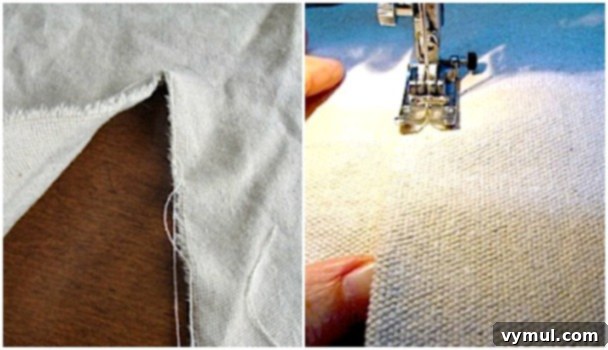
The foundation of your custom shower curtain is a well-prepared drop cloth. Begin by measuring your shower space meticulously to determine the ideal width and length for your curtain. While a 9×12 drop cloth is a versatile choice for most standard tub openings, ensure it’s wide enough (at least 72 inches) and long enough (up to 84 inches for that designer, floor-grazing effect). The pre-sewn edges of a drop cloth are often uneven. If you desire perfectly straight lines, the simplest and most effective method is to *rip* the cloth. This technique allows the fabric to tear naturally along the grain, guaranteeing a perfectly straight edge without the need for meticulous cutting. To do this, make a small snip where you want your new edge, then firmly rip the fabric. Before any sewing, it’s also highly recommended to pre-wash and dry your drop cloth. This step is crucial as it softens the fabric, removes any manufacturing chemicals, and most importantly, pre-shrinks the material, preventing any surprises after your first wash.
1a. Sew Hems as Needed for a Polished Look
Once your drop cloth is pre-shrunk and has straight edges, it’s time to create the hems. For the raw edges (sides and bottom), turn the fabric under by about half an inch, press with an iron for a crisp fold, and then turn it under again by the same amount, encasing the raw edge. Stitch a simple straight stitch close to the inner fold. For the top hem, consider a slightly larger allowance – perhaps 2 to 3 inches – as this provides a more substantial, finished look, especially where the clips will attach. Iron this wider hem thoroughly and stitch close to both the top and bottom edges of the hem to secure it firmly. These finished hems give your curtain a professional, custom-made appearance.
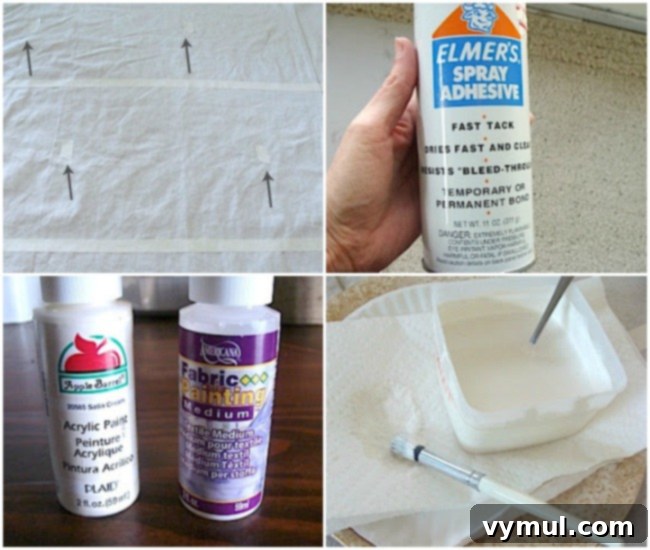
2. Mark the Cloth for Your Stencil Pattern
This step is where your design vision comes to life. Lay your prepped drop cloth flat on a large, clean surface. Using painter’s or masking tape, divide the curtain into even horizontal rows. The spacing of these rows will depend on the size of your stencil and your desired pattern density. Next, decide on your overall pattern arrangement. Will your stencil motifs be aligned perfectly on top of each other, creating a grid-like effect, or will they alternate, offering a more dynamic and organic look? I opted for an alternating pattern, as I found it creates a less linear appearance when the curtain is hung and folded, ensuring the pattern is visible from various angles. For my alternating pattern of “five-four” (meaning five motifs in one row, then four centered between them in the next), I first measured the width of my stencil and the total width of the cloth. I then divided the cloth’s width by five to determine the spacing for the first row of tape markers, placing them in the middle of each stencil width. After establishing the first few rows, I often found that I could eyeball the subsequent placements, ensuring a consistent yet naturally flowing pattern. Precision here pays off in the final aesthetic.
3. Apply Temporary Spray Adhesive to the Stencil
A crucial step for achieving clean, crisp stencil lines is using temporary spray adhesive. Lightly spray the back edges of your stencil and allow it to dry for a few minutes until it feels tacky, but not wet. This ensures a temporary bond that holds the stencil firmly in place without leaving a permanent residue on your fabric. The adhesive acts as a barrier, significantly reducing the chances of paint bleeding under the stencil edges, which is a common concern in stenciling projects. This simple step can dramatically improve the quality of your finished design and save you touch-up time.
4. Prepare Your Fabric Paint Mixture
To ensure your acrylic craft paint adheres properly to the fabric and remains flexible and washable, you must mix it with a fabric painting medium. Always follow the specific package directions for your medium, but a common ratio is 2 parts acrylic paint to 1 part fabric medium. For this project, I used 4 oz. of creamy white craft paint with 2 oz. of medium, which proved to be more than enough for the entire curtain. Mix thoroughly until the consistency is smooth and uniform. This blend is what will allow your beautiful stenciled design to last through countless washes.
5. Set Up Your Painting Station for Efficiency
Having an organized painting station will make the stenciling process much smoother. I used a simple paper plate for mixing paint and a stack of paper towels for blotting. Whatever you choose, ensure it’s easily portable, as you’ll be moving along the length of the drop cloth. If you have a stenciling roller, it might be more efficient for larger patterns or to cover more ground quickly. However, a stencil brush works wonderfully for detail and control, and I often prefer it for its accessibility. Choose the tool that feels most comfortable and effective for you.
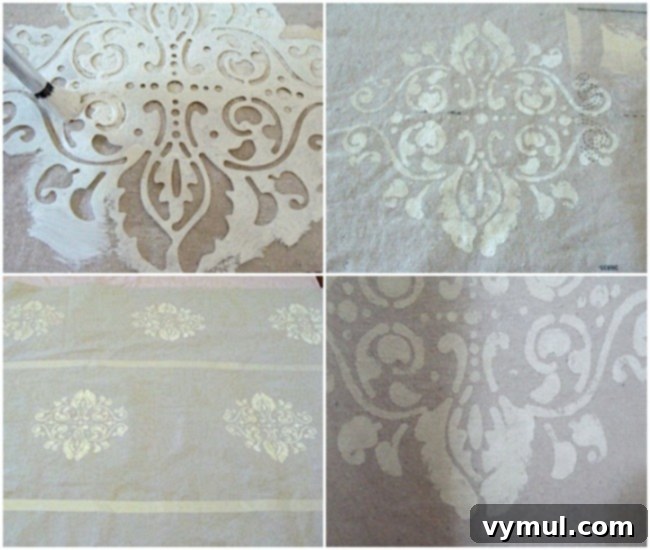
6. Position the Stencil and Begin Painting
Start your stenciling process in the middle of one of your marked rows. Carefully center your stencil on the marked position. Before applying paint, gently lift the edge of the stencil to remove the tape marking underneath, ensuring no tape residue is caught. Now, load your stencil brush with the mixed paint, then off-load any excess paint by dabbing the flat end of the brush onto a paper towel. The key is to have paint on the brush, but not so much that it’s oversaturated. You want it moist, not dripping wet. Then, using a pouncing or pushing motion, apply the paint through the stencil openings onto the drop cloth. Because fabric tends to absorb paint, you might find you need slightly more paint on your brush than you would for stenciling on a hard surface. Build up the color in thin layers rather than trying to achieve full opacity with one heavy application, which can lead to bleeding.
PRO TIP: It’s completely normal to feel a moment of doubt when you’re stenciling, especially when you think paint might be seeping under the edges. Trust me, I’ve been there every single time! But almost without fail, once you carefully peel back the stencil, you’ll find the results are far better than you imagined. Stenciling, by its nature, rarely yields perfectly machine-precise lines, and a few minor “imperfections” are part of its charm. On a large shower curtain with repeating motifs, these slight variations are virtually unnoticeable and only add to the handmade, unique quality of your piece. Embrace them as proof of your creative endeavor!
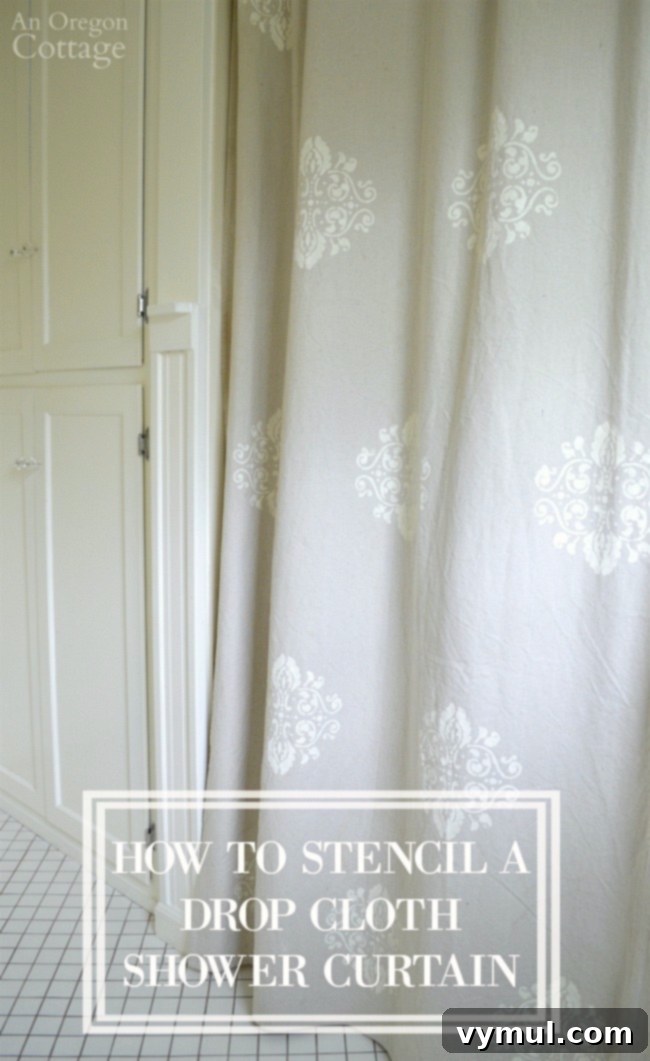
Observe the lower-left photo in the reference images to see how the alternating pattern of five and four (or three and two, as visible) contributes to the overall visual flow. The lower-right photo provides a close-up that hopefully offers encouragement – stenciling isn’t intimidating, and even a slight blur won’t detract from the stunning final product.
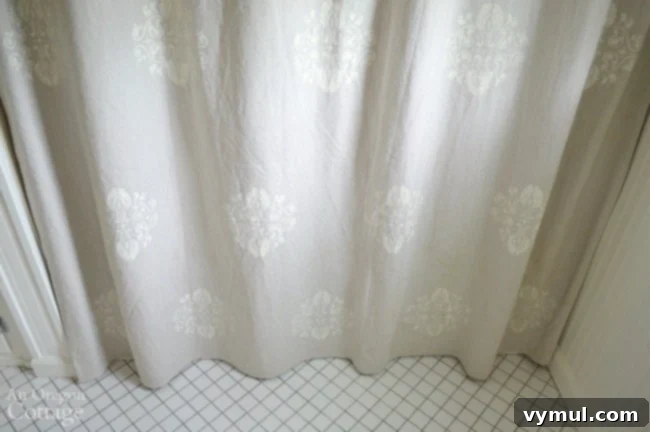
These minor quirks become invisible when viewed as part of the complete pattern. Your guests will admire the bespoke nature of your curtain, not meticulously search for any tiny deviation. In fact, these small “mistakes” are precisely what make your creation a one-of-a-kind item, distinguishing your space from mass-produced decor. This project is a perfect embodiment of embracing imperfection, celebrating the authentic beauty of handmade items in your home.
After all your stenciling is complete and the paint has thoroughly dried (check your fabric medium for specific drying and heat-setting instructions, as some require heat to fully cure and become washable), hang your masterpiece. Heat setting typically involves ironing the fabric on the reverse side of the painted area or placing a cloth over the painted side before ironing, to ensure the paint is permanently bonded to the fabric fibers.
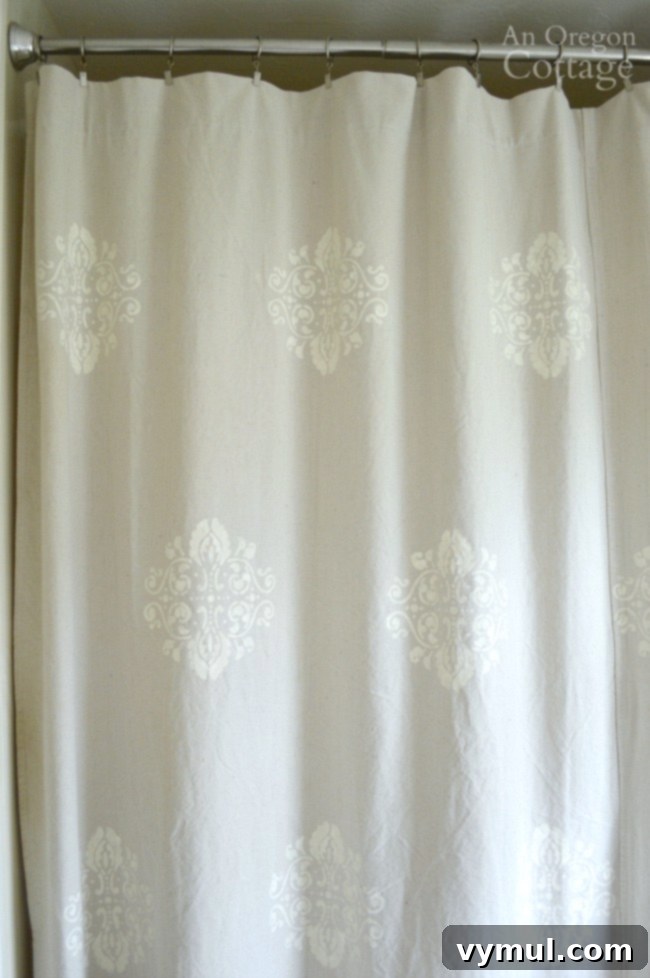
The Beautiful Result: A Truly Custom Bathroom
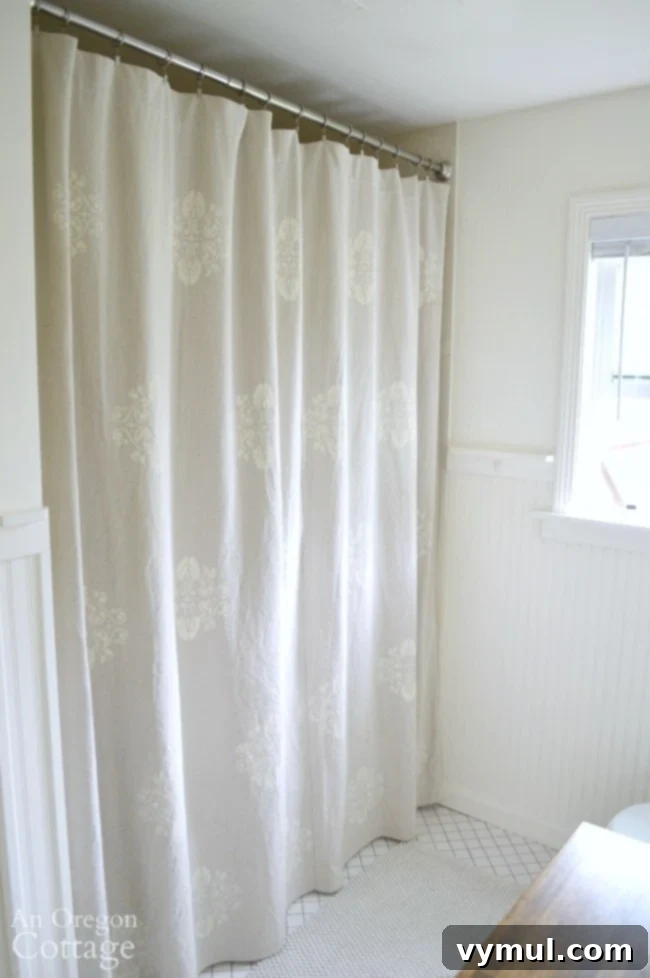
I am absolutely thrilled with how this stenciled drop cloth shower curtain turned out! The choice of neutral colors, especially a creamy white on the natural drop cloth, creates a subtle yet impactful pattern. It’s never overwhelming or “busy,” providing just enough visual interest without dominating the space. This versatile color scheme ensures it harmonizes beautifully with virtually any bathroom decor, offering a sophisticated and timeless appeal.
This project is more than just creating a shower curtain; it’s about infusing your home with personalized style and achieving a high-end designer look without the exorbitant price tag. You’ve created a custom piece that reflects your taste, fits your space perfectly, and stands out from anything you could buy in a store.
I genuinely hope this detailed guide encourages you to embark on your own stenciled drop cloth shower curtain project. It’s a remarkably rewarding DIY that delivers truly one-of-a-kind decor, transforming your bathroom into a stylish sanctuary!
Disclosure: As mentioned, some links within this article are affiliate links. This means I may earn a commission on sales made through these links, but it will not affect the price you pay. For a comprehensive understanding of my disclosure and advertising policy, please click here.