
Master Your Garden: The Essential Guide to Organizing Paperwork with a Garden Notebook for Success
Unlock the full potential of your garden by streamlining your paperwork, planning with purpose, and meticulously recording what truly thrives and what doesn’t. This comprehensive guide will show you how to organize your garden records effectively, helping you achieve a flourishing landscape and bountiful harvests year after year. Plus, discover how to download a free printable garden notebook journal designed to make these practices easy and intuitive for your own successful gardening journey!
Some links in this article are affiliate links, meaning if you click on them and make a purchase, I will receive a small commission at no additional cost to you.
Do you find yourself scrambling each spring, trying to remember what you planted last year, or perhaps wondering if you even keep track of your garden’s history? While it’s certainly possible to garden without a single record – and many people do – there are some compelling reasons to maintain at least basic garden records, especially if you’re nurturing an organic vegetable garden. Effective garden organization not only saves time and reduces frustration but also significantly enhances your chances of success.
Keeping a dedicated garden notebook allows you to turn your gardening efforts into a continuous learning experience, transforming guesswork into informed decisions. This simple practice can elevate your gardening from merely planting to strategically cultivating a thriving ecosystem. Here’s why you should consider starting your own garden journal:
- Track What You Grew and When: Essential for understanding seasonal timing, optimizing planting schedules, and remembering successful harvest windows. This knowledge helps you maximize your garden’s yield.
- Record Successes and Failures: Documenting what varieties performed well and which didn’t helps you repeat successes and avoid disappointing crops, leading to more efficient use of your garden space and resources.
- Plan Strategic Crop Rotation: Crucial for organic gardens, rotating crops effectively helps prevent the build-up of pests and diseases in the soil, promoting healthier plants and reducing the need for interventions.
- Visualize and Map Your Garden Dreams: A notebook provides a space to sketch out your garden layout, plan new beds, or imagine future landscaping projects, turning abstract ideas into concrete plans.
- Maintain a Comprehensive Record of Plants and Seeds: Keep tabs on every plant and seed variety you’ve purchased, where it came from, and its specific characteristics, making reordering favorites simple and tracking plant performance easy.
Through years of gardening, I’ve discovered that keeping basic, year-to-year information is incredibly powerful. While I admire the elaborate, artfully drawn journals created by some gardeners, complete with intricate botanical illustrations or photographic inserts, my approach focuses on simplicity and practicality. I believe that garden organization should be a tool that aids your gardening, not an artistic endeavor that becomes a chore. My method is all about making it straightforward and functional – a system designed for real-world gardening success.
Essential Elements for Organizing Your Garden in a Notebook
To create a truly effective garden notebook, focus on these core components that provide the most value for planning and improving your garden:
- Current Season’s Planting Plan: This is your most vital tool for the year. It details exactly what goes where, ensuring you maximize every inch of your planting area and adhere to your desired layout. Without a clear plan, you risk haphazard planting and inefficient space utilization.
- Detailed Crop Rotation Records: As a fundamental principle of organic gardening, consistent crop rotation is key to maintaining soil health and warding off specific diseases and pests that can linger in the soil. Integrate these records directly into your seasonal planting plan for seamless tracking.
- Past Seed Orders and Purchases: Having a history of your seed and plant purchases makes it incredibly easy to refer back to successful varieties when ordering for new seasons. It also serves as a valuable record of what you’ve tried, helping you make informed decisions about future acquisitions.
- Regional Planting Date Guide: A general guide to planting dates specific to your climate zone is indispensable. Knowing average last frost dates, optimal seed-starting times, and transplanting windows can make all the difference in a successful harvest. (The Old Farmer’s Almanac offers an excellent online planting calendar you can print and add to your notebook.)
Non-Essential, But Highly Beneficial Additions:
While the above are critical, these elements can further enrich your garden notebook, providing inspiration, additional records, and practical support:
- Comprehensive Overall Garden Plan: A larger-scale map of your entire property, including perennial beds, trees, shrubs, and hardscaping, helps you visualize long-term projects and track permanent plantings. This provides a holistic view of your garden’s development.
- Curated Articles and Inspiration: Keep magazine clippings, newspaper articles, or printed online resources related to specific gardening interests, techniques, or plants you want to try. This acts as a personal knowledge base and inspiration board.
- Plant Tags and Permanent Records: Store plant tags from trees, shrubs, and flowers you’ve planted. This provides crucial information about variety, care requirements, and mature size, preventing guesswork and aiding in accurate plant identification for years to come.
- Seasonal Chores and Task Lists: Including monthly or seasonal chore lists (like the monthly garden task lists available here) helps you stay organized, ensures critical tasks aren’t forgotten, and breaks down the gardening workload into manageable segments.
Essential Supplies for Setting Up Your Garden Notebook
Creating your garden organization system doesn’t require elaborate tools. Here are the simple supplies you’ll need to set up an effective garden notebook:
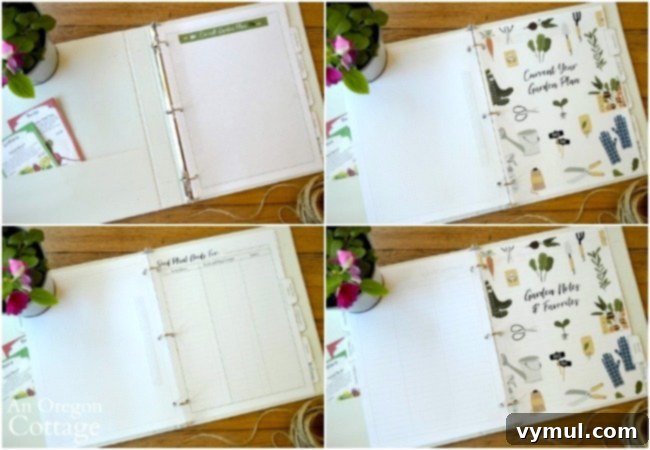
- A Basic 3-Ring Clear-View Binder: A 1 to 1.5-inch size is ideal; anything smaller can make turning pages cumbersome, while anything much larger might encourage you to accumulate too much unnecessary paperwork. I highly recommend clear-view binders (with clear pockets on the outside), as they allow you to easily customize your notebook with the printable cover, spine, and back pages from the free garden notebook journal. Alternatively, you can opt for colorful clear-view binders to add a touch of personality.
- Inside Pockets or Pocket Dividers: While some binders come with internal pockets, if yours doesn’t, you can easily add pocket dividers. These are incredibly useful for storing loose seed packets, clippings, or temporary notes.
- Five Sturdy Dividers: Dividers are essential for segmenting your notebook into logical sections. You can use a standard set of five dividers or, even better, print out the Garden Success Notebook title pages onto cardstock and attach the included tabs for a cohesive, personalized look.
- A Few Page Protectors: You don’t need a large quantity, but having a few page protectors is invaluable. They allow you to take your most important plans and guides out into the garden with you, protecting them from dirt, water, or unexpected spills, ensuring their longevity and usability.
And of course, the indispensable Garden Notebook FREE Download. This invaluable resource includes 16 beautifully designed and highly useful pages that will streamline your garden organization even further! Click here for more details on what’s included, or simply fill out the form below to grab your copy today:
Step-by-Step: How to Organize a Garden Notebook in a Binder
Note: The accompanying photos in this section illustrate my previous, more basic garden notebook from an article originally published in 2010. Rest assured, I have since updated my own notebook using the comprehensive printable garden success plan pages, maintaining the same logical and effective order you see outlined here. The principles remain consistent, just with enhanced, ready-to-use templates.
Inner Pocket/First Page: Your Current Year’s Planting Plan
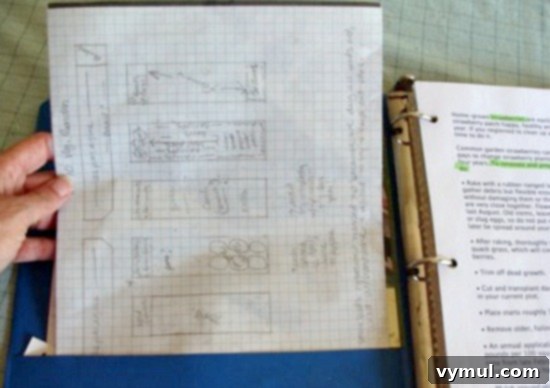
This section is undeniably the most critical for both your vegetable garden and incredibly helpful for flower beds. It should be immediately accessible, ideally protected within a plastic page protector, right at the front of your binder.
- Placement: If your binder includes an inner pocket, store your current year’s plan there for quick retrieval. Otherwise, it should be the very first page in the 3-ring section, secured by a page protector.
- Crop Rotation Made Easy: This yearly dated plan is fundamental for effectively rotating crops through your garden beds. It ensures that the same crop families (e.g., nightshades, brassicas) are not planted in the same spot two years in a row, which is vital for preventing soil-borne diseases and pest infestations.
- Flexible Framework: While the plan serves as a guiding framework, it’s not set in stone. Expect to make minor adjustments throughout the season, perhaps shifting where peas or basil ultimately land. However, critical crop rotation information – such as the designated spots for tomatoes, peppers, and cole crops (like broccoli and cabbage) – should remain consistent to reap the benefits of your planning.
Why is keeping this plan in a page protector my biggest tip?
This current year’s plan is the backbone of your gardening season. You’ll refer to it constantly to determine how many tomato, pepper, or other seedlings you need to start indoors or purchase. You’ll also take it directly into the garden to guide you when direct-sowing seeds and planting transplants. In my early gardening days, I learned the hard way: without a page protector, my plans frequently became wet, crumpled, and even lost to a sudden gust of wind. It took me a surprisingly long time to implement this simple yet crucial protective measure, and it has made all the difference in keeping my plans intact and usable throughout the entire growing season.
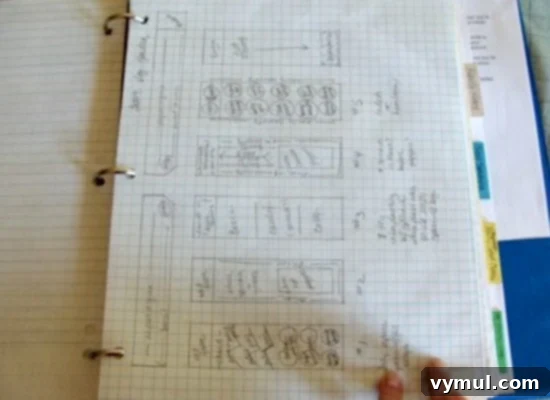
First Section: Comprehensive and Historical Garden Plans
This section is dedicated to your garden’s past, present, and future, helping you visualize and track its evolution.
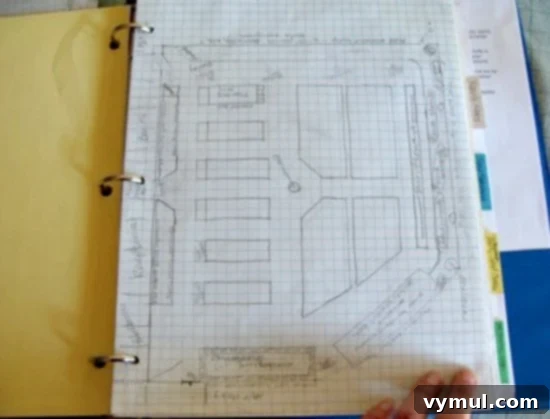
- Overall Garden Plan (left above): My holistic garden plan encompasses our entire property, often spanning several pages. For instance, the main vegetable garden depicted above was initially designed to guide us during the construction of raised beds and the planting of permanent fixtures like fruit trees and asparagus. I also maintain detailed plans for front yard landscaping and backyard projects, which proved invaluable during our extensive backyard makeover. This broader plan is immensely useful for visualizing the “big picture” and allows for easy updates as the landscape evolves – plants may die, certain designs might not work as anticipated, or new beds may be added.
Helpful Tip: While an elaborate overall plan can be incredibly rewarding, I understand it might seem daunting to some. Therefore, it’s an optional component of this system. However, I strongly encourage even simple, rough sketches to guide any DIY work or significant changes you envision for your yard. Even a basic drawing can prevent costly mistakes and provide clarity.
- Individual Vegetable Bed Plans (right above): These pages serve as a year-by-year record of crop rotation and the specific varieties you’ve grown in each bed. This is NOT optional for vegetable gardens and is highly recommended for small flower beds too, especially for annuals. This is the ideal place to jot down notes about what grew exceptionally well, what struggled, or varieties you absolutely never want to plant again (for me, that’s a firm “just say no to lemon balm!”). Integrating these notes directly onto your planting guide creates an easy, intuitive way to keep historical records and make continuous improvements.
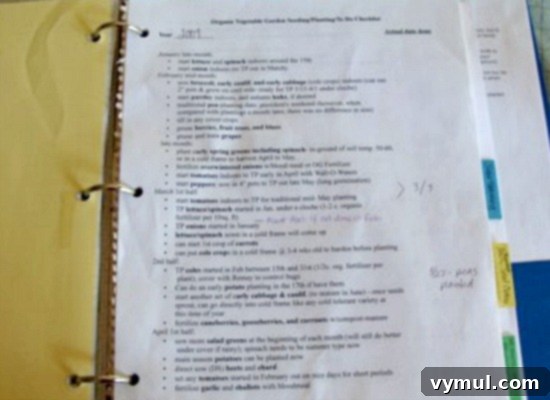
Second Section: Comprehensive Garden Guide & Record
This section is designed to hold your essential yearly guides and historical observations, creating a living document of your garden’s performance and regional specificities.
Here you’ll keep resources like the comprehensive Organic Vegetable Garden Checklist or any other season-by-season guide you use for your specific garden. This ensures you have all necessary yearly tasks and reminders at your fingertips, reducing the chance of forgetting crucial steps.
Note: The year-round garden checklist has been significantly updated since the photo above was taken (it’s now even easier to read and use!) and is also available in the resource library if you wish to download a copy.
Maintaining these lists from year to year, much like your vegetable bed plans, offers another simple yet powerful way to retain valuable information. This includes details such as specific weather patterns (knowing the average frost date versus what actually occurred in your garden), precise planting dates for various vegetables, and harvest observations. I simply jot down notes as thoughts occur to me, making it a no-brainer method for consistent record-keeping without feeling like a chore. This historical data is invaluable for anticipating future growing conditions and fine-tuning your gardening strategies.
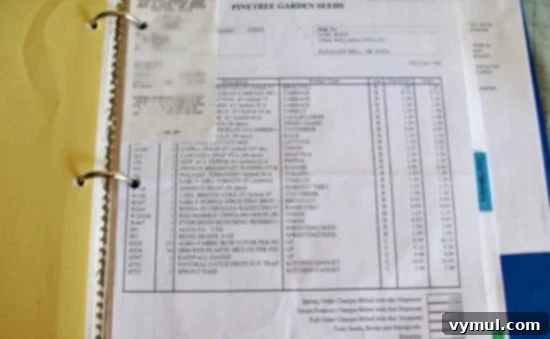
Third Section: Seed & Plant Needs & Orders
This section is dedicated to all things related to seeds and plants – from what you currently possess to what you plan to acquire. It’s an indispensable hub for managing your planting inventory and making smart purchasing decisions.
Here, you should keep copies of your past catalog seed orders as well as your handwritten lists of seeds you already have on hand and those you still need to purchase for each year. This makes it incredibly easy to track your spending, review which seed companies you’ve used, and refer to specific varieties tried in previous seasons (you can find my detailed system for storing and organizing seeds here). The gardening success plan notebook includes a specially designed page where you can meticulously list all the seeds you own in one column, and then delineate what you need to buy in another. This clear overview is exceptionally helpful for planning your new season’s orders, preventing duplicate purchases, and providing a dedicated space to record your thoughts and experiences with different varieties. It transforms your seed and plant acquisition from a chaotic last-minute rush into a thoughtful, organized process.
Fourth Section: Documenting Your Favorite Varieties
This section serves as your curated “hall of fame” for plants. It’s a vital resource for cultivating a garden filled with tried-and-true performers and beloved additions.
In this dedicated space, you can meticulously list the specific plant names and varieties that have truly excelled in your garden – those that thrive, produce abundantly, or simply bring you immense joy. This creates a quick reference guide, making it effortless to know exactly what you want to purchase again for future seasons. Beyond that, it also acts as a permanent record of all the trees, shrubs, and flowers you’ve bought and integrated into your landscape. This thoughtful documentation ensures that you can always confidently answer when someone inevitably asks, “What beautiful plant is that?” No more guessing or forgotten names; your favorites are clearly recorded for easy recall and future enjoyment.
Fifth Section: Essential Vegetable and Flower Growing Information
This final section is your go-to reference for practical growing information, designed to save you time and make informed decisions throughout the gardening year.
It’s the perfect place to consolidate those frequently needed facts and figures that you’d otherwise have to look up online repeatedly. This includes critical data such as optimal dates for seed starting indoors, specific planting dates for fall and winter vegetables to extend your harvest season, and a comprehensive list of varieties known to grow exceptionally well in your particular climate zone. Additionally, it’s an ideal spot for recurring organizational aids like monthly garden to-do lists. Having all this crucial information centrally located in your notebook makes it readily accessible, transforming it into your most reliable tool for organizing garden paperwork and ensuring you have all the necessary information for sustained gardening success.
Don’t miss out on the incredible benefits – be sure to grab the free downloadable notebook to make organizing your garden papers even simpler and more effective! Just fill out the form below, check your email for the download link, and once the file is saved to your computer, it’s simply a matter of printing all the pages you’ll need to kickstart your organized gardening journey!
We’d love to hear from you! How do you currently keep track of your garden’s progress and plans? What information do you consider most important to record and review from year to year for gardening success? Share your insights in the comments below!
Disclosure: Please note that affiliate links included in this article may earn a commission based on sales, but rest assured, this does not affect your purchase price. Click here to read my full disclaimer and advertising disclosure for more information.