Revive Your Faded Outdoor Umbrella: The Ultimate DIY Guide to Painting for Lasting Style and Savings
Save money, reduce waste, and give your patio a fresh look with this incredibly effective and easy technique to paint a faded outdoor umbrella instead of prematurely sending it to the landfill. Discover expert tips on thorough cleaning, the best paint technique that truly works, and be amazed by its longevity, even years later (spoiler: you won’t believe how long this simple DIY refresh lasts!).
Some links in this article are affiliate links and if you click on them I will receive a small commission at no cost to you.
Does your beloved patio umbrella look tired and washed out from years of sun exposure? That once vibrant color, now a dull, ghostly shade of its former self? If your umbrella’s frame is still sturdy, the opening mechanism functions perfectly, and there are no major tears or holes in the fabric, then don’t despair! You’re just an hour or two away from giving it a complete, budget-friendly makeover using a surprising tool: paint.
Yes, you read that right – paint! Specifically, basic spray paint can work wonders. Our own canvas umbrella cover, which had seen better days, was transformed beyond recognition, looking a hundred times better after a simple spray paint application. This success story gives us full confidence that you can achieve similar, if not even more impressive, results by following our tried-and-true method for painting a faded outdoor umbrella.
Can You Really Paint an Outdoor Umbrella? The Answer is a Resounding Yes!
This is a common question, and one we thoroughly investigated through practical application. Through experimentation with different methods, we discovered a clear winner in the quest to revive a faded patio umbrella. While various painting techniques exist, only one proved to be truly effective and yielded durable, attractive results for outdoor umbrella fabric: spray painting. We tested two primary approaches, and the spraying method significantly outperformed brushing or rolling, making it our top recommendation for anyone looking to refresh their faded patio umbrella and extend its life without breaking the bank.
Our Patio Umbrella: Before the DIY Transformation
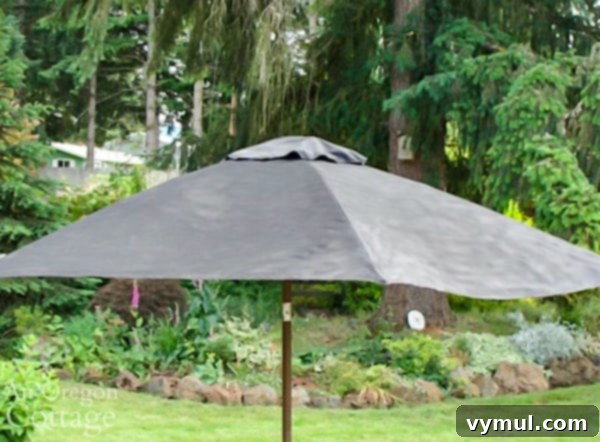
Our outdoor living space featured a standard black canvas umbrella that had dutifully served us for approximately five years. For a significant portion of that time, lacking a garage or suitable storage space, the umbrella was left exposed to the elements year-round. This constant battle against sun, rain, and wind gradually transformed its original deep black hue into a sad, faded gray. To add insult to injury, stubborn green mildew patches began to appear, especially in shaded or damp areas, further diminishing its aesthetic appeal and making it look genuinely old and neglected.
Despite these cosmetic flaws, the umbrella’s structural integrity remained surprisingly robust. It had only developed a few minor holes at the very top, likely from birds seeking a convenient perch. This durability was particularly impressive considering its initial cost – a mere $40 – an absolute steal, especially as it boasted an easy-to-operate hand-crank mechanism, far superior to the cheaper, often cumbersome wooden pulley systems. Given that the underside of the canvas was still a decent black and the fabric itself was in reasonable condition, the decision was made: why not attempt to squeeze another season, or perhaps even more, out of it by painting the top? The potential upside was a revived, beautiful umbrella, and the downside was simply the minimal cost of a few cans of paint – a risk well worth taking for such a significant visual upgrade!
How to Paint a Faded Outdoor Umbrella: A Step-by-Step Guide to Revival
This proven painting method is incredibly versatile and should work effectively for a wide array of outdoor umbrellas, regardless of their original color, fabric type, or brand, as long as they feature a canvas or similar fabric cover. The key prerequisites are that the cover is free from major structural damage (small bird holes can often be overlooked or patched if desired) and that it can still be securely attached to the umbrella’s structural frame. This DIY project is not just about saving money; it’s about sustainable living and adding a personal touch to your outdoor decor. Let’s dive into the simple, yet transformative, steps to bring your faded outdoor umbrella back to life.
Step 1: Thoroughly Clean Your Umbrella Cover
Before you even think about applying paint, a crucial first step is to ensure your umbrella cover is impeccably clean. This means tackling dirt, grime, mildew, bird droppings, and any other unsightly residues that have accumulated over time. A clean surface is paramount for optimal paint adhesion, preventing peeling or an uneven finish, and ensuring the final result is smooth and professional-looking. So, the burning question often is:
Can you wash an outdoor umbrella cover? Absolutely!
Based on our research and personal experience, you essentially have two effective choices for cleaning your umbrella cover, depending on its material and your comfort level:
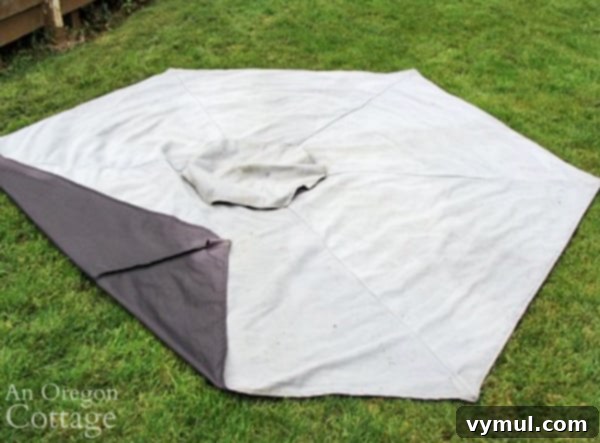
- Machine Washing (for suitable fabrics): If your umbrella cover is made from a robust, machine-washable fabric like cotton canvas, this is often the easiest and most thorough option. First, carefully remove the cover from the umbrella frame. This typically involves unscrewing the finial at the top and gently detaching the fabric from each of the support ribs. Once removed, toss it into your washing machine. Use a regular wash cycle with your preferred laundry detergent. For tackling stubborn mildew or ingrained dirt, adding a cup of white vinegar to the rinse cycle can work wonders as a natural disinfectant and brightener. After washing, lay it out flat or hang it to air dry completely. You’ll be genuinely surprised at how much cleaner and brighter it looks – even those pesky mildew stains often disappear! (As a side note, the “before” photo of our umbrella, shown above, was actually taken *after* it had been machine washed, effectively removing all the green moldy stripes and bird droppings that were previously visible. So, while it still looks faded, the grime is gone, providing a clean canvas for painting!)
- Hand Washing (for delicate or unknown fabrics): If you’re unsure about your cover’s material, or if it feels too delicate for a machine wash, hand washing is a safer and equally effective alternative. Lay the umbrella cover flat on a clean, paved surface, a large tarp, or even your driveway. Wet it thoroughly with a garden hose. Then, using a soft-bristle brush (like a car wash brush or a household scrub brush) and a mild soap (dish soap works well, or a dedicated outdoor fabric cleaner), gently scrub the entire surface. Pay extra attention to heavily soiled areas, creases, or any remaining mildew. For persistent mildew, a solution of equal parts white vinegar and water, or a specialized outdoor mildew remover, can be applied and allowed to sit for a few minutes before scrubbing. Rinse thoroughly with the hose until all soap residue is completely gone. Finally, allow it to air dry completely in the sun. Ensuring it’s bone dry is critical to prevent new mildew growth and ensure optimal paint adhesion.
So, yes, washing your umbrella cover is not only possible but highly recommended. It’s the essential foundation for a successful, long-lasting paint job that will transform your faded outdoor umbrella.
Step 2: Choose Your Painting Method and Supplies

This is where the rubber meets the road, or rather, where the paint meets the fabric! Choosing the right method and paint is paramount for achieving the best results when you decide to paint a faded outdoor umbrella. We’ve tested the waters so you don’t have to waste time and effort on less effective techniques.
Method 1: Spray Paint (Our Strongly Recommended Choice!)
Our primary goal was always to find the easiest yet most effective solution for reviving a faded outdoor umbrella, and spray paint unequivocally delivered on both fronts. For our project, we opted for flat black spray paint – and specifically, one of the cheapest indoor-outdoor varieties available at the time. This initial choice was driven by the experimental nature of the project; we weren’t sure how long it would last and simply wanted to see if this DIY approach was feasible. A paint similar to what we used is readily available, offering good value and performance.
EXPERT TIP: Given the incredible success and surprising longevity of even the cheapest paint (be sure to check our updates below!), we would now advise investing a little more for potentially even better and longer-lasting results. Spending around $4 per can instead of $0.99 for this higher-quality flat black spray paint would be a smart upgrade. Who knows just how many more years you could extend your umbrella’s life with a slightly better quality paint?
Spray paint is ideal for fabric because it applies a fine, even mist. This fine application coats the individual fibers of the fabric without oversaturating them. This key characteristic prevents the fabric from becoming stiff, rigid, or losing its natural flexibility, which is absolutely crucial for an umbrella that needs to fold, unfurl, and drape properly. Additionally, spray paint provides excellent, uniform coverage and typically dries relatively quickly, allowing for the application of multiple thin coats for optimal color saturation and a smooth finish.
Method 2: Regular Paint with a Brush or Roller (Definitely Not Recommended)
Before embarking on this specific DIY journey to paint a faded outdoor umbrella, comprehensive research on this niche project wasn’t as prevalent as it is today. While there are some older resources, such as an article on eHow suggesting the use of regular liquid paint and a brush or sponge roller, our direct, hands-on experience leads us to strongly caution against this method. Here’s why you should avoid it:
- Incredibly Time-Consuming: Applying regular paint with a brush or sponge roller is an incredibly laborious and slow process, especially when attempting to cover a large, irregular fabric surface like an umbrella canopy. You’ll spend hours trying to get an even coat.
- Fabric Saturation and Unwanted Stiffness: Unlike spray paint, regular liquid paint tends to heavily soak into and saturate the fabric. This deep saturation can dramatically alter the fabric’s original texture, making it stiff, rigid, and brittle – a highly undesirable outcome for an umbrella that needs to fold and unfurl easily without cracking or looking unnatural.
- Uneven and Unsightly Application: Achieving an even, smooth, and consistent coat with a brush or sponge roller on fabric, especially a ribbed or paneled umbrella cover, is exceedingly difficult. You’re highly likely to end up with an inconsistent, splotchy, streaky, and frankly, ugly pattern on both the top and underside of the umbrella. While a small roller might offer slightly better distribution than a sponge, the fundamental issue of fabric saturation and resulting stiffness would still persist, compromising the umbrella’s functionality and appearance.
Based on these significant drawbacks from our direct comparison of spray paint versus brush/roll methods, we unequivocally recommend sticking to spray paint for your outdoor umbrella revival project. It’s faster, easier, more efficient, and produces a far superior, more natural-looking finish without compromising the fabric’s integrity or flexibility, which are critical for an outdoor umbrella.
How to Master Spray Painting Your Outdoor Umbrella
Now that you’ve chosen the winning method for painting your faded outdoor umbrella, let’s get into the specifics of how to apply spray paint for the best possible results. Proper technique ensures even coverage, vibrant color, and a professional-looking finish that will last.
- Prepare Your Workspace and Umbrella Cover: Begin by carefully removing the fabric cover from the umbrella frame. This usually involves unscrewing a finial at the top and gently detaching the cover from each of the support ribs. Once removed, lay the cover out completely flat. An ideal surface for this is a freshly mowed lawn, as any minimal overspray onto the grass will simply be mowed away later. Alternatively, you can protect your work area by laying down large sheets of paper, cardboard, or drop cloths on a patio or driveway. Ensure your workspace is well-ventilated and choose a day with calm, dry weather to prevent wind from carrying off paint mist and to allow for proper drying without environmental interference.
- First Coat: Focus on Vents and Edges: Start your spray painting process by tackling the smaller, often overlooked areas first. This includes the umbrella’s top vent, the edges of the vent fabric, and any undersides of seams or panels that might be visible when the umbrella is open. Use a flat paint for a non-reflective, rich finish. Apply the paint in thin, even passes, holding the can at a consistent distance (typically 8-12 inches) from the fabric. Maintain a steady hand and keep the can moving continuously to avoid drips, heavy spots, or uneven saturation.
- Spray Section by Section: Work your way around the umbrella cover methodically, tackling one section or panel at a time. This systematic approach helps ensure no areas are missed and that coverage is consistent. Pay close attention to all seams, creases, and edges, as these tend to be areas where fading is most pronounced and where paint can be tricky to apply evenly. Maintain consistent spray pressure and speed to achieve a uniform appearance across the entire surface.
- Second Coat for Even Coverage: After the first coat has dried sufficiently (always check the paint can’s instructions for specific drying times, but usually 15-30 minutes), it’s time for a second application. The initial coat might not provide perfectly even coverage, especially on heavily faded areas. Apply the second coat in a different pattern or direction (e.g., perpendicular to the first coat, or moving left-to-right if the first was up-and-down) to help fill in any lighter spots and achieve a more uniform, saturated look. Allow this coat to dry completely before proceeding.
- Optional Third Coat & Reassembly (For Optimal Finish): Once the second coat is fully dry, carefully reattach the cover to the umbrella frame. Now, standing on a sturdy ladder (always with a spotter for safety, if possible), you can apply a third coat while the umbrella is upright and open. This position allows you to easily rotate the umbrella and reach any difficult angles, undersides of the fabric panels, or areas that might still appear slightly mottled or uneven. While two coats can often suffice, a third coat significantly enhances the depth of color, provides maximum coverage, and creates a more polished, less mottled finish. This step is particularly easy as you can stand and turn the umbrella as you spray, ensuring comprehensive, targeted coverage. However, always perform the initial coats with the umbrella cover flat to ensure optimal coverage on the top surfaces, seams, and edges without inadvertently getting paint on the frame.
Step 3: Optional Clear Coat for Added Protection
After your paint has completely dried and fully cured (this process can take anywhere from 24 to 48 hours depending on humidity, temperature, and the specific paint type), you might consider applying a water-repellant sealer or clear coat. While this step is entirely optional – and based on our remarkable long-term results, not strictly necessary for achieving impressive durability – it could potentially offer an extra layer of protection against the elements, enhance water repellency, and provide an added safeguard against future fading. This could be particularly appealing if you live in an area with extreme weather conditions or desire maximum protection for your newly painted umbrella.
However, it’s worth noting that finding a true spray-on clear coat specifically designed for outdoor fabric that won’t alter the fabric’s feel, breathability, or appearance can be challenging. Most water-repellent sealers available for outdoor fabrics, like this type of product, are typically designed to be rolled or brushed on. If you choose this route, be mindful that rolling or brushing on a sealant could reintroduce some of the stiffness issues we aimed to avoid with regular paint application. It’s a trade-off to consider. (NOTE: We did not apply any clear coat or sealer to our umbrella, and as the incredible updates below reveal, it held up remarkably well for many years without it. This robust performance strongly suggests that a clear coat might be an unnecessary extra step and expense for many DIYers painting their faded outdoor umbrella.)
Essential Umbrella Painting Tips & Must-Have Supplies
To ensure your DIY outdoor umbrella painting project goes as smoothly as possible and yields fantastic, long-lasting results, here are some crucial tips and supplies you’ll definitely want to have on hand. These recommendations stem directly from our experience and will make your task much easier and safer:
- You’ll Need More Spray Paint Than You Think: Don’t underestimate the absorbency of fabric, especially faded outdoor canvas! For our nine-foot diameter umbrella, we used a surprising total of five cans of spray paint. In retrospect, it probably could have benefited from a sixth can for absolute perfection and maximum color saturation. A good rule of thumb is to plan on approximately one can of paint per section or panel of your umbrella. While we managed to find flat black paint for an incredibly low price of $1 a can at the time (making the total investment a mere $6!), those prices are certainly unusual today. Here’s a higher-quality outdoor spray paint we’d recommend now, known for its durability and coverage (available at Home Depot and also conveniently on Amazon). Even with these slightly more expensive options, the cost is still significantly less than purchasing a brand new umbrella – and as our experience shows, you’ll get many additional years of use out of your revitalized umbrella.
- Invest in a Spray Paint Comfort Grip/Gun: This accessory is an absolute game-changer, especially when dealing with multiple cans of paint. A spray paint gun attaches securely to the top of the aerosol can, transforming it into a more ergonomic tool that mimics a traditional spray gun. Trust us, your index finger will thank you profusely! Holding down the small nozzle button for extended periods can lead to serious fatigue, cramping, and inconsistent application. This inexpensive addition is well worth the price for comfort, improved control, and more consistent application, which is vital for an even finish. You’ll love the difference it makes in your DIY projects.
- Protect Your Lungs with a High-Quality Painting Mask: Safety should always be a top priority when working with aerosols. Spray paint fumes can be strong, contain fine particles, and be irritating or even harmful to the respiratory system. A high-quality painting mask or respirator is absolutely essential for protecting your lungs from harmful particles and odors. Here’s an inexpensive 10-pack of respirators with valves specifically designed for painting odors that provides excellent protection. Ensure your workspace is also well-ventilated by always working outdoors on a calm day, away from confined spaces.
- Don’t Forget Drop Cloths or Cardboard: While freshly mowed grass is a convenient and forgiving surface for minimal overspray, if you’re working on a patio, deck, concrete driveway, or any other surface you wish to protect, be sure to lay down ample drop cloths, old sheets, or large pieces of cardboard. This prevents accidental paint splatters and ensures an easy cleanup.
- Wear Disposable Gloves: Protect your hands from paint with a pair of comfortable disposable gloves. They save you from scrubbing paint off your skin later and make cleanup quicker.
Upon close inspection, you might notice that the freshly painted cover still retains a slightly “mottled” or subtly textured appearance. This isn’t a flaw; rather, it’s a natural characteristic of painting fabric and the way the spray paint adheres to and penetrates the individual fibers. Our daughter cleverly observed that it resembles those artistic photography backdrops that are intentionally designed with such a varied texture, adding depth and interest. We’re embracing that creative perspective!

Regardless of any subtle mottling, the visual improvement is undeniable. We firmly believe it looks 100% better – in fact, a million times better than its previous state of green mold clinging to faded gray fabric. The transformation is truly remarkable, especially considering the minimal financial investment required to achieve such a dramatic and lasting change for your outdoor space. Painting your faded outdoor umbrella is a decision you won’t regret.
Ready for another stunning home and garden transformation? Dive into our comprehensive backyard makeover project, where a huge, unsightly, and decaying deck was ingeniously replaced with four distinct and beautiful new outdoor living areas! Click here to explore the full backyard reveal and get inspired.
Painted Outdoor Umbrella: Real-World Longevity Updates
The true test of any DIY project is its durability and how well it stands the test of time and the elements. Here’s a look at how our spray-painted outdoor umbrella performed over several years, demonstrating remarkable longevity and proving that painting a faded outdoor umbrella is a truly worthwhile endeavor:
2013 UPDATE: Three Seasons Strong!

Despite making no effort to add a protective clear coat or any special sealant, our painted umbrella impressively delivered three full seasons of renewed life! We simply couldn’t believe how well that incredibly cheap spray paint had held up against the relentless sun, rain, and other outdoor elements year after year. This outcome solidified our conviction that painting is an exceptionally viable and effective method to significantly extend the usable life of an outdoor umbrella, delaying its eventual journey to the landfill and offering incredible value for money.
IMPORTANT NOTE ON STORAGE: While the paint itself was incredibly durable, it’s worth mentioning that during this period, we had successfully completed the construction of our garage. This meant we were finally able to properly store the umbrella indoors during the harsh winter months. This seasonal storage undoubtedly contributed to its impressive longevity, protecting it from the most extreme weather conditions and UV exposure when not in use. If you can store your umbrella during off-seasons, expect even better results!
2016 UPDATE: Five Years and Still Standing!
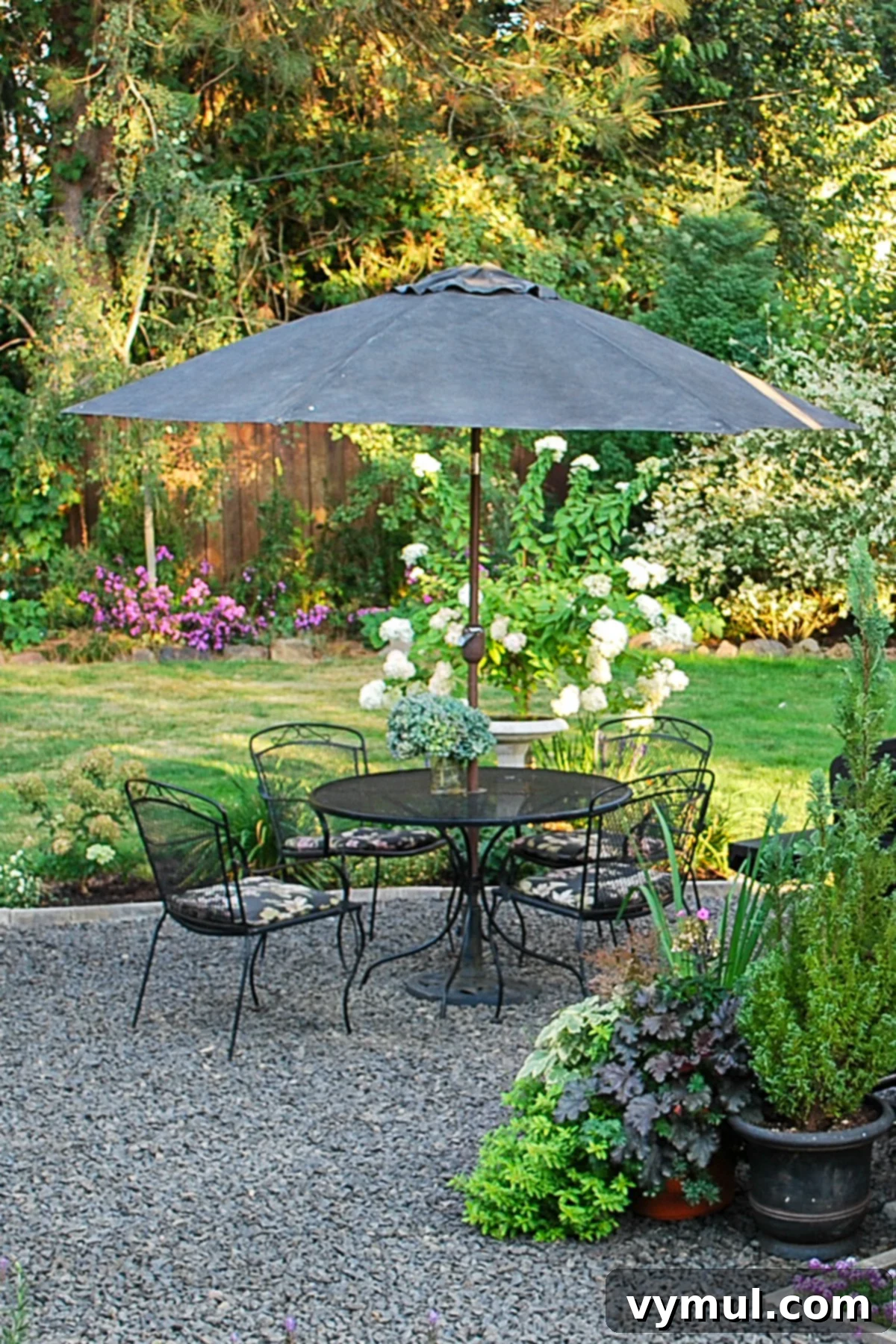
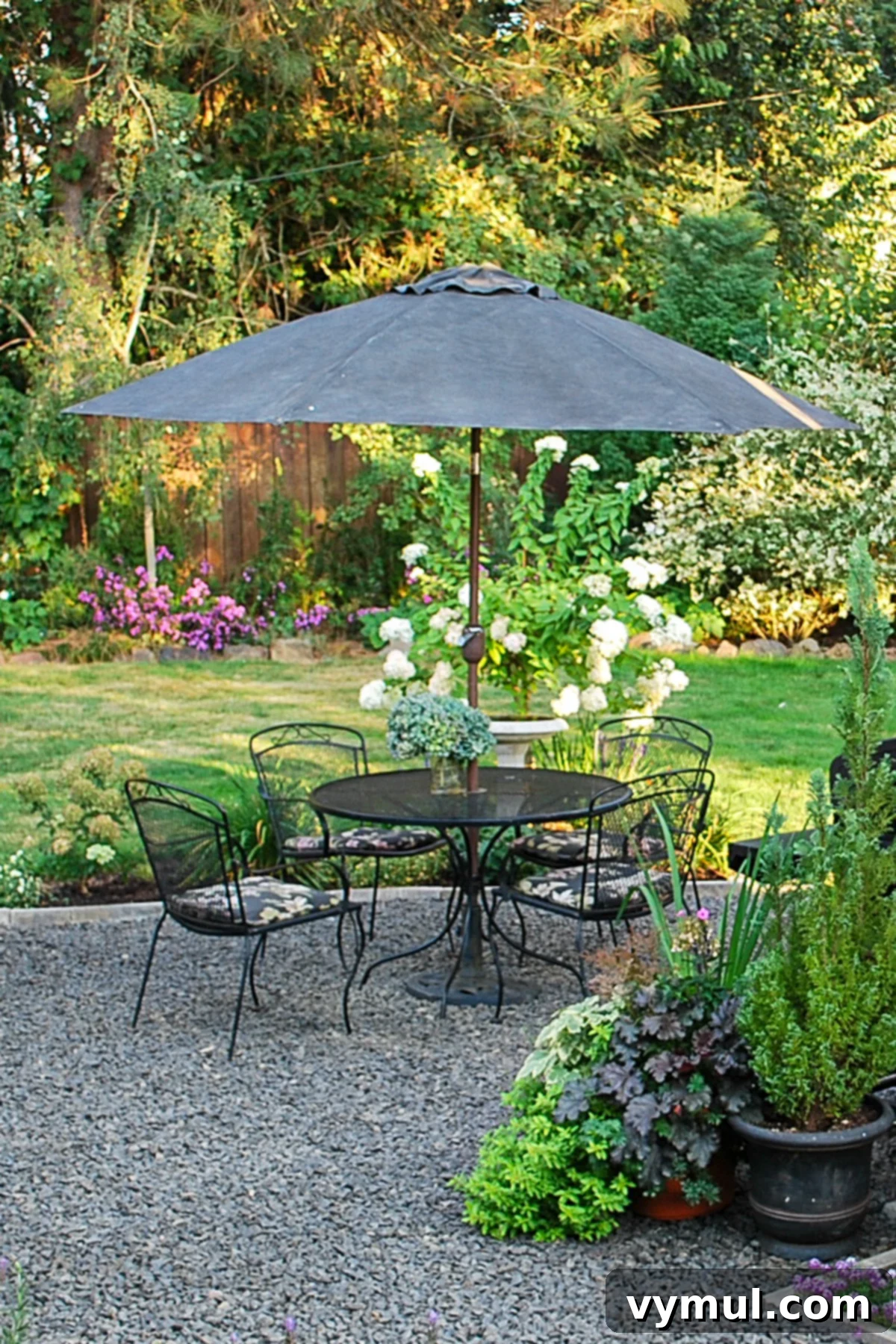
Take a look at this photograph of our backyard, featuring the same painted umbrella, captured during our 2016 Garden Tour, just before we prepared our house for sale:
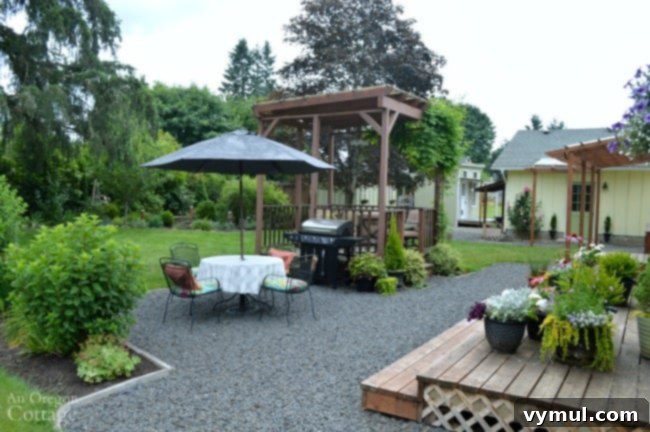
That’s an astounding five full years of continuous use from an initial investment of just a few cans of spray paint! By this point, yes, the umbrella exhibited a more pronounced mottled appearance, and it had developed a few more holes, signaling that its natural lifespan was truly winding down. We were nearing our move and knew it was finally time to bid it farewell. However, even with the increased mottling and minor wear, we still believe it looked infinitely better than its prior state of light, faded gray, or unsightly mildew. Don’t you agree? This entire experiment proved to be a wonderfully surprising success: you absolutely CAN paint a faded outdoor umbrella, and with just basic outdoor spray paint and no additional top coating, they DO last for many, many years, providing incredible value and extending the life of your outdoor furnishings!
When It’s Finally Time for a New Patio Umbrella
Even the most durable DIY projects and lovingly revitalized items eventually reach the end of their useful life. When your beloved, spray-painted patio umbrella has truly given its all and it’s time to replace it, you have a couple of straightforward options, ensuring your outdoor space remains shaded and stylish:
- Purchase a Brand New Umbrella: This is the most obvious choice for a complete refresh and upgrade. When selecting a new umbrella, we highly recommend looking for models that feature a convenient hand-crank mechanism for easy opening and closing, as well as a tilting head feature for adjustable shade throughout the day. These functionalities significantly enhance user comfort, versatility, and overall enjoyment of your outdoor living area. Consider popular and reliable options like this highly-rated model or this versatile choice, which offer durability and user-friendly features.
- Buy a Replacement Cover Only: If your existing umbrella pole, base, and frame are still in excellent, sturdy condition, but only the fabric cover is worn out, faded beyond repair, or simply has too many holes, you can often save a significant amount of money and reduce waste by purchasing just a replacement cover. This is a more sustainable option than replacing the entire unit. When buying a replacement cover, be absolutely sure to measure your old cover accurately (especially the diameter when open) and carefully count how many ribs your pole has, as replacement covers are precisely designed to fit specific frame sizes and rib counts. Here’s a common 9-foot replacement option to get you started, but remember to verify your specific umbrella’s dimensions and rib count before purchasing.
Have you given your faded outdoor umbrella a fresh coat of paint? We’d love to hear about your experience, share your tips, and see how it worked out for you in the comments below!
Disclosure: Please note that affiliate links included in this article may generate a commission based on sales, but this will not alter your purchase price in any way. Click here to access our full disclaimer and advertising disclosure policy for more information.