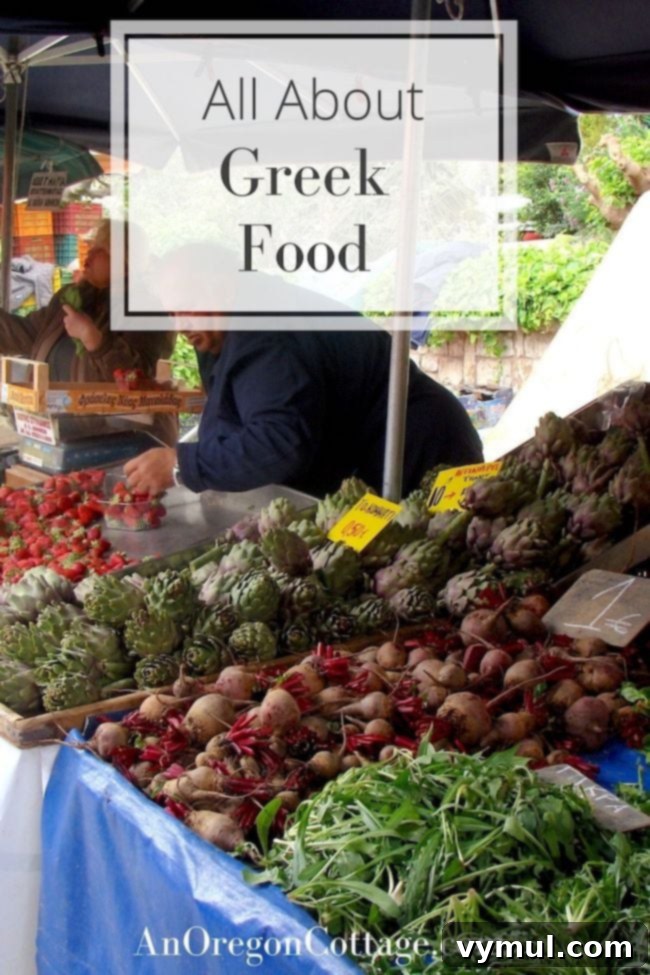
Discovering Authentic Greek Cuisine: A Culinary Journey Through Athens, Corinth, and Thessaloniki
Embark on a flavorful exploration of authentic Greek food, inspired by our unforgettable journey through the vibrant cities of Athens, Corinth, and Thessaloniki. This guide introduces you to the essential terms, unique customs, and delicious dishes we savored, complete with personal insights and vivid imagery. Prepare to have your perceptions of Greek gastronomy transformed!
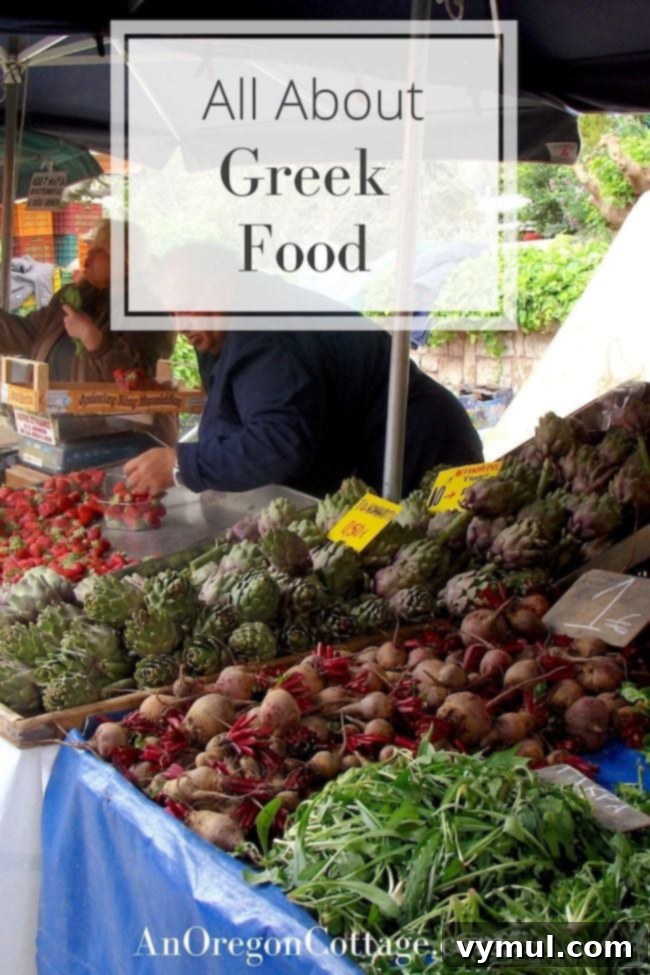
To merely say we enjoyed the food during our trip to Greece would be a significant understatement. Our culinary adventure across this beautiful country was nothing short of extraordinary, largely thanks to our incredible friends who graciously hosted us. They went above and beyond, ensuring we experienced a true immersion into Greek culture through its food, presenting us with a diverse array of dishes that Greece is celebrated for. From the bustling streets of Athens to the serene landscapes near Corinth and the vibrant northern city of Thessaloniki, every meal was a discovery.
We feasted on classic Greek staples like succulent gyros (pronounced YEE-ros, a delightfully savory rotisserie meat dish), flavorful kabobs, and the ubiquitous pita – a soft, versatile flatbread unique to Greece that differs from the pocketed variety often found elsewhere. Of course, no Greek meal is complete without creamy tzatziki, a refreshing yogurt and cucumber dip, and the iconic Greek salad, a vibrant medley of fresh produce and feta. While I anticipated an abundance of incredible flavors, savory meats, and the ever-present pita, along with a generous serving of cucumbers (a personal culinary challenge for me, unfortunately), there were several surprising elements that truly redefined my understanding of Greek cuisine.
Unexpected Delights and Discoveries in Greek Cuisine:
- French Fries, A Greek Staple: Prepare to be amazed by the sheer quantity of french fries consumed in Greece. Seriously, they eat them with almost everything! Far exceeding typical Western consumption, these crispy potatoes are not just a side dish; they are an integral part of many meals. You’ll find them tucked into gyros, accompanying kabobs, or served alongside keftedes (flavorful meatballs) and beefteki (burger patties). Practically every taverna meal we enjoyed featured multiple dishes with fries, often even platters dedicated solely to them. But here’s the twist: forget ketchup. Greeks prefer to dip their fries into cooling, tangy tzatziki, creating a truly unique and addictive flavor combination.
- Embrace the Unpitted Olive: If you’re accustomed to the convenience of pitted Kalamata olives, get ready for a different experience. In Greece, olives are almost universally served with their pits intact. This tradition, while initially startling – prompting a cautious bite and a silent prayer for dental integrity – actually enhances the flavor and texture of the olive. The pit helps preserve the olive’s natural oils and juices, resulting in a richer, more authentic taste. Navigating the polite removal of the pit from mouth to plate becomes an amusing part of the dining ritual.
- Pork and Chicken Reign Supreme Over Lamb: A common misconception, often perpetuated by online recipes, is that lamb is the primary meat in Greek cuisine. While lamb is certainly available and cherished for special occasions, our travels revealed that pork and chicken are far more prevalent in daily meals and street food. The mouth-watering meat cones on street gyros stands, for instance, are almost exclusively pork or chicken. Beef also makes frequent appearances. This preference likely stems from factors like availability, cost-effectiveness, and traditional farming practices, offering a delicious and diverse range of meat dishes.
- The Unparalleled Freshness of Greek Produce: This was perhaps the most delightful surprise. Despite picturing a landscape dominated by ancient cities and endless olive groves, the journey north to Thessaloniki unveiled a country brimming with fertile orchards and productive farms. The produce in Greece is simply incredible. Beyond the expected olives, we savored the most flavorful, intensely sweet oranges I have ever tasted. Cucumbers, peppers, crisp lettuce, deep red tomatoes, and juicy strawberries were all bursting with freshness and robust flavor. The abundance and quality of locally grown ingredients underscore the Mediterranean diet’s emphasis on seasonal, wholesome foods, transforming simple salads and side dishes into culinary highlights.
- A Realistic Look at Pricing: Given recent economic narratives, I initially expected food prices in Greece to be considerably lower than in the US. However, we found that restaurant and taverna prices were generally comparable to those back home. The real bargains, however, were found in the neighborhood markets. Here, the incredibly fresh, seasonal produce was remarkably inexpensive, allowing locals and savvy visitors alike to enjoy high-quality ingredients without breaking the bank. This dual pricing structure highlights the importance of exploring local markets for authentic and economical culinary experiences.
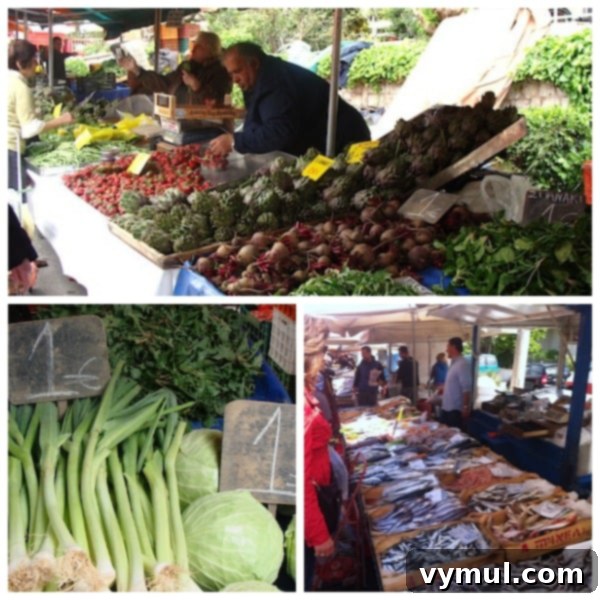
Our experience at the open-air neighborhood markets, known as laiki (pronounced ly-KEE), was a far cry from the serene farmer’s markets we are accustomed to. These bustling hubs of commerce and community are a feast for the senses, vibrant with sound, color, and aroma. Vendors enthusiastically call out to passersby, each vying for attention and trying to entice you to sample and buy their wares. The atmosphere is boisterous and lively, with a charming chaos that truly captures the spirit of Greek daily life. Little old Greek ladies, armed with their sturdy wheeled baskets, navigate the crowds with an almost unstoppable determination, gently (or sometimes not so gently!) bumping into anyone in their path as they meticulously select their provisions.
The laiki we visited was immense, sprawling across so many streets that we couldn’t possibly explore every section. These markets are a dynamic part of urban life, moving from neighborhood to neighborhood throughout the week, with locals keenly aware of the day their area will host the market, planning their shopping accordingly. Beyond the incredible array of fresh produce, these markets also feature extensive sections dedicated to dry goods. You can find everything from practical kitchen gadgets and everyday clothing to decorative pillows and intricate household items. It’s a treasure trove for unique finds; I personally snagged a beautiful leather purse for just 20 euros (approximately $26 at the time), a fantastic price for a quality item.

While the laiki markets were brimming with fresh ingredients, vendors selling prepared foods from carts were less common than one might expect. However, with a little persistence, we did manage to discover a gem! We found a vendor offering delicious cubes of pork on skewers, known as kalamaki. These delightful bites came in a simple bag with a piece of bread, a perfect on-the-go snack for just 1 euro (about $1.30 during our visit). They were incredibly tasty, a testament to the simplicity and quality of Greek street food.
This market experience, however, brought to light a common source of confusion regarding Greek food terminology. We frequently heard terms like souvlaki, kabobs, kalamaki, and gyros, all seemingly used interchangeably to describe grilled meat. It can be quite perplexing for visitors!
Our knowledgeable Greek friends provided the much-needed clarity, helping us navigate the delicious nuances of these names:
Kabob refers to pressed, seasoned ground meat, often beef or lamb, typically formed around a skewer before grilling. Gyros (YEE-ros) are characterized by thinly shaved meat, usually pork or chicken, expertly carved from a vertical rotisserie. Kalamaki describes cubed pieces of meat, most commonly pork, threaded onto a small skewer and grilled. Finally, Souvlaki is a broader, general term encompassing any dish of meat grilled on a skewer, whether it’s a small skewer cooked over a grill or the larger rotisserie meat. Our friends would often ask, “Should we do souvlaki for dinner?” – meaning they might order kabob, gyros, or kalamaki, as souvlaki is the overarching category for these delightful grilled offerings.
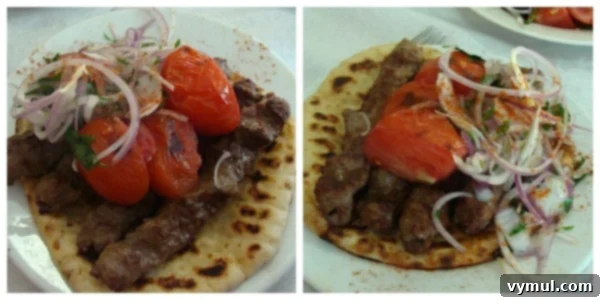
The image above showcases a delectable kabob dish we savored at one of Athens’ famed (and bustling) tavernas, Thanassis. This particular kabob featured a savory blend of seasoned ground beef and lamb, expertly pressed around a skewer before being grilled to perfection. It’s a testament to the rich flavors that Greek cuisine offers.
An interesting cultural note we observed: when dining in a taverna, kabobs and gyros are typically served “open-faced” on a plate, allowing you to appreciate each component. However, when you opt for takeout, the pita bread is skillfully wrapped around the filling, creating a convenient, hand-held meal presented in a paper wrapper. This subtle difference highlights the versatility and adaptability of these dishes to various dining settings.
Most of the time, the tomatoes served with our meals were fresh and vibrant. This particular dish at Thanassis was one of the rare occasions where we encountered grilled tomatoes, and they were absolutely delicious, adding a wonderfully smoky sweetness that perfectly complemented the excellent meat.
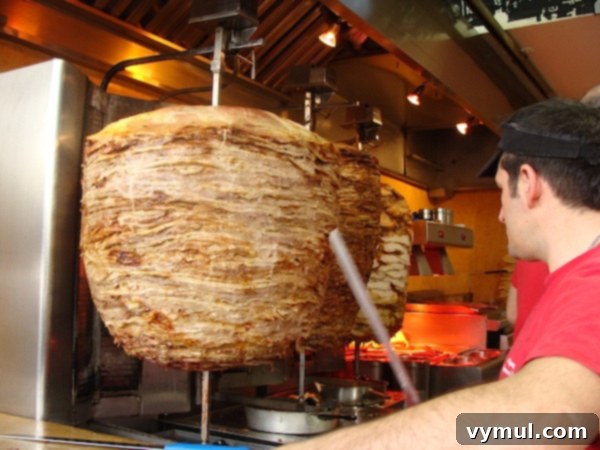
Above, you can see the iconic, mesmerizing cone-shaped rotisseries found at street gyros stands across Greece. It’s truly a sight to behold, a culinary spectacle in itself. These impressive vertical spits are meticulously layered with seasoned meat – often pork in the front and chicken towards the back, as seen in this photo. The meat slowly cooks as the spit continually turns, allowing the flavors to meld and the exterior to caramelize to perfection.
When it’s time to prepare a gyros, the skilled worker employs a long, serrated knife – a blur of motion in the photo, highlighting their speed and precision – to expertly slice off thin strips of the cooked meat directly into a container they hold. This process unfolds before your eyes, a fascinating dance of culinary craftsmanship. Each gyros is then swiftly assembled into a delectable, hand-held meal:
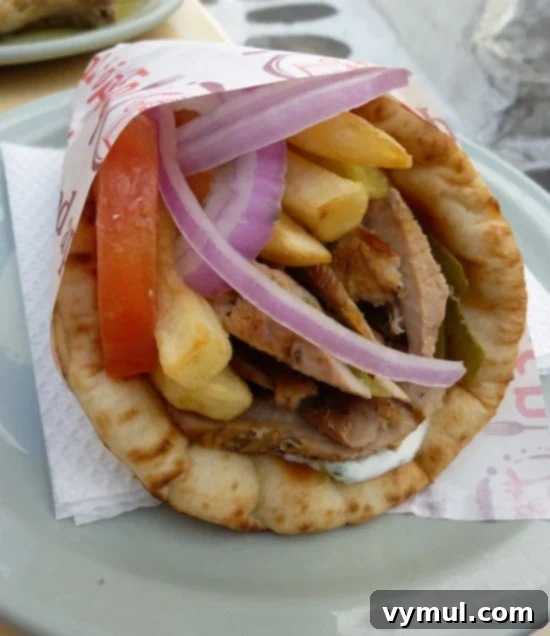
Throughout our travels, whether in the ancient city of Corinth, the bustling capital of Athens, or the northern hub of Thessaloniki, every gyros we encountered followed the same delightful composition: soft pita bread, generous portions of savory rotisserie meat, a handful of crispy fries, fresh tomatoes, and thinly sliced onion. This consistent preparation across regions speaks to the enduring popularity and traditional authenticity of this beloved street food.
One interesting observation was the occasional absence of tzatziki within the gyros itself. While this picture shows it included, it was usually served separately, and often, we had to pay extra for it! This might be a reflection of current economic conditions, but it was a noticeable difference from some Western interpretations of gyros. Personally, I must admit, I don’t quite understand the inclusion of french fries inside the gyros. It’s already a substantial meal with a large piece of pita bread! I often ended up sharing my fries and half the pita with my husband, Brian, as it was simply too much bread for my preference. However, the seasoned meat itself was absolutely delicious, and the combination of flavors, even with the fries, was undeniably good.
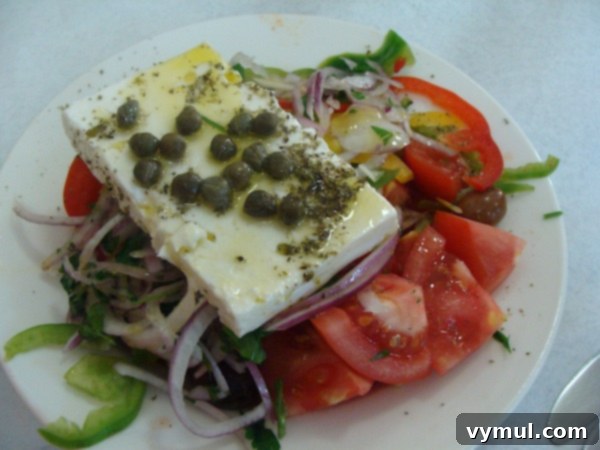
And finally, we arrive at the ubiquitous and utterly refreshing Greek salad, or “Horiatiki Salata.” Can I just express my pure delight? I was truly in heaven with every bite. The simplicity and freshness of this salad are unparalleled, featuring bright red, ripe tomatoes, crisp cucumbers (despite my aversion, their freshness was undeniable), sweet red onion, and usually green peppers, all crowned with generous, thick chunks of creamy feta cheese and robust Kalamata olives.
The particular salad pictured above, from the Thanassis taverna, was notable for its inclusion of capers – a delightful, tangy addition that we rarely encountered in other Greek salads during our trip. Sometimes, the salads would feature thinly sliced sweet peppers, and most often, they rested on a very small, almost imperceptible bed of finely shaved lettuce or cabbage, providing just a hint of leafy green without overpowering the main components.
Crucially, all the Greek salads we enjoyed were “composed,” not tossed. This means the vegetables were meticulously layered, then artfully topped with a few olives and a significant chunk of feta. The feta could be presented as one large, impressive block, as seen here, or more commonly, in three to four substantial pieces, but critically, it was never, ever crumbled. This layered presentation worked wonderfully for me, as it allowed me to easily select my portion from the vegetables that hadn’t been “contaminated” by the dreaded cucumber juice!
The dressing was a testament to Greek culinary philosophy: simple, high-quality ingredients allowing the natural flavors to shine. A generous drizzle of exquisite olive oil and a splash of vinegar (often red wine vinegar or fresh lemon juice) formed the base, finished with a liberal sprinkling of dried oregano – truly the signature Greek herb. This authentic method has completely transformed how I now prepare Greek salads at home (you can find my recipe and tips here!).
Maintaining a Healthy Lifestyle While Savoring Greek Delights:
I know this culinary narrative is extensive, but you might be wondering how I managed to indulge in all this incredible food while maintaining a healthy weight during my travels. This trip served as powerful proof of the principles I advocate in my real, whole food weight-loss series. When you embrace a lifestyle centered around eating smaller, moderate portions of unprocessed, whole foods, your body naturally gravitates towards its optimum weight. After two and a half weeks of dining out in tavernas, enjoying home-cooked meals with friends, and eagerly trying a multitude of new dishes, I returned home at the exact same weight I’ve maintained for years.
The key was never denying myself the pleasure of these authentic flavors. Instead, I practiced mindful eating, often consuming only about half of what you see pictured in many of these generous Greek portions. Furthermore, the traditional Greek taverna dining experience, often involving sharing appetizer plates known as mezedes, inherently encourages this approach. Mezedes allow you to sample small, varied bits from numerous dishes, fostering a communal and naturally portion-controlled way of eating. This emphasis on fresh ingredients, healthy fats like olive oil, and balanced meals, combined with the active exploration typical of travel, truly makes Greek cuisine a wonderfully health-supportive way to eat.
I am currently dedicated to refining some of the exciting recipes I brought back from Greece and adapting others to faithfully replicate the incredible dishes we enjoyed. My goal is to share these authentic flavors and culinary inspiration with all of you!
Update: Here are a few of the Greek-inspired recipes I’ve already published:
- Greek Style Grilled Beef Lettuce Wraps
- Tips for Making an Authentic Greek Salad & Recipe
- Greek Style Shrimp and Orzo Recipe
- Greek Tuna Salad with Artichokes, Olives & Feta