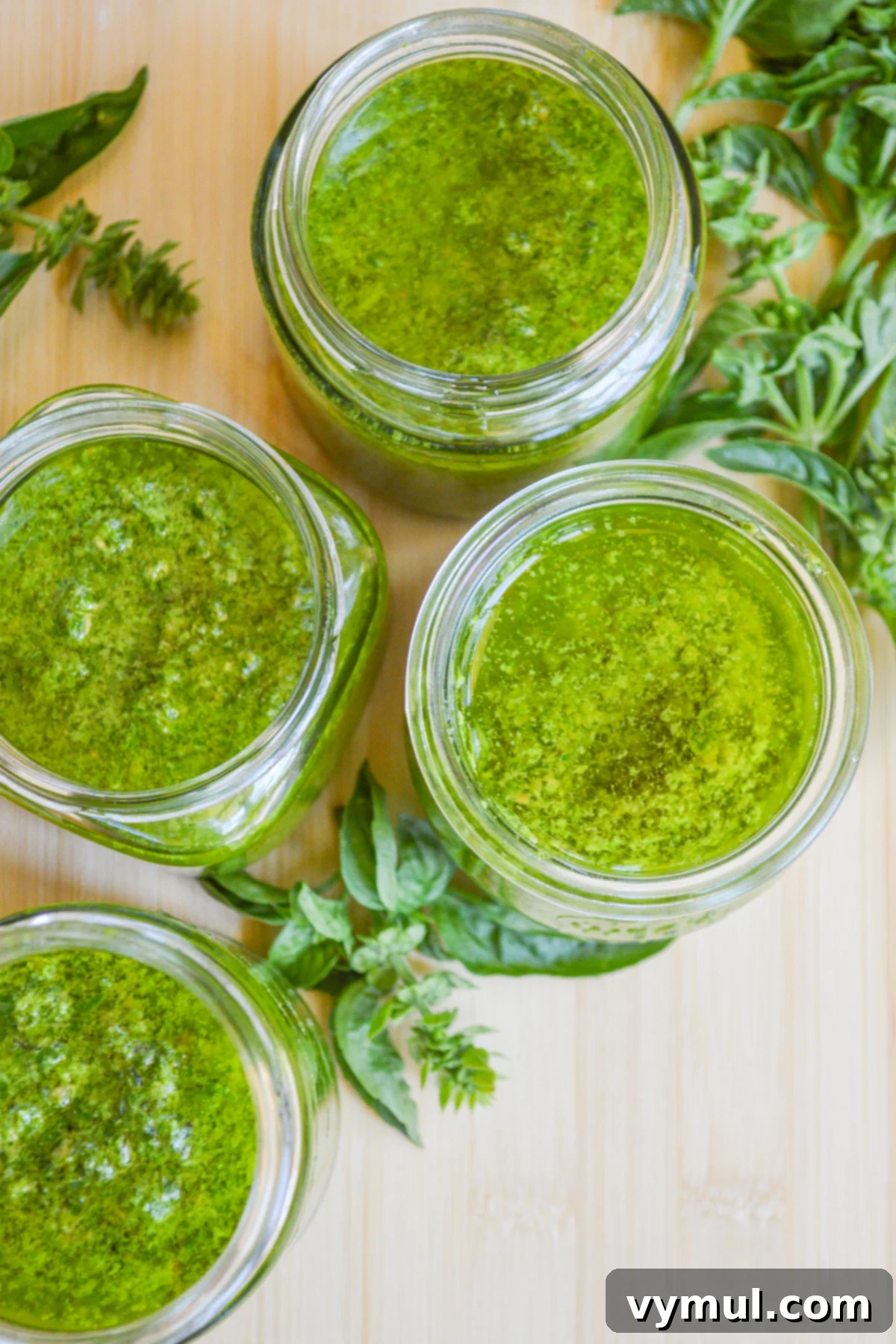
Frugal Homemade Pesto: Your Secret to Enjoying Summer Basil All Year Long (with a Pine Nut Alternative!)
Imagine harnessing the vibrant essence of summer basil and enjoying it long after the season ends. This incredible homemade pesto recipe allows you to do just that! It’s not only super easy to make and bursting with fresh flavor, but it also features a clever, budget-friendly ingredient that makes enjoying delicious pesto all winter long an affordable reality. Say goodbye to expensive store-bought versions and hello to a freezer full of homemade goodness!
For more inspiration, explore our collection of Quick Healthy Recipes designed to make nutritious eating both simple and delicious.
“This recipe is dangerously good! I tried it last year and froze most in small jars. The pesto was just as good and colorful when I thawed it this spring as when I made it. I served it at a small dinner party a couple of months ago and it was a big hit. The guests liked it so much they put it on everything but the dessert.” -Marj
Why Homemade Pesto is a Game Changer
For years, our garden basil has been transformed into this amazing homemade pesto recipe. We make large batches to stock our freezer, ensuring a taste of summer basil is always within reach. While we certainly enjoy it fresh, the majority of our harvest is preserved, providing a wonderful convenience food for busy days.
Homemade pesto is a true kitchen staple. It elevates simple meals and offers a burst of fresh, herbaceous flavor that store-bought versions often lack. Making it yourself means you control the ingredients, avoiding unwanted additives and ensuring the freshest taste possible. Plus, it’s surprisingly simple to prepare, requiring just a few minutes of blending in a food processor.
We absolutely adore this versatile pesto on so many dishes. Spread it generously on warm artisan bread instead of butter – a combination so good it might become an addiction! It’s also the perfect savory sauce for homemade pizza, adding a gourmet touch. And for a quick and satisfying meal, try it in our creamy Creamy Pesto Pasta. Beyond these favorites, it’s fantastic tossed with roasted vegetables, swirled into scrambled eggs, or used as a marinade for chicken or fish.
This pesto proudly earns its spot among my Pantry Basics. It joins other homemade essentials like ketchup, mayo, and salad dressings – all those everyday items we once thought we could only buy from the store. Crafting these items at home not only saves money but also offers superior flavor and quality.
While making pesto at home with your own garden basil inherently reduces costs, there’s an even more significant way this recipe helps your budget. It incorporates a special, frugal ingredient that dramatically cuts down on the expense, allowing you to enjoy this delicious spread frequently without guilt.
The Secret to Frugal Pesto: A Delicious Pine Nut Alternative
The secret to keeping this pesto recipe budget-friendly lies in a non-traditional ingredient that drastically reduces the cost associated with one of pesto’s most expensive components: pine nuts. Traditional pesto often calls for pine nuts, which, while delicious, come with a hefty price tag.
The secret ingredient? Simple sunflower seeds.
You might wonder why sunflower seeds, and not walnuts or another common nut or seed often suggested as a substitute. The answer is their remarkable neutrality. Walnuts, for instance, can impart a strong flavor that competes with the fresh basil and garlic. Sunflower seeds, however, blend seamlessly into the pesto, providing the necessary texture without overpowering the delicate flavors. In my experience, their mildness makes them the perfect, understated alternative.
Are pine nuts truly essential for “authentic” pesto? As a self-proclaimed traditional pesto heretic, I simply cannot justify the expense. Pine nuts can be three times the cost of sunflower seeds. I confess, when I first made pesto years ago, I did use pine nuts, nearly hyperventilating at the cost, all in the name of “authenticity.” But here’s the kicker: once combined with robust garlic, aromatic basil, and savory Parmesan, I honestly couldn’t even distinguish the flavor of the pine nuts. If we’re spending almost $10 per pound on an ingredient, we should definitely be able to taste it, right?
The Ultimate Taste Test: Winning Over a Gourmet
For a long time, I kept my sunflower seed secret to myself, perhaps out of a mix of embarrassment, shame, or guilt – you decide! But then came the fateful dinner with Brian’s cousin and his family. This cousin is an incredible gourmet cook, known for preparing truly memorable meals. Naturally, I was a bit nervous.
I served my pesto with bread instead of butter, probably pushing my luck. He took a bite and paused, then asked, “There’s something different about this pesto—what is it?” My heart sank. “Uh-oh. Gulp. I… um… used sunflower seeds instead of pine nuts. Can I get anyone more water?”
Then, to my absolute astonishment, he replied, “I don’t usually like pesto, but this is really good!”
To say I breathed a sigh of relief would be a massive understatement. From that moment on, I’ve held my head high when revealing the secret ingredient in my pesto. In fact, I now believe it’s a brilliant and frugal approach to making pesto, and dare I say, we actually prefer it this way! If you’re a true pesto connoisseur, by all means, stick with pine nuts. But for the rest of us, let’s embrace this fantastic, frugal pesto recipe.
Let’s Make Homemade Pesto: Simple Steps for Amazing Flavor
Making delicious homemade pesto is incredibly straightforward and quick!
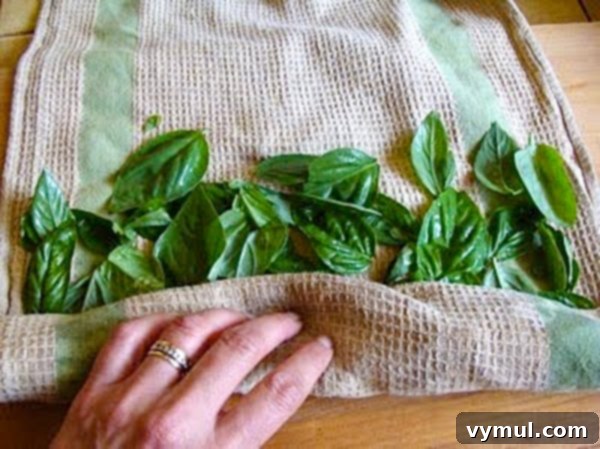
Step 1: Prepare the Basil. Start by carefully removing the leaves from their stems and washing them thoroughly. It’s crucial to dry the leaves completely; excess water can dilute your pesto and cause it to turn brown more quickly. See our handy tip below for an easy drying and storage method!
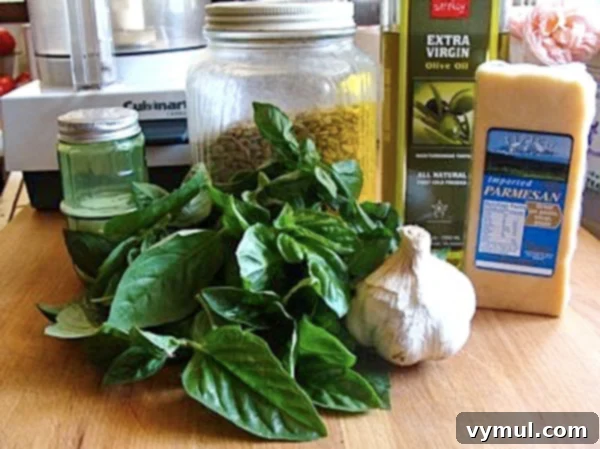
Step 2: Gather Your Ingredients. Besides your freshly prepared basil, you’ll need a few essential components: garlic cloves, grated Parmesan cheese, good quality olive oil, salt, and of course, our star frugal ingredient – sunflower seeds!
Pro Tip: Easily Dry and Store Basil Leaves for Freshness
- For immediate use: Lay your washed basil leaves in a single layer on a clean, dry tea towel. Gently roll up the towel with the leaves inside. Let it rest while you gather your other ingredients; the towel will absorb the moisture, leaving your basil perfectly dry.
- For later use (up to a week): If you need to separate your pesto-making tasks, simply place the rolled, damp towel with the basil into a large plastic bag, seal it, and store it in the refrigerator. The basil will remain remarkably fresh for up to a week (though it’s generally best within four days). You might notice a few leaves turn brown, but the majority will stay vibrant and ready for pesto.
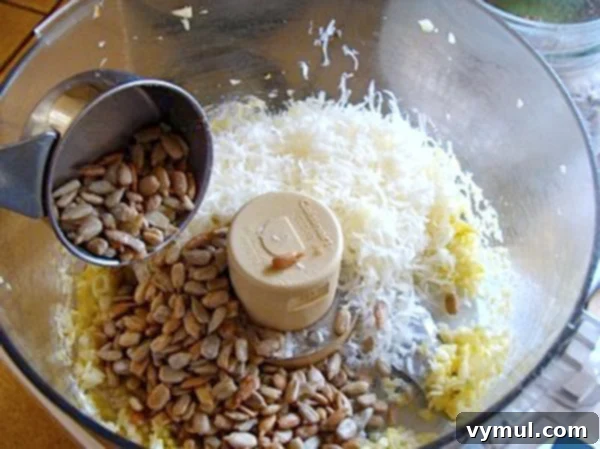
Step 3: Pulse Dry Ingredients. In your food processor, combine the peeled garlic cloves, grated Parmesan cheese, salt, and sunflower seeds. Pulse these ingredients until they are finely chopped and well-combined. This ensures a consistent texture and helps release their flavors.
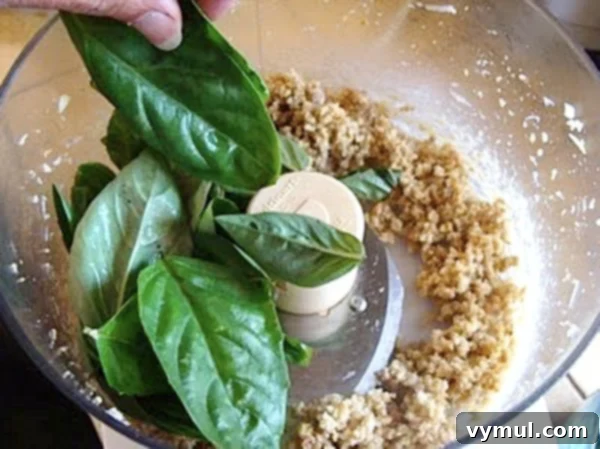
Step 4: Incorporate Basil and Olive Oil. Add the prepared basil leaves to the food processor. Pulse until the basil is partially chopped (don’t worry if it’s not perfectly minced yet). Then, with the food processor motor running, slowly drizzle in the extra virgin olive oil in a steady, fine stream. Continue processing until the pesto reaches a smooth, consistent texture. And just like that – you have glorious homemade pesto!
How to Freeze Homemade Pesto for Winter Enjoyment
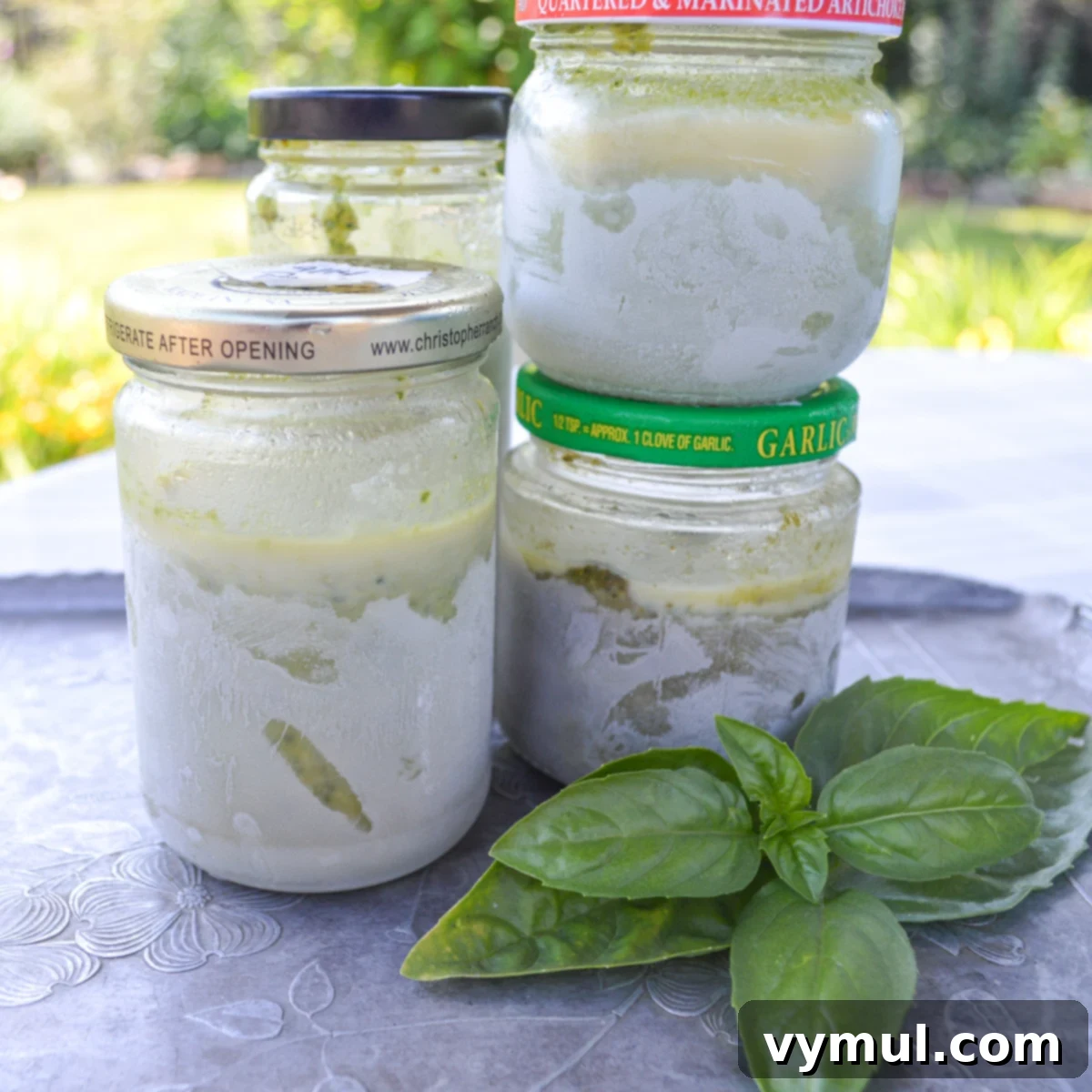
One of the greatest advantages of making pesto from scratch is its excellent freezer-friendliness. Freezing pesto is a fantastic way to capture the taste of summer basil and enjoy it throughout the colder months, adding a burst of fresh flavor to your winter dishes.
To freeze pesto for later use, simply spoon serving-sized portions into freezer-safe containers. It’s important to leave about 1-2 inches of headspace in each container to allow for expansion as the pesto freezes. As an extra layer of protection and to maintain optimal freshness, I highly recommend adding a small layer of olive oil to the top of the pesto before sealing the lid. This creates a barrier that prevents oxidation and freezer burn (see more tips below!).
Choosing the Best Containers for Freezing Pesto
When it comes to freezing pesto, the right container makes all the difference in convenience and preventing waste.
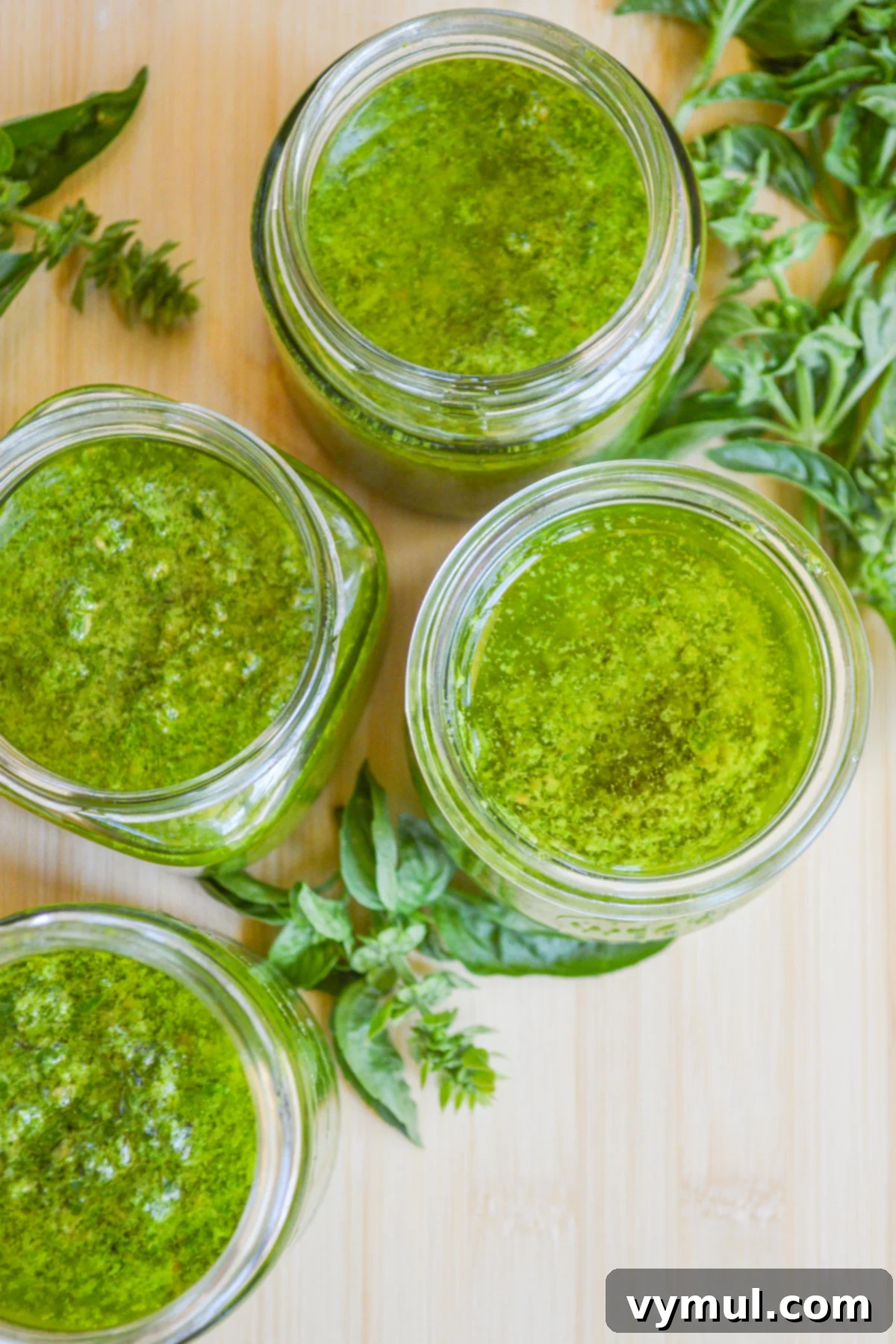
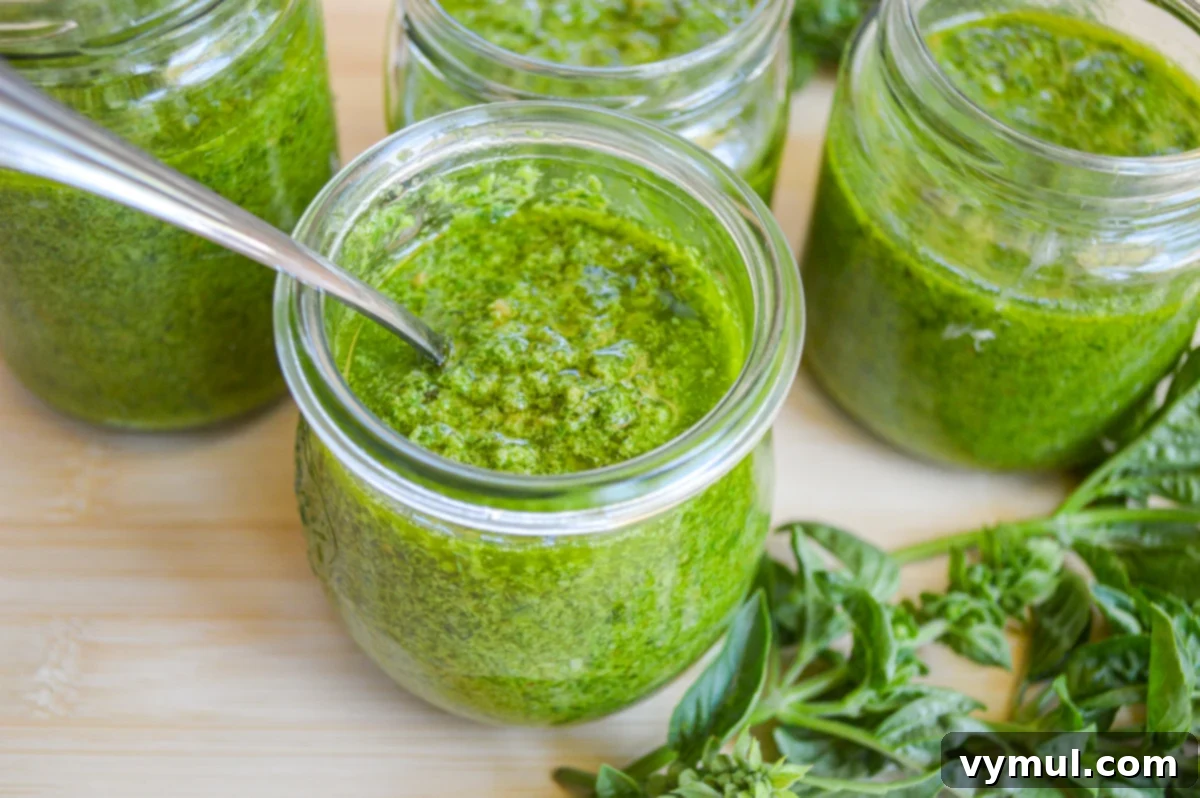
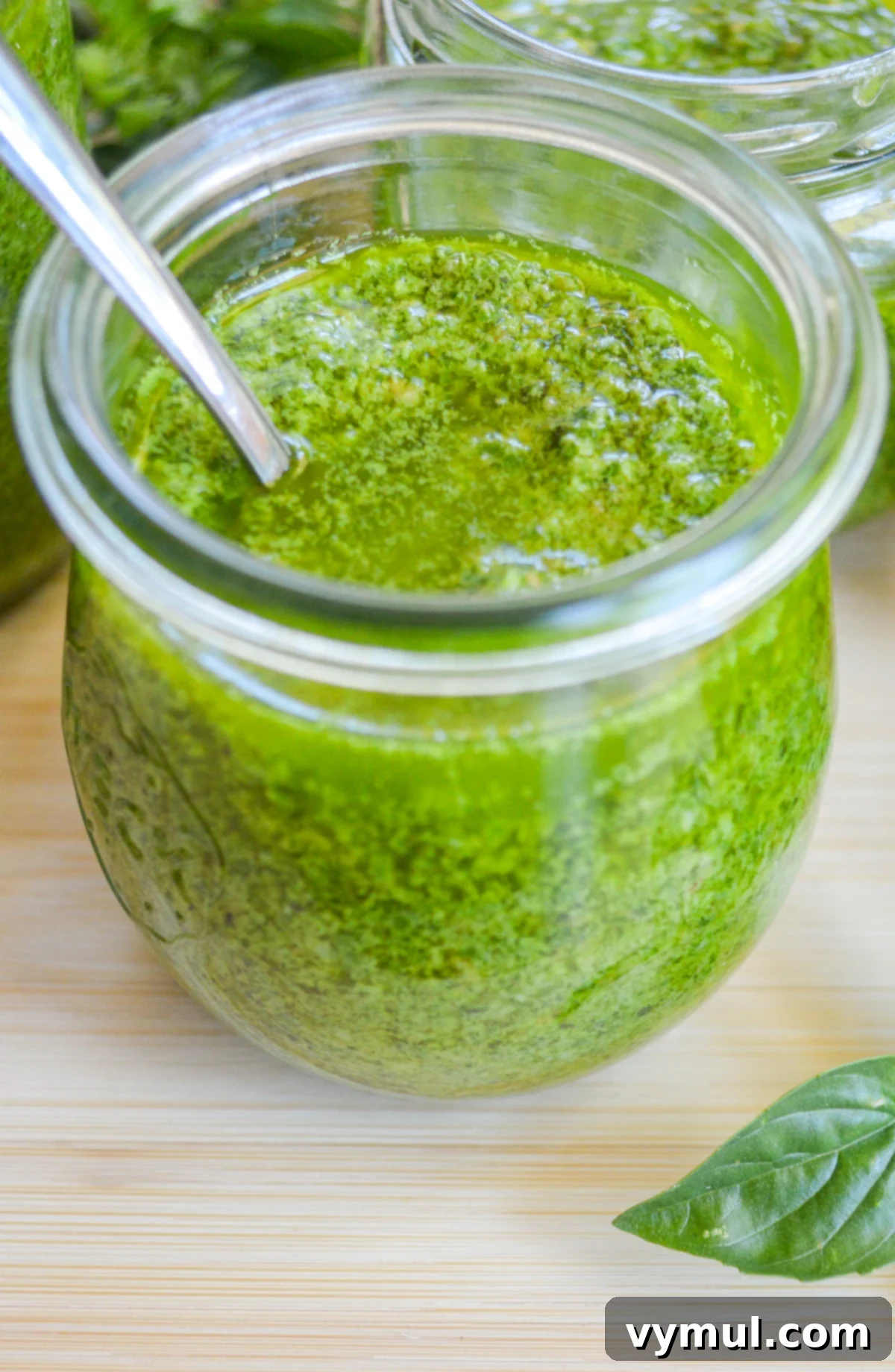
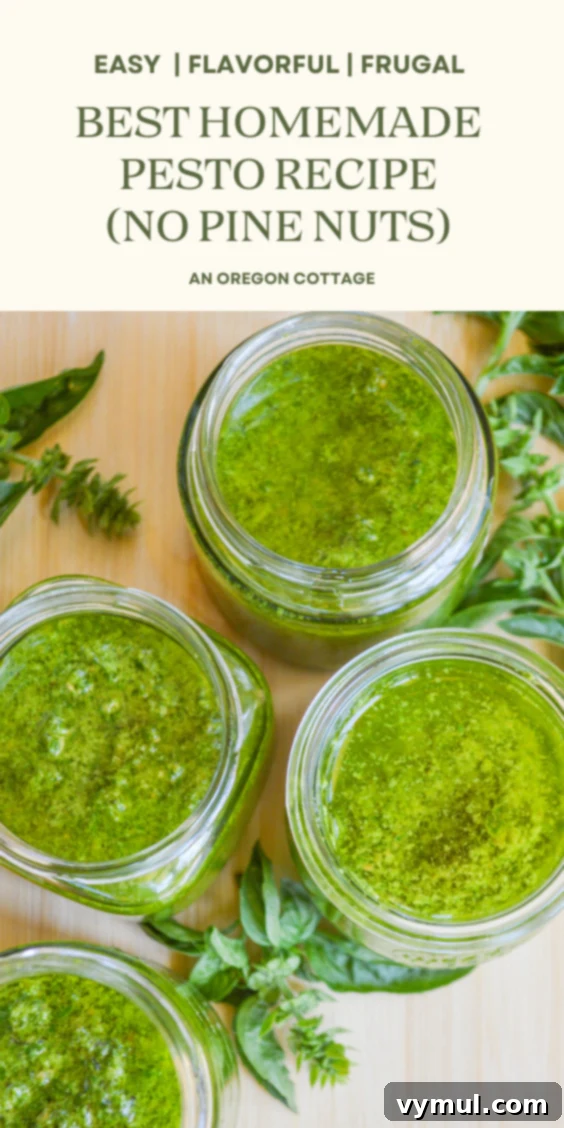
Small glass jars are my top choice for convenience and reusability. As you can see in the photo above, I frequently reuse small glass jars that originally held items like marinated artichokes. I’ve been using this method for many years without any issues of breakage. These jars are ideal because they’re easy to defrost – simply place them in the refrigerator overnight – and then you can serve the pesto directly from the jar at the table. This minimizes cleanup and maximizes ease.
Alternatively, you can use half-pint or 4-ounce Mason jars, which are specifically designed for preserving and are readily available. Another excellent option, especially for smaller, single servings, is to freeze pesto in ice cube trays. Once frozen solid, pop the pesto cubes out and transfer them to a freezer bag or airtight container. This allows you to grab just the amount you need for a quick meal or to add flavor to soups, stews, or sauces without thawing a whole jar.
Expert Tips for Perfectly Frozen Pesto
These two simple yet effective tips, which I learned from The Oregonian’s food section years ago, will significantly enhance the quality of your frozen pesto, ensuring it tastes as fresh as the day you made it:
- Add a Splash of Lemon Juice: Before freezing each batch of pesto, stir in a couple of teaspoons of fresh lemon juice. This small addition works wonders! The lemon juice not only acts as a natural preservative, helping the pesto last longer in the freezer, but it also dramatically helps it maintain a vibrant green color once thawed and opened. Trust me on this – when I’ve skipped this step, the pesto tends to turn brown almost immediately after opening.
- Create an Olive Oil Barrier: After pouring your pesto into freezer jars, cover the surface with a thin layer of extra virgin olive oil. This layer acts as a protective seal, preventing air from reaching the pesto and safeguarding it against freezer burn and oxidation. To accommodate this extra oil layer, I often use slightly less oil when processing the pesto initially. This way, the added layer simply gets stirred in when you thaw and use the pesto, contributing to its rich flavor without making it overly oily.
More Pantry Basics Recipes to Elevate Your Home Cooking
- Homemade Mayonnaise Recipe – Two Easy Methods: Discover how simple it is to whip up creamy, flavorful mayo at home.
- Quick Honey Sweetened Homemade Ketchup Recipe: A healthier, tastier alternative to store-bought ketchup.
- Sweet and Spicy Canned Onion Marmalade: A versatile condiment perfect for cheese boards, sandwiches, and more.
“Was looking for a pesto recipe and came across this one. So glad I did. Just made it today. Really delicious!!” -SandraM
If you give this recipe a try, I’d absolutely love to hear how it turned out for you in the comments below! You can also share your culinary creations with me by sending a picture on Instagram!

Frugal Homemade Pesto (with Secret Ingredient)
Make this easy homemade pesto recipe that tastes amazing and uses a secret alternative to expensive pine nuts that we like even better!
Pin Recipe
Prep Time: 30 mins
Total Time: 30 mins
Yield: 1 1/4 cups
Author: Jami Boys
Equipment
- Food Processor
Ingredients
- 6 cloves garlic (peeled)
- 1/4 cup sunflower seeds*
- 1/2 cup grated Parmesan cheese
- 1 teaspoon salt (or to taste)
- 2 ½ cups packed basil leaves (washed and dried)
- 1 tablespoon lemon juice (for freezing to keep pesto a brighter green after opening)
- 3/4 to 1 cup olive oil (plus more if freezing)
Instructions
- Pulse garlic in a food processor until minced. Add sunflower seeds, Parmesan cheese, and salt. Pulse a few times to chop, then add the basil leaves and continue to process until most is chopped (it’s okay if not all is perfectly chopped – it will further mince as the oil is added). Add lemon juice now, if using.
- With the food processor running, add the olive oil in a fine stream. Process until the pesto is smooth and well combined. Adjust salt to taste, if needed (less will be required if using salted sunflower seeds).
- To store in the freezer: Pour about a 1/2 cup of pesto into freezer-safe containers. Add a shallow layer of olive oil to completely cover the tops of the pesto (ensuring you leave at least a 1-inch headspace for expansion). Secure the lids, label with the date, and freeze.
Notes
*I use roasted sunflower seeds for the extra flavor, but raw seeds will work too.
Storage: The frozen pesto keeps well for about a year – if it lasts that long in your freezer!
Nutrition
Serving: 1 teaspoon | Calories: 31kcal | Carbohydrates: 0.4g | Protein: 0.4g | Fat: 3g | Saturated Fat: 1g | Polyunsaturated Fat: 0.4g | Monounsaturated Fat: 2g | Cholesterol: 1mg | Sodium: 54mg | Potassium: 10mg | Fiber: 0.1g | Sugar: 0.03g | Vitamin A: 60IU | Vitamin C: 0.4mg | Calcium: 10mg | Iron: 0.1mg
Did you make this recipe?
Mention @anoregoncottage or tag #anoregoncottage!
This recipe has been updated and refined over the years – it was originally published in 2009, with significant updates in 2015 and 2024 to provide you with the best possible homemade pesto experience.