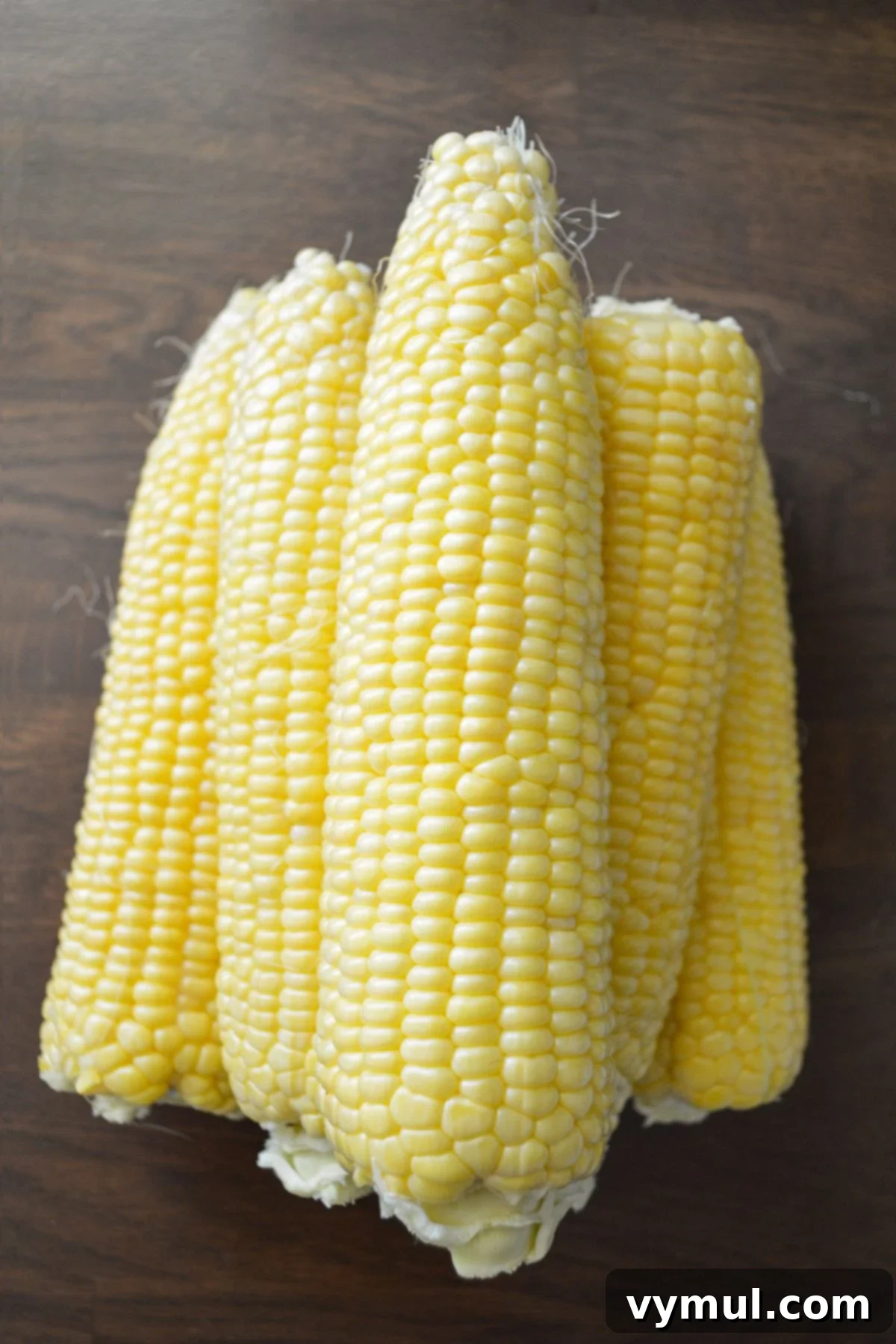
The Ultimate Guide to Freezing Corn: Three Easy Methods for Year-Round Enjoyment
Unlock the secret to preserving summer’s sweet bounty! This comprehensive guide details three simple yet effective methods for freezing corn – whether you prefer unblanched whole cobs, raw cut kernels, or blanched kernels. Learn the pros and cons of each approach to help you choose the perfect preservation technique for your needs, ensuring you can enjoy that fresh corn flavor all year long.
Beyond freezing, there are many fantastic ways to preserve and cook with corn. If you’re looking for more inspiration, consider these popular corn-based recipes:
- Spicy Corn Relish Recipe with Olives (Water Bath Can)
- 5-Minute Foolproof Fermented Corn Relish Recipe
- Spicy Beef, Tomato and Corn Stew (a perfect meal to freeze for later!)
Some links in this article are affiliate links. If you click on them and make a purchase, I may receive a small commission at no extra cost to you. Your support helps sustain this content!
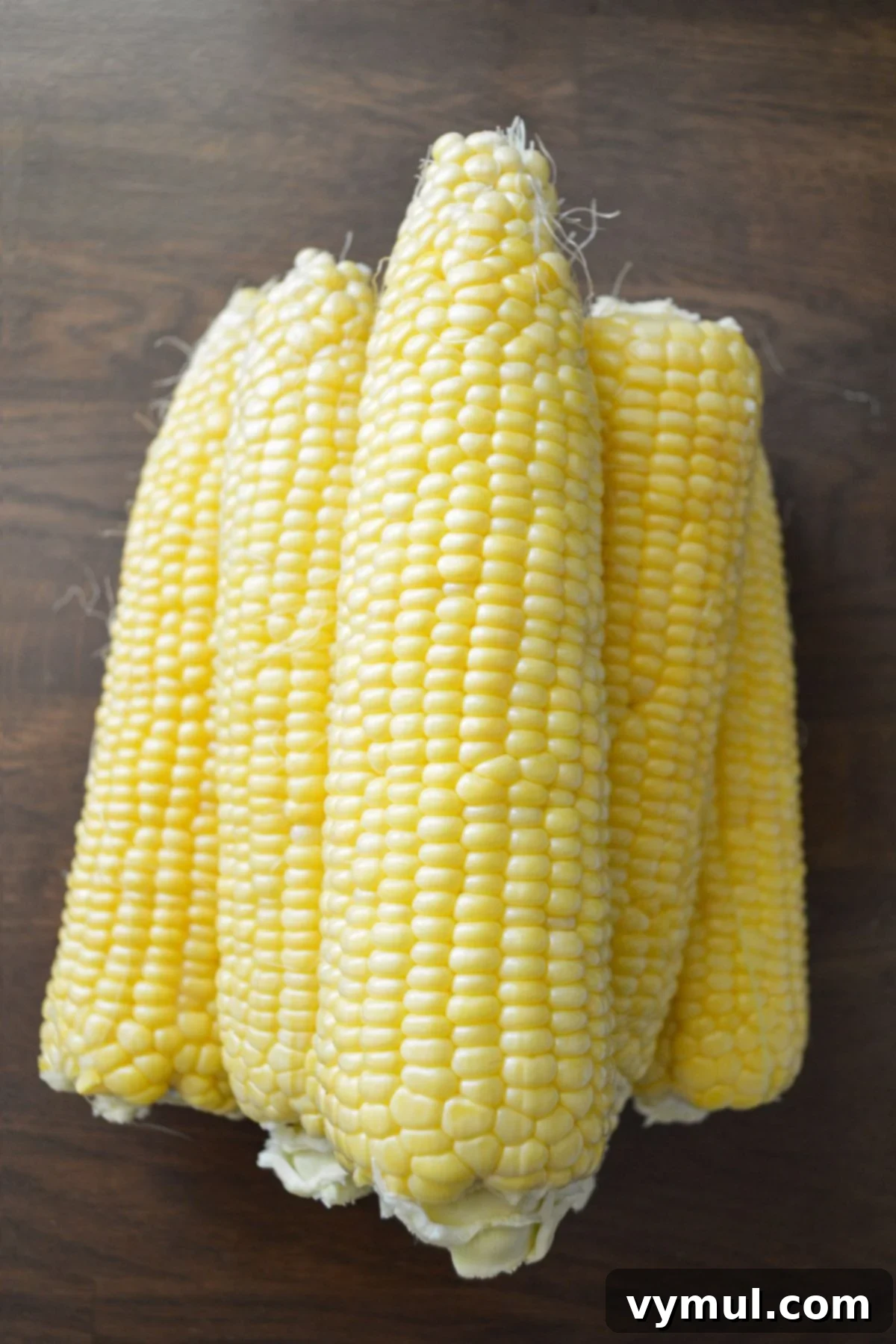
There’s a unique joy in savoring fresh sweet corn, a true emblem of summer’s peak. Whether you’re harvesting a bumper crop from your garden or stocking up on a great deal at a local farm stand, there inevitably comes a time when you’ve enjoyed all the corn you can directly. You might have grilled it on the cob, or incorporated it into delightful seasonal dishes like a vibrant zucchini, corn & tomato sauté with feta or a comforting creamy fresh baked corn. When the harvest is plentiful, the next logical step is preservation, allowing you to extend that quintessential taste of summer into the colder months.
Among the various preservation methods, freezing stands out as one of the easiest and most effective ways to handle a large quantity of corn while retaining most of its fresh flavor and tender texture. Frozen corn is incredibly versatile and can be transformed into a wide array of dishes. Imagine a fresh-tasting sauté with peppers and onions, a hearty sausage-corn chowder, or even a delightful roasted corn salsa, all made with corn frozen at the height of its flavor. This makes frozen corn a truly indispensable ingredient in any home kitchen.
Inspired by the success of freezing other vegetables without blanching, such as green beans, snap peas, and even broccoli, many readers frequently inquired about freezing corn without the traditional blanching step. To address these questions, I dedicated a full year to experimenting with different freezing techniques for corn, carefully evaluating our family’s preferences and the practical outcomes of each method.
The results were enlightening! While it is indeed possible to freeze corn without blanching, the optimal approach isn’t as straightforward as with some other vegetables. My experiments revealed that I actually prefer to have corn preserved in three distinct ways, each tailored for specific culinary uses. This strategy ensures maximum versatility, allowing me to always have the perfect type of frozen corn on hand for any recipe:
- Unblanched, cut kernels.
- Blanched, cut kernels.
- Whole ears of unblanched corn.
Regardless of the method you choose, preserving corn when it’s at its peak flavor is an incredibly rewarding process that allows you to enjoy the sweet taste of summer throughout the entire year. Let’s delve into each method to help you determine which options are best suited for your kitchen and cooking style.
Watch Our Instructional Video: Freezing Corn Made Easy
Selecting and Preparing Your Corn for Optimal Freezing
The quality of your frozen corn largely depends on the initial quality of the fresh ears. To ensure the best flavor and texture, always choose corn that is harvested recently, sweet, and firm. Look for husks that are vibrantly green and tightly wrapped around the cob. The silks should be slightly damp, brown, and sticky. Avoid ears with dry or yellowing husks and silks, as these indicate older corn that has lost some of its sweetness and moisture. Once you’ve selected your perfect ears, follow these simple preparation steps common to all methods:
- Shucking: Carefully peel back the green husks and completely remove all the fine silks from each cob. A clean, stiff brush can be very helpful for dislodging stubborn silk strands.
- Cleaning: Rinse the shucked cobs under cold running water to ensure all remaining dirt, debris, or tiny silk fragments are washed away.
These crucial preliminary steps ensure your corn is in prime condition before it goes into the freezer, setting the stage for delicious results every time.
Three Highly Effective Ways to Freeze Fresh Corn
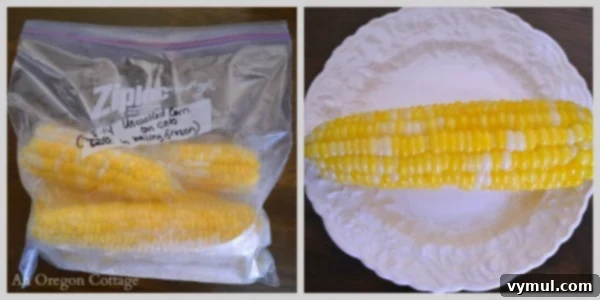
1. Freezing Unblanched Whole Corn Cobs
For those times when you need to preserve a large quantity of corn with minimal fuss, freezing whole, unblanched cobs is the quickest and easiest method. It’s ideal for busy harvest days when time is a precious commodity.
- Instructions: After shucking and cleaning the corn, simply place the whole cobs into large freezer-safe bags. The key here is to extract as much air as possible from the bags – a straw can be effective, or a vacuum sealer works even better. Once sealed, transfer the bags directly to your freezer.
Pros: The primary advantage of this method is its incredible speed. It takes mere minutes per ear, allowing you to process a substantial harvest quickly. We always keep a few whole cobs frozen this way, offering a delightful taste of summer, even in the coldest winter months.
Cons: While convenient, corn frozen as whole, unblanched cobs tends to develop a slightly chewier texture and can release more water when cooked compared to blanched or fresh corn. They are also less versatile for recipes that require loose kernels, making them best suited for serving as corn on the cob. Although visually appealing (as seen in the right photo above), their texture might not be preferred by everyone for all applications.
Best way to cook frozen whole cobs*:
To optimize the texture and flavor of unblanched frozen whole cobs, minimizing sogginess, follow these steps:
- Bring a large pot of water to a vigorous, rolling boil. Ensure there’s enough water to fully immerse the corn cobs.
- Carefully drop the frozen ears of corn directly into the boiling water. Do not thaw them beforehand, as this can lead to a mushier texture.
- Cook for 3-5 minutes, or until the corn is thoroughly heated and cooked to your desired tenderness. The high heat helps to cook the corn quickly while retaining some of its natural crispness.
*This particular cooking method was suggested by a reader as an effective way to prevent the cobs from becoming overly soggy. While we observed they can still be a bit more watery than fresh corn, this approach consistently delivers the best results for unblanched frozen whole cobs.
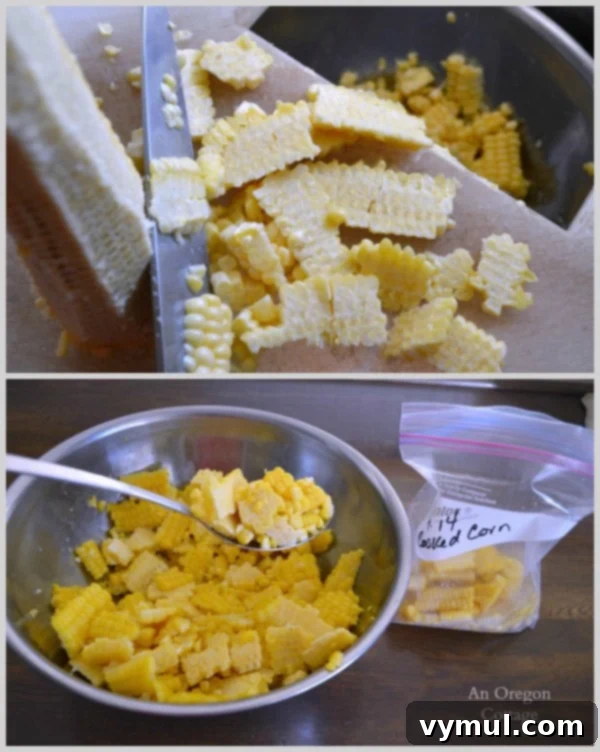
The following two freezing methods involve removing the kernels from the corn cobs. This additional step significantly enhances their versatility, making them suitable for a broader range of culinary applications and more efficient for storage.
Essential tips for efficiently removing and storing corn kernels:
– Optimal Storage Containers. When freezing individual corn kernels, I strongly recommend using quart-size freezer baggies over rigid jars or plastic containers. Freezer bags offer a crucial advantage: you can easily remove excess air using a simple straw (or, for even better results, a vacuum sealer). This removal of air is vital for preventing freezer burn and maintaining the quality, flavor, and texture of your corn. Furthermore, flexible bags conform to space, stacking neatly and efficiently in your freezer, thereby maximizing precious storage capacity.
– Minimizing Mess During Kernel Removal. Cutting kernels off the cob can famously be a messy endeavor, with sweet corn spraying everywhere! I’ve experimented with countless techniques to contain this chaos – from standard cutting boards to specialized tube cake pans and even dedicated corn cob cutters. After extensive personal testing, I consistently return to my most trusted and effective method: an over-the-sink cutting board that features a built-in drain or hole on one side. This ingenious setup allows me to position a large bowl directly underneath the hole. As I expertly slice the kernels from the cob, they fall neatly and directly into the bowl below. This method drastically minimizes splatter and effectively contains the vast majority of the mess within the sink area, making corn preparation much cleaner and more efficient.
If you’re considering enhancing your kitchen setup with a similar over-the-sink cutting board, here are a few highly-rated options available on Amazon:
- For a practical, highly durable, and well-reviewed option, consider this plastic over-the-sink cutting board.
- A slightly more premium, yet highly adjustable and equally well-reviewed alternative is this plastic over-the-sink cutting board with adjustable features.
- For those who prefer the timeless elegance and feel of wood (though fewer options exist in this style), this beautiful wooden over-the-sink cutting board boasts excellent reviews. Remember that wooden cutting boards require regular maintenance and oiling to preserve their condition.
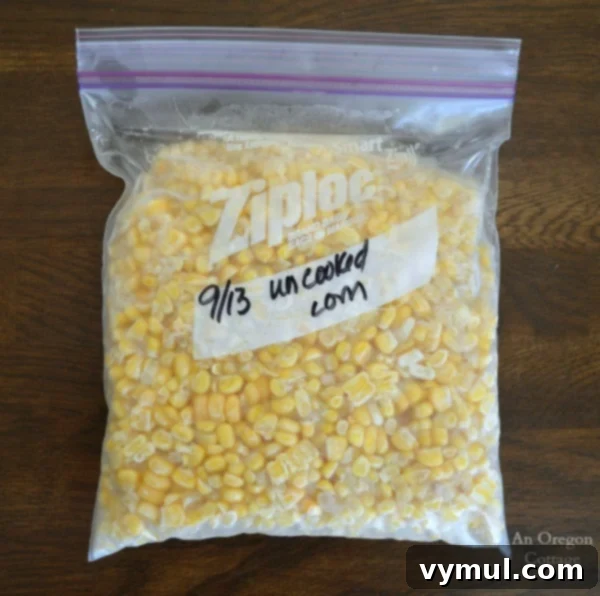
2. Freezing Uncooked (Unblanched) Corn Kernels
This method offers the second easiest approach to preserving corn kernels, primarily because it eliminates the need for any pre-cooking or blanching step. It’s a quick and straightforward way to prepare corn for the freezer.
- Instructions: After shucking and thoroughly cleaning your corn, simply use a sharp knife to cut the kernels off the cob into a large bowl. Once collected, spoon the kernels into freezer-safe baggies or other suitable containers. Crucially, remove as much air as possible from the packaging – my preferred and effective method is using a handy straw for air extraction, or a vacuum sealer if you have one. Seal the bags tightly and then transfer them directly to the freezer.
Pros: The most significant benefit is the simplicity; there’s no need to cook first, just cut and package. This makes it an incredibly efficient choice for processing large quantities of corn quickly. Additionally, these uncooked kernels are perfectly suited for any recipe that explicitly calls for raw corn, as there’s no danger of overcooking them during the initial preservation stage.
Cons: Corn frozen using this unblanched method will have a distinct texture compared to blanched corn. We’ve observed that it generally needs to be cooked thoroughly before consumption to achieve a palatable texture. This method is not ideal if you plan to use the corn in raw applications like fresh salads or cold salsas, as the texture may remain too firm or “raw-tasting” without further cooking.
TIP: The bag of corn pictured above is a year-old baggie of frozen corn. As you can see, the kernels still look remarkably fresh and vibrant, demonstrating how effective proper air removal, especially with the straw sealing technique, can be in preventing freezer burn and maintaining quality!
Best ways to use unblanched or uncooked cut corn:
- Quick Sauté: Sauté these kernels in a bit of butter or olive oil for a simple side dish. You can enhance the flavor by adding chopped onions, bell peppers, or minced garlic.
- Savory Bacon and Corn Sauté: For a richer flavor profile, cook 3-4 strips of bacon until crisp. Remove the bacon to a paper towel-lined plate. Then, cook 2-3 cups of frozen corn kernels directly in the hot bacon grease until they are tender and slightly caramelized, typically taking about 5-7 minutes. Season with salt and pepper, and crumble the reserved bacon on top before serving.
- Hearty Soups and Stews: Unblanched kernels are an excellent addition to a wide variety of soups and stews. They can be added directly to the pot, where they will cook thoroughly with other ingredients. Try them in black bean soup, a warming chili, or a robust vegetable stew.
- Baked Dishes and Casseroles: Integrate these frozen kernels into baked dishes where they will cook thoroughly, such as a simple sausage-corn tart, a delightful bacon-corn tart, or as part of the filling for delicious stuffed zucchinis. Their texture holds up beautifully during longer cooking times.
- Roasted Corn for Deep Flavor: For a deeper, sweeter flavor with a lovely char, roast your frozen corn. Simply spread the frozen kernels in a single layer on a parchment-lined sheet pan and roast at 400 degrees Fahrenheit (200°C) until browned. Season as desired, or use them to craft a truly delicious roasted corn salsa.
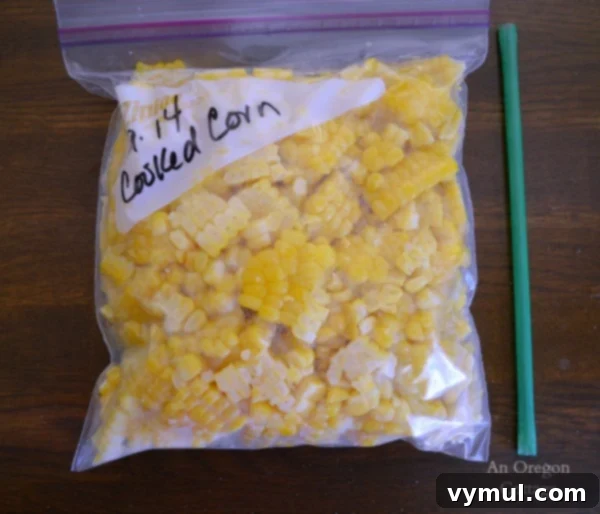
3. Freezing Blanched Corn Kernels
This third method represents the most traditional and widely recommended technique for freezing fresh corn. Blanching is a critical step that helps preserve the corn’s vibrant color, fresh flavor, and crisp-tender texture by deactivating enzymes that would otherwise degrade its quality during freezing and storage.
- Instructions:
- Start by bringing a large pot of water to a vigorous, rolling boil.
- Carefully drop the shucked and cleaned ears of corn into the boiling water. Allow them to cook for a brief period of 2-3 minutes. This quick burst of heat is sufficient to blanch them without fully cooking.
- Immediately after blanching, remove the cobs from the boiling water and plunge them into a large bowl filled with ice water. This “ice bath” rapidly halts the cooking process, effectively preserving their bright color and desirable crisp-tender texture. Allow them to cool completely for several minutes until they are comfortable to handle.
- Once cooled, proceed to cut the kernels off the cobs. Spoon the blanched kernels into freezer-safe baggies. It’s crucial to remove as much air as possible – again, using a straw or a vacuum sealer is highly recommended for optimal preservation. Seal the bags tightly and then transfer them to the freezer. For superior results and to prevent the kernels from clumping together, you can first spread them in a single layer on a baking sheet and freeze them solid for an hour or two before transferring them to bags. This “flash freezing” allows them to freeze individually, making them easier to portion later.
Pros: The primary advantage of blanching is the significantly superior quality it imparts to frozen corn. It’s incredibly convenient to have bags of perfectly prepared, ready-to-eat corn in the freezer. You can thaw these kernels and add them directly to fresh salads and salsas without any further cooking, maintaining their delightful texture and taste. Blanched corn tastes more “fresh” and less “raw” than its unblanched counterpart. An additional bonus is that if you frequently cook corn on the cob for dinner during peak season, any delicious leftovers can easily be blanched, cut, and bagged for freezing after the meal, effectively minimizing food waste.
Con: This method admittedly requires the most time and involves more distinct steps due to the blanching, cooling, and additional handling processes. However, for many home preservers, the enhanced quality, color, and versatility gained often make the extra effort worthwhile.
Best ways to use blanched cut corn:
- Fresh Salads: Thaw and add these vibrant kernels directly to any fresh salads, such as this quick chopped salad, pasta salads, quinoa bowls, or as a colorful garnish. Their crisp texture and sweet flavor will truly shine.
- Homemade Black Bean and Corn Salsa: Create a lively black bean and corn salsa. Simply combine your thawed blanched corn with a can of black beans, diced fresh tomatoes (or homemade Rotel), fresh garlic, zesty lime juice, cilantro, and your preferred seasonings for an irresistible dip or topping.
- All-Purpose Culinary Applications: Blanched frozen corn is exceptionally versatile and can be used in virtually any recipe that calls for corn. It’s excellent in stir-fries, quesadillas, casseroles, or simply as a quick and nutritious side dish. Since it’s already partially cooked, it requires less cooking time than unblanched kernels.
- Enhanced Roasted Corn: The roasting method described for unblanched corn also works wonderfully with blanched kernels. Roasting intensifies their natural sweetness and adds a delightful smoky char, making them perfect for salsas or as a standalone side.
Which Way to Freeze Corn is Best for Your Kitchen?
After a year of rigorous testing and countless family meals featuring corn preserved in various ways, I’ve come to a clear conclusion: there isn’t one singular “best” method for freezing corn. Instead, the ideal approach largely depends on your intended culinary uses and the amount of time you have available. Our family enjoys corn in such a wonderfully diverse array of dishes (you can explore many of them in our comprehensive recipe index) that I find it most beneficial to preserve fresh corn using all three methods each season. Relying on just one way simply doesn’t cover all our varied culinary needs!
Embracing these multiple preservation options offers incredible flexibility. If you find yourself pressed for time, freezing unblanched whole cobs can be a lifesaver, providing a quick solution. When you need corn for cooked dishes but prefer to skip the blanching step, the uncooked kernels are an excellent, convenient choice. And for those recipes where an impeccable texture and ready-to-eat convenience are paramount – think salads or fresh salsas – blanched kernels are simply unbeatable. This multi-method strategy becomes particularly invaluable when you’re faced with an abundant harvest of corn, whether from your flourishing garden or an amazing deal discovered at a local farmer’s market, allowing you to maximize your preservation efforts efficiently.
By understanding the nuances of each freezing technique, you can intelligently choose the method that best aligns with your kitchen habits and future recipe aspirations, ensuring you can enjoy delicious, high-quality corn throughout the entire year.
Looking for Delicious Recipes to Use Your Frozen Corn?
Now that your freezer is brimming with perfectly preserved corn, it’s time to unleash its culinary potential! Here’s a selection of fantastic recipes that brilliantly showcase the versatility of your frozen corn:
- The Ultimate Corn Guide – An extensive resource covering everything from growing and harvesting corn to cooking techniques and a plethora of inspiring recipe ideas.
- Zucchini, Corn, and Tomato Sauté with Feta – A vibrant and flavorful side dish perfect for any season.
- 5-Minute Foolproof Fermented Corn Relish Recipe – A unique, tangy, and easy-to-make condiment that adds a gourmet touch to meals.
- Quick & Easy Roasted Corn Salsa – A wonderfully smoky and sweet salsa that’s perfect for dipping or as a topping.
- Quick Corn and Sausage Chowder – A comforting, hearty, and satisfying meal ideal for chilly evenings.
- Creamy Fresh Baked Corn – A rich and classic side dish that’s always a crowd-pleaser.
- Simple Sausage and Corn Tart – An elegant and flavorful tart that can serve as a main course or an impressive appetizer.
- Simple Corn, Pepper and Onion Sauté – A versatile and incredibly easy vegetable dish that pairs well with almost anything.
- 5 Minute Fool Proof Fermented Corn Relish – Another mention for this delicious relish, because it’s simply too good not to highlight twice!
Print Recipe
Pin Recipe
Save
Saved!
Three Ways to Freeze Corn
Equipment
-
Cutting Board
-
Chef’s Knife
-
Freezer baggies
Ingredients
- 2 to 3 corn cobs depending on size of ears
Instructions
-
Unblanched Whole Cobs – the easiest and quickest method:
-Shuck, add to freezer bags, extract air, and toss in the freezer. (See Note* for cooking method.)
-
Uncooked Corn Kernels – the second easiest method, since you don’t need to cook the corn first:
-Shuck and cut the kernels off the cob into a large bowl.
-Spoon kernels into freezer baggies (or containers), remove as much air as possible (I use my handy straw), seal and freeze.
-
Blanched or Cooked Corn Kernels – This third way is the most traditional way to freeze fresh corn:
-Bring a large pot of water to boil.
-Drop shucked ears into boiling water and cook 2-3 minutes.
-Remove from water to a large bowl and let cool a few minutes until you can handle them.
-Cut kernels off of cobs, spoon into freezer baggies, remove as much air as possible (again using a straw), seal and freeze.
Notes
- Bring a large pot of water to boil.
- Drop frozen ears of corn into boiling water.
- Cook for 3-5 minutes or until done to your liking.
Nutrition
Disclosure: affiliate links in this article will earn commission based on sales, but it doesn’t change your price. Click here to read our full disclaimer and advertising disclosure.