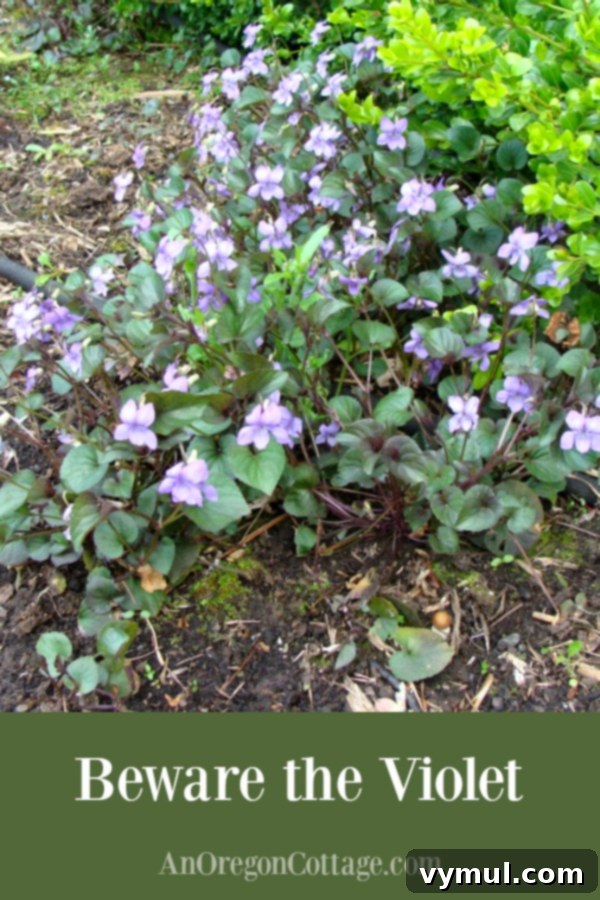
The wild violet can become invasive in many gardens – take my warning to not plant it and my tips to keep it under control.
Conquering the Invasive Wild Violet: A Guide to Control and Eradication in Your Garden
For many gardeners, the sight of a vibrant, verdant ground cover is a welcome one. However, there’s a particular plant that, despite its innocent appearance and pretty purple blooms, harbors a deeply invasive nature: the wild violet. This isn’t just a friendly garden volunteer; it’s a formidable adversary that can quickly overwhelm your beloved plants and transform your garden into a battleground. This article serves as a comprehensive warning against introducing this aggressive species into your landscape and provides proven strategies for its control and eradication, helping you reclaim your garden space.
Consider this a crucial Public Service Announcement for every gardener:
Should you ever encounter this plant for sale in a nursery, resist the urge to examine it. Do not be swayed by its charming facade. If a well-meaning friend offers you a free clump from their garden, politely decline. Your frugal instincts might implore you to accept a complimentary plant, but this is one instance where “free” comes with an extraordinarily high long-term cost. In short, maintain a significant distance from this particular botanical menace!
Identifying the Foe: The Common Blue Wild Violet
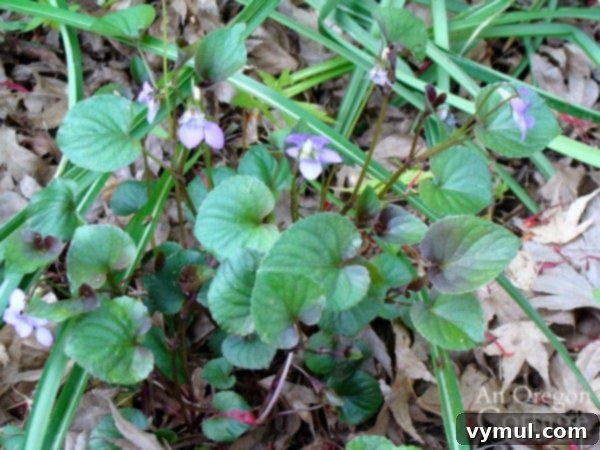
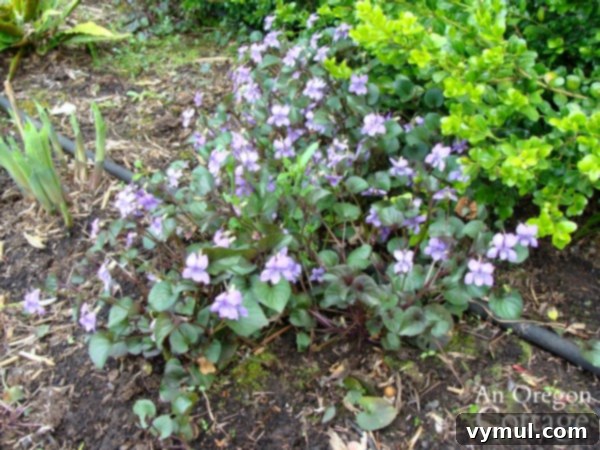
You might be thinking, “Wait—doesn’t it look so delicate and charming with its heart-shaped leaves and lovely purple flowers?” This deceptive appearance is precisely what makes the common blue wild violet (Viola sororia) such a cunning adversary. Often mistaken for a beneficial ground cover or a harmless native wildflower, its true nature is far more aggressive. Its heart-shaped leaves form dense mats close to the ground, effectively blocking sunlight from less vigorous plants. The small, often fragrant, purple flowers are indeed beautiful, but they are just the visible tip of an extensive and tenacious underground network.
Don’t be deceived by its quaint beauty. This plant will relentlessly colonize your garden beds, consuming precious hours as you meticulously pull it up, along with any tiny fragments of its extensive root system you can find. The battle often escalates to the point where you might find yourself digging up desirable plants—the ones you actually want to thrive—in a desperate effort to extract every last bit of the violet’s roots. This extreme measure is often necessary to prevent your cherished perennials and shrubs from being suffocated and ultimately killed by this seemingly “cute little plant.”
But the struggle is often relentless: no matter how thoroughly you believe you’ve eradicated it, the wild violet possesses an uncanny ability to return with vengeance the following season, seemingly taunting your efforts. Its resilience is legendary, and its persistence can test the patience of even the most dedicated gardener.
If you dare to neglect it for even a mere six months, the consequences can be devastating, as dramatically illustrated by the image below:
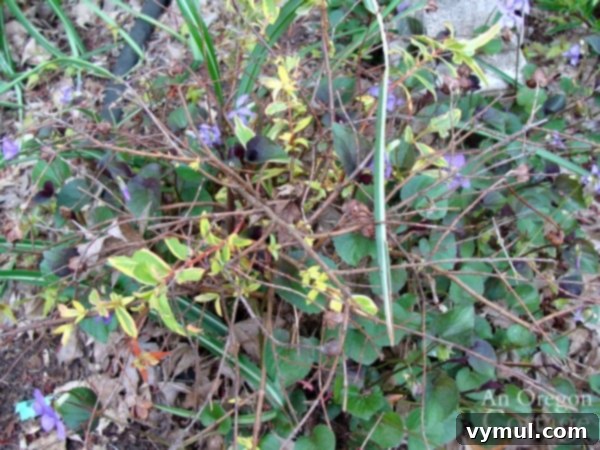
It will mercilessly choke the life out of a poor variegated St. John’s Wort, or any other unsuspecting plant in its path. My personal experience confirms that the more I pull, the more voracious and widespread it seems to become. It’s a truly frustrating cycle.
The previous occupants of my home made the regrettable decision to plant this violet in the front garden, intending it as a benign “ground cover.” In retrospect, “everything cover” would have been a far more accurate description. I have dedicated years to its eradication while simultaneously trying to establish new, desirable plantings. And the invasion wasn’t confined to just the front garden. Oh no, it ingeniously managed to propagate and find its insidious way into all the other areas of the yard, demonstrating its remarkable adaptability and spreading capabilities.
As you can probably infer from my ongoing struggle, I’m not achieving much success with complete eradication. At this juncture, my focus has shifted from total elimination to effective control. My most promising results have come from applying a thick layer of newspaper, subsequently covered with mulch. However, even this method isn’t foolproof, as the tenacious roots can sometimes penetrate through the decomposing paper. And predictably, it even grew through the landscape fabric that the previous owners had laid down – a testament to its persistence and a clear indictment of that generally ineffective material (though that’s a subject for an entirely different public service announcement).
For me, the battle is ongoing, a legacy I inherited. But if you don’t yet have this plant, you still have a choice. If you are already battling it, please know that I deeply empathize with your struggle. I truly “feel your pain.”
Don’t invite it into your garden. No matter how appealing or harmless it may seem. Heed this warning: beware the wild violet.
Understanding the Enemy: Why Wild Violets Are So Invasive
To effectively combat the wild violet, it’s essential to understand its formidable reproductive strategies. This knowledge will empower you to employ more targeted and successful control methods. Several key factors contribute to its invasive prowess:
- Extensive Root System (Rhizomes): Wild violets spread vigorously through a complex network of underground rhizomes. Even a small fragment of root left behind during weeding can regenerate into a new plant, making manual removal incredibly challenging and time-consuming.
- Prolific Seed Production: These plants produce an abundance of seeds. After flowering, the seed capsules mature and can explosively disperse seeds several feet away. This natural scattering ensures widespread colonization.
- Cleistogamous Flowers: In addition to their showy purple flowers, wild violets produce small, inconspicuous, self-pollinating flowers (cleistogamous flowers) close to the ground, often hidden beneath the leaves. These flowers never open but reliably produce seeds even in unfavorable conditions, ensuring continuous propagation regardless of pollinators or weather.
- Adaptability: Wild violets are incredibly adaptable, thriving in a wide range of soil types and light conditions, from full sun to deep shade. This versatility allows them to invade diverse garden environments and outcompete a vast array of other plants.
- Dense Ground Cover: Their heart-shaped leaves grow close to the ground, forming dense mats that effectively block sunlight from reaching other plants and emerging seedlings. This smothers desirable vegetation, claiming territory for the violets.
Effective Strategies for Wild Violet Control and Eradication
Controlling wild violets requires patience, persistence, and a multi-pronged approach. There’s no single quick fix, but a combination of methods can lead to significant reduction and eventual eradication. Here are the most effective strategies:
1. Manual Removal: The Hands-On Approach
This is arguably the most critical step, though also the most labor-intensive. The goal is to remove as much of the root system as possible.
- Identify Correctly: Many types of violets exist, and not all are invasive. The common blue wild violet, Viola sororia, is the primary culprit for invasiveness. While it can cross-pollinate with other violets, it’s generally safest to avoid planting any violet species unless you are absolutely certain of its non-invasive nature and can guarantee it won’t cross-pollinate with local wild types.
- Timing is Key: Pulling wild violets is most effective when the ground is moist. Water the area thoroughly an hour or two before you plan to weed if the soil is dry. Moist soil allows for easier extraction of the entire root system without breaking it into fragments that can re-sprout.
- Gentle but Firm Pulling: Grasp the plant at its base and gently but firmly pull upwards, trying to lift the entire root ball. Tools like a hori-hori knife or a dandelion digging fork can be invaluable for prying up stubborn roots without leaving pieces behind.
- Be Meticulous: Wild violets spread extensively by underground rhizomes. Even a small piece of root left in the soil can regenerate into a new plant. Inspect the area carefully after pulling to ensure you’ve removed as many root fragments as possible.
- Dispose Properly: Do not add wild violet plants or roots to your compost pile unless you are absolutely certain your compost system reaches high enough temperatures to kill seeds and root fragments. It’s safer to bag them and dispose of them in municipal waste.
2. Smothering with Mulch and Cardboard
This organic method is highly effective for large infested areas and helps suppress new growth over time.
- Prepare the Area: After diligently pulling as many violets and their roots as possible from the targeted area, level the soil.
- Layer Cardboard: Place a thick layer of cardboard directly over the cleared soil. Ensure the cardboard overlaps significantly at the edges and any seams to prevent light from penetrating and violets from finding gaps to grow through. Remove any plastic tape from the cardboard.
- Water the Cardboard: Thoroughly wet the cardboard. This helps it settle, break down, and become less prone to blowing away.
- Apply Mulch: Cover the cardboard with a generous, thick layer of organic mulch. Aim for at least 4-6 inches (10-15 cm) of wood chips, shredded bark, or straw. This not only weighs down the cardboard but also creates an attractive and beneficial layer for your garden.
- Benefits: This method starves the violets of light, preventing photosynthesis and eventually killing the plants and exhausting their root reserves. The cardboard also slowly decomposes, adding organic matter to your soil.
- Persistence is Key: Monitor the mulched area. If you see any violet leaves emerging through the mulch or cardboard (which can happen, given their tenacity), pull them immediately and reinforce the mulch layer. Repeat this process annually if necessary, adding new layers of cardboard and mulch to maintain suppression. Over several years, you will notice a significant reduction in their presence.
3. Ongoing Vigilance and Garden Health
Long-term control relies on consistent monitoring and fostering a healthy garden environment that favors your desired plants.
- Regular Monitoring: Make it a habit to scan your garden beds weekly for any signs of wild violet resurgence, especially during spring and fall when they are most active. Early detection makes removal much easier.
- Proper Watering: Ensure your desired plants receive adequate water, as healthy, vigorous plants are better equipped to outcompete weeds. Avoid overwatering areas where violets are prevalent, as they often thrive in moist conditions.
- Soil Health: Improve your garden’s soil health with compost and organic amendments. Healthy soil supports robust desirable plants, making them more resilient against invasive species.
- Consider Edging: If you have an area heavily infested with violets adjacent to a garden bed you wish to protect, consider installing deep garden edging (at least 6-8 inches deep) to create a physical barrier against their spreading rhizomes.
A Gardener’s Battle: Perseverance is Key
Battling invasive wild violets is a marathon, not a sprint. It requires dedication, consistency, and a realistic understanding that complete eradication may take several years. However, with the strategies outlined above – diligent manual removal, effective smothering techniques, and ongoing vigilance – you can significantly reduce their presence and reclaim your garden for the plants you truly wish to cultivate.
Remember, the best defense is a good offense: never introduce this seemingly innocent but truly insidious plant into your garden. If it’s already there, embrace the challenge, equip yourself with knowledge, and patiently work towards a violet-free paradise. Your efforts will be rewarded with a healthier, more vibrant garden where your cherished plants can truly flourish.