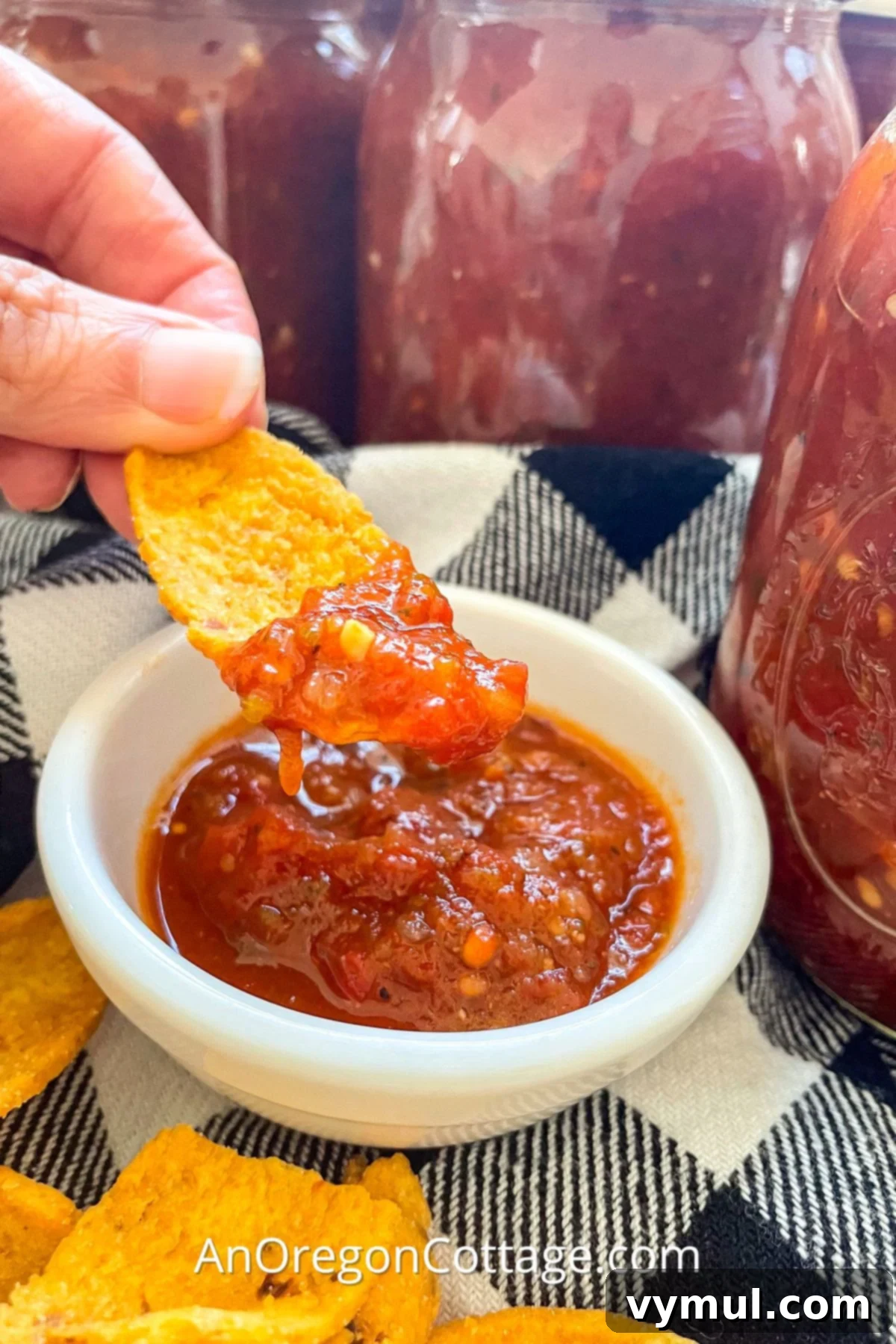
Homemade Roasted Chipotle Salsa: Smoky, Spicy & Perfect for Canning or Freezing
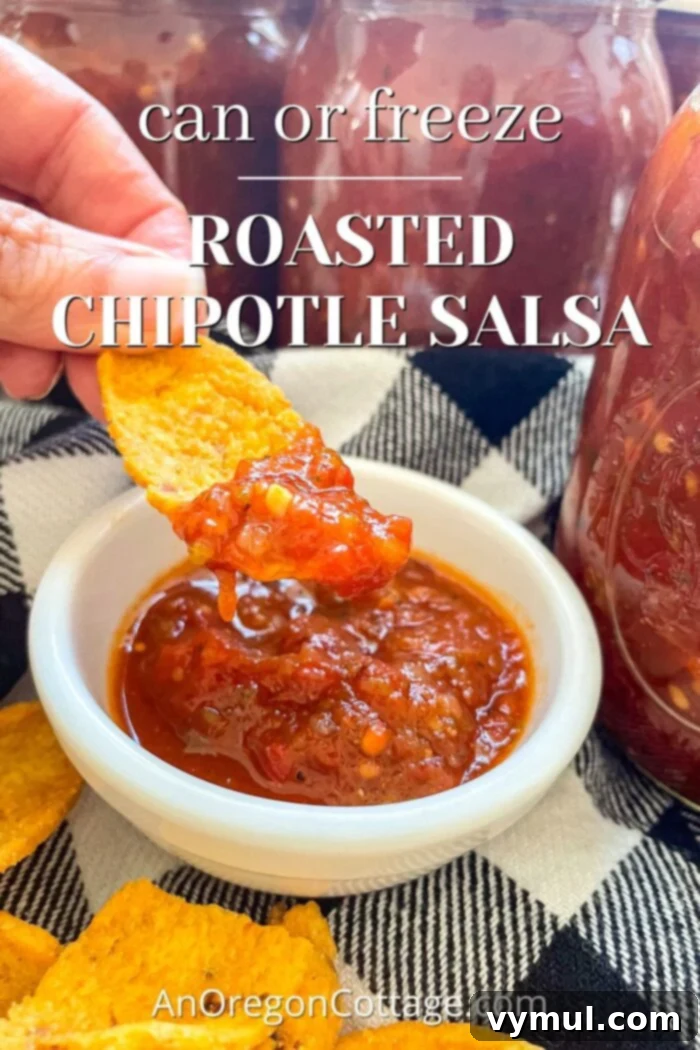
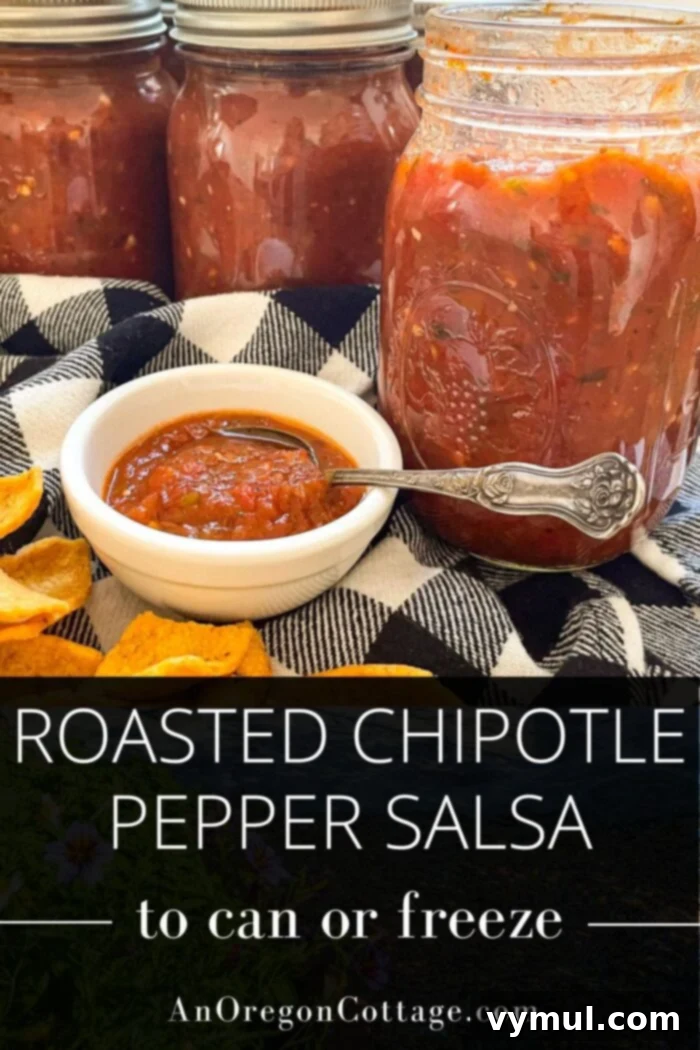
This recipe for roasted chipotle salsa elevates flavor with the distinctive smoky depth and spicy kick of canned chipotles in adobo sauce. Ideal for Tex-Mex dishes, appetizers, and more, this vibrant salsa can be made in a large batch for water-bath canning or freezing, or a smaller portion for immediate enjoyment. Prepare to transform your homemade salsa game!
Some links in this article are affiliate links, meaning if you click on them and make a purchase, I may receive a small commission at no extra cost to you.
While my go-to thick canned salsa recipe remains a kitchen staple, I’m always eager to explore new flavors, especially when it comes to safe-for-canning recipes. The world of homemade salsa offers endless possibilities, and this roasted chipotle version has quickly become a beloved addition to our pantry.
Chipotle peppers in adobo sauce are a secret weapon in my kitchen. Their unique flavor profile goes beyond just heat; they impart a wonderful smokiness and a deep, complex warmth to any dish they grace. You’ll find them enhancing everything from this delightful chipotle BBQ sauce to these succulent shrimp tacos. The rich, earthy notes they bring are simply irresistible.
So, when I stumbled upon a canning recipe that not only featured chipotles but also incorporated the fantastic technique of roasting vegetables, I knew I had to adapt it to create a more traditional, versatile salsa. Roasting vegetables before pureeing them for salsa is a game-changer. It caramelizes their natural sugars, intensifying their flavors and adding a layer of depth that uncooked vegetables simply can’t achieve. This extra step transforms simple ingredients into something truly extraordinary.
My adaptation was inspired by a canning recipe from Better Homes & Gardens. However, I wanted a less sweet, more straightforward tomato-and-pepper based salsa. I swapped out the peaches for a generous quantity of tomatoes and completely omitted the honey. Since peaches are slightly more acidic than tomatoes, I compensated by using a bit less vinegar than the original recipe called for and added 1/4 cup of lime juice. This not only provided the necessary acidity for safe canning but also added a bright, zesty flavor that perfectly complements the smoky chipotles. All other fresh vegetable ratios were maintained from the published recipe to ensure a balanced and tested formula.
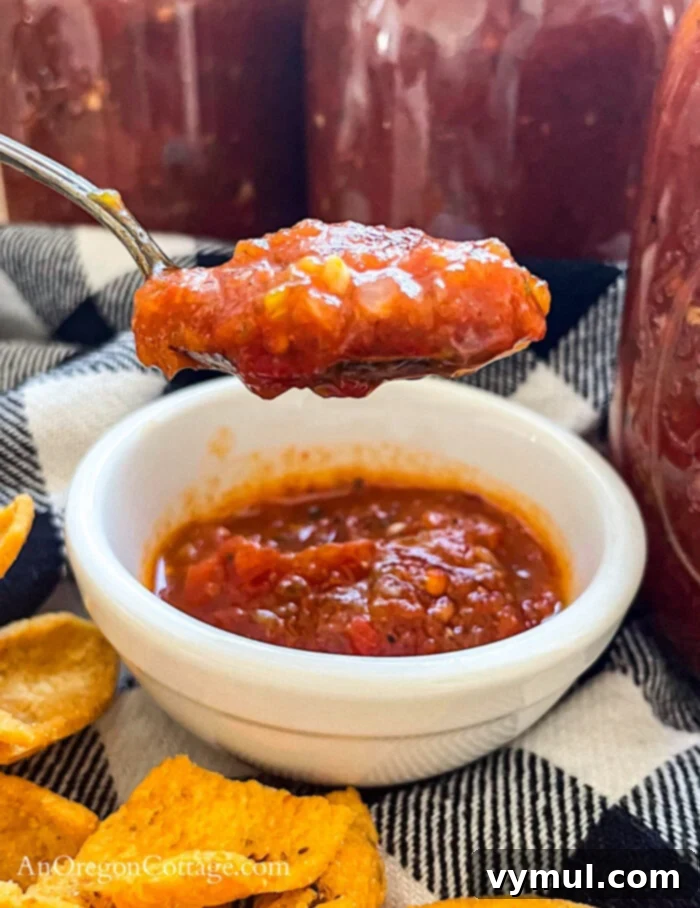
The resulting taste of this roasted chipotle salsa is truly incredible. The robust smokiness from the chipotles in adobo, combined with the caramelized flavors of the roasted vegetables, creates a depth that makes you want to spoon it onto everything. From dipping tortilla chips to enhancing tacos, burritos, and eggs, this salsa adds an exciting dimension to any meal.
I’ve been making this flavorful salsa for several years now, alongside my classic go-to recipe, especially during the peak of garden harvest season. It’s wonderfully satisfying to have a variety of homemade salsas stocked in the pantry. Having both a traditional and a smoky, spicy option ensures there’s always something to suit our craving.
Do you absolutely have to can this salsa?
No, not at all! You can certainly enjoy it immediately after preparing. Stored in the refrigerator, it will keep fresh for about a week. If you don’t consume a lot of salsa quickly, consider making half the recipe for fresh use. Alternatively, freezing is an excellent option for longer storage. A key benefit of freezing is the flexibility to add fresh, low-acid ingredients like cilantro, extra garlic, or more fresh peppers after thawing, which isn’t safe for water-bath canning.
We genuinely hope you’ll love this unique salsa as much as we do!
Chipotle Salsa Video Tutorial
Crafting Your Roasted Chipotle Salsa: A Step-by-Step Guide
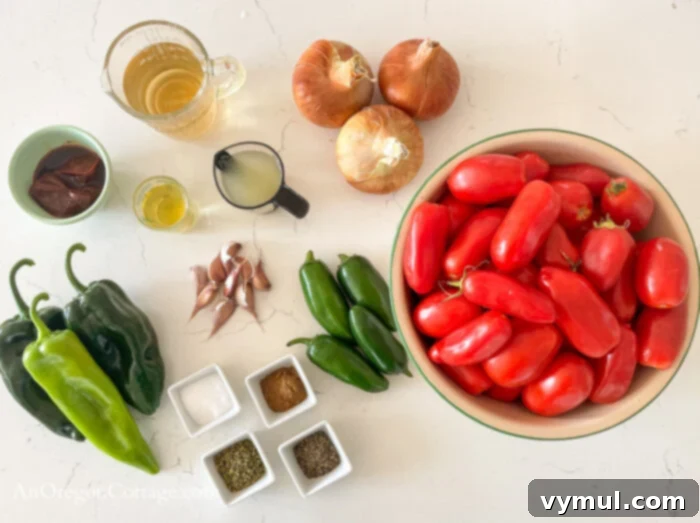
What Goes into Chipotle Salsa? Essential Ingredients
To create this incredibly flavorful roasted chipotle salsa, you’ll need a combination of fresh, vibrant produce and pantry staples, with one star ingredient that truly sets it apart:
- Tomatoes: Roma or paste tomatoes are ideal for salsa due to their firm flesh and lower water content, resulting in a thicker consistency.
- Peppers: A mix of mild poblano or Anaheim chilies, along with a few jalapenos, provides a balanced heat and complex flavor base.
- Onions: Yellow onions roast beautifully, adding a subtle sweetness and depth.
- Garlic: Fresh garlic cloves, roasted until tender and fragrant, contribute a foundational savory note.
- Spices: A blend of oregano, cumin, and black pepper enhances the overall taste profile.
- Lime Juice: Crucial for both flavor and acidity. For canning, always use bottled lime juice to ensure consistent and safe pH levels.
- Vinegar: White distilled or apple cider vinegar provides the necessary acidity for preservation and a pleasant tang.
- Olive Oil: Used for roasting the vegetables, helping them caramelize and preventing sticking.
And the undeniable ingredient that defines this salsa’s character:
- Canned Chipotle Chilies in Adobo Sauce: These smoked, dried jalapeños packed in a rich, tangy, and slightly spicy sauce are the heart of this recipe, providing the signature smoky depth and heat.
If you’re lucky enough to have a garden and can harvest all your own produce, consider that extra bonus points for freshness and flavor!
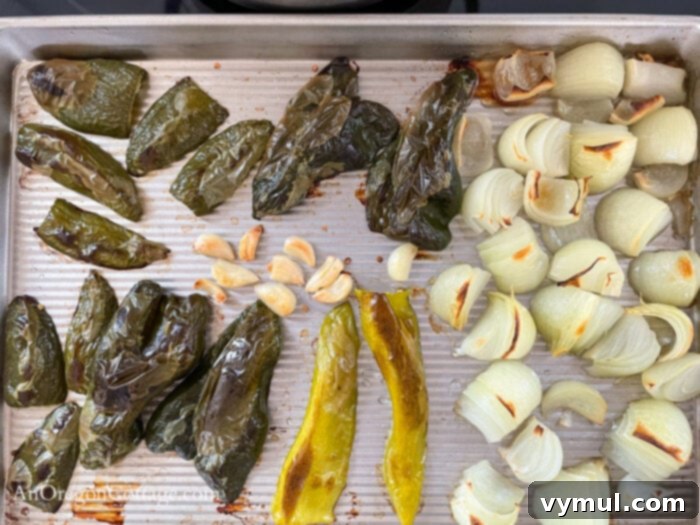
Step-by-Step Roasting and Preparation
The journey to this delicious salsa begins with roasting the vegetables. This simple step unlocks incredible depth and complexity that sets this recipe apart.
You’ll start by preheating your oven to 450 degrees Fahrenheit (230°C). On one large baking sheet, toss the halved peppers (poblano/anaheim and jalapeño), quartered onions, and peeled garlic cloves with olive oil. Arrange the peppers skin-side up to allow them to blister and char evenly. On a separate large baking sheet, place the halved tomatoes with their cut side down. This positioning helps them roast without becoming too watery, concentrating their flavors.
Looking for the perfect large baking sheet for all your culinary adventures? This USA pan is truly the BEST sheet pan I’ve ever owned. Its superior non-stick surface means food hardly ever sticks, cleanup is a breeze, and it heats incredibly evenly without any warping. I genuinely regret not discovering it sooner!
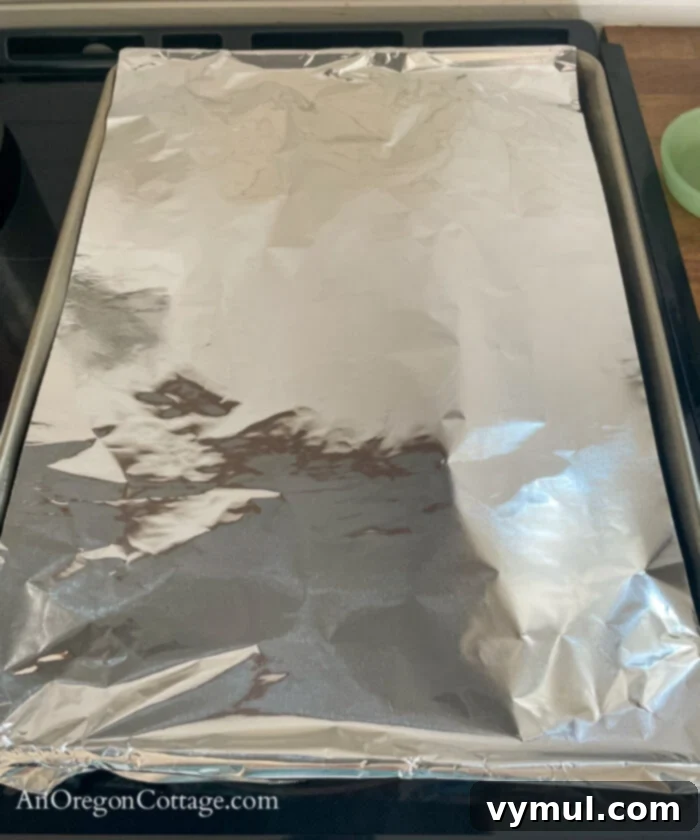
Roast all the vegetables for 25 to 30 minutes. Keep an eye on them, turning the onions and garlic halfway through if needed to ensure even browning. Once roasted, remove both pans from the oven. Immediately cover the baking sheet with the peppers and onions with foil. This crucial step allows the peppers to steam for 10-15 minutes, making their skins much easier to peel off later. Steaming creates a humid environment that loosens the tough outer skin, which can be unpleasant in salsa.
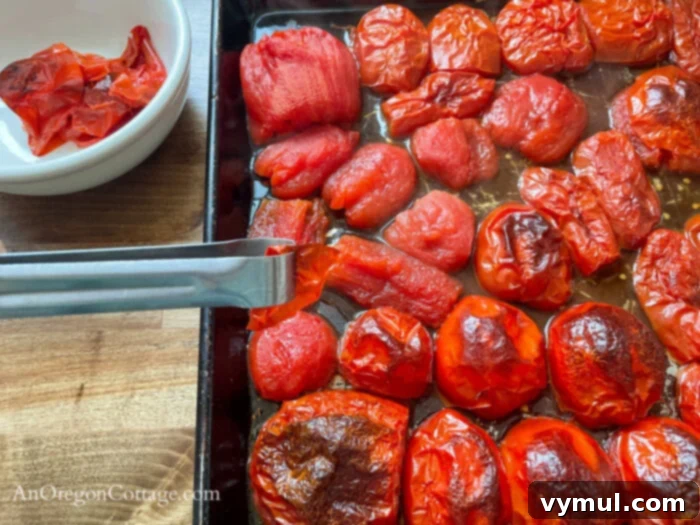
While the peppers are steaming, turn your attention to the roasted tomatoes. Gently remove the skins from the tomatoes. While optional, this step is highly recommended, especially for thicker or visibly puffed-up skins, as it results in a smoother, more refined salsa texture.
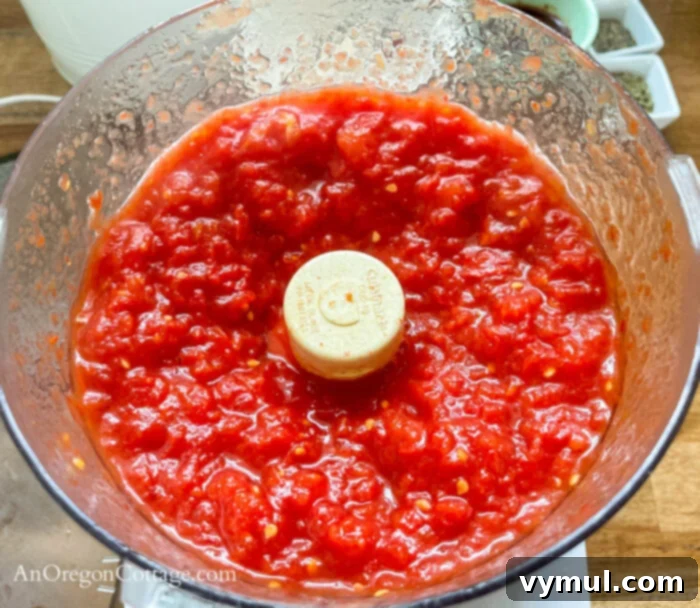
Now it’s time to process your tomatoes. You have two excellent choices depending on your desired salsa consistency:
- For a chunkier, heartier salsa: Simply roughly chop the skinned tomatoes using kitchen shears or a knife. Then, transfer all the chopped tomatoes and their accumulated juices directly into a large stock pot.
- For a smoother, restaurant-style salsa: Pour the skinned tomatoes and their juices into a food processor. Pulse a few times until they are evenly chopped to your preferred fineness. Then, add them to your large stock pot.
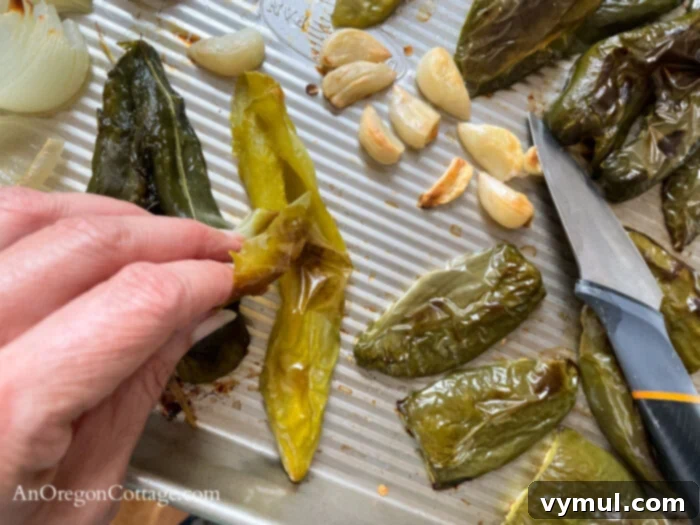
With the tomatoes handled, uncover the pepper and onion mixture. Carefully peel the skins off the roasted peppers as thoroughly as possible. While optional, removing the skins prevents hard, chewy bits in your salsa. If a few bits remain, don’t worry too much; the goal is to get the majority off for a better texture.
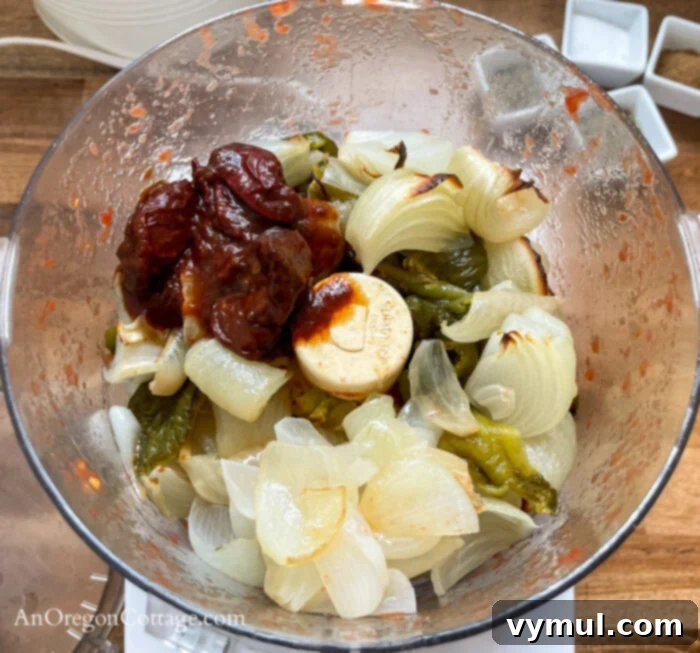
Add the peeled roasted peppers, roasted onions, and roasted garlic to the same food processor you used for the tomatoes (no need to wash it in between!). Crucially, add the chipotle peppers in adobo sauce at this stage. Process these ingredients until they are chopped to your desired consistency – whether you prefer a slightly chunky texture or a very smooth blend. Scrape the processed vegetable mixture into the stock pot with your tomatoes.
Expert Tips for Using Chipotles in Adobo Sauce
- When a recipe calls for a specific number of chipotles, remember that the adobo sauce is just as important as the peppers themselves for flavor. Use a fork to easily remove the peppers, then use a spoon to add some of the rich adobo sauce along with them. I usually eyeball it, but it’s generally about a teaspoon of sauce per pepper.
- Don’t waste leftover peppers! If you only use a few from the can, freeze the remaining chipotles and adobo sauce in an ice cube tray. Place one pepper in each section, then distribute the remaining adobo sauce evenly among them. Once frozen solid, pop them out and transfer them to a labeled freezer-safe container or bag. This way, they’re perfectly portioned and ready for your next recipe that calls for a touch of smoky heat. (Be aware that the vibrant red adobo sauce might stain white ice cube trays, so you might consider dedicating a tray specifically for this purpose.)
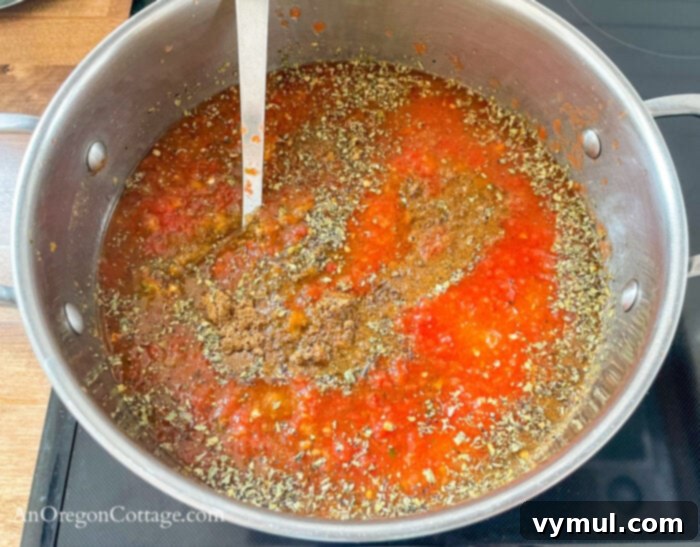
Add the remaining ingredients – vinegar, lime juice, canning salt (or sea salt), oregano, black pepper, and ground cumin – to the stock pot. Stir everything together thoroughly. Bring the mixture to a rolling boil over high heat, then reduce the heat to maintain a low simmer. Allow the salsa to cook, uncovered, for 20 minutes, stirring occasionally. This simmering time allows the flavors to meld beautifully and reduces some of the liquid, resulting in a perfectly textured salsa.
Once your delicious roasted chipotle salsa is ready, you have several convenient options for storage:
- Immediate Enjoyment: Serve it right away! Any leftovers can be stored in an airtight container in the refrigerator for up to a week.
- Freezing for Longer Term: Let the salsa cool completely to room temperature. Transfer it to freezer-safe containers, ensuring you leave an inch of headspace at the top to allow for expansion during freezing. Label the containers with the date, and freeze for up to a year. Freezing is a fantastic way to preserve the fresh flavors without the extensive process of canning.
- Water-Bath Canning for Shelf Stability: For pantry storage that lasts up to 18 months, follow the water-bath canning steps outlined below. This method allows you to enjoy homemade salsa year-round, right off your shelf.
Easy Steps to Water-Bath Can Your Salsa
Water-bath canning is a reliable method for preserving high-acid foods like salsa, ensuring they remain safe and shelf-stable. If you’re new to canning, or simply need a quick refresher, the process is straightforward once you understand the basic principles. This method allows you to lock in the incredible flavors of your roasted chipotle salsa for months to come.
For a visual guide to water-bath canning, watch this quick video I created while processing pickled green beans – the exact same fundamental steps and safety practices apply to all foods we preserve using the boiling water method:
While your salsa is simmering and its flavors are deepening, begin preparing your canning setup. Fill a boiling water canner (equipped with a rack) with water and place it on your stove over high heat to start warming up. This glass-lid canner is my absolute favorite – it allows you to monitor the boil without lifting the lid, saving energy and time! I highly recommend it for any canning enthusiast.
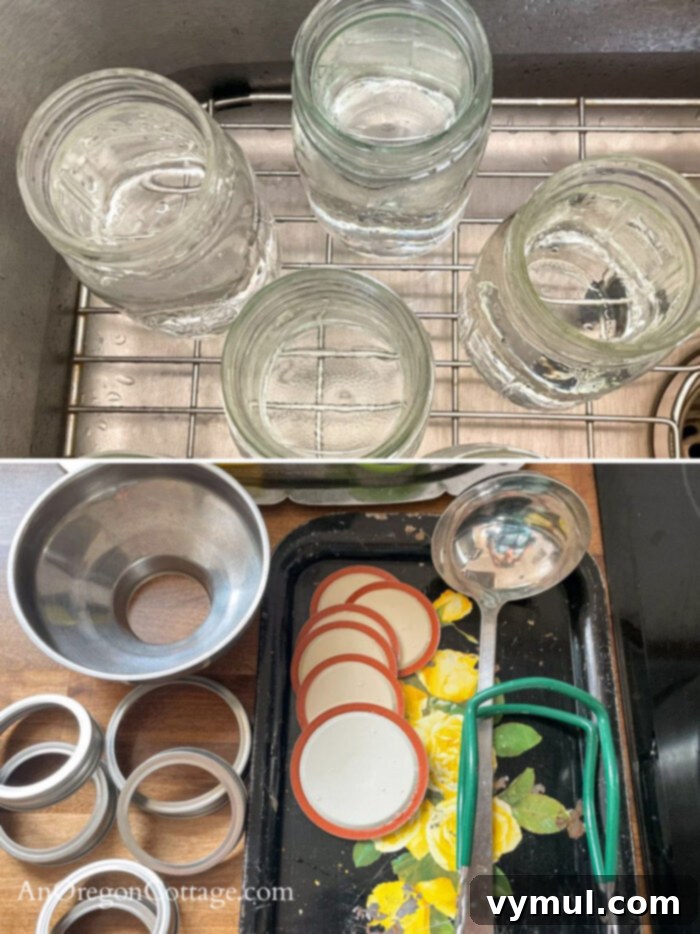
Next, prepare 6 pint-sized canning jars. Wash them thoroughly with hot, soapy water, then rinse well. Fill each clean jar with the hottest tap water and leave them in the sink to stay warm. This prevents thermal shock when you fill them with hot salsa, reducing the risk of jar breakage. Gather your essential canning supplies and place them conveniently next to your stove: new canning lids (washed and dried – no need for the old heating method!), screw bands (rings), a sturdy ladle, a stainless steel canning funnel (plastic funnels can leach chemicals when exposed to hot acidic foods), and a jar lifter.
Pro Tip for a Clean Workspace: I find it incredibly helpful to use a small tray or rimmed baking sheet next to the stove when filling jars. It catches any drips or spills, making for super easy cleanup – just carry the tray to the sink and rinse it off when you’re finished!
Once your salsa has finished simmering and is ready, carefully empty the hot water from one prepared jar. Using your ladle and canning funnel, fill the jar with the hot salsa, ensuring you leave precisely 1/2-inch of headspace (the empty space between the salsa and the rim of the jar). This headspace is crucial for proper sealing and preventing siphoning during processing. Wipe the jar rim thoroughly with a damp rag or paper towel to remove any food particles that could interfere with the seal. Center a clean, new lid on the jar and secure it with a screw band, tightening it only to fingertip-tight – meaning snug, but not overly tight. Place the filled jar onto the rack in your canner. Repeat this process for all remaining jars.
Important Note: If your last jar doesn’t have enough salsa to reach the required 1/2-inch headspace, do not attempt to can it. Instead, refrigerate that particular jar and enjoy its contents fresh within a week. Canning a jar with insufficient headspace can lead to improper sealing and spoilage.
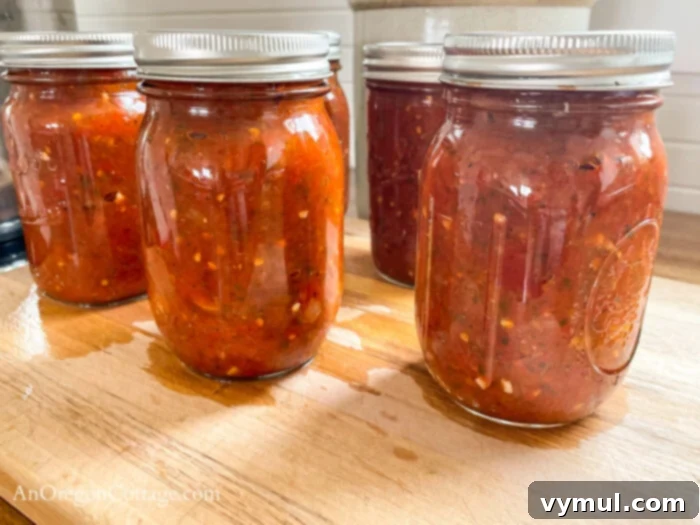
Once all the jars are filled and placed in the canner, lower the rack into the water. Ensure the jars are covered by at least 1-2 inches of water. Cover the canner with its lid and bring the water to a full, rolling boil. Once boiling vigorously, start your timer for 20 minutes (adjust for altitude if necessary). Reduce the heat slightly to maintain a gentle but steady boil throughout the entire processing time. It’s essential to monitor the boil; if it stops, you’ll need to bring it back to a full boil and restart your timer.
When the 20-minute processing time is complete, turn off the heat and carefully remove the canner lid. Set a timer for another 5 minutes. This allows the jars to acclimate to the temperature change, preventing siphoning and promoting a better seal. After 5 minutes, use your jar lifter to carefully remove the hot jars from the canner, placing them on a towel-lined surface or a wire rack, spaced a few inches apart. Avoid placing them directly on a cold countertop, which could cause breakage.
Allow the jars to cool undisturbed for 12 to 24 hours. During this time, you should hear a “ping!” sound as the lids seal. After cooling, remove the screw bands, test each lid for a proper seal (it should be concave and not flex when pressed). If any jar didn’t seal, refrigerate it immediately. Label your successfully sealed jars with the date and contents, then store them in a cool, dark place for up to 18 months. Enjoy the delicious, smoky flavor of your homemade roasted chipotle salsa all year long!
Roasted Chipotle Salsa FAQs
A chipotle pepper is actually a fully ripened jalapeño pepper that has been smoked and dried. Jalapeños start green and turn red as they mature; these red jalapeños are then smoked, giving them their distinctive smoky flavor. Chipotles can be found in dried form or ground into a powder, but they are most commonly used in their canned version, like in this recipe, where the dried peppers are steeped in a rich adobo sauce—a savory, spiced tomato-based marinade.
Since chipotle peppers originate from jalapeños, they generally share a similar heat level, ranging from 2,500 to 8,000 Scoville Heat Units (SHU) on the Scoville Scale. This makes them moderately hot, comparable to a jalapeño, but significantly milder than peppers like habaneros. The smoking process primarily adds flavor rather than intensifying the heat.
If your intention is to water-bath can this salsa for shelf-stable storage, it is not safe to add fresh cilantro. Fresh cilantro is a low-acid ingredient and adding it to a tested canning recipe can alter the pH balance, potentially making the product unsafe. For canned salsa, it’s best to add fresh cilantro only when you open a jar to serve, as it will also provide a fresher taste at that point.
However, if you are planning to freeze the salsa or eat it fresh within a week, you are absolutely free to add as much fresh cilantro as you desire to enhance the flavor!
Delicious Serving Suggestions
- Serve alongside Freezer Mediterranean Breakfast Wraps for a hearty start to your day.
- Pair with Easy 10 Minute Baked Tortilla Chips for a quick and satisfying snack or appetizer.
- Dollop generously over Chipotle Spice Rubbed Grilled Chicken Salad with Guacamole for an extra layer of smoky flavor.
- Enhance your taco nights, burritos, quesadillas, or any Tex-Mex inspired meal.
- Mix into scrambled eggs or breakfast burritos for a spicy morning kick.
- Use as a vibrant topping for grilled fish or chicken.

Print Recipe
Pin Recipe
SaveSaved!
Roasted Chipotle Salsa (Can or Freeze)
Equipment
-
2 large (20×14) sheet baking pans
-
Food Processor or knife and cutting board
-
6-quart or larger stock pot
-
ladle
-
canner and canning supplies, optional
Ingredients
- 3 medium onions, cut in half and then quartered
- 3 poblano or anaheim mild green chilies, halved and seeded
- 4 medium jalapeno chilies, halved and seeded
- 9 garlic cloves, peeled
- 1 tablespoon olive oil
- 6 pounds roma/paste tomatoes, cored and cut in half
- 3 small to medium chipotle peppers in adobo (about 3 tablespoons)
- 1 cup vinegar (cider vinegar preferred)
- 1/4 cup lime juice (or lemon juice)
- 2 teaspoons canning salt or sea salt (or to taste)
- 2 teaspoons oregano
- 1 ½ teaspoons black pepper
- 1 ½ teaspoons ground cumin
Instructions
-
Heat oven to 450 degrees Fahrenheit (230°C).
-
On a large baking sheet, combine all the halved peppers (poblano/anaheim and jalapeno), quartered onions, and peeled garlic cloves. Drizzle with the olive oil and toss to coat evenly. Arrange the peppers cut side down on the pan.
-
On a second large baking sheet, place the cored and halved tomatoes, cut side down, in a single layer.
-
Roast both pans in the preheated oven for 25 to 30 minutes. Halfway through, if needed, turn the pan and toss the onions and garlic to ensure even cooking and browning. The peppers should be nicely charred and blistered.
-
Carefully remove both pans from the oven. Immediately cover the baking sheet containing the pepper, onion, and garlic mixture tightly with foil. Let it steam for 10 minutes; this helps loosen the pepper skins for easy peeling.
-
Meanwhile, remove the skins from the roasted tomatoes. You can then roughly chop the tomatoes with a knife or kitchen shears, or for a smoother salsa, transfer them with all their juices to a food processor and pulse a few times to chop evenly. Add the tomatoes and their juices to a large 6-quart (or larger) stock pot.
-
Lift the foil from the pepper mixture. Carefully peel off the charred skins from the roasted peppers using a sharp knife or your fingers. Add the skinned peppers, roasted onions, roasted garlic, and the chipotle peppers in adobo sauce to the food processor. Pulse until the vegetables are chopped evenly to your desired consistency. Scrape the processed vegetable mixture into the stock pot with the tomatoes.
-
Add all the remaining ingredients (vinegar, lime juice, canning salt/sea salt, oregano, black pepper, and ground cumin) to the stock pot. Stir everything thoroughly to combine. Bring the salsa to a boil over high heat, then reduce the heat to low and simmer, uncovered, for 20 minutes, stirring frequently to prevent sticking and allow flavors to meld.
-
Serve your fresh roasted chipotle salsa immediately. For short-term storage, refrigerate for up to a week. For longer preservation, proceed with freezing or water-bath canning as described below.
-
TO FREEZE: Allow the prepared salsa to cool completely to room temperature. Transfer the cooled salsa into freezer-safe containers, ensuring you leave at least a 1-inch headspace at the top for expansion during freezing. Label each container with the date and contents. Freeze for up to one year.
-
TO WATER-BATH CAN: While the salsa simmers, prepare 6 pint canning jars by washing them thoroughly and keeping them warm (e.g., filled with hot tap water in the sink). Fill your water-bath canner (or a large stock pot with a canning rack) with water and begin heating it on high. Gather your canning lids, screw bands (rings), a damp rag or paper towel, and a jar lifter.
-
Empty the hot water from one jar. Using a ladle and canning funnel, fill the hot jar with hot salsa, leaving a precise 1/2-inch headspace. Wipe the rim of the jar clean with a damp rag to ensure a proper seal. Center a new canning lid on the jar and secure it with a screw band, tightening to fingertip-tight. Place the filled jar onto the rack in the canner. Repeat this process for all remaining jars.
-
Ensure the jars are covered by at least 1-2 inches of water in the canner. Cover the canner with its lid and bring the water to a full, rolling boil. Once a strong boil is achieved, start your timer for 20 minutes (adjust processing time for your altitude if necessary). Reduce the heat slightly to maintain a gentle but steady boil throughout the entire canning time, monitoring to ensure the boil does not stop.
-
When the timer signals the end of processing, turn off the heat and carefully remove the canner lid. Set a timer for an additional 5 minutes; this allows the jars to cool gradually, preventing siphoning. After 5 minutes, use your jar lifter to remove the hot jars from the canner, placing them on a towel-lined surface or wire rack, ensuring they are spaced apart to cool evenly.
-
Allow the jars to cool undisturbed for 12 to 24 hours. After cooling, remove the screw bands and test each lid for a proper seal (it should be indented and not flex when pressed). Any unsealed jars should be refrigerated and consumed within a week. Label your successfully sealed jars with the date and contents, and store them in a cool, dark place for up to 18 months.
Notes
Nutrition

Disclosure: This article contains affiliate links. If you click on these links and make a purchase, I may earn a small commission at no additional cost to you. Click here to read our full disclaimer and advertising disclosure for more information.