Thrift Store Makeover: Crafting Rustic White Ceramic Turkeys for High-End Thanksgiving Decor
Every year, as the autumn leaves turn and the scent of pumpkin spice fills the air, many of us start dreaming of the perfect Thanksgiving celebration. This often includes envisioning a beautifully decorated home, especially a stunning tablescape that becomes the focal point of our festive gatherings. For me, that vision frequently involves elegant, timeless decor, not the brightly colored, overtly “cute” pieces that often flood store aisles during the holiday season.
The challenge, however, lies in the cost. High-end home decor stores like Pottery Barn offer exquisite pieces that inspire awe, but their price tags can quickly deflate even the most enthusiastic decorator’s budget. This exact dilemma was the catalyst for my latest fall mantel project, and it certainly drove the inspiration for this particular thrift store transformation. I was captivated by a specific item from the October 2012 Pottery Barn catalog:
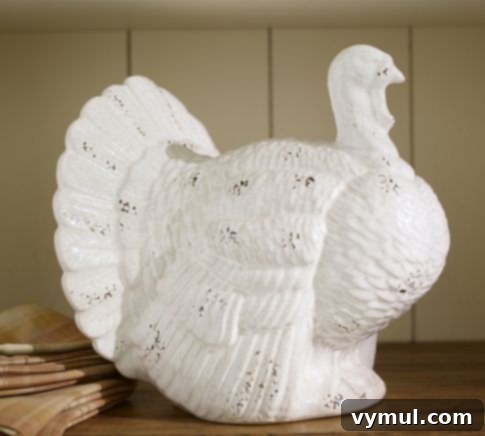
This magnificent piece was a rustic ceramic turkey, impressively sized at 15 inches high. Its elegant white finish and substantial presence made it the perfect statement piece for a sophisticated Thanksgiving display. The only catch? Its price: a hefty $159.00. Ouch! What was even more surprising was that by mid-October, it was already unavailable. Clearly, there’s a strong demand for classic, understated Thanksgiving decor, even if it comes with a premium price tag. While I admired its beauty, spending over $150 on a single decorative turkey wasn’t within my budget. Yet, the desire for that classic, white painted turkey look persisted.
The Quest for Elegant Thanksgiving Decor: Beyond the Kitschy and Costly
Finding genuinely classic and elegant Thanksgiving decorations can be surprisingly difficult. It often feels like retailers leap straight from Halloween spooky delights directly into Christmas wonderland, leaving a noticeable gap for tasteful autumn and harvest-themed items. You’ll find an abundance of orange, brown, and yellow pieces, often with a kitschy aesthetic that doesn’t quite fit a minimalist or rustic farmhouse style. My preference leans towards understated elegance, pieces that blend seamlessly with natural elements and evoke a sense of warmth and tradition without being overly bright or cartoonish.
This scarcity of suitable options further fueled my resolve to create my own. My solution, as it often is, lay in the magic of thrift store transformations. I embarked on a search for ceramic turkeys, knowing that with a bit of DIY magic, I could replicate that coveted Pottery Barn aesthetic for a fraction of the cost.
Hunting for Hidden Gems: Thrift Store Strategies
Thrift stores are treasure troves for aspiring DIY decorators, especially during seasonal transitions. Most have dedicated holiday aisles where they gather all their festive finds. This is precisely where I focus my energy, sifting through items like pumpkins, turkeys, and Christmas ornaments, always with an eye for their potential rather than their current state. My strategy is simple: look for good shapes and sturdy materials that can hold paint well, disregarding existing colors or minor flaws.
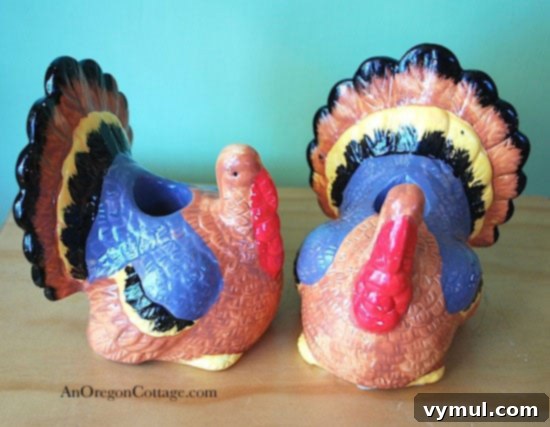
And that’s where I discovered these two charming, albeit vibrantly painted, ceramic turkey candleholders. They were priced at a mere .99 cents each – an absolute steal! While their original colors were, shall we say, “certainly colorful,” I immediately saw beyond the primary hues to the elegant shapes beneath. A quick tip for fellow thrift store enthusiasts: never judge people by what they’re buying, because you never know the creative genius they’re about to unleash with their finds!
The Transformation Process: From Thrift to Chic
Turning these humble, brightly painted candleholders into sophisticated rustic white turkeys required a few strategic steps. The goal was to emulate the solid, decorative look of the Pottery Barn turkey, which meant addressing the functional candleholder openings.
Step 1: Preparation – Filling and Smoothing
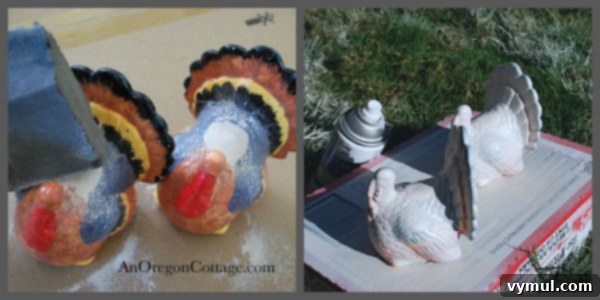
The first crucial step in achieving a classic, solid look was to fill the holes where candles would typically sit. Since these were relatively deep openings, I opted for wood filler, a versatile material that is easy to apply and sands smoothly once dry. For smaller indentations, spackle or even hot glue could work, but for these larger holes, wood filler offered the best structural integrity and finish.
Applying the wood filler requires a bit of patience. I filled the holes generously, making sure to slightly overfill so that I could sand it down flush with the turkey’s surface. Given the amount of filler used, it took a full 24 hours to dry completely, ensuring a solid, stable foundation for the next steps. Once dry, a good sanding with a sanding block helped to blend the filled areas seamlessly into the turkey’s original contours. The aim was to create a smooth, continuous surface, making the turkeys appear as solid decorative pieces rather than repurposed candleholders.
A quick note on perfection: While I strive for a polished look, it’s important to remember that handmade items, especially those with a rustic aesthetic, can embrace minor imperfections. Even after thorough sanding and painting, you might still discern a faint outline where the holes once were. For me, this doesn’t detract from the final result. In fact, it adds to the charm of a handmade piece, echoing our tag-line: “embracing imperfection.” My primary goal was to achieve a specific look and, of course, to save a significant $157.
Step 2: Painting – The Power of White
Once the filler was dry and sanded, it was time for the transformation to truly take shape with paint. Ceramic pieces are excellent candidates for painting, and you have several options depending on your preference and what you have on hand. For a super smooth, brush-stroke-free finish, spray paint is often the go-to. I initially started with white spray paint, as it provides excellent coverage and a professional look.
However, during the project, I found myself in a common DIY predicament: my white spray paint ran out! (It seems I’d been on a bit of a painting spree lately.) Rather than pausing the project, I pivoted to another readily available option: the semi-gloss enamel paint I use for the molding and cabinets in our home. This is a testament to the versatility of household paints and the “use what you’ve got” philosophy of many successful DIY projects. Acrylic paints also work wonderfully on ceramic, especially if you prefer brush application. The key is to apply thin, even coats, allowing each coat to dry thoroughly before applying the next, regardless of the paint type.
Step 3: Achieving the Rustic Finish – Distressing for Character
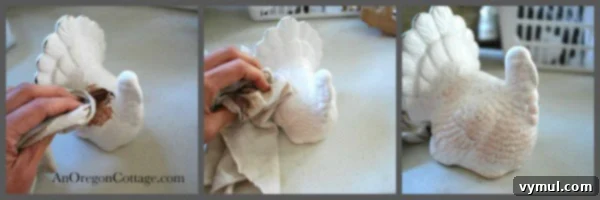
After the white paint had completely dried, the next step was to create that desirable rustic, slightly aged look, mimicking the Pottery Barn original. My initial thought was to use a sanding block to distress the paint, but not much came off on the smooth, hard enamel. I then wondered if a brown glaze might help achieve the desired effect by settling into crevices and highlighting textures. I applied a brown glaze and then immediately wiped it off. As you can see from the photo (and don’t worry, I’m not 100 years old; that’s just how my hand looks in these particular shots!), the process was a bit messy.

Ultimately, I wasn’t pleased with the glazed effect. I felt it “muddied” the crisp white, diminishing the fresh, clean look I was aiming for. I quickly used water to wipe off as much of the glaze as I could from the one turkey I had tried it on, though some residue lingered. You can observe the subtle difference between the two turkeys in the image above, with the glazed one having a slightly dingier appearance. This experiment served as a good reminder that not every technique yields the desired result, and it’s perfectly fine to adjust your approach mid-project.
Instead, a simpler method proved far more effective for creating the rustic appeal. A couple of swipes with a coarser grit sanding paper was all it took. By lightly sanding the raised areas and edges, I was able to gently remove some of the white paint, allowing glimpses of the original, darker ceramic or even the wood filler beneath. This subtle distressing instantly gave the turkeys a weathered, aged appearance, perfectly capturing the rustic charm I was after. It truly demonstrated that sometimes, less is more when it comes to distressing.
So, in summary, the successful formula for achieving a Pottery Barn-inspired rustic white turkey was:
Fill holes + sand with fine paper + paint (white) + sand with rougher paper = PB-like rustic white turkey.
Showcasing Your DIY Masterpiece: Styling for Thanksgiving

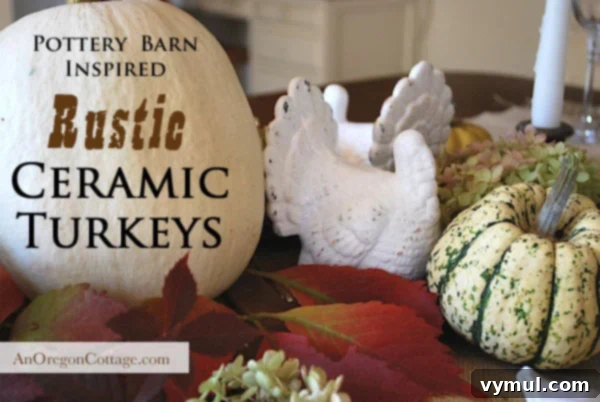
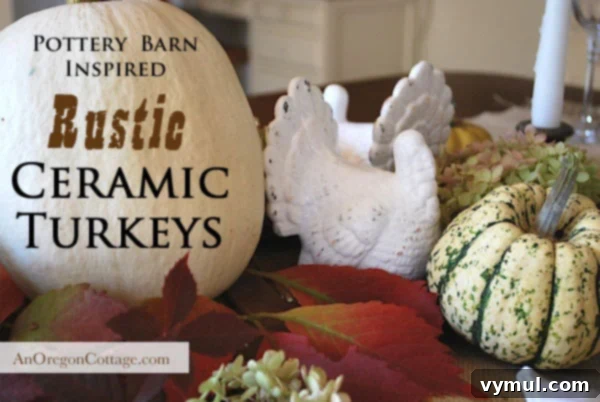
With the transformation complete, the next exciting step was to integrate these newly refined turkeys into a Thanksgiving tablescape. I quickly arranged a centerpiece to visualize how they would contribute to the overall aesthetic. The result was nothing short of delightful. The rustic white ceramic turkeys blended beautifully with an array of natural elements: soft pumpkins, delicate pee-gee hydrangeas, vibrant Virginia creeper leaves, and the warm patina of tarnished silver and pewter accents. The white provided a clean, elegant anchor amidst the rich autumn textures and colors, creating a balanced and inviting display.
These turkeys would also look fantastic on a fall mantel, a console table in an entryway, or even as accent pieces on bookshelves. Their versatile, neutral color allows them to complement various decor styles, from farmhouse to traditional. The beauty of DIY decor is not just the cost savings, but the ability to customize pieces to perfectly suit your personal taste and existing home aesthetic.
The Joy of Transformation: Why DIY Matters
When I first embarked on this thrift store transformation series, I genuinely thought I might not keep every single item I revived. After all, there’s only so much space in one’s home! But these rustic white ceramic turkeys? Oh yes, I’m absolutely keeping them. They embody everything I love about DIY: the thrill of the hunt, the satisfaction of creating something beautiful from something discarded, and the joy of saving a significant amount of money while achieving a high-end look.
This project is a powerful reminder that with a little creativity and effort, you can turn ordinary, inexpensive thrift store finds into extraordinary, custom home decor. It empowers you to curate a home that reflects your style without breaking the bank. So, I encourage you to look at those seemingly unappealing items at your local thrift store with a fresh perspective – what hidden potential do they hold?
Have you tackled any similar ceramic pieces from thrift stores and brought them back to life with a coat of paint? Share your experiences and ideas! There’s a wonderful community of DIY enthusiasts who love to see what others are creating.
This transformation marks day 11 in our exciting series, “31 Days of Thrift Store Transformations.” You can click on the button above to explore all the inspiring posts in this category and discover more creative ways to upcycle and refresh your home decor. If you’re new to the series and curious about its premise, you can delve into the introduction to 31 Days of Thrift Store Transformations here. We take a bit of liberty with the term “thrift store,” using it broadly to encompass anything you acquire secondhand and affordably – whether it’s from a dedicated thrift store, a bustling garage or estate sale, a charming flea market, or any other source of pre-loved treasures.
I’m delighted to share this project at:
- Funky Junk Interiors SNS Link Party
- N-S-E-W Thanksgiving Traditions Party